作者: admin

  • Northern Ireland’s former unionist leader faces trial in sexual abuse case involving 2 girls

    Northern Ireland’s former unionist leader faces trial in sexual abuse case involving 2 girls

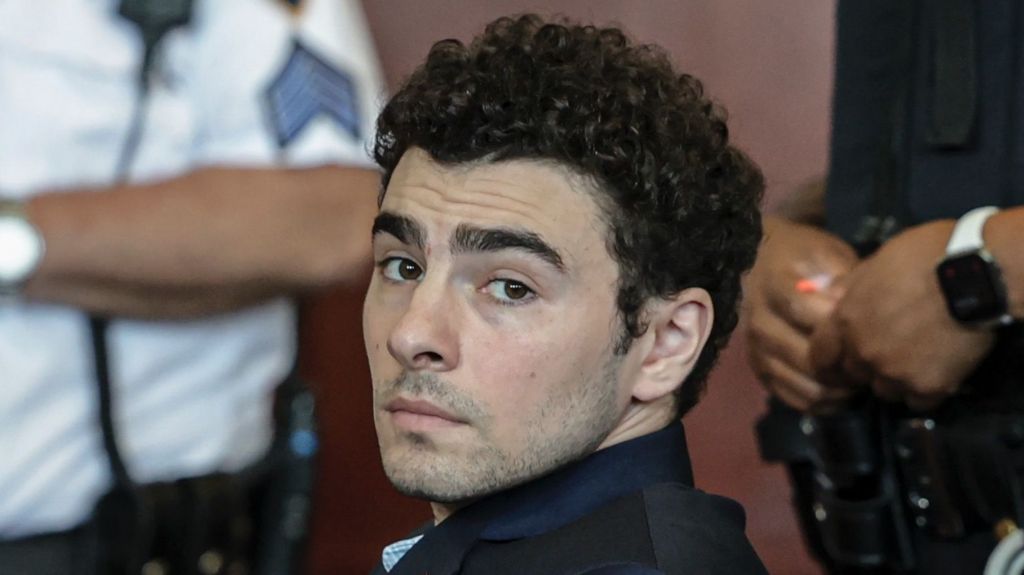
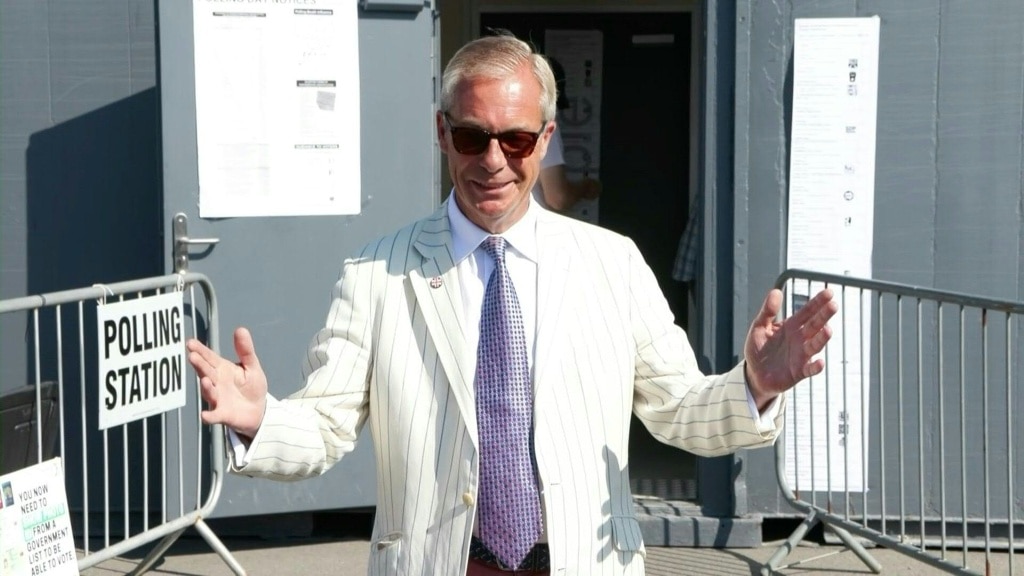
    In opening statements delivered Wednesday at a crown court trial in Northern Ireland, a senior prosecutor outlined decades-old allegations of repeated sexual abuse against two underage girls leveled against Jeffrey Donaldson, the former head of the region’s largest pro-union political party.

    The 63-year-old, who led the Democratic Unionist Party (DUP) from 2021 to 2023, has entered a full not guilty plea to all 18 charges against him: one count of rape, four counts of gross indecency, and 13 counts of indecent assault. The alleged offenses are tied to the two complainants and are said to have occurred between 1985 and 2006.

    Addressing the jury at Newry Crown Court, prosecutor Rosemary Walsh explained that the two victims first brought their accounts of the “difficult and traumatic childhood incidents” to police more than two years ago. The younger complainant told investigators that Donaldson groped her when she was of primary school age, Walsh said. The older complainant, identified in court proceedings only as Complainant B, reported that the abuse persisted for multiple years. Years after the alleged abuse ended, Complainant B said a mediated meeting was arranged through a local church, where Donaldson personally apologized for the harm he caused in the past, Walsh added.

    When questioned by law enforcement following his March 2024 arrest, Donaldson dismissed the allegations as unbelievable, insisting he never sexually touched either complainant. Donaldson stepped down immediately from his role as DUP leader and resigned his seat in the UK House of Commons shortly after his arrest. His departure sent shockwaves through Northern Ireland’s political establishment, coming just weeks after the DUP ended a two-year boycott of the region’s devolved power-sharing government. The party had returned to the governing arrangement after Donaldson secured key concessions from the UK government and European Union over post-Brexit trading rules for the region, a contentious issue that had divided unionist communities for years.

    As DUP leader, Donaldson was the most prominent and influential figure in Northern Ireland’s unionist movement, which advocates for retaining the region’s constitutional status as part of the United Kingdom, opposing reunification with the Republic of Ireland.

    Donaldson’s wife Eleanor has also pleaded not guilty to charges of aiding and abetting her husband’s alleged crimes. However, she is not present in court for the proceedings: Judge Paul Ramsey ruled she is unfit to stand trial due to ongoing mental health challenges. While the jury will review the facts of the case against her, she cannot be convicted or sentenced if the jury finds the allegations proven. The overall trial is expected to proceed over the course of four weeks, with the jury set to deliver a verdict on all counts after closing arguments.

  • Trump says US ‘not satisfied’ with Iran deal yet

    Trump says US ‘not satisfied’ with Iran deal yet

    Amid fragile ceasefire talks between the United States and Iran following months of open conflict, US President Donald Trump has publicly stated that Washington is still unsatisfied with the current terms of a potential peace deal, leaving the prospect of a final agreement uncertain. Speaking during a public cabinet meeting held in Washington DC on Wednesday, Trump outlined his stance on the ongoing negotiations, confirming that while Iranian leadership is eager to reach a negotiated settlement to end the conflict, the two sides have not yet closed the gap on core disagreements.

    “Iran is very much intent on getting a deal done. They want this very badly,” Trump told reporters in attendance. “So far, they haven’t gotten there, and we’re not satisfied with what’s on the table. Either we get a deal that works for the United States, or we will have to finish the job,” he added, repeating a longstanding US threat to resume large-scale military strikes if no acceptable agreement is reached. Trump also downplayed Iran’s current negotiating position, claiming the country was “negotiating on fumes” and had no other choice but to reach a deal with Washington.

    The comments came hours after Iranian state television published leaked details of what it claimed was a full draft framework agreement between the two delegations. The leaked draft included a number of major proposed terms: Iran would reopen the strategically critical Strait of Hormuz to commercial shipping within one month, restoring traffic to pre-conflict levels, with vessel routing and management overseen jointly by Tehran and Muscat. In exchange, the draft claimed the US would lift its naval blockade of Iranian ports and withdraw all American military forces from the region. The leaked document notably made no mention of Iran abandoning its nuclear enrichment program or surrendering its stockpile of highly enriched uranium, two longstanding core US demands in prior negotiations with Tehran.

    Within hours of the report, the White House dismissed the leaked draft as a “complete fabrication”, denying that any such agreement had been put forward. President Trump also directly addressed the proposed terms during Wednesday’s briefing, rejecting the idea that Iran would control access to the Strait of Hormuz. “Nobody controls the Strait of Hormuz,” he said, adding that the waterway must open immediately under any final deal. He also denied two other circulating reports that have drawn domestic political pushback: that he was considering lifting sweeping US sanctions on Iran, and that he would allow Russia and China to remove Iran’s highly enriched uranium stockpile to meet US non-proliferation requirements.

    Secretary of State Marco Rubio echoed Trump’s general tone Wednesday, confirming that “some progress and some interest” has been made in ongoing talks but declined to share details of remaining sticking points between the two delegations. “We’ll see over the next few hours and days whether that progress can continue and solidify into something we can move forward with,” Rubio said.

    The current round of negotiations follows months of escalating conflict that upended stability across the Middle East. The US and Israel launched large-scale, widespread strikes against Iranian targets on February 28, officially launching the open conflict. Iran responded with strikes against Israeli targets and US-allied Gulf nations, and moved to fully close the Strait of Hormuz, a critical chokepoint for 20% of the world’s daily oil supplies. The closure sent global crude prices soaring, triggering widespread economic concerns across global energy markets.

    An initial ceasefire agreement was reached on April 8, and has been largely respected by both sides, but formal talks to resolve the underlying conflict stalled for weeks. In recent days, the fragile truce has come under renewed strain: the US launched new strikes targeting Iranian missile sites and coastal boats that US military officials claimed were laying mines in international waters on Monday, followed by additional self-described “self-defense strikes” against targets in southern Iran on Tuesday. Tehran has repeatedly denounced these new strikes as a “gross violation” of the April ceasefire agreement, raising fears that full-scale conflict could resume if talks collapse. BBC News has not independently verified the contents of the purported draft framework leaked by Iranian state media, and no official confirmation of the draft’s terms has been provided by either negotiating delegation.

  • ‘They stole our sheep, killed my son’: Israeli settlers, soldiers attack and loot West Bank villages

    ‘They stole our sheep, killed my son’: Israeli settlers, soldiers attack and loot West Bank villages

    Deep in the occupied West Bank, north of Ramallah in the small village of Jiljilya, Ali Kaabneh stands on the exact patch of ground where his 16-year-old son Yousef was shot and killed last Wednesday, during a joint raid by Israeli settlers and soldiers that left a once-thriving Bedouin community displaced and its livelihood stolen. In an interview with Middle East Eye, Kaabneh laid bare the devastating human cost of what he calls a deliberate campaign of state-backed displacement and plunder targeting Palestinian communities in the occupied territories.

    The raid was launched in response to unconfirmed claims that 120 sheep had been stolen from an illegal Israeli settler outpost called Tzur Levavi Farm, run by the Maguri family. The outpost sits in Jabal al-Batin, a section of Area A – the part of the occupied West Bank that is nominally under the full civil and security control of the Palestinian Authority, under the terms of the Oslo Accords. All Israeli settlements and outposts in the occupied West Bank are classified as illegal under international law, and this particular outpost was built on private Palestinian land belonging to the nearby villages of Sinjil and al-Mazra’a ash-Sharqiya.

    Within hours of the theft report, dozens of settlers backed by uniformed Israeli soldiers launched a large-scale incursion into the three neighboring Palestinian villages of Sinjil, Jiljilya and Abwein. The armed group systematically entered local sheep pens, emptying them of livestock and seizing a total of 900 sheep from local residents. The operation was openly coordinated between Israeli security forces and settler participants, according to reporting from Israel National News (Arutz 7), a media outlet closely aligned with the Israeli settler movement. The outlet confirmed the seizure was only possible through direct collaboration between security search forces and settler civilian volunteers.

    As the raid unfolded, the Israeli military deployed drones to track fleeing Palestinian herders and set up roadblocks across the entire region to guarantee unimpeded movement for the settlers and their stolen flock. Members of the Kaabneh clan, who maintained a small herding community in the wadi between Sinjil and Jiljilya, spotted the advancing group and attempted to flee with their flock toward the built-up center of Jiljilya. Military forces tracked the group via aerial surveillance, surrounded them, confiscated all their sheep, and took four Kaabneh family members into custody – including Ali Kaabneh, Yousef’s father. All four detainees were released later the same day, after no evidence linking them to the earlier sheep theft from the outpost was found.

    Kaabneh, who was in detention when his son was killed, described the peaceful resistance his family offered to the theft. “We were at home working with the sheep. The settlers came under army protection,” he said. “We did not attack them, we did nothing. We moved the sheep about two kilometres away, and the army located them using drones.” Today, a circle of stones marks the spot where Yousef fell, and faint bloodstains still mark the dry earth just a few dozen meters from the main road where the stolen flock was driven away.

    In a harrowing account of his son’s killing, Kaabneh said the 16-year-old was unarmed and posed no threat to the heavily armed soldiers. “The army killed my son deliberately. They shot him in the chest and he died on the spot,” he said. “He was 16 years old – what was his crime? He wanted his sheep back, and they responded by shooting him. What danger did he pose to them? He had nothing in his hands, he was unarmed. They could have arrested him, but instead they shot him. Like any child, he wanted to build a home in the future and get married. But here, during the day we worked, and at night we stood guard in shifts, without sleeping.”

    Cell phone footage filmed by the family captures the moments before the shooting: several Israeli soldiers stand opposite an alley where Kaabneh and other family members gathered to protest the theft as the stolen flock passed, before multiple gunshots ring out. One of the bullets struck Yousef. Ali Kaabneh was arrested just moments after filming, and only learned of his son’s death when he was released from custody four hours later.

    Fawaz Kaabneh, another local resident who had 200 sheep stolen during the raid and was also detained, said the rapid release of all detainees makes clear the allegations against them were baseless. “We were afraid they would reach the houses, so we went out. We were shocked by the number of settlers. They seized me and handed me over to the army, and from there I was transferred to the police. They took me to Sha’ar Binyamin. I told them the sheep were mine,” he said. After being questioned and released that night, Fawaz filed a formal complaint with Israeli police; in the days after the raid, the military returned roughly four dozen sheep to the village.

    Iyad Ghafar, a Sinjil-based local activist who documented the entire raid, provided a step-by-step reconstruction of the coordinated operation. At 11:06 a.m., he filmed an armed settler drawing a pistol and charging toward him as he documented the stolen flock. Six minutes later, Yousef Kaabneh was shot dead by soldiers. Additional footage captured by Ghafar shows masked settlers throwing stones at Palestinian residents during the incursion. Ghafar confirmed all the stolen sheep were driven directly to the Maguri outpost, which is built inside former Palestinian agricultural structures in Area A. It is the same site where Israeli soldiers and settlers killed two young Palestinian men defending their land just last July. One of those victims was Saif al-Din Musallat, a 20-year-old U.S. citizen, who died from injuries sustained during severe beatings by the group, according to the Palestinian Ministry of Health.

    Ghafar emphasized the full coordination between soldiers and settlers throughout the incursion. “It began on the edge of Sinjil, and afterwards they started attacking Jiljilya. We managed to get there in time, and I filmed the settlers and the army, and where they came from. The settlers chased us. One of them drew a weapon and came straight towards us. We got into the car and drove away. The military patrol stopped and started shooting at us – we almost died. It was a joint operation by the army and the settlers, acting together at the same time. Together they entered homes, together they chased the shepherds, together they took the flock,” he said.

    Before last week’s raid, around 20 Palestinian families – roughly 200 people, all of whom are refugees originally displaced from land east of Ramallah in 1948 – lived in the small community between Jiljilya and Sinjil. Today, every last resident has fled the area, leaving behind empty sheep pens and intact tents filled with mattresses, clothing, and baby cots, abandoned in the rush to escape. Residents only returned briefly this week to collect personal belongings and rescue dogs that were left behind during the evacuation.

    The Kaabneh family’s story is a stark example of the ongoing pattern of displacement and dispossession facing Palestinian communities across the occupied West Bank, rights observers note. The clan has been repeatedly displaced by settler violence backed by the Israeli military over the past three years. Originally expelled from their traditional land between the Negev and Masafer Yatta in the 1948 Nakba, the family lived in Mu’arrajat Centre near the Taybeh junction until the outbreak of Israel’s war on Gaza in October 2023, when settlers and soldiers forced them to leave. Some members relocated to the outskirts of Lubban ash-Sharqiya, while others moved to the al-Batin area – where the Tzur Levavi outpost was built a year later, shortly after soldiers killed Musallat and 20-year-old Mohammad Razek Hussein al-Shalabi. The family was forced to flee again.

    Ali Kaabneh and other remaining family members settled near Route 60 on the outskirts of Lubban ash-Sharqiya, but were attacked again just weeks before the Jiljilya raid. On April 6, settlers burned two cars and a tent that family members were sleeping in, injured one relative with a club, and spray-painted the far-right “Price Tag” and “Zionist Revenge” slogans on the remains of the camp. The attack was launched as retaliation for the evacuation of another illegal outpost, Ora Yisrael, built in Wadi Salfit deep inside Area B – dozens of kilometers away from the Kaabneh camp. The clan moved to their Jiljilya compound after that attack, believing that since the area is formally under Palestinian Authority control, it would be safer.

    “We moved from Mu’arrajat to Lubban ash-Sharqiya. We were attacked there on 6 April, so we moved here. This is under Palestinian Authority control, so we thought it would be safer, but there is no safe place,” Ali Kaabneh said. The repeated targeting of displaced Bedouin families after relocation is not a new pattern: in April 2025, settlers who built an illegal outpost near Sinjil attacked another group of displaced residents from Wadi as-Siq, burning their vehicles and residential tents.

    In conflicting official statements issued after the incident, Israeli military spokespersons attempted to downplay the military’s role in the raid. A spokesperson acknowledged the Tzur Levavi outpost is located inside Area A, but claimed soldiers only entered the area “to remove the civilians” – not to support or protect the settler operation. “Upon arriving at the scene, [Israeli army] and Border Police forces acted to remove all Israeli civilians from the village, prevent friction in the area, and recover the livestock,” the spokesperson said, adding that forces had arrested several suspects in the initial sheep theft from the outpost. The statement does not explain how forces allowed settlers to leave the area with 900 Palestinian sheep if the goal of the operation was to prevent theft and friction.

    In a later update, the Israeli army acknowledged that “some of the Israelis who entered the village took animals belonging to local residents” and confirmed that approximately 40 sheep had been returned to the village, adding that “the entire incident remains under review and is still being investigated.” Israeli police, for their part, said all detained suspects were questioned and released with conditions, and that a counter-complaint filed by Palestinian residents is currently under examination “with the aim of establishing the truth.”

    The incident has underscored growing international concerns over rising settler violence and state-backed land grabs in the occupied West Bank, as settlements and outposts continue to expand into Palestinian territory formally designated for Palestinian self-governance under the Oslo Accords.

  • Watch: Moment rescuers find five people trapped in Laos cave

    Watch: Moment rescuers find five people trapped in Laos cave

    A week-long nightmare of entrapment has ended in a moment of joy and relief for five villagers in Laos, as rescue teams located the group alive deep inside a waterlogged cave system.

    The five had been cut off from the outside world when rising floodwaters sealed off the cave’s entrance last week, leaving families and emergency crews bracing for the worst outcome after days of relentless rescue efforts. Dramatic footage captured the exact second that search teams made contact with the trapped group, a moment that has already been shared widely across regional media.

    Flood-related cave entrapments are a recurring risk in Laos’ rugged, cave-rich northern terrain during the annual monsoon season, when sudden heavy rains can rapidly fill underground passages with rushing water. In this case, steady search operations combined with a stroke of good fortune allowed rescuers to reach the group before conditions turned fatal.

    Local authorities have not yet released full details on the health of the five survivors, or how they managed to sustain themselves through seven days trapped in the dark, flooded cave. But the confirmation of their survival has already been celebrated as an unexpected miracle by communities across the region, and relief efforts are now focused on extracting the group to safety and providing urgent medical care.

  • How a drink with Kylie Minogue got director on board

    How a drink with Kylie Minogue got director on board

    For a first-time feature director, heading up a high-profile documentary about one of pop music’s most iconic global stars sounds like an intimidating prospect — and for Michael Harte, a Donegal-born filmmaker, that intimidation almost led him to walk away from the project entirely.

    When veteran producer John Battsek reached out to Harte with an invitation: the Australian pop legend Kylie Minogue would be in Los Angeles, and Battsek wanted Harte to join them for a meeting to discuss the documentary concept. Harte immediately questioned if he was the right fit for the role. “I don’t think that’s a good idea, I’m not experienced enough as a director,” Harte recalled his internal thought process telling the BBC’s Evening Extra radio programme. Still, he reasoned, turning down a chance to sit down with Minogue at the legendary Chateau Marmont hotel was impossible. “I’ll go anyway. I’m not going to turn down a drink in the Chateau Marmont with Kylie Minogue,” he thought.

    That fateful meeting at the iconic Sunset Boulevard hotel in West Hollywood shifted Harte’s perspective completely in minutes. Describing the dim, moody dining space, Harte said Minogue walked into the room with an unmissable, magnetic energy. “It sounds cheesy to say, but she really was [like a beam of light]. There was an energy there that was intoxicating,” he said. In that moment, any doubt Harte had carried into the meeting melted away. “And then I thought, I do want to make this film. I am the right person to do it. I could tell there was an energy from her that I wanted to take and transfer onto film and if we can do that successfully, I think the film could be really special.”

    The resulting project is KYLIE, a three-part documentary series coming to Netflix that tracks Minogue’s decades-long career, tracing her path from a teenage actor on the hit Australian soap opera Neighbours to one of pop music’s most enduring, beloved performers. This collaboration marks a reunion for Harte and Battsek, who previously worked together on the hit Netflix documentary about David Beckham. For Harte, this is only his second credit as a director — his first came during the COVID-19 pandemic — after building a reputation as a respected editor, most recently for the critically acclaimed Michael J. Fox documentary Still.

    To craft a documentary that felt fresh and intimate, rather than just another recap of a celebrity’s career, Harte and his team made a deliberate choice to step away from the formal, structured sit-down interviews that are common in biographical documentaries. “We decided pretty early on that we’d call them chats,” Harte explained. “Kylie had been interviewed for decades, and we wanted this to feel different.”

    Instead, the series is anchored by Minogue’s personal archive, with the casual conversations taking place in her home, surrounded by boxes of personal photographs, home video, and decades of career footage that brought old memories flooding back. One of the biggest creative challenges the team faced was sorting through the sheer volume of content Minogue had accumulated over her career: beyond her decades of music releases and tours, Minogue has also worked consistently as an actor, leaving the team with everything from Neighbours on-set footage to high-fashion shoot outtakes, decades of media coverage, and unheard home recordings to sift through.

    For Harte, working through that massive archive offered a rare, intimate look at Minogue’s growth in real time. “I say to Kylie, it almost felt like the Truman Show. You watch somebody grow up on camera,” he said. “Because of that we’re not just invested in Kylie’s music or you know her as an artist you’re actually invested in her as a person.”

    Above all, Harte said what stood out most to him through the months of working on the project was Minogue’s extraordinary resilience, particularly in the face of relentless public criticism that started when she rose to fame as a teenager. “Kylie was 19 when that happened to her. I’m 43, if I got criticism like that, I’m retiring in the morning,” he said. That quiet strength left a lasting impact on how Harte shaped the documentary, a observation from Minogue’s ex-boyfriend Jason Donovan that never made it into the final cut but anchored the series’ emotional core: “There’s real fire in her.”

  • Israeli defence minister insists there are ‘voluntary emigration’ plans for Gaza

    Israeli defence minister insists there are ‘voluntary emigration’ plans for Gaza

    More than 18 months into Israel’s military campaign in the Gaza Strip, Israeli Defence Minister Israel Katz has formally advanced long-circulated proposals to push Palestinians to leave the enclave through what the government frames as “voluntary emigration”, announcing this week that preparations are on track to be implemented when the government deems conditions appropriate. In a public statement Wednesday, Katz confirmed the plans will move forward “at the proper time and in the proper manner”, one day after he announced Israel had assassinated Mohammed Odeh, the leader of Hamas’s armed wing, alongside his wife and three children in a targeted strike. Back in March, Israel’s security cabinet already greenlit Katz’s proposal to set up a dedicated internal directorate within the defence ministry to manage the process of mass “migration” out of Gaza, a policy that has been raised repeatedly by senior Israeli officials since the current military campaign began in October 2023.

    To date, the military offensive has killed more than 72,700 Palestinians and reduced most of Gaza’s built infrastructure to rubble, yet repeated surveys show the overwhelming majority of the enclave’s population refuses to leave their ancestral homeland. The push for emigration has dovetailed with growing public calls from extremist Israeli settler groups and far-right politicians to annex parts of Gaza and establish new Israeli settlements on occupied Palestinian territory. While some senior government figures have attempted to frame the exit initiative as a purely voluntary program, other Israeli officials have openly advocated for forced expulsion — a practice widely recognized under international law as a war crime.

    One of the most prominent voices pushing for forced removal is far-right Member of Knesset Limor Son Har-Melech, who doubled down on her position during a tour of the Gaza border region in early May. Speaking on social media platform X following the visit, Son Har-Melech argued that full reoccupation of Gaza, mass expulsion of its existing residents, and the construction of permanent Israeli settlements is the only path to what she calls long-term security for the state of Israel. “Regrettably, the State of Israel is still captive to a flawed conception. There is no alternative to conquest, expulsion, and settlement,” she wrote, adding that any other diplomatic or political solution would fail and lead to future violence. She also emphasized Israel must retain permanent control over the Netzarim Corridor, a strategic route that splits the Gaza Strip into northern and southern zones, and establish a continuous Israeli settlement presence along the corridor.

    The current situation on the ground remains dire, despite a U.S.-brokered ceasefire agreement reached in October that was intended to end active hostilities, lift Israel’s total 18-month blockade of Gaza, and allow unimpeded access for humanitarian aid including food, clean water, and critical medical supplies. Since the truce was announced, Israel has repeatedly violated its terms and has largely kept the crippling blockade in place, leaving basic necessities including fuel, food, and life-saving medication at critically low levels for Gaza’s 2 million remaining residents.

    Over the course of the war, only a few thousand Palestinians have managed to evacuate Gaza through the Rafah border crossing into Egypt. Following the ceasefire, Israeli authorities have allowed just a tiny handful of displaced Palestinians to return to Gaza from Egypt each day, and many who have crossed back have reported systemic abuse and harassment by Israeli forces during their journey. Even with the nominal ceasefire in place, Israeli airstrikes and artillery shelling across the enclave have continued nonstop, killing more than 800 additional Palestinians since the truce took effect. As of the latest count from Gaza’s Ministry of Health, the total death toll from Israel’s military campaign since October 2023 now stands at more than 72,700, with over 172,000 more people sustaining life-altering injuries.

  • Starmer warns of Russian aggression as UK agrees new treaty with Poland

    Starmer warns of Russian aggression as UK agrees new treaty with Poland

    In a high-profile diplomatic gathering held at RAF Northolt in West London on Wednesday, British Prime Minister Keir Starmer and his Polish counterpart Donald Tusk formalized a landmark new bilateral defence and security partnership, capping the event with a solemn visit to the adjacent Battle of Britain Bunker, where the leaders laid a commemorative wreath to honor fallen World War II service members.

    Speaking after the signing ceremony, Starmer emphasized that Russian aggression stands as the most pressing shared threat facing both nations, with impacts extending far beyond the war in Ukraine to destabilize all European states. He framed the new accord as a transformative step that would deliver a “generational uplift” to the longstanding security relationship between the UK and Poland.

    The official text of the treaty explicitly names Russia as the most significant long-term threat to collective Euro-Atlantic security, and formalizes both nations’ commitment to countering Moscow’s malign influence across the region. It also reaffirms the UK and Poland’s unwavering, ironclad commitment to the collective defence principles of NATO, and addresses a range of additional shared security priorities. These include supporting domestic defence industry jobs, enhancing coordinated response capabilities for cyber attacks, strengthening cross-border security, coordinating crackdowns on transnational organized crime networks, and joint action to curb irregular migrant smuggling. Under a new dedicated joint action plan, the two countries will expand intelligence sharing, deploy emerging technologies to enhance border monitoring, and target the social media infrastructure that smuggling gangs use to recruit and coordinate operations.

    Tusk emphasized through an interpreter that the treaty is rooted in the shared core values of the two nations: respect for the rule of law and fundamental human rights. He pushed back against growing narratives that frame these principles as outdated, noting that these values remain non-negotiable foundations for the sovereignty and security of both Poland and the UK.

    Despite the official optimism surrounding the agreement, independent defence analysts have raised pointed questions about the tangible impact of the new treaty and its added value compared to previous bilateral accords. Ed Arnold, a defence adviser at The D Group and senior associate fellow at the Royal United Services Institute (RUSI), a leading UK defence think tank, told the BBC that the new agreement delivers little meaningful new content on core defence and security cooperation. Arnold pointed out that the UK and Poland already signed major bilateral security agreements in 2018 and 2023, leaving him unclear what unique role the new treaty will fill.

    He added that the bulk of the new text focuses heavily on migration and related border security issues, rather than advancing core defence cooperation. Arnold warned that lumping multiple disparate policy areas into a single treaty carries inherent risks: if the two countries experience disagreements over one policy domain, such as migration management, those tensions could spill over and damage critical defence and security collaboration. He also questioned whether the UK currently has sufficient institutional and resource capacity to deliver on all the treaty commitments it has made across its growing portfolio of bilateral international agreements, concluding that the accord falls far short of the transformative, generational change that Starmer has claimed it delivers.

  • Fifa ordered to explain World Cup ticket pricing

    Fifa ordered to explain World Cup ticket pricing

    The world’s governing body of soccer, FIFA, is now facing a formal, multistate investigation led by top law enforcement officials from New York and New Jersey over widespread claims of deceptive and exploitative ticketing practices for the upcoming 2026 men’s World Cup, co-hosted in the United States, Mexico, and Canada. The probe centers on repeated accusations that FIFA artificially inflated ticket costs and misled thousands of fans hoping to attend the tournament, which will kick off across North America next year.

  • Desperation forces Yemenis to risk lives smuggling qat to Saudi Arabia

    Desperation forces Yemenis to risk lives smuggling qat to Saudi Arabia

    For millions of young Yemenis trapped in more than a decade of civil conflict and systemic economic collapse, the promise of a stable future lies almost exclusively across the northern border in Saudi Arabia. As one of the only accessible destinations for steady work, the neighboring kingdom has become a beacon of hope for those fleeing violence and poverty – but the $2,500 price tag for a legal visa and sponsorship puts this path out of reach for nearly all Yemeni households.

    Ahmed, a 35-year-old chef and father of two young children, was one of millions who dreamed of legal work in Saudi Arabia to support his family. Unable to scrape together the funds for official entry, he made the fateful choice to cross the border illegally by the end of 2024, finding casual work in a restaurant in Jazan province. Twice, Saudi authorities caught and deported him back to Yemen, leaving him with no legal way to earn the income his family needed to survive. That’s when he turned to the only viable option he had left: joining qat smuggling networks.

    On his first illegal crossing, Ahmed had already traveled alongside qat smugglers, witnessing firsthand the deadly risks that come with moving the controlled stimulant across the border. Qat is classified as an illegal narcotic in Saudi Arabia, with punishments ranging from a mandatory minimum five-year prison sentence and a $5,300 fine to permanent deportation. For repeat offenders, sentences can stretch to 25 years, and under the kingdom’s anti-narcotics laws, capital punishment is a possible penalty in serious trafficking cases. Despite knowing the dangers – including accounts of smugglers being shot dead by border guards – success stories from fellow villagers convinced him the risk was worth taking.

    For four months, Ahmed successfully made smuggling runs across the border, returning home with enough money to lift his family out of extreme poverty. For two months, they lived without the constant hunger and uncertainty that defined most Yemeni households, and Ahmed planned a second four-month stint to earn enough for a permanent home. He promised his two young children new bicycles on his return, and asked his wife Wafa to begin searching for a house. But just two weeks into his second trip, Wafa received the devastating news: Ahmed had been shot dead by Saudi border guards while attempting to cross.

    Two months on, Wafa still has not told her children – both under the age of 10 – that their father is dead. She hides the trauma to protect them, telling them he is still working in Saudi Arabia and plans to bring their bicycles home soon. “It is too difficult to tell a child that their father was killed while simply trying to provide for their needs,” she told Middle East Eye. Now, the family faces eviction from their small rental home, as there is no one left to earn an income. “The days spent with my husband when we only had one meal a day were infinitely better than these days without him,” Wafa said. “Having the whole family gathered together under one roof is something you cannot truly appreciate until you lose someone you love.”

    Ahmed’s tragic story is far from an isolated case: it reflects a nationwide humanitarian catastrophe unfolding across Yemen. According to the United Nations Office for the Coordination of Humanitarian Affairs (OCHA), by 2026 more than 22.3 million Yemenis – over half the country’s total population – will require life-saving humanitarian assistance and protection. More than 10 years of war, cascading economic collapse, crippling funding shortages for aid programs, and repeated climate-driven disasters have left millions without consistent access to food, healthcare, and clean drinking water. According to 2022 Saudi census data, more than 1.8 million Yemenis already live legally in Saudi Arabia, marking the Yemeni community as the kingdom’s fourth-largest immigrant population.

    Khalid, a 45-year-old Yemeni who turned to qat smuggling one year ago, understands the deadly gamble better than most. Like Ahmed, he had no other viable path to a living wage: the only two lines of work that offer meaningful income in today’s Yemen are joining one of the warring factions or smuggling qat. He chose smuggling. “I thought deeply about whether to join the fighting or smuggle qat, as these are the only two jobs that I can do and they offer a good income. I decided to go with smuggling,” he explained.

    Khalid describes the smuggling trek across the rugged border highlands as a “death journey” that demands extreme physical stamina. Smugglers often walk more than 20 kilometers carrying up to 40 kilograms of qat on their backs, a feat that only the most fit can complete. As a low-level courier for a large smuggling ring, Khalid earns 5,000 Saudi riyals (around $1,330) per successful run – a sum that no legal, civilian job in Yemen can match for ordinary laborers. When spotted by Saudi border guards, smugglers are ordered to halt; those who run face deadly gunfire. “Many Yemenis have been arrested and face severe penalties in Saudi Arabia, so I prefer to run. For me, it was either make it across or die,” he said. He recalled one incident in which 10 smugglers came under fire, and only six made it to safety, with the fates of the other four unknown.

    Khalid counts himself among the extremely lucky: after one year of smuggling, he earned enough to open a small grocery store in Lahij and build a home for his family, and he has left smuggling behind for good. “One year was enough for me to achieve my dreams of owning a home and a grocery shop. Now, I will focus on running this business together with my sons,” he said. “I don’t want my sons to ever do the same job. I encourage them to grow this grocery business and make it their future.” Even so, he recognizes why so many other Yemenis take the same risk he did: “If I hadn’t been desperate to provide for my family, I would never have risked my life, but I was forced to.”

    Economic analyst Sameer al-Dhobhani explains that the surge in qat smuggling is a direct symptom of Yemen’s collapsed economy and decades of stalled job growth. “The civil service has almost paused employing new university graduates since 2011, the economic situation has collapsed and the population is growing. All of these factors have forced Yemenis to seek out jobs that are hazardous or illegal,” he said. Qat smuggling across the border is not a new trade, but al-Dhobhani notes it has exploded in popularity over the course of the war: for young Yemenis, the risks of smuggling often compare favorably to the near-certain death of frontline fighting, and the pay is far better than any legitimate work.

    “Qat smuggling is one of the grim consequences of the war, as some people have broken the barrier of fear and no longer hesitate to take on dangerous work,” al-Dhobhani said. “However, we must not lose sight of the root cause, which is the catastrophic economic situation and the severe lack of legitimate job opportunities. If safe, legal, and well-paid jobs were available, Yemenis would not risk their lives smuggling qat. It is desperation, he said, that drives them to it.”

    Al-Dhobhani warns that the crisis will only worsen until Yemeni authorities prioritize economic recovery and job creation for young people. “Since 2015, every day has been worse than the last for Yemenis. They will not stop taking these dangerous jobs until the government takes this issue seriously and begins implementing solutions to revive the economy and provide the youth with civilian jobs,” he said. For Wafa and her children, that solution has come too late – a reminder that for millions of Yemenis, the search for a better future too often ends in tragedy on the border.

  • Watch: Community gathers as workers remain missing after chemical blast

    Watch: Community gathers as workers remain missing after chemical blast

    A devastating chemical explosion at a paper mill in the U.S. state of Washington has left one person confirmed dead and nine additional workers unaccounted for, according to official statements from local authorities. In the wake of the industrial accident, members of the surrounding community have come together to support emergency response teams and the families of those who remain missing, offering emotional comfort, practical resources, and coordinated assistance during the uncertain aftermath. First responders have been working around the clock to secure the site, conduct search and recovery operations, and assess the extent of damage caused by the blast. Local officials have not yet released detailed information about the cause of the explosion or the identities of the deceased and missing workers, as investigations remain in the early stages. The tragedy has prompted an outpouring of solidarity across the region, with community organizations and local residents stepping up to provide whatever support is needed to those affected by the incident.