作者: admin

  • Matthew Perry’s assistant sentenced to 41 months for role in the actor’s death

    Matthew Perry’s assistant sentenced to 41 months for role in the actor’s death

    The years-long legal process following the 2023 death of beloved *Friends* star Matthew Perry has reached its final chapter, with the actor’s live-in personal assistant receiving a 41-month federal prison sentence for his role in the overdose that killed Perry.

    Sixty-year-old Kenneth Iwamasa, who had no formal medical training, admitted to conspiring with two licensed doctors to supply Perry with more than $50,000 worth of ketamine in the weeks leading up to the actor’s death. Court records confirm Iwamasa personally injected Perry with the dissociative drug multiple times, including several doses on the day Perry died.

    Perry, who spoke publicly for decades about his long-running battle with substance addiction, was found unresponsive in the hot tub at his Los Angeles home in October 2023. Medical examiners later ruled his death an acute ketamine overdose, with drowning listed as a contributing cause.

    Iwamasa entered a guilty plea in August 2024 on one count of conspiracy to distribute ketamine resulting in death, a charge that carried a maximum penalty of 15 years behind bars. In addition to his 41-month prison term, he was ordered to serve two years of supervised release following incarceration and pay a $10,000 fine.

    During Wednesday’s sentencing hearing in a downtown Los Angeles courtroom, Iwamasa addressed Perry’s family directly from the witness stand, issuing a public apology for his actions. “I’m so sorry to all of you. I’m just so sorry to have done illegal acts that I will forever regret. I will take it to my grave,” he said, adding that he hoped his case would serve as a warning to others in similar positions to choose differently.

    In her sentencing remarks, U.S. District Judge Sherilyn Peace Garnett highlighted two key aggravating factors: Iwamasa’s full knowledge of Perry’s history of addiction, and his choice to conceal evidence related to his role after the actor’s death.

    Members of Perry’s family submitted pre-sentencing letters to the judge outlining their position on the case, with many expressing harsh condemnation of Iwamasa’s breach of trust. Perry’s mother, Suzanne Morrison, noted that Iwamasa’s core responsibility was to support Perry’s recovery and keep him free of drugs, with clear protocols in place to call for help if he felt overwhelmed. Instead, she wrote, Iwamasa facilitated repeated illegal drug use and arranged for multiple drug suppliers. “We trusted a man without a conscience, and my son paid the price,” she wrote.

    Perry’s sister Caitlin Morrison added that on the night of the actor’s death, Iwamasa either fled the scene knowing he had caused harm or intentionally abandoned a vulnerable person in a life-threatening situation, writing she had no sympathy for Iwamasa. Another sister, Madeline Morrison, argued that Iwamasa bore greater responsibility for Perry’s death than ketamine supplier Jasveen Sangha.

    Prosecutors had requested the 41-month sentence that the judge ultimately handed down. Iwamasa was the first of five defendants charged in the case to reach a plea deal, and the last to receive his sentence.

    All five co-defendants have now pleaded guilty to their respective charges and been sentenced. Sangha, the Los Angeles-based supplier known as the “Ketamine Queen”, was sentenced to 15 years in prison in April 2024. Dr. Salvador Plasencia, one of the doctors who supplied Perry with ketamine, received a 30-month prison sentence last December. A second doctor involved, Dr. Mark Chavez, was sentenced to eight months of home detention and three years of supervised release the same month. Erik Fleming, who sourced ketamine from Sangha, was sentenced to two years in prison earlier this month, along with three years of supervised release and a $200 fine.

    Federal prosecutors have alleged that the entire network exploited Perry’s well-documented addiction for profit, knowingly supplying him with large quantities of ketamine that directly led to his fatal overdose.

  • Is the Gulf losing its grip on the oil world?

    Is the Gulf losing its grip on the oil world?

    The ongoing conflict in Iran has put global energy markets to an unexpected test, particularly after supply disruptions hit the Strait of Hormuz—the world’s busiest and most critical oil transit chokepoint. What has surprised most industry analysts, however, is the surprising resilience of international oil prices, which have held steady near $100 per barrel, a far lower level than most pre-conflict forecasts predicted even with the loss of Hormuz transit capacity.

    The core explanation for this unexpected market stability lies in the rapidly expanding role of oil production across North and South America. Long before the Iran conflict erupted, the International Energy Agency projected that nearly all incremental global oil demand growth through 2026 would be covered by rising output from American nations including the United States, Canada, Brazil, Guyana, and Argentina.

    Prior to the war, market expectations centered on a coming period of oversupply: OPEC had signaled plans to ramp up production, which most analysts believed would push stockpiles higher and drag prices downward. The Iranian conflict upended this outlook entirely. The disruption of Hormuz shipping removed up to 14 million barrels of daily supply from global markets, driving prices upward and leading to large draws on global commercial stockpiles instead of the expected builds.

    Yet a long-held energy market axiom has held true: high prices are the most effective remedy for supply shortages. Producers across the Americas have moved quickly to capitalize on elevated prices by ramping up output and expanding export capacity. In the United States, crude oil exports hit an all-time record of 6.44 million barrels per day in April 2026, and the country is expanding port infrastructure to handle even more volume, with nearly 800,000 barrels per day of new dock capacity scheduled to launch by 2026.

    Down in Brazil, the country has added eight new offshore floating production units in recent years, bringing a combined total capacity of nearly 1.5 million barrels per day. State-owned oil giant Petrobras recently brought one new project online in the Búzios field off the coast of Rio de Janeiro five months ahead of schedule, a direct move to capitalize on strong global prices. Industry projections point to another sharp production increase for Brazil in 2026.

    Further north along the South American coast, Guyana has solidified its position as one of the world’s fastest-growing oil producers. Current output already sits around 900,000 barrels per day, and forecasts indicate production could nearly double by the end of the 2020s. Even Venezuela, which has struggled with years of declining output and deep economic crisis, has managed to boost exports substantially in response to higher global prices.

    When combined, these regional gains are projected to push total oil output across the Americas to roughly 30 million barrels per day by the end of 2026, a volume that approaches pre-war OPEC total production. The U.S. retains its title as the world’s largest single producer, with total liquid hydrocarbon output hitting almost 22 million barrels per day in April 2026.

    Ironically, this Western Hemisphere production boom can trace part of its origins to OPEC itself. For more than a decade, the cartel’s de facto leader Saudi Arabia led a strategy of output cuts to prop up global prices, a policy that made higher-cost exploration and production projects across the Americas commercially viable—particularly U.S. shale oil development.

    Saudi Arabia’s “higher for longer” price strategy is rooted in its domestic economic priorities: to fund large-scale diversification projects including the planned futuristic city Neom, the kingdom requires oil prices of at least $90 per barrel. The unintended consequence of this policy has been a powerful financial incentive for non-OPEC producers to scale up output aggressively.

    Even with this rapid growth in American production, it would be premature to declare a permanent shift of the global oil industry’s center of gravity away from the Middle East. Production economics still heavily favor Gulf Cooperation Council producers, as extraction costs in the Persian Gulf remain among the lowest on Earth.

    In many major Saudi fields, production costs fall below $10 per barrel, and the regional average across the Gulf is roughly $27 per barrel. By comparison, most North American shale operations require prices between $50 and $65 per barrel to turn a profit. This cost gap becomes critically important during market downturns: if oil demand weakens and prices fall, higher-cost American producers will face pressure first, while low-cost Gulf producers with massive reserve bases can easily outlast periods of low prices.

    Geography also gives Middle Eastern producers a major advantage in fast-growing key Asian markets. For large emerging economies including India, Pakistan, and Bangladesh, importing oil from the nearby Gulf is far more cost-effective than long-haul shipments from the Americas. Additionally, most Asian refineries were originally designed to process heavy, high-distillate Middle Eastern crudes that align with regional demand for diesel and jet fuel, the fuels that underpin most economic growth. U.S. shale exports are largely lighter crude that cannot directly replace Middle Eastern grades without costly refinery modifications.

    Gulf producers are also investing heavily to protect their long-term market position and reduce reliance on the Strait of Hormuz. The United Arab Emirates is expanding its Habshan-Fujairah pipeline, which bypasses the strait entirely to ship crude to the Indian Ocean. Saudi Arabia already operates the massive East-West Pipeline, which can move up to 7 million barrels of oil per day to Red Sea export terminals, eliminating exposure to Hormuz disruptions and opening more direct trade routes to European and Asian markets.

    There is no question that the Americas are reshaping the global oil market in profound ways. The region now functions as the world’s de facto swing producer, adding critical supply flexibility during geopolitical shocks and supply crises. Still, long-term market dominance depends on far more than just production volume: production costs, geographic access to key markets, infrastructure investment, and total reserve size all play decisive roles. On all these metrics, the Middle East retains a formidable, unrivaled advantage.

    For as long as global oil demand remains at historically high levels, the Gulf region will almost certainly stay the core hub of global oil production and exports—even as the Americas grow into an increasingly important source of crude supply for the world.

  • Compliance wall: China rewriting world’s agriculture trade rules

    Compliance wall: China rewriting world’s agriculture trade rules

    Across Asia’s agricultural trade ecosystem, a stark divide is emerging, driven by a transformative shift: China’s revised import regulations are actively redrawing supply chain maps across the entire region, creating winners and losers among global agricultural producers.

    In São Paulo, Brazil, Chinese meat purchasers are now offering premium prices for beef that carries formal certification confirming it comes from deforestation-free supply chains. A purchasing delegation from the Tianjin Meat Industry Association, reflecting shifting consumer priorities in China, has committed to sourcing 50,000 tons of this compliant product by the end of 2026. This move sends a clear, industry-altering signal: transparency and environmental compliance are now non-negotiable core requirements for Chinese importers.

    Half a continent away in Southeast Asia, Vietnam’s lucrative durian industry faces a far grimmer reality. In Vietnam’s Dong Thap Province, 80 out of 112 local fruit packaging facilities have suspended all exports to China after banned chemical residues were detected in multiple shipments. Local prices for the popular Ri6 durian cultivar have plummeted to just $1 per kilogram, well below the baseline cost of production. Strengthened safety screenings and persistent inspection bottlenecks have completely locked non-compliant producers out of the Chinese market.

    This shift marks a key turning point for global agricultural trade: China is no longer merely a volume-focused mass buyer. Its evolving market access standards now exert profound, far-reaching influence over global agricultural production and trade. For foreign producers aiming to access the world’s largest food consumer market, meeting unified compliance criteria has become the single most decisive factor for success.

    ### The End of an Era of Relaxed Cross-Border Rules
    To understand the current disruption, it is necessary to look back at the old cross-border trade model that prevailed for decades. Between 2003 and 2005, when analyst Ju Liang worked in cross-border logistics along the China-Vietnam border, regional trade lacked mature traceability frameworks, standardized inspection protocols, and strict certification requirements. Basic customs clearance was enough to keep legitimate operations running.

    Over time, Vietnamese producers developed a fixed mindset that low price points could compensate for gaps in product quality and incomplete documentation. Chinese logistics operators also grew accustomed to flexible, informal border clearance arrangements. While this low-regulation model drove rapid growth in transaction volumes, it left the entire industry ill-prepared for the regulatory tightening that would eventually come.

    China’s Customs Decree 280, which formalizes mandatory registration requirements for all foreign food manufacturers exporting to China, completely upended this long-standing trade logic. The regulation has been translated into multiple languages and officially circulated globally to align international suppliers with updated compliance norms.

    Brazil, for its part, proactively prepared for this shift. After a 2017 quality scandal, the country invested eight years between 2018 and 2025 to build a comprehensive end-to-end digital tracking system that covers every step of the supply chain, from pastures and slaughterhouses to warehouses and cross-border shipping. When China raised its food safety and environmental thresholds, Brazil was ready, securing a stable position as a trusted, qualified supplier.

    Vietnam, by contrast, has fallen noticeably behind in quality management, product traceability, and logistics and cold chain development, despite its large cultivated fruit acreage. Some local facilities even submitted falsified traceability documents in an attempt to pass customs inspections. These issues stem from deep structural gaps between modern industrial supply chain management and Vietnam’s dominant scattered small-scale farming model. Today, producers that attempt to bypass official standards can no longer evade border restrictions, and face permanent exclusion from China’s mainstream import market.

    ### Infrastructure Creates the Competitive Divide
    A comparison between Thailand and Vietnam makes clear how infrastructure investment shapes export competitiveness in the new regulatory environment.

    Thailand has successfully leveraged the China-Laos Railway to boost its tropical fruit exports to China. Cold-chain freight trains move durians and mangosteens from Thai orchards to Kunming quickly via expanded cross-border rail corridors, with products reaching more than 30 major Chinese cities within 48 hours of final road transfer. The railway is projected to carry more than 200,000 tons of tropical fruit in 2026 alone. Advanced refrigeration technology keeps container temperatures within a narrow, stable range, cutting cargo loss from 8-15% under traditional road transport to just 1-5%.

    Vietnam’s export chain, by comparison, suffers from crippling operational bottlenecks. Convoys of durian transport trucks regularly queue for 24 hours to wait for pre-shipment testing in Dong Nai Province. By the end of 2025, Vietnam only had 24 testing laboratories accredited by China’s General Administration of Customs (GACC), far too few to meet demand across its major growing regions.

    This extended waiting period is not the result of a temporary inspection backlog: it is a consequence of China’s permanent regulatory upgrade. Dong Thap Province alone harvests its massive durian crop in May and June each year, and the country lacks the efficient clearance infrastructure to process this peak output. Shortages of cold storage exacerbate the problem: Vietnam has 117 professional cold storage facilities, but 90% are designed for frozen meat and seafood, leaving very limited capacity for fresh fruit. Annual post-harvest losses reach 20-40%, translating to $3.5 billion to $4.1 billion in economic damage each year.

    Given the massive capital investment required to build out cold chain facilities, accredited testing laboratories, and modern cross-border logistics, Vietnam’s structural competitive disadvantages are unlikely to be reversed in the next three to five years. Thai exporters, by contrast, benefit from stable, reliable cold-chain transport supported by a transnational rail network that aligns with China’s requirements.

    ### Beyond Surface-Level Inspection Bottlenecks
    Public discourse in Vietnam often blames export disruptions on limited testing capacity, but this ignores deeper systemic flaws that are the root of the problem.

    China enforces strict testing for cadmium, a toxic heavy metal, and Auramine O, an unapproved industrial dye, both of which pose risks to human health. Test results from the Mekong Delta show that a large share of durian and jackfruit samples have excessive heavy metal levels, and any shipment containing unapproved food additives is immediately recalled.

    A failed reinspection in China carries long-term penalties: factories with disqualified shipments lose their official export registration codes, and restoring qualification takes six to 12 months – an entire fruit export cycle. Eight local packaging plants have submitted accreditation applications but still await official approval, leaving export operations stagnant.

    Vietnam’s fruit and vegetable exports hit a record $8.5 billion in 2025, but that growth was driven entirely by expanded production volume, not systematic industrial upgrading or improved risk resistance. The widely cited “testing bottleneck” conceals a host of unresolved problems: incomplete traceability records, unregulated planting practices, lax factory audits, and chronic underinvestment in cold chain infrastructure. Peer competitors like Thailand have already addressed these issues to adapt to China’s new rules.

    ### Compliance Standards Reset Global Agricultural Trade
    Vietnam’s agricultural regulatory body has pushed local testing institutions to speed up inspections and appealed to Chinese customs for more flexible clearance policies. However, these incremental adjustments cannot close the deep, systemic strategic gaps that hold the country back.

    Today, China has emerged as a rule-setter in global agricultural trade. By establishing ESG-aligned purchasing standards, tightening limits on hazardous contaminants, and requiring high-standard cold chain infrastructure, it has put in place clear compliance thresholds for all overseas suppliers. Producers that meet these standards – those that invest in digital traceability, build out cold chain capacity, and maintain complete, accurate trading documents – thrive, while producers that rely on informal operations and falsified credentials are gradually pushed out of the market.

    This shifting landscape carries profound implications for Southeast Asian economies. Nations that align their industrial standards and infrastructure development with China’s requirements, like Thailand through its integration with the China-Laos Railway, retain steady access to China’s huge consumer market. Economies that fail to adapt, by contrast, will see their agricultural products lose competitive ground to better-prepared rivals.

    Vietnam now faces a critical strategic choice. It can continue to address updated import rules with temporary, stopgap fixes, or it can pursue comprehensive supply chain reform. Full upgrades – covering farm-level traceability systems, standardized testing capacity, and border cold storage networks – can turn compliance requirements into lasting competitive advantages.

    A new order for global agricultural trade is already taking shape. Every rejected shipment, every premium paid for certified compliant goods, and every fresh fruit delivered via temperature-controlled cross-border transport signals that this industry-wide transformation is well underway. Compliance rules act as a fair screening mechanism, not discriminatory trade barriers. Meeting high standards is now the essential entry ticket to China’s market, separating competitive, forward-thinking producers from outdated operations and resetting the balance of global agricultural trade.

    *Ju Liang is an independent policy analyst with over 20 years of on-the-ground experience in Southeast Asia, specializing in agricultural trade and supply chain compliance. He is currently affiliated with Yunnan Agricultural University, China. All opinions expressed are his own.*

  • 5 things to know about the protests challenging Bolivia’s new president

    5 things to know about the protests challenging Bolivia’s new president

    Six months ago, Bolivia’s new centrist President Rodrigo Paz stepped into office carrying high hopes from a nation weary of 20 years of near-constant socialist rule and reeling from the worst economic downturn it had seen in a generation. His early moves quickly delivered visible improvements: long queues that had become a daily fixture at gas stations disappeared after he negotiated new fuel import deals, the nation’s persistently depreciating local currency gained value on the black market, and investors reacted positively to his campaign pledges to cut ballooning budget deficits. After years of Bolivian diplomatic isolation on the global stage, Paz also moved to repair fractured ties with the United States and key regional powers, drawing dozens of international delegations to his inauguration and filling Bolivians with a new sense of national pride.

    Today, that early optimism has curdled into deep uncertainty and public dread as widespread violent protests have engulfed Paz’s administration, a key ally of the U.S. under former President Donald Trump. Protesters have deployed dynamite to blockade major urban centers, cutting off supplies of food, fuel, and critical medical care to thousands of residents. Even Indigenous and rural Bolivians, who once backed Paz’s promises to upend the existing political order while protecting longstanding social welfare programs, are now joining calls for his immediate resignation. As the crisis deepens, Paz has secured congressional approval for legislation that clears the way for a national state of emergency. Below are five key factors shaping the unrest roiling the South American nation.

    ### Disillusionment Among Former Supporters
    Paz’s ascent to power relied on the support of defectors from the long-ruling Movement Toward Socialism (MAS) party, who backed him over more hardline conservative opponents. Today, many of these voters say they have been abandoned by the new administration. Within weeks of taking office, Paz struck governing deals with right-wing parties in congress and sidelined his populist vice president, who was widely credited with delivering the grassroots support that won him the election. Notably, Paz appointed no members of Bolivia’s Indigenous majority—who make up more than half the country’s population—to top cabinet or government posts. He backed an agribusiness-focused land reform bill that Indigenous leaders warned would open the door to mass evictions of small family farmers, and he eliminated longstanding fuel subsidies, sending gasoline prices soaring by nearly 90%. Many motorists have also reported that imported fuel is contaminated and has damaged their vehicles.

    Paz has attempted to blunt public anger, which has been amplified by global price pressures tied to geopolitical conflict, by offering direct cash transfers to low-income households, approving a 20% increase to the national minimum wage, and repealing the controversial land reform bill. But his refusal to meet union demands for further salary hikes has left the national labor movement infuriated and more determined than ever to push for his ouster.

    ### A Historic Siege Tactic With a Track Record of Toppling Governments
    Bolivia’s unique geography turns road blockades into an extraordinarily powerful political weapon. Blockades on the mountain roads leading to La Paz, the country’s administrative seat of government, can completely cut off more than 1.6 million local residents—over 13% of Bolivia’s total population. The strategy of laying siege to the capital was first popularized during an 18th-century rebellion against Spanish colonial rule and has long been a go-to tactic for Indigenous movements demanding political change.

    In 2003 and again in 2005, mass blockades of La Paz organized by Indigenous and social movements protesting plans to sell the country’s natural gas reserves to foreign firms toppled two consecutive pro-Western governments, clearing the path for MAS leader Evo Morales to rise to the presidency. Now, the blockades choking La Paz have entered their fourth week. Thousands of trucks carrying food and critical supplies, including medical oxygen for hospitals, remain stuck on blocked highways. Beef, eggs, and fresh fruit have all but vanished from grocery store shelves, and the military has been forced to fly in subsidized chicken to prevent a total food collapse. At least four people have already died due to delays in accessing emergency medical care, and hospitals have been forced to ration remaining supplies exclusively to critical cases. Business owners and transport workers who oppose the blockades are increasingly pressuring Paz to clear the roads by any means necessary, holding mass marches through downtown La Paz where they banged pots and chanted demands for immediate action.

    ### Mounting Pressure For a Crackdown
    Bolivian security forces have already used tear gas to disperse protesters and arrested more than 120 movement leaders, but Paz has so far refused calls to deploy the military to break the blockades by force. He has argued that the deaths of protesters at the hands of state security would only escalate tensions, and has repeatedly framed dialogue as the only viable path out of the crisis. “There should not be any deaths in Bolivia,” Paz said Wednesday during the formation of a new advisory council to incorporate underrepresented social groups into economic policy. “What we need is dialogue. For the love of our country, let’s talk.”

    Paz has already made a series of concessions to defuse tensions: he has offered performance bonuses to public school teachers, reached tentative agreements with protesting mining groups, cut his own presidential salary in half, fired his unpopular labor minister, and appointed an Indigenous lawyer to fill the vacant post. Still, calls for a 60-day state of emergency that would put the military in charge of restoring public order continue to grow. Late Tuesday, congress passed legislation lifting constitutional restrictions on the military’s role in quelling domestic unrest, giving Paz the legal authority to declare the emergency measure. Paz has described the step as an option of last resort.

    ### Ex-President Evo Morales Awaits A Political Comeback
    Former President Evo Morales, Bolivia’s first Indigenous head of state who ruled the country for 14 years before being ousted in 2019, is now calling for early national elections to end the crisis. “Paz only has two paths left: a suicidal decision like militarization or … an election in the next 90 days,” Morales wrote on the social platform X.

    Morales has been in hiding for nearly two years in Bolivia’s central Chapare coca-growing region, evading an arrest warrant on human trafficking charges stemming from allegations he had a sexual relationship with a 15-year-old girl. Morales has repeatedly denied the accusations, framing them as a politically motivated hit job by his rivals. Many of the unions and Indigenous groups leading the current protests against Paz are aligned with Morales, whose 2019 attempt to stay in power beyond constitutional term limits alienated much of his once-massive base and led to his ouster. Last week, Morales’ most loyal supporters—seasoned protesters from the region’s coca-growing unions—officially joined the protest movement, marching across the Andes to La Paz to demand Paz resign. Paz’s administration has accused Morales of secretly funding the demonstrations, a claim Morales has denied.

    ### Global Responses Lay Bare Regional Political Fault Lines
    Right-wing, Trump-aligned administrations that have recently won power across Latin America—including governments in Argentina, Chile, Honduras, and Costa Rica—have publicly pledged their support for Paz and labeled the protests a destabilizing threat to democratic order. In response, Colombian President Gustavo Petro, one of the region’s few remaining leftist heads of state, has publicly defended the demonstrations, calling them a “struggle for Latin American dignity” and a justified response to “geopolitical arrogance.” In retaliation for Petro’s comments, Bolivia expelled Colombia’s top ambassador to the country.

    The United States has taken a hard line against the protests, characterizing the unrest as a coup attempt against a democratic ally. “We will not allow criminals and drug traffickers to overthrow democratically elected leaders in our hemisphere,” U.S. Secretary of State Marco Rubio said last week. The U.S. Embassy in La Paz announced it would close Wednesday and Thursday due to the ongoing unrest, citing safety concerns for diplomatic staff.

    Reporting for this article was contributed by DeBre from Buenos Aires, Argentina.

  • Northern Ireland’s former unionist leader faces trial in sexual abuse case involving 2 girls

    Northern Ireland’s former unionist leader faces trial in sexual abuse case involving 2 girls

    In opening statements delivered Wednesday at a crown court trial in Northern Ireland, a senior prosecutor outlined decades-old allegations of repeated sexual abuse against two underage girls leveled against Jeffrey Donaldson, the former head of the region’s largest pro-union political party.

    The 63-year-old, who led the Democratic Unionist Party (DUP) from 2021 to 2023, has entered a full not guilty plea to all 18 charges against him: one count of rape, four counts of gross indecency, and 13 counts of indecent assault. The alleged offenses are tied to the two complainants and are said to have occurred between 1985 and 2006.

    Addressing the jury at Newry Crown Court, prosecutor Rosemary Walsh explained that the two victims first brought their accounts of the “difficult and traumatic childhood incidents” to police more than two years ago. The younger complainant told investigators that Donaldson groped her when she was of primary school age, Walsh said. The older complainant, identified in court proceedings only as Complainant B, reported that the abuse persisted for multiple years. Years after the alleged abuse ended, Complainant B said a mediated meeting was arranged through a local church, where Donaldson personally apologized for the harm he caused in the past, Walsh added.

    When questioned by law enforcement following his March 2024 arrest, Donaldson dismissed the allegations as unbelievable, insisting he never sexually touched either complainant. Donaldson stepped down immediately from his role as DUP leader and resigned his seat in the UK House of Commons shortly after his arrest. His departure sent shockwaves through Northern Ireland’s political establishment, coming just weeks after the DUP ended a two-year boycott of the region’s devolved power-sharing government. The party had returned to the governing arrangement after Donaldson secured key concessions from the UK government and European Union over post-Brexit trading rules for the region, a contentious issue that had divided unionist communities for years.

    As DUP leader, Donaldson was the most prominent and influential figure in Northern Ireland’s unionist movement, which advocates for retaining the region’s constitutional status as part of the United Kingdom, opposing reunification with the Republic of Ireland.

    Donaldson’s wife Eleanor has also pleaded not guilty to charges of aiding and abetting her husband’s alleged crimes. However, she is not present in court for the proceedings: Judge Paul Ramsey ruled she is unfit to stand trial due to ongoing mental health challenges. While the jury will review the facts of the case against her, she cannot be convicted or sentenced if the jury finds the allegations proven. The overall trial is expected to proceed over the course of four weeks, with the jury set to deliver a verdict on all counts after closing arguments.

  • Trump says US ‘not satisfied’ with Iran deal yet

    Trump says US ‘not satisfied’ with Iran deal yet

    Amid fragile ceasefire talks between the United States and Iran following months of open conflict, US President Donald Trump has publicly stated that Washington is still unsatisfied with the current terms of a potential peace deal, leaving the prospect of a final agreement uncertain. Speaking during a public cabinet meeting held in Washington DC on Wednesday, Trump outlined his stance on the ongoing negotiations, confirming that while Iranian leadership is eager to reach a negotiated settlement to end the conflict, the two sides have not yet closed the gap on core disagreements.

    “Iran is very much intent on getting a deal done. They want this very badly,” Trump told reporters in attendance. “So far, they haven’t gotten there, and we’re not satisfied with what’s on the table. Either we get a deal that works for the United States, or we will have to finish the job,” he added, repeating a longstanding US threat to resume large-scale military strikes if no acceptable agreement is reached. Trump also downplayed Iran’s current negotiating position, claiming the country was “negotiating on fumes” and had no other choice but to reach a deal with Washington.

    The comments came hours after Iranian state television published leaked details of what it claimed was a full draft framework agreement between the two delegations. The leaked draft included a number of major proposed terms: Iran would reopen the strategically critical Strait of Hormuz to commercial shipping within one month, restoring traffic to pre-conflict levels, with vessel routing and management overseen jointly by Tehran and Muscat. In exchange, the draft claimed the US would lift its naval blockade of Iranian ports and withdraw all American military forces from the region. The leaked document notably made no mention of Iran abandoning its nuclear enrichment program or surrendering its stockpile of highly enriched uranium, two longstanding core US demands in prior negotiations with Tehran.

    Within hours of the report, the White House dismissed the leaked draft as a “complete fabrication”, denying that any such agreement had been put forward. President Trump also directly addressed the proposed terms during Wednesday’s briefing, rejecting the idea that Iran would control access to the Strait of Hormuz. “Nobody controls the Strait of Hormuz,” he said, adding that the waterway must open immediately under any final deal. He also denied two other circulating reports that have drawn domestic political pushback: that he was considering lifting sweeping US sanctions on Iran, and that he would allow Russia and China to remove Iran’s highly enriched uranium stockpile to meet US non-proliferation requirements.

    Secretary of State Marco Rubio echoed Trump’s general tone Wednesday, confirming that “some progress and some interest” has been made in ongoing talks but declined to share details of remaining sticking points between the two delegations. “We’ll see over the next few hours and days whether that progress can continue and solidify into something we can move forward with,” Rubio said.

    The current round of negotiations follows months of escalating conflict that upended stability across the Middle East. The US and Israel launched large-scale, widespread strikes against Iranian targets on February 28, officially launching the open conflict. Iran responded with strikes against Israeli targets and US-allied Gulf nations, and moved to fully close the Strait of Hormuz, a critical chokepoint for 20% of the world’s daily oil supplies. The closure sent global crude prices soaring, triggering widespread economic concerns across global energy markets.

    An initial ceasefire agreement was reached on April 8, and has been largely respected by both sides, but formal talks to resolve the underlying conflict stalled for weeks. In recent days, the fragile truce has come under renewed strain: the US launched new strikes targeting Iranian missile sites and coastal boats that US military officials claimed were laying mines in international waters on Monday, followed by additional self-described “self-defense strikes” against targets in southern Iran on Tuesday. Tehran has repeatedly denounced these new strikes as a “gross violation” of the April ceasefire agreement, raising fears that full-scale conflict could resume if talks collapse. BBC News has not independently verified the contents of the purported draft framework leaked by Iranian state media, and no official confirmation of the draft’s terms has been provided by either negotiating delegation.

  • ‘They stole our sheep, killed my son’: Israeli settlers, soldiers attack and loot West Bank villages

    ‘They stole our sheep, killed my son’: Israeli settlers, soldiers attack and loot West Bank villages

    Deep in the occupied West Bank, north of Ramallah in the small village of Jiljilya, Ali Kaabneh stands on the exact patch of ground where his 16-year-old son Yousef was shot and killed last Wednesday, during a joint raid by Israeli settlers and soldiers that left a once-thriving Bedouin community displaced and its livelihood stolen. In an interview with Middle East Eye, Kaabneh laid bare the devastating human cost of what he calls a deliberate campaign of state-backed displacement and plunder targeting Palestinian communities in the occupied territories.

    The raid was launched in response to unconfirmed claims that 120 sheep had been stolen from an illegal Israeli settler outpost called Tzur Levavi Farm, run by the Maguri family. The outpost sits in Jabal al-Batin, a section of Area A – the part of the occupied West Bank that is nominally under the full civil and security control of the Palestinian Authority, under the terms of the Oslo Accords. All Israeli settlements and outposts in the occupied West Bank are classified as illegal under international law, and this particular outpost was built on private Palestinian land belonging to the nearby villages of Sinjil and al-Mazra’a ash-Sharqiya.

    Within hours of the theft report, dozens of settlers backed by uniformed Israeli soldiers launched a large-scale incursion into the three neighboring Palestinian villages of Sinjil, Jiljilya and Abwein. The armed group systematically entered local sheep pens, emptying them of livestock and seizing a total of 900 sheep from local residents. The operation was openly coordinated between Israeli security forces and settler participants, according to reporting from Israel National News (Arutz 7), a media outlet closely aligned with the Israeli settler movement. The outlet confirmed the seizure was only possible through direct collaboration between security search forces and settler civilian volunteers.

    As the raid unfolded, the Israeli military deployed drones to track fleeing Palestinian herders and set up roadblocks across the entire region to guarantee unimpeded movement for the settlers and their stolen flock. Members of the Kaabneh clan, who maintained a small herding community in the wadi between Sinjil and Jiljilya, spotted the advancing group and attempted to flee with their flock toward the built-up center of Jiljilya. Military forces tracked the group via aerial surveillance, surrounded them, confiscated all their sheep, and took four Kaabneh family members into custody – including Ali Kaabneh, Yousef’s father. All four detainees were released later the same day, after no evidence linking them to the earlier sheep theft from the outpost was found.

    Kaabneh, who was in detention when his son was killed, described the peaceful resistance his family offered to the theft. “We were at home working with the sheep. The settlers came under army protection,” he said. “We did not attack them, we did nothing. We moved the sheep about two kilometres away, and the army located them using drones.” Today, a circle of stones marks the spot where Yousef fell, and faint bloodstains still mark the dry earth just a few dozen meters from the main road where the stolen flock was driven away.

    In a harrowing account of his son’s killing, Kaabneh said the 16-year-old was unarmed and posed no threat to the heavily armed soldiers. “The army killed my son deliberately. They shot him in the chest and he died on the spot,” he said. “He was 16 years old – what was his crime? He wanted his sheep back, and they responded by shooting him. What danger did he pose to them? He had nothing in his hands, he was unarmed. They could have arrested him, but instead they shot him. Like any child, he wanted to build a home in the future and get married. But here, during the day we worked, and at night we stood guard in shifts, without sleeping.”

    Cell phone footage filmed by the family captures the moments before the shooting: several Israeli soldiers stand opposite an alley where Kaabneh and other family members gathered to protest the theft as the stolen flock passed, before multiple gunshots ring out. One of the bullets struck Yousef. Ali Kaabneh was arrested just moments after filming, and only learned of his son’s death when he was released from custody four hours later.

    Fawaz Kaabneh, another local resident who had 200 sheep stolen during the raid and was also detained, said the rapid release of all detainees makes clear the allegations against them were baseless. “We were afraid they would reach the houses, so we went out. We were shocked by the number of settlers. They seized me and handed me over to the army, and from there I was transferred to the police. They took me to Sha’ar Binyamin. I told them the sheep were mine,” he said. After being questioned and released that night, Fawaz filed a formal complaint with Israeli police; in the days after the raid, the military returned roughly four dozen sheep to the village.

    Iyad Ghafar, a Sinjil-based local activist who documented the entire raid, provided a step-by-step reconstruction of the coordinated operation. At 11:06 a.m., he filmed an armed settler drawing a pistol and charging toward him as he documented the stolen flock. Six minutes later, Yousef Kaabneh was shot dead by soldiers. Additional footage captured by Ghafar shows masked settlers throwing stones at Palestinian residents during the incursion. Ghafar confirmed all the stolen sheep were driven directly to the Maguri outpost, which is built inside former Palestinian agricultural structures in Area A. It is the same site where Israeli soldiers and settlers killed two young Palestinian men defending their land just last July. One of those victims was Saif al-Din Musallat, a 20-year-old U.S. citizen, who died from injuries sustained during severe beatings by the group, according to the Palestinian Ministry of Health.

    Ghafar emphasized the full coordination between soldiers and settlers throughout the incursion. “It began on the edge of Sinjil, and afterwards they started attacking Jiljilya. We managed to get there in time, and I filmed the settlers and the army, and where they came from. The settlers chased us. One of them drew a weapon and came straight towards us. We got into the car and drove away. The military patrol stopped and started shooting at us – we almost died. It was a joint operation by the army and the settlers, acting together at the same time. Together they entered homes, together they chased the shepherds, together they took the flock,” he said.

    Before last week’s raid, around 20 Palestinian families – roughly 200 people, all of whom are refugees originally displaced from land east of Ramallah in 1948 – lived in the small community between Jiljilya and Sinjil. Today, every last resident has fled the area, leaving behind empty sheep pens and intact tents filled with mattresses, clothing, and baby cots, abandoned in the rush to escape. Residents only returned briefly this week to collect personal belongings and rescue dogs that were left behind during the evacuation.

    The Kaabneh family’s story is a stark example of the ongoing pattern of displacement and dispossession facing Palestinian communities across the occupied West Bank, rights observers note. The clan has been repeatedly displaced by settler violence backed by the Israeli military over the past three years. Originally expelled from their traditional land between the Negev and Masafer Yatta in the 1948 Nakba, the family lived in Mu’arrajat Centre near the Taybeh junction until the outbreak of Israel’s war on Gaza in October 2023, when settlers and soldiers forced them to leave. Some members relocated to the outskirts of Lubban ash-Sharqiya, while others moved to the al-Batin area – where the Tzur Levavi outpost was built a year later, shortly after soldiers killed Musallat and 20-year-old Mohammad Razek Hussein al-Shalabi. The family was forced to flee again.

    Ali Kaabneh and other remaining family members settled near Route 60 on the outskirts of Lubban ash-Sharqiya, but were attacked again just weeks before the Jiljilya raid. On April 6, settlers burned two cars and a tent that family members were sleeping in, injured one relative with a club, and spray-painted the far-right “Price Tag” and “Zionist Revenge” slogans on the remains of the camp. The attack was launched as retaliation for the evacuation of another illegal outpost, Ora Yisrael, built in Wadi Salfit deep inside Area B – dozens of kilometers away from the Kaabneh camp. The clan moved to their Jiljilya compound after that attack, believing that since the area is formally under Palestinian Authority control, it would be safer.

    “We moved from Mu’arrajat to Lubban ash-Sharqiya. We were attacked there on 6 April, so we moved here. This is under Palestinian Authority control, so we thought it would be safer, but there is no safe place,” Ali Kaabneh said. The repeated targeting of displaced Bedouin families after relocation is not a new pattern: in April 2025, settlers who built an illegal outpost near Sinjil attacked another group of displaced residents from Wadi as-Siq, burning their vehicles and residential tents.

    In conflicting official statements issued after the incident, Israeli military spokespersons attempted to downplay the military’s role in the raid. A spokesperson acknowledged the Tzur Levavi outpost is located inside Area A, but claimed soldiers only entered the area “to remove the civilians” – not to support or protect the settler operation. “Upon arriving at the scene, [Israeli army] and Border Police forces acted to remove all Israeli civilians from the village, prevent friction in the area, and recover the livestock,” the spokesperson said, adding that forces had arrested several suspects in the initial sheep theft from the outpost. The statement does not explain how forces allowed settlers to leave the area with 900 Palestinian sheep if the goal of the operation was to prevent theft and friction.

    In a later update, the Israeli army acknowledged that “some of the Israelis who entered the village took animals belonging to local residents” and confirmed that approximately 40 sheep had been returned to the village, adding that “the entire incident remains under review and is still being investigated.” Israeli police, for their part, said all detained suspects were questioned and released with conditions, and that a counter-complaint filed by Palestinian residents is currently under examination “with the aim of establishing the truth.”

    The incident has underscored growing international concerns over rising settler violence and state-backed land grabs in the occupied West Bank, as settlements and outposts continue to expand into Palestinian territory formally designated for Palestinian self-governance under the Oslo Accords.

  • Watch: Moment rescuers find five people trapped in Laos cave

    Watch: Moment rescuers find five people trapped in Laos cave

    A week-long nightmare of entrapment has ended in a moment of joy and relief for five villagers in Laos, as rescue teams located the group alive deep inside a waterlogged cave system.

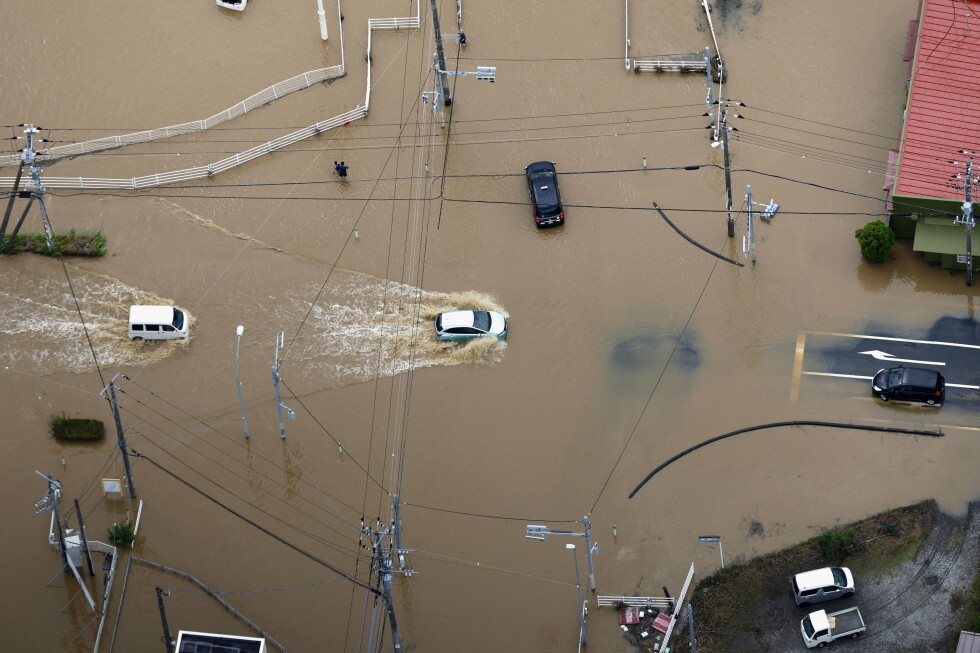
    The five had been cut off from the outside world when rising floodwaters sealed off the cave’s entrance last week, leaving families and emergency crews bracing for the worst outcome after days of relentless rescue efforts. Dramatic footage captured the exact second that search teams made contact with the trapped group, a moment that has already been shared widely across regional media.

    Flood-related cave entrapments are a recurring risk in Laos’ rugged, cave-rich northern terrain during the annual monsoon season, when sudden heavy rains can rapidly fill underground passages with rushing water. In this case, steady search operations combined with a stroke of good fortune allowed rescuers to reach the group before conditions turned fatal.

    Local authorities have not yet released full details on the health of the five survivors, or how they managed to sustain themselves through seven days trapped in the dark, flooded cave. But the confirmation of their survival has already been celebrated as an unexpected miracle by communities across the region, and relief efforts are now focused on extracting the group to safety and providing urgent medical care.

  • How a drink with Kylie Minogue got director on board

    How a drink with Kylie Minogue got director on board

    For a first-time feature director, heading up a high-profile documentary about one of pop music’s most iconic global stars sounds like an intimidating prospect — and for Michael Harte, a Donegal-born filmmaker, that intimidation almost led him to walk away from the project entirely.

    When veteran producer John Battsek reached out to Harte with an invitation: the Australian pop legend Kylie Minogue would be in Los Angeles, and Battsek wanted Harte to join them for a meeting to discuss the documentary concept. Harte immediately questioned if he was the right fit for the role. “I don’t think that’s a good idea, I’m not experienced enough as a director,” Harte recalled his internal thought process telling the BBC’s Evening Extra radio programme. Still, he reasoned, turning down a chance to sit down with Minogue at the legendary Chateau Marmont hotel was impossible. “I’ll go anyway. I’m not going to turn down a drink in the Chateau Marmont with Kylie Minogue,” he thought.

    That fateful meeting at the iconic Sunset Boulevard hotel in West Hollywood shifted Harte’s perspective completely in minutes. Describing the dim, moody dining space, Harte said Minogue walked into the room with an unmissable, magnetic energy. “It sounds cheesy to say, but she really was [like a beam of light]. There was an energy there that was intoxicating,” he said. In that moment, any doubt Harte had carried into the meeting melted away. “And then I thought, I do want to make this film. I am the right person to do it. I could tell there was an energy from her that I wanted to take and transfer onto film and if we can do that successfully, I think the film could be really special.”

    The resulting project is KYLIE, a three-part documentary series coming to Netflix that tracks Minogue’s decades-long career, tracing her path from a teenage actor on the hit Australian soap opera Neighbours to one of pop music’s most enduring, beloved performers. This collaboration marks a reunion for Harte and Battsek, who previously worked together on the hit Netflix documentary about David Beckham. For Harte, this is only his second credit as a director — his first came during the COVID-19 pandemic — after building a reputation as a respected editor, most recently for the critically acclaimed Michael J. Fox documentary Still.

    To craft a documentary that felt fresh and intimate, rather than just another recap of a celebrity’s career, Harte and his team made a deliberate choice to step away from the formal, structured sit-down interviews that are common in biographical documentaries. “We decided pretty early on that we’d call them chats,” Harte explained. “Kylie had been interviewed for decades, and we wanted this to feel different.”

    Instead, the series is anchored by Minogue’s personal archive, with the casual conversations taking place in her home, surrounded by boxes of personal photographs, home video, and decades of career footage that brought old memories flooding back. One of the biggest creative challenges the team faced was sorting through the sheer volume of content Minogue had accumulated over her career: beyond her decades of music releases and tours, Minogue has also worked consistently as an actor, leaving the team with everything from Neighbours on-set footage to high-fashion shoot outtakes, decades of media coverage, and unheard home recordings to sift through.

    For Harte, working through that massive archive offered a rare, intimate look at Minogue’s growth in real time. “I say to Kylie, it almost felt like the Truman Show. You watch somebody grow up on camera,” he said. “Because of that we’re not just invested in Kylie’s music or you know her as an artist you’re actually invested in her as a person.”

    Above all, Harte said what stood out most to him through the months of working on the project was Minogue’s extraordinary resilience, particularly in the face of relentless public criticism that started when she rose to fame as a teenager. “Kylie was 19 when that happened to her. I’m 43, if I got criticism like that, I’m retiring in the morning,” he said. That quiet strength left a lasting impact on how Harte shaped the documentary, a observation from Minogue’s ex-boyfriend Jason Donovan that never made it into the final cut but anchored the series’ emotional core: “There’s real fire in her.”

  • Israeli defence minister insists there are ‘voluntary emigration’ plans for Gaza

    Israeli defence minister insists there are ‘voluntary emigration’ plans for Gaza

    More than 18 months into Israel’s military campaign in the Gaza Strip, Israeli Defence Minister Israel Katz has formally advanced long-circulated proposals to push Palestinians to leave the enclave through what the government frames as “voluntary emigration”, announcing this week that preparations are on track to be implemented when the government deems conditions appropriate. In a public statement Wednesday, Katz confirmed the plans will move forward “at the proper time and in the proper manner”, one day after he announced Israel had assassinated Mohammed Odeh, the leader of Hamas’s armed wing, alongside his wife and three children in a targeted strike. Back in March, Israel’s security cabinet already greenlit Katz’s proposal to set up a dedicated internal directorate within the defence ministry to manage the process of mass “migration” out of Gaza, a policy that has been raised repeatedly by senior Israeli officials since the current military campaign began in October 2023.

    To date, the military offensive has killed more than 72,700 Palestinians and reduced most of Gaza’s built infrastructure to rubble, yet repeated surveys show the overwhelming majority of the enclave’s population refuses to leave their ancestral homeland. The push for emigration has dovetailed with growing public calls from extremist Israeli settler groups and far-right politicians to annex parts of Gaza and establish new Israeli settlements on occupied Palestinian territory. While some senior government figures have attempted to frame the exit initiative as a purely voluntary program, other Israeli officials have openly advocated for forced expulsion — a practice widely recognized under international law as a war crime.

    One of the most prominent voices pushing for forced removal is far-right Member of Knesset Limor Son Har-Melech, who doubled down on her position during a tour of the Gaza border region in early May. Speaking on social media platform X following the visit, Son Har-Melech argued that full reoccupation of Gaza, mass expulsion of its existing residents, and the construction of permanent Israeli settlements is the only path to what she calls long-term security for the state of Israel. “Regrettably, the State of Israel is still captive to a flawed conception. There is no alternative to conquest, expulsion, and settlement,” she wrote, adding that any other diplomatic or political solution would fail and lead to future violence. She also emphasized Israel must retain permanent control over the Netzarim Corridor, a strategic route that splits the Gaza Strip into northern and southern zones, and establish a continuous Israeli settlement presence along the corridor.

    The current situation on the ground remains dire, despite a U.S.-brokered ceasefire agreement reached in October that was intended to end active hostilities, lift Israel’s total 18-month blockade of Gaza, and allow unimpeded access for humanitarian aid including food, clean water, and critical medical supplies. Since the truce was announced, Israel has repeatedly violated its terms and has largely kept the crippling blockade in place, leaving basic necessities including fuel, food, and life-saving medication at critically low levels for Gaza’s 2 million remaining residents.

    Over the course of the war, only a few thousand Palestinians have managed to evacuate Gaza through the Rafah border crossing into Egypt. Following the ceasefire, Israeli authorities have allowed just a tiny handful of displaced Palestinians to return to Gaza from Egypt each day, and many who have crossed back have reported systemic abuse and harassment by Israeli forces during their journey. Even with the nominal ceasefire in place, Israeli airstrikes and artillery shelling across the enclave have continued nonstop, killing more than 800 additional Palestinians since the truce took effect. As of the latest count from Gaza’s Ministry of Health, the total death toll from Israel’s military campaign since October 2023 now stands at more than 72,700, with over 172,000 more people sustaining life-altering injuries.