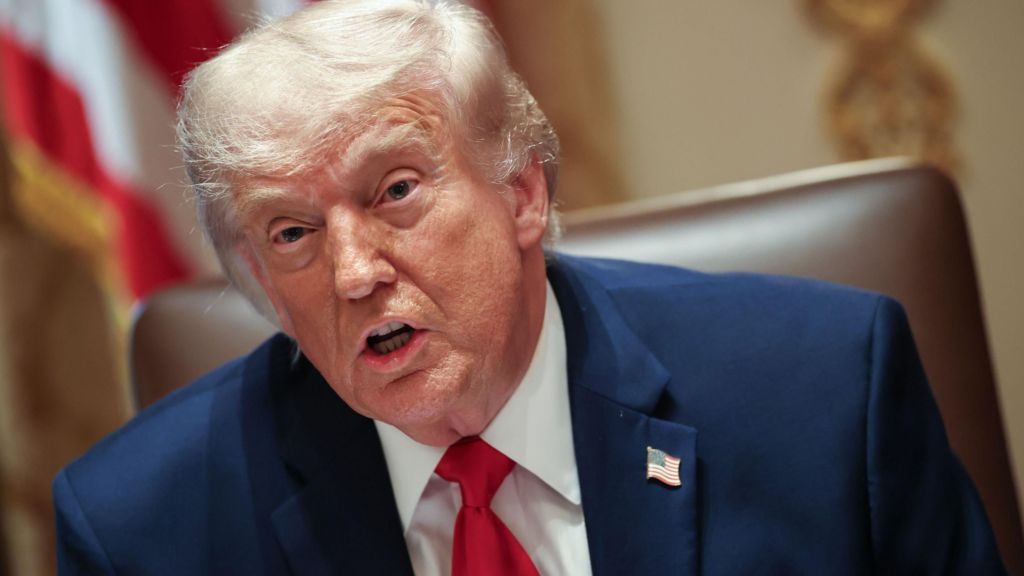
Amid fragile ceasefire talks between the United States and Iran following months of open conflict, US President Donald Trump has publicly stated that Washington is still unsatisfied with the current terms of a potential peace deal, leaving the prospect of a final agreement uncertain. Speaking during a public cabinet meeting held in Washington DC on Wednesday, Trump outlined his stance on the ongoing negotiations, confirming that while Iranian leadership is eager to reach a negotiated settlement to end the conflict, the two sides have not yet closed the gap on core disagreements.
“Iran is very much intent on getting a deal done. They want this very badly,” Trump told reporters in attendance. “So far, they haven’t gotten there, and we’re not satisfied with what’s on the table. Either we get a deal that works for the United States, or we will have to finish the job,” he added, repeating a longstanding US threat to resume large-scale military strikes if no acceptable agreement is reached. Trump also downplayed Iran’s current negotiating position, claiming the country was “negotiating on fumes” and had no other choice but to reach a deal with Washington.
The comments came hours after Iranian state television published leaked details of what it claimed was a full draft framework agreement between the two delegations. The leaked draft included a number of major proposed terms: Iran would reopen the strategically critical Strait of Hormuz to commercial shipping within one month, restoring traffic to pre-conflict levels, with vessel routing and management overseen jointly by Tehran and Muscat. In exchange, the draft claimed the US would lift its naval blockade of Iranian ports and withdraw all American military forces from the region. The leaked document notably made no mention of Iran abandoning its nuclear enrichment program or surrendering its stockpile of highly enriched uranium, two longstanding core US demands in prior negotiations with Tehran.
Within hours of the report, the White House dismissed the leaked draft as a “complete fabrication”, denying that any such agreement had been put forward. President Trump also directly addressed the proposed terms during Wednesday’s briefing, rejecting the idea that Iran would control access to the Strait of Hormuz. “Nobody controls the Strait of Hormuz,” he said, adding that the waterway must open immediately under any final deal. He also denied two other circulating reports that have drawn domestic political pushback: that he was considering lifting sweeping US sanctions on Iran, and that he would allow Russia and China to remove Iran’s highly enriched uranium stockpile to meet US non-proliferation requirements.
Secretary of State Marco Rubio echoed Trump’s general tone Wednesday, confirming that “some progress and some interest” has been made in ongoing talks but declined to share details of remaining sticking points between the two delegations. “We’ll see over the next few hours and days whether that progress can continue and solidify into something we can move forward with,” Rubio said.
The current round of negotiations follows months of escalating conflict that upended stability across the Middle East. The US and Israel launched large-scale, widespread strikes against Iranian targets on February 28, officially launching the open conflict. Iran responded with strikes against Israeli targets and US-allied Gulf nations, and moved to fully close the Strait of Hormuz, a critical chokepoint for 20% of the world’s daily oil supplies. The closure sent global crude prices soaring, triggering widespread economic concerns across global energy markets.
An initial ceasefire agreement was reached on April 8, and has been largely respected by both sides, but formal talks to resolve the underlying conflict stalled for weeks. In recent days, the fragile truce has come under renewed strain: the US launched new strikes targeting Iranian missile sites and coastal boats that US military officials claimed were laying mines in international waters on Monday, followed by additional self-described “self-defense strikes” against targets in southern Iran on Tuesday. Tehran has repeatedly denounced these new strikes as a “gross violation” of the April ceasefire agreement, raising fears that full-scale conflict could resume if talks collapse. BBC News has not independently verified the contents of the purported draft framework leaked by Iranian state media, and no official confirmation of the draft’s terms has been provided by either negotiating delegation.