作者: admin

  • ‘Conspiracy of silence’: Parliament set to debate Israeli influence on British politics

    ‘Conspiracy of silence’: Parliament set to debate Israeli influence on British politics

    A grassroots petition demanding scrutiny of Israeli-linked and pro-Israel lobbying activity in British politics has crossed the 100,000-signature threshold required for a mandatory parliamentary debate, forcing what advocates call a long-overdue conversation about foreign influence and democratic integrity in the UK. Scheduled for discussion on June 22, the petition has collected more than 116,000 signatures from UK citizens concerned that unregulated lobbying is skewing government policy, party priorities and public discourse on the Israeli-Palestinian conflict.

    The petition’s text frames the debate as an urgent necessity, pointing to the ongoing humanitarian catastrophe in Gaza, continued Israeli expansion and repression in the West Bank, and the UK government’s aligned response to these events as evidence of the need to map the full scope of pro-Israel influence across British political institutions. Under UK parliamentary rules, any public petition hosted on the official government website that garners 10,000 signatures requires a formal written response from the government, while any crossing 100,000 signatures must be scheduled for a full debate in the House of Commons.

    In its initial response to the petition, the UK government has already rejected calls for a dedicated investigation into pro-Israel lobbying, claiming existing regulatory frameworks already address foreign political interference. Critics push back against this claim, noting that the government’s flagship review into foreign financial interference—led by former senior diplomat Matthew Rycroft—explicitly focuses on Russian, Chinese and Iranian interference and does not mention Israeli influence at all.

    Andy Kalil, the creator of the petition, dismissed the government’s position as empty deflection, arguing that clear conflicts of interest between pro-Israel lobbying donations and UK policy on Gaza, the West Bank, Iran and southern Lebanon amount to a major political scandal on par with some of the most high-profile controversies in recent British political history.

    Documentation of unreported and disclosed pro-Israel donations underpins these concerns, particularly within the current ruling Labour Party. Data shows that more than half of Keir Starmer’s cabinet have received donations from pro-Israel lobbying groups. One of the most prominent of these donors, Trevor Chinn, contributed £175,000 between 2017 and 2020 to Labour Together, the influential think tank that spearheaded Starmer’s successful campaign to oust Jeremy Corbyn, a longtime critic of Israeli policy toward Palestinians, as Labour leader. Chinn’s donations granted him repeated private access to senior Labour figures, including current Foreign Secretary David Lammy.

    That £700,000 in donations to Labour Together during Starmer’s leadership campaign went undeclared to the UK’s Electoral Commission, resulting in a £14,000 fine for the group. After the undeclared funding was exposed in journalist Paul Holden’s book *The Fraud*, reports emerged that Labour Together hired a public relations firm to investigate journalists who leaked the information, then attempted to destroy evidence of a coordinated smear campaign against the reporters.

    The pro-Israel funding that flowed through Labour Together was a core component of a successful effort to unseat Corbyn and shift the Labour Party sharply to the right on Middle East policy. Since taking office, Starmer has stated publicly that Israel has a right to cut power and water access to Gaza, a position aligned with pro-Israel lobbying priorities. The think tank has also been linked to a series of coordinated “astroturf” campaigns fronted by groups like the Centre for Countering Digital Hate and Stop Funding Fake News—co-founded by senior Labour politicians Steve Reed and Imran Ahmed—designed to attack independent pro-Palestine media and push left-wing, pro-Corbyn figures out of the party.

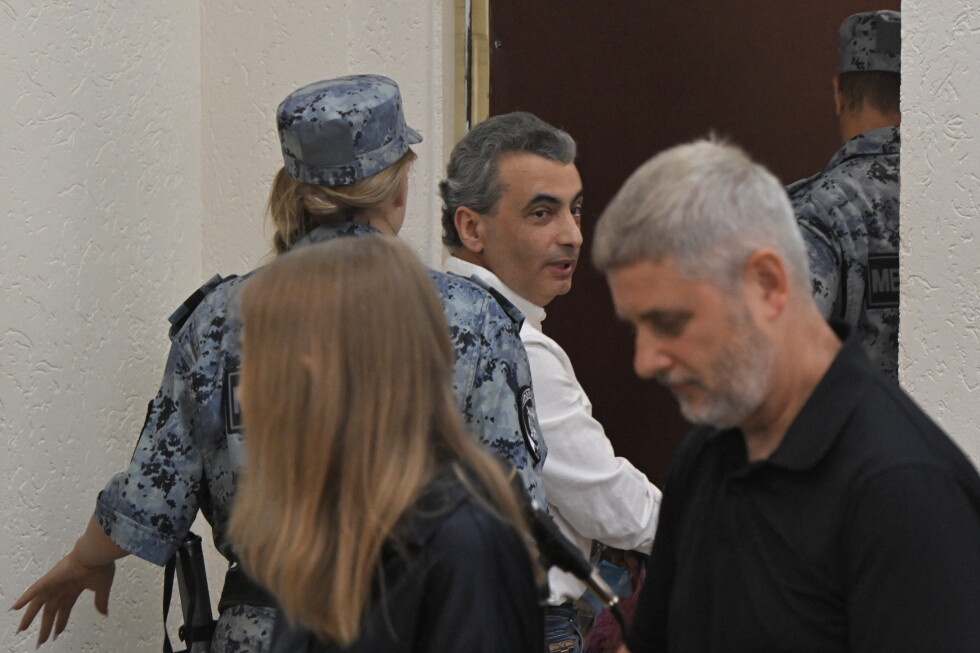
    Since Starmer took control of the party, one-third of newly elected Labour MPs have professional backgrounds in lobbying, and one-quarter have received direct funding from pro-Israel groups. Even ahead of the 2024 general election, Luke Akehurst, a former director of the pro-Israel advocacy group We Believe in Israel, was selected to run for a safe Labour seat in Durham, reflecting the movement’s deep penetration into party ranks.

    Pro-Israel lobbying is not limited to the Labour Party, either. Roughly 80% of Conservative Members of Parliament are members of Conservative Friends of Israel (CFI), an organization that has provided more than £330,000 to fund 118 MPs’ trips to Israel across 160 separate visits.

    Neve Gordon, an Israeli professor of international law at London’s Queen Mary University, argues that the double standard in how foreign influence is scrutinized in the UK reveals clear political alignment. While Russian, Chinese and Iranian interference are repeatedly framed as threats to British national interests and subject to intense regulatory and media scrutiny, Gordon says those countries exert far less actual influence on UK policy than the pro-Israel lobby, whose impact is consistently downplayed. Gordon explains that this double standard exists because the pro-Israel lobby is broadly aligned with long-standing British geopolitical interests, allowing the government to hide its own policy preferences behind the narrative of external lobbying influence.

    Jeremy Corbyn, who faced years of pressure from pro-Israel groups during his time as Labour leader, confirmed that this pressure is both political and commercial. He recalled being asked during a private Parliamentary Labour Party meeting whether he would offer unconditional support for Israeli military action, and said he faced constant, enormous pressure across all areas of his leadership due to his dissenting views on Middle East policy.

    Commercial lobbying is also a major factor: Elbit Systems, Israel’s largest private weapons manufacturer, held multiple meetings with UK Home Office officials and lobbied the government during its crackdown on Palestine Action, a direct action group that stages protests against the company’s UK facilities. The government ultimately proscribed Palestine Action as a terrorist organization—a decision that was later ruled unlawful by the UK High Court, though the government has continued to appeal the ruling.

    Critics of the pro-Israel lobby also highlight its coordinated strategy of framing criticism of Israeli policy as antisemitism to silence dissent. Leah Levene and Jonathan Rosenhead of Jewish Voice for Liberation, a group representing anti-Zionist Jews in the UK, point to organizations like UK Lawyers for Israel, which has been accused of waging legal intimidation campaigns against activists who oppose Israel’s military campaign in Gaza, and Campaign Against Antisemitism, whose legal actions against pro-Palestine public figures were labeled “abusive” by a UK judge.

    Levene and Rosenhead note that mainstream pro-Israel Jewish organizations like the Board of Deputies of British Jews and the Office of the Chief Rabbi have successfully positioned themselves as the sole legitimate representatives of all Jewish people in the UK, erasing dissent from anti-Zionist Jews and flattening diverse community perspectives into a single pro-Israel consensus. When any public figure voices criticism of Israeli policy, these organizations come down heavily to silence that dissent, which in turn undermines open democratic debate by cutting off space for alternative viewpoints.

    Hil Aked, author of *Friends of Israel: The Backlash Against Palestine Solidarity*, contextualizes the deep roots of pro-Israel lobbying in British political history, noting that the development of the Zionist movement has long been intertwined with the history of the British Empire. Aked explains that pro-Israel organizers have consistently framed their goals as aligned with British national interests to win support from successive UK governments. A key example, Aked argues, is the 1917 Balfour Declaration, which paved the way for the creation of the state of Israel and was drafted by the same generation of British politicians who passed the 1905 Aliens Act, the UK’s first modern anti-immigration law that blocked Jewish refugees fleeing persecution in Europe from entering the UK. This historical context, Aked says, makes clear that Zionism and antisemitism are not incompatible, and that pro-Israel lobbying in the UK is not a foreign import—it has been actively fostered by successive British governments for more than a century.

    For campaigners like Andrew Feinstein, co-founder of the anti-corruption non-profit Shadow World Investigations, open debate about the influence of the pro-Israel lobby is a core requirement for protecting British democracy. “Unless we are prepared to have a transparent, open and frank conversation not only about the Israel lobby, but about the influence of all money in politics, we will continue to have nothing better than the best democracy money can buy,” Feinstein said.

  • SEC moves to repeal rule that requires companies to report greenhouse gas emissions and climate risk

    SEC moves to repeal rule that requires companies to report greenhouse gas emissions and climate risk

    In a sweeping step to roll back climate-focused regulations implemented during the Biden administration, the U.S. Securities and Exchange Commission (SEC) announced Friday a formal proposal to scrap a landmark rule requiring certain publicly traded companies to disclose their greenhouse gas emissions and detail the financial risks they face from global warming.

    The climate disclosure mandate has been frozen in legal limbo since last year, after the SEC’s new Republican majority paused its legal defense of the rule amid multiple lawsuits filed by industry groups and Republican state attorneys general. In its official statement announcing the proposal, the commission argued the rule must be rescinded entirely because it oversteps the agency’s legal authority granted by Congress. The 2024 finalized rule, the SEC added, imposes steep, disproportionate costs on public companies and their shareholders that cannot be justified by the limited informational benefits it might deliver to a subset of investors.

    SEC Chairman Paul Atkins emphasized that eliminating the rule will prevent the agency from indirectly coercing corporate climate policy choices, and will uphold the commission’s commitment to only enacting regulations where projected benefits clearly outweigh the associated costs and burdens.

    The proposed repeal is part of a far broader series of environmental deregulatory actions launched during the second term of President Donald Trump. The Environmental Protection Agency (EPA), led by Administrator Lee Zeldin, has already scrapped major federal climate programs, canceled billions of dollars in Biden-era environmental justice grants, and revoked the foundational scientific finding that has served as the legal backbone for U.S. greenhouse gas regulation for decades. Zeldin has framed these actions as striking a decisive blow against what he calls “climate change religion.”

    Critics of the SEC’s proposal, however, warn that rolling back the disclosure rule will leave investors without the standardized, material data they need to accurately evaluate climate-related financial risks to their holdings. Kathy Fallon, director of land systems at the non-profit environmental advocacy group Clean Air Task Force, noted that while the 2024 rule was not perfect, it represented a critical step toward delivering consistent, transparent information to investors about financially material climate risks, including the use of carbon offsets. Fallon called on the commission to keep the rule in place and enforce disclosure requirements that meet the transparency needs of both investors and the general public.

    Democratic Massachusetts Senator Ed Markey, a longstanding proponent of the climate disclosure mandate, called the SEC’s announcement the end result of years of lobbying by corporate polluters aimed at weakening and dismantling protections that safeguard investments from high-risk business models. Markey stressed that the SEC’s core mission is to protect Americans’ retirement savings, union pensions, and personal investments, not put those assets at risk by shielding companies whose profitability relies on unregulated pollution and exposure to climate volatility. Tom Zimpleman, an attorney with the Natural Resources Defense Council, echoed this criticism, arguing the commission is abandoning its statutory responsibility to protect investors by ignoring the reality that climate risk is inherently financial risk.

    The SEC first approved the 2024 climate disclosure rule in a party-line vote, when the commission had a Democratic majority: three Democratic commissioners supported the rule, while two Republicans opposed it. Today, the commission holds three Republican members (including Chairman Atkins) and no Democratic appointees. When the rule was being developed, it became one of the most anticipated regulatory actions in recent history from the nation’s top financial regulator, drawing more than 24,000 public comments over two years from companies, auditors, lawmakers, and industry trade groups. At the time of its finalization, the rule aligned U.S. regulatory standards with the European Union and California, both of which have already implemented similar mandatory corporate climate disclosure requirements.

    A 60-day public comment period will open after the repeal proposal is published in the Federal Register, which is expected to occur in the coming days.

  • Ghana’s parliament passes a bill criminalizing the promotion of LGBTQ activities

    Ghana’s parliament passes a bill criminalizing the promotion of LGBTQ activities

    ACCRA, Ghana – In a landmark legislative vote that has reignited global debate over LGBTQ rights in West Africa, Ghana’s parliament passed a harsh new anti-LGBTQ bill Friday that introduces steep prison sentences for a range of activities connected to same-sex relations, from public advocacy to personal engagement.

    The legislation, which incoming President John Dramani Mahama has already signaled he will sign into law, marks a major expansion of existing restrictions on LGBTQ people in the country. Under the bill’s terms, anyone found guilty of promoting or advocating for LGBTQ rights can face up to 10 years behind bars, while people who engage in same-sex sexual activity face three-year prison sentences. Operating a space for same-sex intimacy carries a five-year prison term, and the bill also formally bans all funding for LGBTQ organizations and related activities.

    This outcome is the culmination of years of pressure from conservative religious groups that have long pushed for stricter anti-LGBTQ policies in Ghana. An earlier version of the bill cleared parliament in 2024, but then-president Nana Akufo-Addo refused to sign it into law, leaving the legislation in limbo. Undeterred, religious leaders and bill supporters kept up their advocacy through the 2024 election cycle, and Mahama ran on a platform aligned with conservative cultural values, giving the bill new life after his election.

    Ghana is now part of a growing wave of African nations moving to entrench broader anti-LGBTQ laws into their national legal frameworks. Across the continent, 31 of 54 countries already criminalize same-sex sexual relations, many of which carry penalties including life sentences and even the death penalty in nations such as Somalia, Uganda, and Mauritania. The push for stricter laws has broad popular support in many socially conservative African countries, even as it draws fierce condemnation from the international human rights community.

    Supporters of the new Ghanaian bill frame it as a necessary defense of indigenous cultural values and traditional family structures, arguing that LGBTQ rights run counter to widely held Ghanaian social norms. But critics warn that the law undermines fundamental constitutional protections for all Ghanaians and will open the door to systemic discrimination, harassment, and violence against sexual minority groups.

    Human Rights Watch has issued a strong condemnation of the legislation, calling on Ghana’s government to uphold international human rights standards that guarantee equal treatment, freedom from discrimination, freedom of expression, and the right to privacy for all citizens, regardless of sexual orientation or gender identity.

    Same-sex relations were already criminalized in Ghana under a colonial-era law that bans so-called “unnatural carnal knowledge,” but the new bill vastly expands that criminalization to include not just private same-sex activity, but also public advocacy, community organizing, and financial support for LGBTQ communities. This expansion carries tangible economic risks as well: when the earlier version of the bill was under consideration, Ghana’s Finance Ministry warned that enacting the legislation could put billions of dollars in international development financing and partner support at risk, a warning that remains unaddressed in the latest version of the bill.

  • Former Southern California mayor pleads guilty to secretly acting as agent of Chinese government

    Former Southern California mayor pleads guilty to secretly acting as agent of Chinese government

    In a landmark federal court hearing held in downtown Los Angeles Friday, a one-time leader of a majority-Asian Southern California city entered a guilty plea to a federal charge of operating as an unregistered illegal agent for the Chinese government.

    Eileen Wang, 56, who stepped down from her position as mayor of Arcadia — a suburban community of roughly 53,000 located 21 kilometers northeast of Los Angeles — earlier this April, formally admitted to carrying out requests for Chinese officials without meeting U.S. legal requirements to disclose her foreign work to American authorities. She was initially indicted on the single charge back in April 2023.

    Wang first won a seat on Arcadia’s five-member city council in the November 2022 general election, a body that selects its mayor on a rotating annual basis. Federal prosecutors document that her unlawful activities took place between late 2020 and 2022, a timeline that both city officials and Wang’s legal team confirm ended before she assumed public office.

    During the plea hearing, U.S. District Judge Wesley Hsu walked Wang through standard procedural checks to confirm she fully understood her constitutional rights and the penalties attached to her guilty plea. Though a Mandarin interpreter was on hand for the proceeding, Wang declined the service, confirming she could follow the hearing without assistance. She was granted continued release on a $25,000 bond ahead of her scheduled October 6 sentencing, where she faces a maximum sentence of 10 years in federal prison and three years of supervised release following incarceration.

    Court documents attached to her plea agreement detail that Wang collaborated with her then-fiancé Yaoning “Mike” Sun to advance Chinese government propaganda through a digital platform called U.S. News Center. Sun, who also served as treasurer for Wang’s 2022 city council campaign, pleaded guilty to the identical charge last October and is currently serving a four-year federal prison sentence. Wang’s legal team has stated her romantic relationship with Sun ended in spring 2024, and in a statement following her resignation, the attorneys noted Wang “trusted and loved the wrong person, who ultimately led her astray.”

    One key documented incident from June 2021 lays out the core of Wang’s cooperation: after a Chinese government official sent Wang a link to an op-ed written by China’s Los Angeles consul general and published in the *Los Angeles Times*, Wang shared the link to her collaborative website within minutes. The op-ed rejected international reporting of systematic human rights abuses including persecution, forced labor and mass incarceration against Uyghurs in China’s Xinjiang region, falsely claiming “There has never been genocide in Xinjiang or forced labor in the region’s cotton fields or any other sector.” The United States and dozens of other nations have formally recognized Beijing’s systemic repression of Uyghurs and other ethnic minority groups in Xinjiang as genocide and crimes against humanity.

    Local reactions to Wang’s plea have reignited long-simmering tensions in Arcadia, a city with a large concentration of Chinese American residents. Many local residents and former elected officials have argued Wang should have been removed from office immediately after she first became linked to the FBI investigation into Sun’s activities.

    Current acting mayor Paul Cheng has pushed back on that criticism, noting the city charter only grants the city council authority to remove a sitting member after they have been convicted of a felony crime — a milestone Wang had not reached prior to her guilty plea. “We are not law enforcement investigators, and politicizing an active federal case would only undermine the ongoing investigation,” Cheng explained of the council’s previous inaction.

  • Multiple artists drop out of US Freedom 250 concert

    Multiple artists drop out of US Freedom 250 concert

    A growing wave of high-profile musical artists have pulled out of the Great American State Fair, a 16-day national celebration planned for Washington D.C.’s National Mall to mark the United States’ 250th birthday, after multiple performers claimed event organizers misled them about the festival’s conservative political origins. The event, scheduled to run from June 25 to July 10, is being organized by Freedom 250, a non-profit group that formally launched last year under the oversight of the former Trump administration, with its chief executive Keith Krach directly appointed by ex-President Donald Trump.

    When Freedom 250 publicly unveiled its full performer lineup Wednesday, artists quickly began severing ties with the event over allegations that they had signed on under false pretenses of a non-partisan national celebration. 1980s hip-hop star Young MC, best known for his chart-topping hit *Bust a Move*, was among the first artists to announce his withdrawal. In a social media post, he explained that performers were never informed of the event’s political connections, adding that he would only perform in the nation’s capital for an event that is not overly politically charged.

    He was soon joined by fellow R&B legend Morris Day, who shared a clear statement on Instagram writing, “Contrary To Rumor, Morris Day & The Time Will Not Be Performing At The ‘GREAT AMERICAN STATE FAIR’” with the simple caption, “It’s A No For Me.” By the following day, more big names had followed suit. Iconic funk group The Commodores announced their exit in a social media post, noting that their music has always stood above partisan politics, and they choose not to formally align with any single political party, adding that their core commitment remains to advancing the well-being of all Americans.

    Country star Martina McBride echoed those concerns, writing on X that she had been offered a spot at what was described as a non-partisan gathering, only to learn that framing was misleading. Rock vocalist Bret Michaels, frontman of 1980s hair metal band Poison, also pulled out, releasing a lengthy statement explaining that what was initially presented as a unifying celebration of the nation had shifted into something far more divisive than what he agreed to join. Michaels also cited unaddressed safety concerns as an additional factor in his decision to withdraw.

    Despite the mass exodus, a handful of artists still plan to take the stage as originally scheduled. Rapper Vanilla Ice, famous for his breakout hit *Ice Ice Baby*, defended his decision to perform in an Instagram video caption, arguing that the event is not a political platform and exists solely to celebrate America’s anniversary. Fab Morvan, one of the original public faces of 1980s pop group Milli Vanilli, will also keep his performance slot – though the act’s original vocalists quickly clarified that they would not appear, noting that any performance under the Milli Vanilli name without them would qualify as a tribute act, a reference to the infamous 1990s lip-synching scandal that brought down the original group. 1990s dance collective C+C Music Factory member Freedom Williams also confirmed he will still perform, even as he made clear he does not support Donald Trump.

    Event organizers Freedom 250 have pushed back on claims of partisan alignment, insisting the non-profit is exclusively dedicated to uniting Americans around the 250th anniversary of the nation’s founding. In a formal statement, the group said it respects the decisions of artists who choose to withdraw, and reaffirmed that it remains strictly non-partisan. As of press time, the organization has not yet announced any updates or changes to the public lineup. Spokeswoman Rachel Reisner said in a statement that the U.S. has too much history and progress worth celebrating to allow political noise and division to overshadow the milestone event, adding that the group is still looking forward to welcoming millions of visitors from across the country to a festival that belongs to all Americans.

    The Great American State Fair is one of several high-profile 250th anniversary events backed by the current White House to mark the 250th anniversary of the signing of the Declaration of Independence this July. Other planned events include a professional UFC fight hosted on the White House South Lawn, a Grand Prix motor race set to take place in Washington D.C. this coming August, and the release of a limited-edition series of commemorative U.S. passports that feature a formal portrait of Donald Trump on the cover.

  • EU hails Hungary’s ‘wind of change’ and unlocks €16.4bn for new PM Magyar

    EU hails Hungary’s ‘wind of change’ and unlocks €16.4bn for new PM Magyar

    Less than three weeks after taking office following a landslide electoral victory over long-time incumbent Viktor Orbán, Hungary’s new prime minister Péter Magyar has secured a landmark agreement with the European Union that will release €16.4 billion in previously frozen bloc funding, contingent on Budapest delivering a series of long-delayed governance and anti-corruption reforms.

    European Commission President Ursula von der Leyen announced the deal after meeting with Magyar, framing the agreement as a tangible vote of confidence in Hungary’s new political direction. She praised the incoming administration for sending clear, strong signals of change to the European community, noting that a perceptible “wind of change” is already sweeping across the Central European nation after years of strained relations between Brussels and Orbán’s nationalist Fidesz government.

    The full €16.4 billion package splits into two core tranches: €10 billion from the EU’s Covid-19 economic recovery fund, which Magyar’s administration had raced to unlock before an approaching August deadline, and an additional €6.4 billion from EU cohesion funds earmarked for improving Hungary’s economic and social infrastructure. The funding had been frozen by Brussels for years over widespread allegations of democratic backsliding and systemic corruption during Orbán’s 12-year tenure. Unlocking these funds was the central campaign pledge of Magyar’s relatively new Tisza Party in last month’s parliamentary election, which the party won with a two-thirds legislative supermajority.

    Von der Leyen emphasized that the agreement came after Magyar’s government rebuilt fractured trust between Budapest and Brussels, adding that the EU would not cut corners on holding the new administration accountable for meeting its reform commitments. She highlighted concrete early steps already taken by Magyar’s team that demonstrate a clear break from Orbán-era policies: Hungary has now joined the European Public Prosecutor’s Office, revised controversial public procurement legislation, and opened a review of the so-called public interest trusts that Orbán’s government used to transfer public institutions including hospitals and universities to the control of loyalist allies.

    “We can already see strong signals that Hungary is turning the page,” von der Leyen said, confirming that Hungarian university students will also regain full access to the EU’s Erasmus student exchange program. The program had been suspended for Hungarian institutions in 2022 after Orbán’s government brought more than 20 universities under the control of the politically aligned public interest trusts.

    Magyar framed the agreement as a “historic breakthrough” for Hungary, noting that the total funding equals 13% of the country’s entire annual state budget. Just two days before the announcement, he acknowledged, there was no guarantee a final deal could be reached, with negotiations only launching a few weeks prior to the final agreement.

    The prime minister outlined that the funding will be directed to core public sectors: €1.5 billion will go toward upgrading Hungary’s national electricity grid with a focus on expanding solar and wind energy capacity, while €2 billion will be allocated to purchasing new intercity passenger trains. The remainder will support improvements to healthcare, education, and transport infrastructure across the country.

    In a sharp rebuke of his predecessor, Magyar accused Orbán of lying to the Hungarian public for years about the root cause of the frozen funding. “The real reason was that corruption was at an incredible rate in Hungary,” he said, adding that his administration had long proven that restoring EU funding only required committing to targeted anti-corruption rules and measures to end systemic cronyism. “These steps and just a few weeks were enough to conclude a political agreement about these incredibly important funds,” he added.

    The deal comes as Orbán’s political future hangs in the balance. The former prime minister stepped down from his parliamentary seat last month and has announced plans to rebuild Fidesz ahead of a party congress in June that will decide whether he retains his position as party chairman. However, his path to a return to the premiership appears effectively blocked: last week, Tisza, leveraging its two-thirds legislative majority, tabled a constitutional amendment that would cap a prime minister’s total tenure at eight years, a rule that would bar Orbán from holding the office again even if his party returns to power.

  • Fonseca blasts Djokovic out of French Open after epic comeback

    Fonseca blasts Djokovic out of French Open after epic comeback

    The 2025 French Open delivered one of the biggest upsets in Grand Slam history on Friday, as 19-year-old Brazilian wildcard Joao Fonseca completed a spectacular comeback from two sets down to defeat 24-time Grand Slam champion Novak Djokovic, knocking the Serbian great out of the third round and ending his bid for a record-breaking 25th major title.

    Fonseca, who already pulled off a similar reverse comeback win in the previous round, pulled off another masterclass in resilient, aggressive power tennis to seal a 4-6, 4-6, 6-3, 7-5, 7-5 victory after nearly five hours of brutal baseline battles on the clay of Roland Garros. The shock result marks the first time the teenager has ever advanced to the fourth round of a major tournament, and caps off a seismic 24 hours for the men’s draw that has cleared the path for an unprecedented new champion.

    When asked how he maintained belief after falling two sets behind to one of the sport’s most mentally tough competitors, the teen kept his response characteristically grounded. “I actually didn’t [keep believing], I just kept playing. I just enjoyed being on court. What a pleasure it was stepping on court with him for the first time, I was trying to hit the ball as fast as I could. Djokovic, he does not miss,” Fonseca explained after the match.

    In a show of class, Djokovic was quick to praise his young opponent’s performance, acknowledging Fonseca outperformed him when it mattered most. “What an incredible match to be part of. Huge credit to Joao for really deserving to win the match. Without a doubt he was the better player in crucial moments,” the 36-year-old said. “He played lights-out tennis. I don’t think I’ve done much wrong with my game. He was just better.” Djokovic has been stuck on 24 Grand Slam titles since winning the 2023 US Open, and with defending champion Carlos Alcaraz already sidelined by injury ahead of this tournament, this was widely seen as one of his best remaining chances to add to his historic haul.

    Djokovic’s exit comes just one day after world number one and pre-tournament favorite Jannik Sinner was also knocked out in an earlier upset. Combined, the eliminations of the two most dominant men’s players of the recent Grand Slam era guarantee that the 2025 French Open will crown a first-time men’s Grand Slam champion, breaking a streak of nine consecutive major titles won by either Sinner or Alcaraz. Second seed Alexander Zverev, a three-time Grand Slam finalist, now enters the tournament as the clear favorite to capitalize on the wide-open draw, and is set to face French wildcard Quentin Halys in his third round night match. For his next match, Fonseca will take on the winner of the tie between two-time Roland Garros runner-up Casper Ruud and 24th-seeded American Tommy Paul.

    On the women’s side of the draw, four-time French Open champion Iga Swiatek continued her steady march toward a fifth title in Paris, advancing to the last 16 with a straight-sets 6-4, 6-4 win over compatriot Magda Linette. Swiatek, who hired former Rafael Nadal coach Francisco Roig after losing to Linette at the Miami Open in March, fought back from an early 2-0 deficit to secure the win, breaking Linette three times in the opening set to grab the momentum before closing out the match in the second. “It was a good match. I played much better than Miami,” Swiatek said of her performance.

    The world number one will next face 15th seed Marta Kostyuk, who extended her unbeaten 2025 clay season to 15 matches with a 6-4, 6-3 win over Switzerland’s Viktorija Golubic. Kostyuk, who already picked up clay titles in Madrid and Rouen this season, enters the match in red-hot form. “Marta is having a great season. She always had a game to play well, so good for her. But I’m going to focus on myself, prepare tactically, as before any other match, and we’ll see,” Swiatek said of her upcoming opponent.

    Eighth-seeded Russian teenager Mirra Andreeva also advanced to the fourth round with a dominant 6-4, 6-2 win over 27th-seeded Czech Marie Bouzkova, and will next face unseeded Swiss Jil Teichmann, who upset former runner-up Karolina Muchova to claim her spot in the last 16. Elina Svitolina, who recently ended an eight-year title drought by winning the WTA 1000 Rome Open, pushed her winning streak to nine matches with a 6-2, 6-3 defeat of Tamara Korpatsch, and will next face either 11th seed Belinda Bencic or American Peyton Stearns for a quarterfinal spot. Romanian 18th seed Sorana Cirstea rounded out the day’s women’s results with a dominant 6-0, 6-0 shutout win over Argentina’s Solara Sierra.

  • Higher proportion of pro-Palestine than Labour candidates won at local elections

    Higher proportion of pro-Palestine than Labour candidates won at local elections

    Exclusive new data obtained by Middle East Eye (MEE) has uncovered a striking electoral trend from England’s 7 May local elections: candidates who publicly backed Palestinian rights outperformed nominees from most major established parties, only trailing the right-wing Reform Party in win rates for contested seats.

    The data confirms that public opposition to ongoing British policy cooperation with Israel remains a deeply resonant political issue across England, and that running on a clear pro-Palestine platform has emerged as a measurable predictor of electoral success in dozens of local races.

    All candidates who signed the Palestine Solidarity Campaign (PSC)’s widely supported “Pledge for Palestine” secured victory in 27% of the seats they contested. By comparison, Reform candidates posted a 30% win rate, while the Labour Party — the current national governing party — won just 22% of its contested seats, and the Liberal Democrats followed closely behind at 21%.

    More than 1,600 candidates across the political spectrum signed the pledge, which commits elected officials to use their local office to advance Palestinian human rights. Signatories vow to take all appropriate steps to uphold the inalienable rights of the Palestinian people, and to support efforts to secure accountability for what the pledge frames as Israel’s crimes of genocide, military occupation, ethnic cleansing and apartheid.

    The pledge also requires candidates to prevent their local councils from complicity in or normalization of Israel’s alleged violations of international law. Key commitments include divesting council pension funds and other publicly administered assets from companies that enable these violations, and aligning local procurement policies with these goals.

    Signatures came from a broad cross-section of political groups: more than 1,000 Green Party candidates, over 200 Labour candidates, more than 200 independent and small local party nominees, as well as a number of Liberal Democrat and Conservative candidates. Pro-Palestine candidates were particularly likely to run and win in seats with large youth, student, ethnic minority and Muslim populations.

    One of the most high-profile successes came in Hackney, east London, where 31 Green candidates signed the pledge, including mayoral candidate Zoe Garbett, who won her race. The Greens secured a dominant majority on Hackney Council, taking 42 of the body’s 57 total seats. In neighboring Haringey, north London, the Greens surged to 28 council seats, overtaking Labour and coming just short of a full majority, with 26 of the party’s successful candidates having signed the pledge. Across the Midlands, in Bradford and Birmingham, dozens of independent and Green signatories won their local council contests.

    Jeanine Hourani, a representative of Palestinian Youth Movement Britain — a partner in the Vote Palestine grassroots coalition that backed the pledge campaign — emphasized that the results confirm Palestine is a critical local issue for voters across England. “In the months leading up to election day, 16 local campaigns were launched, spending thousands of hours canvassing and organising dozens of local action days,” Hourani said. She added that the outcome highlights how essential grassroots community organizing is to the pro-Palestine movement, while sending a clear warning to mainstream elected officials: “Pledge signatories collectively outperformed almost every political party, and their successes will only grow as we look towards the 2029 general election.”

    Asma Alam, a newly elected Green councillor for Manchester’s Burnage ward, who won her seat after signing the pledge, framed Palestinian rights as an inherent local government responsibility. “If councils have power over pensions, procurement and public money, then Palestine is absolutely a local government issue,” she said. Alam pointed to Greater Manchester’s pension fund, the largest local government pension pool in England, valued at more than £31 billion. Campaigners have identified nearly £905 million in fund investments tied to companies that they say are complicit in Israel’s oppression of Palestinians. “We cannot pass motions, say the right things, and then carry on as normal,” Alam said. “For me, this is simple: I will not take a council pension while that pension is tied to Palestinian suffering. Divestment is not symbolic. It is about refusing to let public money bankroll injustice.”

    The electoral success of pro-Palestine candidates comes against a backdrop of growing tension between the national Labour government and pro-Palestine activists within and outside the party. In January, Communities Secretary Steve Reed issued a warning to all Labour-run local councils that they could face legal action if they move to boycott Israeli businesses, directing councils to a 2016 national government ban on procurement boycotts targeting Israeli firms and companies that trade with Israel.

    Over the past two years, dozens of local authorities have passed votes to boycott companies linked to Israeli war crimes, arms supplies to Israel, or economic activity in the occupied Palestinian territories. Multiple local council pension funds — including those in Islington, Lewisham, Wandsworth and Caerphilly — have already removed companies listed by the United Nations as operating in occupied Palestinian territories from their investment portfolios.

    Prominent veteran pollster Sir John Curtis noted after the elections that the Green Party, which drew the largest share of pro-Palestine candidates, inflicted far more damage to Labour’s vote share across England than the Reform Party, a shift that experts attribute in part to the Green Party’s clear embrace of pro-Palestine policy.

    MEE, which publishes independent, in-depth coverage of the Middle East, North Africa and global affairs, obtained the exclusive data for this report.

  • First of five men found alive in flooded Laos cave rescued

    First of five men found alive in flooded Laos cave rescued

    In a high-stakes international rescue operation unfolding in the remote mountainous terrain of central Laos’ Xaysomboun province, the first of five men trapped for more than a week by sudden flash floods inside an isolated cave has been pulled to safety. The group had ventured into the cavern on May 20 to search for artisanal gold when unanticipated flash floods sealed off their exit, cutting them off from the outside world entirely. Two additional members of their original party remain unaccounted for as of Friday. Rescue divers located the five surviving men on Wednesday, huddled together on a small dry ledge roughly 300 meters (984 feet) from the cave’s entrance, after days of difficult searching. On Friday, a member of the Thai rescue contingent shared a photo on Facebook documenting the moment the first man was pulled out, confirming in a subsequent update that “the first victim has been successfully rescued out of the cave.”

    This mission has been defined by a relentless race against time, with forecasters warning of incoming thunderstorms and a 60% chance of heavy rain across the region by Friday evening, conditions that would push cave water levels higher and further narrow the window for a safe extraction. The men, who are weak and malnourished after more than 10 days trapped with very limited resources, were recorded in video footage shot by rescuers on Wednesday covered head to toe in mud, reporting severe chest pains and extreme hunger.

    Rescuers initially pursued a plan to pump floodwaters out of the cave to open an exit route, but that strategy failed to produce results, forcing teams to consider a last-ditch alternative: teaching the trapped men basic scuba diving skills so they could swim out with guide support. It remains unclear exactly how rescuers managed to extract the first man, with operation leaders saying full details will be released after the entire mission concludes. Kengkard Bonggawong, a member of the Thai rescue team, wrote on social media Friday that after confirming the first man’s safe extraction, teams would conduct assessments of the remaining four survivors overnight before resuming the search for the two missing men on Saturday.

    The urgent plight of the trapped men has drawn international support from the global cave diving community, with specialist rescue teams from Thailand, Indonesia, France, and Australia arriving in Laos on Friday to contribute their specialized skills and experience to the operation. The operation bears striking similarities to the 2018 Tham Luang cave rescue, where a youth football team and their coach were extracted after 18 days trapped deep in flooded northern Thailand cave system. Mikko Paasi, a Finnish diver who participated in both the 2018 mission and the current Laos rescue, told CBS News Friday that the conditions in the cave remain extremely dangerous. “The environment is so hostile that anything can happen,” Paasi said.

    Photos released to the media show rescue teams from the Metta Tham Kalasin unit working tirelessly to redirect floodwaters out of the cave system, pumping water to higher ground to create safe passage for extraction teams.

  • Moscow-led economic grouping threatens to suspend Armenia over its EU bid

    Moscow-led economic grouping threatens to suspend Armenia over its EU bid

    ASTANA, KAZAKHSTAN — At a high-stakes summit of the Russia-led Eurasian Economic Union (EAEU) held Friday in Central Asia’s capital, top leaders from the bloc have issued a stark warning to member state Armenia: move forward with plans to seek European Union membership, and face immediate suspension from the Moscow-dominated economic alliance. The public rebuke amplifies already simmering tensions between the Kremlin and Armenia’s pro-Western government, just days ahead of a critical national parliamentary election that will shape the small Caucasus nation’s future geopolitical alignment.

    Russian President Vladimir Putin was joined by the heads of state of Belarus, Kazakhstan, and Kyrgyzstan — the four full voting members of the 2015-founded single market bloc — in issuing the demand. The group emphasized that Armenia’s formal bid for EU membership creates “significant systemic risks” to the collective economic security of all EAEU members, who enjoy tariff-free movement of goods, capital, and labor across their shared market. They instructed top regional officials to prepare a comprehensive policy report by December detailing the procedural and economic implications of suspending Armenia’s EAEU membership.

    In an unusual step that goes beyond standard bloc diplomacy, the four leaders also called on Armenian authorities to put the geopolitical choice to a national public vote: let Armenian voters decide between pursuing integration with the EU or retaining full membership in the Eurasian Economic Union. That call has already been rejected by Armenian Prime Minister Nikol Pashinyan, who has led the country since the 2018 Velvet Revolution and is currently campaigning to retain his office in the June 7 parliamentary election.

    The escalation from EAEU leaders is no coincidence: it comes just over a week before Armenians head to the polls, with Pashinyan’s government having spent the past two years steadily shifting Armenia’s foreign policy away from Moscow and toward Western institutions. Last year, Yerevan signed a US-brokered peace deal with neighboring Azerbaijan, ending decades of armed conflict over the Nagorno-Karabakh region. Since then, Pashinyan has openly declared his government’s intention to pursue full EU membership, and already suspended Armenia’s participation in the Collective Security Treaty Organization (CSTO), the Moscow-dominated regional security bloc.

    This deliberate westward pivot has enraged the Kremlin, which has long viewed Armenia as a key ally in the South Caucasus. Putin has repeatedly warned Pashinyan that moving closer to the EU would bring severe economic consequences for Armenia. In recent weeks, Moscow has already taken preliminary punitive steps: it has threatened to cut off supplies of heavily subsidized natural gas — a critical energy input for Armenia’s economy — and imposed a full ban on imports of Armenia’s signature brandy, as well as fresh fruit and vegetable products. Analysts widely view these measures as direct interference in the upcoming election, designed to turn voters against Pashinyan and his pro-Western agenda.

    Putin doubled down on that position Friday, stressing that Armenia cannot maintain membership in both blocs simultaneously. He warned that if Armenia withdraws from the EAEU, the country could see its total gross domestic product drop by as much as 14% as it loses access to the large, tariff-free Eurasian market. In comments that carried clear historical weight, Putin also drew a direct parallel between the current standoff with Armenia and the 2014 crisis in Ukraine. At that time, Ukraine’s decision to move forward with an association agreement with the EU led to the ouster of Moscow’s allied president, Russia’s annexation of Ukraine’s Crimean Peninsula, the outbreak of a separatist insurgency in eastern Ukraine, and ultimately the full-scale Russian invasion of Ukraine in 2022 — the largest European military conflict since World War II.

    Pashinyan has pushed back against the Kremlin’s warnings, arguing that for the immediate future, Armenia can balance its existing EAEU membership with deepening political and economic cooperation with the European Union. As campaigning enters its final stretch, the election is set to deliver a clear verdict on whether Armenians will back their government’s push westward, or pivot back to closer alignment with Russia.