作者: admin

  • US judge halts Trump’s $1.8bn ‘anti-weaponisation’ fund

    US judge halts Trump’s $1.8bn ‘anti-weaponisation’ fund

    A U.S. federal judge has issued an emergency temporary order blocking the launch of a controversial $1.8 billion government compensation fund designed for people who allege they were targeted for political investigations by former presidential administrations.

    Issued in a concise two-page ruling Friday, the order prohibits the Department of Justice from moving forward with any actions to establish, administer, or distribute funds from the initiative — including accepting, reviewing or processing compensation claims — until a preliminary hearing is held on June 12.

    The fund, branded as the “anti-weaponisation fund” by the DOJ, was announced publicly just one week prior. Its creation stems from a settlement agreement between the Biden administration and former President Donald Trump, crafted to end Trump’s $10 billion lawsuit against the Internal Revenue Service over the unauthorized leak of his personal tax returns. A little-noticed additional provision of the same agreement also permanently blocks the IRS from auditing past tax filings submitted by Trump, his immediate family members, and his business entities.

    Though the official memorandum establishing the fund does not outline clear eligibility criteria for payouts, hundreds of supporters of the former president who faced criminal prosecution for their role in the January 6, 2021 U.S. Capitol riot have already publicly stated they intend to file compensation claims through the program.

    From its announcement, the fund has sparked fierce cross-partisan backlash. Democrats and a number of Republican lawmakers have raised sharp objections, pointing out that the initiative was launched without explicit congressional authorization and would operate with almost no formal congressional or independent oversight. Senate Republican Majority Leader John Thune went on record recently saying he is not “a big fan” of the fund, adding that he remains unclear on how the claims process will even function.

    The legal challenge that prompted Friday’s pause was filed in Virginia by two male plaintiffs who argue the fund is inherently discriminatory. The pair allege they themselves were targeted for political retaliation by the Trump administration, but argue the program’s structure will bar them from accessing any compensation, given the administration’s influence over how claims are adjudicated.

    This lawsuit is not an outlier: it is one of multiple active legal challenges to the fund currently pending before federal courts across the country. Earlier this week, a coalition of 35 retired federal judges submitted an open letter to the judge overseeing the original Trump tax lawsuit, urging her to conduct a deeper, more rigorous review of the full terms of the settlement that created the fund.

    The BBC has confirmed it submitted a request for comment from the White House regarding the court’s ruling, and as of this reporting, no response has been issued.

  • Ex-head monk of China’s ‘kung fu temple’ jailed for embezzlement

    Ex-head monk of China’s ‘kung fu temple’ jailed for embezzlement

    One of the most iconic religious institutions in China, the 1,500-year-old Shaolin Temple — globally renowned as the birthplace of Shaolin kung fu — has been rocked by a high-profile corruption case that concluded with a lengthy prison sentence for its former top leader. Shi Yongxin, who served as the temple’s abbot for more than two decades before his ousting, has been handed a 24-year jail term after being convicted of multiple serious crimes including embezzlement and bribery, according to official court announcements from China’s Henan Province.

    The Dengfeng People’s Court, based in the central Chinese province where the mountain-side Shaolin Temple is located, detailed that over a 22-year period spanning from 2003 to 2025, Shi misappropriated approximately 282 million yuan ($42 million) in assets belonging to the temple. Beyond the large-scale embezzlement, the court found that Shi exploited his influential position as abbot to secure unlawful profits worth millions of yuan from temple construction and development projects. The verdict also confirmed that he engaged in bribery, offering substantial illegal payments to government officials to advance his personal interests.

    As reported by China’s official state news agency Xinhua, Shi, whose legal birth name is Liu Yingcheng, had already pleaded guilty to the charges against him prior to the court’s final ruling. Following the announcement of the 24-year sentence on Friday, Shi confirmed that he would not challenge the verdict through an appeal, closing the legal chapter of one of the most high-profile religious corruption cases in recent Chinese history.

    Shi took control of the Shaolin Temple as abbot in 1999, and quickly gained international attention for his unconventional approach to expanding the temple’s global footprint. Often nicknamed the “CEO monk” for his corporate-style branding strategy, Shi transformed the little-known mountain temple into a globally recognized cultural brand. Under his management, Shaolin Temple opened dozens of martial arts schools across multiple continents, launched a world-famous touring kung fu performance troupe, and turned the temple into one of China’s top cultural tourist attractions, drawing hundreds of thousands of pilgrims and visitors from China and abroad every year.

    This case is not the first time Shi has faced public scrutiny. Back in 2015, he faced initial allegations of embezzlement and violating family planning regulations by fathering multiple children. At the time, he was cleared of all charges, and he dismissed the claims in a 2015 interview with BBC Chinese, stating, “If there were a problem, it would have surfaced long ago.” It was not until recent years that a renewed investigation uncovered the extensive corruption that led to his conviction. In 2025, the China Buddhist Association officially defrocked Shi, stripping him of his religious status months before the court handed down its guilty verdict.

    Beyond its religious and martial heritage, Shaolin Temple holds a unique place in global pop culture. The temple gained widespread Western attention after the release of the 1982 hit film *Shaolin Temple* starring martial arts legend Jet Li. It has since been referenced in tracks by iconic American hip-hop group Wu-Tang Clan and even inspired a spin-off of the popular fighting video game franchise Mortal Kombat, cementing its status as a globally recognized cultural icon.

  • South Africa court weighs feud over the body of Zambia’s former President Lungu

    South Africa court weighs feud over the body of Zambia’s former President Lungu

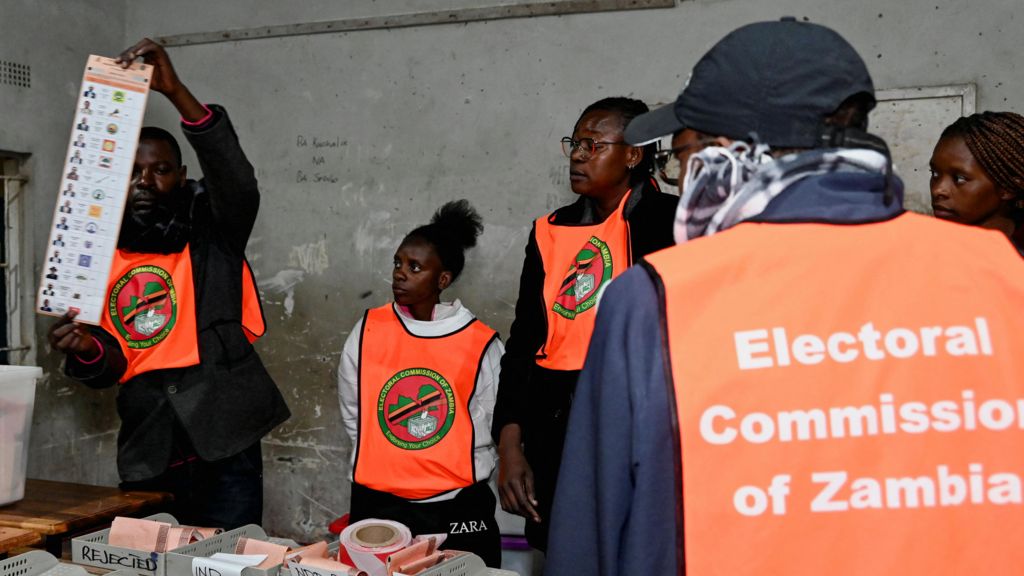
    Nearly 12 months after the passing of former Zambian President Edgar Lungu, a high-stakes legal conflict over where the former leader will be laid to rest landed in South Africa’s Supreme Court of Appeal on Friday. The bitter dispute, pitting Lungu’s surviving family against the current Zambian government led by his long-time political rival, has left Lungu unburied since his death in June 2025.

    Lungu, who held Zambia’s presidency from 2015 to 2021, died at the age of 68 while receiving treatment for an undisclosed medical condition at a private hospital in South Africa. What should have been a period of mourning has devolved into a public standoff over his final arrangements, rooted in deep political enmity between Lungu’s camp and current President Hakainde Hichilema.

    Hichilema’s administration has pushed to repatriate Lungu’s remains to Zambia for an official state funeral. In August, the Pretoria High Court ruled in the government’s favor, ordering that Lungu’s body be handed over to Zambian diplomatic representatives to be returned home for the ceremony. But Lungu’s family, which rejects any involvement of Hichilema in the former president’s funeral, refused to comply with the ruling and launched an appeal to the higher court to allow burial in South Africa.

    During Friday’s oral arguments held in Bloemfontein, Tembeka Ngcukaitobi, the lead lawyer for Lungu’s family, laid out the defense’s core position: the Zambian government’s claim to organize a state funeral has no legal standing, because all of Lungu’s presidential benefits were officially revoked before his death. Ngcukaitobi further emphasized that under prevailing legal principles, the wishes of Lungu’s widow should be prioritized when making burial decisions, overriding any competing claims from the state.

    In response, Ben Stoop, legal counsel for the Zambian government, countered that the family and the administration had already reached a prior agreement that would allow Hichilema to attend the funeral and receive visiting international dignitaries. Stoop argued that the family’s current opposition amounts to a breach of that earlier mutually accepted pact.

    The five justices hearing the appeal focused significant scrutiny on one key gap in the family’s case: the absence of written or clear verbal instructions from Lungu himself confirming his explicit desire to be buried in South Africa. While the bench acknowledged that Lungu may well have preferred not to have his political opponent lead his funeral, the lack of direct evidence from the former president leaves the family’s position on uncertain legal ground.

    As of Friday’s hearing, the Supreme Court of Appeal has not announced a timeline for when it will issue its final ruling on the appeal, leaving the question of Lungu’s final resting place unresolved for the foreseeable future.

  • Abula – Nigeria’s indigenous game with lofty ambitions

    Abula – Nigeria’s indigenous game with lofty ambitions

    Forty years ago, on a modest school playground in Nigeria’s largest city Lagos, a new indigenous sport was quietly born. Today, its growing community of players and backers are convinced this homegrown game has what it takes to capture international attention and carve out a space on global sporting rosters.

    Known as Abula, the fast-paced four-versus-four court sport takes its name from a beloved traditional dish of Nigeria’s Yoruba people. It was created back in 1984 by Elias Yusuf, a former physical education teacher who drew direct inspiration from the iconic meal to shape his game.

    “Abula combines four classes of food in one meal. This game is a conjunction of four by four,” Yusuf explained in an interview with BBC Sport Africa, tying the sport’s structure directly to its cultural namesake. The traditional Abula dish typically features yam flour paired with assorted beef, jute leaf vegetable soup, peeled bean gbegiri soup, and a tangy tomato-pepper stew – a combination of four core components that translated directly to the sport’s 4v4 format.

    Yusuf’s motivation for creating the game was straightforward: he wanted a new activity that would keep his students engaged, balancing fun with physical and mental challenge. The very first match, held in February 1984, pitted four teachers against four students – and the students claimed victory, setting a dynamic tone for a sport that would come to be defined by its blend of speed, technical skill, and strategic thinking.

    Played on a hard 16-meter by 8-meter rectangular court, divided by a central net set 2.44 meters above the ground, Abula shares some surface similarities with both volleyball and tennis. Unlike volleyball, however, players do not use their hands to hit the ball: instead, they wield a custom rectangular bat, crafted from wood and textured rubber and weighing between 500 and 750 grams, to strike a standard tennis ball over the net.

    The rules of the game are straightforward but demand sharp reflexes and tight teamwork. After a serve, each team is allowed just three touches of the ball on their side of the court before returning it to opponents. Rallies continue until one side fails to return the ball, earning the opposing team a point. Teams rotate serving, with each side getting four consecutive serves per turn, and points can be won by both serving and receiving teams. The first side to reach 16 points wins a set, though a 15-all tie requires a team to reach 20 points to claim victory. Matches are decided by best-of-three or best-of-five sets, depending on competition rules, and each side can make up to four substitutions, permitted twice per set.

    Unlike many mainstream court sports, Abula places heavy demands on both physical mobility and cognitive speed. Players must constantly anticipate opponent moves, reposition themselves in an instant, and make split-second decisions on how to return the ball. “When it comes to Abula, you have to be very smart,” said Sylvester Ike, captain of the Bayelsa State team that competed at May’s Nigerian National Sports Festival. “You have to be a very quick thinker and have to be mobile. It’s a very cognitive sport.”

    From its humble playground origins, Abula has gradually built a foothold in Nigerian sports. It has been an official event at the country’s biennial National Sports Festival since 1998, and is regularly played at military camps and school competitions across parts of the nation. Just a decade after its invention, the sport earned official recognition from the International Olympic Committee’s Sport for All programme, as well as support from the Nigeria Olympic Committee – a milestone that remains a source of pride for its pioneers and fueled efforts to expand the game across West Africa’s most populous nation. Even with that early win, Abula has yet to earn a spot at the African Games, a key stepping stone for regional sports.

    Like many emerging indigenous sports, Abula faces significant growing pains: limited public funding, a lack of purpose-built infrastructure, and minimal mainstream media exposure have slowed its growth. Purpose-built Abula courts are rare across the country, most players rely on improvised equipment, and organized competitions are held infrequently. “For now, there is no budgeting provision for this sport,” said Olomo Agbadabina, president of the Nigeria Traditional Sports Federation, which oversees the development of indigenous games including Abula, Dambe, Langa, Ayo and Kokowa. “But with the coming on board of the present National Sports Commission, we have been assured that funding will not be a problem.”

    Abula’s advocates frame these barriers not as dead ends, but as opportunities for growth. With targeted sponsorship and structured national promotion, they argue, the sport can expand rapidly, first across Nigeria, then into neighboring African countries, and eventually onto the global sporting circuit. “If we are properly sponsored, we can invite other African countries to play this game,” Agbadabina said. “It can be introduced first to the African Games, then to the Commonwealth Games and the ultimate one – the Olympics.”

    That is an undeniably ambitious goal, but backers point to volleyball as a successful precedent: the globally popular sport also began as a local pastime before making the leap to international competition.

    For its founders and long-time supporters, Abula is more than just a game – it is a uniquely Nigerian innovation rooted in local culture. In an era where sports fans around the world are increasingly seeking new athletic experiences and fresh narratives, Abula offers a one-of-a-kind product: a fast, tactical court game that is easy to learn but difficult to master.

    Daudu Ajayi, a 70-plus-year-old veteran match official for the sport, says Abula’s unique blend of accessibility, fitness benefit and cultural identity gives it broad global appeal. “Abula is very good for the body. If you play Abula, you look young,” he said. “If you see me now, you think I’m under 50. Whereas I’m over 70.”

    That combination of physical activity and enjoyment has helped Abula maintain a loyal local following over four decades, particularly in school and community tournaments. Though it remains rooted in Nigeria today, its players, officials and pioneers are convinced the sport is ready to reach a global audience.

    “I would say Abula has now got into its peak because we now have vibrant young men like me playing,” Bayelsa captain Ike said. “Abula has everything to be in the international level.”

    If Abula’s supporters succeed in their push for growth and recognition, the game that began with a group of students beating their teachers on a Lagos school yard could one day take the stage at the world’s biggest international sporting events.

  • PSG more ‘hungry’ for Champions League after first taste of glory

    PSG more ‘hungry’ for Champions League after first taste of glory

    As the UEFA Champions League final kicks off in Budapest this Saturday, reigning champion Paris Saint-Germain (PSG) has entered the final matchday with reinforced hunger to add a second consecutive continental trophy to its cabinet, according to key squad leaders.

    The French Ligue 1 side lifted the Champions League trophy for the first time in club history last season, beating Inter Milan by a dominant 5-0 margin in the final. That first taste of elite European glory has left the entire squad craving a repeat experience, captain Marquinhos told reporters ahead of the matchup against Mikel Arteta’s Arsenal, who are still chasing their first ever Champions League title.

    “Once you win the Champions League, once you taste that title, once you taste that moment, you want so badly to relive moments like that again,” the Brazilian center-back shared from Budapest’s Puskas Arena. “I still remember today the feeling and emotion in the dressing room after that final. And for us, as competitors, we always want to feel that emotion. And again, we have to be hungry, we have to have motivation.”

    The passionate support traveling from Paris to Budapest for the final has only strengthened the squad’s resolve, Marquinhos added, noting that even his own father is making the multi-hour cross-continental road trip alongside friends to cheer the team on. “You have people who came from far away to push us on. So the motivation, the hunger, and the ambition to win this title have not changed since last year. And maybe it’s even stronger because we’ve tasted it.”

    PSG forward Ousmane Dembele echoed his captain’s sentiment, emphasizing that consistent title wins are the mark of truly elite players. The 2023 Ballon d’Or winner, who picked up the award after spearheading PSG’s title run last season, confirmed his full fitness heading into the final despite a minor calf injury earlier this month. He pulled out of training immediately after noticing the niggle, leaving 10 to 15 days of recovery time to get back to full match sharpness, and says he never feared missing out on the decider.

    Dembele, who previously played for Borussia Dortmund and Barcelona before moving to Paris, noted that winning the Ballon d’Or did not shift his focus or playing style, but it did deepen his sense of responsibility to the club. “Right now I’m trying to perform well on the pitch, whether it’s in the big matches or the smaller ones. I still have that desire, that hunger to win trophies with this club, with all the staff and this squad, and that’s the only thing in my head. Individual awards, I know people talk about them a lot, but those come afterwards,” he said.

    The French international added that the entire young, talented PSG squad enters every competition with the same hunger for victory, regardless of whether it is the Champions League, domestic league, or national cup. “If we want to be great players, we have to win this kind of trophy several times. We’re hungry, and we hope everything goes well tomorrow,” he said.

    Marquinhos acknowledged that Arsenal will pose a formidable test for the defending champions. The Gunners have kept a clean sheet far more often than any other side in this year’s competition, entering the final unbeaten throughout their Champions League run, and they have developed a reputation for converting dead ball situations into scoring chances.

    “We know their strength, we know how hard and difficult it is to come up against this Arsenal side,” Marquinhos said. “In a match, especially in a final, it’s going to be decided on the details: knowing how to defend, how to attack, how to counter, how to defend a set piece, also how to attack a set piece. All the little details in a football match and in a final are going to be important. We’ve prepared ourselves for all those details.”

  • ‘I’m afraid for my life’: Romanians in shock after drone crash

    ‘I’m afraid for my life’: Romanians in shock after drone crash

    Early this week, a shocking drone strike on a multi-story residential apartment building in the eastern Romanian border city of Galati has left two people injured, stoked widespread public anxiety and triggered a sharp new diplomatic clash between Romania and Russia.

    The overnight incident, which marks the first time a stray drone has damaged civilian housing and hurt residents since Russia launched its full-scale invasion of Ukraine in 2022, has left locals questioning the effectiveness of national and alliance security measures designed to protect border communities.

    Local authorities confirmed the drone crashed into the top floor of a 10-story apartment block located on a busy central thoroughfare lined with shops, banks and other residential buildings in the city of roughly 200,000 residents, just a short drive from Romania’s border with Ukraine. Visual evidence from the scene shows the exterior of a balcony on the impacted floor partially collapsed, with structural debris scattered across the area below. By Friday morning, dozens of local residents had gathered near the site to document the damage.

    Two civilians — a 53-year-old woman and her 14-year-old son — were hospitalized with burn injuries following the crash. Multiple residents described a sudden, terrifying jolt to their overnight routines: emergency phone blares, blinding flashes of light that flooded dark bedrooms, and loud explosions that left pets and people alike panicked.

    Mihaela Blanaru, a 54-year-old local traffic clerk who lives in the neighborhood, recalled her shock: “Two dogs jumped half a meter off my bed, shaking and far too agitated to calm down. I ended up spending hours standing outside on the street. I kept expecting another shock, just like after an earthquake — that’s how terrified I was.”

    The Romanian government quickly identified the drone as Russian-origin, labeling the incident a “serious and irresponsible escalation” by Moscow. In response, Romania announced it would shut down the Russian consulate in the Black Sea port city of Constanta and expel the facility’s consul general. Moscow has already threatened to reciprocate with matching retaliatory measures.

    While Romania, a member of both the European Union and NATO, has recorded dozens of unauthorized airspace incursions and recovered dozens of fallen drone fragments since the Ukraine war began — this crash marks the first time a drone has struck occupied civilian housing and caused injuries. Prior to this incident, an explosive drone crashed into an unoccupied toolshed on Galati’s outskirts in April 2025, causing no casualties.

    Data released Friday by Romania’s defense ministry shows that over the course of the war, the country has officially documented 28 airspace breaches and 47 incidents of fallen drone debris. Even after Romania passed a 2025 law explicitly authorizing military forces to shoot down errant drones, many locals are now asking why defensive systems failed to intercept the aircraft before it reached a populated city center.

    “Where are the anti-drone systems? Shouldn’t they be deployed along the border? Where is the EU? Where is NATO?” asked Mihaela, a 47-year-old local resident who only shared her first name. “I’m really afraid for my life here. This could just as easily have crashed into my building.”

    While some residents directed their anger at Romanian authorities for failing to implement adequate defensive protections, others blamed Russian President Vladimir Putin directly, arguing that his war on Ukraine has needlessly put Romanian civilians at risk. Many locals now say they have little confidence that future incidents will be prevented.

    Seventy-year-old pensioner Jenica Emanoil described himself as “stunned” by the incident, and said he has little faith that state institutions can keep him safe. “At the end of the day, there’s not much the authorities can do… These days, the feeling of safety is pretty much gone.”

  • ‘Put the bone back in place’: Gruesome injury revealed as heartbreaking injury ruins wonderful Origin moment

    ‘Put the bone back in place’: Gruesome injury revealed as heartbreaking injury ruins wonderful Origin moment

    In a devastating turn of events that has sent shockwaves through Australian rugby league, rising star Blayke Brailey is facing a suspected broken forearm just days after achieving the career highlight of his State of Origin debut, casting doubt over his upcoming club and representative fixtures.

    Brailey suffered the injury during Cronulla Sharks’ 28-22 home win against Manly Warringah Sea Eagles on Friday night, when he made a tackle on opposition winger Jason Saab and sustained direct blunt force to his right arm. The 28-year-old dummy-half left the playing field immediately with 27 minutes remaining in the match, heading straight down the tunnel for urgent on-site assessment.

    The incident comes only 48 hours after Brailey earned his first call-up to the New South Wales Blues side for the opening game of the 2026 State of Origin series, where he delivered a standout performance that was central to the Blues’ comeback victory. During the match, the Sharks rake made a game-changing break through the Queensland defensive line to set up star halfback Nathan Cleary for a crucial try, cementing his role in the side ahead of the second game scheduled for June 17 in Melbourne.

    Multiple sources within the club have confirmed the severity of the injury, with Sharks veteran lock Cam McInnes revealing an extraordinary show of toughness from Brailey immediately after the incident. “He’s the toughest player I’ve ever played alongside for his size,” McInnes told reporters post-match. “I don’t want to overshare, but one of the club physios said as he walked off the field, he put the bone back into place himself without flinching once. That sort of grit is unheard of. It’s a brutal injury, and I’m absolutely shattered for him.”

    Fellow Sharks and Blues teammate Addin Fonua-Blake echoed McInnes’ sentiments, praising Brailey’s relentless professionalism and competitiveness. “He was so ready for this moment, he’d worked so hard to get his Origin debut, and he played out of his skin on Wednesday,” Fonua-Blake said. “He even tried to insist on going back out onto the field after getting injured. Coaches had to pull him back to stop him hurting himself worse. There’s no one tougher in this competition, and I’m heartbroken this happened to him. I know he’ll do everything possible to get back fit as fast as he can.”

    Sharks head coach Craig Fitzgibbon confirmed that Brailey will undergo official scans on Saturday to confirm the fracture and assess its severity. Speaking after the win, Fitzgibbon said the early prognosis suggests a break, but the team is holding out hope for a shorter recovery period if the fracture is clean and non-displaced. “Right now, it’s not looking good, but we’re waiting on scans to know for sure,” Fitzgibbon explained. “If it is a break, the best-case scenario is a clean fracture that only needs 4 to 8 weeks out. He’s absolutely gutted, honestly – five minutes after that Origin win on Wednesday, he texted me to say he was good to go and ready to play for the Sharks tonight. That’s just who he is: he loves this club, he loves playing, and this hurts. But at the same time, this opens an opportunity for other guys to step up.”

    Leading NRL physiotherapy experts have weighed in on the potential recovery timeline, noting that most forearm fractures in rugby league players require between one and two months out of action, depending on the exact location and severity of the break. If the scans confirm a fracture, Brailey will almost certainly miss the Blues’ second Origin game in Melbourne, with two experienced players already being linked as potential replacements: Wests Tigers veteran Api Koroisau and Sydney Roosters utility Connor Watson.

    For Cronulla, the absence of Brailey represents a significant disruption to the club’s season, given the dummy-half’s extraordinary run of consecutive appearances. Before a head knock forced him out of Magic Round earlier this month, Brailey had started 139 straight NRL matches for the Sharks, an unmatched display of durability in the modern game. Hohepa Puru stepped into the role in the second half of Friday’s win, and young rake Jayden Berrell, who has already featured in four NRL games this season, is also on standby to cover the position if Brailey is sidelined. Fitzgibbon expressed confidence in his depth, even as he mourned the injury to his star player. “It’s a big blow, but we’ve got two ready-made options waiting in the wings who’ve already stepped up for us this year,” he said. “Blayke isn’t going to be out forever, and we’ll get him back fit and strong as soon as we can.”

  • ‘Controversial’ North Korean invasion setting for next Call of Duty game

    ‘Controversial’ North Korean invasion setting for next Call of Duty game

    One of the gaming industry’s most anticipated annual releases has officially been unveiled, and the upcoming mainline entry in Activision and Infinity Ward’s blockbuster Call of Duty franchise is already drawing global attention – and heated discussion – over its core narrative premise. Slated for a worldwide launch on October 23, *Modern Warfare 4* centers its single-player campaign around a fictional resumption of full-scale armed conflict on the Korean Peninsula, following South Korean service members as they defend against a large-scale invasion from the North.

    The game’s reveal trailer, which racked up nearly 22 million views in just 24 hours after its debut, opens on a group of young South Korean conscripts conducting what looks to be a routine border patrol. The calm is quickly shattered by an incoming missile strike from North Korea, plunging the characters into all-out war. Alongside the Korean Peninsula-focused campaign, the title will also bring back one of the franchise’s most beloved characters, Captain Price, who will appear in multiple missions set across major global cities.

    Notably, this release marks a historic milestone for the Call of Duty franchise: it will be the first core mainline entry to skip last-generation consoles, the PlayStation 4 and Xbox One, launching exclusively on current-generation consoles, PC, and the newly released Nintendo Switch 2.

    As one would expect for a new Call of Duty drop, the announcement has already become a global viral cultural moment. Posts across major social platforms including Instagram, TikTok, X (formerly Twitter), and Facebook have generated more than 3 million user interactions in the first full day after the reveal. Reaction to the conflict setting has been deeply divided, particularly among Korean audiences.

    Many South Korean players have welcomed the choice to center the narrative on ordinary South Korean conscripts rather than framing the conflict through a foreign, Western perspective. Online reactions from Korean fans have leaned enthusiastic in many cases. One commenter noted that the character designs and in-game locations captured an authentic Korean atmosphere, saying “I’m genuinely excited.” Another shared that they initially expected South Korean troops would only be background extras, writing: “Then I heard they’re not just present but one of the playable protagonists? And not even special forces, handled from the perspective of an ordinary conscripted soldier, that’s what gets me.” Some even described the inclusion of Korea as a core setting for one of the world’s biggest gaming franchises as a landmark “symbolic moment.”

    However, academic experts and industry analysts warn the narrative choice could spark significant controversy, arguing that the franchise is turning a still-ongoing unresolved conflict into mass-market entertainment. The Korean War ended in 1953 with only an armistice agreement, not a formal peace treaty, meaning North and South Korea remain technically at war.

    Dr. Sarah Son, Senior Lecturer in Korean Studies at the University of Sheffield, explained that while fictional renewed inter-Korean conflict is not an unheard-of premise in South Korean popular culture, a global blockbuster franchise will face different standards of scrutiny. “It could be controversial, because it turns still-unresolved war into entertainment,” she said. “A global gaming franchise might be judged differently” than domestic Korean productions that explore similar themes.

    George Osborn, author of *Power Play: Video Games, Politics and the Battle for Global Influence*, told media the setting is almost certain to draw close examination in South Korea, pointing to previous video games that faced official pushback for their portrayals of the Korean Peninsula. The 2011 title *Homefront*, which depicted a unified Korea under Northern rule, was banned entirely in South Korea. Osborn warned that the development team will need to demonstrate extreme care in how it handles the conflict to avoid backlash. “The studio will have to show that it has handled possible conflict in the country with great care, or face significant backlash – and possible challenges selling the game – in South Korea specifically,” he noted.

    This is not the first time the *Modern Warfare* subseries has courted controversy for its portrayal of real-world inspired conflict. Past entries have sparked widespread public debate over the boundaries of realistic depictions of war in gaming, including the infamous 2009 “No Russian” mission that allowed players to participate in a civilian mass shooting at a Moscow airport, alongside later depictions of war crimes and terrorism.

    Beyond the controversial narrative setting, Infinity Ward has also announced a slate of major gameplay updates for the new entry. These include completely revamped movement mechanics, more destructible and interactive in-game environments, an overhaul of the fan-favorite extraction-style multiplayer mode DMZ, and a brand-new “Frontlines” system designed to make large-scale battles feel more dynamic and responsive to player actions than ever before.

  • Watch rescue after rollercoaster stalls 100ft in the air

    Watch rescue after rollercoaster stalls 100ft in the air

    A tense amusement park incident unfolded when a popular rollercoaster suddenly stalled mid-ride, leaving multiple passengers stranded 100 feet in the air, prompting an urgent large-scale rescue response. Emergency services, including local firefighting teams, were dispatched immediately to the scene after receiving distress calls from park staff and visitors. Over the course of four hours, first responders worked methodically at height to reach each stranded rider, navigating challenging conditions to bring every person back to safety safely. Officials from the amusement park have confirmed that despite the lengthy period of entrapment that left many shaken, no physical injuries were reported among any of the trapped passengers. The park has since launched a full safety inspection of the rollercoaster to identify the root cause of the mechanical failure, and the attraction remains closed pending the results of the review, with additional safety checks scheduled for all other rides as a precautionary measure.

  • Former US attorney general Pam Bondi testifies in congressional Epstein probe

    Former US attorney general Pam Bondi testifies in congressional Epstein probe

    A high-stakes congressional inquiry into the handling of records linked to convicted sex offender Jeffrey Epstein gained traction on Wednesday, as former U.S. Attorney General Pam Bondi appeared before the House Oversight Committee to answer questions about the Justice Department’s release of the long-sought Epstein files.

    Bondi, who was removed from her post as the nation’s top law enforcement official by former President Donald Trump in early April, was compelled to testify under a subpoena issued by the committee in March, just one week before Trump announced her ouster from the role. The closed-door session in Washington D.C. has sparked partisan friction already, with Democrats rejecting the decision to keep the deposition off-camera, while committee Republicans have pledged to leave no stone unturned in uncovering all unreleased records.

    In her prepared opening remarks to the panel, Bondi pushed back against months of bipartisan criticism of the Justice Department’s document release, defending her leadership’s work on the transparency effort. “We demonstrated an unprecedented commitment to transparency in the Department’s search for, collection, and review of the Epstein files, producing nearly 3 million pages of material, including thousands of videos and hundreds of thousands of images,” she stated.

    Committee Chairman James Comer, a Kentucky Republican, opened the inquiry to probe allegations of mismanagement of the Epstein investigation and evaluate the Justice Department’s compliance with the Epstein Files Transparency Act — a bill mandating public release of all unclassified Epstein records that Trump signed into law during his second term. Ahead of Bondi’s testimony, Comer told reporters that multiple consecutive administrations had failed the survivors of Epstein’s abuse, and that Bondi would face sharp questions about why additional records have not been made public. “We’re going to try to determine whether or not there could be more documents legally turned over,” Comer said. “I want every document. I don’t want anything held back and I think the majority of the committee feels the same way.”

    The committee’s top Democratic leader, Representative Robert Garcia of California, voiced frustration over the choice to hold the deposition behind closed doors without a public videotaped record. Garcia said his caucus was “incredibly disappointed” by the decision to block immediate public access to the testimony, a move that has fueled skepticism about the transparency of the inquiry itself.

    Bondi’s subpoena was first initiated in late winter after Republican Representative Nancy Mace of South Carolina publicly accused the Justice Department of orchestrating a cover-up in the Epstein file release, introducing a resolution to compel Bondi’s appearance. This is not Bondi’s first brush with Epstein-related controversy: long before her tenure as U.S. Attorney General, she served as Florida’s top prosecutor during Epstein’s 2008 plea deal, and later joined Trump’s 2020 impeachment defense team.

    The Trump administration and Bondi have endured sustained bipartisan pressure over their handling of the Epstein files, including widespread criticism of missteps that exposed the names of Epstein’s survivors to public view. Epstein, a wealthy financier convicted of sex trafficking offenses, died by suicide in a New York federal prison in 2019 while awaiting a new criminal trial, leaving a trove of unanswered questions about his high-profile connections.

    Controversy around Bondi’s handling of the files flared most recently in 2025: during a February 2025 interview on Fox News, she claimed a list of Epstein’s high-profile associates was “sitting on my desk right now,” only for the Justice Department to walk back the claim that July. Officials clarified at the time that no formal “client list” existed, and Bondi had misspoke when referencing the full case file sitting on her office desk.

    Beyond the Epstein controversy, Bondi’s tenure as Attorney General was marred by accusations from congressional Democrats that she weaponized the Justice Department at Trump’s direction, after the former president publicly called on her to launch aggressive investigations into his political opponents. She was replaced on an interim basis by Todd Blanche, Trump’s long-time personal defense lawyer.

    In a development announced earlier this week, the 60-year-old former AG revealed she has recently been diagnosed with thyroid cancer, and is currently undergoing active treatment that included surgery several weeks ago, she told CBS News, the U.S. media partner of the BBC.

    Following her departure from the Department of Justice, Bondi announced she planned to move into the private sector, but new details emerged this week confirming she has been appointed to the White House’s advisory group for artificial intelligence policy, the Presidential Council of Advisors on Science and Technology (PCAST). This appointment marks the first public confirmation of Bondi’s post-DOJ role in the Trump administration.