作者: admin

  • The clearest sign Father Time is closing in on Djokovic?

    The clearest sign Father Time is closing in on Djokovic?

    The 2026 French Open has delivered one of the most memorable matches in modern tennis history, as 19-year-old Brazilian breakout star Joao Fonseca defeated 39-year-old tennis legend Novak Djokovic in a grueling five-set clash that stretched nearly five hours on Court Philippe Chatrier. A raucous crowd packed with Brazilian supporters watched on as the young contender pulled off an upset that will be remembered for generations, capping a dramatic, momentum-shifting battle with three consecutive aces to seal the victory.

    Entering the match, Djokovic stood as the last remaining Grand Slam champion in the men’s draw. Top contenders Jannik Sinner had already been eliminated, while defending threat Carlos Alcaraz withdrew due to injury, leaving the Serbian star as the overwhelming favorite to claim a record-breaking 25th major singles title. Djokovic looked set to deliver on that expectation early, taking a commanding two-set lead and holding break points while up 4-3 in the fourth set that would have all but closed out the match. But fatigue, compounded by already nearly seven hours of four-set play against French wildcards Giovanni Mpetshi Perricard and Valentin Royer in earlier rounds, ultimately caught up with the 23-time Grand Slam winner.

    As Fonseca raised his level, Djokovic’s energy faded, forcing him to retch on the side of the court as he fought to summon the strength to continue. When the final point landed, the 39-year-old offered a gracious concession, admitting he had simply run out of physical gas. “I just ran out of gas, to be honest. I didn’t feel good at all on the court in the next couple of sets,” Djokovic told reporters post-match, adding, “I don’t think I’ve done too much wrong with my game. It’s just that he was just better.”

    The result marks a coming-of-age moment for Fonseca, who was born the same year Djokovic reached his first French Open quarterfinal in 2006. Long touted as one of the most promising young talents in men’s tennis, Djokovic himself admitted he had been an admirer of the Brazilian’s game since his Grand Slam debut at the 2025 Australian Open. On Sunday, the tennis world got to see exactly why the hype around Fonseca has grown so rapidly. His ferocious forehand has long been his signature weapon, but it was his composure and tactical maturity that won the day: he adjusted his game as Djokovic faded, mixing consistent deep groundstrokes with deft drop shots that kept the legend off-balance, before closing out the win with unflinching nerve on serve.

    Thousands of Brazilian fans, dressed in green and gold and waving national flags, erupted in celebration after the final point. Only two Brazilian players have ever won a Grand Slam singles title – Maria Bueno and three-time French Open champion Gustavo Kuerten, who last took the Coupe des Mousquetaires in 2001. Now, a new generation of Brazilian tennis fans is dreaming that Fonseca can follow in Kuerten’s footsteps and claim the title in Paris.

    For Djokovic, the defeat brings an end to his 2026 French Open campaign, and raises fresh questions about how much longer the all-time great will continue competing against opponents young enough to be his son. While this exit marks the clearest sign yet that age is finally catching up to a player who has defied Father Time for years, the Serb shows no sign of stepping away. He will now turn his attention to Wimbledon, where he is a seven-time champion on a grass surface that has consistently troubled younger contenders, and few will count him out from adding to his major record there. Djokovic’s insatiable hunger for Grand Slam glory remains undimmed, even as his body can no longer always keep up with his legendary competitive drive.

    With Djokovic, Sinner and Alcaraz all out of the men’s draw, the 2026 French Open is guaranteed to crown a first-time Grand Slam singles champion. Remaining contenders in Djokovic’s half of the draw include second seed Alexander Zverev and two-time runner-up Casper Ruud, but after his epic upset win over the sport’s biggest name, no one will be counting out the teenage Brazilian who has already made history in Paris.

  • Mumbai’s famed dabbawalas fed millions for over 100 years – now they are disappearing

    Mumbai’s famed dabbawalas fed millions for over 100 years – now they are disappearing

    Long before food delivery apps, ride-sharing services, and on-demand urban convenience, Mumbai’s dabbawalas built a logistical legend that captured global attention. For more than 130 years, these uniformed delivery workers, recognizable by their signature white caps and shirts, have navigated the chaos of India’s financial capital to deliver thousands of hot, home-cooked lunchboxes (called dabbas) to office workers every single day. Today, however, this centuries-old tradition is on the brink of collapse, devastated by shifting work patterns and new digital competition.

    Every morning, long before the city wakes to its usual frantic pace, dabbawalas cycle through Mumbai’s sprawling suburbs collecting dabbas packed with rice, lentils, curries, rotis, and fresh seasonal dishes, all cooked in family kitchens across the city. They load the stacked boxes onto suburban trains, sort them according to a simple but incredibly precise alphanumeric coding system, and deliver them on foot or by bicycle to office workers across the city by midday. After workers finish their meals, dabbawalas collect the empty boxes and reverse the route, returning them to the original homes by early afternoon. What makes this system remarkable is that it relies on no apps, no GPS, and no advanced technology – just generations of tacit knowledge of Mumbai’s streets and railways, passed down from worker to worker.

    The origins of the dabbawala network stretch back to the late 19th century, when British-ruled Bombay was rapidly expanding as a commercial hub. At the time, restaurants were scarce, and cultural and religious dietary customs made home-cooked meals non-negotiable for many office workers. The model first began when a Parsi banker hired a local man to deliver his home lunch to his workplace, and the concept quickly spread. By 1890, organizer Mahadeo Bachche formalized the modern network with roughly 100 workers. Over the decades, the system grew to its peak, with nearly 4,500 registered dabbawalas delivering 50,000 lunchboxes across the city every single day.

    Its legendary precision earned the dabbawala network global acclaim. Harvard Business School analyzed the system as a world-class case study in low-cost, high-efficiency logistics. Even Britain’s King Charles III, then Prince of Wales, spent time working alongside dabbawalas during a 2003 visit to Mumbai. For decades, the network became a point of civic pride for Mumbai: a reminder that amid the city’s unending noise and chaos, some core institutions still operated with unrivaled reliability.

    But that reputation now offers little protection from the disruptions that have shaken the network in recent years. The turning point came with the Covid-19 pandemic, when widespread office shutdowns forced millions of Mumbai workers into remote work arrangements. Overnight, demand for daily lunchbox deliveries collapsed. Dabbawalas who once served 20 to 25 clients a day were left with just a handful of customers, or none at all. With little in the way of savings, hundreds of workers left the trade permanently.

    Even after offices reopened, the shift to hybrid work models gutted demand. Many office workers now only come into the city two or three days a week, eliminating the need for daily lunch delivery. The Mumbai Tiffin Box Suppliers Association reports that registered dabbawala numbers have plummeted from roughly 4,500 in 2018 to just 1,500 today.

    Competition from the digital economy has compounded the crisis. Today, major food delivery platforms such as Swiggy and Zomato offer on-demand delivery of everything from traditional biryani to fast food at competitive prices, while a booming cloud kitchen industry has expanded affordable restaurant options for city workers. Where dabbawalas once faced almost no competition for home-style lunch delivery, they now struggle to compete with the convenience of a tap on a smartphone screen.

    For workers who have left the trade, the transition has been difficult. Balu Bhagu Shinde, 41, worked as a dabbawala for 20 years, earning roughly 20,000 rupees a month – enough to support his wife and three children in one of India’s most expensive cities. By the end of 2020, he was left with just two regular customers. After waiting in vain for customers to return, he switched to driving a tuktuk, where he earns just 15,000 rupees a month. “There are no customers, no money – what should we do?” Shinde said. “We are struggling to survive. I am cutting down on household expenses, but I have three children whose education matters the most. At times I have had to borrow money.”

    For the dabbawalas who have stayed in the trade, survival now requires working 15-hour days across two separate jobs. Mauli Bachche, a third-generation dabbawala with 20 years of experience, completes his full morning collection, delivery, and empty box return route by 2 p.m. every day, then starts a second job collecting small daily savings deposits for a local finance company, not returning home until 10 p.m. He travels more than 100 kilometers across Mumbai every day, and still only has 15 regular customers left, down from 25 before the pandemic. “Income from dabbawala work is very low,” Bachche said. “Everyone is doing more than one job.”

    Longtime workers say the biggest long-term threat is the lack of interest from younger generations. With Mumbai’s cost of living rising steadily, young people have little incentive to enter a low-wage trade with an uncertain future. “In our time, we managed to survive,” said Baban Kadam, who has worked as a dabbawala for 35 years. “But with today’s cost of living, the younger generation will not come into this work. Everyone wants a better-paying job or business.”

    Industry leaders are now scrambling to implement changes to keep the network alive. The Mumbai Tiffin Box Suppliers Association is considering restructuring work into shift-based schedules, which would allow dabbawalas to take on part-time work or small side businesses alongside their delivery routes. Even with these adjustments, however, the future remains uncertain. “We are continuing for now,” said Ramdas Baban Karvande, the association’s president. “But we cannot say what will happen in the future.”

    For now, the dabbawalas still load their stacks of steel dabbas onto Mumbai’s crowded suburban trains every morning, keeping alive a tradition that has long been woven into the identity of India’s most iconic city. But as the city evolves around it, this legendary logistical institution is at risk of being left behind by the very pace of change it once helped power.

  • US commander meets with Cuban military officials as Trump pressures island nation

    US commander meets with Cuban military officials as Trump pressures island nation

    Amid a sharp escalation of U.S. pressure on Cuba’s socialist government, the highest-ranking U.S. military commander for Latin America has held an in-person meeting with Cuban military leaders near the long-contested U.S. Navy base at Guantanamo Bay, marking another high-level encounter between the two adversarial nations amid shifting regional tensions.

    The Friday meeting, described by U.S. Southern Command as a “brief exchange on operational security matters,” comes as the Trump administration ramps up coercive action against Cuban leaders, just weeks after U.S. forces captured Venezuelan autocratic leader Nicolás Maduro in a January raid that reshuffled power dynamics across the Caribbean. Speaking shortly after that operation, Trump issued a stark warning that Cuba would be “next” if its ruling government did not make sweeping concessions to U.S. demands.

    In the months following Maduro’s capture, the Trump administration has layered on escalating punitive measures against Havana. A full oil blockade has cut off the island’s primary source of export revenue and energy supplies, while U.S. warships have maintained a persistent presence in Caribbean waters to underscore Washington’s military leverage. Most recently, federal prosecutors unsealed criminal indictments against a former top Cuban leader on multiple federal charges, a move that further escalated diplomatic friction between the two nations.

    In a marked contradiction to its hard-line public stance, the Trump administration has quietly pursued exploratory diplomatic outreach to Cuban officials in recent months. Top administration figures, including Secretary of State Marco Rubio and CIA Director John Ratcliffe, have both held closed-door talks with Cuban representatives to discuss potential avenues for improved bilateral relations. According to insiders familiar with the discussions, however, U.S. negotiators have left these meetings unsatisfied with the concessions offered by Havana, prompting the White House to approve additional rounds of economic sanctions targeting senior Cuban government officials and state-owned entities.

    Beyond the rare security exchange with Cuban military leaders, U.S. Gen. Francis L. Donovan, the top U.S. commander for the region, also used his visit to the Guantanamo Bay base to conduct a security review of the installation. In a public post on the social platform X, U.S. Southern Command noted that Donovan discussed base security, the well-being of deployed service members and their families, and overall operational readiness with base leadership during his trip.

    The U.S. has maintained a naval presence at Guantanamo Bay for more than a century, a presence that has been a constant source of friction between Washington and Havana ever since Cuba’s 1959 socialist revolution. Trump has repeatedly made clear that one of his core regional policy goals is removing Cuba’s current socialist leadership from power, even as he has kept the base operational amid escalating tensions.

    Currently, the U.S. maintains a small contingent of naval vessels in the Caribbean, including at least one large amphibious assault ship. This force is significantly smaller than the deployment that was in place in the lead-up to the January raid that captured Maduro, reflecting a gradual drawdown of major combat assets in the region following that operation. To maintain a consistent security posture, the Pentagon announced Friday that a new rotation of 1,300 sailors and Marines will deploy to the region to replace the 22nd Marine Expeditionary Unit, which first deployed to the Caribbean last summer.

  • Blue Origin rocket explosion is bad news for both Bezos and NASA

    Blue Origin rocket explosion is bad news for both Bezos and NASA

    The high-stakes world of commercial space exploration faced a dramatic and costly setback on Thursday night, when Blue Origin’s next-generation New Glenn rocket erupted into a massive fireball during a pre-launch ground test at Florida’s Cape Canaveral Space Force Station. The incident, which occurred at approximately 9:00 pm local time (0100 GMT Friday), left no reported injuries but has sent ripples of concern across the global space industry, threatening timelines for both Jeff Bezos’s private space ambitions and NASA’s flagship Artemis Moon mission program.

    Standing 98 meters (321 feet) tall, New Glenn is the most powerful launch vehicle ever developed by Blue Origin, designed to carry crewed missions, heavy commercial payloads, and key components for NASA’s lunar landing efforts. While routine testing anomalies are not uncommon in rocket development, industry experts note that full-scale explosions of this magnitude remain rare. Post-incident photos released on Friday confirm that the blast caused severe damage to both the rocket itself and the Cape Canaveral launch pad it was testing on. Florida Congressman Mike Haridopolos, whose district encompasses the Cape Canaveral space complex, told Fox News Friday that reconstruction work on the damaged facility will require a significant amount of time, adding further uncertainty to Blue Origin’s operational timeline.

    In the immediate aftermath of the explosion, NASA Administrator Jared Isaacman released a statement via social media platform X acknowledging the incident. He reaffirmed NASA’s commitment to supporting a full, transparent investigation into the root cause of the anomaly, which is being conducted jointly by Blue Origin, NASA, and the U.S. Space Force. The New Glenn rocket will remain grounded indefinitely throughout the course of the investigation, and Blue Origin has declined multiple requests from Agence France-Presse for additional details on the scope of damage, investigation progress, or revised launch timelines.

    The stakes of this setback extend far beyond Blue Origin’s corporate goals. Just days before the explosion, NASA awarded Blue Origin a major contract to develop a second lunar lander for the Artemis program, a move intended to create redundancy for the initiative after SpaceX, NASA’s primary lunar lander contractor, faced repeated delays to its own Starship development. The Artemis program, which aims to return the first American astronauts to the lunar surface since the Apollo program, currently targets a crewed landing by the end of 2028, with a critical in-orbit rendezvous test between lunar landers and a main spacecraft scheduled for 2027. Clatyon Swope, deputy director of the Aerospace Security Project at the Center for Strategic and International Studies, notes that any extended delay to New Glenn’s development could throw NASA’s carefully calibrated mission schedule off track.

    The explosion also marks the second major malfunction for Blue Origin in just over a month, following a satellite launch failure caused by a rocket anomaly in March. Beyond the lunar program, the incident also threatens progress on Amazon’s Project Kuiper, a satellite internet constellation designed to compete with SpaceX’s Starlink. Project Kuiper relies heavily on New Glenn rockets to launch hundreds of its broadband satellites into orbit, meaning delays to the rocket program will likely push back the commercial rollout of Bezos’s satellite internet initiative.

    This is not the first time a catastrophic rocket explosion has occurred at Cape Canaveral; a decade ago, a SpaceX Falcon 9 rocket exploded during pre-launch ground testing, destroying a $200 million communications satellite that was set to be deployed. While many in the space sector have expressed confidence that Blue Origin will ultimately recover from the setback, the immediate impact of Thursday’s blast is expected to reshape near-term plans for both U.S. commercial space development and NASA’s lunar exploration agenda.

  • After decades risking arrest, South Korea’s tattoo artists step into the limelight

    After decades risking arrest, South Korea’s tattoo artists step into the limelight

    Last Saturday, on a rooftop in Seoul’s trendy Seongsu neighborhood, over 90 South Korean tattoo artists gathered for a celebration decades in the making. For 34 years, tattooing as a profession had been restricted exclusively to licensed medical practitioners in the country, forcing the entire industry to grow in the shadows. But following landmark rulings from the nation’s top court and legislative action from lawmakers, that era of criminalization has finally come to a close. When veteran tattooist Kim Tae-nam took the stage to open the Ink Bomb festival, his relief and joy were palpable to every attendee. “This was only possible because of our effort, all your sweat and tears,” he told the cheering crowd. “Let’s hear it from everyone: Tattoos are art!”

    The path to legalization began decades ago, when South Korea’s Supreme Court ruled in 1992 that tattooing qualified as a medical practice, citing public hygiene and safety concerns. This ruling aligned with long-standing conservative social norms that framed body art as unseemly, reinforcing outdated stereotypes that linked tattoos to organized crime and gang activity. Violations of the restriction carried severe penalties, including heavy fines and even jail time, forcing thousands of artists to operate in secret. When Kim started his career in 2004 under the pseudonym Sunrat Tattoo, he ran his first studio out of an unmarked basement, accepting clients by invitation only. When he launched the Ink Bomb gathering in 2008, every event was shut down by police, who threatened arrest and criminal charges for participants. This year’s open, public festival marks the first time the event has been held legally since 2014.

    The decades-long crackdown did not just push the industry underground—it created dangerous conditions for artists, particularly women. Disgruntled clients often exploited the illegal status of tattooing to blackmail, harass, or threaten artists, who could not turn to police for help without incriminating themselves. According to Kim Do-yoon, founder of the South Korean Tattoo Union who works under the pseudonym Doy, the vast majority of these harassment victims were young women artists. “The shock from these losses is what moved me to found the union and fight for our right to work safely and legally in Korea,” Doy stated, noting that some targeted artists died by suicide as a result of their exploitation. Each year, the union provided legal support to at least 50 prosecuted tattoo artists, with many more facing unreported fines. Despite the constant risk, the industry grew steadily: 2021 government data estimates there are roughly 350,000 tattoo artists working across South Korea today.

    For many artists, the legalization brings an end to a constant state of anxiety. Tattooist Kali, who has never faced criminal charges herself, said she lived with constant hypervigilance from seeing peers prosecuted. “I was constantly working with anxiety. It still feels surreal to me that I no longer have to worry about this,” she said, describing her “ecstatic” reaction to the Supreme Court’s recent decision overturning the 1992 ruling. Just months before the court decision, in September, South Korean lawmakers passed legislation formalizing the legality of tattooing by non-medical professionals, capping off a years-long campaign by artists to end harassment and criminalization.

    Shifting social attitudes laid the groundwork for this policy change, driven by younger generations of Koreans who have embraced body art as a legitimate form of self-expression. Over the 2010s, South Korean tattoo art gained global acclaim, particularly for its distinctive delicate fine-line style, which spread to global audiences via social media. High-profile South Korean celebrities—from K-pop idols like BTS’s Jungkook, Girl’s Generation’s Taeyeon and HyunA, to Olympian diver Woo Ha-ram and actress Han Ye-seul—have also helped normalize tattoos by displaying their body art publicly. Even as the legal framework changes, however, social stigma persists: many workplaces still hold negative biases against tattooed candidates, some public gyms and saunas maintain “no tattoo” policies, and mainstream conformist culture still marginalizes people who choose visible body modification. Still, artists note that younger generations are actively breaking down these long-standing norms.

    While the end of criminalization is a historic win for the industry, uncertainty remains. South Korea’s Ministry of Health has announced plans to roll out a new licensing and testing system for tattooists in 2025 to standardize the profession, and dozens of older criminal cases against artists are still pending. Doy, who was charged under the old Medical Act for tattooing actress Han Ye-seul in 2019 (and has also inked high-profile clients including Brad Pitt and Steven Yeun), expects his charges and those of other artists will be dismissed following the Supreme Court ruling. For Doy, the moment is bittersweet: “Things are finally back where they should be,” he said. “But I can’t help but think of the fellow artists who aren’t here with us.”

    Attendees at Ink Bomb reflected the growing mainstream acceptance of tattoo culture in South Korea, drawing a diverse crowd that included working artists, punk rock fans, and even parents accompanying their teenage children. Though no permanent tattoos were offered at the celebration—given the time and space the practice requires—attendees could pick up free custom sticker art from participating creators. For many in the crowd, the day was far more than a festival: it was a long-overdue recognition of decades of hidden work and cultural contribution. “It makes no sense that tattooing should be seen as a medical act. Nobody is going to medical school to become a tattooist,” said 48-year-old tattoo enthusiast Jay Hur. “Korean tattooists had to take risks to do their job to sustain this beautiful underground culture.”

  • US judge orders Trump’s name be removed from Kennedy Center

    US judge orders Trump’s name be removed from Kennedy Center

    A federal judge in Washington D.C. has delivered a landmark ruling that blocks the controversial addition of former President Donald Trump’s name to the John F. Kennedy Center for the Performing Arts, ordering the immediate removal of all branding bearing his name within 14 days and halting plans for a two-year closure tied to proposed renovations.

    District Judge Christopher Cooper, an appointee of the Obama administration, laid out a clear legal precedent in his 94-page opinion: Congress established the iconic cultural venue’s original name in 1971, and only the legislative branch holds the authority to alter it. The ruling states that unilateral action by the Kennedy Center’s board of trustees to rebrand the institution violates the center’s founding organic statute, which explicitly reserves naming rights to Congress. The venue was originally opened in 1971 as a permanent memorial to assassinated President John F. Kennedy, and the ruling requires its name to revert fully to its original title: the John F. Kennedy Memorial Center for the Performing Arts.

    The chain of events that led to the lawsuit began in early 2025, when Trump replaced multiple sitting trustees on the center’s board, secured an appointment as a trustee himself, and was subsequently voted in as the board’s chairman. By December of that year, the newly reconfigured board voted to rename the venue the “Donald J Trump and John F Kennedy Memorial Center for the Performing Arts,” and new lettering bearing Trump’s full name was installed on the center’s front portico within 24 hours of the vote.

    The rebranding sparked immediate backlash across the arts and political communities: dozens of scheduled performing artists canceled their upcoming engagements at the venue, and ticket sales dropped sharply in the months following the name change. In February 2026, the board announced a two-year full closure of the center starting on July 4, 2026, framing the renovation project as a tribute to the 250th anniversary of U.S. independence. The project was to be funded with $257 million in congressional funding secured during Trump’s administration.

    The legal challenge was brought by ousted board member Joyce Beatty, a Democratic congresswoman from Ohio, alongside other former trustees, who argued that their voting rights had been unlawfully stripped when Trump replaced sitting board members. The lawsuit was later amended to also challenge the proposed closure and renovation timeline.

    Following Friday’s ruling, Beatty celebrated the decision as a victory for the rule of law and public trust. “The Kennedy Center is an institution that belongs to the American people, not to Donald Trump,” she said in an official statement. “He has desecrated this sacred memorial for his own vanity. I am proud to have fought for the rule of law and to protect this sacred institution.”

    Officials with the Kennedy Center have pushed back against the ruling, announcing plans to immediately appeal the order requiring Trump’s name removal. Roma Daravi, a spokesperson for the center, told CBS News that the board remains confident its actions will be upheld on appeal, noting that the board acted in good faith to recognize what it calls Trump’s historic contributions to the national cultural institution. Daravi also added that the center still faces an urgent need for major renovations, a fact the plaintiff has already acknowledged, and that the $257 million in congressionally approved funding is already in place to complete the work. The center will also review the judge’s ruling on the proposed closure and continue to pursue all legal avenues to advance the restoration project, Daravi added.

  • ‘Conspiracy of silence’: Parliament set to debate Israeli influence on British politics

    ‘Conspiracy of silence’: Parliament set to debate Israeli influence on British politics

    A grassroots petition demanding scrutiny of Israeli-linked and pro-Israel lobbying activity in British politics has crossed the 100,000-signature threshold required for a mandatory parliamentary debate, forcing what advocates call a long-overdue conversation about foreign influence and democratic integrity in the UK. Scheduled for discussion on June 22, the petition has collected more than 116,000 signatures from UK citizens concerned that unregulated lobbying is skewing government policy, party priorities and public discourse on the Israeli-Palestinian conflict.

    The petition’s text frames the debate as an urgent necessity, pointing to the ongoing humanitarian catastrophe in Gaza, continued Israeli expansion and repression in the West Bank, and the UK government’s aligned response to these events as evidence of the need to map the full scope of pro-Israel influence across British political institutions. Under UK parliamentary rules, any public petition hosted on the official government website that garners 10,000 signatures requires a formal written response from the government, while any crossing 100,000 signatures must be scheduled for a full debate in the House of Commons.

    In its initial response to the petition, the UK government has already rejected calls for a dedicated investigation into pro-Israel lobbying, claiming existing regulatory frameworks already address foreign political interference. Critics push back against this claim, noting that the government’s flagship review into foreign financial interference—led by former senior diplomat Matthew Rycroft—explicitly focuses on Russian, Chinese and Iranian interference and does not mention Israeli influence at all.

    Andy Kalil, the creator of the petition, dismissed the government’s position as empty deflection, arguing that clear conflicts of interest between pro-Israel lobbying donations and UK policy on Gaza, the West Bank, Iran and southern Lebanon amount to a major political scandal on par with some of the most high-profile controversies in recent British political history.

    Documentation of unreported and disclosed pro-Israel donations underpins these concerns, particularly within the current ruling Labour Party. Data shows that more than half of Keir Starmer’s cabinet have received donations from pro-Israel lobbying groups. One of the most prominent of these donors, Trevor Chinn, contributed £175,000 between 2017 and 2020 to Labour Together, the influential think tank that spearheaded Starmer’s successful campaign to oust Jeremy Corbyn, a longtime critic of Israeli policy toward Palestinians, as Labour leader. Chinn’s donations granted him repeated private access to senior Labour figures, including current Foreign Secretary David Lammy.

    That £700,000 in donations to Labour Together during Starmer’s leadership campaign went undeclared to the UK’s Electoral Commission, resulting in a £14,000 fine for the group. After the undeclared funding was exposed in journalist Paul Holden’s book *The Fraud*, reports emerged that Labour Together hired a public relations firm to investigate journalists who leaked the information, then attempted to destroy evidence of a coordinated smear campaign against the reporters.

    The pro-Israel funding that flowed through Labour Together was a core component of a successful effort to unseat Corbyn and shift the Labour Party sharply to the right on Middle East policy. Since taking office, Starmer has stated publicly that Israel has a right to cut power and water access to Gaza, a position aligned with pro-Israel lobbying priorities. The think tank has also been linked to a series of coordinated “astroturf” campaigns fronted by groups like the Centre for Countering Digital Hate and Stop Funding Fake News—co-founded by senior Labour politicians Steve Reed and Imran Ahmed—designed to attack independent pro-Palestine media and push left-wing, pro-Corbyn figures out of the party.

    Since Starmer took control of the party, one-third of newly elected Labour MPs have professional backgrounds in lobbying, and one-quarter have received direct funding from pro-Israel groups. Even ahead of the 2024 general election, Luke Akehurst, a former director of the pro-Israel advocacy group We Believe in Israel, was selected to run for a safe Labour seat in Durham, reflecting the movement’s deep penetration into party ranks.

    Pro-Israel lobbying is not limited to the Labour Party, either. Roughly 80% of Conservative Members of Parliament are members of Conservative Friends of Israel (CFI), an organization that has provided more than £330,000 to fund 118 MPs’ trips to Israel across 160 separate visits.

    Neve Gordon, an Israeli professor of international law at London’s Queen Mary University, argues that the double standard in how foreign influence is scrutinized in the UK reveals clear political alignment. While Russian, Chinese and Iranian interference are repeatedly framed as threats to British national interests and subject to intense regulatory and media scrutiny, Gordon says those countries exert far less actual influence on UK policy than the pro-Israel lobby, whose impact is consistently downplayed. Gordon explains that this double standard exists because the pro-Israel lobby is broadly aligned with long-standing British geopolitical interests, allowing the government to hide its own policy preferences behind the narrative of external lobbying influence.

    Jeremy Corbyn, who faced years of pressure from pro-Israel groups during his time as Labour leader, confirmed that this pressure is both political and commercial. He recalled being asked during a private Parliamentary Labour Party meeting whether he would offer unconditional support for Israeli military action, and said he faced constant, enormous pressure across all areas of his leadership due to his dissenting views on Middle East policy.

    Commercial lobbying is also a major factor: Elbit Systems, Israel’s largest private weapons manufacturer, held multiple meetings with UK Home Office officials and lobbied the government during its crackdown on Palestine Action, a direct action group that stages protests against the company’s UK facilities. The government ultimately proscribed Palestine Action as a terrorist organization—a decision that was later ruled unlawful by the UK High Court, though the government has continued to appeal the ruling.

    Critics of the pro-Israel lobby also highlight its coordinated strategy of framing criticism of Israeli policy as antisemitism to silence dissent. Leah Levene and Jonathan Rosenhead of Jewish Voice for Liberation, a group representing anti-Zionist Jews in the UK, point to organizations like UK Lawyers for Israel, which has been accused of waging legal intimidation campaigns against activists who oppose Israel’s military campaign in Gaza, and Campaign Against Antisemitism, whose legal actions against pro-Palestine public figures were labeled “abusive” by a UK judge.

    Levene and Rosenhead note that mainstream pro-Israel Jewish organizations like the Board of Deputies of British Jews and the Office of the Chief Rabbi have successfully positioned themselves as the sole legitimate representatives of all Jewish people in the UK, erasing dissent from anti-Zionist Jews and flattening diverse community perspectives into a single pro-Israel consensus. When any public figure voices criticism of Israeli policy, these organizations come down heavily to silence that dissent, which in turn undermines open democratic debate by cutting off space for alternative viewpoints.

    Hil Aked, author of *Friends of Israel: The Backlash Against Palestine Solidarity*, contextualizes the deep roots of pro-Israel lobbying in British political history, noting that the development of the Zionist movement has long been intertwined with the history of the British Empire. Aked explains that pro-Israel organizers have consistently framed their goals as aligned with British national interests to win support from successive UK governments. A key example, Aked argues, is the 1917 Balfour Declaration, which paved the way for the creation of the state of Israel and was drafted by the same generation of British politicians who passed the 1905 Aliens Act, the UK’s first modern anti-immigration law that blocked Jewish refugees fleeing persecution in Europe from entering the UK. This historical context, Aked says, makes clear that Zionism and antisemitism are not incompatible, and that pro-Israel lobbying in the UK is not a foreign import—it has been actively fostered by successive British governments for more than a century.

    For campaigners like Andrew Feinstein, co-founder of the anti-corruption non-profit Shadow World Investigations, open debate about the influence of the pro-Israel lobby is a core requirement for protecting British democracy. “Unless we are prepared to have a transparent, open and frank conversation not only about the Israel lobby, but about the influence of all money in politics, we will continue to have nothing better than the best democracy money can buy,” Feinstein said.

  • SEC moves to repeal rule that requires companies to report greenhouse gas emissions and climate risk

    SEC moves to repeal rule that requires companies to report greenhouse gas emissions and climate risk

    In a sweeping step to roll back climate-focused regulations implemented during the Biden administration, the U.S. Securities and Exchange Commission (SEC) announced Friday a formal proposal to scrap a landmark rule requiring certain publicly traded companies to disclose their greenhouse gas emissions and detail the financial risks they face from global warming.

    The climate disclosure mandate has been frozen in legal limbo since last year, after the SEC’s new Republican majority paused its legal defense of the rule amid multiple lawsuits filed by industry groups and Republican state attorneys general. In its official statement announcing the proposal, the commission argued the rule must be rescinded entirely because it oversteps the agency’s legal authority granted by Congress. The 2024 finalized rule, the SEC added, imposes steep, disproportionate costs on public companies and their shareholders that cannot be justified by the limited informational benefits it might deliver to a subset of investors.

    SEC Chairman Paul Atkins emphasized that eliminating the rule will prevent the agency from indirectly coercing corporate climate policy choices, and will uphold the commission’s commitment to only enacting regulations where projected benefits clearly outweigh the associated costs and burdens.

    The proposed repeal is part of a far broader series of environmental deregulatory actions launched during the second term of President Donald Trump. The Environmental Protection Agency (EPA), led by Administrator Lee Zeldin, has already scrapped major federal climate programs, canceled billions of dollars in Biden-era environmental justice grants, and revoked the foundational scientific finding that has served as the legal backbone for U.S. greenhouse gas regulation for decades. Zeldin has framed these actions as striking a decisive blow against what he calls “climate change religion.”

    Critics of the SEC’s proposal, however, warn that rolling back the disclosure rule will leave investors without the standardized, material data they need to accurately evaluate climate-related financial risks to their holdings. Kathy Fallon, director of land systems at the non-profit environmental advocacy group Clean Air Task Force, noted that while the 2024 rule was not perfect, it represented a critical step toward delivering consistent, transparent information to investors about financially material climate risks, including the use of carbon offsets. Fallon called on the commission to keep the rule in place and enforce disclosure requirements that meet the transparency needs of both investors and the general public.

    Democratic Massachusetts Senator Ed Markey, a longstanding proponent of the climate disclosure mandate, called the SEC’s announcement the end result of years of lobbying by corporate polluters aimed at weakening and dismantling protections that safeguard investments from high-risk business models. Markey stressed that the SEC’s core mission is to protect Americans’ retirement savings, union pensions, and personal investments, not put those assets at risk by shielding companies whose profitability relies on unregulated pollution and exposure to climate volatility. Tom Zimpleman, an attorney with the Natural Resources Defense Council, echoed this criticism, arguing the commission is abandoning its statutory responsibility to protect investors by ignoring the reality that climate risk is inherently financial risk.

    The SEC first approved the 2024 climate disclosure rule in a party-line vote, when the commission had a Democratic majority: three Democratic commissioners supported the rule, while two Republicans opposed it. Today, the commission holds three Republican members (including Chairman Atkins) and no Democratic appointees. When the rule was being developed, it became one of the most anticipated regulatory actions in recent history from the nation’s top financial regulator, drawing more than 24,000 public comments over two years from companies, auditors, lawmakers, and industry trade groups. At the time of its finalization, the rule aligned U.S. regulatory standards with the European Union and California, both of which have already implemented similar mandatory corporate climate disclosure requirements.

    A 60-day public comment period will open after the repeal proposal is published in the Federal Register, which is expected to occur in the coming days.

  • Ghana’s parliament passes a bill criminalizing the promotion of LGBTQ activities

    Ghana’s parliament passes a bill criminalizing the promotion of LGBTQ activities

    ACCRA, Ghana – In a landmark legislative vote that has reignited global debate over LGBTQ rights in West Africa, Ghana’s parliament passed a harsh new anti-LGBTQ bill Friday that introduces steep prison sentences for a range of activities connected to same-sex relations, from public advocacy to personal engagement.

    The legislation, which incoming President John Dramani Mahama has already signaled he will sign into law, marks a major expansion of existing restrictions on LGBTQ people in the country. Under the bill’s terms, anyone found guilty of promoting or advocating for LGBTQ rights can face up to 10 years behind bars, while people who engage in same-sex sexual activity face three-year prison sentences. Operating a space for same-sex intimacy carries a five-year prison term, and the bill also formally bans all funding for LGBTQ organizations and related activities.

    This outcome is the culmination of years of pressure from conservative religious groups that have long pushed for stricter anti-LGBTQ policies in Ghana. An earlier version of the bill cleared parliament in 2024, but then-president Nana Akufo-Addo refused to sign it into law, leaving the legislation in limbo. Undeterred, religious leaders and bill supporters kept up their advocacy through the 2024 election cycle, and Mahama ran on a platform aligned with conservative cultural values, giving the bill new life after his election.

    Ghana is now part of a growing wave of African nations moving to entrench broader anti-LGBTQ laws into their national legal frameworks. Across the continent, 31 of 54 countries already criminalize same-sex sexual relations, many of which carry penalties including life sentences and even the death penalty in nations such as Somalia, Uganda, and Mauritania. The push for stricter laws has broad popular support in many socially conservative African countries, even as it draws fierce condemnation from the international human rights community.

    Supporters of the new Ghanaian bill frame it as a necessary defense of indigenous cultural values and traditional family structures, arguing that LGBTQ rights run counter to widely held Ghanaian social norms. But critics warn that the law undermines fundamental constitutional protections for all Ghanaians and will open the door to systemic discrimination, harassment, and violence against sexual minority groups.

    Human Rights Watch has issued a strong condemnation of the legislation, calling on Ghana’s government to uphold international human rights standards that guarantee equal treatment, freedom from discrimination, freedom of expression, and the right to privacy for all citizens, regardless of sexual orientation or gender identity.

    Same-sex relations were already criminalized in Ghana under a colonial-era law that bans so-called “unnatural carnal knowledge,” but the new bill vastly expands that criminalization to include not just private same-sex activity, but also public advocacy, community organizing, and financial support for LGBTQ communities. This expansion carries tangible economic risks as well: when the earlier version of the bill was under consideration, Ghana’s Finance Ministry warned that enacting the legislation could put billions of dollars in international development financing and partner support at risk, a warning that remains unaddressed in the latest version of the bill.

  • Former Southern California mayor pleads guilty to secretly acting as agent of Chinese government

    Former Southern California mayor pleads guilty to secretly acting as agent of Chinese government

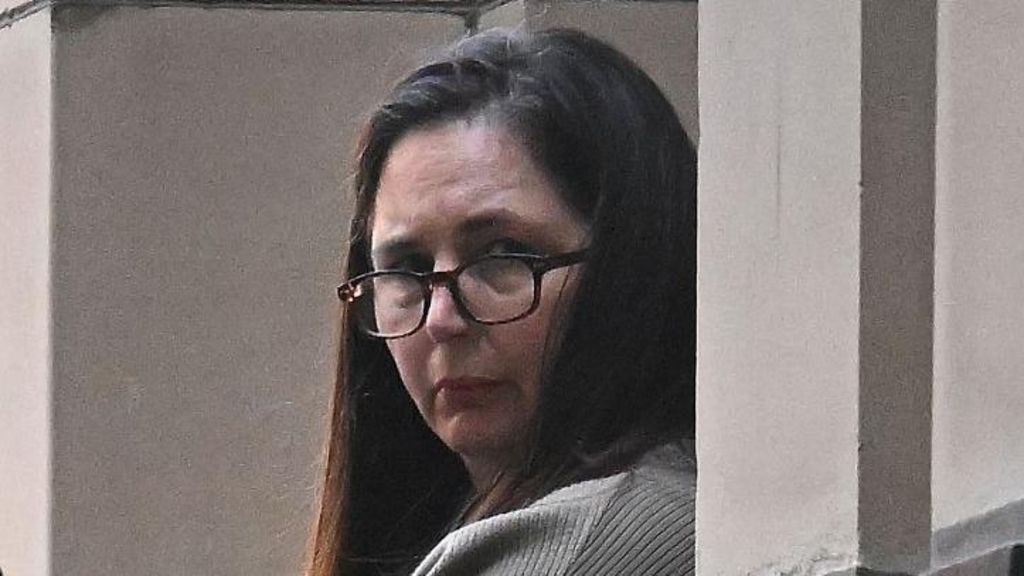
    In a landmark federal court hearing held in downtown Los Angeles Friday, a one-time leader of a majority-Asian Southern California city entered a guilty plea to a federal charge of operating as an unregistered illegal agent for the Chinese government.

    Eileen Wang, 56, who stepped down from her position as mayor of Arcadia — a suburban community of roughly 53,000 located 21 kilometers northeast of Los Angeles — earlier this April, formally admitted to carrying out requests for Chinese officials without meeting U.S. legal requirements to disclose her foreign work to American authorities. She was initially indicted on the single charge back in April 2023.

    Wang first won a seat on Arcadia’s five-member city council in the November 2022 general election, a body that selects its mayor on a rotating annual basis. Federal prosecutors document that her unlawful activities took place between late 2020 and 2022, a timeline that both city officials and Wang’s legal team confirm ended before she assumed public office.

    During the plea hearing, U.S. District Judge Wesley Hsu walked Wang through standard procedural checks to confirm she fully understood her constitutional rights and the penalties attached to her guilty plea. Though a Mandarin interpreter was on hand for the proceeding, Wang declined the service, confirming she could follow the hearing without assistance. She was granted continued release on a $25,000 bond ahead of her scheduled October 6 sentencing, where she faces a maximum sentence of 10 years in federal prison and three years of supervised release following incarceration.

    Court documents attached to her plea agreement detail that Wang collaborated with her then-fiancé Yaoning “Mike” Sun to advance Chinese government propaganda through a digital platform called U.S. News Center. Sun, who also served as treasurer for Wang’s 2022 city council campaign, pleaded guilty to the identical charge last October and is currently serving a four-year federal prison sentence. Wang’s legal team has stated her romantic relationship with Sun ended in spring 2024, and in a statement following her resignation, the attorneys noted Wang “trusted and loved the wrong person, who ultimately led her astray.”

    One key documented incident from June 2021 lays out the core of Wang’s cooperation: after a Chinese government official sent Wang a link to an op-ed written by China’s Los Angeles consul general and published in the *Los Angeles Times*, Wang shared the link to her collaborative website within minutes. The op-ed rejected international reporting of systematic human rights abuses including persecution, forced labor and mass incarceration against Uyghurs in China’s Xinjiang region, falsely claiming “There has never been genocide in Xinjiang or forced labor in the region’s cotton fields or any other sector.” The United States and dozens of other nations have formally recognized Beijing’s systemic repression of Uyghurs and other ethnic minority groups in Xinjiang as genocide and crimes against humanity.

    Local reactions to Wang’s plea have reignited long-simmering tensions in Arcadia, a city with a large concentration of Chinese American residents. Many local residents and former elected officials have argued Wang should have been removed from office immediately after she first became linked to the FBI investigation into Sun’s activities.

    Current acting mayor Paul Cheng has pushed back on that criticism, noting the city charter only grants the city council authority to remove a sitting member after they have been convicted of a felony crime — a milestone Wang had not reached prior to her guilty plea. “We are not law enforcement investigators, and politicizing an active federal case would only undermine the ongoing investigation,” Cheng explained of the council’s previous inaction.