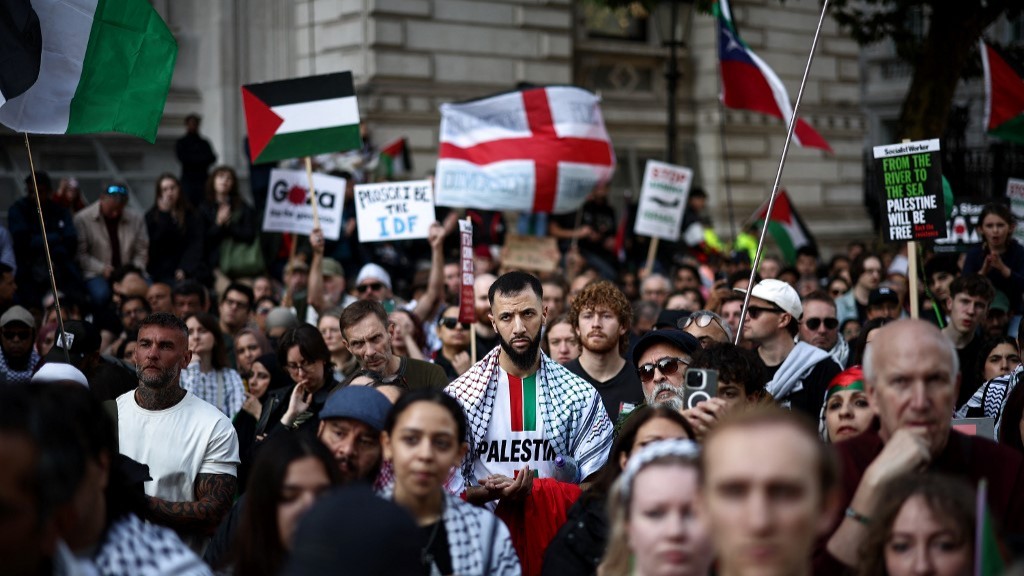
A grassroots petition demanding scrutiny of Israeli-linked and pro-Israel lobbying activity in British politics has crossed the 100,000-signature threshold required for a mandatory parliamentary debate, forcing what advocates call a long-overdue conversation about foreign influence and democratic integrity in the UK. Scheduled for discussion on June 22, the petition has collected more than 116,000 signatures from UK citizens concerned that unregulated lobbying is skewing government policy, party priorities and public discourse on the Israeli-Palestinian conflict.
The petition’s text frames the debate as an urgent necessity, pointing to the ongoing humanitarian catastrophe in Gaza, continued Israeli expansion and repression in the West Bank, and the UK government’s aligned response to these events as evidence of the need to map the full scope of pro-Israel influence across British political institutions. Under UK parliamentary rules, any public petition hosted on the official government website that garners 10,000 signatures requires a formal written response from the government, while any crossing 100,000 signatures must be scheduled for a full debate in the House of Commons.
In its initial response to the petition, the UK government has already rejected calls for a dedicated investigation into pro-Israel lobbying, claiming existing regulatory frameworks already address foreign political interference. Critics push back against this claim, noting that the government’s flagship review into foreign financial interference—led by former senior diplomat Matthew Rycroft—explicitly focuses on Russian, Chinese and Iranian interference and does not mention Israeli influence at all.
Andy Kalil, the creator of the petition, dismissed the government’s position as empty deflection, arguing that clear conflicts of interest between pro-Israel lobbying donations and UK policy on Gaza, the West Bank, Iran and southern Lebanon amount to a major political scandal on par with some of the most high-profile controversies in recent British political history.
Documentation of unreported and disclosed pro-Israel donations underpins these concerns, particularly within the current ruling Labour Party. Data shows that more than half of Keir Starmer’s cabinet have received donations from pro-Israel lobbying groups. One of the most prominent of these donors, Trevor Chinn, contributed £175,000 between 2017 and 2020 to Labour Together, the influential think tank that spearheaded Starmer’s successful campaign to oust Jeremy Corbyn, a longtime critic of Israeli policy toward Palestinians, as Labour leader. Chinn’s donations granted him repeated private access to senior Labour figures, including current Foreign Secretary David Lammy.
That £700,000 in donations to Labour Together during Starmer’s leadership campaign went undeclared to the UK’s Electoral Commission, resulting in a £14,000 fine for the group. After the undeclared funding was exposed in journalist Paul Holden’s book *The Fraud*, reports emerged that Labour Together hired a public relations firm to investigate journalists who leaked the information, then attempted to destroy evidence of a coordinated smear campaign against the reporters.
The pro-Israel funding that flowed through Labour Together was a core component of a successful effort to unseat Corbyn and shift the Labour Party sharply to the right on Middle East policy. Since taking office, Starmer has stated publicly that Israel has a right to cut power and water access to Gaza, a position aligned with pro-Israel lobbying priorities. The think tank has also been linked to a series of coordinated “astroturf” campaigns fronted by groups like the Centre for Countering Digital Hate and Stop Funding Fake News—co-founded by senior Labour politicians Steve Reed and Imran Ahmed—designed to attack independent pro-Palestine media and push left-wing, pro-Corbyn figures out of the party.
Since Starmer took control of the party, one-third of newly elected Labour MPs have professional backgrounds in lobbying, and one-quarter have received direct funding from pro-Israel groups. Even ahead of the 2024 general election, Luke Akehurst, a former director of the pro-Israel advocacy group We Believe in Israel, was selected to run for a safe Labour seat in Durham, reflecting the movement’s deep penetration into party ranks.
Pro-Israel lobbying is not limited to the Labour Party, either. Roughly 80% of Conservative Members of Parliament are members of Conservative Friends of Israel (CFI), an organization that has provided more than £330,000 to fund 118 MPs’ trips to Israel across 160 separate visits.
Neve Gordon, an Israeli professor of international law at London’s Queen Mary University, argues that the double standard in how foreign influence is scrutinized in the UK reveals clear political alignment. While Russian, Chinese and Iranian interference are repeatedly framed as threats to British national interests and subject to intense regulatory and media scrutiny, Gordon says those countries exert far less actual influence on UK policy than the pro-Israel lobby, whose impact is consistently downplayed. Gordon explains that this double standard exists because the pro-Israel lobby is broadly aligned with long-standing British geopolitical interests, allowing the government to hide its own policy preferences behind the narrative of external lobbying influence.
Jeremy Corbyn, who faced years of pressure from pro-Israel groups during his time as Labour leader, confirmed that this pressure is both political and commercial. He recalled being asked during a private Parliamentary Labour Party meeting whether he would offer unconditional support for Israeli military action, and said he faced constant, enormous pressure across all areas of his leadership due to his dissenting views on Middle East policy.
Commercial lobbying is also a major factor: Elbit Systems, Israel’s largest private weapons manufacturer, held multiple meetings with UK Home Office officials and lobbied the government during its crackdown on Palestine Action, a direct action group that stages protests against the company’s UK facilities. The government ultimately proscribed Palestine Action as a terrorist organization—a decision that was later ruled unlawful by the UK High Court, though the government has continued to appeal the ruling.
Critics of the pro-Israel lobby also highlight its coordinated strategy of framing criticism of Israeli policy as antisemitism to silence dissent. Leah Levene and Jonathan Rosenhead of Jewish Voice for Liberation, a group representing anti-Zionist Jews in the UK, point to organizations like UK Lawyers for Israel, which has been accused of waging legal intimidation campaigns against activists who oppose Israel’s military campaign in Gaza, and Campaign Against Antisemitism, whose legal actions against pro-Palestine public figures were labeled “abusive” by a UK judge.
Levene and Rosenhead note that mainstream pro-Israel Jewish organizations like the Board of Deputies of British Jews and the Office of the Chief Rabbi have successfully positioned themselves as the sole legitimate representatives of all Jewish people in the UK, erasing dissent from anti-Zionist Jews and flattening diverse community perspectives into a single pro-Israel consensus. When any public figure voices criticism of Israeli policy, these organizations come down heavily to silence that dissent, which in turn undermines open democratic debate by cutting off space for alternative viewpoints.
Hil Aked, author of *Friends of Israel: The Backlash Against Palestine Solidarity*, contextualizes the deep roots of pro-Israel lobbying in British political history, noting that the development of the Zionist movement has long been intertwined with the history of the British Empire. Aked explains that pro-Israel organizers have consistently framed their goals as aligned with British national interests to win support from successive UK governments. A key example, Aked argues, is the 1917 Balfour Declaration, which paved the way for the creation of the state of Israel and was drafted by the same generation of British politicians who passed the 1905 Aliens Act, the UK’s first modern anti-immigration law that blocked Jewish refugees fleeing persecution in Europe from entering the UK. This historical context, Aked says, makes clear that Zionism and antisemitism are not incompatible, and that pro-Israel lobbying in the UK is not a foreign import—it has been actively fostered by successive British governments for more than a century.
For campaigners like Andrew Feinstein, co-founder of the anti-corruption non-profit Shadow World Investigations, open debate about the influence of the pro-Israel lobby is a core requirement for protecting British democracy. “Unless we are prepared to have a transparent, open and frank conversation not only about the Israel lobby, but about the influence of all money in politics, we will continue to have nothing better than the best democracy money can buy,” Feinstein said.