作者: admin

  • Sabalenka to face Osaka, Cobolli into French Open quarters

    Sabalenka to face Osaka, Cobolli into French Open quarters

    The 2025 French Open is set for one of its most anticipated matches in recent years, as two of women’s tennis biggest superstars, Aryna Sabalenka and Naomi Osaka, will face off in the tournament’s first women’s prime-time night match in three years on Monday. The blockbuster round of 16 clash comes as two unexpected underdogs, Italy’s Flavio Cobolli and Russia’s Anna Kalinskaya, have already secured their places in the event’s quarter-finals after dramatic four-set and three-set wins respectively.

    World number one Sabalenka enters the match still chasing her first ever Roland Garros title, still stinging from her heartbreaking three-set defeat to defending champion Coco Gauff in last year’s final. For Osaka, the match marks a career milestone: this is the first time the four-time Grand Slam champion has advanced to the second week of the clay-court major, and the Japanese star has looked far more comfortable on Paris’ red dirt than ever before during her comeback run.

    Monday’s meeting will only be the fourth time the two stars have faced off, and remarkably, every one of their prior matches has come in the round of 16 of elite-level events. Osaka won their first encounter on her way to lifting the 2018 US Open trophy, and the pair did not meet again until this year. Sabalenka has taken both of their 2025 clashes so far: a straight-sets win at Indian Wells, followed by a come-from-behind victory after dropping the opening set at the Madrid Open. The winner of Monday’s match will go on to face either former Australian Open champion Madison Keys or Russia’s rising star Diana Shnaider in the quarter-finals.

    Sabalenka struck a warm tone when speaking about Osaka, who stepped away from the tour in 2023 to welcome her first child. “It’s nice to see her,” Sabalenka told reporters. “She’s a great player, great person. I feel like I really enjoy our battles. It’s high-level matches, and I really enjoy when somebody pushes me to the limit.”

    After returning to the tour, Osaka struggled to recapture her top form initially, but worked her way back to the US Open semi-finals in 2024, her first deep Grand Slam run since she won her second Australian Open title in 2021. Heading into Paris, she set a new goal of proving her ability on slower surface. “I really wanted to make it a goal to do really well on clay and grass,” she said, noting she has never advanced past the third round at Wimbledon. Off the court, Osaka has turned heads in Paris with her eye-catching sequined gold dress, which she has compared to the glowing Eiffel Tower at night, though she hinted she may change her outfit for the prime-time night match.

    The decision to place the clash in the coveted night slot comes after years of criticism of Roland Garros organizers for sidelining women’s matches for prime-time programming. This will mark the first time a women’s match has been scheduled for the primetime night slot since Sabalenka faced Sloane Stephens in the 2024 round of 16. Tournament director Amelie Mauresmo defended the scheduling choice to reporters, saying “I think it was pretty obvious this should be the night’s match.”

    In earlier fourth-round action on Sunday, Kalinskaya pulled off a stunning comeback over 28th seed Anastasia Potapova of Austria, ending Potapova’s run after she had upset defending champion Gauff in the prior round. Potapova twice held a chance to close out the match serving, but could not hold on, falling 6-4, 2-6, 7-6 (10/7). Kalinskaya will next face either the last remaining home hope Diane Parry or Polish qualifier Maja Chwalinska for a place in the semi-finals.

    On the men’s side, Italian 10th seed Cobolli overcame a dramatic late collapse to book his spot in the quarter-finals, beating American qualifier Zachary Svajda 6-2, 6-3, 6-7 (3/7), 7-6 (7/5) on Court Philippe Chatrier. Cobolli held a comfortable 5-1 lead in the fourth set, but suffered a massive nervous wobble that forced the match to a deciding tie-break. He ultimately held on to reach his second ever Grand Slam quarter-final, following his run at Wimbledon last year.

    “The match is never done and today I almost shit in my pants,” a candid Cobolli told reporters after the match. “I’m happy but I’m still nervous.”

    The 24-year-old Italian will next face either fourth-seeded Canadian Felix Auger-Aliassime or Chile’s Alejandro Tabilo for a place in the semi-finals. Auger-Aliassime is now the highest-ranked player remaining in the top half of the men’s draw after world number one Jannik Sinner was upset earlier in the tournament, and Ben Shelton suffered an early exit. The Canadian will aim to reach his first ever French Open quarter-final when he faces Tabilo, who is playing in the round of 16 of a Grand Slam for the first time in his career.

    The remaining fourth-round matches on the men’s side include a clash between former Wimbledon finalist Matteo Berrettini, who is targeting his first Grand Slam quarter-final since 2022, and Sinner’s conqueror Juan Manuel Cerundolo on Court Suzanne Lenglen. Last year’s quarter-finalist Frances Tiafoe will take on another rising Italian star, Matteo Arnaldi, for a place in the final eight.

  • UK: Shabana Mahmood blocks entry for podcasters Cenk Uygur and Hasan Piker over Israel criticism

    UK: Shabana Mahmood blocks entry for podcasters Cenk Uygur and Hasan Piker over Israel criticism

    The United Kingdom has ignited fresh controversy over its entry policies targeting foreign critics of Israel, after barring two high-profile American political commentators from entering the country just days ahead of their scheduled public appearances.

    Cenk Uygur, the founder and lead host of progressive digital news network The Young Turks, announced on social media over the weekend that he was blocked from boarding a commercial flight bound for London. Uygur was scheduled to speak at the inaugural SXSW London festival and deliver a public lecture at the University of Oxford this week. He directly blamed British officials for the decision, saying the ban was a direct response to his longstanding public criticism of the Israeli government. “I’ve been banned from the UK,” Uygur wrote on his social media platform. “I tried to get on a flight to London to attend SXSW London and give a speech at Oxford. I’ve been banned for criticizing Israel.”

    Following Uygur’s announcement, his nephew, prominent political commentator and Twitch streamer Hasan Piker, confirmed that British authorities had also revoked his travel authorization. Piker, who was also set to appear as a speaker at SXSW London, claimed the move was made “at the behest of Israel.”

    According to a reporting from The Times, UK Home Secretary Shabana Mahmood personally approved the cancellation of Uygur’s Electronic Travel Authorisation (ETA) after concluding that his entry into the country would not be “conducive to the public good.” Multiple factors informed the decision, The Times reported, chief among them concerns that Uygur’s public comments since the October 7, 2023, Hamas attack on Israel could fuel antisemitic sentiment and exacerbate intercommunal tensions across the UK. Uygur has repeatedly denounced Israel’s ongoing military campaign in Gaza, labeling the operation a genocide against Palestinian civilians.

    This latest series of entry bans is not an isolated action, but part of a broader escalation of scrutiny by the UK Home Office against foreign speakers deemed to pose a risk to domestic public order. Back in April, the British government launched a dedicated cross-agency task force with the explicit mandate of blocking high-risk individuals from entering the country. That same month, the UK barred American Muslim scholar and preacher Dr. Shadee Elmasry just days before he was set to deliver a series of talks across multiple UK cities. Mahmood revoked Elmasry’s travel authorization over social media posts he made criticizing Western governments’ military and diplomatic support for Israel in the wake of the October 7 attacks.

    In his post, Elmasry wrote that Western leaders were feigning shock over the Hamas assault after 50 years of Israeli occupation of Palestinian territories. “They are all in this (fake or real) state of shock that the people of Gaza finally punched back (after 50 years),” Elmasry posted. The scholar has since pushed back against the ban, saying his public messaging has always centered on compassion and intercommunity connection.

    The string of entry restrictions has sparked intense debate over freedom of speech in the UK, with critics arguing that the government is prioritizing political alignment over the right to open debate about the Gaza conflict, while supporters of the policy say it is necessary to prevent the spread of division and hate speech.

  • US says it struck Iranian radar sites as Iran targets American forces in Kuwait

    US says it struck Iranian radar sites as Iran targets American forces in Kuwait

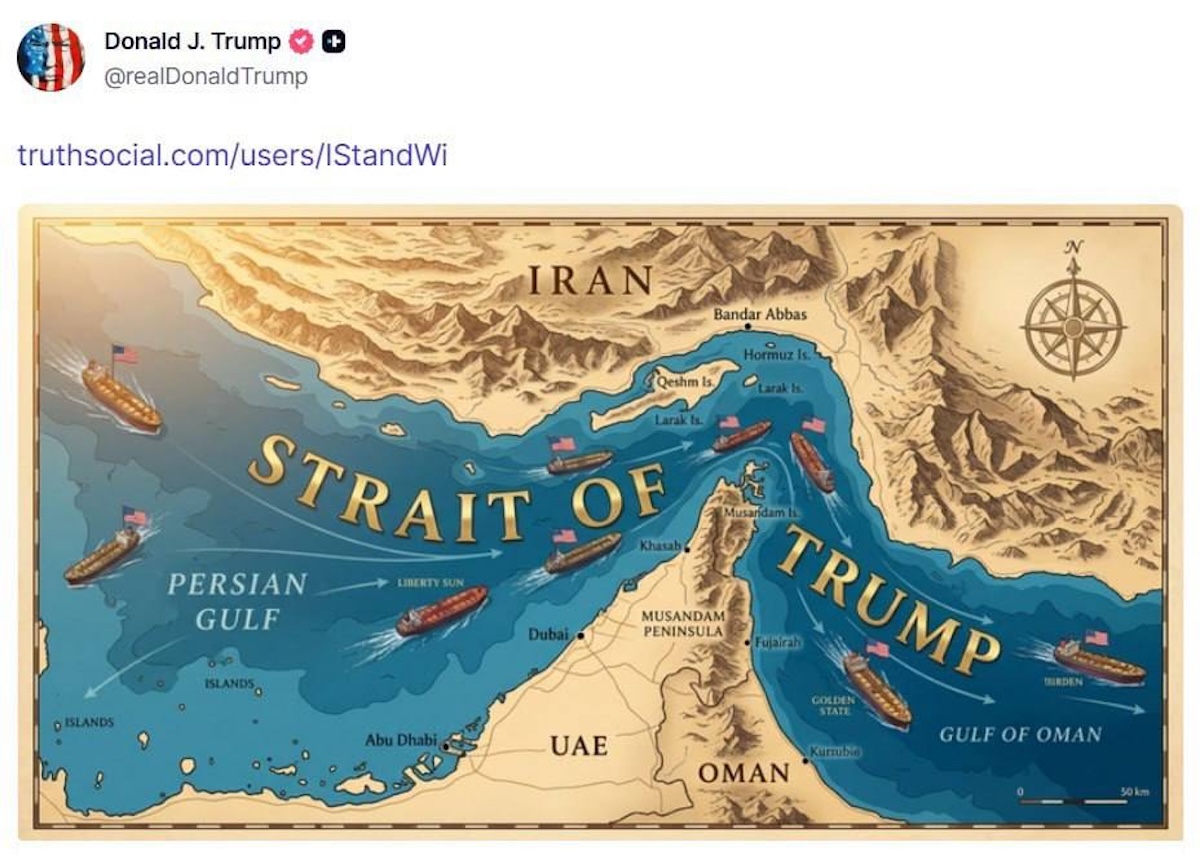
    Fresh tit-for-tat military exchanges between the United States and Iran have sent tensions soaring around the strategic Strait of Hormuz over the weekend, marking the third major escalation in a week even as diplomatic efforts to reach a permanent ceasefire deal remain deadlocked.

    US Central Command (Centcom), the military body overseeing American operations in the Middle East, confirmed it launched what it labeled “self-defence strikes” against Iranian military infrastructure over Saturday and Sunday. The targeted sites were radar and drone command-and-control installations in Goruk, a coastal city in southern Iran, and Qeshm Island, a key landmass sitting directly within the Strait of Hormuz. Centcom said the strikes were launched in response to escalating aggressive Iranian actions, including the downing of an American unmanned drone operating over international waters. It added that the targeted Iranian facilities posed an immediate threat to commercial vessels transiting the critical regional waterway, and that no US service members were injured in the entire episode.

    Shortly after the US strikes, Iran’s Islamic Revolutionary Guard Corps (IRGC), the country’s elite military force, announced it had retaliated by targeting a US military base that Washington had used to launch the earlier attacks on Iranian territory. Two Iranian ballistic missiles fired toward US forces stationed in Kuwait were intercepted by coalition defenses, Centcom confirmed, with no casualties reported on the American side. Kuwaiti military officials had earlier reported engaging incoming “hostile” missiles and drones, triggering air raid sirens across the country. In an official statement released after the exchanges, Kuwait’s foreign ministry condemned the Iranian attacks in the strongest possible terms, calling them “heinous and repeated” acts that represent a dangerous escalation and a direct assault on Kuwaiti sovereignty. The statement added that the attacks undermine international efforts to cool regional tensions, and that Kuwait retains the full right to adopt any necessary measures to defend its territory and citizens.

    This is not the first such exchange: Iran targeted the same Kuwaiti base last week in retaliation for earlier US airstrikes, which Washington said were carried out to disrupt Iranian attempts to lay mines in the Strait of Hormuz shipping lane. The waterway, which handles roughly one-fifth of global oil and liquefied natural gas trade, has remained effectively blocked since the escalation of hostilities, driving sharp increases in global energy prices.

    The latest military clashes come after high-stakes negotiations for a permanent deal to end months of open conflict between the two nations failed to make progress over the weekend. According to US media reports, US President Donald Trump requested last-minute changes to the draft agreement, derailing what had been billed as a final push to resolve the dispute. Sources cited by CBS News, the BBC’s US news partner, said the requested changes center on two key sticking points: the terms for reopening the Strait of Hormuz and the timetable for removing Iran’s stockpiles of highly enriched uranium. The White House has not yet issued any public comment on the reports.

    Iranian officials have pushed back sharply against the last-minute US demands, accusing Washington of shifting its position repeatedly to derail talks. “The United States is constantly changing its views and putting forward new or contradictory demands, which naturally prolong negotiations,” Iran’s foreign ministry spokesman Esmail Baghaei told reporters on Monday. Iran’s chief negotiator reiterated on Sunday that Tehran would not sign any agreement that does not fully secure Iran’s core national rights.

    Baghaei also clarified that nuclear negotiations are not currently on the diplomatic agenda, despite reports that the latest draft framework includes provisions for renewed talks on Iran’s nuclear program, which Tehran has long maintained is entirely peaceful. “No negotiations have taken place on the details of the nuclear file. At this stage, our priority is ending the war,” Baghaei said. He added that a lasting ceasefire in neighboring Lebanon, which has been drawn into the broader conflict, is an non-negotiable essential condition for any final deal, and that Washington and Tehran have not yet reached a final conclusion on any terms. Iran’s foreign minister Abbas Araghchi echoed this position in a post on X on Monday, emphasizing that “the ceasefire between Iran and the US is unequivocally a ceasefire on all fronts, including in Lebanon,” and warning that “the US and Israel are responsible for the consequences of any violation.”

    Lebanon entered the broader conflict between the US, Israel and Iran on March 2, after an Israeli airstrike killed Iran’s Supreme Leader Ali Khamenei. The Iran-aligned militant group Hezbollah launched a massive rocket barrage into northern Israel in retaliation, prompting Israel to launch a full-scale air campaign across Lebanon followed by a ground invasion.

    Despite the ongoing escalation, President Trump struck an optimistic tone in a post on his social platform Truth Social early Monday, urging his political critics to “sit back and relax” and claiming “it will all work out well in the end.” He added that Iran “really wants to make a deal, and it will be a good one for the USA.” A temporary ceasefire between the two sides first came into effect on April 8, and Trump has repeatedly claimed in recent weeks that a permanent deal is close, though no formal agreement has been finalized to date. Last Friday, Trump met with senior aides to make a final determination on a framework to extend the existing ceasefire, but the meeting ended without clarity on next steps, shortly before reports of the president’s requested changes to the draft text emerged. The most recent US draft, according to CBS, includes a 60-day full cessation of hostilities and a binding commitment to reopen the closed Strait of Hormuz.

    Iran has warned that any future American aggression will be met with a far stronger response. “If US aggression is repeated, our response will be completely different,” IRGC officials told Iran’s semi-official Fars news agency.

  • Australia to send more players to England’s PWR

    Australia to send more players to England’s PWR

    As Australia prepares to host the 2029 Women’s Rugby World Cup, national governing body Rugby Australia has launched a strategic partnership with England’s top-flight Premiership Women’s Rugby (PWR), sending elite domestic players to compete in the highly competitive European league to sharpen their competitive edge ahead of the home tournament.

    The initiative marks a deliberate push to lift the Wallaroos, Australia’s senior women’s national side, up the global rankings. Currently sitting ninth in the world ratings, Australia exited the 2025 Rugby World Cup at the quarter-final stage following a lopsided 46-5 defeat to Canada, who went on to reach the tournament final. With 2029’s edition set to be played on Australian soil, Rugby Australia has framed access to PWR’s high-standard competition as a critical stepping stone to reaching its goal of competing deep into the 2029 knockout rounds.

    Tabua Tuinakauvadra, the 23-year-old reigning Wallaroos Player of the Year currently plying her trade with Australia’s ACT Brumbies, is the first player to move under the new partnership. She will join English side Leicester Tigers on a contract that runs through to the end of April 2027, with a pre-agreed arrangement for her to return to Australia annually to compete in the Pacific Four Series international window and the domestic Super Rugby Women competition. Under current PWR scheduling rules, this structure means Australian players will not be available for the closing round of the PWR season or any play-off matches unless the league revises its format in coming years.

    Peter Horne, Rugby Australia’s high performance director, emphasized that the partnership addresses a core development need for the national program. “With a home Rugby World Cup on the horizon, Rugby Australia is committed to exposing the Wallaroos to world-class competition wherever possible,” Horne said. “Gaining consistent match experience in a competition like the PWR will be invaluable for the players’ long-term growth.” Horne’s sentiment has been echoed by several other top rugby nations, which have already established similar pathways for their players to access PWR competition. Wales, Scotland, Canada, and the United States have all moved to send their top international talent to England’s top league in recent years.

    Australia is far from the only nation capitalizing on PWR’s high competitive standard. Following the 2025 Rugby World Cup hosted by England, a large contingent of top players from two-time world champions New Zealand secured PWR contracts after facing limited consistent playing opportunities in their home domestic setup. Ruahei Demant, captain of the world-famous Black Ferns, enjoyed a short-term spell with Bristol Bears Women this season and has already publicly signaled her intention to return to the league in future campaigns.

    The growing influx of elite international talent to the PWR does, however, bring fresh scrutiny to the league’s founding purpose. Initially designed as a development pathway to nurture emerging domestic talent for the England national side, the growing number of overseas recruits has reignited questions around the existing rules requiring PWR sides to field a minimum number of England-qualified players in matchday squads, with observers debating how to balance the benefits of top-tier competition against opportunities for homegrown English prospects.

  • Somali piracy making a comeback on waves of Iran war

    Somali piracy making a comeback on waves of Iran war

    In the late evening of April 26, an Egyptian-registered merchant vessel, the Sward, was boarded and seized by armed assailants just a few nautical miles off the shoreline of Somalia. The hijackers diverted the captured ship toward a mooring point near the port of Garacad in Puntland, the semi-autonomous regional state in northeastern Somalia. In the days following the initial seizure, additional hijacking personnel arrived aboard the Sward, accompanied by a negotiator brought in to coordinate ransom demands with the vessel’s ownership. As of the time of this report, the Sward and its crew remain fully under pirate control. This incident is far from an isolated attack: two additional commercial vessels, the Palau-flagged oil tanker Honour 25 and the Togo-flagged tanker Eureka, were hijacked in the same window and also redirected to the Puntland coast.

    In recent weeks, Somali pirate factions have also seized multiple traditional ocean-going sailing vessels called dhows to repurpose them as “motherships.” These converted vessels allow pirate crews to stay at sea for extended periods, putting them in position to launch strikes hundreds of miles from the Somali coastline. This string of coordinated attacks has reignited widespread international concern that Somali piracy, a threat largely suppressed for more than a decade, is making a dangerous comeback.

    To understand the gravity of the current resurgence, it is necessary to revisit the history of piracy in the region. Between 2005 and 2012, Somali pirate groups carried out more than 1,000 attacks on international commercial shipping, successfully hijacking 218 vessels and taking more than 3,700 sailors hostage. Over that period, shipowners paid an average of $50 million in annual ransom payments, while the cumulative economic cost of disrupted trade, increased insurance premiums, and expanded security measures reached as high as $18 billion per year for the global economy.

    For more than a decade after that peak, Somali piracy was kept under control through a combination of armed private security on commercial vessels, coordinated international naval patrols, and targeted land-based development programs. However, the underlying structure of piracy was never fully dismantled: very few top pirate leaders were ever brought to trial, and the extensive onshore support and logistics networks that sustained the trade were never rooted out. Experts have long warned these networks were merely dormant, and the recent spate of hijackings suggests that warning was well-founded.

    So is the old hijack-for-ransom business model poised for a full resurrection? Analysts point to three key factors that create fertile ground for a widespread return of piracy. First, piracy in Somalia has always been deeply tied to political instability. Academic research on the local dynamics of 2000s-era Somali piracy found that peaks in pirate activity consistently aligned with periods of constitutional crisis, political upheaval, and military conflict across the country. Today, Somalia is mired in just such a crisis: in March 2026, the federal federal government indefinitely postponed the scheduled 2026 general election without following legal protocol, and recently ordered the dissolution of the newly elected parliament of Somalia’s South West state, forcibly replacing its regional leadership. Additionally, Israel’s December 2025 recognition of the self-declared Republic of Somaliland has reshuffled regional alliances, pitting Arab states led by Saudi Arabia — which views Somali territorial integrity as critical to Red Sea and Gulf of Aden security — against the breakaway region. This pattern of political fragmentation mirrors the conditions that allowed piracy to flourish between 2005 and 2012, when regional elites in Puntland and south-central Somalia turned to pirate revenue to fund political and military campaigns. There is growing concern these elites could be tempted to revive the practice.

    The second key driver is widespread economic desperation. Skyrocketing prices for food, fuel, and agricultural fertilizer, compounded by the Trump administration’s sudden elimination of U.S.-funded development and humanitarian programs, have created widespread hardship across Somalia. U.S. humanitarian aid to the country plummeted from $467 million in 2024 to just $70 million in 2025, with only $3 million in federal assistance disbursed in the first three months of 2026 alone. For many coastal communities, piracy is remembered as a reliable source of income: during the 2005-2012 peak, pirate groups distributed ransom revenue broadly across local communities to build onshore support, earning a reputation as generous employers for young people with few other economic options. With widespread poverty leaving many Somalis desperate for alternative income, pirate groups are finding a ready pool of new recruits.

    Third, the strategic conditions for piracy are more favorable today than they have been in more than a decade. The closure of the Strait of Hormuz amid ongoing conflict with Iran, paired with Houthi attacks on commercial shipping in the Red Sea, has forced thousands of merchant vessels bound for Europe to reroute around the Cape of Good Hope — a path that runs directly along the length of the Somali coast, bringing a flood of new targets within pirate reach. At the same time, the risk to pirates has dropped sharply: most of the international naval vessels that previously patrolled the Somali basin have been redeployed to the Red Sea and Strait of Hormuz to address other security threats. This leaves pirates free to operate from hijacked motherships for weeks without detection or intervention. Compounding this, rising operational costs have led many smaller shipping lines to cut back on expensive counter-piracy measures, such as traveling at the high speeds needed to outrun pirate skiffs or hiring armed private security teams. While armed security has proven an effective deterrent, vessels that cannot afford these protections are extremely vulnerable to hijacking.

    Looking ahead, the near-term trajectory of Somali piracy will depend heavily on the outcome of the current round of hijackings. Pirates depend on ransom payments to reinvest in their operations and attract new recruits to their performance-based, no-win no-fee contracts. If shipowners meet the hijackers’ demands — including the $10 million ransom the group has demanded for the Eureka — the quick payoff will incentivize more attacks and raise risk for all shipping in the region. Marine insurers could respond by reclassifying the Somali Basin as a high-risk area, as they did in 2008, which would drive shipping away from the coast and push up consumer costs across global supply chains. Unlike the 2010s, no major global power or international alliance currently has the political will or capacity to deploy a large-scale counter-piracy naval mission on the scale seen in 2011 and 2012, when the international community spent more than $1 billion annually on patrols off Somalia.

    Experts emphasize that while piracy appears as a maritime security problem, a permanent solution will require addressing its root causes on land. Rather than relying exclusively on naval enforcement, investing in infrastructure to boost regional trade and inclusive local economic development offers a more sustainable long-term path to suppressing piracy. The cumulative economic damage of higher trade costs and large-scale naval operations far outweighs the limited benefits pirate activity brings to local Somali communities, making targeted onshore investment a far more cost-effective solution for the international community.

  • The schoolgirl who became world champion at 14

    The schoolgirl who became world champion at 14

    At just 15 years old, Farida Khalil of Egypt has carved out a place in sporting history that most elite athletes twice her age can only dream of achieving. In a single 2024 season, the teenage phenomenon claimed every major global title in modern pentathlon, sweeping all three youth divisions before stunning the sporting world by taking home the senior women’s World Championship gold in August 2024. The Union Internationale de Pentathlon Moderne (UIPM), the sport’s global governing body, has labeled Khalil’s unprecedented clean sweep the “Farida Slam,” a feat never before recorded in modern pentathlon competition.

    What sets Khalil apart beyond her historic trophy haul is the relentless commitment she brings to a grueling multi-discipline sport that combines fencing, swimming, running, shooting, and a newly added obstacle race. For the young champion, the variety of modern pentathlon is one of its greatest draws. “I love that difference, that I’m not going to stay fixed on one discipline,” Khalil told BBC Arabic in a recent interview. Her rise to the top of global rankings has been a true family effort, with her father Mohamed Abu Hashem serving as her head coach since she began competing.

    Abu Hashem emphasizes that Khalil’s success is no happy accident, but the product of years of deliberate sacrifice and unwavering persistence. “Raising a champion in your home, a world champion, is not easy at all,” he explained. “It’s not about luck. It is persistence, years of effort, endurance and big sacrifices.” Khalil’s daily routine bears this out: she wakes at 5 a.m. long before the sun rises over Cairo, kicking off each day with two hours of swimming, followed by two hours of running, and fits up to 14 hours of total training into most days, with only short breaks for lunch and academic tutoring. While her school is located just north of the Egyptian capital, her packed training schedule means she can only attend classes part-time, but when she does join her peers, her status as the world’s youngest number-one-ranked athlete precedes her. “My friends at school are always proud that they are walking around with a world champion – walking with the youngest girl to become world number one,” Khalil says.

    Khalil’s emergence as modern pentathlon’s breakout new star could not have come at a more pivotal moment for the sport. Just a few years ago, modern pentathlon faced the threat of being removed from the Olympic Games following a high-profile incident at the 2020 Tokyo Olympics, where video emerged of a German coach striking a horse that refused to jump during the show jumping discipline. In response, the UIPM voted in November 2021 to replace show jumping with an obstacle race, a change that would take full effect after the 2024 Paris Olympics. This revamped format was used for the first time at the 2025 World Championships in Lithuania, where Khalil claimed her historic senior gold. The young champion is a vocal supporter of the sport’s evolution, noting that the new discipline brings fresh energy to modern pentathlon for both athletes and fans. “I love the idea that our sport is evolving and becoming more appealing to young athletes like me,” she told Olympics.com.

    Today, Khalil hones her craft at Cairo’s El Shams Sporting Club, where she trains under her father’s watchful eye alongside a new generation of young Egyptian pentathletes. Wearing her black Team Egypt shirt emblazoned with a golden image of the falcon-headed Egyptian sky god Horus, she navigates obstacle courses with incredible speed and agility, springing from metal platforms to swing hand-over-hand across overhead ladders as part of her daily training. Abu Hashem says every minute of his daughter’s schedule is intentional, as the pair work toward a shared big dream of Olympic gold. “We are building a big dream, so every minute has to count. This spirit is what makes Farida different from others all over the world,” he says.

    Khalil’s rapid rise through the competitive ranks began just four years ago, when she started competing in youth championships in 2021. She notched wins so consistently against youth competitors that her team quickly moved her up to face senior competition, where she continued to dominate. “We found we were winning with very competitive scores,” Abu Hashem explained. “I started calculating the world records and found that Farida can break them very easily.” Now, father and daughter have their sights set on gold at the 2028 Los Angeles Olympics, a goal that builds on Egypt’s already impressive legacy in modern pentathlon.

    Egypt first emerged as a global pentathlon powerhouse at the 2018 Youth Olympics in Buenos Aires, where Ahmed Elgendy and Salma Abdelmaksoud claimed men’s and women’s individual gold respectively. Elgendy went on to win Egypt’s first senior Olympic medal in the sport with a silver at Tokyo 2020, then upgraded that to a gold medal and a new world record at the 2024 Paris Games. Just hours before Khalil claimed her historic World Championship gold last August, Egyptian athlete Moutaz Mohamed became the first African man to win an individual world title in the sport.

    “Egypt has become a powerhouse in this sport,” Sherif El Erian, president of the Egyptian Modern Pentathlon Federation (EMPF) and UIPM vice president, told the BBC. “This has come through years and years of hard work. It’s like all of Egypt is training.” Khalil’s breakthrough success has only boosted the federation’s momentum: Cairo will host the 2028 World Championships, which will also serve as an official Olympic qualifying event.

    Off the competition course, Khalil has embraced her role as an inspiration for young athletes across Egypt and beyond. In 2023, UNICEF named her a Shabab Balad (Youth of the Country) champion, recognizing her as “a true inspiration and source of pride” for young people across the nation. Today, she often receives requests for advice from aspiring athletes both inside and outside the world of pentathlon, and she makes time to support anyone who wants to follow in her footsteps. “I am very happy when I see someone who wants to do what I did,” she says. “Of course I help them. I help everyone who needs advice.”

  • Israel orders strikes on Beirut ahead of UN meeting

    Israel orders strikes on Beirut ahead of UN meeting

    In a sharp escalation of its two-decade deepest incursion into Lebanon, Israel announced plans Monday to launch new airstrikes on Beirut’s southern suburbs, a Hezbollah stronghold that has largely avoided heavy bombardment since April. The announcement comes just hours before an emergency UN Security Council meeting convened to address Israel’s expanding military operations, and as global powers scramble to prevent a full-scale regional conflict.

    In a joint statement from Prime Minister Benjamin Netanyahu and Defence Minister Israel Katz, the Israeli leadership ordered the Israel Defense Forces (IDF) to target militant positions in Beirut’s densely populated Dahiyeh district. The order frames the operation as a response to repeated ceasefire violations by the Iran-backed militant group Hezbollah, which has launched daily attacks on Israeli territory since a fragile truce took effect in mid-April. “In light of the repeated violations of the ceasefire in Lebanon by the terrorist organisation Hezbollah and the attacks on our cities and citizens, Prime Minister Benjamin Netanyahu and Defence Minister Israel Katz have instructed the IDF to strike terror targets in the Dahiyeh district of Beirut,” the statement read.

    Katz doubled down on the threat in a separate remarks, warning that “there will be no calm in Beirut” if Hezbollah continues its offensive operations. He also formally outlined Israel’s new strategic goal: establishing a military-controlled security zone stretching to the Litani River in southern Lebanon, cleared of all weapons and militant presence. The announcement comes one day after Israeli troops seized the iconic Beaufort Castle (Qalaat al-Chakif), a strategic high point overlooking all of southern Lebanon that served as an Israeli military base during its 22-year occupation of the region ending in 2000. Netanyahu described the capture of the castle as a “dramatic shift” in Israel’s current policy in Lebanon.

    The current cycle of conflict between Israel and Hezbollah erupted on March 2, when Hezbollah launched a massive rocket barrage into Israel in retaliation for the US-Israeli killing of Iran’s supreme military leader. A truce brokered to halt hostilities went into effect on April 17, but the agreement has never been fully respected, with both sides trading daily accusations of breaches that justify renewed attacks.

    By Monday morning, panic had already spread across Beirut’s southern suburbs, with dozens of civilian families fleeing the area ahead of expected strikes. An AFP correspondent on the ground reported seeing families with young children packing only a few bags onto motor scooters to evacuate, while others loaded cars full of belongings to leave the area. “That feeling did not last long… Our fears intensified this morning after I received a series of messages about orders to bomb the southern suburbs, which caused widespread panic, and we immediately left the area,” 24-year-old resident Hadi told AFP by phone. Since April 8, when widespread Israeli strikes across Lebanon killed hundreds of people in minutes, Dahiyeh has only been targeted twice.

    Along with the planned strikes on Beirut, Lebanon’s state-run National News Agency reported Monday that the IDF had issued new evacuation orders for nine towns and villages in Lebanon’s Sidon and Jezzine districts, located far from the Israel-Lebanon border. Hezbollah responded to the escalation by claiming responsibility for a missile attack on Tiberias, a city roughly 19 miles inside Israeli territory, and confirmed it had engaged Israeli ground forces operating inside southern Lebanon.

    The escalating violence has drawn immediate condemnation and urgent diplomatic action. France, which requested the emergency UN Security Council meeting scheduled for later Monday, has already spoken out against the escalation. French President Emmanuel Macron said Sunday that “nothing justifies the major escalation under way in south Lebanon”, while the European Union has called on Israel to immediately “stop its military escalation”.

    Diplomatic efforts to de-escalate are already underway, with the United States brokering a new round of security talks between Israeli and Lebanese military delegations. A fourth round of negotiations is set to open Tuesday, following an initial working meeting in Washington last Friday. A senior anonymous US official told AFP Sunday that Secretary of State Marco Rubio has spoken with both Lebanese President Joseph Aoun and Netanyahu to lay out a US-backed de-escalation framework: Hezbollah must cease all attacks on Israel first, in exchange for Israel backing away from its planned strikes on Beirut. The official added that Rubio has emphasized Hezbollah must take the first step to end hostilities.

    For Iran, which is currently engaged in stalled negotiations with the United States to end their wider ongoing conflict, a ceasefire in Lebanon remains a non-negotiable condition for any final agreement. Iranian foreign ministry spokesman Esmaeil Baqaei reaffirmed this position during a weekly press briefing Monday, stating that “a ceasefire in Lebanon is an essential condition for any deal aimed at ending the war” with the US. Lebanese President Aoun has labeled Israel’s expanding operation as “a vicious and reprehensible Israeli aggression”.

    Official casualty figures underscore the heavy human cost of the three-month conflict: Lebanon’s health ministry reports that more than 3,412 Lebanese people have been killed in Israeli attacks since March 2. Over the same period, 26 people have been killed in Israel – 25 soldiers and one civilian contractor.

  • Son of Brazil coach Carlo Ancelotti hired to lead Lille in return to Champions League

    Son of Brazil coach Carlo Ancelotti hired to lead Lille in return to Champions League

    LILLE, France – In a high-profile coaching announcement made Monday, Ligue 1 side Lille OSC confirmed the appointment of Davide Ancelotti, son of Brazil men’s national team head coach Carlo Ancelotti, as their new first-team manager for the 2025-26 season. The 36-year-old tactician has put pen to paper on a two-year contract that will see him steer the club through its return to the UEFA Champions League, the top club football competition in European soccer.

    Ancelotti steps into the role vacated by Bruno Génésio, who did not receive a contract extension after delivering a third-place Ligue 1 finish that secured Lille’s automatic Champions League qualification for the upcoming campaign. While Génésio led the club to solid domestic results, Lille’s ownership opted for a fresh face to guide the team through their European challenge.

    Davide Ancelotti brings nearly 15 years of top-tier coaching experience across Europe and South America, much of it earned alongside his legendary father. He served as an assistant coach at five different elite clubs – Bayern Munich, Napoli, Everton, and Real Madrid – before joining Carlo Ancelotti’s staff with the Brazil national team during 2026 FIFA World Cup qualifying. After cutting his teeth as an assistant at the highest level of the sport, Ancelotti struck out on his own last year, taking his first full-time head coaching role at Brazilian Serie A club Botafogo. His tenure in Rio de Janeiro ended prematurely, however, with Ancelotti relieved of his duties just five months after taking the job.

    This return to France marks Ancelotti’s first senior coaching role in the country in more than a decade. Over 13 years ago, he worked as a fitness coach at Paris Saint-Germain during Carlo Ancelotti’s 18-month spell in charge of the Parisian giants, giving him early familiarity with French top-flight soccer.

    For Lille, the upcoming Champions League campaign marks a return to the competition after the club’s 2024-25 run saw them reach the round of 16, where they were eliminated by Germany’s Borussia Dortmund. Last season, after dropping into the UEFA Europa League, Génésio’s side once again reached the round of 16, falling to eventual tournament winners Aston Villa. With Ancelotti at the helm, the club will look to build on recent consistent European runs and compete for both domestic and continental honors in the coming seasons.

  • Russia fired record 8,150 drones at Ukraine in May: AFP analysis

    Russia fired record 8,150 drones at Ukraine in May: AFP analysis

    A new analysis conducted by Agence France-Presse (AFP) using official data from Ukraine’s Air Force has revealed that Russia unleashed a historic barrage of long-range drones on Ukrainian territory in May, hitting a new all-time high for monthly drone strikes amid ongoing escalation of the full-scale invasion.

    Compiled from daily operational reports released by Ukraine’s military air branch, the data puts the total number of Russian long-range drones launched in May at 8,150. That marks a 24% increase compared to the total drone count recorded in April, confirming a sharp ramping up of Moscow’s long-range air campaign. In addition to the unprecedented drone volume, Russia also fired 211 missiles across Ukraine last month—one of the highest monthly missile totals registered since the start of the full-scale invasion.

    The escalation of air attacks came shortly after a brief three-day humanitarian truce in April that had briefly raised global hopes for expanded diplomatic negotiations to end the conflict. Those hopes quickly faded, however, as both Kyiv and Moscow traded accusations of truce violations, before both sides resumed and intensified long-range strikes against each other’s territory.

    One of the deadliest single attacks of the month targeted Ukraine’s capital Kyiv, when a Russian missile struck a residential apartment block, leaving the building partially destroyed and killing 24 people alongside multiple injuries. May also saw Moscow deploy its Oreshnik, a nuclear-capable ballistic missile, for only the third time since the full-scale invasion began in 2022.

    Ukraine has built an extensive, multi-layered air defense network across its territory over the course of the war, and official data shows the system successfully intercepted roughly 91% of all incoming Russian drones and missiles launched in May. The high interception rate underscores Ukraine’s progress in developing countermeasures to defeat Russian long-range drone attacks, but military officials warn the country remains critically dependent on military support from Western allies to counter Russian missile strikes.

    Ukrainian authorities have repeatedly sounded the alarm over dwindling stockpiles of ammunition for anti-missile systems, including the U.S.-supplied Patriot air defense systems that form a core part of Kyiv’s frontline air defense. Kyiv has made urgent appeals to Washington for additional ammunition supplies to replenish these shrinking stocks, with Ukrainian President Volodymyr Zelensky directly raising the issue with U.S. President Donald Trump during talks last month.

    The shortfall in air defense ammunition has been worsened by parallel demands from the ongoing conflict in the Middle East, where U.S. allies have expended massive volumes of air defense munitions to protect strategic sites across the Persian Gulf. Diplomatic efforts to resolve the Ukraine conflict have stalled in recent months, as Moscow and Kyiv remain irreconcilable over Russia’s demands to annex large swathes of Ukrainian territory. Trump, who reclaimed the White House in 2024 on a campaign promise to end the Ukraine war quickly, has seen his peace efforts stall amid continued disagreement between the two warring sides. More recently, diplomatic progress has been further derailed as Washington shifted its full foreign policy attention to the U.S.-Israeli military campaign against Iran that began on February 28.

  • De la Espriella takes spotlight in Colombia’s presidential race with promise of crime crackdown

    De la Espriella takes spotlight in Colombia’s presidential race with promise of crime crackdown

    Over the weekend, Colombia’s first round of presidential elections delivered a stunning political upset: bombastic pro-Trump outsider lawyer Abelardo de la Espriella secured the top spot, riding a regional wave of voter demand for harsh crackdowns on organized criminal activity. De la Espriella, who captured nearly 44% of the vote, outpaced long-time polling leader progressive Senator Iván Cepeda, who finished with less than 41% of ballots cast. The two candidates will advance to a decisive runoff election scheduled for June 21, where political analysts widely expect de la Espriella to pick up support from voters who backed other conservative candidates in the opening round.

    Almost immediately after Sunday’s results were tabulated, Cepeda and his political ally, sitting Colombian President Gustavo Petro, raised unsubstantiated questions about the integrity of the election process. Political analyst Sergio Guzmán noted that Cepeda faces a steep uphill battle in the runoff, framing de la Espriella’s first-round win as a reflection of a profound shift in Colombian public opinion that will be extremely difficult for the progressive candidate to reverse. “Abelardo de la Espriella won the first round. In other words, that’s a shift in public opinion that is very difficult to overcome. So now Abelardo is emerging as the likely favorite to win,” Guzmán explained.

    Nicknamed “El Tigre” (The Tiger), the 47-year-old candidate has never held public office in Colombia. Before launching his presidential campaign, he built a high-profile legal career representing controversial clients including former conservative President Álvaro Uribe and Venezuelan ally of Nicolás Maduro Alex Saab, who faces U.S. criminal charges (de la Espriella stopped representing Saab roughly seven years ago). De la Espriella spent years living a luxury lifestyle in Italy, and has campaigned as an anti-establishment outsider who would align closely with former U.S. President Donald Trump and replicate El Salvador President Nayib Bukele’s controversial hardline war on gangs. The Bukele model has cut homicide rates in El Salvador but sparked widespread global allegations of systematic human rights abuses.

    In a final-campaign interview with the Associated Press, de la Espriella laid out his uncompromising approach to Colombia’s long-standing narcotic and gang violence crisis: “I will wipe out narcoterrorism and those who I’ve declared a military target like cockroaches, like rats. I will unleash upon them the wrath of God never seen before.” He also pledged to construct 10 new mega-prisons to hold convicted gang members and criminal actors. De la Espriella’s rise fits into a broader political realignment across Latin America, where a growing number of candidates from Chile to Honduras have adopted the “Bukele model” as voters increasingly abandon progressive administrations that focused on addressing the root causes of violence, such as systemic youth poverty and institutional corruption.

    De la Espriella has drawn support from a broad cross-section of Colombian voters. The day before the election, 64-year-old Bogotá coffee vendor Yolanda Peréz hinted she would cast her ballot for “El Tigre.” For 20-year-old first-time voter Miguel Maheca, who publicly displayed his pro-de la Espriella ballot after voting, security concerns trumped all other policy priorities: “Love isn’t what’s going to make us safe in Colombia,” he said.

    Despite the candidate’s popular appeal, security experts warn that the El Salvador security model is nearly impossible to replicate in Colombia, a country more than 50 times larger than the Central American nation, with a far more fragmented landscape of competing armed groups fighting to control territory and illicit trade routes. De la Espriella’s first-round win comes amid a more aggressive U.S. diplomatic push across Latin America under the Trump administration, which has ramped up pressure on Colombia, Mexico, and Ecuador to adopt harsher anti-crime policies.

    For Cepeda, the result is a major blow to his campaign and the future of the progressive movement that brought President Petro to power in 2022. Cepeda has run on a platform to continue Petro’s controversial “total peace” initiative, which seeks to end decades of conflict by negotiating formal peace agreements with remaining guerrilla factions and criminal gangs. The progressive movement emerged from widespread rejection of the hardline militarized anti-guerrilla campaign waged by former President Uribe, which was marred by the “false positives” scandal that saw Colombian security forces kill thousands of civilians and disguise them as guerrilla combatants to inflate victory counts.

    Cepeda has framed his opponent as a return to Colombia’s problematic past: De la Espriella “represents a return to the paramilitary politics and drug-trafficking — a mafia-run, plutocratic and corrupt past that the country experienced during Álvaro Uribe’s two administrations,” he said Sunday.

    Petro, a former rebel who made history in 2022 as Colombia’s first left-wing head of state, breaking decades of right-wing rule tied to Uribe’s political movement, saw his movement put on the defensive after Sunday’s results. Petro built his winning 2022 coalition on support from rural, Indigenous, and low-income Colombians who had long been ignored by traditional political establishments.

    Renata Segura, director of the International Crisis Group’s Latin America and the Caribbean Program, wrote that the election is now de la Espriella’s to lose. She argued that Cepeda’s strategy of running exclusively on a left-wing platform was a critical error, and his ability to pivot toward broader appeal in the next five weeks will determine whether he has any chance of pulling off an upset in the runoff.