作者: admin

  • US political commentators denied entry to UK by Home Office

    US political commentators denied entry to UK by Home Office

    A high-profile controversy has erupted in the United Kingdom after the Home Office revoked travel authorizations for two prominent American left-wing political commentators, barring them from entering the country ahead of scheduled speaking appearances at the SXSW London festival and an event at the University of Oxford.

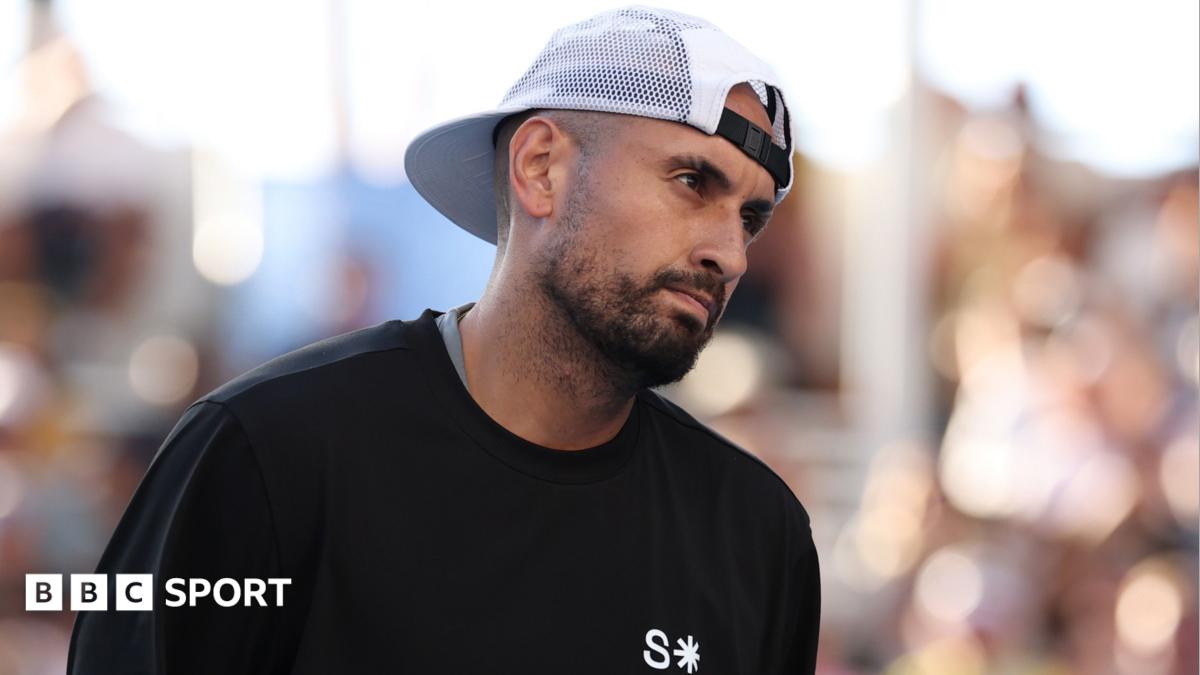
    Hasan Piker, a popular Twitch streamer with a daily audience of 30,000 viewers, and Cenk Uygur, co-founder and host of the leading YouTube political commentary show *The Young Turks*, were both stripped of their Electronic Travel Authorisations (ETAs) ahead of their planned trips. The pair, who are relatives, have publicly condemned the British government, claiming the decision was directly driven by their sharp criticism of Israel’s military campaign in Gaza.

    In a post on X following his denied boarding for a flight to London, Uygur wrote: “I’ve been banned from the UK. I tried to get on a flight to London to attend SXSW London and give a speech at Oxford. I’ve been banned for criticising Israel. Are we free any more? This is oppression of western citizens by our own governments on behalf of a different country.”

    Piker echoed these claims in his response, stating: “The UK has revoked my visa as well. All at the behest of Israel. The west is betraying ‘liberal values’ for a genocidal fascist foreign government. Soon we will all become Israel.”

    Piker has long attracted controversy for his public comments, including stating that Hamas was “1,000 times better” than Israel and saying he would “vote for Hamas over Israel every single time.” He has also previously made a widely condemned 2019 remark that “America deserved 9/11,” which he later acknowledged was inappropriate. Piker has pushed back against accusations of antisemitism, telling *Variety* last year that he is not antisemitic but unequivocally “anti-Israel.”

    According to *The Times*, Uygur’s ban is rooted in multiple concerning factors, including what the outlet describes as antisemitic tropes such as the claim that Israel controls American political institutions, plus controversial comments he made about grooming gangs during an appearance on Piers Morgan’s YouTube channel.

    Under UK immigration rules, the Home Office holds the authority to cancel an ETA if it assesses that an individual’s entry would pose a risk to the UK’s public good.

    The decision has split political and public opinion across the UK. Labour MP David Taylor, who publicly called for Piker to be barred from entry just last week, publicly thanked Home Secretary Yvette Cooper for the outcome. “There’s no reason to open our doors to those who seek to spread hate and division, especially to those who’ve supported a proscribed terror group,” Taylor wrote on X.

    The Community Security Trust (CST), a leading Jewish community security and advocacy group, also welcomed the ban. In a statement, the group said it welcomed “the government’s recognition that there must be consequences when public figures cross the line into hate speech. While criticism of Israel is entirely legitimate, Piker has a record that goes far beyond robust or controversial political speech, including rhetoric that contains antisemitic themes.”

    However, critics across the political spectrum have condemned the visa cancellations as an unacceptable attack on free speech. Green Party of England and Wales leader Zack Polanski described the decision as “a really grim decision,” adding: “People often talk about [the] dangerous road we’d go down under a Reform government – this is another clear warning we’re down there already. A Labour government doing everything possible to silence criticism of the Israeli government.”

    Liberty, a leading UK human rights organization, also criticized the move. Liberty director Akiko Hart noted that “in recent months we have seen the government preventing people from entering the UK where their speech is deemed to have crossed the line. It is important that any Government decisions that restrict speech adhere to the very high standards set out in UK law – and that the Government is transparent about why and how decisions have been made.”

    Officials with SXSW London, a six-day cross-industry event held in East London’s Shoreditch featuring more than 800 speakers, artists, and film screenings, said the organization was aware of the pair’s inability to travel due to the Home Office’s action. “Decisions on entry to the UK are a matter for the Home Office and the individuals concerned. SXSW London’s role is to convene a broad range of diverse voices and perspectives. We remain focused on delivering a programme this week fostering open dialogue and exchange of ideas,” a spokesperson for the festival said.

    Piker was scheduled to lead a discussion titled “How The American Left Learned To Speak The Internet,” while Uygur was set to take part in a panel on “Techno-Feudalism Is Here. Who Are The Lords?” Both speakers’ profiles have since been removed from the SXSW London website.

    This latest visa ban follows a string of similar controversial entry denials by the Home Office in recent months. Earlier this year, American rapper Kanye West, who now goes by Ye, was barred from the UK over a history of widely condemned antisemitic, racist, and pro-Nazi comments. Just last month, the government blocked 11 foreign nationals labeled as “far-right agitators” by Labour leader Keir Starmer from entering the UK ahead of a rally led by far-right activist Tommy Robinson in central London.

  • Bowen: Trump needs this war to end but Iran is not backing down

    Bowen: Trump needs this war to end but Iran is not backing down

    Indirect diplomatic negotiations between the United States and Iran are still ongoing, mediated by Qatar and Pakistan, but Tehran has made no secret of its refusal to compromise on core demands, leaving the fragile April 8 ceasefire hanging in the balance. Neither Washington nor Tehran has walked away from the negotiating table despite persistent low-level military exchanges, but the gap between their competing positions remains wide, with major global consequences at stake.

    The United States maintains a robust naval and air presence positioned within striking distance of Iranian territory, a deliberate show of force designed to ramp up pressure on Tehran to make key concessions. Analysts widely agree that Iran’s military command has kept its forces on heightened alert, using the lull in active fighting to restructure units, repair infrastructure damaged in earlier US and Israeli strikes, and shore up defensive positions. The ongoing low-grade tensions across the Gulf region create a persistent high risk of dangerous miscalculation or miscommunication that could spiral back into full-scale open conflict.

    For Washington, the strategy of military pressure is intended to force Tehran to move toward compromise, while Iran has made equally clear that its resolve to resist remains unbroken. Tehran has warned that if pushed too far, it will target US military bases across the Middle East and critical energy infrastructure across the Arab Gulf states.

    The immediate, near-term priority for any breakthrough is extending the existing ceasefire and locking in a preliminary memorandum of understanding to set the agenda for future, broader negotiations. Even this limited milestone has proven elusive. Iran has linked the reopening of the Strait of Hormuz — a critical global chokepoint closed by Tehran since a US-Israeli attack on February 28 — to major concessions from the West, most notably relief from crippling economic sanctions and the unfreezing of billions of dollars in Iranian assets held abroad. Currently, only a tiny fraction of the usual shipping traffic is able to pass through the waterway, which normally handles roughly a fifth of the world’s daily oil and gas supplies.

    While Saudi Arabia has rerouted some crude exports to Red Sea shipping terminals and the United Arab Emirates can move oil via a pipeline to Gulf of Oman terminals outside the strait, the global economy still faces a 20% cut in traditional energy supplies from the region. Even though the United States no longer relies on Gulf oil imports, domestic US petrol prices remain tied to global market dynamics, meaning the closure is already hitting American consumers at the pump.

    The standoff has left US President Donald Trump in a politically precarious position. Trump joined Israeli Prime Minister Benjamin Netanyahu in launching the current war, based on a flawed assumption that overwhelming air power would quickly topple Iran’s Islamic regime. The pair badly underestimated Tehran’s deep-rooted capacity to resist and absorb attacks, leaving the administration stuck with an unpopular war with no clear exit strategy. Re-escalating open conflict would only deepen public opposition to the war ahead of upcoming political deadlines, but the concessions Iran demands to reopen the strait face fierce pushback from hardline hawks in Trump’s own Republican Party.

    Compounding this political bind is Trump’s long-standing opposition to the 2015 Iran nuclear deal negotiated by the Obama administration, which he withdrew from during his first term. Trump has repeatedly rejected any comparison between a potential new Iran agreement, even a limited ceasefire extension, to the Obama-era deal, limiting his room to compromise. Iran’s leadership, for its part, views the conflict as an existential fight for the survival of its regime, and analysts agree that additional US or Israeli strikes are unlikely to force a change in its core positions.

    Across the wealthy Gulf Arab states, the conflict has already caused lasting economic damage that will take years to repair. These nations built their long-term development models on positioning the Gulf as a stable, secure hub for global commerce and foreign investment, a reputation that has been severely undermined by the outbreak of war. Qatar has taken an active role as a mediator alongside Pakistan, while other Gulf states have taken differing approaches to the crisis. The UAE has deepened its strategic partnership with Israel, which has deployed Iron Dome air defense systems and Israeli military personnel to Emirati territory. Saudi Arabia launched strikes against Iran in retaliation for earlier Iranian attacks, but senior Saudi officials have privately emphasized to Tehran that its actions were independent, not part of the US-Israeli coalition.

    When Trump and Netanyahu launched their campaign to overthrow the Islamic regime, they bet that massive air power would be enough to achieve their goal in short order. That prediction has proven to be a catastrophic miscalculation. Forty-six years after its founding, the Iranian regime has already survived decades of war, sanctions, and international isolation, and it has shown no sign of collapsing under current pressure. Today, the consequences of that failed gamble are being felt not just by the US, Israel, and Iran — but by the entire global economy.

  • Serena Williams to return to tennis at Queen’s Club

    Serena Williams to return to tennis at Queen’s Club

    One of the most decorated athletes in tennis history, Serena Williams, has sent shockwaves through the global tennis community with a long-awaited announcement: she is stepping back into competitive tennis nearly three years after her last professional outing, making her return at the Queen’s Club HSBC Championships later this month in women’s doubles competition. The 44-year-old American icon, who holds 23 Grand Slam singles titles – just one shy of the all-time record held jointly by Margaret Court and Novak Djokovic – has not competed at the top level since her third-round exit at the 2022 US Open, when she signaled she was “evolving away” from the sport rather than formally retiring.

    Williams first teased the news to her millions of fans on social media, posting a clip of herself training on a court with the playful caption “Guess everybody heard the news,” as her phone buzzed nonstop with incoming messages in the background. The 7-time Wimbledon champion followed up with a confirming post, quipping that “Good news travels fast.” In an official statement released through tournament organizers, Williams called Queen’s Club the ideal venue to open this new chapter of her career. “Grass has given me some of the most meaningful moments of my career, and I’m excited to be back competing on one of the sport’s most iconic stages,” she said. The women’s draw of the historic London tournament gets underway on June 8, with Williams granted a wildcard entry into the doubles draw, where she is widely reported to partner 17-year-old rising Canadian star Victoria Mboko.

    Speculation around a potential Williams comeback has been building for months. The first clue emerged back in December, when public records revealed Williams had rejoined the global tennis anti-doping program – a mandatory requirement for any player seeking to return to elite tour competition. Williams initially denied plans for a competitive return, but persistent rumors kept the story alive throughout the first half of 2024. Even men’s tennis great Novak Djokovic tipped off the public about a possible comeback back in March, and the announcement has dominated conversations among players competing at this year’s ongoing French Open in Paris.

    Current and emerging stars of the sport have overwhelmingly welcomed the news of Williams’ return. Former world No. 1 Naomi Osaka, who defeated Williams in the controversial 2018 US Open final to claim her first Grand Slam title, said she is already looking forward to watching the comeback run. “I think it’s good for me. I’ll be very entertained,” Osaka told reporters. American rising star Coco Gauff, who bowed out of the French Open in the third round on Saturday, added that she would jump at the chance to face Williams for the first time in her career, calling the legend an inspiration to a generation of young players.

    WTA Tournament Director and former British tennis pro Laura Robson expressed overwhelming excitement about the landmark comeback, saying “Serena Williams is one of the greatest athletes the world has ever seen, and we’re delighted that she will be making her return to tennis at the LTA’s HSBC Championships.” Robson noted that women’s tennis only returned to Queen’s Club last year after a long absence, making Williams’ participation a historic milestone for the event: “Women’s tennis made a historic return to the Queen’s Club last year and now we have an icon of the game stepping back on to court.”

    Over the course of her legendary career, Williams spent a combined 319 weeks atop the WTA singles world rankings and claimed 73 tour-level singles titles. She also won 14 Grand Slam doubles titles alongside her older sister and long-time doubles partner Venus Williams, who returned to competitive tennis last year after a 16-month break. When Venus announced her own comeback 12 months ago, she said the only thing that could make her return better would be Serena joining her back on tour. That wish is now set to come true at Queen’s Club later this month.

  • Watch: Moment a meteor creates sonic boom over Massachusetts

    Watch: Moment a meteor creates sonic boom over Massachusetts

    On a recent day that drew widespread public attention, a dramatic celestial event unfolded over Massachusetts, as a streaking meteor blazed through the upper atmosphere before breaking apart in a violent burst that generated a noticeable sonic boom across much of the state. Multiple eyewitnesses captured footage of the glowing fireball as it tore across the sky, with videos of the event quickly spreading across social media platforms and sparking fascination among casual stargazers and astronomy enthusiasts alike.

    Following the sighting, NASA experts stepped in to analyze the energy released during the meteor’s fragmentation. According to official assessments from the U.S. space agency, the breakup of the incoming space rock unleashed energy equivalent to roughly 300 tons of TNT – a force large enough to generate the shockwave that many residents across Massachusetts heard and felt as a deep, resonant boom.

    Meteor events of this scale are classified as small to medium-sized entry events, according to astronomical records. Most meteors that enter Earth’s atmosphere burn up completely before reaching the surface, and this event was no exception; NASA has not reported any findings of surviving meteorite fragments reaching the ground as of current updates. The event has renewed public interest in near-Earth objects and the regular cosmic activity that interacts with our planet on a daily basis, often going unseen by most people.

  • Three Ebola vaccines in development amid growing outbreak fears

    Three Ebola vaccines in development amid growing outbreak fears

    A rapidly spreading outbreak of a rare, lethal strain of Ebola, the Bundibugyo species, has sparked an urgent global push to develop targeted vaccines, with three leading research and industry groups racing to deliver viable candidates to stem a crisis that has already claimed nearly 250 lives. Public health experts warn this outbreak, which emerged undetected in a conflict-stricken region of the Democratic Republic of Congo (DRC) with severely limited healthcare infrastructure, could become the most devastating Ebola event on record, rivaling the 2014–2016 West African crisis that killed more than 11,000 people.

    As of the latest update, more than 1,000 suspected Bundibugyo Ebola cases have been recorded in the DRC, with nine confirmed cases already detected in neighboring Uganda, raising fears of cross-border spread. Unlike the more common Zaire Ebola strain, for which an approved vaccine already exists, Bundibugyo is one of six known Ebola species that has only caused two documented outbreaks in history, and no licensed countermeasures currently exist for it.

    The Coalition for Epidemic Preparedness Innovations (CEPI) is providing funding to all three ongoing vaccine development projects, with CEPI CEO Dr Richard Hatchett emphasizing that “every day counts” in the race to contain the virus. Each project leverages different cutting-edge vaccine technologies, many refined and proven during the global COVID-19 pandemic, to target the unique glycoprotein structure on the surface of the Bundibugyo virus.

    The International Aids Vaccine Initiative (IAVI) is leading one effort, adapting the existing approved Zaire Ebola vaccine to target the new strain. Preclinical testing in non-human primates has already shown promising results: the modified candidate rapidly primes the immune system and delivered nearly 100% protection against Bundibugyo. IAVI president and CEO Dr Mark Feinberg noted that while early data leaves his team optimistic about the vaccine’s potential, the candidate currently remains seven to nine months away from entering human clinical trials, though researchers are working aggressively to shorten that timeline. Feinberg echoed widespread public health warnings, saying the outbreak “is clearly threatening to be as severe an outbreak as [the 2014–2016 West African event], if not even worse”, making vaccine development an urgent global priority. That assessment aligns with warnings from medical charity Médecins Sans Frontières, which has described the situation as “deeply alarming”, noting the outbreak has already produced more confirmed cases in its early stages than any previous Bundibugyo event.

    A second candidate is being developed by US pharmaceutical giant Moderna, which is drawing on its mRNA technology that enabled rapid vaccine development during the COVID-19 pandemic. Moderna CEO Stéphane Bancel said the company would “move with urgency and scientific rigor to support the response and help bring a potential vaccine closer to the communities that need it most”.

    The third candidate is being developed by the University of Oxford, which also adapted its established viral vector vaccine platform – first used at scale for COVID-19 – to create a new targeted Ebola vaccine. The Oxford team projects their candidate will be ready for human clinical trials in just two to three months, a significantly faster timeline than the IAVI project.

    While all three candidates are designed to train the human immune system to recognize the Bundibugyo glycoprotein, they use distinct technological approaches: IAVI’s candidate uses a live, harmless engineered virus that displays the Ebola glycoprotein to teach the immune system to recognize the threat, while both Moderna’s mRNA vaccine and Oxford’s viral vector vaccine deliver a small fragment of genetic code that instructs the body’s own cells to produce the glycoprotein, triggering an immune response. Differences in how these technologies activate the immune system may impact the level of protection they provide or the number of doses required, so all candidates will require rigorous testing in human clinical trials to confirm safety and efficacy. The outbreak has already drawn widespread concern from global health bodies, with World Health Organization director general Dr Tedros Adhanom Ghebreyesus noting that a safe, effective Bundibugyo vaccine would not only help control the current crisis but also strengthen global preparedness for future outbreaks of this rare but deadly pathogen.

  • Williams, 44, to return to action in Queen’s doubles

    Williams, 44, to return to action in Queen’s doubles

    Nearly four years after stepping away from competitive tennis, one of the greatest athletes in the history of the sport is set to make her long-awaited return. 44-year-old American legend Serena Williams has officially accepted a wildcard into the women’s doubles draw of the Queen’s Club WTA 500 tournament, which kicks off in London on June 8, marking her first professional appearance since the 2022 US Open.

    While tournament organizers have not yet officially named Williams’ doubles partner, widespread tennis reporting points to 19-year-old Canadian rising star Victoria Mboko, a top-10 ranked young player who already called Williams her “idol” in comments after her 2025 French Open run last week. Mboko advanced to the third round of Roland Garros before falling to former Australian Open champion Madison Keys on Saturday, and has openly spoken about the influence Williams has had on her own career.

    Williams first stepped back from professional tennis in 2022, closing out a 27-year career that redefined women’s tennis. Her trophy cabinet boasts a record-breaking 23 Grand Slam singles titles in the Open Era — the second-most of all time behind only Margaret Court’s 24 — alongside 14 Grand Slam doubles titles won alongside her sister Venus, with the pair maintaining a perfect undefeated record in major doubles finals. Across her career, she spent 319 weeks atop the WTA singles world rankings, claimed 73 WTA singles titles, and earned three Olympic doubles gold medals to add to her 2012 London singles gold. She completed a career Golden Slam in both singles and doubles, and won every major singles tournament at least three times. Even after returning from maternity leave following the birth of her first daughter in 2017, Williams reached four Grand Slam finals and climbed back into the world top 10 rankings. Seven of her Grand Slam singles titles came at Wimbledon, the iconic grass-court major that kicks off just three weeks after the Queen’s Club tournament.

    Rumors of a comeback began circulating last year, when Williams’ name unexpectedly appeared on the official roster for tennis anti-doping testing. She initially denied plans to return, but speculation grew dramatically when the International Tennis Integrity Agency added her to its reinstatement list this past February. Williams fueled the rumors this week when she shared a clip of herself walking onto a competitive tennis court on social media, captioning the post: “Guess everybody heard the news” followed by the line “Good news travels fast.”

    In a statement confirming her entry, Williams called Queen’s Club the ideal venue to launch this new chapter of her tennis journey. “Grass gave me some of the most meaningful moments of my entire career,” she said. “I’m incredibly excited to be back competing on one of the most iconic stages in our sport.”

    Off the court, Williams has kept a busy life since retiring from full-time competition: she welcomed her second daughter in 2023, and has become a prominent business voice, most recently stepping into a spokesperson role for weight health company Ro, which distributes GLP-1 weight management medications including Wegovy and Zepbound. Last year, she opened up about losing 14 kilograms over eight months, describing her excess weight as an “opponent” to overcome, and told reporters she was training up to five hours a day to prepare for a half-marathon, building endurance far beyond what she had hit earlier in her life.

    The announcement has already sent ripples through the global tennis community, with many speculating that the Queen’s Club appearance is a precursor to a wildcard entry into Wimbledon, where Williams has claimed seven singles and seven doubles titles throughout her career. Three-time Wimbledon champion and tennis commentator John McEnroe told TNT Sports that a deep run at the All England Club in singles seems like the logical next step for the legend. “If Serena Williams, the greatest of all time, is coming back, she’s not coming back just to enjoy playing,” McEnroe said. “She wants to win another major — that’s the only reason I can think she’d want to play tennis again.”

    BBC tennis correspondent Russell Fuller noted that the full scope of Williams’ comeback plans remains unconfirmed. There has been no official confirmation that she will enter the Wimbledon singles draw, though with the US Open still two months away from Queen’s Club, Fuller suggested that the temptation of a singles run may prove too strong for the still-competitive champion to resist. Other speculation has centered on a possible final doubles pairing with her sister Venus, who will turn 46 the day before the Queen’s Club tournament begins. Regardless of her end goals, Williams’ return is already one of the most highly anticipated storylines of the 2025 grass court season, with fans already lining up to secure tickets to see the legend back in action.

  • Online commentators Hasan Piker and Cenk Uygur barred from entering the UK for public events

    Online commentators Hasan Piker and Cenk Uygur barred from entering the UK for public events

    LONDON – In a decision that has reignited fierce debate over free expression, immigration policy and the politics of the Gaza conflict, UK authorities confirmed Monday that two high-profile American progressive political commentators have been barred from entering the country ahead of scheduled public appearances. Turkish-American streamer Hasan Piker, who boasts 2.8 million followers on the Twitch streaming platform and is known for sharp criticism of former U.S. President Donald Trump, Israeli government policy, and the ongoing military campaign in Gaza, was among those denied entry. He was joined by his uncle Cenk Uygur, founder and host of the popular online political talk show *The Young Turks*.

    The UK Home Office confirmed that both men’s Electronic Travel Authorizations (ETAs) – the entry clearance required for visa-free visitors to the country – have been revoked on the official basis that their presence in the UK would not be “conducive to the public good.” In a statement following the announcement, the department clarified that decisions to refuse or cancel travel authorization on these grounds are rooted in a formal assessment of the potential risk an individual poses to British society.

    The two commentators had been scheduled to speak at SXSW London, a major festival focused on culture, technology and creative industries, scheduled for this month. Uygur had also been invited to deliver an address at the Oxford Union, the centuries-old prestigious student debating society that has hosted speakers from across the global political spectrum for decades.

    The ban drew immediate reaction from the two commentators, who both say they are being targeted for their public criticism of Israeli policy amid the war in Gaza. Piker, responding to the decision on his YouTube channel, argued that the move reflected the outsized influence of pro-Israel interests on UK immigration policy. “A sad state of affairs where obviously the interests of Israel take the highest priority,” he said. Uygur echoed that sentiment in a post on X, writing: “I got banned for criticizing Israel. Are we free any more?”

    British officials have justified the ban by pointing to past comments by Piker that expressed support for Hamas, the militant group that governs the Gaza Strip and is designated as a proscribed terrorist organization by both the UK and U.S. The October 7, 2023 cross-border attack by Hamas that killed approximately 1,200 people and took 251 hostages triggered the ongoing Israeli military campaign in Gaza that has killed more than 34,000 Palestinians to date, according to Gaza health authorities. David Taylor, a UK Labour Party lawmaker who publicly called for Piker to be barred from the country, said there was no justification for allowing commentators who promote hate or endorse terrorism to enter the UK. “There is no reason we should open our doors to those who seek to spread hate and division, especially someone who’s supported a proscribed terror group,” Taylor said.

    Critics of the decision, however, argue that the ban is part of a broader pattern of the UK government silencing legitimate criticism of Israeli policy. Zack Polanski, leader of the UK Green Party, said the government was “doing everything possible to silence criticism of the Israeli government.”

    The entry ban is the latest high-profile case of the UK barring controversial public figures from entering the country. In April, the government barred American rapper Ye, formerly known as Kanye West, from entering the UK to headline the Wireless Festival in London, following widespread backlash over years of antisemitic statements. At that time, Prime Minister Keir Starmer said his administration “stands firmly with the Jewish community, and we will not stop in our fight to confront and defeat the poison of antisemitism.”

  • Sabalenka to face Osaka, Cobolli into French Open quarters

    Sabalenka to face Osaka, Cobolli into French Open quarters

    The 2025 French Open is set for one of its most anticipated matches in recent years, as two of women’s tennis biggest superstars, Aryna Sabalenka and Naomi Osaka, will face off in the tournament’s first women’s prime-time night match in three years on Monday. The blockbuster round of 16 clash comes as two unexpected underdogs, Italy’s Flavio Cobolli and Russia’s Anna Kalinskaya, have already secured their places in the event’s quarter-finals after dramatic four-set and three-set wins respectively.

    World number one Sabalenka enters the match still chasing her first ever Roland Garros title, still stinging from her heartbreaking three-set defeat to defending champion Coco Gauff in last year’s final. For Osaka, the match marks a career milestone: this is the first time the four-time Grand Slam champion has advanced to the second week of the clay-court major, and the Japanese star has looked far more comfortable on Paris’ red dirt than ever before during her comeback run.

    Monday’s meeting will only be the fourth time the two stars have faced off, and remarkably, every one of their prior matches has come in the round of 16 of elite-level events. Osaka won their first encounter on her way to lifting the 2018 US Open trophy, and the pair did not meet again until this year. Sabalenka has taken both of their 2025 clashes so far: a straight-sets win at Indian Wells, followed by a come-from-behind victory after dropping the opening set at the Madrid Open. The winner of Monday’s match will go on to face either former Australian Open champion Madison Keys or Russia’s rising star Diana Shnaider in the quarter-finals.

    Sabalenka struck a warm tone when speaking about Osaka, who stepped away from the tour in 2023 to welcome her first child. “It’s nice to see her,” Sabalenka told reporters. “She’s a great player, great person. I feel like I really enjoy our battles. It’s high-level matches, and I really enjoy when somebody pushes me to the limit.”

    After returning to the tour, Osaka struggled to recapture her top form initially, but worked her way back to the US Open semi-finals in 2024, her first deep Grand Slam run since she won her second Australian Open title in 2021. Heading into Paris, she set a new goal of proving her ability on slower surface. “I really wanted to make it a goal to do really well on clay and grass,” she said, noting she has never advanced past the third round at Wimbledon. Off the court, Osaka has turned heads in Paris with her eye-catching sequined gold dress, which she has compared to the glowing Eiffel Tower at night, though she hinted she may change her outfit for the prime-time night match.

    The decision to place the clash in the coveted night slot comes after years of criticism of Roland Garros organizers for sidelining women’s matches for prime-time programming. This will mark the first time a women’s match has been scheduled for the primetime night slot since Sabalenka faced Sloane Stephens in the 2024 round of 16. Tournament director Amelie Mauresmo defended the scheduling choice to reporters, saying “I think it was pretty obvious this should be the night’s match.”

    In earlier fourth-round action on Sunday, Kalinskaya pulled off a stunning comeback over 28th seed Anastasia Potapova of Austria, ending Potapova’s run after she had upset defending champion Gauff in the prior round. Potapova twice held a chance to close out the match serving, but could not hold on, falling 6-4, 2-6, 7-6 (10/7). Kalinskaya will next face either the last remaining home hope Diane Parry or Polish qualifier Maja Chwalinska for a place in the semi-finals.

    On the men’s side, Italian 10th seed Cobolli overcame a dramatic late collapse to book his spot in the quarter-finals, beating American qualifier Zachary Svajda 6-2, 6-3, 6-7 (3/7), 7-6 (7/5) on Court Philippe Chatrier. Cobolli held a comfortable 5-1 lead in the fourth set, but suffered a massive nervous wobble that forced the match to a deciding tie-break. He ultimately held on to reach his second ever Grand Slam quarter-final, following his run at Wimbledon last year.

    “The match is never done and today I almost shit in my pants,” a candid Cobolli told reporters after the match. “I’m happy but I’m still nervous.”

    The 24-year-old Italian will next face either fourth-seeded Canadian Felix Auger-Aliassime or Chile’s Alejandro Tabilo for a place in the semi-finals. Auger-Aliassime is now the highest-ranked player remaining in the top half of the men’s draw after world number one Jannik Sinner was upset earlier in the tournament, and Ben Shelton suffered an early exit. The Canadian will aim to reach his first ever French Open quarter-final when he faces Tabilo, who is playing in the round of 16 of a Grand Slam for the first time in his career.

    The remaining fourth-round matches on the men’s side include a clash between former Wimbledon finalist Matteo Berrettini, who is targeting his first Grand Slam quarter-final since 2022, and Sinner’s conqueror Juan Manuel Cerundolo on Court Suzanne Lenglen. Last year’s quarter-finalist Frances Tiafoe will take on another rising Italian star, Matteo Arnaldi, for a place in the final eight.

  • UK: Shabana Mahmood blocks entry for podcasters Cenk Uygur and Hasan Piker over Israel criticism

    UK: Shabana Mahmood blocks entry for podcasters Cenk Uygur and Hasan Piker over Israel criticism

    The United Kingdom has ignited fresh controversy over its entry policies targeting foreign critics of Israel, after barring two high-profile American political commentators from entering the country just days ahead of their scheduled public appearances.

    Cenk Uygur, the founder and lead host of progressive digital news network The Young Turks, announced on social media over the weekend that he was blocked from boarding a commercial flight bound for London. Uygur was scheduled to speak at the inaugural SXSW London festival and deliver a public lecture at the University of Oxford this week. He directly blamed British officials for the decision, saying the ban was a direct response to his longstanding public criticism of the Israeli government. “I’ve been banned from the UK,” Uygur wrote on his social media platform. “I tried to get on a flight to London to attend SXSW London and give a speech at Oxford. I’ve been banned for criticizing Israel.”

    Following Uygur’s announcement, his nephew, prominent political commentator and Twitch streamer Hasan Piker, confirmed that British authorities had also revoked his travel authorization. Piker, who was also set to appear as a speaker at SXSW London, claimed the move was made “at the behest of Israel.”

    According to a reporting from The Times, UK Home Secretary Shabana Mahmood personally approved the cancellation of Uygur’s Electronic Travel Authorisation (ETA) after concluding that his entry into the country would not be “conducive to the public good.” Multiple factors informed the decision, The Times reported, chief among them concerns that Uygur’s public comments since the October 7, 2023, Hamas attack on Israel could fuel antisemitic sentiment and exacerbate intercommunal tensions across the UK. Uygur has repeatedly denounced Israel’s ongoing military campaign in Gaza, labeling the operation a genocide against Palestinian civilians.

    This latest series of entry bans is not an isolated action, but part of a broader escalation of scrutiny by the UK Home Office against foreign speakers deemed to pose a risk to domestic public order. Back in April, the British government launched a dedicated cross-agency task force with the explicit mandate of blocking high-risk individuals from entering the country. That same month, the UK barred American Muslim scholar and preacher Dr. Shadee Elmasry just days before he was set to deliver a series of talks across multiple UK cities. Mahmood revoked Elmasry’s travel authorization over social media posts he made criticizing Western governments’ military and diplomatic support for Israel in the wake of the October 7 attacks.

    In his post, Elmasry wrote that Western leaders were feigning shock over the Hamas assault after 50 years of Israeli occupation of Palestinian territories. “They are all in this (fake or real) state of shock that the people of Gaza finally punched back (after 50 years),” Elmasry posted. The scholar has since pushed back against the ban, saying his public messaging has always centered on compassion and intercommunity connection.

    The string of entry restrictions has sparked intense debate over freedom of speech in the UK, with critics arguing that the government is prioritizing political alignment over the right to open debate about the Gaza conflict, while supporters of the policy say it is necessary to prevent the spread of division and hate speech.

  • US says it struck Iranian radar sites as Iran targets American forces in Kuwait

    US says it struck Iranian radar sites as Iran targets American forces in Kuwait

    Fresh tit-for-tat military exchanges between the United States and Iran have sent tensions soaring around the strategic Strait of Hormuz over the weekend, marking the third major escalation in a week even as diplomatic efforts to reach a permanent ceasefire deal remain deadlocked.

    US Central Command (Centcom), the military body overseeing American operations in the Middle East, confirmed it launched what it labeled “self-defence strikes” against Iranian military infrastructure over Saturday and Sunday. The targeted sites were radar and drone command-and-control installations in Goruk, a coastal city in southern Iran, and Qeshm Island, a key landmass sitting directly within the Strait of Hormuz. Centcom said the strikes were launched in response to escalating aggressive Iranian actions, including the downing of an American unmanned drone operating over international waters. It added that the targeted Iranian facilities posed an immediate threat to commercial vessels transiting the critical regional waterway, and that no US service members were injured in the entire episode.

    Shortly after the US strikes, Iran’s Islamic Revolutionary Guard Corps (IRGC), the country’s elite military force, announced it had retaliated by targeting a US military base that Washington had used to launch the earlier attacks on Iranian territory. Two Iranian ballistic missiles fired toward US forces stationed in Kuwait were intercepted by coalition defenses, Centcom confirmed, with no casualties reported on the American side. Kuwaiti military officials had earlier reported engaging incoming “hostile” missiles and drones, triggering air raid sirens across the country. In an official statement released after the exchanges, Kuwait’s foreign ministry condemned the Iranian attacks in the strongest possible terms, calling them “heinous and repeated” acts that represent a dangerous escalation and a direct assault on Kuwaiti sovereignty. The statement added that the attacks undermine international efforts to cool regional tensions, and that Kuwait retains the full right to adopt any necessary measures to defend its territory and citizens.

    This is not the first such exchange: Iran targeted the same Kuwaiti base last week in retaliation for earlier US airstrikes, which Washington said were carried out to disrupt Iranian attempts to lay mines in the Strait of Hormuz shipping lane. The waterway, which handles roughly one-fifth of global oil and liquefied natural gas trade, has remained effectively blocked since the escalation of hostilities, driving sharp increases in global energy prices.

    The latest military clashes come after high-stakes negotiations for a permanent deal to end months of open conflict between the two nations failed to make progress over the weekend. According to US media reports, US President Donald Trump requested last-minute changes to the draft agreement, derailing what had been billed as a final push to resolve the dispute. Sources cited by CBS News, the BBC’s US news partner, said the requested changes center on two key sticking points: the terms for reopening the Strait of Hormuz and the timetable for removing Iran’s stockpiles of highly enriched uranium. The White House has not yet issued any public comment on the reports.

    Iranian officials have pushed back sharply against the last-minute US demands, accusing Washington of shifting its position repeatedly to derail talks. “The United States is constantly changing its views and putting forward new or contradictory demands, which naturally prolong negotiations,” Iran’s foreign ministry spokesman Esmail Baghaei told reporters on Monday. Iran’s chief negotiator reiterated on Sunday that Tehran would not sign any agreement that does not fully secure Iran’s core national rights.

    Baghaei also clarified that nuclear negotiations are not currently on the diplomatic agenda, despite reports that the latest draft framework includes provisions for renewed talks on Iran’s nuclear program, which Tehran has long maintained is entirely peaceful. “No negotiations have taken place on the details of the nuclear file. At this stage, our priority is ending the war,” Baghaei said. He added that a lasting ceasefire in neighboring Lebanon, which has been drawn into the broader conflict, is an non-negotiable essential condition for any final deal, and that Washington and Tehran have not yet reached a final conclusion on any terms. Iran’s foreign minister Abbas Araghchi echoed this position in a post on X on Monday, emphasizing that “the ceasefire between Iran and the US is unequivocally a ceasefire on all fronts, including in Lebanon,” and warning that “the US and Israel are responsible for the consequences of any violation.”

    Lebanon entered the broader conflict between the US, Israel and Iran on March 2, after an Israeli airstrike killed Iran’s Supreme Leader Ali Khamenei. The Iran-aligned militant group Hezbollah launched a massive rocket barrage into northern Israel in retaliation, prompting Israel to launch a full-scale air campaign across Lebanon followed by a ground invasion.

    Despite the ongoing escalation, President Trump struck an optimistic tone in a post on his social platform Truth Social early Monday, urging his political critics to “sit back and relax” and claiming “it will all work out well in the end.” He added that Iran “really wants to make a deal, and it will be a good one for the USA.” A temporary ceasefire between the two sides first came into effect on April 8, and Trump has repeatedly claimed in recent weeks that a permanent deal is close, though no formal agreement has been finalized to date. Last Friday, Trump met with senior aides to make a final determination on a framework to extend the existing ceasefire, but the meeting ended without clarity on next steps, shortly before reports of the president’s requested changes to the draft text emerged. The most recent US draft, according to CBS, includes a 60-day full cessation of hostilities and a binding commitment to reopen the closed Strait of Hormuz.

    Iran has warned that any future American aggression will be met with a far stronger response. “If US aggression is repeated, our response will be completely different,” IRGC officials told Iran’s semi-official Fars news agency.