作者: admin

  • US to drastically slash the number of embassies in Africa that can process visas

    US to drastically slash the number of embassies in Africa that can process visas

    In a sweeping policy shift aligned with a broader agenda of cutting immigration to the United States, the U.S. State Department is set to dramatically reduce the number of African diplomatic missions that can process visa applications for people seeking entry to the country, three anonymous U.S. officials and an internal department memo obtained by the Associated Press have confirmed.

    Right now, roughly 50 U.S. embassies and consulates across the African continent process incoming visa applications. That number will drop to just 20 regional processing hubs in the coming weeks, with the transition expected to take place in June, though no official final date has been announced. The restructuring was announced during a conference call last Friday attended by senior U.S. diplomatic staff, including regional consular leaders, who were informed of the continent-wide scaling back of visa services.

    The overhaul comes following a directive signed off last week by Secretary of State Marco Rubio, and builds on long-running efforts to restrict both immigrant and non-immigrant visa issuance. The policy priority stems from a broader goal to limit overall immigration to the U.S. and crack down on visitors who overstay the terms of their temporary visas. This cut to African visa processing capacity also follows a broader drawdown of diplomatic staffing at U.S. missions around the globe in recent years.

    African visa processing has already faced major disruptions in recent years: existing barriers include a U.S. travel ban targeting multiple African nations, a requirement that some applicants post cash bonds of up to $15,000 to be considered for a visa, and recent service restrictions tied to regional Ebola outbreaks.

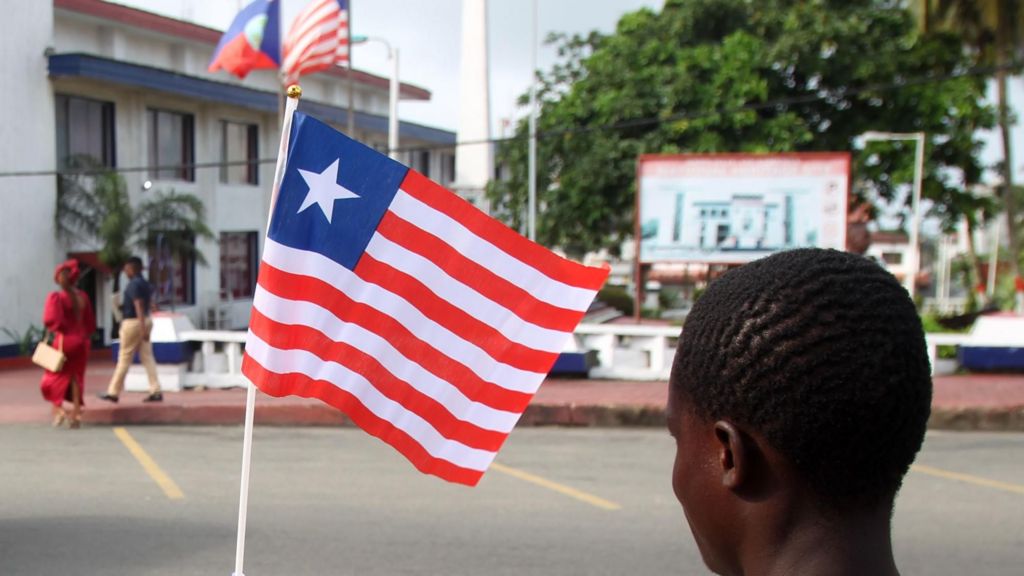
    Under the new structure, all full visa processing will be consolidated into the 20 designated hub locations: Abidjan (Ivory Coast), Accra (Ghana), Addis Ababa (Ethiopia), Cape Town (South Africa), Dakar (Senegal), Dar-Es-Salaam (Tanzania), Djibouti (Djibouti), Johannesburg (South Africa), Kampala (Uganda), Kigali (Rwanda), Kinshasa (Congo), Lagos (Nigeria), Lome (Togo), Luanda (Angola), Malabo (Equatorial Guinea), Monrovia (Liberia), Nairobi (Kenya), Port Louis (Mauritius), Praia (Cape Verde), and Yaounde (Cameroon).

    For citizens of African countries that do not host a designated processing hub, the new rules mean they will need to travel to one of the 20 hub locations to submit their applications and complete required in-person consular screenings. This requirement creates significant practical barriers, adding heavy travel costs and logistical hurdles that did not exist previously for many applicants.

    Consular offices at non-hub missions will remain open, but their service offerings will be severely limited. They will still be able to support U.S. citizens with passport renewals and emergency assistance, process special visa requests tied to U.S. national interests, and handle diplomatic visa applications.

    When reached for comment, the State Department did not address specific details laid out in the internal memo, but issued a general statement defending the restructuring. The department noted that it “is constantly evaluating its overseas operations in order to deploy taxpayer resources in a way that advances America’s priorities as efficiently and effectively as possible.” It added that the overhaul “includes a visa process that maintains rigorous standards of security screening and vetting and aligns resources and operational capacity with America’s national interests.”

    The report was filed by correspondent Mednick from Tel Aviv.

  • Italians bemused by Milan bull mosaic restoration

    Italians bemused by Milan bull mosaic restoration

    A decades-old tourist tradition targeting a beloved 19th-century mosaic in one of Milan’s most famous historic landmarks has sparked unexpected social media uproar, as locals and travelers alike question the fate of the artwork’s most iconic—if irreverent—feature. The piece in question is a blue and beige mosaic depicting a prancing bull, set into the floor of Milan’s Galleria Vittorio Emanuele II, the iconic glass-vaulted shopping arcade at the heart of the city. Designed to represent Turin, Italy’s first national capital, the mosaic has over generations become a bucket-list stop for visitors thanks to a folksy good luck legend. The tradition holds that spinning one’s heel three times clockwise on the bull’s genital region will bring good fortune and guarantee a return trip to Milan. For years, thousands of tourists have followed the ritual, and the constant friction gradually wore away the stone tiles, leaving a noticeable small crater on the mosaic’s surface. Last week, municipal authorities launched long-planned restoration work to repair the damaged section of the artwork, with master artisan Gianluca Galli carrying out the handcrafted repairs to the 100-plus-year-old floor. Over the weekend, Milan local councillor Marco Granelli announced that the mosaic had been “completely restored,” sharing the update on his social media channels. But what was meant as a routine cultural heritage update quickly went viral, as hundreds of social media users pointed out an apparent change to the famous feature: the bull’s iconic “lucky charm” testicles seemed to have vanished entirely. Comments flooded Granelli’s post, with users joking that the bull had been “castrated,” and many questioning why the landmark’s most famous feature was removed. “What happened to the testicles?” one user asked, while another simply noted, “Something is missing.” The widespread online bemusement and criticism quickly prompted a response from Milan’s city council, which moved quickly to clarify that the restoration project is not actually complete. Officials explained that the restored section remains partially covered to allow the new stone tiles’ color to set properly, and the feature was never intentionally removed. The council added that restorers chose light pink marble for the repaired area, a material selected to match the original 19th-century color palette more closely than the darker marble used for the mosaic’s previous repair in 2017. Master restorer Galli confirmed the timeline in an interview with Italian daily newspaper Corriere della Sera, noting that his work is still in progress, and he has not received any formal objections to the work, which is being carried out under direct municipal supervision. For now, tourists and locals alike will have to wait a little longer to see the fully restored iconic bull—and confirm that its famous good luck charm remains intact for future generations of visitors.

  • Chris Mason: Decision to appoint Mandelson continues to inflict damage

    Chris Mason: Decision to appoint Mandelson continues to inflict damage

    The ongoing release of thousands of pages of private communications between senior UK Labour politicians has offered a rare, unfiltered look into the day-to-day inner workings of modern government, as ministers increasingly rely on instant messaging platforms like WhatsApp and email to conduct informal, off-the-record conversations. These uncensored exchanges capture the unvarnished, contemporaneous thoughts, gut instincts and private perspectives of officials that rarely make it into the public sphere, unlike polished, pre-approved official statements.

    At the time of this reporting, political journalists are still working through roughly 1,500 pages of leaked documents, with new details expected to emerge as the review continues. One of the first major controversies to come out of the release centers on Pat McFadden, the current Work and Pensions Secretary, whose private remarks have been seized on by the opposition Conservative Party. In a blunt message to Lord Peter Mandelson, McFadden privately criticized the attitudes of fellow Labour lawmakers toward welfare reform and public spending, writing, “Every meeting I have is ‘who can we tax in order to pay benefits to others,” adding, “They’re asking the wrong questions.” McFadden also noted that many Labour MPs appeared reluctant to cut welfare benefits, a comment that has already opened the party up to opposition attack. Analysts expect this line of criticism to feature heavily in Conservative messaging in the coming weeks.

    While the leak has already yielded political fodder for the opposition, it has failed to shed new light on one of the most pressing recent political stories: the vetting process that led to Lord Mandelson’s appointment as UK ambassador to the United States. No documents related to the vetting procedure were included in the released materials, leaving key questions about the appointment still unanswered.

    Two key contextual factors shape the current political fallout from this leak, compared to earlier revelations in the ongoing Mandelson controversy. First, public fatigue appears to be setting in: after weeks of repeated headlines about the Mandelson appointment saga, voter appetite for new shocking revelations has waned, leading to what political analysts describe as diminishing returns for the controversy. Second, the ongoing damage to Prime Minister Keir Starmer’s political standing comes at a moment when his authority is already weakened. Poor local election results last month have already eroded his position within the party, with an unofficial leadership contest already unfolding beneath the surface of public politics.

    There is no question that this latest wave of controversy has made for a difficult week for the prime minister and his government. The ongoing fallout from the Mandelson appointment has acted as a recurring political boomerang, hitting the government repeatedly and creating constant, low-grade political headaches for Starmer’s administration. Political analysts widely agree that when Starmer reflects on his tenure as prime minister – regardless of how long that tenure ends up being – his decision to appoint Mandelson to the Washington post will stand as one of the most heavily criticized major decisions of his leadership, and a key example of a high-stakes call that went wrong.

  • AI giant Anthropic confidentially files for IPO

    AI giant Anthropic confidentially files for IPO

    The fast-growing artificial intelligence sector just marked another major milestone Monday, when Anthropic—the developer of the popular Claude chatbot—announced it has confidentially filed for an initial public offering with U.S. regulators. The move comes as generative AI firms across Silicon Valley race to secure massive capital to support the breakneck expansion of an industry that continues to reshape global technology.

    A confidential initial filing allows a company to share its offering documentation with the U.S. Securities and Exchange Commission (SEC) for preliminary review, keeping sensitive financial performance and internal business data private until much later in the IPO process. In an official statement, Anthropic confirmed the filing and noted that the option to go public will become available once the SEC completes its review. The company added that the timeline, number of shares to be offered, and per-share price range will remain undetermined for now, with the final offering ultimately contingent on prevailing market conditions and other unforeseen factors.

    The IPO announcement comes only days after Anthropic closed a massive new private funding round that raised $65 billion in fresh capital and pushed the company’s valuation to $965 billion. The figure puts the OpenAI rival just shy of the historic $1 trillion valuation threshold, cementing its status as one of the most valuable and influential players in the global generative AI landscape. Unlike many competitors that prioritize consumer-facing tools, Anthropic has built its market reputation by focusing on delivering enterprise-grade generative AI solutions to business clients, a strategy that has driven steady commercial growth. Currently, Anthropic’s valuation already outpaces that of OpenAI, which carried an $80 billion valuation in a March 2024 funding round and is also preparing its own imminent IPO filing.

    Founded in 2021 by former OpenAI executives Dario Amodei, Daniela Amodei and a team of fellow industry veterans, Anthropic has carved out a distinct niche in the crowded AI race by positioning itself as a safety-first alternative to leading platforms. The company’s Claude large language model ecosystem, which includes the widely used Claude Code developer coding assistant, has helped push Anthropic’s projected annual revenue to $4.7 billion, a rapid climb for a company less than four years old.

    Despite its strong commercial momentum, Anthropic has faced significant growing pains alongside its success. A global shortage of advanced AI chips and server infrastructure has left the company struggling to meet soaring market demand for its products, with a number of users recently voicing complaints that their usage quotas are exhausted far too quickly, forcing them to pay steep premium fees to continue accessing services.

    To address its pressing computing capacity gap, Anthropic has struck a series of major supply deals in recent months, securing multiple gigawatts of additional computing power from industry leaders including Amazon, Google and Broadcom. Most notably, the company signed a surprise partnership last month with billionaire tech entrepreneur Elon Musk, who is currently locked in a high-profile legal battle with OpenAI and its founding leadership. Under the agreement, Musk will lease Anthropic access to his underutilized Colossus data centers, located in Memphis, Tennessee at the facility built for his xAI AI lab—creator of the Grok chatbot—for $1.25 billion per year.

    Both Anthropic and OpenAI’s upcoming public offerings are set to follow SpaceX, another Musk-led company that absorbed xAI earlier this year, to public markets. SpaceX’s IPO is on track to begin trading as soon as June 12, with the company targeting a roughly $175 billion valuation in what will become the largest IPO in global history if it proceeds as planned.

    Beyond infrastructure challenges, Anthropic is also navigating an ongoing legal conflict with the U.S. Department of Defense. The Pentagon recently designated Anthropic a supply chain risk after the company refused to grant the U.S. military unrestricted access to its core AI models. Anthropic has pushed back against the designation, calling it unconstitutional retaliation for the firm’s decision.

  • Hasan Piker was set to meet Zack Polanski and Jeremy Corbyn in UK before being banned

    Hasan Piker was set to meet Zack Polanski and Jeremy Corbyn in UK before being banned

    A brewing controversy over free speech and political censorship has erupted in the United Kingdom after the Home Office blocked entry for two high-profile American progressive political commentators over their public criticism of Israel, multiple sources confirm to Middle East Eye. Hasan Piker and Cenk Uygur, founder and host of the popular online political show *The Young Turks*, were scheduled for a slate of public events across the UK this week, including podcast interviews, a planned discussion with veteran British politician Jeremy Corbyn, speaking engagements at the Oxford Union and SXSW London festival. But their travel authorisations were revoked at the eleventh hour, shutting down all planned in-person appearances.

    The cancellation of the pair’s visit drew immediate condemnation from across the UK political spectrum, with critics arguing the move exposes a growing bias against dissent on Israeli policy, while supporters frame the ban as a necessary step to curb hate speech and community division. Green Party deputy leader Zack Polanski, who was set to host Piker on his *Bold Politics* podcast, was among the first to speak out against the decision Monday morning.

    “People often talk about the dangerous road we would go down under a Reform government – this is another clear warning we are already down that road,” Polanski said in a statement, demanding answers from UK Home Secretary Shabana Mahmood and Greater Manchester Mayor Andy Burnham. “A Labour government is doing everything possible to silence criticism of the Israeli Government,” he added.

    Corbyn, the former Labour Party leader and a longstanding critic of Israeli policy who was set to join Piker for a separate interview with UK outlet PoliticsJOE, called the ban “an absurd and cowardly decision from an increasingly authoritarian government.” He went further, framing the move as an overt attack on fundamental democratic rights: “Let us call this what it is: an attack on the freedom to criticise Israel, as well as the UK government’s own complicity in genocide,” he said. As of publication, PoliticsJOE has not released an official comment on the planned interview, and MEE has reached out to the outlet for additional context.

    Both Piker and Uygur have confirmed the ban stems directly from their public condemnation of Israel’s ongoing military campaign in Gaza, which both have described as genocide. The Times of London reported that Mahmood revoked Uygur’s Electronic Travel Authorisation after concluding his presence in the UK would not be “conducive to the public good,” citing official Home Office concerns that his rhetoric on Israel could fuel antisemitism and stoke tensions between local communities.

    Uygur pushed back against that characterization in a post on X, the social platform formerly known as Twitter, mocking the Home Office’s reasoning. “The British government said that my charge that Israel controls the American government through donations to 94% of Congress, while factual, is antisemitic nonetheless,” he wrote. “Don’t know if facts will soon be banned in Britain. I didn’t get banned for criticizing the UK, but for criticizing Israel. They broke the irony record by saying it was because I said Israel might control other governments. I wonder if they’re going to ban themselves.”

    Organizers of the planned events have also voiced alarm over the last-minute cancellation. Arwa Elrayess, president of the Oxford Union, told MEE the speaking engagements had been publicly announced months in advance, making the sudden Home Office ruling all the more disruptive and worrying. “To this day, we defend freedom of speech; the right for our invited speakers to express themselves, and to be challenged, irrespective of political viewpoint,” Elrayess said, adding that the union is exploring all available alternatives to hold the discussion, including moving the event to an online format.

    A spokesperson for SXSW London, meanwhile, noted that entry decisions fall exclusively under the purview of the Home Office and the individuals affected. “SXSW London’s role is to convene a broad range of diverse voices and perspectives,” the organization said in a statement.

    Not all politicians have criticized the ban, however. Last week, Labour MP David Taylor publicly called on the Home Office to bar Piker from entering the UK, and he applauded the decision after it was announced Monday. “Thank you Home Secretary for revoking Hasan Piker’s visa,” Taylor said. “There’s no reason to open our doors to those who seek to spread hate and division, especially to those who’ve supported a proscribed terror group.”

    The ban is part of a broader recent trend of the UK Home Office denying entry to high-profile foreign speakers over a range of political concerns. Last month, officials barred 11 people scheduled to speak at a far-right rally organized by anti-Islam activist Tommy Robinson, whose legal name is Stephen Yaxley-Lennon.

    British left-wing commentator Aaron Bastani drew a contrast between the UK’s current approach to dissenting speech and its historical position as a haven for exiled political thinkers. “Britain at the height of its power and prestige was home to Karl Marx and Giuseppe Mazzini. It was a refuge for Alexander Herzen and Victor Hugo,” Bastani said. “Now, in 2026, it won’t allow American YouTubers & streamers to enter because they criticised Israel.”

  • Top EU official tells Western Balkan countries that bloc’s enlargement is real

    Top EU official tells Western Balkan countries that bloc’s enlargement is real

    SARAJEVO, Bosnia-Herzegovina – Ahead of a landmark EU-Western Balkans summit this week, European Council President António Costa has reaffirmed that the European Union’s enlargement push for the region is not empty rhetoric, but a tangible and priority goal for the bloc. Making the first stop of his pre-summit tour through the Western Balkans in Sarajevo on Monday, Costa framed EU expansion as a critical geostrategic investment at a moment of rising global uncertainty.

    Against a backdrop of shifting global power dynamics and widespread economic volatility across the globe, Costa emphasized that enlargement delivers long-term dividends for the entire European continent. “Enlargement is an investment in the peace, stability and security of our continent,” he stated, adding that his regional tour itself serves as concrete proof that the EU’s commitment to Western Balkan aspirants is as genuine as the membership opportunity on offer.

    This Friday, Costa will co-chair the high-stakes summit in the Adriatic coastal resort of Tivat, Montenegro. The gathering will bring together heads of government and senior officials from all 27 EU member states, alongside leadership from six Western Balkan candidate countries: Albania, Bosnia-Herzegovina, North Macedonia, Kosovo, Serbia, and host nation Montenegro. Each of the six nations is progressing through the accession process at different speeds, with Montenegro and Albania currently leading the pack in meeting the bloc’s requirements.

    In recent years, the EU has ramped up its outreach and encouragement for reform across candidate nations, driven in large part by concerns over growing geopolitical influence from Russia and China in the Western Balkans. Ukraine and Moldova are also part of a wider group of roughly 10 countries that hold aspiring member status, expanding the bloc’s ongoing enlargement agenda beyond the Western Balkans.

    Accession to the EU requires candidate states to align their entire legal and regulatory frameworks with 35 distinct policy areas, known as “chapters”, that cover everything from judicial standards and human rights protections to agricultural policy and fishing regulations. Every chapter requires unanimous approval from all 27 current EU members both to open negotiations and to finalize its completion, making the process deliberately rigorous and slow.

    Costa made clear that Friday’s summit is designed to build on existing momentum, reinforcing cooperation and accelerating progress toward membership. “The event will be a clear demonstration of our determination to bring forward our cooperation and build on the momentum of the European Union’s enlargement,” he said.

    Among the six candidates, Bosnia-Herzegovina lags furthest behind, still grappling with deep ethnic divisions decades after the 1992-1995 Bosnian War that left over 100,000 people dead and displaced millions. The country’s pro-Russia Bosnian Serb separatist leadership has continued to push for greater autonomy, a dynamic that originally fueled ethnic conflict following the collapse of the former Yugoslav federation and continues to undermine post-war reconciliation today.

    Costa’s visit coincides with a key leadership transition for the international peace architecture governing Bosnia. The Peace Implementation Council, the international body established by the 1995 U.S.-brokered Dayton Peace Accords to oversee the country’s post-war stability, is set to appoint a new High Representative this week following the resignation of German diplomat Christian Schmidt.

    The High Representative holds broad authority to revise legislation and remove public officials who threaten the country’s post-war reconciliation process. Local Bosnian media reports have indicated that PIC member states remain deeply divided over the choice of Schmidt’s successor. Speaking on the appointment, Costa stressed that the incoming representative must align with Bosnia’s stated European integration goal. “If the future of the country is in the European Union it’s important that the new high representative … embodies Bosnia and Herzegovina choice to pursue European Union accession,” he said.

    Costa also urged Bosnian officials to set aside internal divisions and prioritize the accession process, calling for immediate action to speed up required reforms. “Now is the time to focus on your goal and accelerate the pace of reforms,” he told local leaders.

  • AI giant Anthropic says it plans to list on US stock market

    AI giant Anthropic says it plans to list on US stock market

    The artificial intelligence race is entering a new high-stakes chapter on Wall Street, as leading AI developer Anthropic has announced plans to pursue an initial public offering (IPO) on U.S. stock markets later this year.

    In an official statement released Monday, the San Francisco-based company confirmed it has submitted confidential regulatory paperwork to the U.S. Securities and Exchange Commission (SEC) to pave the way for its public debut. The creator of the widely used large language model chatbot Claude noted that details including the per-share offering price and total number of shares available for purchase remain undecided at this preliminary stage.

    Founded only five years ago by CEO Dario Amodei and a small group of fellow former OpenAI executives, Anthropic has emerged as one of the most valuable private AI companies in the world. Its latest private funding round valued the firm at more than $965 billion, pushing it past longtime competitor OpenAI, which carries a most recent private valuation of $852 billion. Amodei launched Anthropic after departing OpenAI years ago over strategic disagreements with OpenAI CEO Sam Altman, and the two companies have since grown into bitter rivals competing for both consumer users and lucrative enterprise clients, as they roll out comparable generative AI technologies.

    Anthropic’s planned IPO comes hot on the heels of similarly public plans from SpaceX, the aerospace firm led by high-profile entrepreneur Elon Musk. Together, the two high-value, high-growth offerings are widely expected to serve as a critical market test of whether investor enthusiasm for the generative AI boom matches the sky-high private market valuations that AI startups have commanded in recent years. After a multi-year stretch of booming investment in AI innovation that sent private valuations soaring, public markets will now judge whether these unprofitable, growth-focused companies can live up to lofty investor expectations.

  • Hungarian PM threatens to oust Orbán-era president

    Hungarian PM threatens to oust Orbán-era president

    A sharp constitutional confrontation is unfolding in Hungary just months after a seismic political upheaval ousted long-serving prime minister Viktor Orbán, as newly installed Prime Minister Péter Magyar has confirmed his government will push through a constitutional amendment to oust sitting President Tamás Sulyok, who has repeatedly rejected calls to resign from his post.

    Magyar’s Tisza Party secured a historic landslide victory and a two-thirds supermajority in the National Assembly during April’s general election, a result that ended 16 years of uninterrupted rule by Orbán’s right-wing Fidesz party. Since taking power, the new prime minister has made dismantling remaining Orbán-era institutional holdovers a top policy priority, and has targeted Sulyok — a figure appointed to the presidency by Fidesz in February 2024 without a direct public vote — as a primary example of old regime influence.

    Magyar has repeatedly publicly called for Sulyok’s resignation, most recently setting a firm 31 May deadline for the president to step aside. In a social media post on X published over the weekend, Magyar doubled down on his criticism, arguing that Sulyok has never advocated for vulnerable Hungarian communities, defended citizens under political attack, or upheld the principles of the rule of law. He has repeatedly characterized the sitting president as unfit to represent the unity of the Hungarian nation, claiming Sulyok remains loyal to Orbán’s political interests rather than serving the public good.

    Sulyok, for his part, has refused to step down, stating he intends to complete the full five-year term he was appointed to serve. Following a face-to-face meeting with Magyar on Monday, the president reaffirmed his position, warning that the forced removal effort triggered by the new government has already created a constitutional crisis that deepens existing social rifts within Hungary and undermines international confidence in the country’s democratic credentials. He has also raised a warning that the ongoing standoff could put at risk the long-frozen €16.4 billion in EU development funds earmarked for Hungary, a large portion of which has been withheld by Brussels for years due to documented democratic backsliding during Orbán’s tenure. Last week, EU officials signaled that reform efforts under Magyar’s new government could clear the way for the funds to be released imminently, a development Sulyok argues is now threatened by the political clash.

    Fidesz, Orbán’s former ruling party, has already labeled Magyar’s demand for Sulyok’s resignation an “unlawful ultimatum”, rejecting the new government’s push to remove the sitting president. While the Hungarian presidency is largely a ceremonial role under the country’s governing framework, it holds key practical powers that can disrupt the new government’s legislative agenda: it can refer passed laws back to parliament for re-examination, challenge legislation before the Constitutional Court, and oversee all public sector appointments. Just on Monday, Sulyok demonstrated these active powers by announcing a slate of new military appointments via his official Facebook page, a move seen as a show of defiance amid the standoff.

    The presidency itself became vacant in early 2024 when then-president Katalin Novák resigned in the wake of public outrage over the Fidesz government’s botched response to a high-profile child sex abuse scandal, clearing the way for Sulyok’s appointment by the outgoing Fidesz-controlled legislature. Orbán himself stepped down from his seat in parliament after his party’s election defeat in April, closing out 16 years as Hungary’s prime minister. Even as it moves to oust Sulyok, Magyar’s government has already advanced additional constitutional reforms to lock in the post-Orbán political shift, including a new amendment that would cap any future prime minister at eight years total in office, closing off any potential path for Orbán to return to power.

    Magyar confirmed to reporters this week that the constitutional amendment process to remove Sulyok will take approximately four weeks to complete, a timeline that keeps the country in a state of political uncertainty as the new government works to roll out its ambitious agenda of institutional and democratic reform.

  • Israelis sing national anthem inside Al-Aqsa Mosque during raid

    Israelis sing national anthem inside Al-Aqsa Mosque during raid

    On a Sunday in May 2026, a contingent of at least 199 Israeli ultranationalists carried out a deeply provocative incursion into the Al-Aqsa Mosque compound in occupied East Jerusalem, under the direct protection of Israeli police. During the raid, the group raised the Israeli national flag, sang the country’s national anthem, and multiple participants openly conducted Talmudic prayers — actions that directly violate long-standing agreements governing the holy site.

    Al-Aqsa Mosque ranks as one of the most sacred sites in Islam, and its governance has been guided for decades by a globally recognized status quo arrangement. This binding international framework, widely accepted by major world powers, explicitly designates the entire mosque complex as an exclusively Islamic place of worship, where only Muslim followers may conduct religious rituals. While non-Muslim visitors are permitted limited access under specific conditions, all administrative, maintenance, and worship oversight falls to the Jerusalem Islamic Waqf, which operates under the custodianship of Jordan’s king, with Jordan holding formal protection responsibility for the site.

    For years, however, Israel has faced growing international condemnation for systematically eroding this status quo. Successive Israeli governments, and particularly the hard-line administration led by Prime Minister Benjamin Netanyahu that took office in 2022, have increasingly facilitated near-daily incursions by ultranationalist Jewish groups into the compound, allowing activities that were banned for decades to prevent regional unrest. For generations, Israeli leaders enforced restrictions on displays of the Israeli flag and formal Jewish prayer at Al-Aqsa, out of explicit concern that such actions would ignite widespread violence across Jerusalem and the occupied Palestinian territories. But ultranationalist factions, which openly advocate for the destruction of Al-Aqsa Mosque to build a Jewish temple in its place, have pushed relentlessly to lift these restrictions, and Netanyahu’s government has largely capitulated to their demands.

    Speaking to Anadolu Agency following Sunday’s incursion, Omar Rajoub, media department director for the Jerusalem Governorate, framed the action as part of a deliberate, state-backed campaign to reshape the identity of East Jerusalem. “Raising the Israeli flag inside the courtyards of Al-Aqsa Mosque, along with performing provocative rituals, is part of a systematic and deliberate official Israeli policy led by the extremist occupation government,” Rajoub stated. He added that these targeted practices are intended to forcibly impose new realities on occupied East Jerusalem, and fundamentally undermine the site’s centuries-old historical and legal status quo.

    Rajoub warned that the repeated incursions by settlers and ultranationalists are a core component of an ongoing colonial project to Judaize Jerusalem and erase the city’s existing Palestinian, Arab, and Islamic religious and historical identity. He emphasized that these incursions, which are enabled and protected by Israeli security forces, amount to a clear violation of international law, and held the Netanyahu government fully accountable for any subsequent escalation of tensions in the region.

    On the day of the incursion, Israeli police imposed additional strict restrictions on Palestinian worshippers seeking entry to the mosque, multiple witnesses confirmed. Several worshippers reported that their identity documents were seized by officers at the outer gates of the compound, barring them from accessing the site for worship. The Jerusalem Islamic Waqf added that the Israeli settlers deliberately provoked on-site guards and worshippers by taking photos throughout the mosque courtyards, including in front of the iconic Dome of the Rock, one of the most recognizable and sacred landmarks in the city.

  • Syria’s government begins to return Alawi lands, while maintaining its hold over others

    Syria’s government begins to return Alawi lands, while maintaining its hold over others

    In the wake of the December 2024 lightning rebel offensive that toppled 50 years of Assad family rule in Syria, a quiet crisis over land ownership is unfolding in northern Hama, the historic core of Syria’s once world-leading pistachio industry, threatening to derail fragile efforts to build intercommunal peace.

    The conflict traces back more than a decade to the earliest days of Syria’s civil war, when northern Hama’s pistachio-growing hills became a brutal frontline between regime forces and opposition factions. What were once scenic, multi-sectarian villages descended into sectarian bloodshed between majority Sunni communities, which made up most of the anti-Assad rebellion, and Alawis, the Shia offshoot sect to which Bashar al-Assad belonged. By the end of Assad’s rule, thousands of Sunni landowners had been displaced from their properties, while Alawi landholders fled en masse after the regime’s collapse, fearing retaliatory violence from returning rebels.

    For Ahmed Ali, a former Syrian civil servant who lost his government job in 2019 for refusing mandatory military service on principle, the collapse of the Assad regime should have cleared the way for him to return to his 15-hectare family pistachio farm, a plot that has been in his family for more than half a century. Instead, Ali has become one of hundreds of landowners trapped in the messy new system of property administration implemented by the new Syrian government, led by former HTS leader Ahmed al-Sharaa.

    Ali’s story is familiar to many displaced landowners. When he returned to his property after Assad’s ouster, he found his former Alawi neighbor Karim al-Khattib occupying his home, after Khattib’s own property was destroyed in the fighting. Ali initially agreed to let Khattib stay in exchange for a share of the annual pistachio harvest, only to discover that the state-owned agricultural investment firm Iktifaa had seized control of his land, branding him an Assad-aligned “shabih” without providing evidence of any crime.

    Khattib, who has signed a new contract with Iktifaa to farm Ali’s land for 2026, says he will vacate the property once he earns enough to replant his own destroyed pistachio orchard. Last year, a weak harvest worsened by Syria’s worst drought in decades yielded around $4,000, 60% of which went to Khattib, with the remaining 40% going to Iktifaa. Ali estimates his losses from 2025 alone top $50,000, and he has been blocked from even selling the land he has owned for decades.

    Founded in 2021 through a merger of two Idlib-based agricultural firms active in former opposition-held territory, Iktifaa is now the central body managing “absentee lands” across most of Syria, under the oversight of the newly created Illicit Gains Committee. The committee, an extrajudicial body independent of Syria’s court system, is tasked with investigating ties to the former Assad regime and seizing assets from those linked to the old government. It is overseen by Abraham Succarieh, a Lebanese-Australian national who remains under Western sanctions over allegations of terrorism financing, and all revenue from seized assets flows to the Syrian state’s sovereign wealth fund.

    During the war, Iktifaa and its predecessor firms managed lands owned by displaced Druze and Christian minorities in HTS-held Idlib. While those properties were returned between 2020 and 2023 as HTS sought to improve its standing with minority communities, many landowners reported they never received compensation for years of use of their property, with all revenue going to the former Syrian Salvation Government, HTS’s pre-2024 governing body. Today, Iktifaa applies the same model to lands abandoned by displaced Alawis who fled after Assad’s fall.

    Monzer Khattab, head of Iktifaa’s Hama and Homs branch, defends the firm’s approach, arguing that state oversight was necessary to prevent widespread land grabbing and chaos in the immediate aftermath of the regime’s collapse. He acknowledged that 2025 was a chaotic year, with much of the harvest in Hama and Homs stolen due to the firm’s limited capacity, but confirmed Iktifaa still earned between $1.5 million and $2 million in profits from the region last year, 90% of it from absentee lands. This year, the firm will deploy additional staff across all producing regions to monitor the upcoming June mid-harvest, he said.

    But for displaced Alawi landowners who have already been cleared of any ties to the Assad regime, the system still leaves them locked out of their livelihoods. Ammar al-Aassad, an Alawi farmer from the northern Hama village of Maraiwid, received official clearance for his 29 dunam pistachio and olive orchard last month, but has still been unable to access his land. After a Bedouin faction occupied his property and Iktifaa signed a cultivation contract with the group, Aassad lost his entire 2025 harvest, with estimated losses of $40,000. He has yet to receive any compensation, and fears to return to his village even with official clearance: three days after Assad’s ouster, one of his Alawi neighbors who tried to return was killed by unknown assailants, and no other displaced Alawi residents have dared come back since.

    “There should be evidence – the previous regime was oppressive, we don’t want oppression again,” Ali says of the current system.

    Syrian provincial authorities in Hama acknowledge the growing tensions and say they are working to resolve the crisis. Hama Deputy Governor Hassan al-Hassan says the national presidency has issued formal directives supporting the return of displaced Alawis to their lands, and that new appeal offices linked to the Illicit Gains Committee will open in every province within weeks to allow landowners to challenge seizures. To resolve the immediate housing crisis that has displaced Sunnis and Alawis alike, the provincial council is planning to build temporary caravan housing for displaced Sunni farmers who returned to destroyed homes and now occupy abandoned Alawi properties.

    “Our goal is to restore civil peace, and our thinking is that of a state and its institutions, not that of an armed faction. The state’s vision is that people return to their regions,” Hassan said, adding that priority must first go to Sunni farmers who returned after years of displacement to find their homes destroyed and trees uprooted. He gave no clear timeline for when full property returns would be completed.

    Local intercommunal reconciliation committees, made up of both Sunni and Alawi community leaders, are already working to resolve disputes at the village level. Alaa Ibrahim, an Alawi landowner from Maan village who serves on one such committee, says his 138 dunam family property remains under Iktifaa control because his brother worked at an army-owned shoe factory, placing him under suspicion. With the 2026 harvest approaching, the Illicit Gains Committee has not issued a ruling on his case, and Ibrahim warns that if Alawi landowners are locked out of another harvest, the economic impact will be catastrophic for already vulnerable families, pushing many to sell their land at rock-bottom prices.

    Ibrahim and other committee members are negotiating direct sharecropping contracts between Alawi landowners and their Sunni neighbors, while working to resolve long-running intercommunal violent disputes. If successful, he says, the agreements could pave the way for the safe return of displaced Alawis and ease sectarian tensions. If not, he warns, growing resentment will undermine the entire project of building post-war civil peace in Syria’s once-prosperous pistachio heartland.