作者: admin

  • African EV firm Spiro raises $215 million for electric mobility expansion

    African EV firm Spiro raises $215 million for electric mobility expansion

    Nairobi, Kenya – African electric mobility startup Spiro has announced it has closed a $215 million equity financing round, with backing from cross-continental institutional investors to fuel its aggressive expansion of battery-swapping infrastructure and electric vehicle operations across the African continent.

    The new capital injection, which counts Denmark’s Impact Fund among its lead backers, highlights the rapidly growing global investor interest in Africa’s emerging clean transport and renewable energy sectors, a space that has gained increasing attention as governments across the continent pursue decarbonization and energy security goals.

    For Spiro, the fresh funding marks the start of a new high-growth phase after a transformative 12 months for the company. Gagan Gupta, Spiro’s founder and chair of parent firm Equitane, framed the past year as a defining strategic milestone for the business in an official statement. Currently active in seven African markets – Kenya, Rwanda, Uganda, Togo, Benin, Nigeria, and Cameroon – Spiro has already deployed 100,000 electric vehicles and 2,500 smart battery-swapping stations, turning what was once a niche sustainable mobility concept into an affordable, accessible option for daily use across multiple regions. Gupta emphasized that the company’s next chapter will center on bringing affordable clean transport alternatives to millions of riders across the continent.

    Spiro did not disclose the company’s valuation tied to this latest financing round. What the startup did outline is its clear roadmap for the new capital: the funds will go toward expanding its existing battery-swapping network, scaling up local manufacturing and vehicle assembly operations, and accelerating entry into two new target markets, the Democratic Republic of Congo and Ethiopia.

    This funding round closes at a pivotal moment for African sustainable transport. Many governments across the continent are actively working to cut reliance on costly imported fossil fuels, boost domestic energy security, and modernize overstretched urban transportation systems. These policy shifts come as global fuel prices remain volatile and consumer demand for low-cost mobility options continues to rise alongside rapid urban population growth.

    Lars Bo Bertram, CEO of Denmark’s Impact Fund, noted that the investment signals broad confidence in the long-term growth potential of Africa’s electric mobility market. Two-wheeled vehicles, particularly electric motorcycles, have emerged as one of the fastest-growing segments for clean transport in Africa, where motorcycles already dominate urban passenger mobility and last-mile delivery services across most major cities.

    Unlike many foreign EV entrants that rely on imported fully assembled vehicles, Spiro has built local production capacity across key markets, operating manufacturing facilities in Kenya, Rwanda, and Uganda, as well as a purpose-built battery recycling plant in Nigeria. The company also highlights tangible cost savings for riders: users of Spiro’s electric motorcycles can cut their daily transport expenses by up to 40%, equal to roughly $2 per day, compared to operating a traditional gasoline-powered two-wheeler.

    In addition to expanding its core network, Spiro is also investing in innovative sustainable energy integration, including developing solar-powered battery-swapping stations and second-life battery storage systems that repurpose used EV batteries for stationary energy storage.

    While Africa’s overall electric mobility market still lags behind the larger, more mature sectors in China and Europe, industry analysts project rapid continued growth for the segment. That expansion is being driven by two key trends: national governments rolling out policy incentives for clean transport, and homegrown startups like Spiro developing locally tailored business models – such as widespread battery swapping, which eliminates long charging waits and cuts the high upfront cost of EV ownership for riders.

  • France seizes Russia-linked oil tanker with ties to Iranian magnate

    France seizes Russia-linked oil tanker with ties to Iranian magnate

    In a coordinated operation with international partners, French authorities detained a Russia-tied oil tanker suspected of evading Western sanctions over Moscow’s full-scale invasion of Ukraine in the Atlantic Ocean over the weekend, triggering a sharp rebuke from the Kremlin that has labeled the seizure an act of modern piracy. This interception marks the fourth such vessel detained by French forces since September 2024 as part of a broader crackdown on Russia’s shadow fossil fuel fleet, a loose network of unregulated ships used to bypass export restrictions imposed after the 2022 Ukraine invasion.

    The 23-crew vessel, identified as the *Tagor*, was intercepted early Sunday morning more than 400 nautical miles off the coast of Brittany in international waters, after its Russian captain repeatedly ignored orders to stop for inspection, French maritime prosecutors confirmed. The operation received logistical and intelligence support from the United Kingdom and other allied nations, according to official statements. French maritime officials revealed the ship was falsely flying a Cameroonian flag while traveling from Murmansk, a major Russian Arctic port, toward Limbe, a coastal city in Cameroon. A criminal investigation has already been opened by prosecutors in the northwestern French city of Brest, focusing on charges of vessel identity fraud, unregistered flag use, and refusal to comply with maritime law enforcement orders.

    Open-source sanctions tracking database Opensanctions.org has linked the *Tagor* to Mohammad Hossein Shamkhani, an Iranian petroleum shipping magnate and son of prominent Iranian security official Ali Shamkhani, who was killed alongside his son in a US-Israeli airstrike in late February that ignited the latest round of open conflict in the Middle East. French officials declined to comment on the specific connections to Shamkhani when pressed for details.

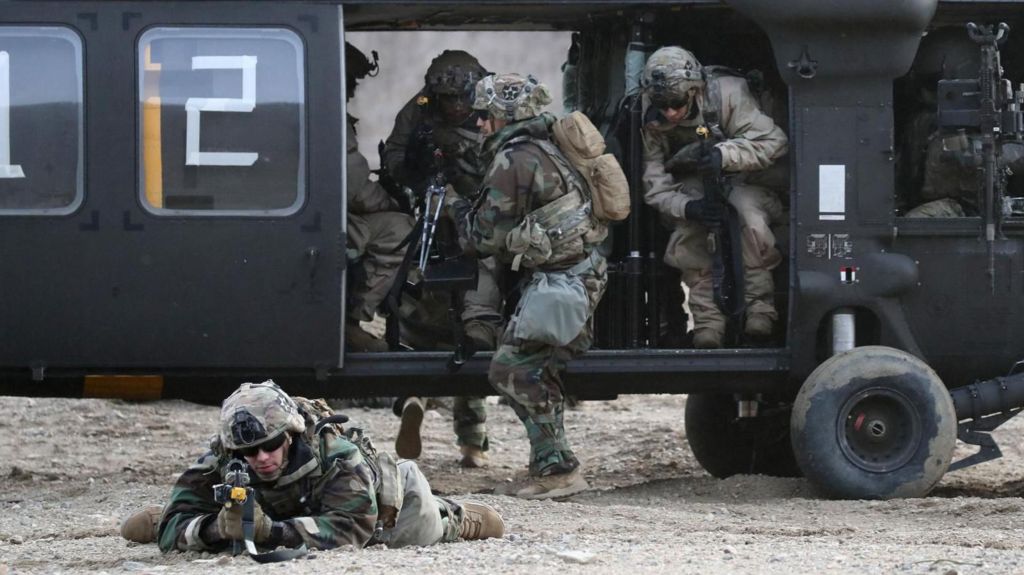
    Footage of the interception, shared publicly by French President Emmanuel Macron on social media, shows French special operations commandos rappelling from a military helicopter onto the tanker’s deck to seize control. Macron emphasized in a accompanying statement that sanction-busting vessels that violate international maritime law effectively fund Russia’s ongoing war in Ukraine, an outcome the international community cannot accept. “It is unacceptable for ships to circumvent international sanctions, violate the law of the sea, and fund the war that Russia has been waging against Ukraine,” Macron said.

    Following the interception, the *Tagor* is currently being escorted by the French Navy to a designated French anchorage for full documentation and cargo inspections. Guillaume Le Rasle, spokesperson for France’s Atlantic maritime prefecture, told reporters the vessel had been on the international community’s radar for months: “It is a vessel that was known and tracked. It is already subject to EU and U.S. sanctions.” The decision to divert the ship to French waters was finalized Sunday evening, he added, with the primary initial goal of verifying the validity of its registration and flag.

    Shadow fleet vessels routinely engage in a practice called “flag-hopping,” constantly switching their country of registration or using invalid, expired registrations to avoid detection by international sanctions enforcers. Since September, France has detained three other vessels suspected of being part of Russia’s shadow fleet; all three were eventually allowed to resume travel after their owners paid administrative fines. In April, French authorities announced plans to double fines for unflagged or non-compliant sanction-busting ships, as part of a national effort to strengthen enforcement of international sanctions.

    Kremlin spokesperson Dmitry Peskov rejected the French operation as a violation of international law in comments to reporters Monday, saying the seizure amounts to international piracy. “We consider these acts illegal. They border on international piracy,” Peskov said, adding that “Russia is taking measures to ensure the safety of its cargo” moving through global waters. The Russian Embassy in Paris also confirmed it had formally requested information from French authorities about the *Tagor* and its crew, saying no official notification of the interception had been provided by Paris. Prior to the seizure, the *Tagor* had previously flown flags of Madagascar, the Marshall Islands, and Panama, consistent with the flag-hopping behavior common to shadow fleet operations.

    The interception comes as Western nations ramp up pressure on Russia’s shadow fleet of oil tankers. The European Union currently has sanctions in place against nearly 600 ships confirmed or suspected of being part of the network, which Russia uses to sell oil to third-party nations at discounted prices bypassing Western price caps and export bans.

  • Nvidia bets on AI personal computers with new ‘superchip’ powering Windows laptops

    Nvidia bets on AI personal computers with new ‘superchip’ powering Windows laptops

    In a landmark announcement made at its annual GTC conference in Taipei on Monday, industry-leading chipmaker Nvidia introduced a game-changing new line of high-performance chips designed to bring cutting-edge artificial intelligence capabilities directly to consumer laptops and desktops. New AI-powered PC models from major global brands including Microsoft and Dell are scheduled to hit the market by the end of 2024.

    Already the world’s most valuable publicly traded company — surpassing tech giants Apple, Alphabet and Microsoft — Nvidia has built its massive recent success on meeting exploding global demand for high-end data center chips that power large-scale AI infrastructure. With this new launch, the firm is pursuing an aggressive expansion strategy to embed its AI technology across the entire spectrum of consumer AI systems and products.

    Jensen Huang, Nvidia’s Taiwanese-American founder and chief executive officer, used his keynote address to frame the launch as a fundamental reset for the personal computing industry. “Microsoft and Nvidia are going to reinvent the PC,” Huang told the audience, calling the new generation of devices “the new PC.”

    At the core of the new offering is the Nvidia RTX Spark superchip, an integrated processor that combines the core computing power of a central processing unit (CPU) with the parallel processing strength of a graphics processing unit (GPU). This combined chip will power a new category of devices the company has branded “AI personal computers,” which are set to debut commercially this fall in the form of new Windows laptops and desktops. Huang emphasized that the new chips will transform PC use cases for both creative work and gaming, enabling on-device AI assistants that can interact with users via voice and vision, read large files, conduct independent research, and handle a wide range of complex personalized tasks. A key innovation of the new platform is that AI agents can run fully locally on consumer devices, eliminating the need for constant cloud connectivity to access advanced AI functions.

    In a separate statement, Microsoft confirmed that the new Nvidia-powered devices will support fully functional large AI models and handle high-demand workloads that previously required cloud-based processing.

    Huang called the launch the first complete overhaul of personal computing architecture in four decades, a shift that analysts say carries profound implications for the global tech industry. Lian Jye Su, chief analyst at technology research firm Omdia, noted that Nvidia’s expansion into consumer AI PCs comes as global consumer demand for personal on-device AI agents grows rapidly. “For consumers, it means more choices, which is always a good thing,” Su explained.

    Neil Shah, co-founder of Counterpoint Research, described the announcement as a transformative shift that will redefine the PC over the coming decade. “This new generation of laptops and desktops will drive agentic AI applications in every home,” Shah said, adding that the initiative aims to put an AI supercomputer in every household.

    The launch immediately rippled through global financial markets: in early U.S. trading, Nvidia’s share price rose nearly 4%, while its primary manufacturing rivals Intel and AMD both saw share prices drop more than 3%, reflecting investor expectations of increased competition in the consumer chip market.

    In addition to the RTX Spark superchip, Huang shared several other major updates during his keynote. He confirmed that the company’s new Vera CPUs, designed for AI data centers, are already in full mass production, and positioned the new chips as the firm’s next major core growth driver amid the booming demand for AI agent infrastructure. Early customers for the Vera CPUs already include leading AI research firms Anthropic and OpenAI, as well as SpaceX’s AI division SpaceXAI.

    Huang also revealed a new open-source humanoid robot reference design called Isaac GR00T, created to serve as a foundational blueprint for future humanoid robot research, particularly for academic and higher education institutions. Standing close to six feet tall, the GR00T chassis is built around Chinese robotics firm Unitree’s H2 humanoid platform, and is fitted with dexterous five-fingered hands developed by Singapore-based robotics startup Sharpa, which are capable of precise, fine motor control movements.

  • James Milner announces retirement after record-breaking Premier League career

    James Milner announces retirement after record-breaking Premier League career

    One of the most enduring and respected figures in English top-flight soccer, James Milner, has formally called time on his iconic 24-year professional playing career, announcing his decision via social media on Monday. The 40-year-old midfielder, who set a new record for the most appearances in Premier League history, departs the sport after 658 top division outings, finishing his final chapter at current club Brighton & Hove Albion. Looking back on a decorated journey that included stints at some of England’s biggest clubs, Milner said the moment to step away felt natural and right.

    Milner’s career is a story of longevity, consistency, and rare adaptability that began when he made his professional debut at age 16 with boyhood club Leeds United. It was at Leeds that he first made history, becoming the youngest goal-scorer in Premier League history at the time, a milestone that signaled the start of a decades-long career filled with accolades. Over the following 24 seasons, Milner went on to wear the kits of top-flight giants Newcastle United, Aston Villa, Manchester City, and Liverpool, before ending his playing days at Brighton. Along the way, he claimed a full collection of major club honors: three Premier League titles, two FA Cups, two League Cups, a UEFA Champions League trophy, and a FIFA Club World Cup.

    At the international level, Milner also represented his home nation England, earning 61 senior caps and featuring for the Three Lions at two European Championships and two FIFA World Cups. In a heartfelt statement posted to his social media channels, Milner reflected on the unexpected path his career has taken, noting he never could have imagined the experiences he would have as a young player coming through the ranks.

    “From fighting for league survival to lifting major trophies, playing in European competitions and representing my country on the world’s biggest stages, I’ve been fortunate enough to enjoy so many unforgettable moments,” Milner wrote. He went on to thank both fans and critics who shaped his journey, adding: “To those who supported me every step of the way, your encouragement meant more than you’ll ever know. And to those who gave me grief along the way, thank you too — you all played your part in making the journey memorable and helping shape me as a player and person.”

    Widely regarded as one of the most professional and versatile players of his generation, Milner leaves the sport as one of the Premier League’s most iconic figures, with a career that set new benchmarks for longevity and consistency at the top of English soccer.

  • UAE’s IMI takes full control of Sky News Arabia amid Sudan coverage scrutiny

    UAE’s IMI takes full control of Sky News Arabia amid Sudan coverage scrutiny

    After a 14-year collaborative partnership, UK-headquartered Sky has formally exited its co-ownership of pan-regional Arabic-language broadcaster Sky News Arabia, ceding all strategic and operational control to its United Arab Emirates-based co-founder International Media Investments (IMI). The transition, announced Sunday, includes a multi-year brand licensing arrangement that will allow the broadcaster to retain its existing Sky-branded identity going forward.

    The original partnership between Sky and IMI dates back to 2010, when the two entities laid the groundwork for a new 24-hour Arabic news outlet designed to challenge established regional players across the Middle East and North Africa. Sky News Arabia launched its official broadcast in 2012, entering a competitive landscape long dominated by Doha-based Al Jazeera and Saudi-owned Al Arabiya. No financial details of the full ownership transfer deal have been made public.

    In an official statement marking the transition, David Rhodes, Executive Chairman of Sky News Group, framed the handover as a natural next step for the broadcaster. “The time is right for this change and we look forward to continuing our relationship in the next phase of Sky News Arabia,” Rhodes said, adding that the group was proud of the platform built through its collaboration with IMI and viewed the ownership shift as a natural progression for the outlet’s development.

    IMI, a major Abu Dhabi-based media investment firm controlled by Sheikh Mansour bin Zayed Al Nahyan, UAE Vice President and owner of the Manchester City Football Club, echoed this framing in its own comments. The company emphasized that the full ownership transfer reflects how Sky News Arabia has grown into a fully mature regional media institution, and that sole control will position the outlet to pursue accelerated expansion and innovative editorial development.

    However, the ownership restructuring comes on the heels of significant public scrutiny over Sky News Arabia’s editorial coverage of the ongoing civil conflict in Sudan. In November last year, former senior Sky executives based in the UK told The Daily Telegraph that the outlet had devolved into a mouthpiece for UAE leadership, failing to provide accurate, independent reporting on atrocities committed by the Rapid Support Forces (RSF), a Sudanese paramilitary group that UN-appointed international investigators have found targeted ethnic minority communities in Darfur.

    While the UAE government has repeatedly denied allegations of backing the RSF, independent outlet Middle East Eye has published extensive on-the-record reporting documenting the UAE’s support, citing a wide range of evidence including satellite imagery, flight logs, weapons serial numbers and multiple anonymous and named sources inside the region. In the same November that the original allegations emerged, Sudan’s transitional government formally banned Sky News Arabia from operating within the country’s borders, after the outlet published a report from El Fasher, the capital of North Darfur, that claimed security conditions in the conflict-torn city were stabilizing.

    The Guardian later reported that top executives at Sky’s UK headquarters had grown increasingly uncomfortable with the outlet’s editorial choices, particularly around how it framed the Sudan conflict. The newspaper also noted that Sky News Arabia had published multiple pieces questioning the credibility of evidence collected by international investigators and conflict survivors documenting RSF atrocities.

    In February of this year, a UN-mandated independent fact-finding mission concluded that actions carried out by the RSF and its allied militias across parts of Sudan carry the clear “hallmarks of genocide.” Shortly after this UN report was released, Sky News Arabia deployed veteran correspondent Tsabih Mubarak Khatir to cover El Fasher – a move that drew widespread criticism after it was revealed Khatir is married to a senior RSF official. Video footage from the trip later showed Khatir embracing a high-profile female RSF commander who had previously publicly called on RSF fighters to rape Darfuri women, telling the commander, “we are with you.”

    A month later, a major joint investigation by Yale University’s Humanitarian Research Lab and NASA’s Harvest programme confirmed that the RSF has carried out a deliberate campaign of mass starvation against civilian populations in El Fasher, destroying dozens of farming villages and wiping out nearly all crop production in the area surrounding the besieged city.

    IMI has repeatedly maintained that its ownership negotiations with Sky were rooted in purely commercial considerations, and were unrelated to any disputes over editorial policy. When contacted by Bloomberg News for additional comment following Sunday’s announcement, an IMI spokesperson declined to provide any statement beyond the company’s official release, while Sky did not immediately respond to requests for comment.

  • Nigeria police warn against reprisal attacks against South Africans

    Nigeria police warn against reprisal attacks against South Africans

    Tensions are escalating across West and Southern Africa in recent weeks, after widespread public demonstrations in South Africa demanding harsh new restrictions on undocumented migrants have sparked cross-border security concerns. A South African activist group called March and March organized the protests, which have pushed the issue of immigration to the top of the regional diplomatic agenda. The group has set a 30 June deadline for all undocumented migrants to voluntarily leave South Africa, framing its campaign as a push for systemic immigration reform that eases strain on overburdened domestic public services. Protesters have also argued that unvetted migration has fueled higher crime rates, claims that South African authorities have not independently verified.

    While South African police have not confirmed any targeted violent attacks on foreign nationals, the national government has publicly condemned any criminal acts directed at people from other countries. The growing unrest has already prompted other African nations to take precautionary measures: Ghana recently organized the evacuation of hundreds of its citizens from South Africa, and multiple governments have issued advisory warnings urging their nationals residing in the country to maintain heightened vigilance for personal safety.

    In response to widespread public anger in Nigeria over unsubstantiated reports of attacks on Nigerian citizens in South Africa, Nigerian law enforcement has issued an urgent official warning against retaliatory action targeting South African people or commercial assets operating within Nigeria’s borders. The statement came after a high-level meeting between senior national security and intelligence leaders, convened to assess the cross-border fallout from the South African protests.

    Aliyu Giwa, a senior spokesperson for the Nigerian Police Force, outlined the force’s position in an official post shared to the social platform X. “We recognise the pain and anger caused by recent attacks on Nigerians abroad,” Giwa wrote. “As an institution dedicated to protecting Nigerian lives, we understand these concerns deeply. However, this is a time for calm and restraint. Violence would not protect Nigerians abroad and would only create additional crises.”

    Giwa confirmed that the Nigerian government is already engaging with South African officials at the highest diplomatic levels to address security concerns for Nigerian citizens. To prevent outbreaks of retaliatory violence, Nigerian police have deployed enhanced security patrols and protective measures around foreign diplomatic missions, critical national infrastructure, and other sites deemed sensitive to national and international security.

    The police force emphasized that any deliberate action targeting South African nationals, diplomatic properties, legitimate businesses, or other legal assets operating in Nigeria will be prosecuted as a criminal offense under Nigerian law. The region has existing precedent for escalating tensions over anti-migrant violence: past outbreaks of xenophobic attacks in South Africa triggered severe diplomatic rifts and retaliatory violence in Nigeria, where dozens of South African-owned commercial properties were vandalized and looted in waves of unrest.

  • France intercepts sanctioned Russian oil tanker, Macron says

    France intercepts sanctioned Russian oil tanker, Macron says

    A high-seas interdiction of a sanctioned Russian oil tanker carried out by French naval forces in the Atlantic Ocean on Sunday has triggered a sharp diplomatic dispute between Paris and Moscow, with top officials on both sides trading starkly opposing claims over the legality of the operation. Backed by allied partners including the United Kingdom, the French navy intercepted the tanker *Tagor* approximately 400 nautical miles off the western coast of Brittany in international waters. According to French President Emmanuel Macron, the vessel was found to be flying a false flag to conceal its identity and origins when it was detained.

    In a public post on social platform X, Macron emphasized that the action was fully justified. He argued that the deliberate circumvention of international sanctions, violation of established maritime law, and connection to funding Russia’s ongoing military campaign in Ukraine—now entering its fifth year—are completely unacceptable. Macron further stressed that the entire interception was conducted in full adherence to the United Nations Convention on the Law of the Sea, adding that unregulated shadow fleet tankers that disregard basic navigation rules also create severe environmental and public safety hazards for all maritime traffic. Footage released by the French presidency shows armed French naval personnel boarding the tanker via helicopter, though the BBC has not yet independently confirmed the authenticity of the video.

    The Kremlin has responded with fierce condemnation of the seizure, labeling the operation an “illegal” act that amounts to international piracy. Kremlin spokesperson Dmitry Peskov told reporters that Russia is already implementing active countermeasures to protect the security of its maritime cargo shipments.

    The interception of the *Tagor* marks the fourth time since September 2025 that French authorities have boarded a suspected Russian shadow fleet tanker. Previously, Paris opted to allow detained vessels to resume their journeys after owners paid administrative fines, but French officials have recently toughened their stance, vowing to block any future transits by sanctioned ships.

    The UK, another key Western ally in enforcing sanctions on Russian oil, has adopted a similar approach. In March, British Prime Minister Keir Starmer authorized the UK military to board sanctioned Russian shadow fleet tankers. However, an independent analysis conducted by BBC Verify has found that nearly 200 vessels linked to Russia’s shadow fleet have entered UK territorial waters since Starmer first announced the interception policy in mid-March. The UK Ministry of Defence has only stated that it is engaged in “disrupting and deterring” unauthorized shadow fleet traffic, declining to release specific operational data to back up its claims.

    Russia’s extensive network of shadow fleet tankers, characterized by hidden ownership structures and deliberate obfuscation of shipping routes, was developed after Western nations imposed sweeping sanctions on Russian crude and product exports following Moscow’s full-scale invasion of Ukraine in 2022. The network allows Russia to continue selling oil to global buyers in violation of international sanctions, generating billions in revenue that the Kremlin has used to fund its war effort.

  • UK wins court case over collapsed Rwanda asylum deal

    UK wins court case over collapsed Rwanda asylum deal

    An international arbitral court has delivered a landmark ruling that clears the United Kingdom of any obligation to pay Rwanda over £100 million in damages for the cancellation of the controversial offshore asylum processing scheme signed by the former Conservative government. The Permanent Court of Arbitration based in The Hague, Netherlands, rejected Rwanda’s legal claim that the UK breached the terms of the bilateral agreement when newly-elected Prime Minister Keir Starmer scrapped the policy shortly after taking office.

    The highly controversial policy was first unveiled in 2022 by then-Conservative Prime Minister Boris Johnson, with the formal agreement later finalized under his successor Rishi Sunak. Under the terms of the original deal, the UK was set to make multi-million pound payments to Rwanda in exchange for the African country hosting asylum seekers who arrived in the UK via unauthorized small boat crossings across the English Channel. Sunak framed the scheme as a core deterrent to reduce the flow of irregular migration across the Channel, but it faced repeated legal challenges in UK courts and fierce political opposition throughout its development.

    Labour made scrapping the Rwanda asylum plan a central campaign pledge during the 2024 UK general election. After securing victory, Starmer moved quickly to cancel the agreement, publicly declaring the policy “dead and buried” within days of his inauguration. During the three-day arbitration hearing held in The Hague, UK legal representatives argued that the cancellation of the scheme following a change in government was entirely predictable and logically consistent. They maintained that it was basic common sense that no additional payments would be required after the policy was terminated, and denied that the UK had violated any terms of the original agreement. The legal team told the court that “Rwanda is not entitled to any of the forms of relief it seeks.”

    This ruling brings a swift legal conclusion to one of the first major international policy disputes of the new Starmer administration, and resolves a potential £100 million liability for the UK public purse. This is an ongoing developing news story, with further details expected to be released in the coming hours.

  • Sino-US cooperation on AI on the table

    Sino-US cooperation on AI on the table

    Following a high-level bilateral summit between Chinese and U.S. leaders in Beijing that opened new space for dialogue on emerging technologies, artificial intelligence has emerged as a promising potential area of collaboration between the world’s two largest technological powers, according to leading international affairs experts, who are also sounding the alarm over the urgent need to address cross-border AI risks before they escalate.

    During U.S. President Donald Trump’s official visit to China in May, the two heads of state held productive, constructive discussions on artificial intelligence development and governance, and reached a consensus to launch formal intergovernmental dialogue focused on the topic.

    At a May 19 press briefing, Chinese Foreign Ministry spokesperson Guo Jiakun emphasized that as the world’s two leading AI powers, China and the United States bear a shared responsibility to work together to advance responsible AI development and strengthen global AI governance frameworks. Such collaboration, he noted, would ensure the technology serves as a driver of human progress and delivers shared benefits to the entire global community.

    Fred Teng, president of the America China Public Affairs Institute and a fellow at the U.S. Foreign Policy Association, told China Daily that AI can no longer be framed as a narrow technical issue confined to research labs and tech companies. “AI is now an economic, security, governance and strategic stability issue,” Teng said. He stressed that joint action by China and the United States to mitigate risks stemming from the malicious use of AI is not just beneficial—it is essential.

    Teng warned that the pace of AI advancement is already outstripping the development of diplomatic frameworks, regulatory rules, and public understanding of the technology. Capabilities that were once restricted exclusively to national governments, he noted, will soon be accessible to small non-state groups and even individual actors, creating unprecedented risk.

    “AI can make cyberattacks more automated, deepfakes more convincing, fraud more scalable, and biological or chemical risks harder to control. These dangers do not respect borders,” Teng said. “AI is not separate from strategic stability. AI is now part of strategic stability.”

    Zhiqun Zhu, professor of political science and international relations and director of the China Institute at Bucknell University, echoed Teng’s call for urgent collaboration, noting that unchecked AI progress poses shared global dangers that no single country can address alone.

    “AI technologies are progressing rapidly and changing the world enormously, so there is an urgent need to establish some protocol about the usage of AI at the international level,” Zhu explained in an interview. “The United States and China are the two biggest technological powers and should take the leadership in developing such protocols.”

    Even so, Zhu acknowledged that turning shared interests in responsible AI into tangible, concrete cooperation will present significant challenges. Reaching consensus on the boundaries and appropriate uses of AI, especially in sensitive domains tied to national security, will be “a tall order,” he said.

    Despite these hurdles, experts say the two countries are uniquely positioned to lead global AI risk mitigation, even amid ongoing bilateral competition. Kyle Chan, a fellow in the John L. Thornton China Center at the Brookings Institution, argued that large-scale collaboration on AI risk reduction does not require broad bilateral trust, full strategic alignment, or compromise on core national interests.

    “The United States and China can continue to compete vigorously in AI while taking practical steps to reduce shared risks,” Chan wrote in a recent Brookings Institution commentary.

    Teng, who also serves as an adviser to the George H. W. Bush Foundation for US-China Relations, outlined a series of practical, low-barrier starting points for cooperation that focus on shared risk reduction rather than broad systemic alignment. First, he called on both governments to align AI safety standards for advanced AI models that could impact cyber operations, biological research, global financial systems, critical national infrastructure, and military decision-making processes.

    Teng also proposed that the two sides build dedicated AI risk-reduction mechanisms, including secure emergency communication channels that can be activated in the event of an AI-enabled attack on critical infrastructure. Additionally, he said cross-border information sharing on malicious AI use—ranging from AI-powered cybercrime and deepfake disinformation to threats against critical public services like hospitals and power grids—should be a core priority for early dialogue.

    In the military domain, Teng said the two governments must agree on foundational ethical and operational principles, most importantly that human actors must retain full responsibility for all life-or-death strategic decisions, even as AI systems grow more autonomous and capable.

    Teng drew a parallel to Cold War-era nuclear risk reduction cooperation between the United States and the Soviet Union, where the two geopolitical rivals maintained fierce systemic competition while collaborating on practical measures to reduce the risk of accidental conflict. The same logic, he argued, applies to AI governance today.

    “Cooperation can be limited to areas of shared risks, such as AI-enabled cybercrime, attacks by non-state actors, crisis communication, model safety testing and protection of critical infrastructure,” Teng said. “Cooperation is not a concession; it is responsible self-protection.”

  • Two men charged after teen allegedly bitten during violent Sydney soccer brawl in Revesby

    Two men charged after teen allegedly bitten during violent Sydney soccer brawl in Revesby

    What was supposed to be a routine weekend under-17 boys’ soccer fixture in southwest Sydney turned into uncontrolled violence over the weekend, leaving multiple people injured and two people facing serious criminal charges. The clash unfolded around 3:30 p.m. Saturday at Amour Park, located on Iluka Street in Revesby, between competing sides Revesby Rovers FC and Greenacre Eagles FC.

    According to New South Wales Police accounts, a small on-field disagreement between teenage players rapidly escalated far beyond the pitch, triggering a full-scale pitch invasion that drew more than 30 people—both spectators and players—into a sprawling, chaotic melee. Graphic mobile phone footage captured from the scene shows brawling participants surging across the grass, at one point even catching an innocent bystander walking their dog near the sideline in the middle of the chaos.

    Emergency services were called to the park to respond to the violence, with paramedics treating multiple injured people on scene before transporting two for further hospital care. A 47-year-old man, who suffered minor head wounds in the fight, was taken to Bankstown-Lidcombe Hospital for evaluation and treatment. An 18-year-old man, who was found with a clear bite mark on his back among other injuries, was transferred to Liverpool Hospital to receive care.

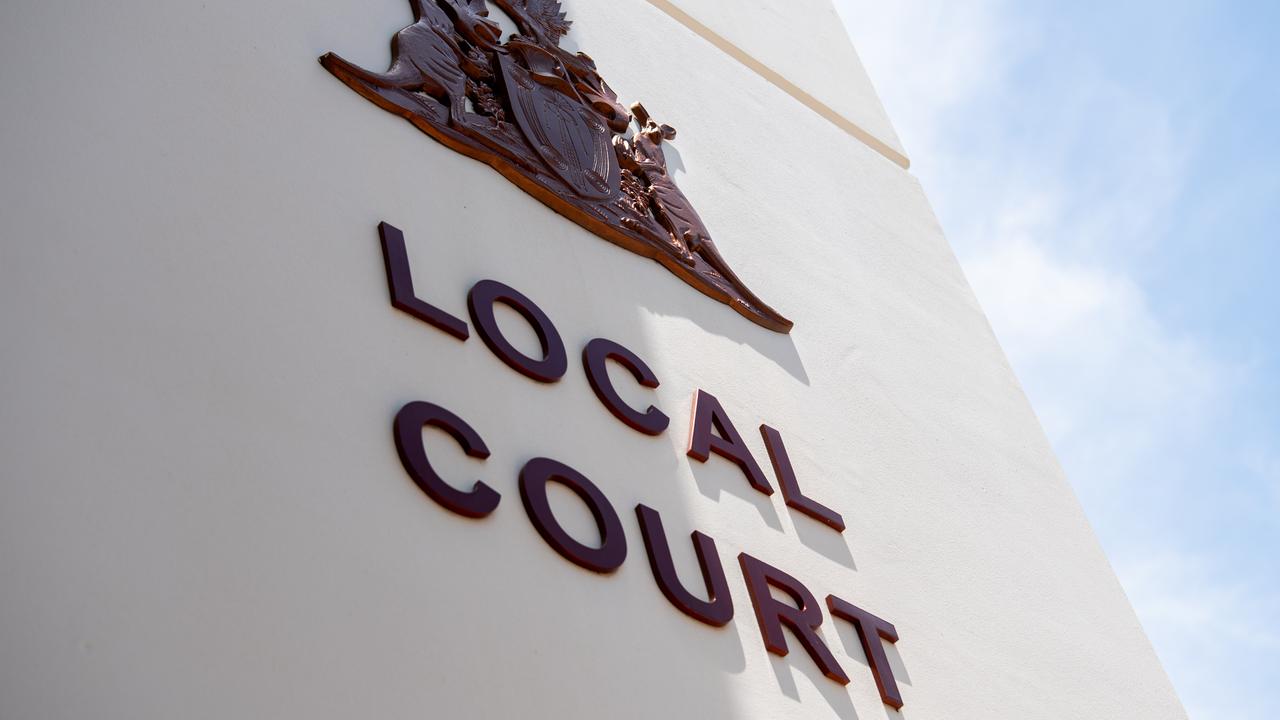
    In the hours and days following the incident, officers from the Bankstown Police Area Command launched a full investigation to identify key instigators of the brawl. On Sunday, police arrested a 47-year-old man from Greenacre. He has been formally charged with affray and assault occasioning actual bodily harm, and was granted conditional bail ahead of a scheduled court appearance at Bankstown Local Court on June 25.

    Later the same day, investigators located and took an 18-year-old man into custody, transporting him to Bankstown Police Station for processing. The teen faces serious charges that include affray and possession of a weapon with intent to commit an indictable offence. He was initially refused bail following his arrest, but appeared at Bankstown Local Court on Monday where he was also granted conditional bail, with the same court return date of June 25 set.

    In the wake of the violence, five police officers remained on scene to interview club officials and witness, while a separate senior men’s match scheduled for the park continued in the background. Police confirmed Tuesday that their investigation into the full circumstances of the brawl is still ongoing, and additional charges may be laid as new information comes to light. The incident has renewed calls for greater spectator oversight at junior community sporting events across New South Wales, where violent crowd disturbances at youth matches have become an increasingly concerning issue in recent years.