作者: admin

  • The US and others turn to Brazil for rare earths, raising environmental concerns

    The US and others turn to Brazil for rare earths, raising environmental concerns

    The global race to secure rare earth elements — the critical raw materials underpinning everything from consumer smartphones to electric vehicle motors and wind turbines, all core to the global transition away from fossil fuels — has positioned Brazil as a major alternative to China’s decades-long dominance in the sector, according to a joint investigation by The Associated Press and Reporter Brasil. With the second-largest proven rare earth reserves globally, only trailing China, Brazil’s emergence as a new supply hub is reshaping global resource markets, drawing a flood of foreign investment, and sparking urgent debates over environmental protection, Indigenous rights, and diplomatic positioning between Washington, Brasília, and Beijing.

    Rare earth elements are 17 chemically similar metals that are irreplaceable for permanent magnets, batteries, defense technologies, and consumer electronics. The International Energy Agency projected in 2022 that global demand for these critical minerals will grow at least threefold by 2040, driven by the rapid expansion of renewable energy and clean transportation. That growing demand, paired with China’s 2025 decision to restrict rare earth exports in retaliation for U.S. tariffs, has sent Western governments and corporations scrambling to diversify their supply chains, opening a massive new opportunity for Brazil.

    Data from Brazil’s National Mining Agency, analyzed through June 2026, shows a staggering surge in rare earth exploration permit applications: more than 86% of all 2,727 active requests have been filed in just the past three years, including 268 applications in the first half of 2026 alone. Foreign capital accounts for a huge share of this boom: 42% of all applications come from foreign-owned mining subsidiaries or firms with significant foreign investment stakes, and 11 of the 20 companies with the highest number of applications are backed by investors from Australia, the United States, and Canada.

    Australian firms lead the pack with 695 applications, with U.S. companies close behind at 347, followed by Canadian investors. One of the most high-profile moves came earlier this year, when USA Rare Earth — a firm with a partial U.S. government stake and up to $1.6 billion in federal support — closed a $2.8 billion acquisition of Serra Verde Mining, Brazil’s only currently operating commercial rare earth producer. Based in Goias state, Serra Verde is the only rare earth producer outside of Asia with the capacity to supply all four critical magnetic rare earth elements (neodymium, praseodymium, dysprosium, and terbium) that power everything from automotive manufacturing to aerospace and defense technology. “The Western rare earth sector stands at a critical inflection point, as governments and strategic industries urgently seek reliable sources of critical rare earths — particularly scarce heavy rare earths,” Serra Verde Group CEO Thras Moraitis said of the acquisition.

    For Brazil, the rare earth boom carries significant economic potential: it could attract billions in foreign direct investment, create thousands of new jobs, and cement the country’s status as a key player in the global clean energy economy. But it also brings major risks and unresolved tensions.

    According to the Energy Transition Observatory, a geospatial analysis platform run by Reporter Brasil, at least 25% of all exploration applications target areas that overlap with or lie within 6 miles of 283 protected areas and Indigenous territories, many located on the edge of the Amazon rainforest. Rare earth mining carries well-documented environmental hazards: depending on the deposit, operations can release toxic chemicals, generate radioactive waste, cause deforestation, and contaminate local water supplies, poisoning aquatic ecosystems and drinking water for nearby communities.

    Indigenous groups and traditional local communities have already raised alarms about the incoming projects. In Goias state, a small Afro-Brazilian community of 30 families sees its territory overlapping with exploration claims held by Canadian firm Aclara Resources, which has received $5 million in development financing from the U.S. International Development Finance Corporation. While the company has stated it will not conduct mining directly within the community’s territory, residents still fear planned operations that could launch as early as 2028 will damage local springs and wildlife. “Mining always leaves a footprint,” said Gilvan Magalhães, president of the community’s residents association.

    Political leaders across Brazil’s ideological spectrum have pushed to speed up the permitting process for strategic rare earth projects to capitalize on global demand: President Luiz Inacio Lula da Silva’s Ministry of Mines and Energy has discussed streamlining environmental licensing for critical mining projects, while Sen. Flávio Bolsonaro, a leading challenger to Lula in October’s presidential election, has also proposed faster approval timelines. Even as leaders back faster development, policymakers are moving to safeguard Brazil’s national interests: a pending bill in the Brazilian Senate would establish a federal critical minerals policy, require foreign firms to transfer processing technology to Brazil, and monitor foreign influence in the sector. “We will not allow anyone from outside to come here and exploit our mineral resources, because we want their processing and transformation to happen here,” Lula said recently, confirming the Senate will advance the legislation.

    Diplomatically, Brazil has sought to maintain neutrality in the geopolitical competition between the U.S. and China. While Chinese firms have not yet filed any exploration applications as of June 2026, Chinese state-owned and private companies have already signaled interest: last year, state-owned China Nonferrous Metal Mining Group acquired Brazil’s largest tin producer, Mineracao Taboca, which holds Amazonian mining claims and plans to conduct rare earth exploration, while Shenghe Resources Holding signed a memorandum of understanding with two Brazilian firms to pursue joint rare earth projects. China still holds an estimated 44 million metric tons of rare earth reserves, double Brazil’s 21 million metric tons, and retains near-total control of global rare earth processing and refining capacity.

    Robert Muggah, co-founder of Brazilian think tank the Igarape Institute, noted that Brazil’s rare earth sector carries unique geopolitical weight far beyond its reserve size. “Brazil’s rare earths are significant not just because of the sheer size of the deposits, but because they sit at the intersection of resource nationalism, energy transition demand, Western supply-chain diversification and competition with China’s rare earth dominance,” Muggah explained.

    Industry experts caution that the path from exploration permit to commercial production takes 5 to 10 years in Brazil, requiring extensive technical studies, regulatory approval, and in the case of projects near Indigenous territories, formal community consultation. The sector also carries high inherent financial risk: Julio Nery, mining affairs director at the Brazilian Mining Institute, noted that for every 1,000 potential rare earth prospects, only 100 justify full exploration, and just two will become viable commercial operations. Still, the flood of investment into Brazil’s rare earth sector signals a lasting shift in the global rare earth supply chain that will reshape geopolitics, clean energy development, and environmental policy in Latin America for decades to come.


  • New opposition group plans protest in Tunisia after extreme heat-driven power and water cuts

    New opposition group plans protest in Tunisia after extreme heat-driven power and water cuts

    TUNIS, Tunisia – A record-shattering summer heat wave sweeping across North Africa has pushed Tunisia into a cascading public service and economic crisis, fueling widespread public fury against the administration of President Kais Saied and setting the stage for a major opposition demonstration in the capital Tunis this Thursday.

    The planned protest is organized by Nafas, a newly formed broad opposition umbrella movement launched in May that aims to unify political parties and independent public figures outside Tunisia’s traditional opposition blocs to challenge Saied’s rule. The movement has centered its activism on pushing back against what it frames as systemic government failure and deepening injustice across the country that served as the catalyst and starting point for the 2011 Arab Spring pro-democracy uprisings.

    Protesters’ grievances stretch far beyond immediate public service failures: they include chronically intermittent power and water access, persistent shortages of life-saving essential medications, skyrocketing living costs that have stretched household budgets to breaking point, and persistently high unemployment that has left thousands of young Tunisians without economic opportunity.

    This year’s extreme heat has amplified every existing strain on Tunisia’s infrastructure, with temperatures climbing as high as 50 degrees Celsius (122 degrees Fahrenheit) in inland regions of the country. The blistering heat pushed national electricity demand to unprecedented all-time highs, forcing STEG, Tunisia’s state-owned utility provider, to implement targeted rolling rationing and scheduled outages across multiple governorates to avoid a total grid collapse.

    These planned power cuts have had a ripple effect that worsens long-standing gaps in drinking water access across many parts of the country, as the outages disrupt operations at public water pumping stations. Empty store shelves for bottled water quickly followed, as extended blackouts halted factory production of bottled products. The production slowdown has been further compounded by a shortage of raw plastic resin, a shortage triggered by ongoing shipping disruptions in the Strait of Hormuz that have cut off key petrochemical exports needed for bottle manufacturing to North African producers.

    The upcoming Thursday demonstration follows a well-attended Nafas-led rally held in Tunis last month, which marked a notable shift in opposition mobilization: the protest drew not just long-time opposition activists, but also hundreds of ordinary Tunisians who had never participated in political demonstrations before. It included a cohort of prominent social media influencers speaking out against the current political status quo for the first time, driving a significant surge in turnout among young Tunisians that has been rare in recent years of opposition organizing.

    That July rally was held to mark the fifth anniversary of Saied’s 2021 power grab, when the president suspended the elected parliament, dismissed the sitting sitting government, and moved to consolidate unilateral control over state institutions. Protesters at that event called for sweeping political reform, the release of hundreds of political prisoners, and highlighted the rapid deterioration of Tunisia’s economic conditions and public services over Saied’s tenure.

    Since consolidating power in 2021, Saied has steadily tightened restrictions on independent media, civil society organizing, and all forms of dissenting political speech. He has repeatedly targeted opposition and civil society groups, accusing them of accepting foreign funding to foment unrest and undermine Tunisia’s national interests.

    Recent opposition rallies have seen a clear hardening of tone, with calls for Saied to resign growing far more explicit than in earlier demonstrations. Protesters have revived the iconic 2011 Arab Spring chant “the people want the fall of the regime”, as well as “Dégage” – French for “Get Out” – the same slogan used by demonstrators who successfully ousted long-time authoritarian ruler Zine El Abidine Ben Ali more than a decade ago.

  • Germany reports record 14,000 heat-related deaths this summer

    Germany reports record 14,000 heat-related deaths this summer

    Europe’s devastating 2024 summer heatwave season has left a grim trail of mortality across the continent, with official German data released Thursday confirming a national record of roughly 14,000 heat-linked deaths – a toll far surpassing previous benchmarks for extreme heat fatalities.

    According to Germany’s national public health authority, the Robert Koch Institute (RKI), nearly 70% of those fatalities, around 9,600 deaths, were concentrated in a single seven-day period in late June, when much of Germany baked under unprecedented temperatures that exceeded 40 degrees Celsius.

    RKI’s analysis confirms that the vast majority of heat-related deaths occurred among adults aged 75 and older, a demographic particularly vulnerable to extreme heat stress. Unlike acute conditions that are directly listed as causes of death on official certificates, most heat-linked fatalities stem from a dangerous interaction between sustained high temperatures and pre-existing chronic health conditions. To account for this underreporting in official death records, RKI uses specialized statistical modeling to estimate total heat-related mortality, a methodology the agency has refined over 10 years of tracking heat mortality trends.

    The 2024 death toll shatters previous records: the prior high was 8,900 heat-related deaths recorded in 2018, while an independent estimate from 1994 put the toll at around 10,000. In cooler years with milder heatwaves, Germany’s annual heat-related death toll drops below 2,000, a clear correlation between the severity of extreme heat events and total mortality, RKI noted.

    Germany is far from alone in facing this public health crisis. Matching Thursday’s German data release, Spanish public health officials reported nearly 4,500 heat-related deaths since June 1, while French health authorities recorded more than 7,300 excess deaths over the same period – all part of a broader trend of soaring mortality across Europe amid a summer of record heat and widespread drought.

    Beyond the staggering human cost, the extreme heat and persistent drought have disrupted Europe’s largest economy, fanning destructive wildfires across rural regions, cutting agricultural crop yields, and dropping water levels on key commercial river navigation routes to near-unnavigable lows.

    The unprecedented mortality toll has reignited urgent political pressure for systemic action to adapt Germany to the accelerating climate crisis. This week, ministers from the centre-left Social Democrats (SPD) – the junior partner in Chancellor Friedrich Merz’s governing coalition – introduced a push to embed commitments to “climate adaptation and nature conservation” into Germany’s Basic Law, the country’s constitution.

    SPD Environment Minister Carsten Schneider emphasized that the climate crisis is no longer a distant threat, but a “tangible reality” for German communities. Current federal legislation, he argued, imposes critical limits on the actions his ministry can take to support regional and local governments as they respond to growing extreme heat risks.

    Alongside constitutional reform, the group of SPD ministers is calling for updates to urban planning regulations, national building codes, and labor laws to protect workers forced to operate during high temperature events. The proposal has already won cross-party and expert support, including from former SPD Health Minister Karl Lauterbach, a medical scientist who backed the call for increased federal funding for local adaptation measures.

    “Effective heat protection costs a lot of money,” Lauterbach told the Rheinische Post daily. “Many municipalities are heavily in debt and simply cannot finance the necessary measures on their own.”

    That assessment aligns with warnings from the German Association of Towns and Municipalities, which earlier this month estimated that at least 20 billion euros in investment is required to retrofit hospitals and nursing homes – most of which lack full air conditioning – to withstand sustained extreme heat.

    “Hospitals need air conditioning — not only for patients but also for staff,” association president Ralph Spiegler told the Rheinische Post. “We see an immense need for investment here… It is also essential to specifically address the situation in retirement and nursing homes in order to account for climate change and equip their facilities in a way that is adapted to the climate.”

    Lauterbach added that the official RKI death toll is likely a conservative estimate, meaning the actual number of heat-related deaths this summer could be even higher than 14,000. Because most heat-linked fatalities occur when extreme heat exacerbates pre-existing conditions – such as triggering a stroke in patients with underlying atrial fibrillation – heat is rarely listed as the official cause of death, leading to consistent undercounting, he explained.

  • Pirates hijack cargo ship carrying Turkish weapons off Somalia’s coast, official says

    Pirates hijack cargo ship carrying Turkish weapons off Somalia’s coast, official says

    Nearly four nautical miles off the coast of the Eyl district in Somalia’s semi-autonomous Puntland region, an act of maritime piracy has reignited longstanding concerns over organized hijacking in one of the world’s most dangerous waterways. A Somali government official, speaking on condition of anonymity due to restrictions on discussing sensitive security information, confirmed to the Associated Press that the Cameroon-flagged cargo vessel M/V LUTUF was seized by pirates this Monday. The hijacked vessel, which was carrying a cargo of Turkish military hardware and specialized communications technology, was subsequently redirected toward the Nugaal coast of the Puntland region.

    Details of the hijacking reveal that the 10-person crew on board the M/V LUTUF comes from four different nations: six crew members hold Indian citizenship, one is Turkish, one is Georgian, and two Serbian nationals are employed as armed security guards on the vessel. The ship is owned by Polar Movement Shipping, and its cargo was officially documented as bound for a Turkish military training installation in Somalia’s capital, Mogadishu. Along with the shipment of weapons, the vessel was also carrying communications infrastructure and advanced satellite equipment for the facility, the official confirmed. As of Thursday, Turkish government officials had not released any public statement confirming or commenting on the hijacking incident.

    According to the official’s account, eight pirates carried out the seizure, and investigators believe they belong to the same criminal network that hijacked another commercial vessel, the M/V Sward, back in late April. After taking control of the M/V LUTUF, the pirates sailed the ship to a holding position off the coast near Garmaal, located in Puntland’s Dangoroyo district. In the hours after the hijacking, two vessels owned by Turkish interests arrived in the area to monitor the situation, while Turkish military helicopters and unmanned drones conducted ongoing surveillance of the hijacked ship and surrounding waters.

    On Tuesday, a small civilian boat carrying two people approached the anchored M/V LUTUF to deliver khat, a mild stimulant widely chewed for recreational and cultural purposes across Somalia, the official said. Once that small boat returned to the Somali shore, an airstrike targeted the area, leaving four people dead and two others with severe injuries. To date, key details about the strike remain unconfirmed by independent observers: it is still unclear which military force carried out the attack, and it has not been independently verified whether the people killed and injured were the pirates responsible for the hijacking. The current status of the M/V LUTUF, its entire crew, and its sensitive military cargo also remains unconfirmed publicly, as independent journalists have not been able to access the site to verify all details of the official’s account. Suzan Fraser contributed additional reporting from Ankara, Turkey.

  • Express train hits and kills 4 workers at a railway station in Japan

    Express train hits and kills 4 workers at a railway station in Japan

    A tragic workplace accident has shaken Japan’s renowned safe transportation sector: four crew members conducting weed management work along a railway line were struck and killed by an incoming express train at a station north of Tokyo on Thursday, local law enforcement and railway officials confirmed. The deadly collision unfolded at Shin-Kanuma Station, located along Tobu Railway’s Nikko Line, and involved the Spacia express train heading toward central Tokyo, according to Tochigi Prefectural Police.

    The four victims, comprising three on-site workers and one supervisory staff member, were immediately transported to a nearby medical facility by emergency responders, but were ultimately pronounced dead shortly after arrival, both police and operator Tobu Railway Co. confirmed. Six additional personnel present at the work site escaped unharmed: the group includes two other herbicide spraying workers, three lookout staff assigned to monitor oncoming traffic, and a second on-site supervisor. None of the roughly 50 passengers aboard the colliding express train suffered any injuries in the incident.

    At this early stage of the probe, investigators and railway representatives have not been able to confirm why the working crew failed to clear the active track ahead of the approaching train, nor what the designated lookout personnel were doing in the moments before the collision. Per standard Japanese railway work safety protocols, lookouts are required to alert fellow workers of incoming trains using visible signals such as flags, or audible alerts including whistles and portable microphones. Tobu Railway officials noted that the full sequence of events leading up to Thursday’s tragedy remains under active investigation, and the company is fully cooperating with law enforcement and transport authorities to pinpoint the root cause.

    Takao Suzuki, the head of Tobu Railway’s railway business division, issued a formal public apology following the fatal incident. “We take this severe accident seriously and we will ensure preventive measures are implemented so this never happens again,” Suzuki stated in a press briefing.

    This event marks a rare fatal railway accident in Japan, a country globally recognized for its industry-leading standards of railway safety and on-time performance. In the immediate aftermath of the collision, all regular services along the affected Nikko Line were suspended for multiple hours to allow accident investigators to access and process the site. Railway officials confirmed that full service along the line resumed later the same day, after investigators completed their initial on-site inspection.

  • Taiwan proposes a record $35B defense budget for 2027 as China’s military pressure grows

    Taiwan proposes a record $35B defense budget for 2027 as China’s military pressure grows

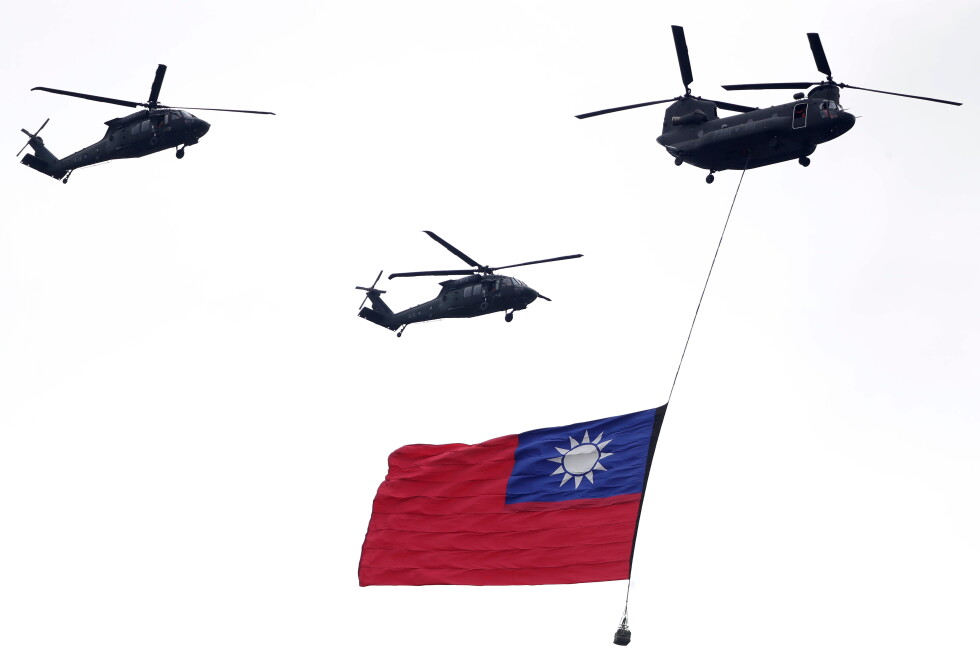
    Against a backdrop of steadily growing military and political pressure from Beijing, Taiwan’s ruling administration announced a historic defense budget proposal for 2027 on Thursday, marking a major escalation in the island’s efforts to bolster its deterrence capabilities against potential Chinese aggression.

    The planned budget totals 1.12 trillion Taiwan dollars, equivalent to roughly $35 billion — an 18% increase from the 2026 proposed defense allocation, per an official government statement. For the first time, the defense budget will exceed 3% of Taiwan’s projected gross domestic product, putting the island on track to meet the commitment President Lai Ching-te laid out to raise military spending to 5% of GDP by 2030.

    Just days before the official budget release, Lai previewed the milestone, stating that crossing the 1 trillion Taiwan dollar threshold for defense spending was fundamentally an investment in long-term cross-strait peace. This proposal comes after years of escalating Chinese activity around the self-governing island: Beijing claims Taiwan as part of its sovereign territory, and regularly deploys fighter jets, coast guard vessels, and military ships to waters and airspace near Taiwan, while holding large-scale military exercises around the island on a recurring basis. Beijing has never formally ruled out the use of military force to seize control of Taiwan.

    The budget proposal will now move to Taiwan’s opposition-controlled legislature for review, which must be completed before the end of August. However, the legislative process is expected to face notable hurdles. Last Friday, the legislature only finalized passage of the 2026 central government budget following a record-setting 266-day delay, local Taiwan’s Central News Agency reported.

    The push for higher defense spending also aligns with longstanding calls from the United States, Taiwan’s most important informal security partner. Though Washington does not maintain formal diplomatic ties with Taipei, U.S. federal law requires the U.S. to provide Taiwan with the defensive arms it needs to deter aggression. For decades, the U.S. has served as the island’s primary arms supplier and diplomatic backer, a status that has consistently been a major source of diplomatic and military tension between Washington and Beijing.

    This latest budget announcement follows a major escalation of Taiwan’s annual Han Kuang military exercises earlier this month, which are designed to simulate responses to a full-scale Chinese invasion. In a break from previous years, the drills incorporated reservists and civilian stakeholders into realistic combat scenarios, and temporarily throttled mobile internet connectivity in parts of the island to text-only speeds to simulate wartime network disruptions. Earlier urban resilience drills in Taipei were far less disruptive and attracted little public attention.

    Cross-strait tensions have remained volatile in recent years, with high-level diplomatic moves adding to uncertainty on the island. During a 2017 visit to Beijing by then-U.S. President Donald Trump, Chinese President Xi Jinping warned that mismanagement of the Taiwan issue could lead to direct conflict between the two major powers. After the meeting, Trump sparked widespread anxiety across Taiwan when he described U.S. arms sales to the island as a “very good negotiating chip” to use in talks with Beijing.

    Taiwan has operated as an independent self-governing entity since 1949, when the defeated Nationalist Party retreated to the island at the end of the Chinese Civil War, which brought the Chinese Communist Party to power in mainland China.

  • Swiss tourist sentenced to a year in jail for insulting Bali’s sacred Day of Silence

    Swiss tourist sentenced to a year in jail for insulting Bali’s sacred Day of Silence

    On the Indonesian resort island of Bali, a local district court has handed down a one-year prison sentence to a 26-year-old Swiss national convicted of insulting one of the island’s most sacred Hindu traditions. The ruling, delivered Thursday by the Denpasar District Court, marks an unusual strict legal resolution for a foreign visitor violating Nyepi customs, following widespread public outrage over the tourist’s offensive social media posts.

    Luzian Andrin Zgraggen was found guilty of violating Indonesia’s updated national criminal code for a series of social media posts he shared during this annual Day of Silence, a centuries-old tradition that reshapes daily life across the entire island. Nyepi, which typically falls each March, requires all people on Bali — a majority-Hindu island within the world’s largest Muslim-majority nation — to remain in their accommodations, observe silence, and engage in meditation. The observance is so strictly respected that Bali’s international airport closes for the full day, public internet access is cut off, streets and world-famous beaches are emptied of all non-patrol activity, and the rules apply equally to local residents and foreign visitors of every religious background.

    Court documents confirm that Zgraggen was explicitly informed of Nyepi’s restrictions by staff at the private villa where he was staying before he published his posts. Despite this warning, he took to Instagram to openly boast about defying the ban on non-emergency outdoor movement. In video clips shared to the platform, Zgraggen filmed himself walking along a Bali beach during the observance, smiled for the camera, called the deeply rooted tradition “crazy”, and used a vulgar expletive to describe the custom.

    The posts quickly spread across regional and global social media platforms, triggering immediate and widespread condemnation from Balinese communities, who widely viewed the content as a deliberate attack on their faith and cultural identity. Following dozens of public complaints from residents, Indonesian law enforcement tracked Zgraggen to a villa in Legian, a popular tourist neighborhood near Kuta Beach, and took him into custody to face criminal charges.

    Presiding judge Tjokorda Putra Budi Pastima emphasized in the ruling that Zgraggen’s actions caused tangible harm to Balinese people and their deeply held beliefs. “What the defendant did offended the Balinese people, hurt their faith and provoked public outrage,” the judge stated. “The defendant must be held accountable for his actions.”

    During Zgraggen’s trial, which opened in June, the defendant argued he had never intended to insult the sacred holiday or the Balinese community. He told the court he had posted the content while hungry and frustrated, after being unable to leave his accommodation to purchase food, and claimed he had not fully grasped how deeply meaningful the restrictions are to local culture. In his final defense statement, Zgraggen offered a public apology: “I deeply regret what I did, I apologize to the Balinese people.”

    Legal observers note that this ruling represents a departure from how similar violations have been handled in past years. While authorities have previously detained both foreign and domestic visitors who left their accommodations during Nyepi, nearly all prior cases were resolved through warnings or administrative action, without formal criminal prosecution.

  • Huge questions loom over Prince Harry’s shock return to UK

    Huge questions loom over Prince Harry’s shock return to UK

    In a development that has sent shockwaves through British royal circles and global media alike, Britain’s Prince Harry and his wife Meghan Markle are preparing to relocate back to the United Kingdom, six full years after stepping down from their official royal duties and leaving the country. The unexpected announcement, first reported by The Daily Telegraph late Wednesday, has left the public and commentators grappling with a host of unanswered questions about the couple’s motivations, plans, and future relations with the House of Windsor.

    According to the Telegraph’s reporting, the couple intend to depart the United States by the end of the current month to take up residence in a private, non-royal property understood to be located outside of London. Multiple British media outlets, including the national public broadcaster BBC, have confirmed that the couple’s two young children — 7-year-old Prince Archie and 5-year-old Princess Lilibet — have already been enrolled in a British school ahead of the new academic year starting in early September. That confirmation has lent credibility to reports of the impending move, even as core details remain unconfirmed by Buckingham Palace or representatives for the couple.

    ### The Motivations Behind the Sudden Relocation
    Royal commentators have put forward a range of competing theories to explain why the couple, who have resided in Montecito, California since 2020, have chosen to uproot their lives and return to Britain now. Many point to the underperformance of the couple’s high-profile commercial ventures in the United States, which have failed to meet the high expectations that accompanied their 2020 departure.

    “Meghan’s cookery series did not perform well, they were unable to secure a long-term successful partnership with Netflix, and they ultimately lost their major podcast deal with Spotify,” veteran royal commentator Richard Fitzwilliams told Agence France-Presse. “Their time in Hollywood has not been the success they anticipated, and this looks like a strategic shift to change their trajectory before Prince William accedes to the throne.”

    Fitzwilliams added that the couple may also be acting in response to persistent reports that Prince William, Harry’s older brother and the heir to the British throne, is considering stripping them of their honorary royal titles once he becomes king. Other analysts, however, frame the move as a step toward long-sought reconciliation with the royal family.

    Another prominent royal commentator, Ed Owens, noted that Harry, the younger son of reigning King Charles III, has held a long-held desire to repair fractured relations with his father and the wider royal household. In July of this year, the couple made a low-key brief visit to the UK where they met with King Charles — marking the first time the couple’s two children had met their paternal grandfather in four years. According to Owens, that visit went far better than many observers expected, clearing the way for a more permanent return.

    “That visit was seen as a success on both sides, so now appeared to be the right moment to make this move,” Owens explained.

    ### Where Will the Couple Reside?
    After stepping back from their roles as working members of the royal family in 2020, Harry and Meghan — the Duke and Duchess of Sussex by hereditary title — eventually purchased and settled into a sprawling private estate in the wealthy coastal California community of Montecito. Multiple reports confirm that any new UK residence will not be one of the royal family’s many official properties, and will remain entirely private.

    Fitzwilliams said the rural Cotswolds region of western England, where Harry spent much of his childhood visiting his father’s private Highgrove House estate, is emerging as the most likely location for the couple’s new home. The British tabloid The Sun has further reported that the couple will retain their existing Montecito home, as well as a vacation property in Portugal where they spent part of this summer, meaning the relocation will not mean a complete break from their life in the United States.

    ### What Does the Future Hold for Their Public Roles?
    When the couple stepped down as working royals in 2020, the late Queen Elizabeth II explicitly ruled out any so-called “half-in/half-out” arrangement that would allow the pair to retain official royal roles while pursuing private commercial ventures. To date, Buckingham Palace has not signaled any shift on this longstanding position, and it is widely understood that the couple will remain non-working royals following their return, with no access to the official perks and responsibilities that come with active royal status.

    Harry will maintain his patronages with a number of UK-based charities, and will continue his work leading the Invictus Games, the international adaptive sporting event for wounded veterans that he founded, with the next edition scheduled to be held in Birmingham in 2025. The couple’s original $100 million content deal with Netflix, signed shortly after their departure from the UK, was renegotiated last year to a far more limited agreement that allows the pair to develop smaller film and television projects for the streaming platform. Meghan also recently launched her own lifestyle and consumer products brand, As Ever, in 2025.

    Despite their high profile, the couple remain broadly unpopular with the British public. A recent YouGov public opinion poll found that only 22 percent of British respondents hold a positive view of Meghan, while just 33 percent view Harry favorably.

    ### Can Harry Repair Fractured Ties With Prince William?
    Relations between Harry and the rest of the royal family collapsed completely after the couple’s bombshell 2021 interview with Oprah Winfrey, where they made wide-ranging allegations of racism and neglect against the royal household. The rift deepened further with the January 2023 release of Harry’s unflinching tell-all memoir *Spare*, which made damning personal claims about William and other senior royals.

    While tentative bridges have been rebuilt between Harry and King Charles in recent months, William and Harry remain completely estranged, with the brothers reportedly not speaking to one another. The Daily Mail reported that William was furious when he learned of the couple’s planned relocation, with Fitzwilliams noting that the heir to the throne is strongly opposed to the move.

    “There is a very deep rift between the brothers. William feels that Harry has betrayed him and the institution,” Fitzwilliams explained. Owens, however, struck a more optimistic tone, noting that William — like his father before him — will likely eventually choose to forgive Harry for past tensions in the interest of the monarchy.

    ### Unresolved Security Questions
    Another major open question surrounding the move centers on personal security for the family. Harry has repeatedly said that he did not feel safe bringing his family to the UK after he lost a high-profile court battle against the British government over public funding for personal armed police protection. Former BBC royal correspondent Jennie Bond told Sky News that the planned relocation is particularly surprising given Harry’s longstanding public concerns on this issue.

    “It is extraordinary that he suddenly feels able to bring his wife and children to the UK when just a year ago he said there was no way he could do that because of the ongoing disputes over security provision,” Bond said.

  • ‘I feel I am imprisoning myself’ – Djokovic on drive & doubts

    ‘I feel I am imprisoning myself’ – Djokovic on drive & doubts

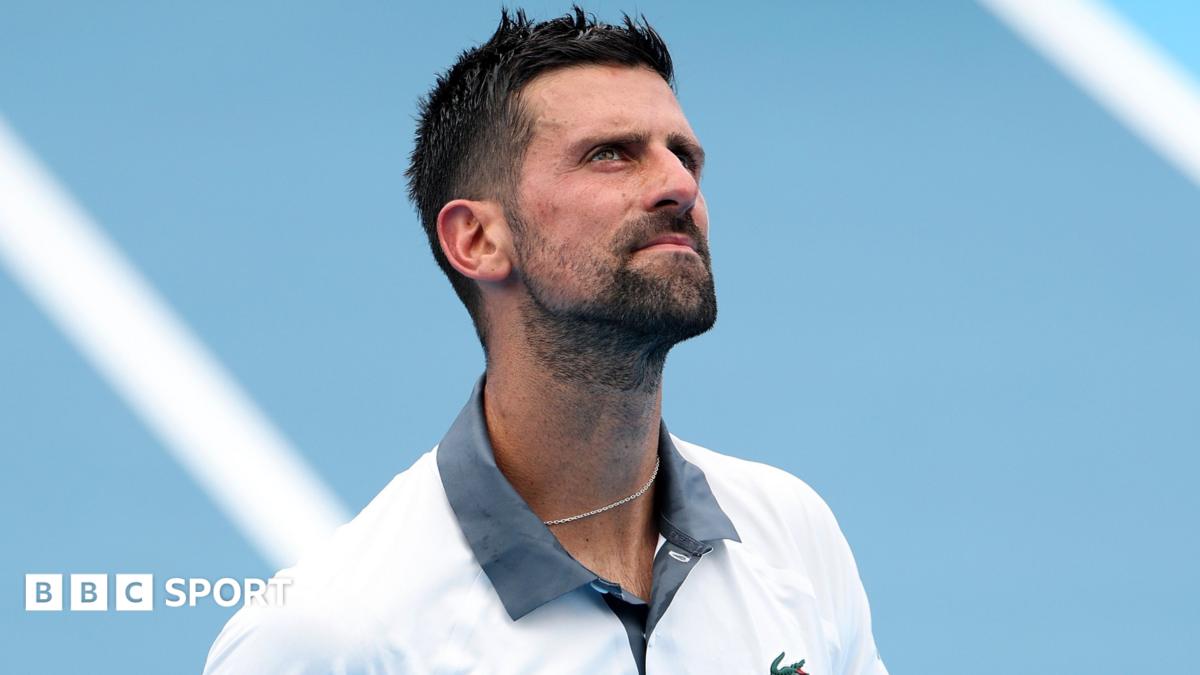
    At 39 years old, Novak Djokovic stands alone as one of the most decorated athletes in tennis history, yet his relentless hunger for more has never faded. With a record-tying 24 Grand Slam singles titles, the most ATP Masters 1000 crowns of any male player in the sport, and a newly minted Olympic gold medal added to his trophy case in 2024, Djokovic has already secured his legacy as one of the greatest to ever pick up a racket. But in a revealing new Amazon Prime documentary, the Serbian superstar opens up about his lifelong internal battle: no number of trophies has ever been enough to quiet the voice inside that pushes him to constantly do better.

    “I cannot say I feel content with what I have and who I am,” Djokovic shared in the film. “I am always looking to be more – better, faster, stronger. Oftentimes I feel I am imprisoning myself.” This unrelenting self-criticism makes Djokovic his own harshest judge. “I’m the number one doubter,” he explained. “I’m trying to prove myself wrong more than anybody else.”

    His wife Jelena Djokovic echoed this insight, confirming the tennis legend holds deeply conflicting feelings about the eventual end of his playing career. “He carries that burden that he’s never enough. No matter how much he does, it will never be enough,” she said. “Tennis is a fulfilling place for him – a place where he feels worthy.”

    Djokovic’s singular path to tennis greatness, and his complex relationship with the sport, is rooted in traumatic childhood experiences that few elite athletes can relate to. Born and raised in Belgrade, he was just a young boy when NATO bombing campaigns targeted the Serbian capital between March and June 1999. He recalled fleeing his residential building, which lacked any dedicated bomb shelter, in search of safety. On the way, he fell behind his family, and watched from the street as a warplane dropped two bombs on a nearby hospital. In the years that followed, daily life meant waiting hours in long lines just to secure basic necessities like bread and milk.

    Far from breeding resentment, Djokovic says these hardships became the foundational building blocks that forged his character and competitive drive. “These are defining moments, something I want to portray as a building block for me as a player and a person,” he told BBC 5 Live in a recent interview. “There is no regret or resentment. In contrary, it’s appreciation and gratitude. Everything in life happens as a reason.”

    As a young rising star, Djokovic was always an outsider in the historically expensive, elitist world of professional tennis. He opened up about his father having to borrow money from high-risk lenders just to fund his early training and travel for junior tournaments. When he finally broke into the upper echelons of the men’s game, he disrupted the decade-long rivalry between Roger Federer and Rafael Nadal that had captivated global tennis fans. More emotionally expressive and outspoken on court than his two legendary rivals, Djokovic never enjoyed the universal adoration that the pair received early in his career. For years, he suppressed the stress and frustration of his early struggles, emotions that would later emerge during high-stakes matches. “On the court, that’s where I felt safe and comfortable. It was a familiar ground,” he said. “Tennis is much more than a game and competition. It is defining ground for who I am as a person.”

    Today, with both Federer and Nadal having retired from the sport – Federer in 2022, and Nadal in 2024, both forced out by persistent, career-ending injuries – Djokovic continues to compete at the highest level. In recent years, he has scaled back his playing schedule, focusing almost exclusively on Grand Slam tournaments to preserve his body. After falling to Jannik Sinner in the 2025 Wimbledon semi-finals, he acknowledged he was pushing through major events with his energy reserves already “half-empty.”

    Still, Djokovic rejects any talk of setting an expiration date for his career. Every Grand Slam tournament brings fresh speculation about when he will hang up his racket, regardless of his result, and the 2026 US Open will be no different. But for Djokovic, as long as he can still compete with and beat the best players in the world, retirement is not on the agenda.

    “Why would I talk about retirement when I still keep proving to myself that I can still win?” he asked in the documentary. “As long as I have the drive, the passion, but most of all, as long as I feel like I can be one of the best players in the world, I want to keep going.”

    After claiming the long-awaited Olympic men’s singles gold medal at the 2024 Paris Games – a achievement Djokovic calls the pinnacle of his entire career – he has already set his sights on competing at the 2028 Los Angeles Olympics. “It seems a long way out. I feel like I can make it,” he said. “I would like to end with the Serbian flag on my shoulders. It would be a nice way to wrap up something I’m very proud of.”

  • The global revival of mahjong, a centuries‑old Chinese tradition

    The global revival of mahjong, a centuries‑old Chinese tradition

    The centuries-old Chinese tile-based game of mahjong is experiencing an unprecedented global renaissance. From designer-branded tile sets to viral social media ‘mahjong parties’ and a rapid expansion of community clubs and beginner classes across Western countries, this traditional pastime has reemerged as one of the hottest lifestyle trends of the 2020s. But its newfound mainstream popularity has sparked urgent conversations about cultural exchange, commercialization, and the responsibility to honor its Chinese roots as it becomes a global commodity.

    Mahjong traces its origins to the eastern coastal region of 19th century China, during the final decades of the Qing Dynasty. While scholars continue to debate its exact creation story, most agree the game evolved from much earlier tile-based gaming traditions that existed across China for centuries. By the early 1900s, mahjong had spread across the entirety of China before making its way overseas, gaining early footholds in the United States, France, and the United Kingdom.

    During this first international boom, American retailers like Abercrombie & Fitch led commercialization efforts to market mahjong to Western consumers. However, as historian Heather Lynn Heinz notes, that commercial success would not have been possible without the critical contributions of Chinese manufacturers, trade networks, and cultural insiders. Chinese merchants and community leaders imported and sold mahjong sets, and personally taught thousands of white American players the rules of the game – yet these foundational contributions have been largely erased from popular narratives of mahjong’s early history in the West, as captured in a 1924 Library of Congress photograph of young Chinese boys hand-engraving mahjong tiles for export.

    At its core, traditional mahjong is a four-player strategy game played with 144 tiles, where participants draw and discard tiles to complete a winning hand. Success relies on a mix of strategic thinking, probability calculation, memory, and the ability to read opponents’ moves, but the social, connection-focused element of the game is just as central to its enduring appeal as the gameplay itself.

    Today, more than 40 distinct regional variations of mahjong are played across the world, each with unique rule sets, tile counts, and winning conditions. Iconic Chinese variants including Cantonese and Hong Kong-style mahjong differ dramatically from adaptations like Japanese riichi mahjong. One of the most distinct Western iterations is American Mah Jongg, which was developed during the 1920s boom, incorporates unique joker tiles not found in traditional sets, and adopted the double-g spelling as a commercial branding choice. It was eventually standardized by the National Mah Jongg League, which still oversees tournament play today. In the current revival, American Mah Jongg leads growth in the U.S., while newer clubs like Australia’s Lucky Tiles focus on introducing new players to traditional Hong Kong-style play.

    Within China, mahjong’s history has long mirrored larger societal shifts. During the late Qing and Republican eras (1912–1949), the game transitioned from male-dominated gambling spaces like teahouses and brothels into middle-class and elite private homes, becoming a core part of women’s social gatherings – a shift that reflected changing gender norms and attitudes toward leisure in early 20th century China. Even at points throughout history when critics labeled mahjong a vice tied to gambling and excessive leisure, particularly as it grew in popularity among women, those criticisms never erased its deep cultural roots. Today, mahjong remains a staple of Lunar New Year celebrations and everyday social gatherings in households across China and the Chinese diaspora, where it serves as a tool for intergenerational connection and preserving cultural identity for overseas communities.

    So what is driving mahjong’s unexpected 2020s boom? Google search data shows consistent year-over-year growth in interest for “mahjong” and related terms, while rising media coverage has further accelerated its popularity. Multiple overlapping trends have fueled this resurgence: in the wake of global pandemic lockdowns, many people are actively seeking offline, in-person activities that foster genuine social connection, filling a gap left by years of remote interaction. Pop culture and social media have also played a major role, with many observers tracing the start of the current revival to the 2018 hit film *Crazy Rich Asians*, which featured a iconic high-stakes mahjong scene that introduced the game to millions of new Western viewers. Today, boutique lifestyle brands and social media influencers have rebranded mahjong as an aspirational lifestyle trend, framing fashionable mahjong game nights as an extension of the viral “Chinamaxxing” trend that embraces Chinese cultural aesthetics.

    This commercial boom has reignited long-simmering debates over cultural appropriation, a tension that first emerged during the 1920s American mahjong craze. Back then, mahjong became a fad among wealthy white American women, who embraced what Heinz describes as an Orientalist framing of “feminine exoticism,” adopting stereotypical Chinese-inspired clothing and language to perform an imagined, romanticized version of Chinese culture – all at a time when anti-Asian prejudice and strict immigration restrictions were escalating rapidly across the United States.

    Philosopher James Young argues that cultural borrowing is a natural part of human societal development, and is not inherently unethical. The key questions, he says, are whether the origin of a cultural practice is properly acknowledged, and whether adoption of that practice causes harm to the community it came from. Late cultural critic bell hooks, meanwhile, warned against the harm of reducing a living culture to a detachable aesthetic object stripped of its historical context – a debate that played out in a 2021 controversy, when U.S. brand The Mahjong Line drew widespread backlash for selling sets that replaced traditional Chinese characters with Western words and symbols.

    There is also the question of financial equity in mahjong’s current boom. Texas-based brand Oh My Mahjong, founded in 2022, reported more than $30 million in revenue in 2025, while luxury fashion houses like Hermès sell high-end designer mahjong sets for tens of thousands of dollars, turning a culturally significant traditional game into a high-margin luxury commodity. As mahjong continues to grow in global popularity, the core challenge moving forward will be ensuring its success remains tied to the Chinese communities and deep history that shaped it, and that those communities get to have a meaningful voice in how the game evolves around the world.