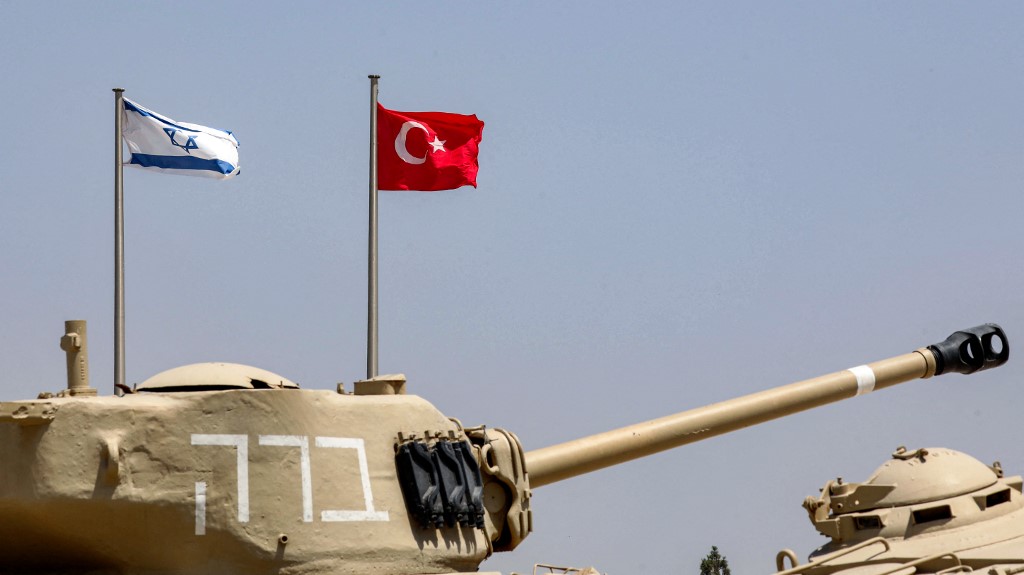
A recent Israeli airstrike on the Abu al-Duhur military airbase in northern Syria, located just 70 kilometers from the Turkish border, has ignited a sharp diplomatic standoff between Jerusalem and Ankara, reigniting long-simmering regional tensions that diplomatic efforts had sought to ease. On Thursday, Israeli Defense Minister Israel Katz issued a thinly veiled warning to Turkey in a public social media statement, accusing Turkish President Recep Tayyip Erdogan of leading his country into risky, destabilizing military actions across Syria. Katz emphasized that Israel would not permit any foreign or regional actor to jeopardize its national security, urging Erdogan to rein in his frequent anti-Israel rhetoric instead of challenging Israel’s commitment to defending its territorial and strategic interests. Jerusalem’s core allegation centers on claims that Syria was on the brink of breaking a long-standing security status quo negotiated with Israel by allowing Turkish military personnel to deploy permanently at the Abu al-Duhur facility. However, both Ankara and Damascus have forcefully rejected these claims, offering consistent, detailed accounts that contradict Israel’s justification for the strike. The Turkish Ministry of Defense issued an official statement categorically denying that any Turkish military forces were present at the airbase either before or during the “unacceptable” Israeli attack, calling for an immediate end to what it described as reckless Israeli military incursions into Syrian territory. While Syrian officials confirmed that a small Turkish technical team had been deployed to the base to repair damaged infrastructure including the runway and air traffic control tower, they stressed no uniformed Turkish military personnel were stationed at the site. The last of the reconstruction crew had departed the base two full days before the Israeli strike, according to senior Syrian officials. Turkish authorities clarified that their work in Syria is focused on helping rebuild the Syrian military’s infrastructure and capabilities under the framework of the “single army” principle, which supports the development of a strong, sovereign Syrian military capable of defending the country’s own borders. Turkish officials emphasized that these efforts are not targeted at Israel, nor do they include plans for a permanent Turkish military deployment at any Syrian base. Syrian Foreign Minister Asaad al-Shaibani echoed this denial in an interview with Axios earlier this week, stating that he had explicitly communicated to Israeli officials that there were no plans to host a permanent Turkish military presence at the site, which is being rehabilitated exclusively for use by the Syrian Air Force. This latest exchange of strikes and accusations has renewed open friction between Turkey and Israel, despite a series of high-level diplomatic talks held in 2023 that resulted in the creation of a dedicated bilateral diplomatic hotline designed to prevent accidental military clashes and miscommunication. Turkish officials speaking to Middle East Eye claim that Israel deliberately chose not to activate this hotline ahead of the strike, in a deliberate attempt to provoke the Ankara government. Diplomatic sources in Ankara also noted that U.S. authorities appear to have tipped off Turkish officials about the impending strike, providing clarity on why Israeli aircraft were operating near the Turkish border and easing immediate concerns of an intentional attack on Turkish assets. The Turkish presidency has further framed the Israeli strike as a politically motivated move by Israeli Prime Minister Benjamin Netanyahu, who is campaigning ahead of Israel’s general election scheduled for October. Netanyahu pushed back on this narrative, confirming that Israel had issued explicit warnings to Syria ahead of the strike to prevent any Turkish deployment to the base, telling reporters “Our message was very clear: Don’t. I guess they didn’t quite understand the message.” For its part, Damascus has rejected Israel’s justification as entirely illegitimate, with al-Shaibani reiterating that Israel had no right to carry out the bombing on sovereign Syrian territory. In the wake of the strike, U.S. Special Presidential Envoy for Syria and Iraq Tom Barrack told reporters from Reuters that Washington is currently working to establish a formal deconfliction mechanism that would bring together Israel, Turkey, and Syria to prevent future military miscalculations. Analysis from Israeli media, quoting a senior Syrian source close to the Damascus government, suggests that the strike is likely to backfire on Israeli strategic goals. The source noted that while Syria does not seek an expanded permanent foreign military presence on its territory, repeated Israeli threats and military incursions are pushing the Syrian government to deepen its strategic alignment with Turkey. “The Israeli government is getting the opposite result of what it hopes to achieve,” the source added.
作者: admin
-
Como mayor bans ‘beasts’ in city centre after being hit by bike
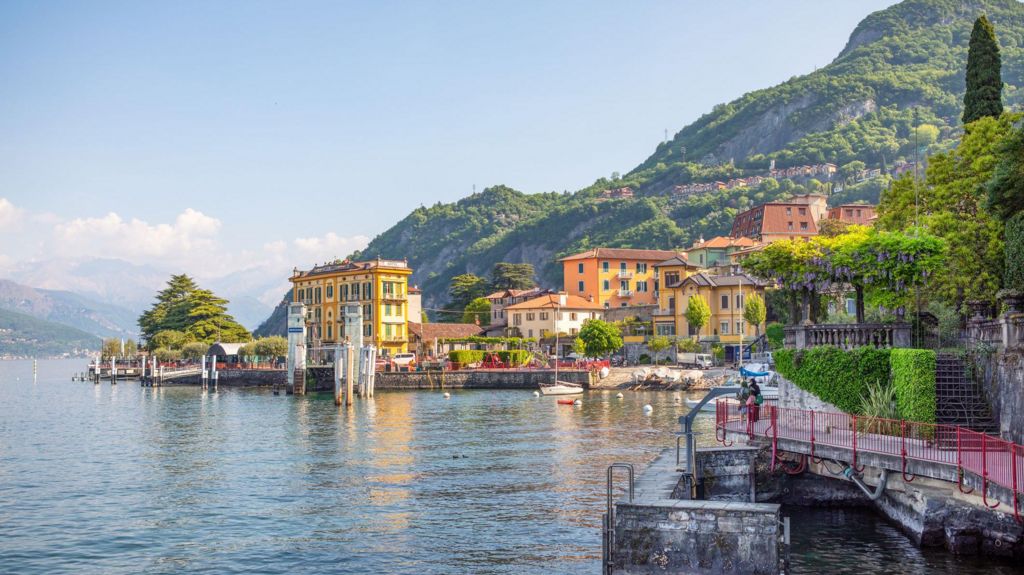
Nestled on the scenic shores of Italy’s iconic Lake Como, the historic city of Como is now at the center of a heated public debate over new mobility restrictions, triggered by a personal incident that has reshaped its local traffic policy.
Alessandro Rapinese, the city’s mayor, has announced a full ban on bicycle riding across roughly 30 streets in Como’s ancient city center, set to take effect in September. The sweeping rule, which applies equally to traditional pedal bikes and electric two-wheelers under Italian highway regulations, comes after Rapinese was struck by an electric bicycle earlier this year. The mayor framed the ban as a critical step to shore up public safety in the dense, tourist-heavy historic district, noting that his firsthand experience of the collision drove his decision-making.
“People act based on their own experiences, and I know what it’s like to be hit by one of these beasts,” Rapinese told Italian national news agency Ansa. He detailed the incident in an episode of his self-produced online video series RapiNews24, explaining that the collision occurred in July, just as his administration was debating new central city traffic limits, as he left Como’s city hall. Rapinese escaped the crash without requiring hospitalization, but said the experience pushed him to move forward with the restriction.
The cycling ban is just one component of a broader package of traffic reforms designed to manage booming tourist numbers in Como, which draws millions of visitors annually to its Roman-walled center and lakeside vistas. The new rules expand the city’s existing Limited Traffic Zone (ZTL), imposing stricter access controls for cars and vans. Under the updated regulations, most private vehicles will require an annual permit to enter the zone, plus a €3 (£2.60) daily access fee. Commercial deliveries to local shops and restaurants are restricted to between 6 a.m. and 11 p.m., and only tourists staying at accommodations with on-site parking will be allowed to drive into the historic center.
Many of the streets covered by the new cycling ban are among the widest thoroughfares in Como’s old town, and are regularly used by delivery cyclists, making the restriction a significant disruption to local daily logistics. While bicycles have long been a primary mode of daily transportation for local residents in the already car-limited city center, Rapinese’s new rule has drawn fierce pushback from the community.
Local residents have launched an online petition to overturn the ban, and prominent local advocacy groups have publicly condemned the policy. Civitas Como, a local citizens’ organization, has challenged the legal and practical legitimacy of the restriction, calling it “questionable and erroneous.” The local association Nova Como has organized a mass protest bike ride for September 12 to demonstrate opposition to the new rule.
This move places Como among a growing number of European cities that have tightened restrictions on lightweight personal mobility devices in dense urban areas amid growing safety concerns. Palermo, another major Italian city, implemented similar bicycle restrictions on busy central streets back in 2023. Beyond Italy, Paris implemented a full ban on rental e-scooters in 2023 and has since introduced stricter safety requirements for privately owned e-scooter users, reflecting a continent-wide trend of re-evaluating micromobility in historic and crowded city centers.
-
Three Palestinian parties in Israel form joint list ahead of elections
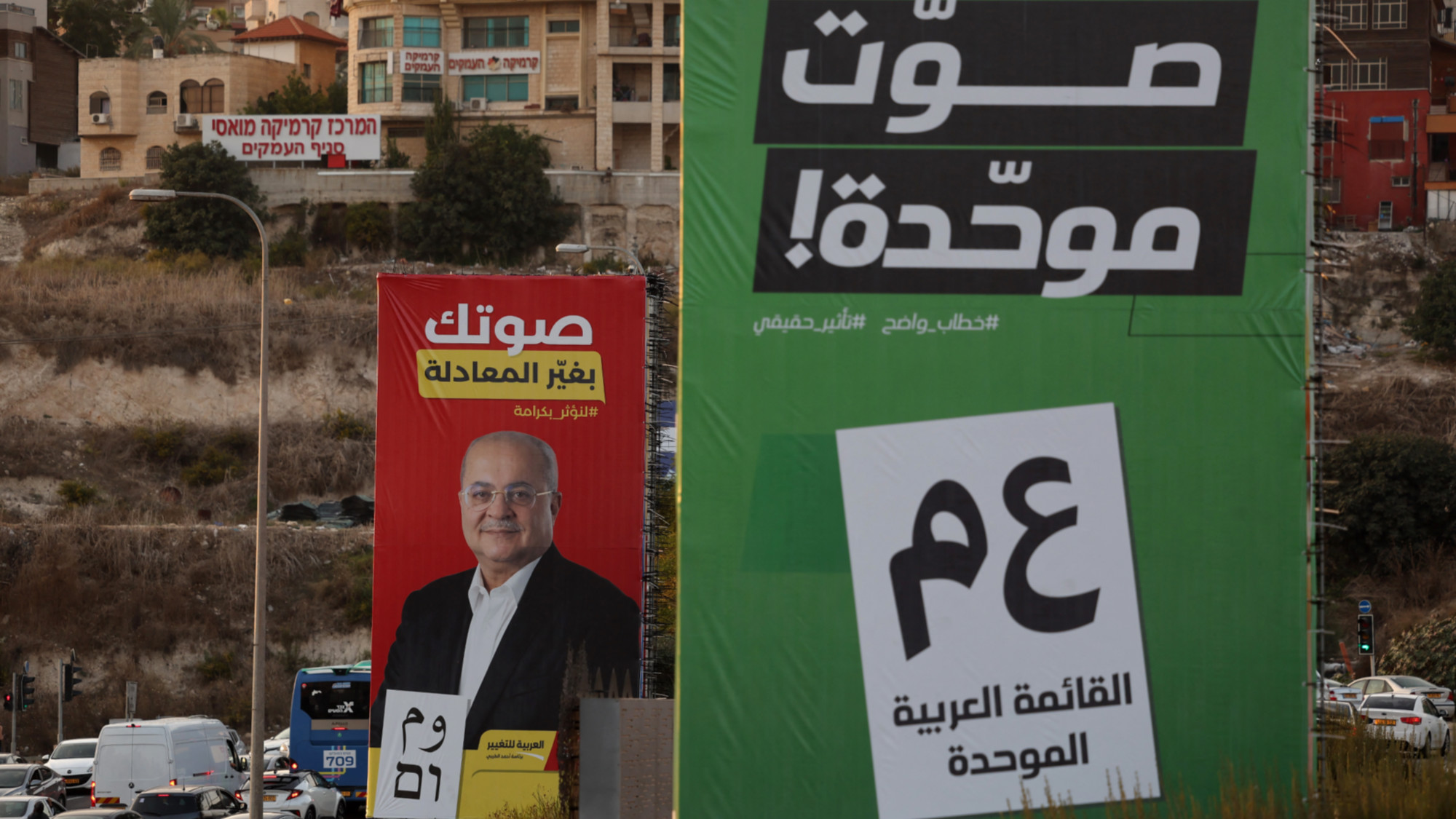
Ahead of Israel’s upcoming parliamentary elections scheduled for October 27, three Palestinian-led political parties operating within Israel announced a historic electoral alliance this Wednesday, reviving the Joint List framework that has historically united Palestinian political factions under a single electoral banner. The coalition, which brings together Hadash (the Democratic Front for Peace and Equality), Balad (the National Democratic Assembly), and Ta’al (the Arab Movement for Renewal), was formed to counter what the parties describe as mounting “fascist and racist” threats targeting Israel’s Palestinian citizen community.
In a shared official statement, the alliance laid out its core political objectives: to consolidate the collective political influence of Palestinian citizens of Israel and convert that momentum into more robust representation in Israel’s 120-seat legislature, the Knesset. “Our task is to harness our collective political weight and translate it into stronger representation in the Knesset,” the statement read. Beyond increasing representation, the parties emphasized their mission to center the interests of Palestinian citizens and their core national principles, while building a unified political force capable of unseating the current far-right Israeli government.
Talks to revive the Joint List have been underway for months, driven by growing pressure on fragmented Palestinian parties to set aside internal divisions. The original Joint List was first launched in 2015, formed in direct response to a controversial legislative change that raised the electoral threshold for Knesset entry from 2 percent to 3.25 percent of the national vote — a change widely interpreted as a deliberate tactic to exclude Palestinian political parties from parliament. The original coalition included the current three alliance members plus the United Arab List (Ra’am), but internal ideological and strategic disagreements led the bloc to fracture first in 2019, and again in 2022.
The push to reunify gained new urgency amid two unfolding crises: the ongoing military campaign in Gaza that many global observers and Palestinian leaders characterize as genocide, and a sharp rise in violent crime within Palestinian communities inside Israel. A nationwide mass strike and large-scale protests against gun violence held in the northern Israeli city of Sakhnin this January pushed leaders of all four former Joint List parties to sign a formal pledge to revive the unified electoral alliance. However, Ra’am leader Mansour Abbas confirmed in June that his party would not join the new coalition, choosing instead to run an independent electoral slate. Ra’am has even held preliminary discussions about adding Yoav Segalovich, a Jewish former Israeli police commander, to its candidate list.
At the height of the Joint List’s electoral success in 2020, the alliance secured 15 seats in the Knesset, earning its place as the third-largest political bloc in parliament. Latest pre-election polling indicates the new three-party alliance could win approximately 8 seats, while independent Ra’am is projected to claim an additional 6 seats. In recent years, Palestinian political parties have taken on growing strategic importance in Israeli politics, as traditional Jewish-led political blocs have consistently failed to secure the 61-seat majority needed to form a government on their own. This has repeatedly positioned Palestinian parties as potential kingmakers, able to throw their support behind either bloc to help form a ruling coalition.
Current polling mirrors this dynamic, indicating that both the bloc led by incumbent Prime Minister Benjamin Netanyahu and the competing opposition bloc headed by Gadi Eisenkot will fall short of a majority without the parliamentary support of Palestinian parties. Despite this, both major Israeli political blocs have publicly ruled out any partnership with Palestinian-led parties following the October election.
-

Erasmus sits Kolisi and picks Springboks-All Blacks series to go the distance
The most storied rivalry in international rugby is set to reignite this Saturday, as South Africa’s Springboks and New Zealand’s All Blacks kick off their first four-match series in half a century at Johannesburg’s iconic Ellis Park stadium. While both head coaches, South Africa’s Rassie Erasmus and New Zealand’s Dave Rennie, publicly downplay the do-or-die stakes of the opening test, history and pre-tour analysis tell a different story.
Only once in the shared history of these two rugby giants has a team come back from an opening test defeat to claim the overall series. That historic comeback came in 1937, when Philip Nel’s underdog Springbok side outmuscled the All Blacks at their home ground to reverse an opening loss and take the series. Statistically, that means the winner of Saturday’s clash will hold a massive advantage going into the remaining three matches.
Going into the opening test, much of the pre-series speculation has tipped the All Blacks as slight underdogs, with analysts identifying two opportunities for Dave Rennie’s side to steal a critical test win: this Saturday’s opening clash at Ellis Park, where the Springboks are widely reported to be carrying a layer of competitive rust after a limited lead-up schedule, and the fourth and final test, which will be held on neutral ground in Baltimore, USA. Still, when speaking to reporters ahead of this weekend’s match following team announcements, Rennie avoided playing into predictions of his side’s chances.
“Whoever doesn’t win the first test will say it doesn’t matter because there’s three to go,” Rennie noted Thursday. “Both sides want to start well. Drawing first blood would help.”
For Erasmus, the stakes of the opening test carry extra context: the South African coach already has experience fighting back from an opening series defeat, after his side toppled the British and Irish Lions in 2021 despite dropping the first match. That experience has left him confident the series can go the full distance, regardless of Saturday’s result, even as he acknowledged the strategic advantage of an early win.
“How we start is important. You win the first match you have a better chance of winning (the series), because win another one and you can’t lose it,” Erasmus explained. “We’ve learned from the Lions series, we’ve learned from World Cup pool matches that are lost early, it’s only going to be determined in game three.”
One of the biggest talking points ahead of the opening test is Erasmus’ decision to leave inspirational Springbok captain Siya Kolisi out of the match day starting lineup. Kolisi has suffered two hamstring injuries in the past two months, limiting him to just 25 minutes of competitive game play in that stretch, though Erasmus confirmed the captain was fit enough to be selected.
“Siya trained well with us this week and we could have selected him,” Erasmus said. Instead, the coach opted for in-form flanker Paul de Villiers, who made his international debut last month filling in for Kolisi in the number 6 jersey and quickly emerged as one of South Africa’s breakout standouts of the July test window.
The Springboks’ starting lineup also brings several key players back from injury: loosehead prop Ox Nché returns to the side seven weeks after sustaining a knee injury against England, while veteran center Damian de Allende is set to earn his 100th test cap, becoming only the 10th Springbok player to hit the milestone. De Allende will partner with Jesse Kriel, who is set to play his 91st test, in the South African midfield.
“He’s a great team man,” Erasmus said of de Allende. “He will certainly not let the occasion shadow what he has to do on the field.”
For the All Blacks, Rennie confirmed that three backs who had previously carried injury concerns — Cam Roigard, Will Jordan and Damian McKenzie — have all been named to the starting lineup. All three, along with All Blacks captain Ardie Savea, will make their first appearances on the 2026 tour on Saturday.
Full starting lineups for the opening test are as follows:
**South Africa**: Damian Willemse, Cheslin Kolbe, Jesse Kriel, Damian de Allende, Kurt-Lend Arendse, Sacha Feinberg-Mngomezulu, Grant Williams; Jasper Wiese, Pieter-Steph du Toit (captain), Paul de Villiers, Ruan Nortjé, Eben Etzebeth, Wilco Louw, Malcolm Marx, Ox Nché. Reserves: Jan-Hendrik Wessels, Gerhard Steenekamp, Zachary Porthen, Cobus Wiese, André Esterhuizen, Marco van Staden, Cobus Reinach, Manie Libbok.
**New Zealand**: Damian McKenzie, Will Jordan, Quinn Tupaea, Jordie Barrett, Josh Moorby, Ruben Love, Cam Roigard; Ardie Savea (captain), Luke Jacobson, Tupou Vaa’i, Fabian Holland, Josh Lord, Tyrel Lomax, Codie Taylor, Ethan de Groot. Reserves: Asafo Aumua, George Bower, Fletcher Newell, Anton Segner, Peter Lakai, Kyle Preston, Anton Lienert-Brown, Leroy Carter.
-
UK to lay out ‘measures’ against Israel over West Bank settlements
A fresh diplomatic standoff has emerged between the United Kingdom and Israel following Jerusalem’s decision to advance long-planned controversial settlement construction in the E1 corridor east of Jerusalem, a project that critics warn will permanently split the occupied West Bank and bury any hopes of an independent Palestinian state.
On Tuesday, Israeli authorities launched a formal tender process for the development of 1,234 new settlement residential units across the southern portion of the E1 plan, marking a major pivot for the decades-debated project. What was once stuck in planning and approval phases has now moved to active land marketing and on-the-ground implementation. The development spans roughly 12,000 dunams of land between Jerusalem and the large existing settlement of Ma’ale Adumim, encompassing seven interconnected settlement zones that will include residential neighborhoods, industrial hubs, tourism sites, and new connecting road and utility infrastructure.
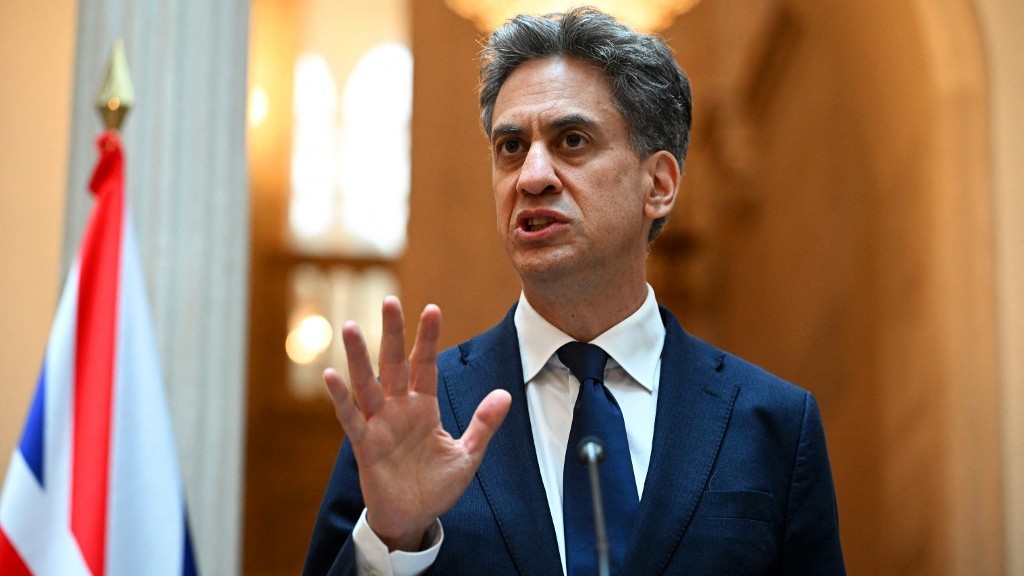
In an official public statement released Wednesday, UK Foreign Secretary Ed Miliband issued sharp condemnation of the move, warning that the settlement project poses an existential threat to the long-debated two-state solution that has been the international community’s core framework for Middle East peace for decades. Miliband confirmed that he had directly conveyed the UK’s strong opposition to Israeli Foreign Minister Gideon Sa’ar, demanding an immediate end to all E1 development plans, the full withdrawal of the newly issued construction tender, and a complete halt to all Israeli settlement expansion across occupied Palestinian territory.
“ The impact of settler violence and terrorism has been catastrophic for Palestinian communities. Settlement expansion and attempts to create irreversible divisions on the ground threaten peace, security and the prospects for a viable Palestinian state,” Miliband said in his remarks. He added that the UK refuses to quietly accept the elimination of the two-state framework, confirming that the British government will release a full package of punitive measures in the coming weeks, including targeted sanctions against individuals and entities directly involved in illegal settlement expansion.
Stephen Doughty, UK Minister of State for the Middle East, echoed Miliband’s condemnation, labeling the E1 tender a “deliberate and destructive act designed to undermine a two-state solution.”
The planned announcement of new anti-settlement measures aligns with prior reporting from Middle East Eye, which exclusively revealed last week that the UK was preparing to roll out updated policies toward Israel this September. According to that earlier exclusive report, planned actions include a national ban on goods produced in Israeli settlements, new sanctions on individuals, organizations, and even sitting Israeli ministers tied to the Israeli settler movement, and additional restrictions on UK arms exports to Israel.
As an independent media outlet focused on coverage of the Middle East and North Africa, Middle East Eye first broke news of the UK’s upcoming policy shift, bringing advance transparency to a diplomatic move that signals a significant hardening of Britain’s stance against unilateral Israeli actions that undermine Palestinian statehood.
-
How China eased pressure on oil markets by halting purchases and relying on reserves
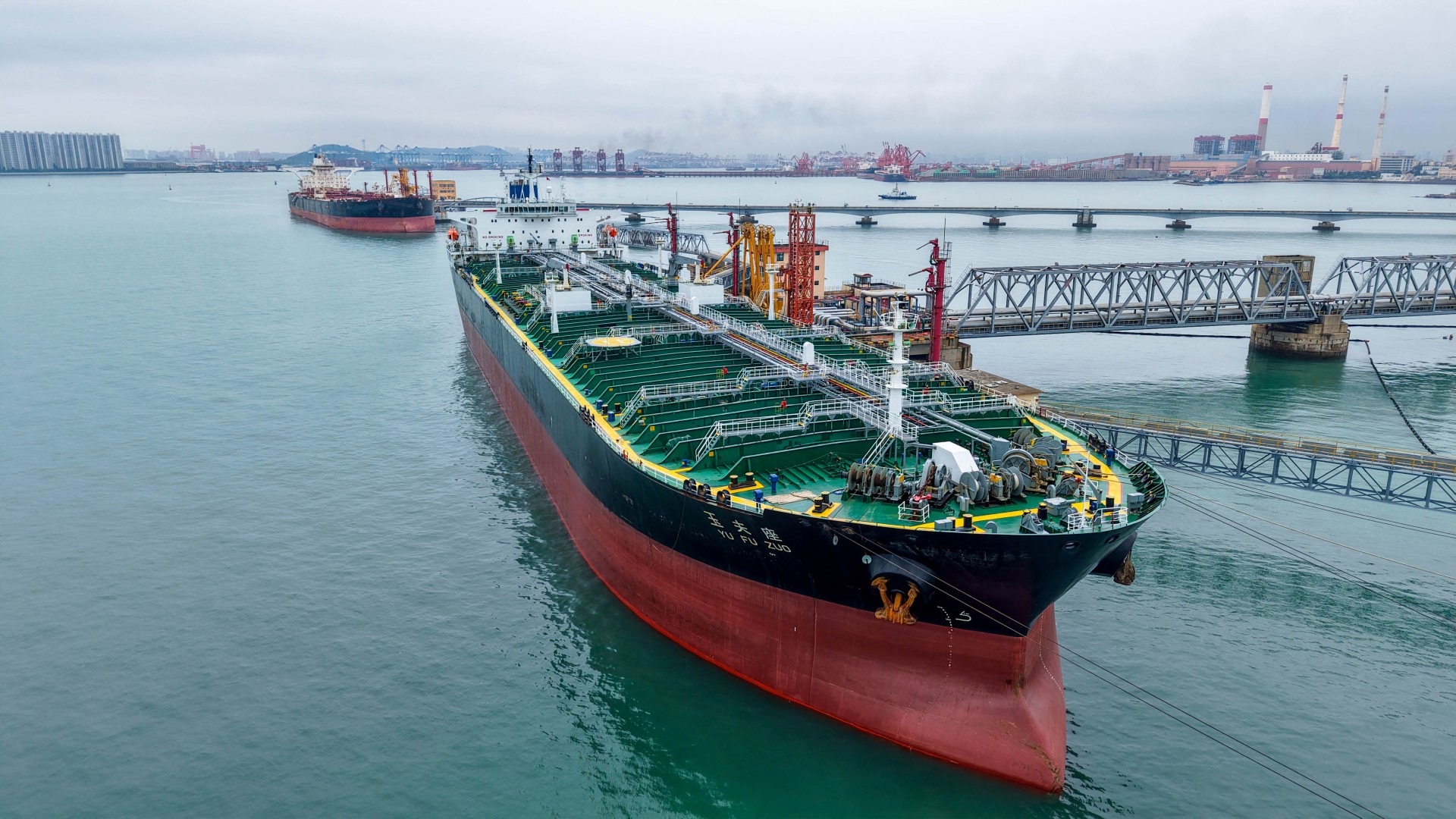
Six months after major supply disruptions shut down much of the Strait of Hormuz — the world’s most critical chokepoint for global oil trade — energy markets have avoided the catastrophic price spikes that marked comparable Middle Eastern crises in decades past. Analysts largely credit one unexpected factor for this muted volatility: China’s deliberate strategy of drawing down its massive strategic petroleum reserves (SPR) instead of bidding up crude prices on a disrupted global market.
Before the current crisis, the Strait of Hormuz carried roughly 20 million barrels of crude per day, equal to one-fifth of total global daily oil consumption. Six months into the ongoing disruption, an estimated 10 to 14 percent of the world’s total oil supply remains locked in, a far larger share of global output taken offline than during past major Middle East energy shocks. For comparison, the 1973 Arab oil embargo, which quadrupled global oil prices, only disrupted 7 percent of global supply. Both the 1979 Iranian Revolution and the 1990 Iraqi invasion of Kuwait doubled crude prices despite cutting off just 6 to 7 percent of global supply each.
Against this historical context, the current market outcome has been remarkably stable: international benchmark Brent crude has only risen around 50 percent since the start of the year, stabilizing at a steady $85 to $90 per barrel, after an initial jump when the strait closed. Two key factors explain this relative calm: coordinated emergency releases from the International Energy Agency totaling 400 million barrels, and a sharp pullback in crude purchasing from China, the world’s largest crude oil importer.
China’s ability to cut back on imports stems from its 20-year program of building up strategic reserves, which has accelerated since 2022. Today, Beijing holds more than 1.2 billion barrels of stored crude, enough to cover more than 100 days of net imports and sustain domestic supply for at least a full year even with a complete halt to seaborne imports. To preserve its stockpile while meeting domestic needs, Beijing sharply slowed refinery output to prioritize essential domestic demand, and restricted exports of refined products including diesel, gasoline, and jet fuel, allowing it to draw on reserves instead of purchasing expensive crude on the open market.
As Jack Prandelli, a veteran commodity trader, explained to Middle East Eye, Beijing’s strategy has effectively served as a price buffer: “China is preserving a high cushion, using its reserve as a buffer instead of chasing barrels in a disrupted Gulf market.”
In recent weeks, however, Beijing has begun to adjust its approach: it has partially lifted restrictions on refined product exports and made small, temporary purchases of Gulf crude. This shift has sparked market speculation about when China will resume full-scale restocking of its SPR, a move that analysts warn could trigger substantial upward pressure on global oil prices.
In July, China recorded a surprise small surplus of 210,000 barrels per day, a figure that caught many analysts off guard given the steep drop in crude imports since March. But Prandelli noted the surplus stems from refiners cutting output faster than export restrictions were loosened, not a meaningful rebound in crude imports. “It looks more like a pause in an extended destocking cycle than a decisive pivot to aggressive restocking,” he said.
Duncan Wrigley, chief China economist at Pantheon Macroeconomics, added that the minor uptick in oil imports seen in August can be traced to improved refinery margins following a brief drop in global crude prices, which dipped to $78 per barrel in the first week of August after averaging more than $90 the prior month. Prandelli cautioned that this minor import growth is unlikely to hold, predicting that “import volumes are already expected to stall or even reverse in August” as refiners continue leaning on reserves amid ongoing Hormuz disruptions and no diplomatic breakthrough between the U.S. and Iran.
For the second consecutive month in August, China further relaxed caps on refined fuel exports, approving a quota of up to 2.7 million metric tons for international shipments, according to a Reuters report citing industry sources. This move surprised many analysts, given the ongoing instability for vessels transiting the strait. Wrigley argued the easing “indicated perhaps misplaced optimism that global oil supplies would start to normalise.” A stabilization of conditions through the Hormuz would allow Chinese refiners to return to full normal output levels, he noted.
Early August had raised hopes for a diplomatic breakthrough: mediation from Qatar and Pakistan signaled that the U.S. and Iran might reach a long-term agreement to reopen the strait, where traffic had already fallen to record lows. Those hopes faded quickly, however, when former U.S. President Donald Trump reaffirmed plans to maintain harsh economic pressure on Iran and reiterated military threats just weeks before the existing bilateral memorandum of understanding expired on August 17 without renewal. The following weekend saw only five vessels transit the waterway, an all-time record low.
Even with the ongoing disruption, Wrigley noted that China’s loosening of export restrictions signals Beijing is not concerned about running low on either commercial or strategic oil inventories. The current reserve stockpile is enough to cover more than 100 days of net imports, according to Prandelli, and analysts do not expect Chinese refiners to actually export the full 2.7 million tons approved in the latest quota, which falls just short of the pre-crisis 2025 monthly average of 3.04 million tons. While the quota easing is widely seen as a small step toward restoring pre-crisis oil flows, Prandelli noted that since refiners are still drawing on reserves, the move will not automatically translate to an immediate increase in crude imports or refinery runs.
Across the board, analysts agree that China will not resume filling its strategic reserve with Gulf crude until the Strait of Hormuz stabilizes. Chinese refiners act as opportunistic buyers, Wrigley explained, and will only ramp up purchases after a marked fall in crude prices. Rory Green, a China economist at TS Lombard, projected that once China does restart restocking, the dynamic that has kept global prices muted will shift sharply: “China is likely to move from an oil price deflator to an inflator, limiting the scope for declines in global benchmarks.”
Prandelli laid out two clear conditions for China to resume large-scale Gulf crude purchases: first, confirmation that the acute crisis has shifted to long-term stability, and second, a meaningful price discount for Gulf crude compared to alternative supplies from Russia and the Atlantic Basin. That discount will most likely only emerge once the strait reopens, or if Saudi Arabia and the United Arab Emirates scale up alternative bypass pipelines to move crude past Hormuz. If China resumes imports before those infrastructure expansions are complete while the strait remains closed, Prandelli warned, that could push global prices higher even before the chokepoint fully reopens.
To date, China’s strategic reserve strategy has had a deflationary effect on global oil prices: the sharp, rapid pause in crude imports cut global demand enough to absorb most of the initial shock from the Hormuz closure. Beyond its reserves, China’s broader long-term energy strategy has left it far more resilient to this energy shock than many other major economies. It relies on a mix of large-scale domestic energy production, rapid mass electrification, and intentional supplier diversification to reduce exposure to Gulf disruptions.
Domestically, China produces 60 percent of its natural gas from domestic shale and coal-to-gas projects, and the rapid growth of electric vehicle adoption — EVs now make up more than half of all passenger cars on Chinese roads — has cut overall oil import demand. On the supply side, China has systematically diversified its crude suppliers beyond the Middle East, adding major volumes from Central Asia, Russia, Latin America, and Africa, alongside continued discounted purchases from Iran.
This diversification has left China much better positioned than neighboring economies including Japan, South Korea, and Taiwan, all heavily reliant on Middle Eastern crude, as well as developing economies like the Philippines, Pakistan, and Thailand, which have already been forced to implement emergency energy conservation measures. “China can cover a substantial portion of its needs through sanctioned barrels sitting in floating and bonded storage, especially Iranian cargoes already positioned in Asia and Chinese ports,” Prandelli explained, a flexibility few other economies can match.
Before the current crisis, China purchased up to 90 percent of Iran’s total oil exports, and despite the overall drop in volumes, it continues to source discounted crude from Tehran, evading Western sanctions largely via small tankers that disable their location transponders during transit. Today, Russia is China’s largest single crude supplier, delivering more than 2 million barrels per day, equal to more than one-fifth of China’s total imports. Most of this crude is moved via Russia’s “shadow fleet” of aging, unregulated tankers used to evade Western sanctions, a fleet that carries growing risks of major environmental disasters like the recent leak from the tanker Caroline Bezengi off the coast of Oman. Russia has also begun using the Arctic Northern Sea Route to cut transit time to China by more than half, compared to the increasingly geopolitically vulnerable Suez Canal route.
Even with growing Russian imports, analysts warn that Russian crude is not a permanent long-term replacement for Gulf supplies. “While Russian oil is a workable substitute in the near term, it’s not a perfect one-for-one replacement for Middle Eastern flows in terms of logistics, grades, and political diversification,” Prandelli noted.
In recent months, some analysts have argued that China is beginning to take on some of the market influence long held by the Organization of the Petroleum Exporting Countries (OPEC), a shift accelerated by the United Arab Emirates’ departure from the group last April. While China’s reserve strategy has undeniably helped stabilize global prices since the Hormuz closure, the analysts consulted by Middle East Eye are skeptical that this amounts to a lasting challenge to OPEC’s market power.
When asked whether Beijing is now rivaling OPEC, Wrigley said: “I don’t think China is doing so at all. The drop in China’s oil imports is an intended by-product of policy, rather than a strategic move to set oil prices.”
Prandelli echoed that view, noting that for now, China is setting the cyclical pace of the global oil market, but OPEC still controls the market’s structural trajectory. “If and when Hormuz resolves, that balance shifts back toward a more traditional Opec+ centric structure,” he said.
-
US warns allies, China to back economic war on Iran
Six months into a deeply unpopular U.S. military engagement in Iran, the White House has announced a dramatic strategic shift, launching what it calls the most sweeping coordinated economic isolation campaign in modern history to topple the Tehran government. U.S. Treasury Secretary Scott Bessent outlined the new initiative to reporters at the White House on August 20, 2026, framing the economic push as an alternative to expanding costly large-scale military operations that have faced mounting domestic backlash ahead of critical midterm elections.
Speaking to CNBC, Bessent confirmed that the administration is demanding full participation from both U.S. allies and major competing powers including China, issuing a stark “you are either with us or against us” ultimatum to the global community. When pressed about how Washington will compel Beijing to align with the campaign, Bessent declined to share public details, noting that sensitive discussions are often held privately, but explicitly called on China to “get with the program.” The issue of Iran is set to be a top agenda item when Chinese President Xi Jinping visits the White House on September 1, a follow-up to the Iran discussions that took place during Trump’s May summit in Beijing.
Bessent emphasized that the ramped-up economic pressure is intended to reduce the likelihood of resuming large-scale kinetic military action against Iran, though he stopped short of ruling out future military deployments. “If we are doing the maximum economic pressure, then that means that likely there will not be a large-scale kinetic restart, but I will emphasize that is for now,” he said, adding that full details of the new sanctions and enforcement measures will be released during a formal press conference scheduled for Monday.
Iran has swiftly rejected the new campaign, dismissing it as a cynical distraction from growing economic troubles facing the United States. Iranian Foreign Minister Abbas Araghchi took to X to point out that the so-called “Economic D-Day” comes as the U.S. grapples with unprecedented national debt and soaring interest costs, while the Iranian foreign ministry labeled the new sanctions threats a clear act of “economic terrorism.”
The strategic shift comes amid a months-long military stalemate following the U.S. and Israeli launch of military operations against Iran on February 28. Currently, Tehran maintains partial closure of the strategic Strait of Hormuz, while the U.S. enforces a naval counter-blockade of Iranian trade. After six months of combat, the U.S. has failed to force Iran to abandon its enriched uranium program or its stated plans for civilian nuclear energy, a core demand of the Trump administration, which has insisted it will not allow Iran to develop a nuclear weapon.
Domestic criticism of the administration’s war handling has intensified in recent weeks, after reports of abysmal living conditions aboard the USS Abraham Lincoln, which has been deployed to the Middle East since November 2025. The vessel reportedly faced widespread food shortages, broken plumbing systems, and multiple suicide attempts among crew, prompting the Pentagon to replace it with the newly arrived USS George Washington carrier strike group, which arrived in the region Wednesday.
This new economic campaign is not the first time Trump has prioritized economic pressure against Iran. During his first term from 2017 to 2021, Trump withdrew from the landmark nuclear deal negotiated by former President Barack Obama and implemented a harsh “maximum pressure” sanctions regime. Despite decades of sweeping U.S. sanctions and the earlier maximum pressure campaign, Iran has managed to continue exporting oil largely via a shadow fleet of sanctioned tankers, with China remaining its largest crude oil customer. In his initial announcement of the new campaign on Truth Social, Trump called for an immediate end to all activities that facilitate Iranian oil trade, including what he termed “oil smuggling, swap lines, cash transfers, exchange houses, ship registries, front companies,” though he did not name any specific countries aiding Iran in these activities.
-
France: Mosque closure fuels fear of state overreach on Muslim worship
A recent court ruling upholding the temporary closure of a small working-class mosque in northeastern Paris has reignited fierce national debate over France’s approach to countering radicalism, the practice of secularism, and systemic biases targeting the country’s Muslim community.
The case centers on Attaqwa Mosque, commonly called Chanteloup Mosque, nestled in a social housing complex in Aulnay-sous-Bois’s majority-immigrant southern neighborhood. Unlike traditional Islamic religious sites, the unassuming space blends into surrounding residential apartment blocks, with no minaret or dome, housing a 50-person prayer hall and offices for Acas, the local cultural association that manages it. Founded by local residents in the early 2010s as an informal prayer room, the site operated for more than a decade without pushback from housing providers or municipal officials.
In July, the prefecture of Seine-Saint-Denis ordered the mosque shuttered for six months, citing claims that imams at the site had disseminated content inciting violence, hatred and terrorism, both during sermons and on personal social media accounts. Earlier this month, the Montreuil Administrative Court rejected the mosque operator’s appeal to suspend the order, ruling that the temporary closure does not qualify as a clear, illegal violation of religious freedom. The court added that the ruling did not penalize citations of Islamic scripture, noting the order also relied on evidence of radicalized individuals frequenting the space, and that prefectural authorities had not interfered with core religious beliefs or violated France’s principle of state religious neutrality.
But local residents and legal representatives have pushed back sharply against the decision. For 78-year-old retired bus driver Salah, a regular worshipper who lives within walking distance of the mosque, the closure has stripped him of access to daily sunset prayers he has practiced for years. His poor health makes the longer trip to other mosques in Aulnay impossible, leaving him disconnected from the community space that anchored his daily routine. Twenty-year-old local resident Rayane, who also prays at Attaqwa, said the collective punishment of closing the entire mosque instead of prosecuting individual imams accused of wrongdoing is unfair. Critics argue the decision undermines both religious freedom and the secularism France claims to uphold, by punishing an entire community for the alleged actions of a few individuals.
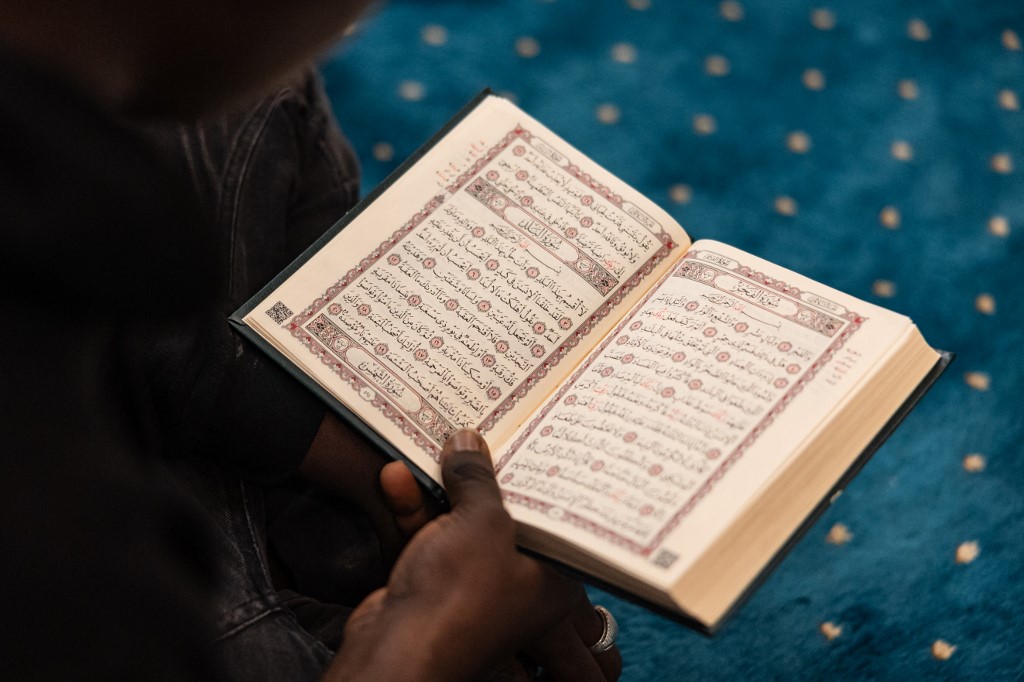
Rafik Chekkat, the lawyer representing Acas (which has had all its assets frozen in the case), argues key portions of the court ruling run counter to fundamental religious freedom protections. He announced plans to appeal the decision to the Council of State, France’s highest administrative court, noting that authorities built part of their case against the mosque on imams’ citations of seven verses from the Quran and references to foundational works of Islamic tradition, including 13th-century Syrian scholar Imam al-Nawawi’s *The Garden of the Righteous* and *The Forty Hadiths* — works universally recognized as core to mainstream Islamic teaching. The defense also highlighted that the prefecture objected to sermons referencing hell and punishment for non-believers, despite identical theological teachings being common in Christian preaching across the country.
Veteran French lawyer Sefen Guez Guez, who has successfully won the suspension of three mosque closure orders throughout his career, says the ruling sets a dangerous legal precedent. He argues the court validated the prefecture’s practice of literally interpreting routine citations of core religious texts out of context to justify closing a place of worship. Guez Guez also raised procedural concerns, noting some of the sermons cited in the closure order date back to 2020, raising unanswered questions about how far back authorities can search for evidence to justify shutting down a religious site.
The Attaqwa case is far from an isolated incident, but rather the latest manifestation of a years-long shift toward stricter state control of Muslim worship in France that began early in Emmanuel Macron’s presidency, when he took office in 2017. In 2021, the French legislature passed the controversial anti-separatism law, formally titled the Law Reinforcing Respect for the Principles of the Republic, which was framed as a tool to root out Islamist radicalism. Critics have long argued the law stigmatizes France’s 5.7 million Muslim residents, the largest Muslim population in Europe, while eroding civil liberties. The legislation expanded the legal powers of regional prefects to order mosque closures, added new mandatory requirements for religious associations, broadened the justifications for closing religious sites, and created a systematic system of state oversight — making closures far more frequent and easier to administer.
Prominent scholars of religion warn this shift marks a fundamental change to French secularism. In his 2025 book *Governing Islam in France*, CNRS senior researcher and religion specialist Franck Fregosi argues that growing numbers of mosque closures are evidence of an authoritarian turn in France’s long-standing practice of laïcité, or secularism. Fregosi notes the state’s increasingly heavy interference in the internal governance of mosques, including mandatory vetting of imams and worshippers, fits into a centuries-long pattern of state efforts to control and monitor Muslim worship that dates back to France’s colonial era in North Africa.
In 2024, then-Interior Minister Gerald Darmanin introduced a new official registration system for imams working in France, intended to end the long-standing practice of foreign governments sending clerics to serve French mosques. The stated goal was to block foreign influence and radical ideological currents, allowing imams already working in the country to stay if they were hired by a local religious association and completed mandatory civic training, including coursework on French secularism. But even compliant imams have faced barriers: an Algerian imam hired by Nîmes’ Grand Mosque who completed all required requirements was still denied a residence permit by the prefecture and forced to return to Algeria, according to mosque rector Abdallah Zekri.
Zekri, who also chairs the French Observatory Against Islamophobia and serves as vice president of the French Council of Muslim Worship (CFCM), the national representative body for French Muslims, argues growing numbers of mosque closures reflect a rising climate of anti-Muslim bias across the country. “When it’s not for radicalisation, mosques are closed under the pretext of non-compliance with urban planning regulations,” he explained, adding that Muslim associations face growing barriers to securing state approval to purchase land for new mosque construction. Guez Guez confirmed this pattern, noting that most closure requests are rooted in political considerations, with municipalities often using minor violations of fire safety or zoning rules as a pretext to shut down Muslim sites.
Official French Interior Ministry data records only 12 places of worship, almost all mosques, that have been administratively closed for reasons related to radicalization since 2017. But independent journalistic investigations and advocacy group data show the actual number of closed mosques is far higher, with dozens more shut down for technical or regulatory violations. Between 2021 and 2022 alone, roughly 20 mosques were closed as part of a nationwide campaign of expanded administrative inspections. French Muslim advocacy group Trouve Ta Mosquée estimates that 89 mosques have been closed, temporarily or permanently, since 2017, including sites currently facing ongoing investigations.
Zekri also noted that imams face growing punishment for discussing political topics, with comments on the Israeli military campaign in Gaza routinely mislabeled as hate speech, leading to retaliatory action. In a high-profile 2025 case, Abdourahmane Ridouane, president of a mosque near Bordeaux, was initially sentenced to four months suspended prison and a two-year ban from France on charges of apologizing for terrorism after he denounced Israeli policy in the Palestinian territories. He was ultimately acquitted by the Paris Court of Appeal later that year.
Efforts to tighten state oversight of Muslim worship continue to move forward through the French legislature. In May 2025, the French Senate adopted a bill introduced by Senator and former Interior Minister Bruno Retailleau, following a June 2024 report on alleged Muslim Brotherhood infiltration in French religious institutions. The bill would further expand prefects’ power to order mosque closures by broadening the legal definition of justifications for closure and allowing for preventive shutdowns before any disturbance of public order has occurred — a change that critics warn would grant state officials far more discretionary power to target sites. A second bill introduced in January 2025 by right-wing Les Républicains lawmakers would require prefectural approval for all new construction or expansion of places of worship, replacing the previous system where the prefect only issued a non-binding advisory opinion. Neither bill has been passed into law as of yet.
-

Boat capsizes in northwestern Nigeria, leaving dozens of people dead
A deadly boat capsize in northwestern Nigeria’s Sokoto State has left at least 47 people dead, according to local officials and community residents, in what marks another tragic incident in a country plagued by frequent waterway disasters during the annual rainy season. The overloaded vessel was carrying more than 80 passengers when it overturned Thursday on a local river, with the vast majority of travelers heading to agricultural work sites in Gorau town, located within the state’s Goronyo Local Government Area.
Abdulkadir Yusuf, state manager for Nigeria’s National Inland Waterways Authority, confirmed that the fatality count stood at 47 as of the latest update. For local residents, the disaster has brought devastating personal loss: 55-year-old Samaila Garba told the Associated Press that his 13-year-old granddaughter, Jamila Usman, was among those killed. Garba, who personally counted at least 42 recovered victims’ bodies, noted that most of the dead were women and children — a demographic that routinely travels across the river to reach farmland during the rainy season.
Another local resident, Aminu Dan Hajiya, who relies on the same river route to access his own farm, said he considered himself extraordinarily fortunate to have avoided boarding the fateful voyage. The tragedy has touched nearly every corner of the small community, he added: “In fact, almost every household in the community has been affected.”
Usman Yusuf, a leading community figure in Gorau, corroborated the report that more than 80 passengers had been on board the boat when it capsized, adding that 41 victims had already been laid to rest as of initial updates.
Deadly boating accidents are an all-too-common occurrence across Nigeria, particularly during the annual rainy season when river conditions become turbulent and unpredictable. Systemic failures in regulatory enforcement have created dangerous conditions for informal river travel: weak oversight allows unfit, overloaded vessels to operate without required safety equipment such as life jackets, putting thousands of daily commuters at risk. Just earlier this year in January, a nearly identical incident in northeastern Nigeria’s Yobe State killed at least 25 people, highlighting the ongoing risk to rural communities dependent on waterways for access to work and basic services.
This report was prepared by Mohammed Ibrahim, reporting from Kaduna, Nigeria, with additional contributions from Tunde Omolehin.
-
Nord Stream bomb suspect arrested while working on movie about attack: media
In a striking twist that intersects international sabotage investigations and global entertainment, a Ukrainian man suspected of involvement in the 2022 Nord Stream gas pipeline bombing has been taken into custody on the set of a major Hollywood film about the attack, multiple international media outlets reported Thursday.
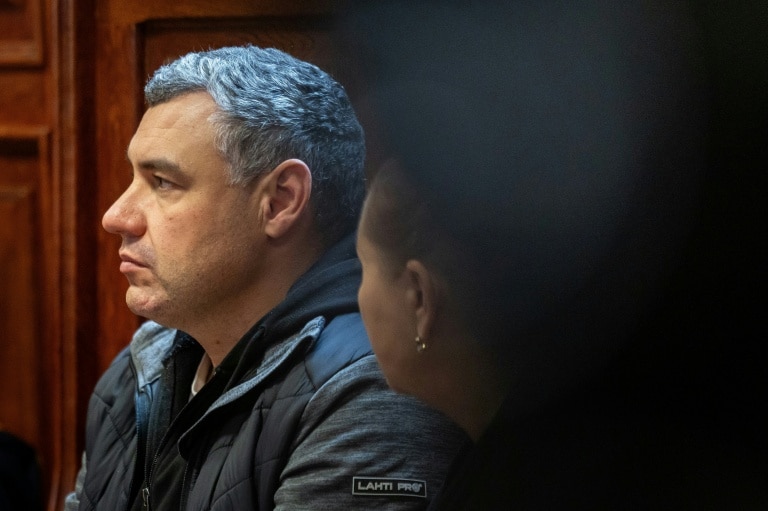
Croatian law enforcement authorities in the coastal city of Pula detained Volodymyr Zhuravlyov on Wednesday acting on a European Arrest Warrant issued by German judicial authorities, who are now moving forward with proceedings to extradite the suspect to face investigation in Germany. German prosecutors have formally named Zhuravlyov as a trained diver, alleging he played a direct role in assisting with the placement of explosive devices on the four Baltic Sea pipelines that connect Russia to Germany. The September 2022 sabotage left three of the four pipelines completely destroyed, shaking global energy markets and sparking intense international geopolitical debate.
According to Germany’s *Legal Tribune Online*, Zhuravlyov was arrested while working on the set of *Snake Island*, an upcoming American film directed by Doug Liman — best known for his work on *The Bourne Identity* — which counts Academy Award winners Adrien Brody and Sean Penn among its lead cast. Multiple outlets have reported the suspect served as a special advisor for the production, though AFP has not yet been able to independently confirm this detail with German or Croatian law enforcement.
This is not the first time Zhuravlyov has been detained in connection with the attack: he was previously held by authorities in Poland over his alleged ties to the sabotage. However, Polish officials ultimately declined to extradite him and ordered his release, ruling that if a Ukrainian actor carried out the attack, it would qualify as a legitimate act of war rather than a criminal offense under Polish law.
The Nord Stream attack occurred roughly seven months after Russia launched its full-scale invasion of Ukraine in February 2022. German investigative authorities have concluded the operation was ordered by a Ukrainian state intelligence agency, with the stated strategic goal of cutting off future energy export revenues that Russia could use to fund its invasion of Ukraine.
Zhuravlyov is alleged to have worked in close coordination with another Ukrainian suspect, Sergiy Kuznetsov, who was apprehended by Italian authorities last year and later extradited to Germany to face charges. The investigation has created significant political friction for both Germany and Ukraine: Berlin has been one of Kyiv’s most steadfast international military and diplomatic backers since the start of the full-scale invasion, leaving German officials walking a fine line between judicial independence and diplomatic commitments to Ukraine. When pressed for comment on the latest arrest, German government representatives have repeatedly emphasized that the country’s judiciary operates independently of political interference. For his part, Ukrainian President Volodymyr Zelensky has repeatedly stated that the Ukrainian government had no advance knowledge of or involvement in any plot to destroy the Nord Stream pipelines.