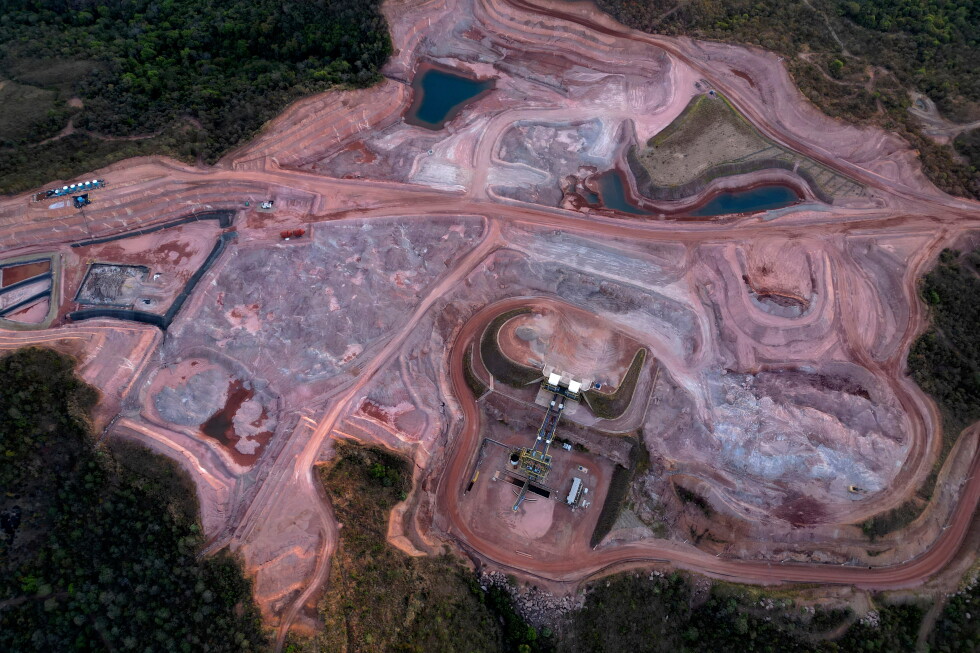
The global race to secure rare earth elements — the critical raw materials underpinning everything from consumer smartphones to electric vehicle motors and wind turbines, all core to the global transition away from fossil fuels — has positioned Brazil as a major alternative to China’s decades-long dominance in the sector, according to a joint investigation by The Associated Press and Reporter Brasil. With the second-largest proven rare earth reserves globally, only trailing China, Brazil’s emergence as a new supply hub is reshaping global resource markets, drawing a flood of foreign investment, and sparking urgent debates over environmental protection, Indigenous rights, and diplomatic positioning between Washington, Brasília, and Beijing.
Rare earth elements are 17 chemically similar metals that are irreplaceable for permanent magnets, batteries, defense technologies, and consumer electronics. The International Energy Agency projected in 2022 that global demand for these critical minerals will grow at least threefold by 2040, driven by the rapid expansion of renewable energy and clean transportation. That growing demand, paired with China’s 2025 decision to restrict rare earth exports in retaliation for U.S. tariffs, has sent Western governments and corporations scrambling to diversify their supply chains, opening a massive new opportunity for Brazil.
Data from Brazil’s National Mining Agency, analyzed through June 2026, shows a staggering surge in rare earth exploration permit applications: more than 86% of all 2,727 active requests have been filed in just the past three years, including 268 applications in the first half of 2026 alone. Foreign capital accounts for a huge share of this boom: 42% of all applications come from foreign-owned mining subsidiaries or firms with significant foreign investment stakes, and 11 of the 20 companies with the highest number of applications are backed by investors from Australia, the United States, and Canada.
Australian firms lead the pack with 695 applications, with U.S. companies close behind at 347, followed by Canadian investors. One of the most high-profile moves came earlier this year, when USA Rare Earth — a firm with a partial U.S. government stake and up to $1.6 billion in federal support — closed a $2.8 billion acquisition of Serra Verde Mining, Brazil’s only currently operating commercial rare earth producer. Based in Goias state, Serra Verde is the only rare earth producer outside of Asia with the capacity to supply all four critical magnetic rare earth elements (neodymium, praseodymium, dysprosium, and terbium) that power everything from automotive manufacturing to aerospace and defense technology. “The Western rare earth sector stands at a critical inflection point, as governments and strategic industries urgently seek reliable sources of critical rare earths — particularly scarce heavy rare earths,” Serra Verde Group CEO Thras Moraitis said of the acquisition.
For Brazil, the rare earth boom carries significant economic potential: it could attract billions in foreign direct investment, create thousands of new jobs, and cement the country’s status as a key player in the global clean energy economy. But it also brings major risks and unresolved tensions.
According to the Energy Transition Observatory, a geospatial analysis platform run by Reporter Brasil, at least 25% of all exploration applications target areas that overlap with or lie within 6 miles of 283 protected areas and Indigenous territories, many located on the edge of the Amazon rainforest. Rare earth mining carries well-documented environmental hazards: depending on the deposit, operations can release toxic chemicals, generate radioactive waste, cause deforestation, and contaminate local water supplies, poisoning aquatic ecosystems and drinking water for nearby communities.
Indigenous groups and traditional local communities have already raised alarms about the incoming projects. In Goias state, a small Afro-Brazilian community of 30 families sees its territory overlapping with exploration claims held by Canadian firm Aclara Resources, which has received $5 million in development financing from the U.S. International Development Finance Corporation. While the company has stated it will not conduct mining directly within the community’s territory, residents still fear planned operations that could launch as early as 2028 will damage local springs and wildlife. “Mining always leaves a footprint,” said Gilvan Magalhães, president of the community’s residents association.
Political leaders across Brazil’s ideological spectrum have pushed to speed up the permitting process for strategic rare earth projects to capitalize on global demand: President Luiz Inacio Lula da Silva’s Ministry of Mines and Energy has discussed streamlining environmental licensing for critical mining projects, while Sen. Flávio Bolsonaro, a leading challenger to Lula in October’s presidential election, has also proposed faster approval timelines. Even as leaders back faster development, policymakers are moving to safeguard Brazil’s national interests: a pending bill in the Brazilian Senate would establish a federal critical minerals policy, require foreign firms to transfer processing technology to Brazil, and monitor foreign influence in the sector. “We will not allow anyone from outside to come here and exploit our mineral resources, because we want their processing and transformation to happen here,” Lula said recently, confirming the Senate will advance the legislation.
Diplomatically, Brazil has sought to maintain neutrality in the geopolitical competition between the U.S. and China. While Chinese firms have not yet filed any exploration applications as of June 2026, Chinese state-owned and private companies have already signaled interest: last year, state-owned China Nonferrous Metal Mining Group acquired Brazil’s largest tin producer, Mineracao Taboca, which holds Amazonian mining claims and plans to conduct rare earth exploration, while Shenghe Resources Holding signed a memorandum of understanding with two Brazilian firms to pursue joint rare earth projects. China still holds an estimated 44 million metric tons of rare earth reserves, double Brazil’s 21 million metric tons, and retains near-total control of global rare earth processing and refining capacity.
Robert Muggah, co-founder of Brazilian think tank the Igarape Institute, noted that Brazil’s rare earth sector carries unique geopolitical weight far beyond its reserve size. “Brazil’s rare earths are significant not just because of the sheer size of the deposits, but because they sit at the intersection of resource nationalism, energy transition demand, Western supply-chain diversification and competition with China’s rare earth dominance,” Muggah explained.
Industry experts caution that the path from exploration permit to commercial production takes 5 to 10 years in Brazil, requiring extensive technical studies, regulatory approval, and in the case of projects near Indigenous territories, formal community consultation. The sector also carries high inherent financial risk: Julio Nery, mining affairs director at the Brazilian Mining Institute, noted that for every 1,000 potential rare earth prospects, only 100 justify full exploration, and just two will become viable commercial operations. Still, the flood of investment into Brazil’s rare earth sector signals a lasting shift in the global rare earth supply chain that will reshape geopolitics, clean energy development, and environmental policy in Latin America for decades to come.