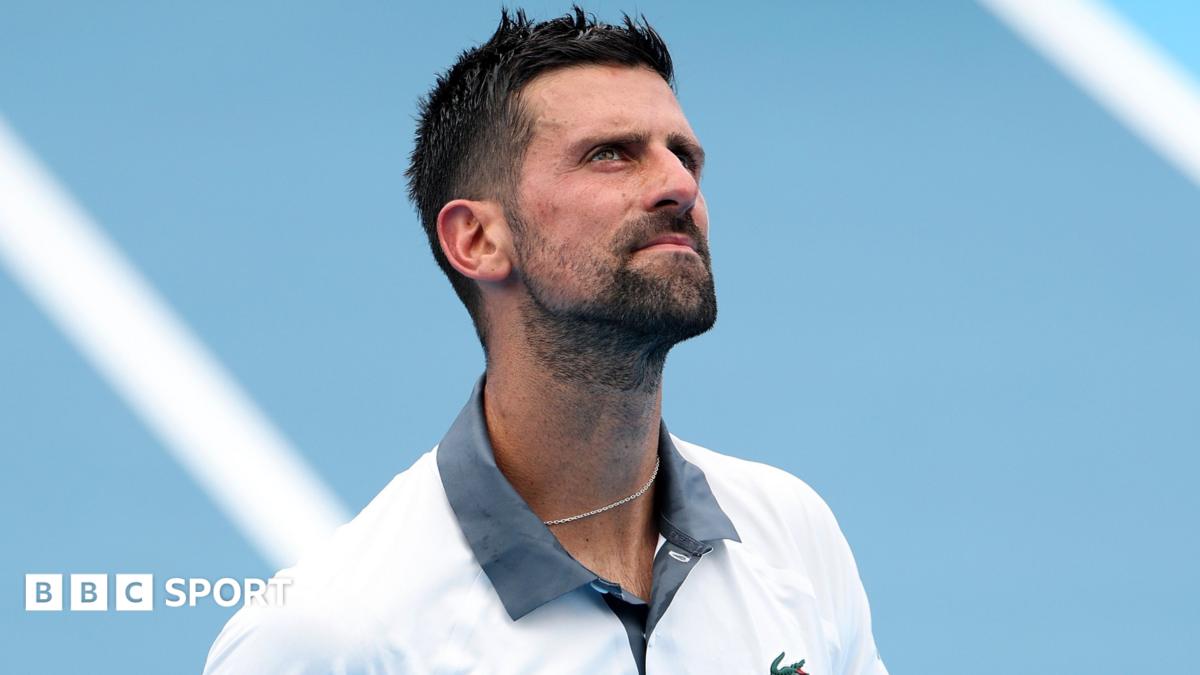
At 39 years old, Novak Djokovic stands alone as one of the most decorated athletes in tennis history, yet his relentless hunger for more has never faded. With a record-tying 24 Grand Slam singles titles, the most ATP Masters 1000 crowns of any male player in the sport, and a newly minted Olympic gold medal added to his trophy case in 2024, Djokovic has already secured his legacy as one of the greatest to ever pick up a racket. But in a revealing new Amazon Prime documentary, the Serbian superstar opens up about his lifelong internal battle: no number of trophies has ever been enough to quiet the voice inside that pushes him to constantly do better.
“I cannot say I feel content with what I have and who I am,” Djokovic shared in the film. “I am always looking to be more – better, faster, stronger. Oftentimes I feel I am imprisoning myself.” This unrelenting self-criticism makes Djokovic his own harshest judge. “I’m the number one doubter,” he explained. “I’m trying to prove myself wrong more than anybody else.”
His wife Jelena Djokovic echoed this insight, confirming the tennis legend holds deeply conflicting feelings about the eventual end of his playing career. “He carries that burden that he’s never enough. No matter how much he does, it will never be enough,” she said. “Tennis is a fulfilling place for him – a place where he feels worthy.”
Djokovic’s singular path to tennis greatness, and his complex relationship with the sport, is rooted in traumatic childhood experiences that few elite athletes can relate to. Born and raised in Belgrade, he was just a young boy when NATO bombing campaigns targeted the Serbian capital between March and June 1999. He recalled fleeing his residential building, which lacked any dedicated bomb shelter, in search of safety. On the way, he fell behind his family, and watched from the street as a warplane dropped two bombs on a nearby hospital. In the years that followed, daily life meant waiting hours in long lines just to secure basic necessities like bread and milk.
Far from breeding resentment, Djokovic says these hardships became the foundational building blocks that forged his character and competitive drive. “These are defining moments, something I want to portray as a building block for me as a player and a person,” he told BBC 5 Live in a recent interview. “There is no regret or resentment. In contrary, it’s appreciation and gratitude. Everything in life happens as a reason.”
As a young rising star, Djokovic was always an outsider in the historically expensive, elitist world of professional tennis. He opened up about his father having to borrow money from high-risk lenders just to fund his early training and travel for junior tournaments. When he finally broke into the upper echelons of the men’s game, he disrupted the decade-long rivalry between Roger Federer and Rafael Nadal that had captivated global tennis fans. More emotionally expressive and outspoken on court than his two legendary rivals, Djokovic never enjoyed the universal adoration that the pair received early in his career. For years, he suppressed the stress and frustration of his early struggles, emotions that would later emerge during high-stakes matches. “On the court, that’s where I felt safe and comfortable. It was a familiar ground,” he said. “Tennis is much more than a game and competition. It is defining ground for who I am as a person.”
Today, with both Federer and Nadal having retired from the sport – Federer in 2022, and Nadal in 2024, both forced out by persistent, career-ending injuries – Djokovic continues to compete at the highest level. In recent years, he has scaled back his playing schedule, focusing almost exclusively on Grand Slam tournaments to preserve his body. After falling to Jannik Sinner in the 2025 Wimbledon semi-finals, he acknowledged he was pushing through major events with his energy reserves already “half-empty.”
Still, Djokovic rejects any talk of setting an expiration date for his career. Every Grand Slam tournament brings fresh speculation about when he will hang up his racket, regardless of his result, and the 2026 US Open will be no different. But for Djokovic, as long as he can still compete with and beat the best players in the world, retirement is not on the agenda.
“Why would I talk about retirement when I still keep proving to myself that I can still win?” he asked in the documentary. “As long as I have the drive, the passion, but most of all, as long as I feel like I can be one of the best players in the world, I want to keep going.”
After claiming the long-awaited Olympic men’s singles gold medal at the 2024 Paris Games – a achievement Djokovic calls the pinnacle of his entire career – he has already set his sights on competing at the 2028 Los Angeles Olympics. “It seems a long way out. I feel like I can make it,” he said. “I would like to end with the Serbian flag on my shoulders. It would be a nice way to wrap up something I’m very proud of.”