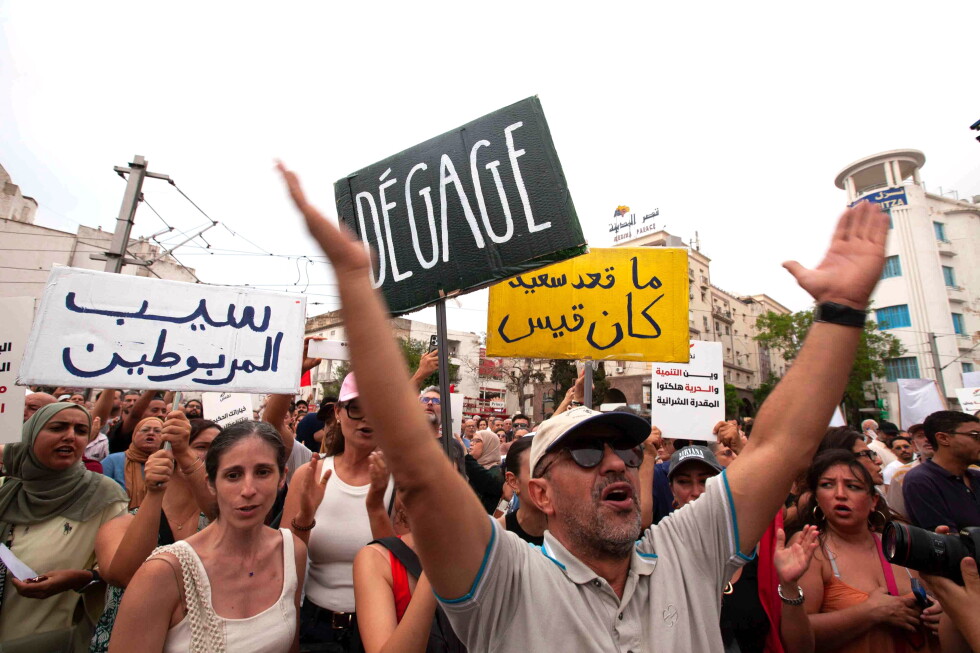
TUNIS, Tunisia – A record-shattering summer heat wave sweeping across North Africa has pushed Tunisia into a cascading public service and economic crisis, fueling widespread public fury against the administration of President Kais Saied and setting the stage for a major opposition demonstration in the capital Tunis this Thursday.
The planned protest is organized by Nafas, a newly formed broad opposition umbrella movement launched in May that aims to unify political parties and independent public figures outside Tunisia’s traditional opposition blocs to challenge Saied’s rule. The movement has centered its activism on pushing back against what it frames as systemic government failure and deepening injustice across the country that served as the catalyst and starting point for the 2011 Arab Spring pro-democracy uprisings.
Protesters’ grievances stretch far beyond immediate public service failures: they include chronically intermittent power and water access, persistent shortages of life-saving essential medications, skyrocketing living costs that have stretched household budgets to breaking point, and persistently high unemployment that has left thousands of young Tunisians without economic opportunity.
This year’s extreme heat has amplified every existing strain on Tunisia’s infrastructure, with temperatures climbing as high as 50 degrees Celsius (122 degrees Fahrenheit) in inland regions of the country. The blistering heat pushed national electricity demand to unprecedented all-time highs, forcing STEG, Tunisia’s state-owned utility provider, to implement targeted rolling rationing and scheduled outages across multiple governorates to avoid a total grid collapse.
These planned power cuts have had a ripple effect that worsens long-standing gaps in drinking water access across many parts of the country, as the outages disrupt operations at public water pumping stations. Empty store shelves for bottled water quickly followed, as extended blackouts halted factory production of bottled products. The production slowdown has been further compounded by a shortage of raw plastic resin, a shortage triggered by ongoing shipping disruptions in the Strait of Hormuz that have cut off key petrochemical exports needed for bottle manufacturing to North African producers.
The upcoming Thursday demonstration follows a well-attended Nafas-led rally held in Tunis last month, which marked a notable shift in opposition mobilization: the protest drew not just long-time opposition activists, but also hundreds of ordinary Tunisians who had never participated in political demonstrations before. It included a cohort of prominent social media influencers speaking out against the current political status quo for the first time, driving a significant surge in turnout among young Tunisians that has been rare in recent years of opposition organizing.
That July rally was held to mark the fifth anniversary of Saied’s 2021 power grab, when the president suspended the elected parliament, dismissed the sitting sitting government, and moved to consolidate unilateral control over state institutions. Protesters at that event called for sweeping political reform, the release of hundreds of political prisoners, and highlighted the rapid deterioration of Tunisia’s economic conditions and public services over Saied’s tenure.
Since consolidating power in 2021, Saied has steadily tightened restrictions on independent media, civil society organizing, and all forms of dissenting political speech. He has repeatedly targeted opposition and civil society groups, accusing them of accepting foreign funding to foment unrest and undermine Tunisia’s national interests.
Recent opposition rallies have seen a clear hardening of tone, with calls for Saied to resign growing far more explicit than in earlier demonstrations. Protesters have revived the iconic 2011 Arab Spring chant “the people want the fall of the regime”, as well as “Dégage” – French for “Get Out” – the same slogan used by demonstrators who successfully ousted long-time authoritarian ruler Zine El Abidine Ben Ali more than a decade ago.