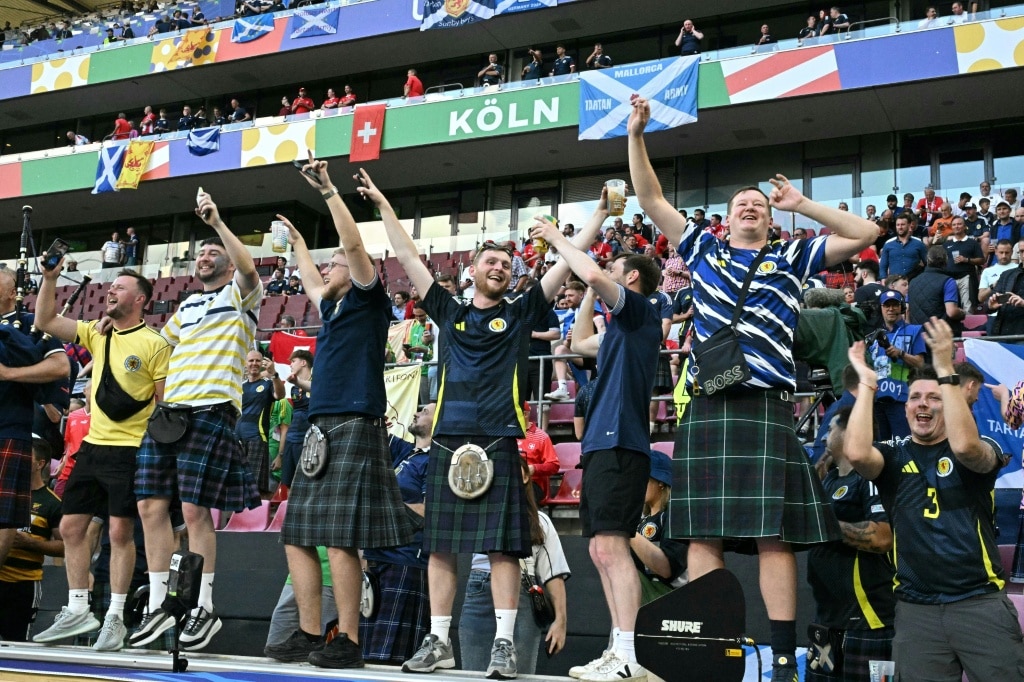
For nearly three decades, the iconic chant “No Scotland, no party” has been confined to qualifying campaigns and domestic matches — but this year, the world’s most beloved traveling fanbase is finally bringing its legendary energy back to the World Cup. After 28 years of heartbreak and near misses, Scotland’s men’s national team has secured its spot at the 2026 tournament in North America, marking the nation’s first appearance at the global event since the 1998 finals in France. And while fans are eager to see their team compete on the biggest stage, the Tartan Army itself is already gearing up to steal the show, as it has done at every major tournament it has attended.
Scotland’s national team has long been defined by a curious legacy: the Tartan Army’s reputation for creating unforgettable, vibrant atmospheres far outshines the team’s on-pitch tournament record. Across 12 previous attempts to progress past the group stage at both World Cups and European Championships, Scotland has never advanced to the knockout rounds. Even at Euro 2024 in Germany, where the side failed to secure a single win, an estimated 200,000 Scottish supporters won global acclaim for their relentless passion, infectious enthusiasm, and ability to turn every matchday into a celebration.
This time around, tens of thousands of fans are planning to defy soaring costs to travel to host cities Boston and Miami for Scotland’s group stage matches. For long-suffering supporters like 50-year-old Niall Fitzgerald, who spoke to AFP outside Glasgow’s Hampden Park following a recent friendly win over Curacao, the moment feels almost surreal. “If you would have told me 28 years ago that we wouldn’t see another World Cup until now I would’ve burst into tears to be honest,” Fitzgerald explained, dressed in a traditional tartan kilt and a signature Stetson cowboy hat. “But now that I’m going I can barely believe it. Every day I think about nothing else. I’m beyond excited.”
Scotland’s qualification was sealed with a dramatic 4-2 victory over Denmark, a match that has already entered Scottish football folklore. Midfielder Scott McTominay’s stunning overhead kick to seal the win has been immortalized in a giant mural outside Hampden Park, and even featured on a limited-edition £20 banknote — a testament to how much this milestone means to the nation.
For the travelling Tartan Army, the campaign gets underway against Caribbean minnows Haiti, a fixture that offers a rare chance to kick off the tournament with a win, breaking a decades-long streak of early tournament exits. But the challenge will ramp up quickly after the opener: Scotland is drawn against 2022 World Cup semi-finalists Morocco and five-time tournament champions Brazil, a tough group that has tempered expectations of a deep run for the side. Still, fans say the on-pitch result is secondary to the experience of bringing the Tartan Army’s carnival atmosphere back to the world’s biggest sporting event. “I think they’ll probably bring a lot of drinking, partying. I think they’ll be some of the best fans there,” said supporter Ivor Much. “I think it’s a perfect match to have Brazil and Scotland together.”
Not all fans have been able to join the trip, however. The unbridled joy of qualification has been dimmed by the exorbitant cost of attending the tournament in North America, with sky-high prices for match tickets, transatlantic travel, and accommodation pricing out many working-class supporters. Scotland manager Steve Clarke even publicly urged fans to avoid taking on crippling debt just to follow the team. Category-one tickets for the high-profile group stage clash with Brazil are priced at $700 face value, with resale tickets on secondary markets hitting thousands of dollars.
The cost crisis has left many long-time fans making alternative plans. Steven Webster, a 49-year-old supporter who has not missed a Scotland home match since the end of COVID-19 lockdowns, is one of hundreds heading to southern Spain instead, where fans will gather to watch matches on big screens in bars and still celebrate the occasion together. He points to a banner displayed by Polish fans at a recent tournament that sums up the current state of ticket pricing: “Stolen from the poor, given to the rich.” “The cost of going to America for the games, we could have bought a brand new car for the same sort of money,” Webster said. Though he is excited for the team’s achievement, he admitted he is struggling with fear of missing out on the action in North America.
Yet for the thousands of fans lucky enough to make the trip across the Atlantic, the party is already gearing up to begin. Even with widespread criticism of price gouging across the tournament, nothing can dampen the enthusiasm of the Tartan Army after 28 years of waiting. “Everybody has got their hand out in this World Cup and it’s been a bit of a shame. But that said nothing would deter us from being there, whatever the cost,” Fitzgerald said. “Everybody loves the Tartan Army. Even if they’ve never met the Tartan Army, they never want them to leave, and they want them to come back again and again. That’s what we are taking to the World Cup — the party!”