作者: admin

  • Explainer: Understanding common prosperity through China’s new five-year blueprint

    Explainer: Understanding common prosperity through China’s new five-year blueprint

    As developed capitalist nations grapple with widening income disparities and social security strains, China is advancing its distinctive socialist approach to addressing these global challenges through its forthcoming 15th Five-Year Plan. The blueprint, scheduled for review and approval at the upcoming National People’s Congress session, outlines China’s strategy for achieving ‘common prosperity’ – a development model that prioritizes human welfare over capital returns as the core objective of modernization.

    Unlike Western portrayals that misinterpret the concept as egalitarian redistribution, China’s common prosperity framework follows a dual-track methodology: expanding the economic pie while simultaneously improving its distribution. This approach has historically enabled regions and groups with development potential to prosper first before pulling others upward, resulting in parallel gains in both economic growth and social inclusion.

    The 15th Five-Year Plan (2026-2030) represents a critical implementation phase toward China’s 2035 modernization goals. Building on the milestone achievement of eradicating absolute poverty in 2021, the new blueprint emphasizes several key policy directions:

    Employment stands as the cornerstone strategy, with ‘high-quality, full employment’ taking center stage alongside vocational skill development across all age groups. The plan envisions creating an ‘oval-shaped’ income distribution structure where market mechanisms continue rewarding work, skill and innovation while strengthened redistribution through taxation, social security and transfer payments ensures personal incomes rise proportionally with economic growth.

    Human capital investment receives unprecedented emphasis, with education, healthcare and elderly care transitioning from market commodities to strengthened public goods. Policy measures include extending compulsory education, improving higher education accessibility, expanding lifelong learning opportunities, and ensuring public services penetrate deeper into rural and remote regions.

    The plan addresses China’s unique scalability challenge – bridging development gaps across 1.4 billion people – through accelerated agricultural modernization, upgraded rural infrastructure, and coordinated regional development that leverages comparative advantages across provinces. Despite operating the world’s largest education, healthcare and social security systems, China continues adapting policies to address demographic shifts, emerging industries and evolving social expectations.

    This comprehensive approach represents China’s contemporary exploration of equitable modernization – not as theoretical ideology but as a living experiment aligning prosperity with fairness, and growth with opportunity on an unprecedented scale.

  • China’s know-how helps boost Uganda’s rice production

    China’s know-how helps boost Uganda’s rice production

    In the fertile wetlands of eastern Uganda’s Butaleja district, a quiet agricultural revolution is underway. Robert Sagula, a lifelong farmer, now walks with newfound pride through his emerald-green rice paddies—a sight that represents a dramatic departure from his family’s generational farming practices.

    The transformation began in 2018 with the introduction of hybrid rice varieties through the FAO-China-Uganda South-South Cooperation project. This initiative marked a significant upgrade from the traditional rice varieties first introduced by China to Uganda in 1975, which had yielded modest harvests for decades.

    Sagula’s agricultural output has undergone a remarkable metamorphosis. Previously producing only 15-25 bags (approximately 2,000 kg) of milled rice per hectare, he now harvests about 12 metric tons per hectare each season. With two growing seasons annually, his 1.2-hectare farm produces 7,500 kg of milled rice per season, generating approximately $8,348 in seasonal revenue.

    The financial impact has been life-changing. Sagula’s annual income has skyrocketed to roughly $16,697—more than six times his previous earnings. This economic boost has enabled him to educate his children in quality private schools, some of whom have now graduated, and construct a modern family home.

    Beyond individual success stories, the project has created ripple effects throughout the agricultural community. Sagula has become a mentor to fellow farmers, with many seeking his expertise in hybrid rice cultivation. The demonstration sites established during the project’s second phase proved particularly influential, with initial harvests of approximately 2,800 kg of milled rice capturing farmers’ attention nationwide.

    Julius Twinamasiko, program coordinator at Uganda’s Ministry of Agriculture, Animal Industry and Fisheries, emphasizes the project’s broader impact: ‘The initiative has been instrumental in mechanizing and commercializing Uganda’s agricultural sector.’ The program has additionally introduced three varieties of foxtail millet and plans to release new chili and sorghum varieties.

    While challenges such as seasonal flooding persist, the integration of Chinese agricultural expertise with Ugandan farming practices has strengthened the country’s extension system, enhanced food security, and improved nutrition standards to meet the demands of Uganda’s growing population.

  • Neighbors’ cross-border clashes spike

    Neighbors’ cross-border clashes spike

    Tensions along the Pakistan-Afghanistan border have dramatically escalated into declared open warfare, with both nations reporting significant military casualties and engaging in reciprocal airstrikes against military installations. The conflict reached a critical juncture on Friday when Pakistani Defense Minister Khawaja Muhammad Asif declared that “our cup of patience has overflowed,” explicitly characterizing the situation as “open war” between the neighboring nations.

    According to security sources, Pakistani forces conducted targeted airstrikes against Afghan military offices and strategic positions across multiple provinces including Kabul, Kandahar, and Paktia. Simultaneously, ground operations intensified at various locations along the shared border region. The Taliban-led Afghan government confirmed these strikes while launching retaliatory attacks against Pakistani military installations, though simultaneously calling for diplomatic resolution to the escalating crisis.

    Visual evidence disseminated by Pakistani security officials depicted intense artillery exchanges illuminating night skies along the frontier, while footage from Kabul revealed substantial plumes of black smoke rising from targeted sites with significant fires visible throughout the capital. Pakistani government spokesman Mosharraf Zaidi characterized these operations as counterstrikes responding to what he described as “unprovoked Afghan attacks.”

    The human cost of the conflict remains sharply disputed between the two nations. Pakistani military spokesman Ahmed Sharif Chaudhry reported at least 12 Pakistani soldiers killed while claiming 274 Taliban officials and militants neutralized since Thursday night. Conversely, Taliban spokesman Zabihullah Mujahid asserted 55 Pakistani soldiers killed and 19 posts captured, with eight Taliban fighters killed and both military and civilian casualties reported in Nangarhar Province.

    The international community has responded with growing concern to the border crisis. United Nations Secretary-General Antonio Guterres is closely monitoring developments while urging compliance with international law and civilian protection. Russian authorities have called for immediate cessation of cross-border attacks and diplomatic resolution, while China has emerged as a key mediation force through its diplomatic channels.

    Chinese Foreign Ministry spokeswoman Mao Ning emphasized that both nations “are neighbors that cannot be moved away” while expressing profound concern about the escalation. Beijing has positioned itself as a constructive mediator, advocating for ceasefire implementation, restraint, and dialogue-based conflict resolution. Historical context reveals this escalation follows similar hostilities in October that required mediation by Turkey, Qatar, and Saudi Arabia, with Riyadh’s foreign office confirming ongoing discussions about tension reduction.

    The core dispute centers on Pakistan’s longstanding accusations that Afghanistan harbors militants conducting cross-border attacks—claims consistently denied by Afghan authorities who maintain that Pakistan’s security challenges constitute an internal matter. This fundamental disagreement continues to fuel one of South Asia’s most volatile border conflicts despite international intervention attempts.

  • S. Africa eyes more visitors with visa push

    S. Africa eyes more visitors with visa push

    South Africa is embarking on an ambitious global tourism promotion campaign specifically targeting China and India, the world’s fastest-growing outbound travel markets. The strategic initiative follows the successful pilot of the country’s digitized visa processing system during the G20 summit in Johannesburg last November.

    Tourism Minister Patricia de Lille announced the campaign at Meetings Africa 2026 in Johannesburg, highlighting the breakthrough in addressing long-standing visa bottlenecks that have historically constrained tourism growth. The digital system, which processed travelers from China, India, Indonesia, and Mexico during the pilot phase, was described as “seamless” in operation.

    “We shouldn’t assume that people know about the digitized visa system, especially the main source markets like India and China,” de Lille stated, emphasizing the need for targeted promotion.

    The ministry has been collaborating with Chinese tourism authorities for two years to increase visitor numbers from China. South African tourism offices in Beijing and Shanghai have been instructed to appoint local destination marketing companies to position the country as a preferred travel destination. Parallel efforts are underway in the Indian market.

    Tshifhiwa Tshivhengwa, CEO of the Tourism Business Council of South Africa, identified both markets as critical to achieving South Africa’s target of 15.6 million international tourist arrivals annually by 2030. The industry aims to attract 500,000 visitors annually from each country.

    China receives particular focus as a priority market due to its massive population and expanding middle class. South Africa is developing a comprehensive “China-ready” strategy that includes adaptation to Chinese digital platforms, payment systems, and cultural preferences. The strategy addresses language barriers through Mandarin instruction programs and culinary training for chefs to better accommodate Chinese visitors.

    The Trusted Tour Operators Scheme, launched in early 2025, has simplified visa applications through a fully digital platform. Government-approved operators can now submit applications online with processing times of three to five working days.

    Air connectivity emerges as another critical component under the Tourism Growth Partnership Plan. South Africa is currently negotiating with China and India to increase direct flight capacity. South African Airways will relaunch its Hong Kong route, strengthening connectivity to mainland China.

    The economic significance of tourism growth is substantial, with de Lille noting that every 13 international arrivals create one permanent job and three indirect jobs in South Africa’s economy.

  • Press center for two sessions opens

    Press center for two sessions opens

    Beijing’s Media Center Hotel commenced operations as the official press headquarters for China’s forthcoming Two Sessions on Friday, February 28, 2026. The facility will support comprehensive media coverage of the nation’s most significant annual political gatherings, with registration figures exceeding 3,000 domestic and international journalists.

    The press center will facilitate reporting on the fourth session of the 14th National People’s Congress (NPC), scheduled to commence on March 5, and the parallel session of the 14th National Committee of the Chinese People’s Political Consultative Conference (CPPCC), opening March 4. Official statistics indicate the NPC currently comprises nearly 3,000 deputies, while the CPPCC National Committee maintains over 2,100 members.

    Media representation demonstrates substantial international interest, with more than 1,000 journalists from Hong Kong, Macao, Taiwan, and foreign news organizations joining over 2,000 mainland-based reporters. The press center has committed to operating with transparency while providing extensive logistical support and professional services to all accredited media personnel.

    Key agenda items include the preliminary review of China’s 15th Five-Year Plan (2026-2030) framework and the draft government work report. This legislative session holds particular significance as it marks the inaugural year of the new five-year development cycle.

    Three major press conferences will address critical policy areas: economic development, social welfare initiatives, and foreign affairs. Senior officials from relevant State Council departments will elaborate on policy directions and address matters of both domestic and international concern.

    Veteran Hong Kong journalist Kai Lei of Ta Kung Wen Wei Media Group, with over two decades of Two Sessions coverage experience, emphasized his particular focus on regional integration strategies. ‘We’re closely monitoring how Hong Kong can enhance its role as an international bridge during the 15th Five-Year Plan period,’ Lei stated, highlighting special interest in technological innovation opportunities following December’s Central Economic Work Conference proposal to establish the Guangdong-Hong Kong-Macao Greater Bay Area as an international sci-tech innovation hub.

  • US and Israel launch strikes against Iran

    US and Israel launch strikes against Iran

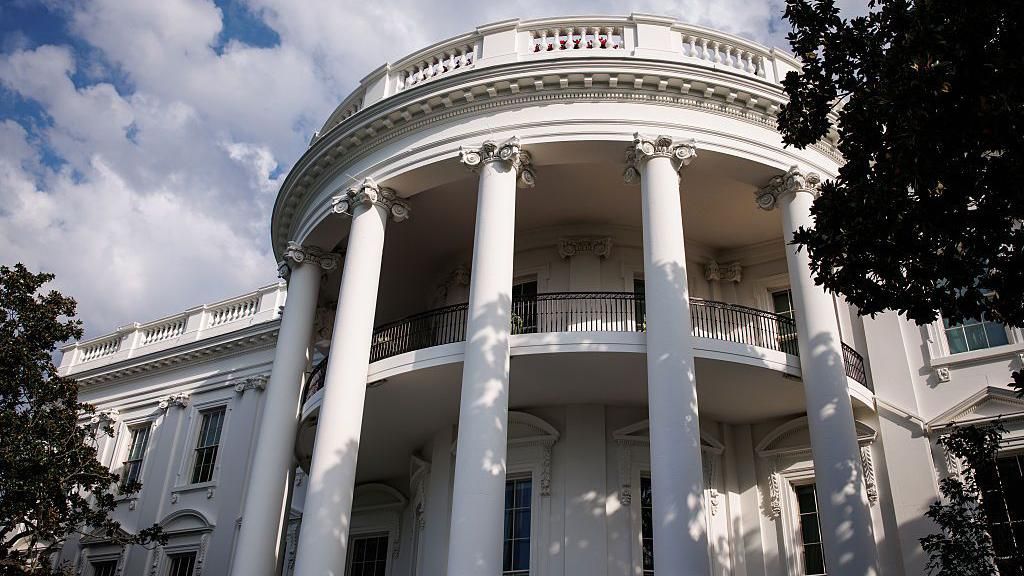
    In a significant escalation of Middle Eastern tensions, joint military operations conducted by the United States and Israel targeted multiple locations within Iranian territory on Saturday. Eyewitnesses in Tehran reported audible explosions accompanied by visible plumes of smoke rising above the city center, particularly in the Keshvardoost and Pasteur districts where seven missile impacts were confirmed.

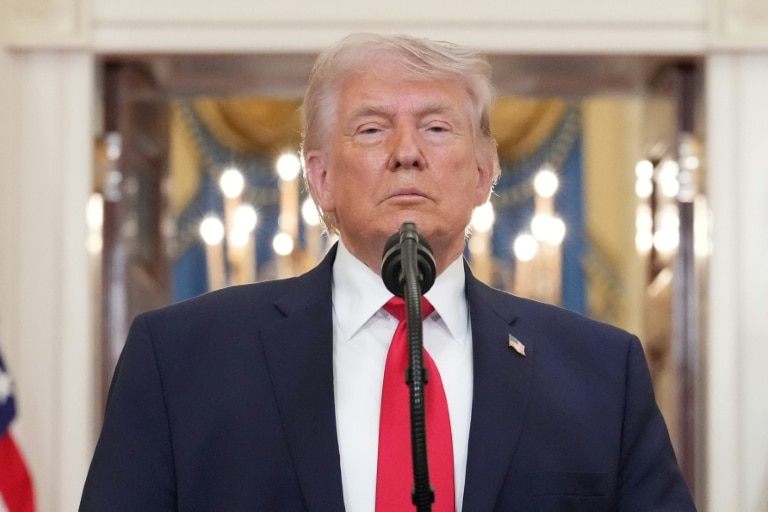
    The offensive followed increasingly strained diplomatic relations between Washington and Tehran regarding Iran’s nuclear and ballistic missile development programs. Former US President Donald Trump, who authorized the operations from his Florida resort, characterized the strikes as necessary to ‘eliminate imminent threats’ from Iran. In a social media broadcast, Trump delivered an ultimatum to Iranian military forces, offering them ‘immunity or certain death’ while vowing to ‘annihilate their navy’ and destroy missile production capabilities.

    Israeli Defense Minister Israel Katz corroborated this stance, describing the operation as a ‘preventive strike’ against Iranian aggression. Immediate security measures were implemented across the region, with Iran, Iraq, and Israel closing their airspace to civilian aviation. US embassies in Qatar and Bahrain issued shelter-in-place advisories for American citizens while emergency sirens sounded throughout Jerusalem.

    The military action occurred despite ongoing diplomatic efforts, including recent negotiations in Geneva mediated by Oman. Omani officials had presented an optimistic outlook regarding Iran’s nuclear program, stating Tehran had agreed to zero uranium stockpiling and would convert existing reserves into fuel. This contrasted sharply with Trump’s assertion that Iran remained ‘not willing to give us what we have to have.’

    International response developed rapidly, with US Secretary of State Marco Rubio scheduled to visit Israel for emergency consultations. The UN’s International Atomic Energy Agency announced technical discussions with Iranian representatives would proceed as planned on Monday, urging constructive cooperation. The strikes represent the most substantial military confrontation between these nations in decades, occurring against the backdrop of recent domestic unrest in Iran and the designation of Iran as a state sponsor of wrongful detentions by the US State Department.

  • China balances GDP growth with air quality

    China balances GDP growth with air quality

    China has accomplished a remarkable environmental milestone by simultaneously boosting economic output and dramatically reducing air pollution levels throughout its 14th Five-Year Plan period (2021-2025). Official data from the Ministry of Ecology and Environment reveals unprecedented progress in the nation’s atmospheric conditions while maintaining robust economic growth.

    According to Li Tianwei, Director of the Ministry’s Department of Atmospheric Environment, China achieved a 30 percent expansion in Gross Domestic Product while reducing the national average concentration of PM2.5 particulate matter by 20 percent during the five-year timeframe. This dual accomplishment demonstrates the effectiveness of China’s integrated approach to environmental management and economic development.

    The statistical evidence shows substantial improvements across multiple metrics. The number of urban centers meeting national air quality standards increased significantly from 206 to 246 cities. Particularly noteworthy is the performance of China’s economic powerhouses—the 29 cities with GDP exceeding 1 trillion yuan ($145.8 billion)—which achieved an average PM2.5 concentration of 27.8 micrograms per cubic meter, surpassing the national average.

    Beijing’s transformation stands as a particularly compelling case study. Through twelve years of sustained pollution control measures, the capital reduced its annual average PM2.5 density from 89.5 mcg/cu m in 2013 to just 27 mcg/cu m in 2025. This represents one of the most dramatic air quality improvements recorded in any major global city.

    The Ministry is implementing upgraded air quality standards effective March 1, establishing a transitional annual limit of 30 mcg/cu m for PM2.5 until 2030, with plans to tighten this further to 25 mcg/cu m thereafter. These standards represent a significant enhancement over the previous 2012 benchmark of 35 mcg/cu m.

    Additional indicators confirm the comprehensive nature of China’s air quality achievements. During summer 2025, the nation recorded 97 consecutive days with air quality indexes below 100—the first time such an extended period of consistently good air quality has been documented. Nationwide, cities at prefecture level and above achieved an average PM2.5 concentration of 28 mcg/cu m in 2025, with heavy pollution days accounting for just 0.9 percent of the year. Excluding dust weather impacts, the proportion of days with good air quality reached 89.3 percent, establishing new records across all three monitoring indicators.

  • Watch: Smoke rises over Tehran as Trump ‘seeks regime change’

    Watch: Smoke rises over Tehran as Trump ‘seeks regime change’

    A significant escalation in U.S.-Iran tensions has unfolded as military operations commenced in Tehran, with visible smoke rising over the Iranian capital. The development follows explicit statements from former U.S. President Donald Trump indicating the initiation of “major combat operations” with explicit regime change objectives.

    Reporting from Jerusalem, BBC correspondent Jon Donnison documented the emerging crisis as tensions reached their highest point in recent years. The military action represents a dramatic deterioration in relations between Washington and Tehran, raising concerns about potential regional destabilization and broader geopolitical consequences.

    The operations mark a significant shift in U.S. foreign policy toward Iran, moving from economic sanctions and diplomatic pressure to overt military engagement. Security analysts suggest this escalation could trigger responses from Iran’s regional proxies and allies, potentially drawing neighboring countries into the conflict.

    International observers are monitoring the situation closely, with many world leaders calling for restraint and de-escalation. The United Nations Security Council is expected to convene an emergency session to address the rapidly developing situation and seek diplomatic solutions to prevent further military confrontation.

  • Pakistan says it killed more than 300 Afghan forces in dayslong airstrikes inside Afghanistan

    Pakistan says it killed more than 300 Afghan forces in dayslong airstrikes inside Afghanistan

    The volatile Pakistan-Afghanistan border has erupted into intense military confrontation, with both nations exchanging lethal airstrikes and artillery fire across the Torkham border region. The conflict escalated dramatically when Pakistani forces, utilizing air power and heavy artillery, targeted Afghan military installations deep inside Afghan territory overnight into Saturday.

    According to Pakistani Information Minister Attaullah Tarar, these operations resulted in devastating losses for Afghan forces, with over 300 casualties and more than 500 wounded. Pakistani authorities reported the destruction of 102 Afghan military posts, capture of 22 additional positions, and elimination of 163 tanks and armored vehicles across 37 locations.

    The current cycle of violence began Thursday night when Afghan forces launched retaliatory strikes against what they described as Pakistani military aggression. Islamabad maintains its initial operations targeted seven training camps and hideouts of the outlawed Tehrik-e-Taliban Pakistan (TTP), which Pakistan alleges receives sanctuary from Afghanistan’s Taliban government—a claim both the TTP and Afghan authorities consistently deny.

    Afghanistan’s Defense Ministry countered with claims of successful attacks on Pakistani military bases in Miranshah and Spin Wam, destroying installations and inflicting heavy casualties. Local Afghan officials additionally accused Pakistan of striking civilian areas, reporting at least 11 civilian deaths and destruction of residential properties—allegations Pakistan denies, insisting it exclusively targets military infrastructure.

    The rhetorical warfare matches the intensity of physical combat. Afghan government spokesman Zabihullah Mujahid declared their strikes delivered “a message that our hands can reach their throats,” while Pakistan’s Defense Minister Khawaja Mohammad Asif stated unequivocally on social media: “Our patience has now run out. Now it is open war between us.”

    The human toll extends beyond combatants, with hundreds of border residents fleeing to safer areas and Afghan refugees stranded at crossing points. Civilian testimonies describe families trapped by fighting and struggling to obtain food during Ramadan. Multiple international actors including Turkey, Saudi Arabia, Qatar, and China have initiated mediation efforts to de-escalate tensions, with Qatari officials already engaging both nations’ foreign ministers.

  • China to accelerate lunar mission plans this year

    China to accelerate lunar mission plans this year

    China has officially intensified its lunar exploration timeline, announcing a major acceleration in infrastructure development critical to its ambitious manned moon mission program. The China Manned Space Agency confirmed on Friday that 2026 will witness a full-throttle push to complete essential facilities at the Wenchang Space Launch Center in Hainan province.

    The comprehensive development encompasses not only launch infrastructure but also sophisticated ground support systems including advanced telemetry, tracking networks, command centers, communications technology, and landing site preparations. This infrastructure surge supports the concurrent development of the program’s flagship vehicles: the Long March 10 heavy-lift carrier rocket, the Mengzhou crew spacecraft, and the Lanyue lunar lander.

    Technical milestones already achieved include successful pad abort and maximum dynamic pressure escape tests for the Mengzhou spacecraft, along with comprehensive landing and takeoff demonstrations for the Lanyue lander. The Long March 10 rocket has completed critical static ignition and low-altitude flight tests, demonstrating substantial progress toward operational readiness.

    The mission architecture involves a sophisticated orbital dance: two separate Long March 10 launches will deliver the Lanyue lander and Mengzhou spacecraft to lunar orbit. After achieving orbital synchronization, the vehicles will dock, allowing two astronauts to transfer to the lander for descent to the lunar surface. Surface operations will utilize the Tansuo rover for scientific exploration and sample collection before the crew returns to the orbiting spacecraft for Earth return.

    In a parallel development, the agency revealed that astronauts selected from Hong Kong and Macao special administrative regions will likely undertake their inaugural spaceflights this year. This historic inclusion follows China’s June 2024 selection of its fourth astronaut cohort, which for the first time included payload specialists from these regions. The 2026 schedule also includes two manned spaceflights and one cargo mission to the Tiangong space station, underscoring China’s broad commitment to space exploration.