作者: admin

  • Hire house help in 15 minutes in India. But is the system fair?

    Hire house help in 15 minutes in India. But is the system fair?

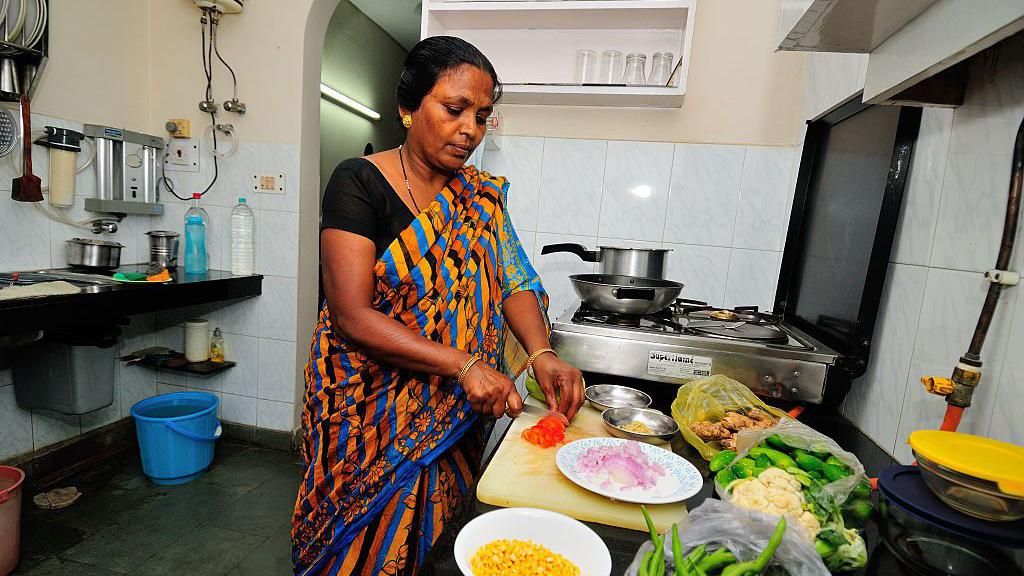
    On a busy Tuesday afternoon in Noida, a satellite city bordering India’s capital New Delhi, domestic cleaner Seema Kumari steps through the door of a client’s home in a faded purple T-shirt and gets straight to work. In just 55 minutes, she wipes down sticky kitchen counters, scrubs years of grime from the balcony railing, straightens rumpled bedsheets, and mops every last corner of the floor, leaving the space spotless before heading to her next scheduled booking. Like millions of domestic workers across India, Seema now works through Urban Company, one of a new wave of home-service startups that let urban customers book everything from deep cleaning to beauty treatments on demand, often with as little as 15 minutes’ notice.

    For generations, domestic work in India has operated almost entirely through informal word-of-mouth networks, with workers hired off the books and paid exclusively in cash. Today, a growing cohort of digital startups is moving this centuries-old sector online, rolling out on-demand short-task booking services across major Indian cities. These platforms are entering a massive, nearly entirely unregulated market: industry estimates place the total number of domestic workers in India at roughly 30 million, the vast majority of whom are women with limited access to formal, steady employment options. One of the newest entrants, Pronto, launched just last year, has already scaled to 15,000 daily bookings within 10 months of operation, with peak demand concentrated in Delhi and its surrounding suburbs, followed by Mumbai and Bengaluru.

    For decades, domestic work in India has been defined by low wages, job insecurity, and near-total lack of regulation, in large part because it takes place behind closed doors in private residences. Platforms like Urban Company and Pronto frame their entry into the market as a force for good, arguing that they can formalize the sector by offering standardized worker training, transparent fixed pricing, and traceable digital wage payments. For workers like Seema, the shift has brought tangible new economic opportunities — but it has also introduced unprecedented pressures and algorithmic control that did not exist in the old informal system.

    Before joining Urban Company, Seema worked 12-hour shifts at a local garment factory, earning just 10,000 to 14,000 Indian rupees (approximately $108 to $151) per month. She quit the role last year after hearing the platform was hiring new cleaners, drawn by the promise of higher, more consistent earnings. “I now make around 20,000 rupees a month,” she says, explaining that the increased income lets her cover school fees and basic needs for her two children. While her monthly earning potential is listed as 25,000 rupees on the platform, she takes home far less after automatic fines for booking cancellations, low client ratings, and late arrivals. “I have made the full amount only once, when I did not take any leave and worked for at least eight hours every day,” she notes.

    Unlike the flexible informal arrangements of the past, platform-based domestic work is fully governed by algorithmic systems that assign jobs, track worker performance, and automatically impose penalties for rule violations. Even delays entirely outside a worker’s control can result in fines, Seema explains: “We often have to walk from one location to another. Sometimes security guards hold us up at the gate while they verify our entry into the building. That makes us late and then we are penalized — even if it is by five minutes.”

    This experience is not unique. An anonymous household client in Gurgaon shared that her app-based cleaner arrived a few minutes late and was automatically fined 10 rupees by the platform, a penalty the worker showed her directly on the app. The BBC reached out to Urban Company for comment on its penalty policy but received no response; Pronto stated it does not fine workers for late arrivals.

    Client ratings add another constant layer of stress for workers. One cleaner who accidentally broke a curtain rod during a job begged her client not to leave a negative review, explaining that a poor score would drastically reduce her future booking opportunities. Labour rights activists argue that the strict time and performance expectations imposed by platforms are often unworkable and dehumanizing. “It is inhuman to expect that someone can simply be summoned within 15 minutes,” says activist Akriti Bhatia. “These are people, not automated systems.”

    Beyond performance pressure, algorithmic governance also creates unpredictable earnings. Most platforms use either per-task payment models with performance-based incentives or variable fixed pay structures, meaning a worker’s monthly income is entirely shaped by their ratings and algorithmic allocation, rather than a set contracted wage. Pronto founder Anjali Sardana argues that the platform’s model delivers meaningful progress for workers, pointing to direct bank deposits and optional health and accident insurance as key steps toward formalization. But critics remain deeply skeptical. Bhatia notes that while digital payments have brought a small degree of formality to the sector, workers still lack core labor protections including paid leave, pensions, and minimum wage guarantees. With almost no unionization among platform domestic workers, most have little to no bargaining power to push for better conditions. Platforms counter that they offer internal grievance redressal systems and emergency support for workers who face hostile situations with clients, but activists say these measures do little to address the daily struggles of on-demand work.

    The relentless pace of back-to-back bookings has also taken a toll on workers’ basic well-being. In Hyderabad, domestic cleaner Amrutha says she declines offers of water during shifts because she cannot be sure she will have access to a public restroom between bookings, a common issue given that many private households still bar domestic workers from using their in-home bathrooms. While platforms state they operate service hubs with public restrooms for workers between shifts, many workers report not knowing these facilities exist, and instead wait for their next booking in public parks, building stairwells, or bus stops. What was once unstructured downtime to rest, eat, or travel between jobs has shrunk dramatically as demand for on-demand services has grown. “There are days when I don’t even get time to eat. It has started taking a toll on my health,” Seema says.

    This tension between expanded opportunity and increased exploitation is not a new pattern for India’s gig economy. The same trade-off played out when ride-hailing platforms like Uber and food delivery apps like Zomato first entered the Indian market. “We’ve seen this pattern before,” Bhatia explains. “Many venture-funded platforms initially offer higher pay and discounts to attract users and workers. Over time, that balance shifts” toward greater pressure and lower earnings for workers.

    While instant on-demand home services have gained rapid popularity among young, urban, middle-class households, many families remain hesitant to adopt the new model. Sushma, a long-time Delhi resident, says she was uncomfortable when her adult children booked an app-based cleaner after her regular domestic worker missed a day of work. “I do not know the person,” she says. “How do I let them into my house?” She also expressed concern about how the shift would affect her long-standing working relationship with her regular informal helper. Her hesitation reflects broader unease about how digital platforms are reshaping decades-old social and economic ties between households and domestic workers.

    As on-demand domestic services continue to grow across India, they are transforming not just how work is booked and paid for, but how the work is experienced by both workers and clients. For Seema, despite the constant pressure, the physical toll, and the unpredictable earnings, the job remains a lifeline. As she finishes her last booking of the day in Noida, another notification pops up on her phone for a new shift the next morning. “The work is tough and I am looking for other opportunities,” she says. “But for now, it helps me take care of my children, so I’ll keep going.”
  • Trump issues expletive-laden threat  to Iran over Hormuz Strait blockage

    Trump issues expletive-laden threat to Iran over Hormuz Strait blockage

    After more than a month of open conflict between the U.S.-Israeli bloc and Iran, regional tensions have spiraled to new heights in recent days, fueled by a fiery public ultimatum from U.S. President Donald Trump and a wave of reciprocal cross-border strikes that have put global energy security at grave risk.

    The latest escalation follows the downing of an American F-15 fighter jet over southwestern Iran on Friday. Both the pilot and a second crew member ejected safely after the crash, and the pilot was rescued within hours. After a multi-day search carried out by both U.S. and Iranian teams in the mountainous crash site, the White House announced Sunday that the second service member had also been successfully extracted from hostile Iranian territory.

    Hours after confirming the rescue, Trump took to his Truth Social platform to issue a profanity-laced threat against Tehran, tying his demand to a rapidly approaching deadline. Iran has blocked all commercial shipping traffic through the Strait of Hormuz, the world’s most critical chokepoint for global oil exports, for more than a month. The closure has sent crude prices soaring worldwide and stoked widespread fears of a sustained global inflation surge. Trump first issued a series of deadlines for Iran to reopen the waterway back in March, and Sunday’s post reaffirmed that demand with unprecedented harsh language.

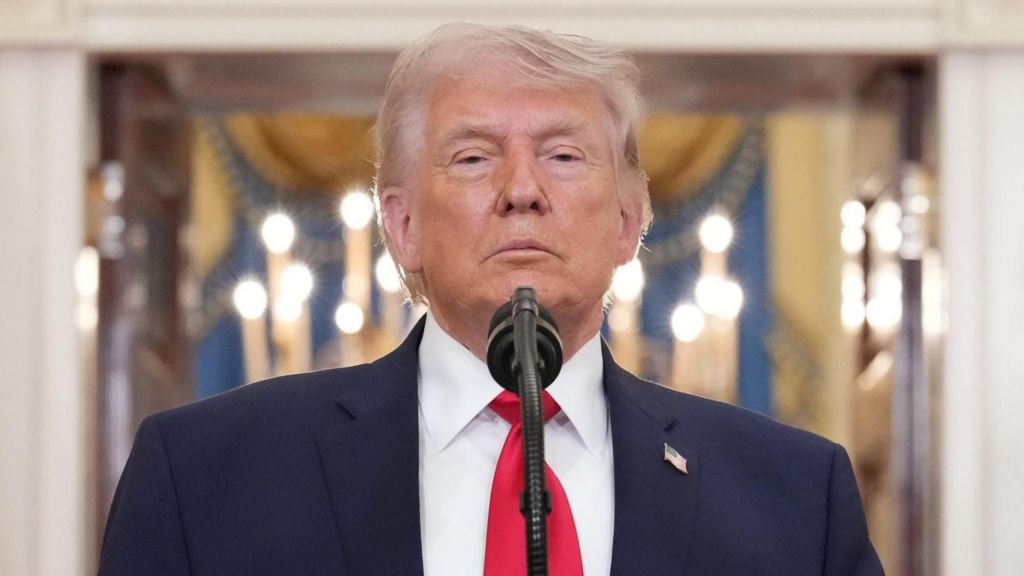
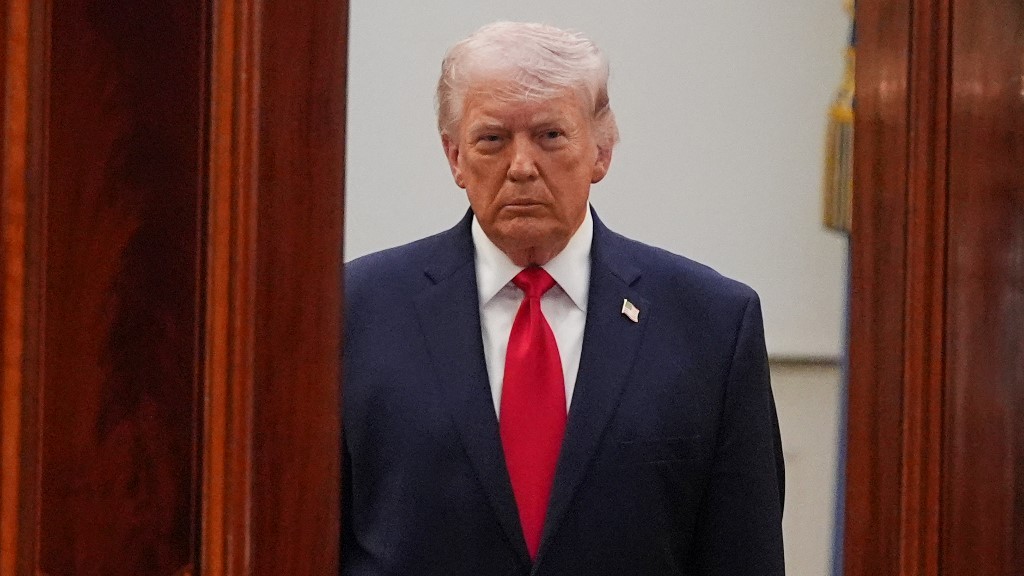
    “Tuesday will be Power Plant Day, and Bridge Day, all wrapped up in one, in Iran. There will be nothing like it!!! Open the Fuckin’ Strait, you crazy bastards, or you’ll be living in Hell – JUST WATCH! Praise be to Allah. President DONALD J. TRUMP,” the post read. Later, Trump clarified an adjustment to the timeline, posting “Tuesday, 8:00 P.M. Eastern Time!” – an extension from the original Monday, April 6 deadline. In subsequent interviews with U.S. media outlets, the president struck a contradictory tone: he repeated his earlier threat to unleash “hell” on Iran if the deadline is not met, but added that he believes there is a “good chance” a negotiated deal can be reached with Tehran before the clock runs out. He also acknowledged he is considering a more extreme option: “blowing everything up and taking over the oil” if no agreement is secured quickly.

    Iranian officials have responded with open mockery and defiance of Trump’s ultimatum. Gen. Ali Abdollahi Aliabadi, a senior commander with Iran’s central military command, dismissed the threat as a “helpless, nervous, unbalanced and stupid action,” warning that “the gates of hell will open” for the U.S. president if Washington follows through on the attack.

    Parallel to the diplomatic standoff, both sides have ramped up military strikes across the region in recent days. Israel has carried out a wave of attacks on civilian infrastructure targets across Iran in recent days, with a petrochemical facility hit Saturday marking the latest in that campaign. According to senior Israeli defense officials, Jerusalem is currently awaiting final approval from Washington to launch expanded strikes on Iranian energy facilities as early as next week. On Sunday, joint U.S.-Israeli strikes hit the Qasem Soleimani International Airport in southwestern Iran, a key logistical hub for Iranian military operations.

    Iran has continued its reciprocal retaliatory strikes targeting Israel and U.S. Arab allies across the Persian Gulf. On Sunday, an Iranian ballistic missile scored a direct hit on a residential building in the Israeli coastal city of Haifa, leaving four people injured. Further north in the Gulf, Abu Dhabi emergency responders spent Sunday battling large fires at the Borouge petrochemical complex, sparked by debris from an intercepted Iranian missile. Kuwaiti officials reported severe damage to key oil and petrochemical facilities from Iranian drone strikes, while industrial and fuel infrastructure in Bahrain was also targeted in separate attacks.

  • Trump warns ‘crazy bastards’ in Iran to open ‘fuckin’ strait’ in Truth Social rant

    Trump warns ‘crazy bastards’ in Iran to open ‘fuckin’ strait’ in Truth Social rant

    In a profanity-laced outburst posted to his Truth Social platform dated April 5, 2026, U.S. President Donald Trump launched a virulent verbal attack against Iranian leadership, threatening catastrophic consequences if Tehran does not immediately reopen the strategically vital Strait of Hormuz. The Strait, which carries roughly a fifth of the world’s daily oil supply and is a critical chokepoint for global energy trade, has been closed to commercial traffic since the joint U.S.-Israeli military assault on Iran launched in late February, sending shockwaves through global energy markets and straining international economies already grappling with persistent volatility.

    Trump’s inflammatory post targeted Iranian leaders as “crazy bastards,” demanding they open the “fuckin’ Strait” or face what he called “hell,” adding a threat to destroy Iran’s key energy and transportation infrastructure. In a striking and unusual closing to the aggressive message, the president ended the post with the phrase “Praise be to Allah.”

    As of Sunday, April 6, Iranian officials had not issued an immediate public response to Trump’s latest ultimatum. However, speaking to Fox News later that same day, Trump walked back some of the overt belligerence slightly, noting that ongoing negotiations are already underway and claiming he sees a “good chance” a formal agreement to reopen the waterway could be reached as early as Monday. The president reiterated his threat in the interview, stating: “If they don’t make a deal and fast, I’m considering blowing everything up and taking over the oil.”

    Reopening the Strait of Hormuz has been framed as a top policy priority for the Trump administration and the broader international community, which has faced steep economic fallout from the weeks-long closure of the critical trade route. Diplomatic efforts to de-escalate tensions and broker a deal have been led primarily by Oman, which announced Sunday that Omani and Iranian foreign ministry representatives had met to discuss a path toward reopening the strait.

    In a post on the social platform X, Oman’s state news agency confirmed the meeting, which brought together deputy foreign ministry officials and technical specialists from both sides to review potential “options” for restoring navigation through the waterway. This follows an announcement from Tehran earlier last week that Iran was drafting a peacetime maritime protocol with Oman to oversee commercial traffic through the strait, a document Iranian Deputy Foreign Minister Kazem Gharibabadi told Russian state media would go into effect once hostilities between Iran, the U.S. and Israel conclude.

    Diplomatic contacts between the U.S. and Iran have so far been indirect, mediated through Pakistani intermediaries, but Trump has ramped up his aggressive rhetoric in recent days. Just one day before his April 5 Truth Social rant, on Saturday, the president gave Tehran a 48-hour deadline to reach an agreement or face “all Hell.”

    In separate developments last week, an Iranian parliamentary committee voted to implement new shipping tolls for all vessels transiting the strait and implement a total ban on any ships flagged to or owned by the U.S. and Israel from entering the waterway.

  • Analysis: Trump declares victory in Iran war after rescue, but threats to US operation still loom

    Analysis: Trump declares victory in Iran war after rescue, but threats to US operation still loom

    The successful recovery of the second downed F-15 crew member from Iranian territory drew an immediate victory declaration from U.S. President Donald Trump on Sunday. In his statement, Trump framed the high-stakes rescue operation as fresh proof that the United States holds unchallenged air dominance over the region, a boast that comes against a far more nuanced strategic backdrop, according to independent observers.

    While the rescue mission itself met its core goal of extracting the missing airman, the sequence of events that unfolded over recent days lays bare that persistent threats to U.S. aircraft and personnel remain intact – even after weeks of intensive joint strikes by U.S. and Israeli forces targeting Iranian military infrastructure, and Trump’s own repeated claims that Tehran had been left with no functional anti-aircraft capabilities. In addition to the two downed fixed-wing aircraft, at least one U.S. helicopter suffered damage from ground fire during the operation, a detail that undermines narratives of total Iranian defensive disablement.

    Multiple anonymous Washington sources familiar with internal administration deliberations confirmed to reporters that the loss of aircraft and the unexpected complexity of the pilot recovery mission may make Trump more hesitant to approve proposed ground operations. These potential actions, which have been drafted by military planners and presented as viable options to the president, include seizing Iran’s strategic Kharg Island oil export terminal and other key Persian Gulf sites, as well as targeting stockpiles of highly enriched uranium stored in deep underground facilities. Any large-scale ground or amphibious incursion would carry significant risk, as it would expose U.S. troops to Iran’s surviving, widely dispersed air defense capabilities – particularly man-portable air defense systems (Manpads), shoulder-launched weapons that remain highly effective against low-flying helicopters and transport aircraft.

    Yet the operation also carries a contrasting strategic lesson that could embolden the Trump administration, analysts note. The fact that U.S. special operations forces were able to insert into heavily contested Iranian territory, establish a temporary forward airfield and refueling position directly in range of Iranian defensive positions, hold the site for multiple hours while destroying the two downed aircraft, and extract all personnel without additional casualties could convince Trump that larger airborne or amphibious operations against high-value Iranian targets have a strong chance of success.

    Trump has sent conflicting signals about his administration’s next steps in the standoff with Iran. During a series of phone calls with reporters on Sunday, he suggested that a negotiated settlement with Tehran could be imminent. But if diplomacy fails, the president has repeatedly warned on his social media platform Truth Social that his self-imposed deadline for launching strikes on Iranian power plants and critical transportation infrastructure is rapidly approaching. In a profanity-laced post directed at the Iranian regime Sunday, Trump threatened that if Tehran did not reopen the Strait of Hormuz to unimpeded commercial shipping, Iranian leadership would “be living in Hell.” During a brief telephone interview with Fox News, he also raised the possibility of moving to “take” control of Iran’s vast oil reserves, though he offered no additional details on how such an operation would be carried out.

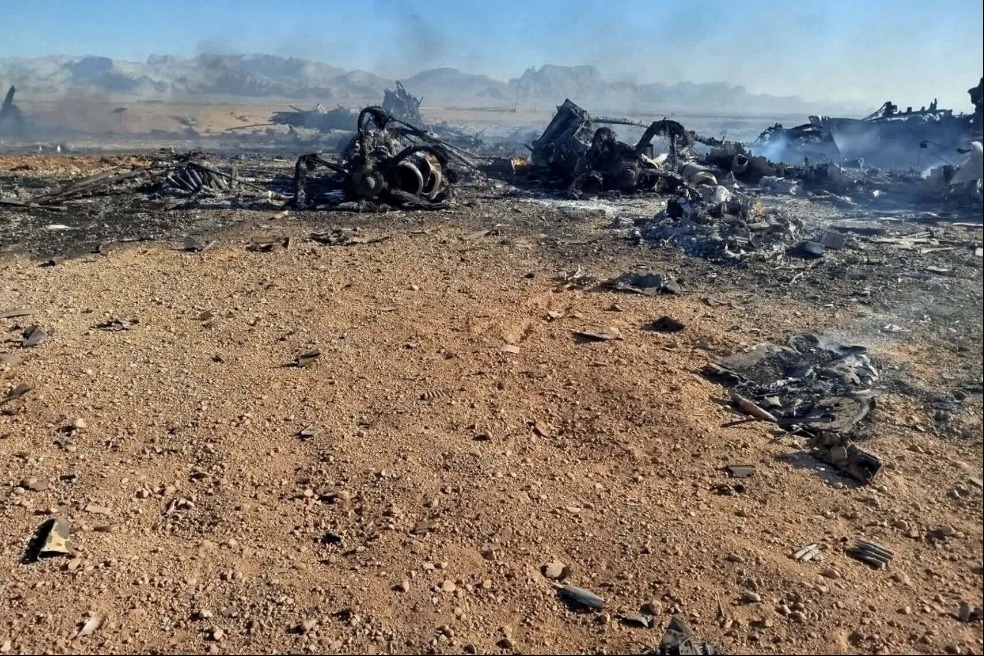
    Iranian state media has published photos of wreckage it identifies as a U.S. military helicopter downed during the pilot rescue mission, offering visual confirmation of the risks U.S. forces encountered during the operation.

    Any expansion of U.S. targeting to include Iranian civilian infrastructure and energy facilities would mark a major escalation of the ongoing conflict, drawing immediate pushback from global human rights groups, which warn that such strikes would put civilian lives at severe risk and potentially violate international humanitarian law. Critics of the president argue that the shift toward more aggressive threats reflects Trump’s growing frustration over the failure of previous strikes to secure unimpeded freedom of navigation through the Strait of Hormuz, the critical global chokepoint through which roughly a fifth of the world’s oil supplies and key commodities transit daily.

    Trump’s latest hardening of rhetoric marks a clear shift from comments he made just one week ago, including an April 1 televised address in which he claimed the U.S. had already cleared the way for U.S. allies to secure and use the strait independently, telling partners “Take it, protect it, use it for yourselves.” Just days ago, the president also suggested he was willing to stand down from further escalation even if no negotiated deal was reached with Iran. Analysts say the new approach appears designed to increase pressure on Tehran’s leadership, doubling down on threats of devastating attacks on Iran’s core infrastructure to force Iranian negotiators back to the bargaining table.

  • People across China pay tribute to martyrs during Qingming Festival

    People across China pay tribute to martyrs during Qingming Festival

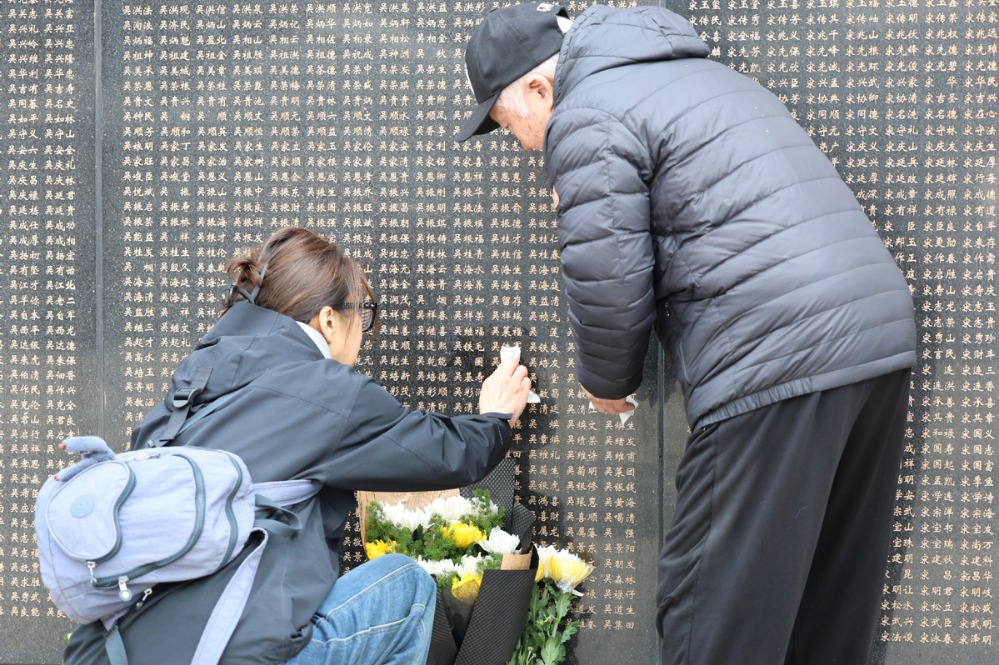
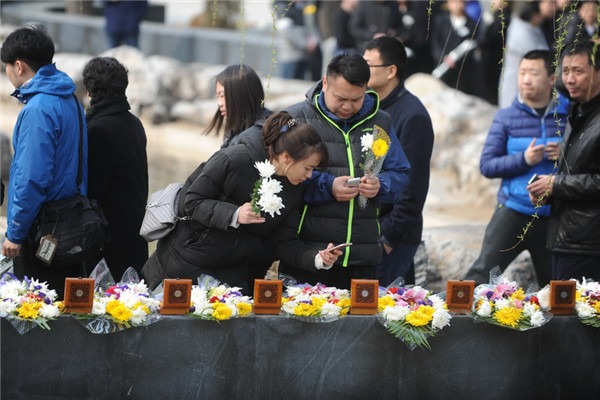
    Across China, thousands of people gathered at memorial sites, cemeteries, and public monuments on Sunday, April 5 2026, to mark this year’s Qingming Festival with solemn tributes to the country’s revolutionary and national martyrs. The annual traditional observance, also widely known as Tomb-Sweeping Day, has evolved in modern times to include formal collective ceremonies that honor the sacrifices of individuals who gave their lives for China’s national independence, social progress, and public safety.

    One of the most prominent gatherings took place at Nanjing’s Yuhuatai Martyrs Memorial Park in eastern China’s Jiangsu province, where visitors laid wreaths of white chrysanthemums, bowed in silent respect, and reflected on the legacies of the revolutionaries executed at the site during China’s mid-20th century national liberation struggles. Similar events were hosted at memorial sites spanning every region of the country, from small local community cemeteries for fallen service members to large national monuments in major urban centers.

    Many attendees brought young family members to the ceremonies, framing the tribute as an opportunity to pass down national memory and collective historical awareness to younger generations. Participants included local government officials, school groups, military personnel, veterans’ organizations, and ordinary residents from all walks of life, all united in a shared moment of national remembrance. In addition to in-person gatherings, many regions also offered online tribute platforms, allowing people who could not travel to memorial sites to leave virtual flowers and messages of gratitude to the fallen.

    Qingming Festival, a centuries-old Chinese tradition centered on honoring ancestors and deceased loved ones, has carried special national significance in modern China as a time to publicly recognize the sacrifices of martyrs who contributed to the founding and development of the country. This year’s nationwide observance continued that long-standing tradition, reinforcing collective shared memory of the contributions of the fallen across the country.

  • Trump threatens Iran with ‘hell’ amid intensified strikes

    Trump threatens Iran with ‘hell’ amid intensified strikes

    Escalating violence has sent shockwaves across the Middle East over the 2026 Easter weekend, as United States President Donald Trump issued a stark 48-hour ultimatum to Iran, threatening that “all hell will rain down” on the nation if a peace deal is not reached before his 10-day deadline for Iran to fully reopen the strategically critical Strait of Hormuz expires.

    The inflammatory threat came as airstrikes and ground operations intensified across the region over the holiday weekend, leaving critical infrastructure including Iranian hospitals, universities and Gulf state energy facilities with heavy damage. The tit-for-tat violence has raised global alarm over nuclear safety and the risk of a full-scale regional conflict.

    In a post to his Truth Social platform on Sunday, Trump announced that U.S. military forces had completed “one of the most daring search and rescue operations in U.S. history”, retrieving a “highly respected colonel” who was now “safe and sound”. Trump stated that at his direction, dozens of U.S. military aircraft armed with the world’s most advanced lethal weaponry were deployed for the extraction mission. He confirmed the rescued service member sustained injuries but is expected to make a full recovery. The president added that this operation followed an unannounced successful rescue of a second downed pilot the previous day, which was kept secret to avoid compromising the second mission. He reaffirmed the U.S. commitment to “never leave an American warfighter behind” before closing his post with an Easter greeting to the nation.

    Iranian officials have issued a direct contradiction of Trump’s account, however. Iran’s Tasnim News Agency reported Sunday that Iranian armed forces foiled a U.S. attempt to rescue a downed pilot in a coordinated defensive operation south of the central Iranian city of Isfahan. A spokesperson for Iran’s Khatam al-Anbia Central Headquarters confirmed that Iranian military destroyed multiple U.S. aircraft during the incident, which came after U.S. forces attempted to infiltrate central Iran to extract the downed aircrew. The joint defensive operation, which included Iranian aerospace forces, ground units, volunteer Basij militias and local law enforcement, successfully intercepted and neutralized the incoming aircraft, according to the spokesperson.

    The Iranian official further accused Trump of downplaying the failed mission in his social media statement, confirming that two U.S. Black Hawk helicopters and one C-130 military transport aircraft were struck and left burning in southern Isfahan. Separately, Qatar-based Al Jazeera reported that fatal casualties occurred during search operations for a downed U.S. F-15E pilot in Iran’s Kohgiluyeh and Boyer-Ahmad province. Iran’s Fars News Agency clarified the death toll from that incident: five people were killed and eight wounded in an attack on the Koh Siah area of Kohgiluyeh County, while four additional fatalities were recorded in strikes on the Vazg and Kakan areas of Boyer-Ahmad County.

    The violence has also raised urgent global concerns over nuclear safety, after the International Atomic Energy Agency (IAEA) confirmed Saturday that one person was killed by projectile fragments when U.S. and Israeli strikes hit a site near Iran’s Bushehr nuclear power plant. The Israel Defense Forces (IDF) announced it had struck more than 120 targets across central and western Iran over the weekend, targeting infrastructure including ballistic missile stockpiles, drone production facilities and Iranian air defense systems.

    Iranian Foreign Minister Abbas Araghchi condemned the strikes near Bushehr in a post on X, drawing a parallel to international outcry over attacks on Ukraine’s Zaporizhzhia Nuclear Power Plant. “Israel-US have bombed our Bushehr plant four times now. Radioactive fallout will end life in GCC capitals, not Tehran,” Araghchi wrote, adding that attacks on Iranian petrochemical facilities also reveal the true goals of the coalition campaign. He accused U.S. media of misrepresenting Iran’s negotiating position, reiterating that Iran’s core demand is a “lasting end to the illegal war that is imposed on us”.

    World health and nuclear officials have joined the growing international outcry over the escalating violence. World Health Organization Director-General Tedros Adhanom Ghebreyesus wrote on X Sunday that he joined the IAEA in renewing alarm over the safety of Iranian nuclear facilities. “The latest incident involving the Bushehr nuclear power plant is a stark reminder: a strike could trigger a nuclear accident, with health impacts that would devastate generations,” Tedros said. “With every passing day of this escalating conflict, the stakes and threats are raised higher and higher. We must de-escalate now. Peace is the best medicine.” Former IAEA Director-General Mohamed ElBaradei went further, urging Gulf Cooperation Council (GCC) states and the United Nations to intervene to stop what he called “madman” Trump from turning the entire region into an inferno.

    In a retaliatory escalation on Sunday, Iran launched drone strikes targeting energy infrastructure across four GCC states: the United Arab Emirates, Saudi Arabia, Bahrain and Kuwait. No official casualty counts from these attacks have been released as of press time, confirming the cycle of violence continues to accelerate just days before Trump’s deadline for a negotiated resolution.

  • China launches official website for funeral services

    China launches official website for funeral services

    BEIJING – In a move timed to align with one of China’s most important traditional memorial holidays, the Qingming Festival, a new national official online platform for funeral services launched its public operations Sunday. Developed under the direct guidance of China’s Ministry of Civil Affairs (MCA), the China Funeral Network was created to address longstanding gaps in accessible, transparent funeral information for bereaved families across the country.

    Unlike scattered, unstandardized local resources that often leave grieving households navigating fragmented service options, the new platform consolidates funeral and interment service resources from every region of China into a single, centralized hub. Its core mission centers on meeting the critical information service needs of families coping with loss, by providing authoritative, up-to-date data for inquiries and consultations covering all aspects of funeral arrangements, burial services, and memorial activities.

    Xu Zesheng, a senior MCA official overseeing the initiative, noted that all of China’s provincial-level administrative regions have contributed to the platform’s development and will participate in its national promotion. This collaborative structure ensures the network can deliver comprehensive coverage that allows families to quickly locate nearby funeral service resources and access clear, unambiguous information about service pricing, eliminating much of the uncertainty and stress that often accompanies end-of-life arrangements.

    According to the Ministry of Civil Affairs, the China Funeral Network is designed for long-term evolution beyond its current core functions. Future updates will expand the platform’s scope to include targeted resources that promote environmentally friendly burial practices and encourage the adoption of modern,文明, low-impact memorial customs across the country, aligning the service with China’s broader public policy goals for sustainable cultural and social development.

  • Artemis II astronauts have toilet trouble on their way towards the Moon

    Artemis II astronauts have toilet trouble on their way towards the Moon

    Nearly 54 years after the last Apollo mission left lunar orbit, NASA’s groundbreaking Artemis II mission is making history as it carries four astronauts deeper into space than any human mission in half a century. While the 10-day lunar flyby mission has hit a small, unexpected snag with intermittent malfunctions in the Orion capsule’s waste management system, the crew and ground teams have worked around the issue, keeping the historic mission on track.

    Launched from Earth last Wednesday, Artemis II marked the first time humans have traveled beyond low-Earth orbit since NASA’s Apollo 17 mission in 1972. The four-person crew — NASA astronauts Reid Wiseman, Victor Glover, and Christina Koch, joined by Canadian Space Agency astronaut Jeremy Hansen — is housed in a compact Orion cabin roughly the size of a standard camper van, measuring just 5 meters wide and 3 meters tall.

    Troubles with the capsule’s toilet emerged just days into the flight. Mission specialist Koch first noted a minor priming issue during a live video downlink with Earth on Thursday, joking that she was proud to claim the title of “space plumber” and calling the toilet “probably the most important piece of equipment on board.” By Saturday, the problem escalated when the wastewater vent line became clogged, likely due to frozen blockage that prevented the crew from dumping waste overboard, NASA confirmed in an official press release.

    To resolve the blockage, ground controllers instructed the crew to reorient the capsule to point the clogged vent directly toward the Sun, leveraging solar heat to melt any accumulated ice. Engineers also activated dedicated vent heaters to clear the line. NASA officials emphasized that this temporary orientation adjustment did not alter the mission’s core trajectory around the Moon. While the maneuver freed up space in the waste tank, it did not fully resolve the clog. As a precaution, the crew was instructed to use backup collapsible plastic urine collection containers when needed overnight. As of mission day five, the wastewater tank remains well below capacity and the toilet remains partially operational, NASA reported.

    The widespread public fascination with the space toilet issue did not go unnoticed by mission leadership. “I think the fixation on the toilet is kind of human nature,” John Honeycutt, chair of the Artemis II Mission Management Team, told reporters during a Saturday evening press briefing. “Everybody knows how important that is to us here on Earth. And it’s harder to manage in space.” NASA Administrator Jared Isaacman echoed that observation during a Sunday interview on CNN’s *State of the Union*, acknowledging that while the agency can accomplish extraordinary feats in deep space today, perfecting basic life support capabilities like waste management remains an area for improvement.

    Beyond the unexpected life support snag, the mission is proceeding according to plan, and the crew has already gotten a first look at the little-seen far side of the Moon, an experience crew members have described as entirely unprecedented. “That is something we have never seen before,” crew members shared of the view.

    Artemis II is currently traveling along a looping trajectory that will take it around the far side of the Moon before returning the crew safely to Earth. Unlike later Artemis missions, this flight will not attempt a lunar landing; instead, its core goal is to test Orion’s deep space performance and systems, including manual steering tests in orbit and alignment checks that will pave the way for the program’s first crewed lunar landing, currently planned for the coming years. For the first time in more than five decades, humans are back on a path to the Moon, and even a clogged toilet has not derailed that decades-long milestone.

  • Oman and Iran hold talks on reopening Strait of Hormuz

    Oman and Iran hold talks on reopening Strait of Hormuz

    As widespread air strikes between the U.S.-Israeli coalition and Iran fuel a sharp escalation of conflict across the Middle East, Omani authorities have confirmed that senior diplomatic discussions with Iran are now focused on potential pathways to reopen the strategically critical Strait of Hormuz. According to Oman’s official state news agency, the talks brought together deputy foreign ministry officials and technical specialists from both nations, who have begun exploring actionable “options” to restore passage through the key waterway.

    The Strait of Hormuz, the world’s most vital chokepoint for global oil and liquefied natural gas shipments, has been effectively closed to most commercial traffic since large-scale U.S.-Israeli air assaults on Iran began in February. Oman shares a direct border with the strait, placing the small sultanate on the frontline of the regional crisis and giving it unique stakes in de-escalation and the reopening of the key waterway.

    The announcement of these diplomatic efforts comes as air operations continue to intensify across the region, with mounting civilian and military casualties reported on multiple sides. In Iran’s southwestern Kohgiluyeh and Boyer-Ahmad province, recent U.S. strikes have left at least nine people dead and eight others injured. Israeli military officials confirmed that over the past 24 hours alone, their forces have targeted more than 120 Iranian air defense and missile systems across the country.

    A targeted strike on a major petrochemical facility in southwestern Iran killed five people and injured approximately 170 others, Iranian state media reported. Five members of Iran’s Islamic Revolutionary Guard Corps (IRGC) were also confirmed killed in separate attacks on the Moghan Plain, with Iran’s official IRNA news agency referring to the slain service members as “martyrs” in an official statement.

    Escalating cross-border attacks have not been limited to Iranian territory, with impacts spreading across the Gulf and into Israel itself. Drone strikes targeting infrastructure in Kuwait caused damage to vital power and water treatment plants. In Bahrain, authorities confirmed that a fire at a facility operated by state-owned oil firm Bapco has been fully extinguished following an Iranian strike.

    In the United Arab Emirates, falling debris from an intercepted projectile sparked fires at Abu Dhabi’s major Borouge petrochemical complex, forcing operators to temporarily suspend all production at the site. The facility is one of the largest petrochemical manufacturing hubs in the Gulf.

    On the Israeli side, an Iranian rocket hit an industrial facility in southern Israel’s Neot Hovav zone near Beersheba, triggering widespread concerns over a potential hazardous chemical leak. Israeli media reported this marks the third strike on the same industrial site since the current conflict erupted. Israeli home front command issued immediate public warnings after detecting missile launches from Iran targeting both Beersheba and the key nuclear site at Dimona. Separately, rocket fire from Lebanon triggered air raid sirens across the Upper Galilee region, extending the theater of conflict to Israel’s northern border.

  • Who is Viktor Orban, Hungarian PM fighting to stay in power after 16 years?

    Who is Viktor Orban, Hungarian PM fighting to stay in power after 16 years?

    As the longest-serving incumbent head of government in the European Union, 62-year-old Viktor Orbán is bracing for the greatest political challenge of his decades-long career, with Hungary’s general election set to take place on April 12. After holding power for 16 consecutive years, most pre-election opinion polls point to a potential defeat at the hands of Péter Magyar, a former insider from Orbán’s own ruling Fidesz party, marking a potential turning point for both Hungary and its relationship with the EU.

    Orbán’s political journey stretches back to the final days of Soviet-backed communist rule in Central Europe. Born in 1963 in the small village of Felcsút an hour west of Budapest, he grew up in a working-class household with no running water, the eldest of three sons. As a young law student in Budapest in the late 1980s, he first rose to national prominence as a pro-democracy activist, founding the Fidesz party (the Alliance of Young Democrats) and delivering an explosive 1989 speech to a quarter of a million Hungarians gathered at Budapest’s Heroes’ Square, calling for an end to communist dictatorship and the establishment of a free, independent democratic Hungary. In that moment, he was hailed as one of the brightest young hopes for post-authoritarian democracy in the region.

    What followed has been a dramatic ideological and political transformation that has reshaped Hungary and put it at odds with much of the European Union. After early stints as a liberal pro-democracy leader and a short period of study at the University of Oxford funded by Hungarian-born philanthropist George Soros, Orbán gradually shifted his ideology to the nationalist hard right through the 1990s. He won his first term as prime minister in 1998, led Hungary into NATO, and after two election defeats in 2002 and 2006, he swept back into power amid the 2010 global economic crisis. He has won four consecutive elections since, securing a two-thirds parliamentary supermajority each time, allowing him to rewrite Hungary’s constitution and pass more than 40 sweeping “cardinal laws” that restructured state institutions, election rules, the media landscape and the national economy.

    Since 2010, Orbán has rebranded his governing model with terms including “illiberal democracy” and “Christian liberty”, while allies in the U.S. MAGA movement frame it as “national conservatism”. The European Parliament has formally condemned the system as a “hybrid regime of electoral autocracy”, and political analysts widely note it as the only case of a former consolidated liberal democracy within the EU backsliding into non-democratic rule. Transparency International has repeatedly ranked Hungary as the most corrupt country in the EU, with critics alleging that billions in state contracts and infrastructure projects have been awarded to Orbán’s close family and inner circle, while independent media has been almost entirely pushed out of the market, replaced by Fidesz-aligned outlets. Billions of euros in EU development funding have been frozen over persistent rule of law concerns.

    On the international stage, Orbán has emerged as Vladimir Putin’s closest ally within the EU, and has repeatedly clashed with Brussels over the war in Ukraine. He has repeatedly vetoed vital EU funding packages for Kyiv, claiming that supporting Ukraine risks dragging Hungary into direct conflict with Russia. Most recently, his foreign minister Péter Szijjártó admitted sharing confidential details of closed-door EU meetings with his Russian counterpart Sergei Lavrov, dismissing the disclosure as standard “everyday diplomacy” – a comment that drew sharp condemnation from other EU leaders, with Polish Prime Minister Donald Tusk noting that “Orbán and his foreign minister left Europe long ago”. Orbán has also positioned Ukraine as a core campaign enemy this election cycle, falsely claiming Ukrainian President Volodymyr Zelenskyy has blocked Hungary’s oil supplies and accusing opposition parties of planning to send Hungarian public funds to Kyiv. For years, he centered his political messaging on opposition to billionaire philanthropist George Soros and irregular migration, running a widely criticized anti-Soros poster campaign that opponents condemned as antisemitic, forcing the Soros-founded Central European University to relocate most of its operations to Vienna in 2019. In 2015, he built a border fence on Hungary’s Serbian frontier to block migrant arrivals and criminalized aid to irregular migrants, a policy that the EU’s top court ruled violated EU obligations.

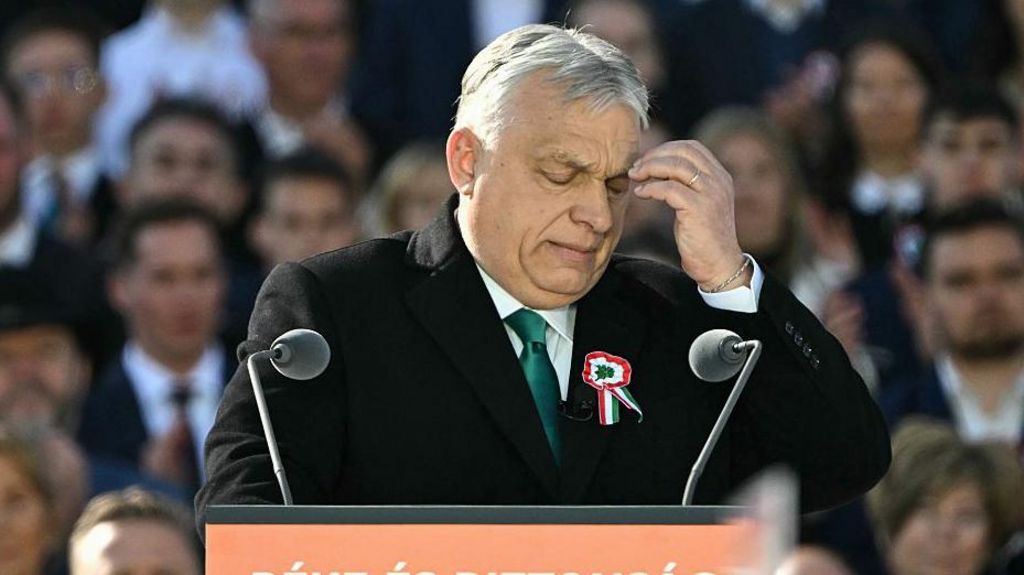
    Despite his long grip on power, Orbán now faces an uphill battle to secure a fifth consecutive term. His populist anti-Brussels rhetoric still resonates with many conservative Hungarian voters, but polling shows widespread fatigue after 16 years of rule, with growing public anger over persistent corruption allegations linked to his party and inner circle. Even his signature personal charisma, a key driver of his past political success, appears to be faltering: he was visibly rattled by boos from the crowd during a recent campaign rally in the northwestern town of Győr, a far cry from the quick-thinking, confident leader that longtime observers have described.

    Orbán has not lost an election since 2006, and he has powerful international backings: former U.S. President Donald Trump has publicly endorsed his re-election bid, and he retains close political and economic ties to the Kremlin. But going into the April 12 vote, he faces the most serious electoral challenge of his decades in power, with the future of Hungarian democracy and Hungary’s place in the European Union hanging in the balance.