作者: admin

  • In Paris fashion, skin is in and celebrities rule the runways

    In Paris fashion, skin is in and celebrities rule the runways

    PARIS — Paris Fashion Week’s Fall 2026 collections have emphatically reinforced the city’s status as the global fashion capital, presenting a compelling fusion of celebrity power, innovative design, and substantive conceptual narratives. The event has become a dynamic platform where designers are exploring profound themes of empowerment, artistry, and bodily expression through their creations.

    Celebrity presence reached extraordinary levels with Oprah Winfrey making notable appearances at both Stella McCartney and Chloé shows, while Sissy Spacek, Julia Garner, and Lil Yachty commanded attention in Loewe’s front row. This star power perfectly complemented the exceptional creative ambition displayed throughout the week.

    Several dominant themes have emerged from the runways at the halfway point: intentional dressing, sartorial pleasure, and fearless self-presentation. These concepts are being expressed through six distinctive trend directions that are defining the season.

    The tuxedo celebrates its 60th anniversary in women’s fashion with particular significance at Saint Laurent. Creative director Anthony Vaccarello, marking his tenth anniversary leading the house, presented a spectacular array of razor-sharp ‘Smokings’—the brand’s term for its iconic women’s tuxedo. These designs featured plunging necklines and elongated silhouettes that captured the same revolutionary spirit Yves Saint Laurent originally unleashed in the 1960s.

    Vaccarello’s vision extended beyond eveningwear, incorporating the same sensual, body-skimming tailoring into daytime suits crafted from fluid pinstripe fabrics with minimal interlining. This approach championed the tuxedo silhouette as appropriate for all aspects of a woman’s daily life. While numerous Milanese brands presented strong black pantsuits this season, Saint Laurent’s interpretation remains uniquely positioned—sleeker, more precise, and richer in symbolic meaning.

    The complementary element in Vaccarello’s collection was latex-stiffened lace, meticulously tailored into structured cardigan-like jackets and straight skirts. This was lace reimagined with structural integrity—assertive rather than delicate. Combined with smoky eye makeup, substantial gold jewelry, and slingback heels, the collection demonstrated the enduring potency of Saint Laurent’s design codes.

    Body consciousness emerged as a major theme across multiple collections. Design collective Vaquera, led by Bryn Taubensee and Patric DiCaprio, staged a provocative presentation within a Paris church featuring strategically exposed skin through hip-cut trousers, leather pieces with intentional zipper placement, and references to fashion’s most boundary-pushing historical moments.

    At Courrèges, Nicolas Di Felice developed his collection around a day-to-night narrative, tracing a woman’s journey from bedroom to nightclub with body-conscious cuts and geometric cutouts on pinafore dresses. Isabel Marant’s designer Kim Bekker embraced brevity and form-fitting silhouettes with micro-shorts, miniskirts, and slim leather pencil skirts.

    Loewe’s creative directors Jack McCollough and Lazaro Hernandez continued their redefinition of luxury craftsmanship with their sophomore collection. The presentation delivered a sensory explosion featuring inflatable channels integrated into outerwear, sculpted shearling resembling prize-winning poodle fur, and latex cast in 3D-printed molds reimagining boudoir essentials. The venue was saturated in taxi yellow accompanied by pounding techno music, while stuffed sea creatures shared front-row space with Hollywood celebrities.

    Inspired by artist Cosima von Bonin, the collection incorporated gingham accents and hand-painted floral prints. McCollough and Hernandez’s approach to craftsmanship deliberately diverges from designers who celebrate imperfection or visible handiwork. Instead, they pursue techniques so refined they eliminate any evidence of human intervention—leather jackets skived to feather-like thinness and fused so seamlessly they appear industrially manufactured. This represents a provocative inversion: exceptional skill masquerading as effortless production.

    Fringe and textural elements emerged as significant trends across multiple presentations. At Carven, designer Mark Thomas established fringe as a signature element in his confident sophomore collection, incorporating fringed gloves, shaggy textures, and delicate mille-feuille panels that added movement and dimensionality to skirts and dresses. He layered gauzy organza with lace in wine and chocolate tones, creating a romantic yet purposeful wardrobe. Fringe manifestations have become one of the season’s most persistent subtle trends.

    Courrèges under Di Felice has established itself as one of the week’s most consistent performers. His fifth-anniversary collection featured slim flared coats, A-line skirts, and vinyl knife-pleated into dresses—presenting a polished Parisian minimalism that has captivated both younger consumers and fashion critics simultaneously, a rare achievement in contemporary fashion.

    Isabel Marant’s Bekker sent models racing down the runway in distressed denim, reversible statement jackets, and sparkling knitted minidresses paired with curved-heel pumps. The collection conveyed a rapid, social, and unabashedly fun atmosphere—evoking a woman moving between shows and parties at full intensity. Rich reds, cobalt blue, and Mondrian-style color blocking punctuated the denim-heavy color palette. Eveningwear incorporated disco influences through fluid sparkling dresses and high-slit satin skirts.

  • Fatbikes are wreaking havoc in Sydney’s wealthy beach suburbs

    Fatbikes are wreaking havoc in Sydney’s wealthy beach suburbs

    Across Sydney’s affluent coastal suburbs, from Manly to Bondi and Cronulla, a growing phenomenon of teenagers riding illegally modified electric fatbikes has escalated into a full-blown public safety crisis. These thick-tired vehicles, originally designed for off-road terrain, have been systematically jailbroken to exceed legal speed limits by 300%, transforming them into high-velocity machines that weave through traffic, dominate footpaths, and even invade golf courses.

    The situation has reached critical levels as hospitals report alarming spikes in e-bike-related injuries. Sydney’s Royal North Shore Hospital trauma specialist Dr. Brian Burns reveals that e-bike injuries are becoming ‘business as usual’ in trauma centers, with doctors regularly treating significant brain injuries and friction burns. St Vincent’s Hospital reported a 350% increase in serious e-bike injuries since 2023, highlighting the devastating human cost of this unchecked trend.

    Multiple factors converge to create this perfect storm: favorable riding weather, affluent parents who can afford the AUD$3,000+ bikes, inadequate public transportation, and critical regulatory gaps. The crisis intensified after 2021 when federal import restrictions loosened, allowing bikes without proven safety standards to flood the market. Subsequently, New South Wales doubled the permitted power wattage to 500w in 2023, while retailers exploited loopholes by providing PIN codes to unlock higher speeds.

    Pedestrians, motorists, and even responsible e-bike users express growing frustration. Northern Beaches resident Andre reports teens overtaking his Vespa at 50-60km/h on footpaths, while Debbie recounts multiple incidents where she and her dog were ‘taken out’ by young riders. The problem is compounded by enforcement challenges, as police hesitate to pursue teens for fear of causing accidents.

    In response, the NSW government has proposed sweeping reforms including minimum age requirements, European safety standards mandating 250w maximum power, anti-tampering protections, and police authorization to crush illegal bikes. However, critics argue the response is either excessive or insufficient, with e-bike shop owner Scott Jeffery calling for education before enforcement, while pedestrian safety advocate Harold Scruby insists the measures don’t address insurance gaps or footpath riding permissions.

    The tragic death of an 8-year-old in Queensland after a collision with a teenager on an illegal e-bike underscores the potentially fatal consequences, with the older teen now facing charges including dangerous operation of a vehicle causing death. As Sydney struggles to balance its cycling ambitions with public safety, the city embodies a global challenge where technological advancement has dramatically outpaced regulatory frameworks.

  • Schools, hospitals, playgrounds: Iran’s civilian sites hit by US-Israeli strikes

    Schools, hospitals, playgrounds: Iran’s civilian sites hit by US-Israeli strikes

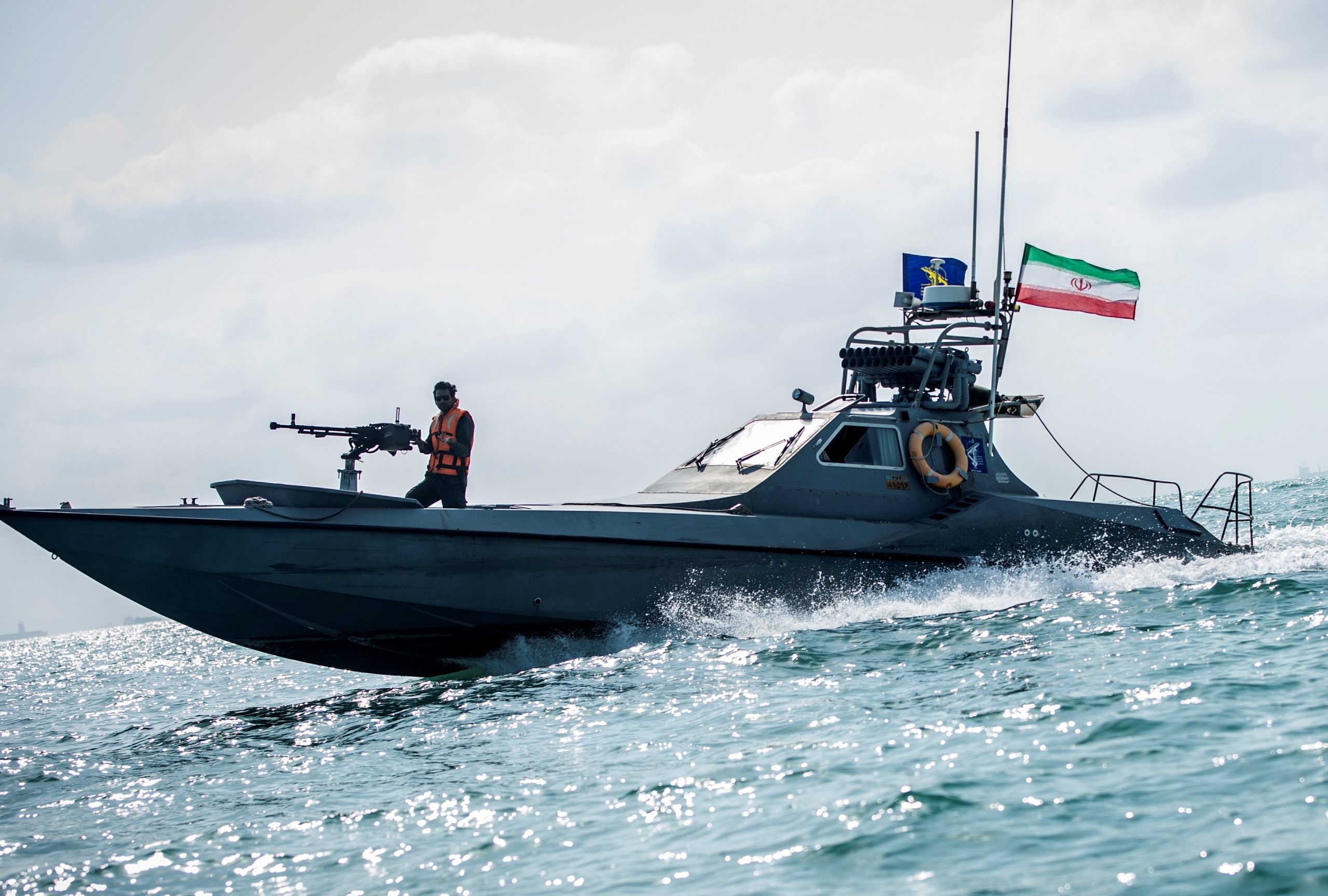
    A devastating humanitarian crisis is unfolding across Iran as civilian infrastructure bears the brunt of ongoing military operations initiated by the United States and Israel. Despite official assertions that strikes exclusively target military and leadership installations, extensive evidence reveals a pattern of attacks on protected civilian sites including educational institutions, medical facilities, and residential areas.

    The offensive, which commenced on Saturday, has resulted in staggering civilian casualties according to Tasnim news agency, reporting over 1,230 fatalities to date. Among the most tragic incidents was the destruction of Shajareh Tayyebeh primary school in Minab, where 165 children aged 7-12 perished in what witnesses describe as a ‘double-tap’ strike pattern—a tactic involving consecutive attacks on the same location.

    Medical infrastructure has suffered systematic damage with the World Health Organization verifying attacks on at least 13 healthcare facilities. The Gandhi Hospital fertility clinic in Tehran sustained severe damage, potentially destroying years of IVF treatment for numerous couples. Healthcare workers reported scrambling to evacuate newborns amid collapsing structures and spreading fires.

    Cultural and sports venues have not been spared either. Tehran’s 400-year-old Golestan Palace, a UNESCO World Heritage Site, sustained significant damage from nearby explosions. The Azadi sports complex’s 12,000-seat stadium was reduced to rubble, prompting Iran’s Sports Minister to condemn the attack as a violation of international law and the Olympic Charter.

    Iranian officials and international observers have raised concerns about potential use of artificial intelligence in target selection without adequate human oversight. Commentator Trita Parsi highlighted the bombing of a public park mistakenly identified as a government target through apparent algorithmic error.

    The growing similarities between targeting methodologies in Iran and previous operations in Gaza have drawn criticism from humanitarian organizations, with the International Red Cross emphasizing that the destruction of educational, medical, and sports facilities constitutes explicit violations of wartime protections.

  • US issues a license that authorizes sales of Venezuelan gold

    US issues a license that authorizes sales of Venezuelan gold

    In a significant policy shift, the United States government issued a comprehensive license on Friday authorizing commercial dealings with Minerven, Venezuela’s state-controlled gold mining enterprise. This strategic move represents the Trump administration’s latest effort to assert greater influence over Venezuela’s vast natural resource sector while countering global competitors.

    The authorization follows high-level diplomatic engagements between U.S. Interior Secretary Doug Burgum and Venezuelan acting President Delcy Rodríguez this week. The discussions included representatives from more than two dozen American mining and mineral corporations, many with prior operational experience in the South American nation.

    According to Secretary Burgum, Venezuelan officials provided concrete security guarantees to potential investors seeking to operate in mineral-rich regions historically dominated by guerrilla factions, criminal organizations, and other illegal armed groups. The license explicitly prohibits participation by entities from Russia, Iran, North Korea, and Cuba in any contractual arrangements with Minerven.

    This development forms part of a broader administration strategy to diminish China’s dominant position in the global critical minerals market, leveraging Venezuela’s substantial untapped mineral reserves. The policy shift occurs alongside recent U.S. actions to assume legal control of a sanctioned tanker and approximately 2 million barrels of petroleum intercepted off Venezuela’s coast in December.

    The licensing initiative advances Washington’s plan for Venezuela’s economic restructuring following the detention of former President Nicolás Maduro by U.S. forces two months ago. This approach received additional momentum in January when Rodríguez enacted legislation opening Venezuela’s petroleum sector to privatization, signaling potential broader economic reforms.

  • Qatar warns war on Iran could ‘bring down’ world economies

    Qatar warns war on Iran could ‘bring down’ world economies

    Qatar’s Energy Minister has issued a stark warning that escalating military conflicts between the US-Israel alliance and Iran could precipitate a worldwide economic crisis. Saad al-Kaabi stated that recent attacks on Gulf energy infrastructure could force regional exporters to declare force majeure within days, potentially driving oil prices to $150 per barrel.

    The minister emphasized that continued hostilities would cripple global GDP growth, create energy price surges worldwide, and trigger supply chain disruptions affecting manufacturing sectors globally. Recent Iranian drone strikes have already impacted critical energy facilities in Qatar’s Ras Laffan and Mesaieed industrial cities, prompting Qatar Energy—the world’s largest LNG producer—to suspend liquefied natural gas production.

    Financial markets have already responded to the escalating tensions, with Brent crude climbing 2.5 percent to $87.6 per barrel on Friday, reaching its highest level since the conflict began. The minister projected that blockade scenarios involving the Strait of Hormuz—through which one-fifth of global oil and gas passes—could push crude prices to $150 within weeks.

    Additionally, Kaabi predicted natural gas prices could quadruple to $40 per million British thermal units, while warning that broader trade disruptions between Gulf states and global partners would create significant economic repercussions for all trading nations. The situation represents the most serious threat to global energy security since the beginning of the conflict.

  • In Miami, the opening game of the World Baseball Classic was a celebration for Venezuelan fans

    In Miami, the opening game of the World Baseball Classic was a celebration for Venezuelan fans

    MIAMI — In a powerful display of national unity, Venezuelan baseball fans transformed Miami’s loanDepot park into a sea of yellow, blue, and red during Friday’s World Baseball Classic matchup against the Netherlands. The game provided a temporary respite from political divisions as thousands of Venezuelan expatriates and supporters gathered to cheer for ‘La Vinotinto’ on American soil.

    The atmosphere was electric from the early morning hours, with fans arriving more than 90 minutes before the first pitch. Outside the stadium, vendors sold national team merchandise from duffle bags while Latin music from artists like Elsen Pro, Bacilos and Carlos Vives filled the air. Inside the ballpark, the lower deck buzzed with excitement, particularly on the third-base side near Venezuela’s dugout.

    The gathering occurred just two months after U.S. forces conducted a military operation in Venezuela aiming to capture deposed leader Nicolás Maduro on drug trafficking charges. Yet political tensions seemed momentarily forgotten as fans focused exclusively on baseball. ‘For our people, baseball is joy,’ said Jessalyn Suarez, an office manager from Miami wearing her team’s jersey with the national flag around her neck. ‘Today is joy. Today is not about anything else.’

    Retired heavy machine operator Jesus Otero from Hialeah echoed the sentiment: ‘Nobody is thinking about him today. He’s not here.’ The overwhelming Venezuelan presence made Netherlands supporters a distinct minority in the crowd.

    Nelson Zurita, a Venezuelan who traveled from Chile for the tournament, explained: ‘The presence of this team provides some relief from the everyday political stress. The emphasis instead is on the Classic. Baseball breathes new life.’ Security presence appeared standard for a major sporting event, with no signs of political protests disrupting the baseball celebration.

  • Middle East war a new shock for financial markets

    Middle East war a new shock for financial markets

    Global financial markets are experiencing significant volatility following the escalation of military conflict in the Middle East, with energy prices surging and equity markets declining sharply across multiple continents. The confrontation between US-Israeli forces and Iran, along with Tehran’s retaliatory strikes across the Gulf region, has severely disrupted shipping through the critical Strait of Hormuz—a vital transit route for approximately 20% of global oil and liquefied natural gas supplies.

    The immediate economic impact has been dramatic: European natural gas prices have skyrocketed by 66% since last week, while international benchmark Brent crude oil surged beyond $90 per barrel, representing a more than 25% price increase. This energy shock has raised serious concerns about renewed inflationary pressures and potential slowdowns in the global economy.

    Equity markets have responded with substantial losses worldwide. European markets have declined significantly, with London’s FTSE losing approximately 6%, while Frankfurt and Paris indices dropped over 7%. Asian markets experienced even steeper declines, with Tokyo falling 5.5% and Seoul plunging 10.6% following a record 12% single-day drop earlier in the week.

    Market analysts note this crisis represents the latest in a series of extraordinary events that financial markets have navigated in recent years, including the COVID-19 pandemic, the Ukraine conflict’s disruption of energy and food supplies, and previous tariff offensives.

    The US dollar has emerged as an unexpected beneficiary of the turmoil, gaining 2.2% against the euro as investors seek safe-haven assets. Interestingly, traditional safe havens like gold have underperformed, declining 3.6% over the past week.

    Government bonds, typically another refuge during market stress, have instead seen rising yields. Ten-year US Treasury yields increased from 4.0% to 4.14%, while Germany’s benchmark bund yields rose from 2.6% to 2.9%. This counterintuitive movement reflects investor concerns that central banks may delay interest rate cuts in response to mounting inflationary pressures.

    Some analysts caution that prolonged conflict could raise the specter of stagflation—a combination of economic stagnation and inflation reminiscent of the 1970s oil crisis. However, others note fundamental differences in today’s economy, including reduced oil dependency and more resilient corporate supply chains. The relative outperformance of US markets, with the Dow declining approximately 3% compared to steeper losses elsewhere, reflects America’s status as a net energy exporter and its relative insulation from energy import disruptions.

  • Memories of twin inspire Paralympian Patrick Halgren to spread good vibes — one sticker at a time

    Memories of twin inspire Paralympian Patrick Halgren to spread good vibes — one sticker at a time

    Paralympic skier Patrick Halgren has transformed personal tragedy into triumphant inspiration at the Milan Cortina Paralympics, honoring his late twin brother through both his athletic performance and a deeply personal movement. Upon arriving in Italy, Halgren began placing distinctive blue-and-yellow “SvendIt” stickers throughout Cortina d’Ampezzo—on chairlifts, water bottles, and even restaurant bathrooms—as a tribute to his brother Lucas Sven Halgren, who died in a 2016 motorcycle accident.

    The phrase “SvendIt,” a playful twist on the skiing term “send-it,” embodies Halgren’s approach to life and sport. His brother Sven had initially encouraged him to pursue adaptive skiing after Halgren lost his left leg above the knee in his own motorcycle crash in 2013. Now competing in his second Paralympics across five standing division events, Halgren carries his brother’s spirit both literally and figuratively—with the words tattooed across his abdomen.

    Halgren’s journey to Cortina represents a victory in itself after a season marked by multiple crashes. His parents traveled from Connecticut to witness his competitions, which he’s approaching with characteristic flair—planning to dye his hair red and blue to complement his blonde braids for different events.

    The athlete leads an unconventional lifestyle, splitting time between his Ford camper van and Colorado Springs home. During ski season, he parks near Winter Park Resort, where he announces races for children, assists with mountain maintenance, and trains. Halgren has also expanded into filmmaking, contributing to “Us and Them,” a project showcasing adaptive skiing from athletes’ perspectives.

    Reflecting on his brother’s legacy, Halgren shared: “I’ve got a lot of really good friends messaging me and saying, ‘He’d be so proud of you.’ When there’s a ray of sunshine on the mountain, I’ve got to believe that it’s him up there showing me the way.”

    The globally distributed “SvendIt” stickers—found from Norwegian slopes to Colorado weather stations—represent more than just memorial; they symbolize Halgren’s philosophy: “Basically, if you’re going to do something, you’ve just got to go for it. Go have some fun and live your life. Have something to talk about later.”

  • ‘It tried to attack me!’ – Loose turkey gives police runaround

    ‘It tried to attack me!’ – Loose turkey gives police runaround

    Law enforcement officers in Georgia found themselves in an unexpected wildlife encounter this week, engaging in a protracted pursuit of a belligerent wild turkey that had taken up residence on a busy roadway. Body camera footage released by local authorities captures the peculiar standoff, showing officers making multiple attempts to corral the agitated bird while managing traffic safety concerns.

    The incident unfolded when police responded to calls about a large turkey obstructing traffic and demonstrating aggressive behavior toward motorists. The footage reveals the substantial bird, with feathers flared and wings spread, charging at officers who attempted to guide it to safety. “It tried to attack me!” one officer can be heard exclaiming as the turkey advanced toward him with clear hostile intent.

    Traffic came to a temporary standstill as officers employed creative tactics to resolve the situation without harming the animal. The encounter lasted approximately twenty minutes before the turkey eventually retreated into nearby woodland. Wildlife experts note that wild turkeys can become particularly aggressive during mating season or when they feel threatened in urban environments.

    Local police departments have increasingly faced similar wildlife interventions as urban expansion continues to encroach upon natural habitats. This incident highlights the unusual challenges law enforcement officers encounter beyond traditional crime prevention, requiring adaptability in handling non-human disturbances to public order.

  • Hushed stillness and Japanese craft at Issey Miyake’s Paris show

    Hushed stillness and Japanese craft at Issey Miyake’s Paris show

    PARIS — At the Carrousel du Louvre on Friday, the Issey Miyake fashion house posed a profound question rarely addressed in the industry: When should a designer cease designing? Under creative director Satoshi Kondo’s guidance, the fall-winter collection titled ‘Creating, Allowing’ provided a contemplative answer through garments that balanced structured design with organic freedom.

    The presentation began in atmospheric minimalism, with sparkling dust particles drifting across the runway as models moved with deliberate slowness. The collection explored the essential tension between actively shaping clothing and allowing fabric and body to interact naturally—a philosophical approach deeply rooted in the Japanese concept of ‘ma’ (the significance of space between objects) that founder Issey Miyake championed until his passing in 2022.

    Initial pieces demonstrated restrained elegance with oversized off-white sweaters featuring architecturally sloped shoulders and dark suits adorned with asymmetrical front panels that resembled unfinished thoughts. Voluminous black trench coats were cinched with belts evoking martial arts attire, while fabric headpieces wrapped tightly around models’ skulls created a monastic aesthetic.

    The collection’s color palette remained deliberately muted until carefully orchestrated moments of visual explosion. A vibrant yellow pleated wrap dramatically cut through the monochrome environment, its pleats hand-wrung then machine-set to create dynamic movement. Most striking were the rigid bodices and peplums in solid red, crafted through an innovative technique called Urushi Body. These pieces were constructed from lacquered washi paper—hand-torn sheets layered onto 3D-printed molds by Echizen region craftspeople, then finished with multiple lacquer coats by Kyoto artisans. The resulting forms contouring the body with armor-like authority represented a fusion of ancient Japanese craftsmanship with cutting-edge technology.

    In a Paris Fashion Week season characterized by sensory overload, Issey Miyake delivered a powerful statement through disciplined minimalism. The collection celebrated the confidence to leave designs intentionally unfinished, transforming negative space and silent moments into profound aesthetic statements.