作者: admin

  • Cuba ‘next’ on agenda, after Iran: Trump

    Cuba ‘next’ on agenda, after Iran: Trump

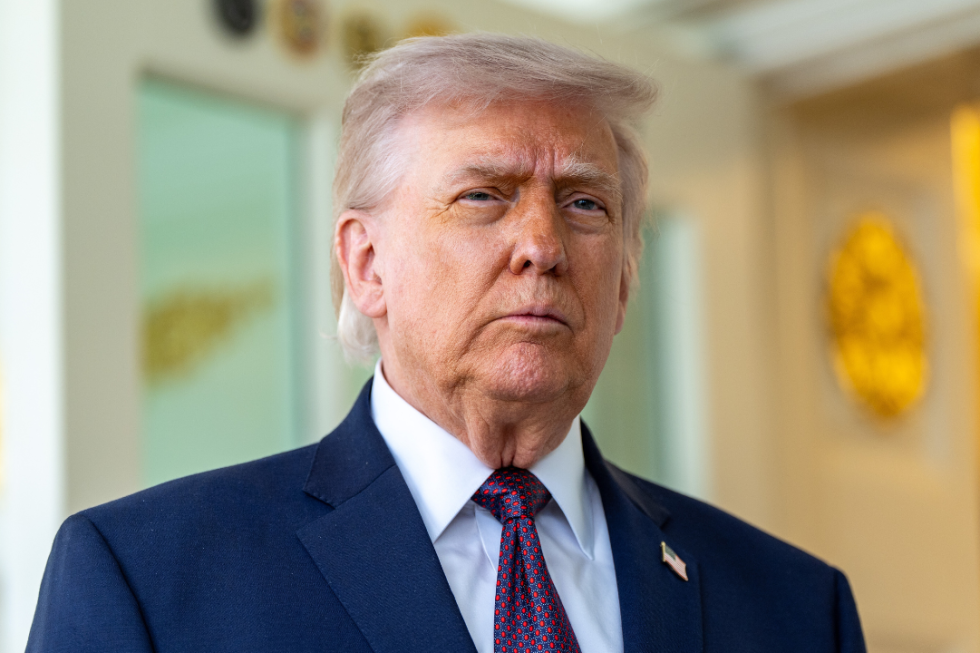
    President Donald Trump has identified Cuba as the next priority on his foreign policy agenda following ongoing tensions with Iran, declaring the communist nation is poised for imminent collapse. In a phone interview with CNN, Trump revealed his administration’s intensified focus on Cuba after what he described as 50 years of waiting for political change.

    The president specifically designated Secretary of State Marco Rubio, whose parents emigrated from Cuba, as his principal advisor on Cuban affairs. Both officials have openly expressed their commitment to regime change in Havana, mirroring their previous approach toward Venezuelan leader Nicolas Maduro.

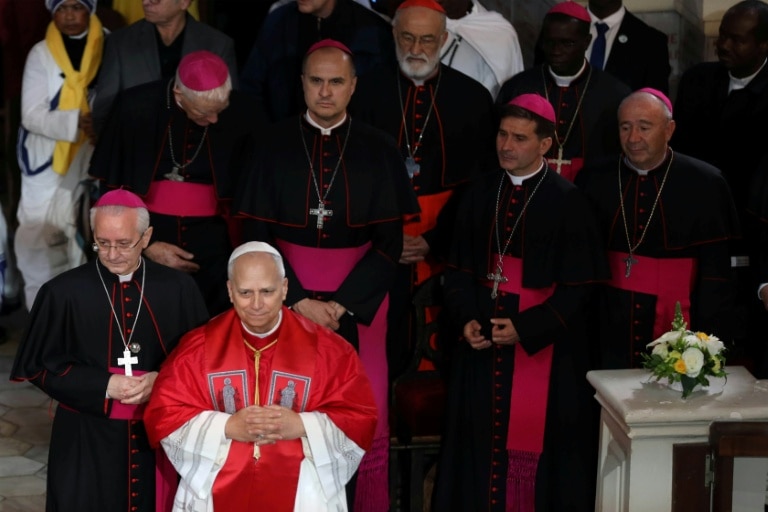
    This renewed pressure coincides with recent diplomatic engagements between U.S. officials and Cuban religious leaders. Rob Allison, the State Department’s coordinator for Cuban affairs, alongside charge d’affaires Mike Hammer, met with Cardinal Juan de la Claridad and Bishop Arturo Gonzalez to discuss humanitarian assistance and necessary reforms.

    The Trump administration has implemented an energy blockade that has severely impacted Cuba’s economy since January, resulting in suspended oil shipments, airline cancellations, and widespread power outages. While Washington recently permitted limited oil imports through private companies, Cuba continues to experience severe shortages of fuel, medicine, and food.

    The Catholic Church has historically mediated between the two nations, having facilitated the diplomatic normalization under President Obama in 2015 and a prisoner exchange agreement with the Biden administration. However, Trump reinstated Cuba’s designation as a state sponsor of terrorism immediately upon returning to office in January 2025, reversing previous diplomatic progress.

  • NASA defense test kicked asteroid off course — and changed its orbit around the sun

    NASA defense test kicked asteroid off course — and changed its orbit around the sun

    In a groundbreaking demonstration of planetary defense capability, NASA’s intentional collision with a distant asteroid has yielded unprecedented results that extend beyond initial projections. The Double Asteroid Redirection Test (DART), conducted four years ago, has not only successfully altered the orbital dynamics between asteroid Dimorphos and its larger companion Didymos but has fundamentally changed their collective path around the Sun.

    According to new research published in Science Advances, the September 2022 mission represents humanity’s first measurable alteration of a celestial body’s solar orbit. The study involved an international team of researchers who employed sophisticated observation techniques, including stellar occultation tracking—monitoring momentary dimming of stars as asteroids passed before them—to obtain hyper-precise measurements of the binary system’s new trajectory.

    The research effort leveraged contributions from volunteer astronomers worldwide who recorded 22 stellar occultation events. Combined with years of additional observational data, the team achieved unprecedented precision in measuring the orbital modifications. While the change appears minute—a mere 0.15-second adjustment—scientists emphasize its profound implications for future planetary defense strategies.

    NASA’s Thomas Statler noted that ‘given enough time, even a tiny change can grow to a significant deflection,’ validating kinetic impact as a viable technique for Earth protection against asteroid hazards. The mission specifically demonstrated that impacting one member of a binary asteroid system can effectively deflect the entire pair.

    The successful experiment provides crucial data for developing defense protocols against potential future asteroid threats, marking a pivotal advancement in humanity’s capacity to safeguard our planet from cosmic impacts.

  • Shenzhen park adjusts lighting for migratory birds

    Shenzhen park adjusts lighting for migratory birds

    In an exemplary display of urban ecological stewardship, Shenzhen Bay Park has implemented strategic lighting reductions despite public complaints about insufficient illumination. This deliberate dimming forms part of a carefully considered conservation initiative to protect migratory bird populations along one of the world’s major avian flight corridors.

    The coastal park, situated in China’s southern Guangdong province, serves as a critical resting habitat for numerous bird species that depend on its mangrove ecosystems. Annual lighting adjustments create essential darkness required for undisturbed roosting and navigation during migration seasons. While some residents have expressed concerns regarding reduced visibility, municipal authorities maintain these measures are scientifically justified and environmentally necessary.

    This policy exemplifies Shenzhen’s dual commitment to technological advancement and ecological responsibility. As a rapidly developing metropolis, the city demonstrates that modern urban planning can successfully integrate vibrant public spaces with wildlife conservation priorities. The lighting strategy represents a conscious choice to preserve natural rhythms amid urban development, acknowledging that true progress encompasses both human needs and environmental stewardship.

    Urban ecologists praise the approach as a model for other coastal cities worldwide. The measured response to public feedback while maintaining conservation commitments highlights sophisticated environmental governance. Shenzhen’s actions reinforce that contemporary cities must occasionally embrace darkness to protect the natural systems that sustain regional biodiversity, creating a harmonious balance between urban infrastructure and ecological preservation.

  • Cuba shuts its Quito embassy as Ecuador expels its diplomats

    Cuba shuts its Quito embassy as Ecuador expels its diplomats

    In a significant diplomatic escalation, Ecuador has forcibly expelled all Cuban diplomatic personnel from its territory following a 48-hour ultimatum issued by President Daniel Noboa’s administration. The Cuban mission in Quito officially ceased operations Friday as diplomats departed the country after Ecuador’s declaration of embassy staff as ‘persona non grata’.

    Visual documentation captured the symbolic conclusion of diplomatic relations as the Cuban flag was lowered from the embassy compound in northern Quito. In a striking display of diplomatic discord, President Noboa himself shared social media footage showing embassy personnel burning documents in an outdoor oven, which he caustically described as a ‘paper barbecue.’

    Cuba’s Foreign Ministry issued an official statement condemning Ecuador’s ‘unilateral and unfriendly action,’ expressing profound regret over the abrupt termination of diplomatic presence. The expulsion occurs within a complex geopolitical context, coinciding with increased U.S. pressure on nations maintaining oil trade with Cuba and occurring just days before President Trump’s scheduled meeting with conservative Latin American leaders, including Noboa.

    Ecuador’s Foreign Ministry cited provisions of the Vienna Convention on Diplomatic Relations, which permits nations to declare diplomatic personnel unwelcome without providing justification. This development further intensifies regional tensions following recent U.S. military operations in Venezuela, a key Cuban ally, highlighting the increasingly complex political alignments within Latin America.

  • Meghan’s lifestyle brand and Netflix end partnership

    Meghan’s lifestyle brand and Netflix end partnership

    American Riviera Orchard, the lifestyle venture established by Meghan, Duchess of Sussex, has officially concluded its financial partnership with Netflix, transitioning to complete operational independence. This development marks a significant evolution in the business relationship between the streaming giant and the Duchess’s entrepreneurial endeavor.

    The separation follows last year’s substantial restructuring of the comprehensive content agreement between Netflix and the Sussexes’ production entity, Archewell Productions. Both American Riviera Orchard and Netflix issued coordinated statements on Friday confirming the brand’s newly independent status.

    A spokesperson for American Riviera Orchard expressed gratitude for Netflix’s initial support, stating: “We appreciate Netflix’s foundational partnership during our inaugural year. The brand has demonstrated remarkable growth trajectories and is now positioned to operate as a fully autonomous enterprise.”

    Netflix’s official response praised the Duchess’s creative vision: “Meghan’s distinctive approach to celebrating life’s simple pleasures through elegant products inspired the brand’s creation. We take pride in our role in launching this vision and support its independent future development as originally intended.”

    Launched in 2023, American Riviera Orchard has gained recognition for its premium artisanal jams while expanding into complementary product categories including rosé wines, specialty teas, shortbread biscuits, and edible floral garnishes.

    This business development occurs against the backdrop of the Sussexes’ broader $100 million content agreement with Netflix, signed in 2020. The Duchess’s culinary series “With Love, Meghan” completed two seasons and a holiday special under this arrangement, though audience metrics indicated moderate viewership performance.

    Following the conclusion of the original production contract last summer, the parties established a revised “first look” arrangement granting Netflix preferential consideration rights for future projects developed by the Sussexes’ production company.

  • Turkish man in London Quran burning case was apparently convicted of wife’s killing

    Turkish man in London Quran burning case was apparently convicted of wife’s killing

    Newly surfaced court documents reveal a complex background for Hamit Coskun, the 51-year-old man recently celebrated as a free speech advocate in Britain. According to Turkish court records obtained by Middle East Eye, Coskun was convicted in 2007 for the aggravated homicide of his wife Vesia Coskun, receiving a 16-year prison sentence for the 2002 killing.

    The revelation comes months after Coskun’s high-profile legal victory in the UK, where he successfully appealed against a conviction for burning a copy of the Quran outside the Turkish embassy in London. His acquittal in October was hailed by free speech organizations and prominent Conservative politicians as a victory for expression rights.

    Coskun, who identifies as half-Kurdish and half-Armenian, vehemently denies the murder conviction, claiming the documents must be forged or misattributed. Through his legal representatives, he maintains his wife died of natural causes from asthma and that he was never investigated for her death.

    His lawyers assert that Coskun’s imprisonment in Turkey stemmed instead from his anti-government political activities. ‘He spent many years in prison on charges arising from his anti-regime politics,’ they stated, characterizing him as ‘a target of state and religious authorities.’

    Independent verification by MEE confirms that the documents from Istanbul’s Bakirkoy criminal court match official archives, with Coskun’s date of birth aligning with UK records. Contemporary Turkish newspaper reports from September 2002 further corroborate the timeline of events.

    The case presents a striking contrast between Coskun’s portrayal as a political prisoner and the judicial record of a murder conviction. While Turkey has documented issues with politically motivated prosecutions, the murder case underwent multiple judicial reviews, including a retrial and ultimate confirmation by Turkey’s Court of Cassation in 2011.

    Notably, none of Coskun’s high-profile British supporters, including former Conservative minister Robert Jenrick and several advocacy groups, appear to have been aware of the murder conviction when celebrating his free speech victory. The Crown Prosecution Service has confirmed it will not pursue further appeals regarding the Quran burning case.

  • Chinese airlines resume Middle East flights amid regional tensions

    Chinese airlines resume Middle East flights amid regional tensions

    Chinese aviation authorities have announced the gradual restoration of flight services to Middle Eastern destinations following extensive safety evaluations. This strategic resumption comes after significant disruptions to regional air travel caused by military actions involving US and Israeli forces against Iran that commenced on February 28th.

    The Civil Aviation Administration of China confirmed that multiple Chinese carriers have implemented carefully coordinated flight schedules to reconnect China with key Gulf destinations. Hainan Airlines successfully operated two round-trip flights between Haikou, the capital of Hainan province, and Jeddah, Saudi Arabia, completing journeys on both Monday and Wednesday of this week.

    Air China has outlined an ambitious operational plan, scheduling daily round-trip services between Beijing Capital International Airport and Riyadh, Saudi Arabia throughout the weekend. Simultaneously, the carrier will maintain additional daily round-trip connections between Beijing and Dubai on Friday, Saturday, and Sunday.

    China Eastern Airlines executed a scheduled round-trip operation between Beijing Daxing International Airport and Muscat on Thursday, while China Southern Airlines prepared for a special Friday flight between Guangzhou and Riyadh specifically designated to repatriate stranded passengers and crew members.

    The resumption of these air services follows a period of considerable aviation disruption across multiple Middle Eastern nations, which compelled international carriers to either reroute trajectories or temporarily suspend operations throughout the region. Chinese aviation officials emphasized that all resumed flights underwent rigorous safety assessments before receiving operational clearance.

  • Egypt’s Taba airport becomes escape route for Israelis fleeing Iran war

    Egypt’s Taba airport becomes escape route for Israelis fleeing Iran war

    The tranquil Red Sea resort of Taba, situated at the Egypt-Israel border, has undergone a dramatic transformation into a bustling international transit corridor. This shift follows Israel’s complete airspace closure, implemented in response to its escalating military conflict with Iran that commenced with joint US-Israeli strikes on February 28th.

    The strategically positioned Taba border crossing now witnesses continuous bidirectional movement, with thousands traversing daily. Evacuating foreign nationals and Israelis stream into Egypt to access international flights, while returning citizens and incoming travelers cross into Israel via coordinated bus services. This unprecedented flow has activated the previously underutilized Taba International Airport, which reopened within 48 hours of initial hostilities to accommodate surging demand.

    Israeli airlines Arkia and Israir initiated special flight operations to Athens and six European destinations respectively, joined by Cypriot and Greek carriers. These operations form part of ‘Operation Lion’s Wings,’ Israel’s emergency repatriation program. Notably, flag carrier El Al abstained from Taba operations citing unresolved security apprehensions.

    US Ambassador to Israel Mike Huckabee publicly endorsed the route through social media, directing citizens to tourism ministry-organized buses from major cities to the crossing. Israel’s National Security Council issued specific guidance for transit through Sinai, advising discretion and immediate airport transfer after border processing.

    Travelers report efficient border procedures with consular officials from multiple nations providing assistance. However, the 40-kilometer desert highway journey between border and airport requires independent arrangement, with arriving passengers receiving immediate hydration and snacks before prearranged coach transfers.

    The sudden tourism surge has generated economic opportunities, drawing workers from across Egypt seeking employment in transportation and hospitality. Hotel occupancy in Taba has reached unprecedented levels after years of tourism decline, with rates increasing substantially due to demand.

    Airport personnel confirm consistently fully booked flights, estimating up to 15 daily departures. While approximately 60% of travelers are foreign nationals according to eyewitness accounts, the route also facilitates Israeli departures for those fearing intensified violence.

    The situation evokes memories of similar border activity during the previous summer’s 12-day conflict, though current operations concentrate on Taba’s airport rather than Sharm El Sheikh’s facility. This vibrant transit activity presents stark contrast to the tightly restricted humanitarian situation at Gaza’s Rafah crossing, merely 200 kilometers distant, highlighting the region’s complex geopolitical realities.

  • Gaza’s fragile humanitarian lifelines in Israel’s crosshairs

    Gaza’s fragile humanitarian lifelines in Israel’s crosshairs

    Amid the rubble of her home, partially reconstructed after Israeli bombardment, Tasneem prepares a Ramadan meal for her family by candlelight. Her story mirrors that of countless Gazans who now depend entirely on international aid organizations for survival following Israel’s devastating military campaign that pushed poverty rates to 81.5 percent and created unlivable conditions across the strip.

    The humanitarian crisis has reached a critical juncture as 37 non-governmental organizations, including Médecins Sans Frontières, Save the Children, Oxfam, and the Norwegian Refugee Council, face potential license suspensions by Israeli authorities. Despite a temporary injunction from Israel’s Supreme Court that allows continued operations after a petition by 17 agencies, the threat looms large over Gaza’s vulnerable population.

    For Tasneem and her family, aid packages represent their primary food source since her husband lost his employment due to the conflict. “One food box is enough for me for almost a month,” she explained, highlighting how these supplies contain essential items like fish and fruits that families can no longer afford independently.

    The situation proves particularly dire for medical patients like Mohammed Alasdoudi, who underwent multiple amputations after being shot by an Israeli sniper in 2018. He depends entirely on MSF for rehabilitation and specialized care unavailable in local hospitals. “If MSF stops its operations, it will be the last nail in the coffin of patients,” Alasdoudi stated, emphasizing the organization’s provision of expensive medications otherwise inaccessible in Gaza.

    MSF’s operations remain crucial, with the organization supporting one in five hospital beds in Gaza last year and assisting with one in three births. Their 15 accessible health centers provide vital services to amputees and trauma patients who cannot reach distant governmental clinics due to transportation shortages.

    According to Claire Nicolet, MSF’s Gaza emergency coordinator, the organization faces severe supply chain disruptions due to Israeli restrictions. “Fortunately, we still have some supplies, but gradually they will run out. If we don’t find a solution to bring them in, we honestly will not be able to continue operating,” she warned.

    The reduction of international staff also diminishes independent witnessing of Gaza’s conditions. Nicolet noted that with international journalists barred entry and Palestinian journalists under attack, the removal of humanitarian workers further isolates the territory from external observation.

    Legal experts emphasize that Israel’s actions violate international humanitarian law. Yahya Muhareb, a specialist in international humanitarian law, stated that suspending aid organizations contravenes Israel’s obligations as an occupying power under the Fourth Geneva Convention and the International Court of Justice’s 2024 provisional measures requiring unhindered aid flow into Gaza.

    Despite a nominal ceasefire, Israel continues to impose obstacles on essential goods entering Gaza while maintaining military operations near the demarcation line. This persistent uncertainty leaves aid-dependent families like Tasneem’s in constant anxiety: “We don’t trust Israel; it may resume the war or close the crossing at any time… if the aid stops, how are people supposed to survive?”

  • Trump puts pressure on Cuba as island faces fuel crisis

    Trump puts pressure on Cuba as island faces fuel crisis

    In a striking declaration made before Inter Miami’s soccer stars, including Lionel Messi and Luis Suarez, former US President Donald Trump predicted the imminent collapse of Cuba’s communist government. The remarks came just one day after the island nation suffered a devastating 24-hour nationwide blackout, exacerbating an already severe energy crisis.

    Addressing team owner and Cuban-born billionaire Jorge Mas, Trump asserted that Cuban authorities desperately seek a negotiated settlement, stating they “want to make a deal. So badly you have no idea.” He promised celebrations would soon follow developments in Cuba, with Mas enthusiastically responding: “It’s going to be an amazing day.”

    In subsequent comments to CNN, Trump revealed plans to involve Senator Marco Rubio in Cuba negotiations, declaring “Cuba’s gonna fall pretty soon” while emphasizing continued pressure on the island nation. Although prioritizing Iran currently, Trump noted Cuba had been “ready after 50 years” of communist rule.

    The energy crisis stems directly from Venezuela’s political upheaval in January, when US military action removed Nicolás Maduro from power. Cuba lost its primary crude oil supplier, with no other partners—particularly Mexico—willing to breach the supply gap under Trump administration pressure.

    The consequences are visible nationwide: mountains of uncollected garbage create public health hazards, forcing residents to burn waste amid acrid smoke. Even affluent Havanans resort to cooking with firewood during blackouts. The fuel shortage cripples transportation and backup generators, with few alternatives to Cuba’s deteriorating Soviet-era electrical grid.

    While the Cuban government remains silent on alleged negotiations—reportedly conducted through Raúl Castro’s grandson—it has permitted limited private sector fuel imports. However, these measures prove insufficient against nationwide shortages that now threaten Cuba’s tourism industry, with Air France recently suspending flights due to refueling difficulties.

    As Cubans brace for summer without air conditioning or fans, the Trump-Rubio approach maintains maximum pressure despite critics noting the policy disproportionately harms ordinary citizens rather than leadership, raising questions about intentions to spark internal uprising.