
Speculation around Philippine President Ferdinand “Bongbong” Marcos Jr.’s physical fitness has been making the rounds on public and social media in recent weeks, fueling unconfirmed whispers that the country’s leader was struggling with undisclosed health issues. Rather than dismissing the claims through a formal written statement or allowing the rumors to spread unchecked, Marcos took an unorthodox, direct approach to put the speculation to rest: he showcased his physical stamina by performing star jumps in a gym setting, and extended an open invitation to any critic who doubts his health to join him for a workout. The bold, confrontational move marks a rare moment of personal engagement from a sitting head of state responding to public gossip, turning a question about personal health into a public display of readiness for the demands of his office. Political analysts note that the stunt not only addresses immediate health concerns but also projects an image of vigor and confidence to voters and political opponents alike, at a time when public perception of leadership stability carries significant weight in Philippine politics.
作者: admin
-
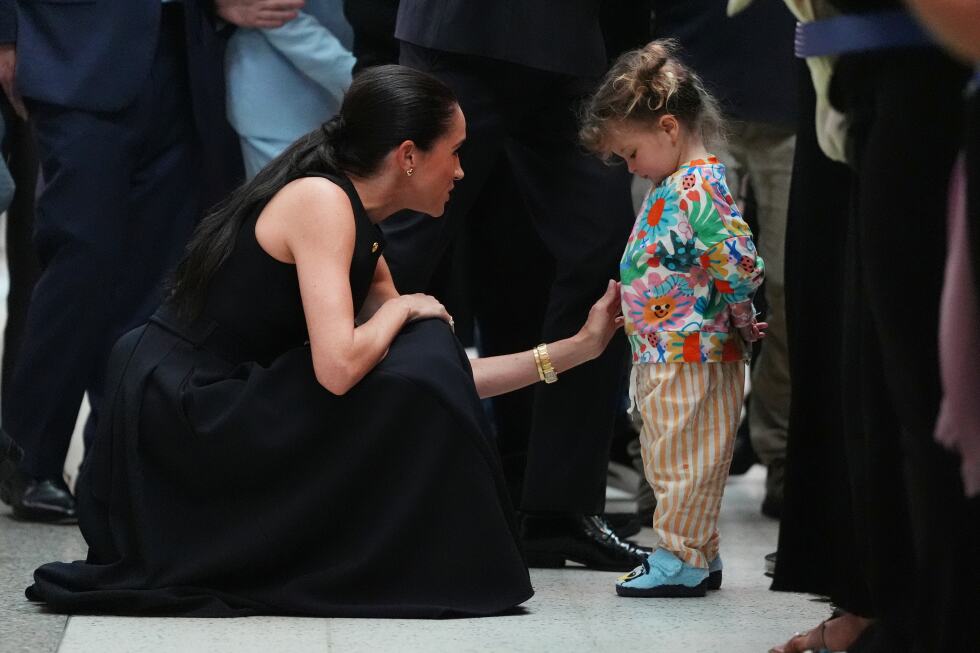
Prince Harry and Meghan arrive in Australia for a low-key, privately funded visit
MELBOURNE, Australia — More than six years after their headline-grabbing 2018 official royal tour as newlyweds, the Duke and Duchess of Sussex, Prince Harry and Meghan, have returned to Australian soil for their first visit since stepping down as working senior members of the British royal family. The four-day, intentionally low-profile trip, which will take the couple from Melbourne to Canberra and finally Sydney, comes four years after their 2020 announcement that they would step away from senior royal duties, relocate to California, and pursue full financial independence.
Unlike their 16-day 2018 tour that included massive public gatherings across Australia, New Zealand, Fiji and Tonga — where thousands of well-wishers turned out to greet the newlyweds — this visit will not feature large-scale public events. A core point of contention that led to this scaled-back schedule is the ongoing debate over who should cover the couple’s additional security costs for Australian law enforcement agencies. The couple have emphasized that the entire trip is privately funded, and they traveled on a commercial Qantas Airways flight from Los Angeles in business class, but public pushback over unplanned taxpayer security expenses has shaped the visit’s low-key format. Their two young children, 6-year-old Prince Archie and 4-year-old Princess Lilibet, did not accompany them on the trip; notably, Meghan announced Archie’s pregnancy during the couple’s 2018 stop in Sydney.
Criticism has mounted from multiple corners over the purpose of the visit. Local outlet the *Herald Sun* framed the trip as a “faux royal tour” designed to boost the couple’s personal “Brand Sussex”, while other commentators have pushed back against their schedule of paid ticketed public events. The Sussexes’ team has rejected claims that this is a publicity-driven promotional tour. In an official statement, their office noted the itinerary centers on long-standing work the couple has prioritized, with a core goal of amplifying charitable organizations that deliver proven community impact. The visit, the statement added, is focused on listening, learning, and supporting local communities rather than self-promotion, while also confirming it includes a small number of private engagements to support both charitable and commercial goals.
Opinions among royal observers are split on the controversy surrounding the trip. Afua Hagan, a media commentator who specializes in coverage of the British royal family, noted that mainstream media has long framed Harry and Meghan as public “villains”, leaving the couple in a no-win situation. “This is a privately funded trip. To pay for that, they’re going to have to have some commercial interest,” Hagan told Australian Broadcasting Corp. “If they didn’t have commercial interest, the problem would be: ‘Oh my goodness, these people are leeching off the Royal Family and the taxpayers whether or not they’re making their own money. How dare they make their own money.’ They can’t do right for doing wrong.”
On the other side of the debate, Giselle Bastin, a British royal studies expert at Australia’s Flinders University, argued that the couple’s choice to leverage their royal titles to advance private commercial interests creates a clear conflict of interest for many observers. “It’s well known that the Sussexes are in dire need of income and so a staging of a quasi-royal tour to Australia is being regarded as a rather desperate attempt to monetise their status as royalty,” Bastin explained.
The couple marked their first public engagement of the trip at Melbourne’s Royal Children’s Hospital, a venue with personal ties to Harry: his parents, then-Prince Charles and Princess Diana, visited the same facility back in 1985. As the pair entered the hospital foyer, they shook hands with dozens of waiting well-wishers, while hundreds of onlookers captured the moment on personal mobile devices. When a reporter asked what Harry was most looking forward to during his time in Australia, he simply replied: “Everything,” adding, “It’s good to be back.”
The remainder of the itinerary aligns with causes Harry and Meghan have long championed. In Melbourne, Meghan is scheduled to visit a local women’s shelter, while Harry will tour a veterans’ art museum. From there, the couple will travel to Canberra, where Harry will visit the iconic Australian War Memorial, before wrapping up the trip in Sydney with a sailing event hosted by Invictus Australia. The Invictus Games, the international sporting competition for ill and injured military personnel and veterans, was founded by Harry in 2014, and the couple hosted the opening of the 2018 Invictus Games during their last visit to Sydney.
-
Carney secures Liberal majority after special election wins
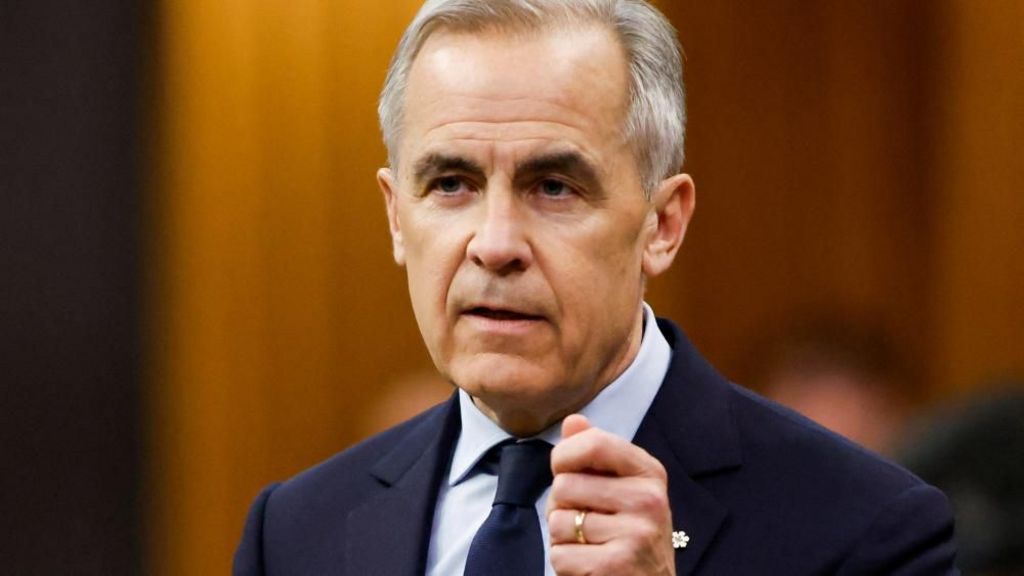
One year after Mark Carney took office as Canada’s Prime Minister, his Liberal Party has locked in a narrow majority in the House of Commons, cementing its hold on federal power following projected by-election wins in two critical ridings on Monday.
Major Canadian news outlets including CBC, CTV and The Globe and Mail project the Liberals will claim victory in two Greater Toronto Area constituencies: Scarborough Southwest and University-Rosedale. Both seats were left vacant in recent months after two senior former Liberal politicians stepped down to take new roles: ex-Defence Minister Bill Blair was appointed Canada’s ambassador to the United Kingdom, and former Deputy Prime Minister Chrystia Freeland (who served under previous Prime Minister Justin Trudeau) took a position as an advisor to the Ukrainian government.
As of 22:30 local time Monday, results for the third by-election held in the Quebec riding of Terrebonne remained too close to call. With roughly 30% of ballots counted, Liberal candidate Tatiana Auguste held a thin lead over Bloc Quebecois contender Nathalie Sinclair-Desgagné. This race is a rerun of a previous election where Auguste won by a single vote, before the Supreme Court of Canada nullified the result earlier this year over a clerical error affecting a mail-in ballot.
Monday’s projected wins, combined with five recent cross-floor defections from opposition lawmakers to the Liberals, push the party to 173 of the 343 total seats in the House of Commons. This narrow majority gives Carney far greater flexibility to advance his policy agenda, allowing his government to pass legislation without securing support from opposition parties and enabling him to delay the next federal election until 2029.
This parliamentary majority marks a dramatic reversal of fortune for the Liberals. Just over a year ago, the party was widely projected to lose the general federal election, when former long-time leader Justin Trudeau stepped down in January after nearly a decade in power. Trudeau’s resignation cleared the path for Carney to win the party leadership contest, and he went on to lead the Liberals to a minority government victory in April 2024. A surge in public support for the Liberals at the time was largely driven by widespread pushback against aggressive trade and policy rhetoric from U.S. President Donald Trump.
This is an unprecedented shift in Canadian federal politics: it marks the first time a governing party has secured a parliamentary majority through a combination of by-election gains and opposition defections, rather than a general election win. The last full Liberal majority government was formed by Trudeau after his landslide 2015 general election victory, though his government was later reduced to a minority in subsequent elections.
In the five months leading up to Monday’s by-elections, Carney had already strengthened his parliamentary caucus with five opposition defectors: four sitting Conservative members of Parliament and one from the left-wing New Democratic Party. Canadian media has also reported in recent days that the Liberals are actively courting several additional opposition MPs to cross the floor to the governing party.
Conservative Party leader Pierre Poilievre issued a sharp rebuke of the Liberal majority win in a post on X Monday night. He argued that the majority was not earned through a general election or Monday’s by-elections, but through backroom deals with politicians who betrayed the constituents that elected them. Poilievre added that the Liberals expect Canadians to stay complacent and allow Carney to consolidate unaccountable total power, but that his party would continue to fight, saying “our country and its people are worth fighting for.”
-
‘Blindsided’: US farmers strained as fertilizer costs surge on war
As spring planting gets underway across the United States, agricultural producers in major farm belts are facing an unprecedented crisis, driven by geopolitical unrest thousands of miles away. The conflict that followed US-Israeli strikes on Iran, which prompted Tehran to block the Strait of Hormuz — a critical global chokepoint for fertilizer and energy shipments — has sent input costs soaring and left growing numbers of farmers waiting for delayed orders they urgently need for this year’s growing season.
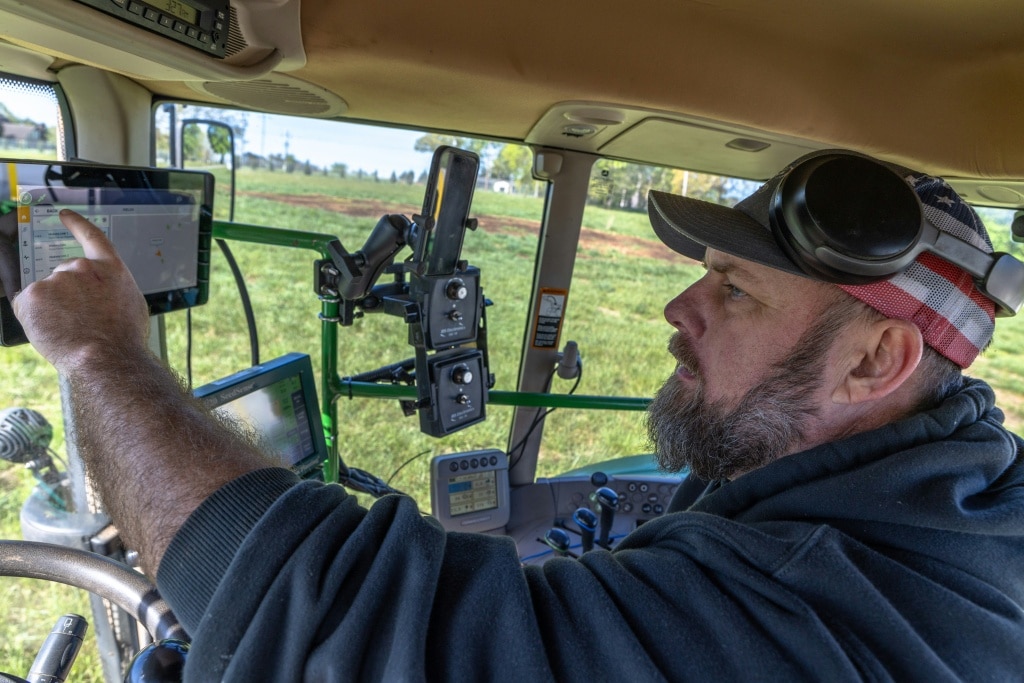
On Andy Corriher’s North Carolina corn and soybean operation, the timing could not be worse. Spring is the period when most American farmers apply the bulk of their fertilizer for the year, and Corriher is among the many who found themselves forced to buy supplies just as prices skyrocketed and shipments stalled. “We got hit at the worst possible time, because we’re trying to buy fertilizer when it skyrockets and when the supply also gets cut,” the 47-year-old grower told AFP. He noted he placed orders for multiple loads of liquid nitrogen weeks ago, but suppliers still cannot give him a firm delivery date. Since the blockage of the strait, Corriher estimates the price of his nitrogen fertilizer has jumped by at least 40 percent, while urea — a widely used nitrogen-based fertilizer — has seen a roughly 50 percent price spike at the Port of New Orleans. To cope, he has cut his fertilizer application by a third, a move he fears will lead to lower crop yields at harvest.
Corriher is far from alone in facing this sudden squeeze. Russell Hedrick, a 40-year-old farmer who grows corn and soy across 1,000 acres near Hickory, North Carolina, said around three-quarters of his fertilizer purchases for this season happened after prices rocketed. Unlike large industrial agricultural operations, most small to mid-sized American farmers lack the on-farm storage capacity and upfront capital to stock up on bulk fertilizer months ahead of planting season, leaving them exposed to sudden market shocks. Even before the current conflict, Hedrick noted, steadily rising input costs had forced farmers to carefully ration every pound of fertilizer to maximize output. Now, he has cut application rates down to the “bare minimum,” holding off on additional applications in the hopes prices will cool later in the season. “This year, we just kind of got blindsided,” he said, comparing the unexpected disruption to pre-planned export restrictions that caused fertilizer shortages in 2021, shortages that farmers had time to prepare for.
The crisis has put political pressure on the Trump administration, as farmers make up a core support base that delivered 78 percent of the vote in agricultural-dependent counties to Trump in the 2024 election. Over the weekend, Trump blamed the price hikes on “price gouging from the fertilizer monopoly,” and reassured producers that “American Farmers, we have your back!” US Agriculture Secretary Brooke Rollins attempted to downplay the severity of the crisis, noting that 80 percent of American farmers had already purchased their spring fertilizer before the conflict broke out. But that assessment offered little comfort to the 20 percent of producers who lacked the funds or storage to buy early. For Derrick Austin, a 55-year-old grower based in Marshville, Rollins’ comments were a “gut shot.” After hearing news of the Strait of Hormuz blockage, Austin immediately called his supplier to lock in supply before prices rose. “Thankfully, he let me buy three loads of nitrogen at the old price per ton so I could at least fertilize my wheat crop,” he said. “It was devastating.”
For many long-time Trump supporters in farm country, the crisis has sparked new questions about the administration’s handling of the Middle East conflict, even as most remain hesitant to abandon their support. Corriher, who has backed Trump in past elections, said the crisis “didn’t seem like we had really thought out all the consequences to the American people. I feel like these things were kind of overlooked as part of collateral damage.” The surge in fertilizer costs has been paired with simultaneous spikes in gasoline and diesel prices, hitting both farmers and ordinary American households: “Everybody seems to be suffering.” Austin said the conflict has left him questioning the administration’s decision-making, though he still believes the current administration “still beats some of the alternatives.” Hedrick, who has voted for Trump three times, struck a similar balance: “He’s human like the rest of us. I think he makes good calls, I think he makes mistakes. If the conflict’s resolution brings long-term peace and a reopened Strait of Hormuz, that’s all I can hope for.”
Agricultural economists warn that the long-term impact of the crisis will depend on how quickly the conflict is resolved. The US agricultural sector has already been locked in a prolonged recession for the past two years, noted Chad Hart, an agricultural economist at Iowa State University, with net farm income declining while overall business costs remain persistently high. For 2025, the overall impact may be muted, as many producers who bought fertilizer early will avoid the worst of the price hikes, keeping overall margin losses lower than initially feared. But if the conflict drags on and the Strait of Hormuz remains blocked, Hart warned the 2027 crop cycle could face far more severe disruptions that would send ripple effects through global food markets.
-
Swift backlash from loyalists and adversaries after Trump depicts himself as Christ
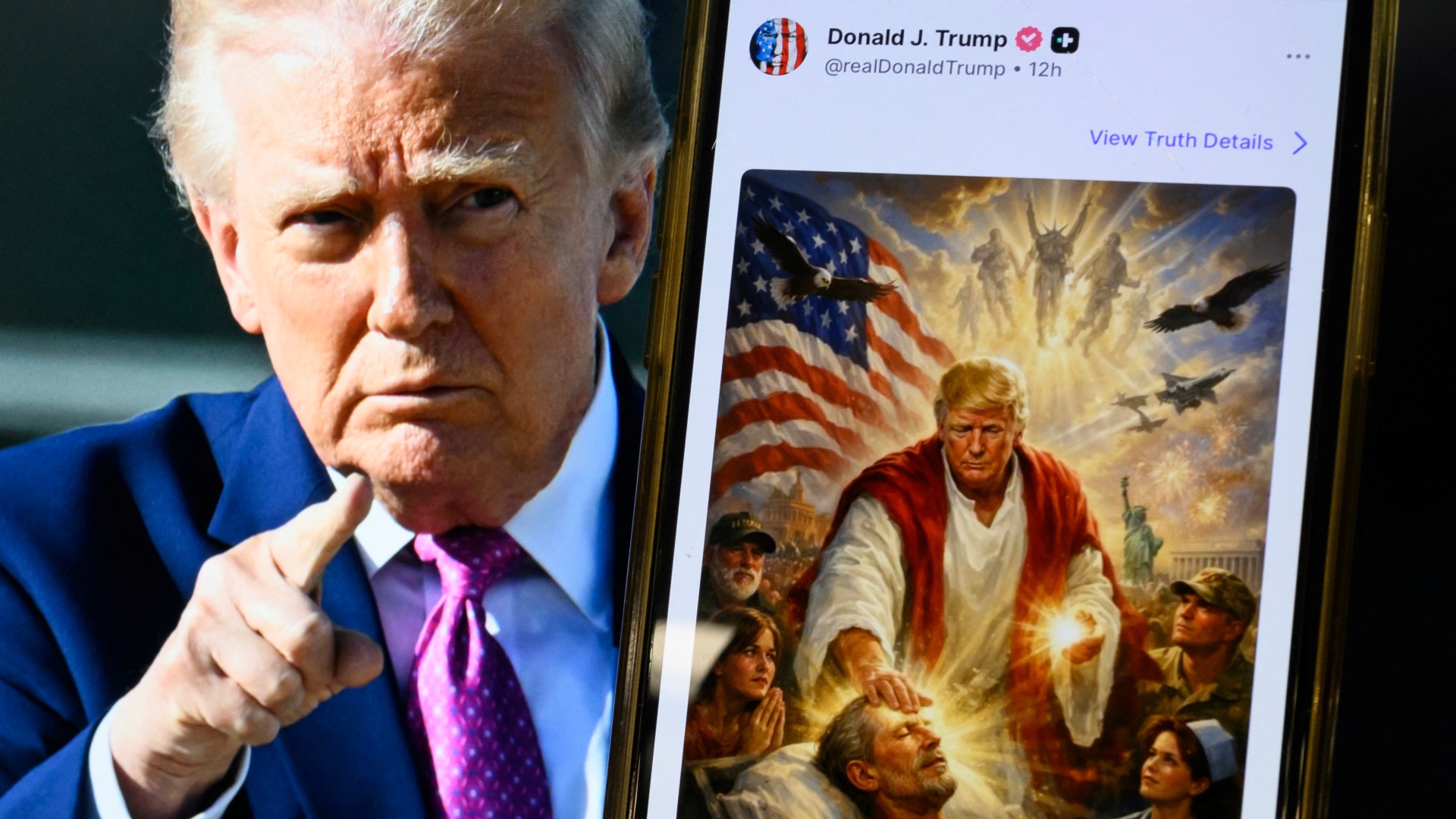
A politically charged firestorm erupted this week after former and current U.S. President Donald Trump shared an AI-generated image depicting him as a messianic, Jesus-like healing figure — a post that quickly drew widespread backlash across religious and political lines, forcing Trump to remove it within 24 hours. The controversial post came on the heels of a bitter public feud between Trump and Pope Leo XIV, the first American pope in history, who has openly condemned Trump’s policy positions, including U.S. support for ongoing military conflicts in the Middle East and hardline immigration crackdowns.
After deleting the image, Trump offered a confusing explanation to reporters at the White House, claiming he believed the graphic depicted him as a doctor affiliated with the Red Cross. “It’s supposed to be me as a doctor making people better. And I do make people better. I make people a lot better,” he told reporters. However, the widely circulated image leaves no room for ambiguity: it shows Trump draped in a flowing robe, with glowing hands hovering over the forehead of a man lying unconscious in a hospital bed. Across both Christian and Islamic religious traditions, Jesus Christ is revered as a figure with the divine power to heal the sick, making the depiction explicitly messianic.
Criticism poured in immediately from across the political and religious spectrum, starting with leading Democratic lawmakers. Vermont Senator Bernie Sanders took to social media platform X to condemn the incident, tying it to Trump’s ongoing conflict with the pope. “Trump is now attacking the Pope for speaking out against war while posting images of himself as a messianic figure,” Sanders wrote. “This is not only offensive. It is deranged, egomaniacal behavior. When will Republicans in Congress stop blindly following this dangerous and unhinged man?” Massachusetts Representative Jim McGovern, the top Democrat on the House Rules Committee and a practicing Catholic, called the image “outrageous, offensive, and profane,” adding “clearly he is not well. As an American, a Catholic, a human – I am disgusted.” The Democratic National Committee’s official account tagged top Catholic and evangelical Republican leaders including Senate Republican JD Vance and House Speaker Mike Johnson, asking for public comment.
Notably, most sitting congressional Republicans remained silent through the first 36 hours of the controversy, even as high-profile former GOP members and religious conservative groups broke with Trump. Marjorie Taylor Greene, the former Georgia congresswoman who has fallen out of Trump’s favor after facing primary pressure from his allies, issued a blunt condemnation on X: “I completely denounce this and I’m praying against it!!!” Former Illinois Representative Adam Kinzinger, another ex-Republican lawmaker who clashed with Trump, called on Christians of all denominations to speak out. “Jesus Christ is not a meme. His image is not a political tool. His name is not a brand,” Kinzinger wrote. Carrie Prejean Boller, a former Trump supporter and anti-abortion Catholic who was ousted from Trump’s Religious Liberty Commission, went further, saying “Trump is not only a blasphemer but he is a liar. No Christian can support Trump or his administration. Speak now or be complicit in evil.” Even a traditionally pro-Trump Catholic group, Knights Templar International, which backed Trump in both the 2016 and 2024 elections, issued a full-throated rebuke, calling the image deeply offensive and demanding a public apology to upset Christian communities. Former Fox News host Megyn Kelly also joined critics, reposting a comment dismissing Trump’s Red Cross doctor explanation that read “He thinks you’re so stupid.”
A small handful of pro-Trump commentators defended the post, however. Hardline right-wing commentator Laura Loomer argued that the U.S. does not recognize blasphemy as a legal offense, and told offended critics to “move to a Muslim country” if they opposed the depiction. International actors also waded into the controversy. Iran’s embassy in South Africa, which has regularly mocked Trump’s policies since the outbreak of the U.S.-Israeli war on Iran, made a sarcastic reference to the late convicted sex offender Jeffrey Epstein in its comment, asking “Is it Epstein being cared for in the Healing Ministry of Trump?” Iranian President Masoud Pezeshkian issued a formal condemnation, saying “the desecration of Jesus (peace be upon him), the Prophet of peace and brotherhood, is unacceptable to any free person.”
The AI image controversy was preceded by a harsh public attack from Trump against Pope Leo XIV, who has become one of the most prominent global critics of Trump’s foreign and domestic policy. Shortly before sharing the image Sunday, Trump posted a tirade against the pope on his social media platform, criticizing Leo’s stances on crime and foreign policy, and attempting to drive a wedge between the pope and his brother, a supporter of Trump’s MAGA movement. “Pope Leo is WEAK on Crime, and terrible for Foreign Policy. He talks about ‘fear’ of the Trump Administration, but doesn’t mention the FEAR that the Catholic Church, and all other Christian Organizations, had during COVID when they were arresting priests, ministers, and everybody else, for holding Church Services, even when going outside, and being ten and even twenty feet apart. I like his brother Louis much better than I like him, because Louis is all MAGA,” Trump wrote. He added bluntly: “I don’t want a Pope who criticizes the President of the United States.”
Pope Leo has previously spoken out against multiple Trump administration policies, including the U.S.-Israeli war on Iran, the Israeli military campaign in Lebanon, and Trump’s harsh crackdown on undocumented immigrants within the U.S. Just days before the feud erupted, the Archbishop of Washington DC Cardinal Robert McElroy delivered a fiery anti-war sermon at a peace mass, calling on Christians to move beyond prayer and actively advocate for an end to conflicts. “As citizens and believers in this democracy that we cherish so deeply, we must advocate for peace with our representatives and leaders. It is not enough to say we have prayed. We must also act… our president will move to reenter this immoral war,” McElroy said. “No. Not in our name. Not at this moment. Not with our country.” Multiple cardinals also confirmed their opposition to Trump’s war policies in an interview with CBS’s 60 Minutes Sunday. Last week, a Catholic publication revealed that the Vatican’s ambassador to the U.S. had been summoned to the Pentagon earlier this year and reprimanded by a senior U.S. official, who told the envoy the U.S. government would act with no constraint on the global stage.
Speaking to reporters Monday, Pope Leo pushed back against Trump’s attacks, reaffirming his commitment to spreading the Gospel message of peace. “I have no fear of the Trump administration or speaking out loudly of the message of the Gospel, which is what I believe I am here to do, what the Church is here to do,” the pope said. “We are not politicians. We don’t deal with foreign policy with the same perspective he might understand it, but I do believe in the message of the Gospel, as a peacemaker.”
The incident has already had electoral ripple effects ahead of the November 2026 U.S. midterm elections. The Iraqi Christian Foundation issued a public call for U.S. Catholics to vote against Trump’s Republican Party, writing on X “We call on all Chaldean Catholics & other Catholics in the USA to vote against the Republicans or abstain from voting in the 2026 elections. We stand with Pope Leo XIV!” Support for the pope extended globally across religious lines, with prominent Muslim leaders and organizations also backing Leo. Iranian Parliament Speaker Mohammed Ghalibaf wrote “Honoring Pope Leo’s fearless stand! He condemns the war crimes of Israel and the US… thank you for this light!” The Council on American-Islamic Relations, the largest Muslim civil rights organization in the U.S., issued a statement saying it stands in solidarity with the pope, noting that “Between denigrating the pope, portraying himself as Jesus (peace be upon him), and sarcastically praising Allah, the president’s mockery of religion is both deranged and insulting.” Controversial Muslim-American influencer Sneako, who has more than one million followers on X, added: “We stand with the Pope and the beautiful religion of Catholicism. Trump is committing the greatest act of blasphemy. If you love America, condemn this evil immediately.”
-
Australians brace for ‘cost of living shock’ as confidence plunges
Australia’s economic sentiment has suffered its sharpest contraction since the height of the COVID-19 pandemic, driven by a crippling new cost of living shock that has left both households and bracing for severe economic headwinds, new industry surveys show.
The monthly Westpac-Melbourne Institute Consumer Sentiment Index, a key measure of Australian household economic outlook, recorded a dramatic 12.5% nosedive in April, dragging the headline reading down to 80.1. By standard survey conventions, any score above 100 signals a net optimistic outlook among consumers, while readings below 100 reflect widespread pessimism. The latest result sits near all-time historic lows, though it remains slightly above the extreme troughs recorded during peak COVID-19 lockdowns and the early 1990s Australian recession.
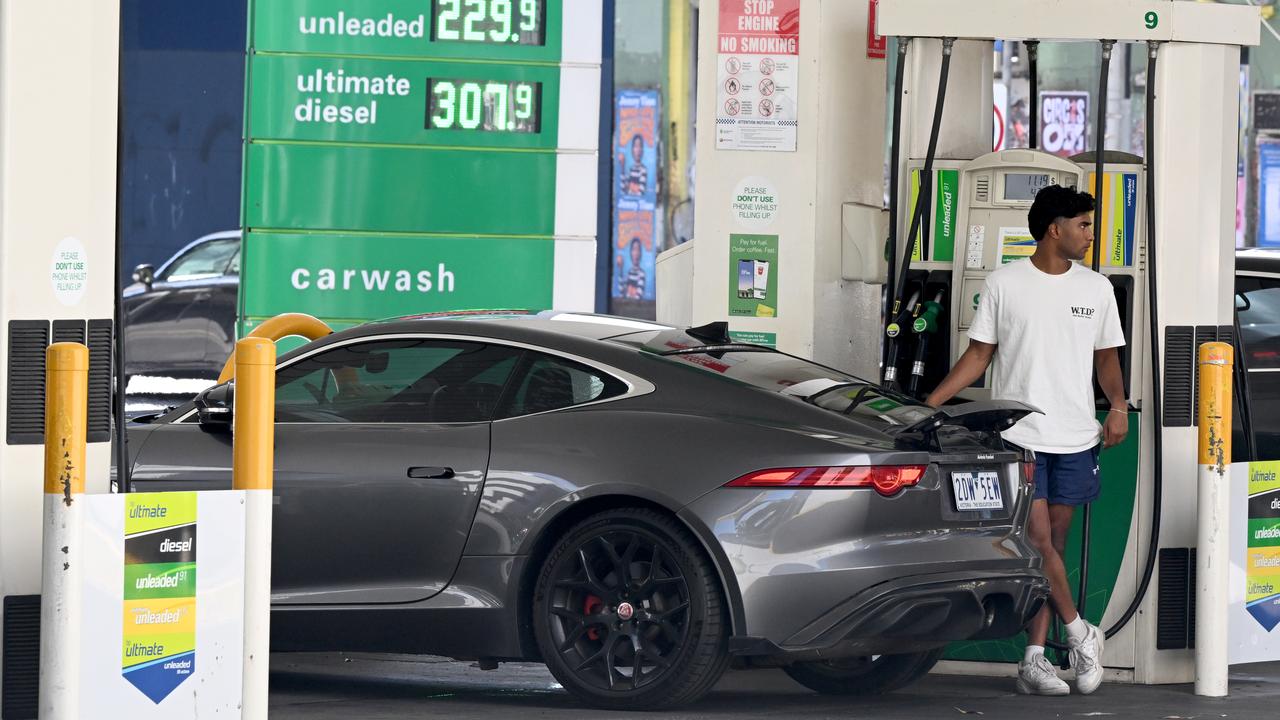
“Australian consumers are being hit by another cost of living shock,” explained Matthew Hassan, Westpac’s head of Australian macro forecasting. Surging fuel prices have emerged as the single biggest drain on household budgets, dragging the corresponding survey subindex down 16.7% year-on-year to 66.8. The sharp decline follows a record jump in national average petrol prices, which hit $2.40 per litre in early April – a 77-cent increase from February that marks the largest percentage price spike in the survey’s decades-long history.
All five of the index’s core subindicators deteriorated sharply in April, with measures of current economic conditions faring the worst. Near-term expectations for both national economic performance and personal household finances also fell steeply, a trend Hassan says signals consumers see almost no chance of near-term relief and are preparing for ongoing hardship.
Fears of another interest rate increase from the Reserve Bank of Australia (RBA) are also weighing heavily on consumer sentiment, Hassan added. Global energy market volatility stemming from international conflicts has stoked inflation concerns, leading many consumers to bet the RBA will implement another rate hike to cool price growth. The Westpac-Melbourne Institute Mortgage Rate Expectations Index, which tracks household forecasts for variable mortgage rates over the coming 12 months, rose 3.9% in April to 177.2, returning to the recent cycle’s multi-year highs.
Money markets are currently pricing in a 65% probability that the RBA will raise the official cash rate when its board meets on May 4-5. If the hike goes through, it will mark the third interest rate increase in 2026 and fully undo the four rate cuts the central bank implemented in 2025, leaving households facing even higher mortgage repayment costs.
The economic uncertainty has also spiked fears of job losses, pushing unemployment expectations to their most pessimistic level since August 2020 – one of the darkest periods of the COVID-19 pandemic, shortly before the federal government expanded the JobKeeper wage subsidy program to prevent mass layoffs. Data shows the jump in job insecurity is most acute among workers in sectors directly exposed to energy and interest rate volatility, particularly construction and hospitality.
The bleak sentiment is not limited to households: separate monthly survey data from the National Australia Bank (NAB) shows Australian business confidence has suffered its second-largest one-month drop in 37 years. The plunge comes on the back of the recent outbreak of conflict in the Middle East and soaring domestic fuel prices, which have combined to amplify existing price pressure pressures across the economy.
In the first full survey reading collected after the Middle East conflict began, NAB’s business confidence index plummeted 29 points to a negative reading of minus 29. Falls of this magnitude have only been recorded twice before in the survey’s history: during the 2008 Global Financial Crisis and at the onset of the COVID-19 pandemic in 2020.
Unlike consumer sentiment, however, actual business activity has so far held relatively steady. NAB’s measure of business conditions fell just one point to six index points in March, indicating that while geopolitical and inflationary shocks have hit business outlook, the real impact on day-to-day operations has yet to fully materialize. “It is still early days in terms of the flow through to activity,” noted Gareth Spence, NAB’s head of Australian economics. Confidence is now negative across every Australian state and territory, though business conditions remain positive in most regions.
The sharp synchronized drop in both consumer and business sentiment marks one of the most significant weakening in Australian economic outlook outside of formal recession periods, reinforcing warnings from top RBA officials about ongoing economic instability and persistent inflationary risks.
-
War-weary Lebanese weigh giving talks with Israel a chance
Decades of repeated conflict have left many Lebanese civilians desperate for an end to bloodshed, creating deep divisions across the country over whether to proceed with unprecedented direct negotiations with Israel scheduled for this week in Washington.
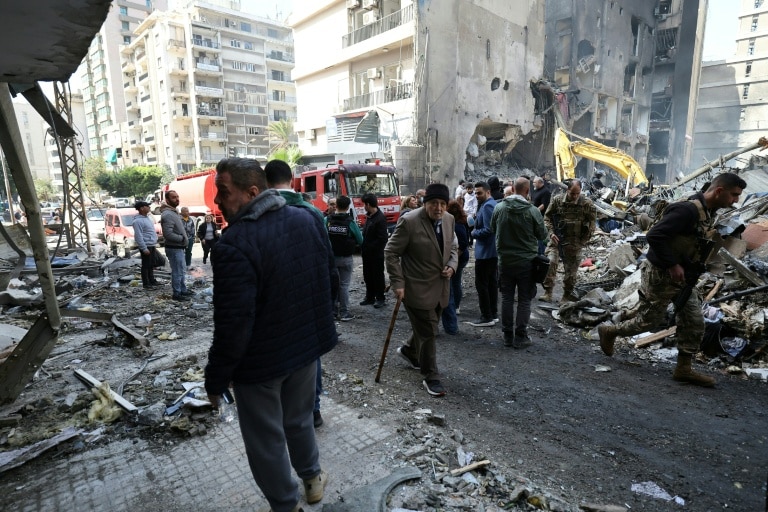
For residents like Qassem Saad, a 49-year-old shop owner who sustained minor injuries in a recent Israeli airstrike that leveled a neighboring Beirut building, exhaustion after generations of war has overridden long-held political enmity. From his damaged store overlooking the rubble, Saad told Agence France-Presse that while Israel remains an adversarial power to most Lebanese, the population can no longer bear the cost of ongoing fighting. “What matters to us is to reach a stage where we can raise our children and live in peace. If there is a comprehensive solution for peace, we are for it, on the condition that no one encroaches on the other,” Saad said. He added that he would fully support the talks if Israel agrees to withdraw from all occupied southern Lebanese territory, repatriate Lebanese prisoners, honor Lebanese sovereign rights, and end all cross-border attacks.
The upcoming Tuesday meeting between Lebanese and Israeli ambassadors in Washington comes as the death toll from the expanding regional conflict continues to climb. Lebanese official data confirms that at least 2,089 people, including 166 children and 88 healthcare workers, have been killed in Israeli strikes since violence spilled over into Lebanon from the Gaza conflict on March 2. A recent nationwide wave of Israeli air strikes last Wednesday alone killed more than 350 people across the country, leaving neighborhoods like Beirut’s working-class Corniche al-Mazraa in ruins.
Many ordinary residents recovering from the destruction share Saad’s hunger for peace. Kamal Ayad, another 49-year-old who was repairing strike damage in Corniche al-Mazraa, echoed calls for an end to decades of conflict. “We are in favor of (negotiations) if they serve Lebanon’s interest, if they will resolve matters, end the war, and let us live in peace,” Ayad said. “We want peace… and we hope Iran won’t obstruct it. We are extremely tired… We have lived through many wars and we want rest.”
But not all Lebanese are convinced that negotiations can deliver a just and lasting peace, especially while bombardment continues. Hezbollah, the Iran-backed militant group that has been the main target of Israeli strikes, has already rejected the talks out of hand. Hezbollah deputy leader Naim Qassem has demanded the meeting be canceled and vowed to fight Israel “until our last breath.” Hundreds of Hezbollah supporters held a protest march in Beirut Saturday to voice their opposition, though the group and its political ally the Amal Movement later called off further demonstrations to preserve domestic civil peace.
Skepticism also runs deep among some civilian residents who doubt Israel’s commitment to any negotiated agreement. Mohammad Al-Khatib, a 57-year-old electronics business owner whose shop sits near the site of the Corniche al-Mazraa airstrike, where soot still blackens building facades and the smell of smoke lingers, argues that talks held under ongoing attack are illegitimate. “You don’t hold negotiations under bombardment, shelling and humiliation. Where is the justice?” he asked. “They (the Israelis) have never stuck to peace in their lives. Their ambition is expansion and control over Lebanon… throughout its history Israel hasn’t been credible.”
Other residents warn that the push for talks risks igniting new internal strife in a country still grappling with the legacy of the 1975-1990 Lebanese Civil War. For decades, negotiating with Israel — which is officially classified as an enemy state under Lebanese law — has been a deeply taboo topic in Lebanese politics. Joe Ghafari, a 61-year-old resident of Beirut’s Ashrafiyeh district, noted that the ultimate fate of any peace deal depends on outside powers: the United States, Israel’s main backer, and Iran, which provides funding and military support to Hezbollah. “There has to be a solution between the US and Iran, otherwise negotiations are useless,” Ghafari said. “The decision isn’t in our hands. If it were, I would support negotiations.” He added that deep divisions within Lebanon over talks with Israel mean any progress on the diplomatic front could spark domestic conflict that the small country can no longer withstand. “How can we make peace with Israel if part (of the population) doesn’t want it?” Ghafari asked. “If these negotiations advance while the other side does not want them, there will of course be internal conflict. And Lebanon cannot bear internal wars.”
The path to talks is already complicated by competing positioning from both sides. Lebanese authorities have emphasized that Beirut’s top priority is securing an immediate bilateral ceasefire between Israel and Hezbollah before formal talks can proceed, but Israel has ruled out that outcome for the moment. Israel insists that Hezbollah must first fully disarm, and says it would rather move straight to formal peace negotiations with the Lebanese state itself. The diplomatic push comes just days after talks between the U.S. and Iran aimed at ending the broader regional war failed to produce a permanent agreement. The two sides agreed to a temporary two-week truce, which Iran and mediator Pakistan say covers cross-border fighting in Lebanon, a claim that both Israel and the U.S. have rejected.
This week’s meeting is not the first attempt at direct dialogue between the two longtime foes. In December 2024, Lebanese and Israeli civilian representatives held the first direct talks between the two sides in decades, as part of a monitoring mechanism for a temporary ceasefire that ended an earlier round of Israel-Hezbollah fighting. The last formal negotiations between the two countries followed Israel’s 1982 invasion of Lebanon, producing an agreement to end hostilities that was later annulled by Lebanese authorities.
-

Interest rates could rise as RBA flags ‘big income shock’ for Australians
Six weeks after the outbreak of new conflict in the Middle East, global oil prices have doubled, triggering stark warnings from top Australian central bank officials that the country could face what many call the “central banker’s nightmare” — a toxic combination of rising inflation and slowing economic activity. The unfolding economic shock is already casting uncertainty over household finances and interest rate trajectories for Australian mortgage holders.\n\nReserve Bank of Australia (RBA) Deputy Governor Andrew Hauser outlined the grave risks during a public fireside chat with the Money Marketeers group in New York, speaking as national consumer sentiment indexes have slumped to all-time historic lows across Australia. While Hauser noted that weak sentiment readings do not always guarantee a corresponding drop in consumer spending, he cautioned that if the surveys accurately reflect underlying trends, Australia is heading for a significant income shock.\n\n“That is the central banker’s nightmare, you know, inflation up, activity down and judging the balance between the two is how we earn our money,” Hauser told the audience. This worst-case outcome, known as stagflation, creates an intractable policy dilemma for central banks: raising interest rates to curb inflation can further drag on already slowing growth, while cutting rates to stimulate activity can make soaring price pressures even worse.\n\nThe disruption to global energy markets from the Middle East conflict has already complicated the RBA’s long-running push to bring inflation back down to its target range of 2 to 3 percent, Hauser added. “I wouldn’t say we have high confidence that we’ve set interest rates at the right level because you never do have that high confidence. But we’re going to have to monitor this new shock pretty carefully,” he said. “I think it is easy to see that upside inflation pressure. More important for us now is to think through what the medium-term impact might be.”\n\nHauser emphasized that inflation is already “too high” in Australia, and the energy price spike spurred by the Gulf conflict is delivering a “big income shock for Australia” that ripples through every sector of the economy. The conflict has disrupted shipping through the Strait of Hormuz, the strategic global oil chokepoint that typically carries roughly one-fifth of the world’s daily oil trade, cutting off key supply routes for global energy markets.\n\nBefore the conflict began six weeks ago, benchmark oil traded at roughly $US56 per barrel; as of this week, prices hover around $US100 per barrel. For Australian motorists, this surge translates directly to higher fuel costs: every $US10 per barrel increase in oil prices adds approximately 10 Australian cents to the price of fuel at the pump, piling extra pressure on already stretched household budgets.\n\nPrior to the outbreak of conflict on February 28, Australia’s annual Consumer Price Index (CPI) fell 0.1 percentage points to 3.7 percent in February, but that figure still remained well above the RBA’s 2-3 percent target range. Already, federal Treasurer Jim Chalmers has updated the government’s economic modelling to account for worsening supply disruptions: early projections showed that prolonged fuel market disruption could push Australian inflation close to 5 percent, and Chalmers recently noted that even that grim forecast “look pretty conservative now.”\n\n“ We’ve asked for some more, challenging circumstances to be modelled,” Chalmers said. The two core variables shaping the government’s scenario planning, he added, are the duration of the conflict and how long it will take for global energy markets and the Australian economy to “get back on track after the hot part of hostilities.”\n\nWhile Hauser stopped short of predicting that Australia will enter a full recession, even with consumption already running at relatively low levels, financial markets are already bracing for further interest rate hikes. The RBA has already raised interest rates twice in 2025, pushing the official cash rate back to 4.1 percent — undoing two of the three rate cuts implemented in 2024, and leaving rates at their highest level since April 2012. As of the latest market pricing, investors see a roughly 65 percent chance of another rate increase when the RBA holds its next policy meeting in May, just one week ahead of the release of the federal government’s annual budget.
-
J Street says Israel should pay out-of-pocket if it wants US weapons
A prominent pro-Israel advocacy organization has upended longstanding U.S. policy orthodoxy around American military support for Israel, with J Street announcing in a new policy document released Monday that it is calling for an immediate end to direct, U.S. taxpayer-funded military assistance to the Jewish state.
For years, J Street positioned itself as a moderate pro-Israel voice that backed unrestricted U.S. provision of free defensive military systems to Israel, including ongoing replenishments for the country’s Iron Dome air defense network. The group’s new framework marks a sharp break from that prior stance: under the updated policy, J Street now argues the U.S. should continue to sell Israel short-range air defense and ballistic missile defense capabilities — but Israel must cover the full cost of these acquisitions with its own public funds.
In justifying the historic policy shift, J Street pointed to Israel’s robust economic and financial standing. “Israel faces real security challenges that require a significant defense investment. With a per capita GDP comparable to leading U.S. allies such as the United Kingdom, France and Japan, as well as an annual defense budget of over $45 billion, it has the financial means to address these challenges,” the group wrote. “It does not require almost $4 billion per year in U.S. financial subsidies to purchase weapons.”
J Street added that continuing the current model of unrestricted direct aid is both fiscally unnecessary and politically damaging, fueling avoidable tensions in U.S. domestic politics and straining bilateral ties between Washington and Jerusalem. Under the existing structure of U.S. military assistance, American taxpayer dollars are allocated to Israel, which is then required to spend those funds on defense equipment manufactured by U.S. weapons contractors.
J Street defines its core mission as organizing pro-Israel, pro-peace, pro-democracy American voters to advance U.S. policies aligned with shared Jewish and democratic values, with the goal of securing Israel’s future as a democratic Jewish homeland. The group’s support base is heavily concentrated within the Democratic Party, whose broader base has seen a rapid shift in attitudes toward Israel amid the ongoing Israel-Hamas war in Gaza.
The policy change comes amid a dramatic reevaluation of U.S. support for Israel across the American political landscape, driven by shifting public opinion following more than 10 months of war in Gaza that has killed more than 72,000 Palestinians, according to local health officials. For J Street specifically, the shift closely tracks the changing trajectory of the Democratic Party, where progressive voters and elected officials have increasingly pushed for cuts to military aid over humanitarian and human rights concerns.
Earlier this month, high-profile progressive Congresswoman Alexandria Ocasio-Cortez of New York — who is widely speculated to be preparing a run for higher national office — announced she would no longer vote for any U.S. military support for Israel, reversing her prior position of backing defensive weapons transfers in a move that aligned with growing demands from her progressive base. Notably, Ocasio-Cortez’s announcement followed a surprise revelation from Israeli Prime Minister Benjamin Netanyahu earlier this year, when he declared that Israel would not seek to renew its current military aid package with the U.S. when it expires in 2028. “I want to taper off the military aid within the next 10 years,” Netanyahu told *The Economist* in January, “all the way down to zero.”
J Street’s new policy mirrors a key provision of Ocasio-Cortez’s stance, requiring that all future arms sales to Israel — which the country pays for with its own funds — must be “fully consistent with American law.” U.S. statute prohibits security assistance to any country whose government engages in a consistent pattern of gross human rights violations, or that blocks or restricts the delivery of U.S.-funded humanitarian aid to civilian populations.
“U.S. arms sales to Israel should be further conditioned to incentivize alignment with American interests and laws — as has been the case with other allies and partners — when their behavior is inconsistent with U.S. interests,” J Street wrote. The group stopped short of cutting all security ties with Israel, however, emphasizing that the U.S.-Israel alliance delivers tangible benefits to American national security.
J Street noted that Washington and Jerusalem broadly share core strategic interests, writing: “The U.S. also benefits meaningfully from the relationship. Intelligence sharing has been critical in campaigns such as the fight against ISIS, while joint operations such as Israel’s 2006 strike on Syria’s secret nuclear facility have advanced shared security goals.” With roughly 500,000 American citizens residing in Israel, the group added that continued, conditional arms sales to Israel remain a legitimate U.S. national security priority.
-
Man charged with attempted murder in attack on home of OpenAI’s Sam Altman
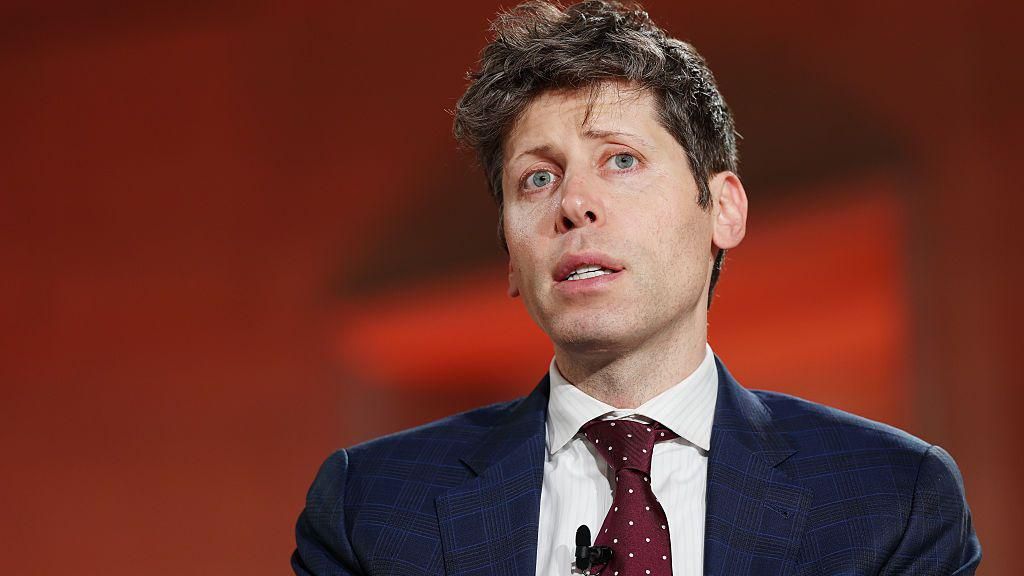
A 20-year-old Texas man has been hit with a sprawling set of state and federal criminal charges following alleged coordinated arson attacks targeting the private San Francisco residence of OpenAI CEO Sam Altman and the artificial intelligence company’s headquarters earlier this month. Daniel Moreno-Gama is scheduled to make his first court appearance for state charges during an arraignment scheduled for Tuesday afternoon, where he will formally hear allegations that include two counts of attempted murder.
Alongside the state-level charges, Moreno-Gama also faces multiple federal felony counts, including unregistered firearm possession and attempted destruction of property through the use of explosive devices. Court documents filed by the U.S. Department of Justice confirm that investigators recovered written materials from the suspect that express extreme opposition to artificial intelligence development, and openly call for violent criminal acts to be carried out against AI industry executives, board members and investors.
Authorities allege the series of violent acts began shortly after 4 a.m. local time Friday, when Moreno-Gama set fire to an exterior security gate at Altman’s residential property before fleeing the scene on foot. Roughly one hour later, the suspect is accused of launching a second attack at OpenAI’s central San Francisco headquarters, the facility where the company develops its industry-defining ChatGPT AI chatbot. According to sworn statements in the federal criminal complaint, on-site security personnel observed the suspect attempting to smash the building’s glass entrance doors with a heavy chair before the attack was interrupted.
When law enforcement officers took Moreno-Gama into custody, they recovered a cache of incendiary devices, a large container of kerosene, and a lighter from his possession, the Department of Justice confirmed. The written materials found with the suspect outline deep fears over existential risks that unregulated AI development could pose to humanity, including one section titled “Some more words on the matter of our impending extinction.” In the documents, Moreno-Gama allegedly wrote that if he was going to urge others to carry out lethal attacks against AI industry figures, he must lead by example to prove his sincerity. The documents also included a compiled list of full names and home addresses for CEOs, board members and major investors at leading AI companies across the country. Surveillance camera footage collected from both attack locations clearly places Moreno-Gama at the scene of both incidents, prosecutors confirmed in their criminal complaint. Crucially, no people were harmed during either alleged attack.
In an official statement following the suspect’s arrest, Acting U.S. Attorney General Todd Blanche emphasized that violence has no place in ideological or policy debate. “Violence cannot be the norm for expressing disagreement, be it with politics or a technology or any other matter,” Blanche said. “These alleged actions – which damaged property and could well have taken lives – will be aggressively prosecuted.”
OpenAI’s official response echoed that stance, noting that healthy, good-faith public debate over responsible AI development is a necessary part of building technology that benefits the public through democratic frameworks. “To ensure society gets AI right, we need to work through the democratic process, and we welcome a good faith debate,” the company said. “But there is no place in our democracy for violence against anyone, regardless of the AI lab they work at or side of the debate they belong to.”
While local and federal authorities initially declined to publicly confirm the target of the residential attack, an OpenAI spokesperson confirmed the information to the BBC last Friday, verifying that the residence targeted belonged to Altman. Speaking at a press conference on Monday announcing the state charges, San Francisco District Attorney Brooke Jenkins expressed relief that no harm came to those targeted. “I’m grateful that Mr Altman, his family, and his employees were uninjured in these attacks and are safe,” Jenkins said.
Earlier on Monday, FBI Director Kash Patel confirmed via a post on X that FBI agents had carried out a raid on a location in Texas connected to the incident, as part of the multi-jurisdiction investigation into the attacks.
The alleged attacks come just one week after Altman was the subject of a high-profile investigative profile in *The New Yorker* that raised public questions over his personal trustworthiness and suitability to lead a company developing transformative, widely debated AI technology. Hours after the attack on his home, Altman posted a comment on social media referencing what he called the “incendiary article about me,” and called for broader de-escalation of public rhetoric around AI: “we should de-escalate the rhetoric and tactics and try to have fewer explosions in fewer homes, figuratively and literally.” Altman later walked back the comment, posting a follow-up on X stating he regretted linking the profile article to the alleged attack, after receiving widespread criticism from social media users for drawing the connection.
The 2022 launch of OpenAI’s ChatGPT sparked a global surge of public interest in generative AI chatbot technology, triggering a tidal wave of billions in venture capital investment across the global AI industry. Despite the massive financial inflow, the rapid pace of unregulated AI development has drawn growing skepticism from experts, activists and observers concerned about safety, ethical and societal risks.