作者: admin

  • Rapper-politician Balendra Shah set to be Nepal’s next prime minister

    Rapper-politician Balendra Shah set to be Nepal’s next prime minister

    In a stunning political upheaval, Nepalese rapper Balendra Shah has decisively unseated former Prime Minister Sharma KP Oli in the country’s general election, marking a dramatic shift in the nation’s political landscape. The Election Commission confirmed Saturday that the 35-year-old musician-turned-politician, popularly known as Balen, secured 68,348 votes against Oli’s 18,734 in the parliamentary constituency race.

    The election, held Thursday amidst heightened tensions, represented a fundamental clash between Nepal’s established political order and a new generation of leaders championing the aspirations of frustrated Gen Z voters. Shah, who resigned as Kathmandu’s mayor in January specifically to challenge Oli, is now poised to assume the prime minister role after his Rastriya Swatantra Party (RSP) secured a general election victory.

    This political transformation follows September 2025’s youth-led protests that toppled the previous government, triggered by Oli’s controversial ban on social media platforms. The demonstrations escalated into widespread criticism of Nepal’s political system and class inequality, particularly targeting ‘nepo babies’—children of established politicians. Tragically, 77 protesters lost their lives during the unrest, with a BBC investigation revealing the police chief had authorized lethal force against unarmed demonstrators.

    Shah, who gained fame through his Nepali hip-hop music including the viral hit ‘Balidan’ about sacrifice, emerged as a vocal supporter of the protest movement, once labeling Oli a ‘terrorist’ who betrayed his country. Despite typically avoiding media attention, Shah told the Financial Times during his campaign that he would become ‘the candidate for all of Nepal.’

    The RSP’s February manifesto directly addresses youth frustrations, promising to create 1.2 million jobs, reduce forced migration, and implement ambitious economic reforms including doubling per capita income from $1,447 to $3,000 within five years. The party also committed to expanding Nepal’s economy to $100 billion GDP while establishing social safety nets including universal healthcare insurance.

    This election marks a potential end to Nepal’s decades-long pattern of coalition governments dominated by three established parties, including two communist factions. With 800,000 first-time voters participating, the results demonstrate the growing political influence of Nepal’s youth population demanding substantive change.

  • A nightclub bombing in Peru injures 33, including minors, authorities say

    A nightclub bombing in Peru injures 33, including minors, authorities say

    A devastating explosion rocked the Dali nightclub in Trujillo, Peru during the early hours of Saturday, leaving 33 individuals wounded—including three teenagers—in the latest episode of violence plaguing the northern coastal region. According to the local Emergency Operations Center, the blast occurred in an area increasingly dominated by criminal enterprises.

    Medical authorities reported at least five victims in critical condition, with many sustaining severe shrapnel wounds and traumatic amputations requiring immediate surgical intervention. Gerardo Florián Gómez, executive director of the Trujillo Health Network, confirmed the injured included one 16-year-old and two 17-year-olds among the casualties.

    Eyewitness Fiorella Mantilla, present during the explosion, described the moment of detonation: “It sounded as if the sound system had suddenly been turned off,” she recounted while being treated for glass fragments embedded in her legs.

    This incident marks the fourth significant explosion in Trujillo within a year, following a pattern of escalating violence. Official statistics reveal that the La Libertad region experienced 286 explosions in 2025 alone, with 136 occurring specifically in Trujillo. The region’s illegal gold mining operations and extortion networks have created a fertile environment for organized crime.

    Peruvian authorities have linked the bombing campaign to sophisticated criminal syndicates, including the notorious Los Pulpos organization, which has expanded its operations beyond Peru’s borders into Chile and neighboring countries. The group allegedly uses explosives as intimidation tactics in their extortion schemes.

    The nightclub explosion occurred less than one month after another blast damaged 25 homes in the same city, and follows earlier attacks on government buildings and residential areas throughout 2025 that collectively injured dozens of civilians.

  • India eyes third T20 World Cup title as New Zealand hopes to spoil party in Sunday’s final

    India eyes third T20 World Cup title as New Zealand hopes to spoil party in Sunday’s final

    AHMEDABAD, India — The world’s largest cricket stadium prepares for an epic showdown as India faces New Zealand in the Twenty20 World Cup final on Sunday, with the host nation pursuing an unprecedented third title while confronting lingering memories of past heartbreaks.

    The Narendra Modi Stadium will witness India’s attempt to exorcise the demons of their 2023 ODI World Cup final defeat to Australia on this very ground. Despite subsequent victories in the 2024 T20 World Cup and 2025 Champions Trophy under Rohit Sharma’s leadership, that loss to Australia continues to resonate within the team’s psyche.

    Indian captain Suryakumar Yadav acknowledged the dual emotions surrounding the final: “There is pressure, I cannot deny that. There is excitement too — playing another World Cup final and that too on home soil.”

    New Zealand approaches the match with their own history of final disappointments, having finished as runners-up in the dramatic 2019 Cricket World Cup against England and falling to Australia in the 2021 T20 World Cup final. Captain Mitchell Santner emphasized the unpredictable nature of T20 cricket: “We have seen throughout this World Cup that a lot of teams are on a similar page and it comes down to little moments in every game that changes the outcome.”

    The road to the final reveals contrasting journeys for both teams. New Zealand, despite a 4-1 series loss to India prior to the tournament with a second-string squad, has demonstrated remarkable growth throughout the competition. Their campaign included a stunning nine-wicket semifinal victory over South Africa in Kolkata, highlighted by Finn Allen’s record-breaking 100 not out from just 33 balls.

    India dominated Group A but suffered a wake-up call against South Africa in their first Super 8 game at Ahmedabad. This prompted strategic changes from coach Gautam Gambhir, including the introduction of Sanju Samson as opener, who has since scored 210 runs in three innings with consecutive half-centuries.

    Key matchups will likely determine the outcome: Finn Allen’s explosive form against India’s bowling attack, which has relied heavily on Jasprit Bumrah on flatter surfaces. New Zealand’s batting lineup, featuring Devon Conway, Rachin Ravindra, Daryl Mitchell, and Glenn Phillips, brings considerable experience with Indian conditions and bowling. India’s batting fortunes rest significantly on Ishan Kishan’s consistent performances, while their middle order has shown variability throughout the tournament.

    The final promises to be a tactical battle between Matt Henry’s pace and Mitchell Santner’s spin against India’s versatile batting lineup, creating a compelling climax to the tournament.

  • Scotland stuns France 50-40 and blows open the Six Nations title race

    Scotland stuns France 50-40 and blows open the Six Nations title race

    EDINBURGH, Scotland — In a spectacular display of attacking rugby, Scotland delivered a seismic shock to the Six Nations championship with a breathtaking 50-40 victory over France at Murrayfield Stadium on Saturday. The match, played before an estimated 15,000 traveling French supporters, completely reshaped the tournament landscape and dashed France’s Grand Slam aspirations.

    Scotland’s fearless approach produced their highest-ever score against France, crossing the try line seven times in a match that featured 13 total tries. The Scottish strategy of consistently opting for attacking plays over kickable penalties proved remarkably effective, with virtually every tactical gamble yielding positive results.

    France entered the match needing only a victory to secure the championship with one round remaining but found themselves systematically dismantled by Scotland’s relentless offense. The visitors appeared uncharacteristically vulnerable, struggling at the gainline and showing defensive frailty in wide channels.

    The victory propelled Scotland into a share of the championship lead with France on points, just two ahead of a resurgent Ireland team that remains in contention. The result sets up a dramatic final round next weekend where Scotland travels to face Ireland in Dublin, while France will host England in Paris knowing exactly what result they need to claim the title.

    Despite building a commanding 47-14 lead, Scotland allowed France to score four late tries, granting the visitors both a try bonus point and valuable points difference that could prove crucial in the final championship calculations. The late French resurgence, while impressive, could not overcome Scotland’s dominant performance through the first 65 minutes of play.

    The match began ominously for France as Scotland scored within five minutes through winger Darcy Graham, who became Scotland’s sole record try-scorer with his 36th international try. France briefly responded with scores from Louis Bielle-Biarrey and Theo Attissogbe, but Scotland’s relentless pressure through tries from Kyle Steyn (2), Pierre Schoeman, Ben White, and Graham’s second ultimately proved decisive.

    France finished strongly with consolation tries from captain Antoine Dupont, Thomas Ramos (2), and Oscar Jegou, but the late flourish couldn’t mask what was ultimately a disappointing performance from the pre-match favorites.

  • 2nd plenary meeting of 4th session of 14th CPPCC National Committee held in Beijing

    2nd plenary meeting of 4th session of 14th CPPCC National Committee held in Beijing

    The Great Hall of the People in Beijing hosted a significant political gathering on March 7, 2026, as the 14th National Committee of the Chinese People’s Political Consultative Conference (CPPCC) conducted its second plenary meeting during its fourth session. This high-level assembly brought together political advisors from across China to deliberate on national development strategies and policy recommendations.

    The CPPCC, serving as China’s paramount political advisory body, plays a crucial role in the country’s governance structure by providing consultation and oversight. The meeting represented a platform for multi-party cooperation and political consultation under the leadership of the Communist Party of China.

    Delegates engaged in comprehensive discussions regarding China’s socioeconomic development trajectory, focusing on implementation strategies for national rejuvenation and modernization goals. The proceedings emphasized the importance of collective wisdom in addressing contemporary challenges and opportunities facing the nation.

    The plenary session demonstrated China’s distinctive political architecture, where diverse political parties and personages without party affiliation collaborate within the established framework. This mechanism ensures broad participation in political processes while maintaining stability and continuity in governance.

    Observers noted the meeting’s significance in refining policy recommendations that would subsequently inform government decision-making processes. The outcomes of these deliberations are expected to contribute to China’s ongoing development initiatives and international engagement strategies.

  • Innovation drives China’s space industry success

    Innovation drives China’s space industry success

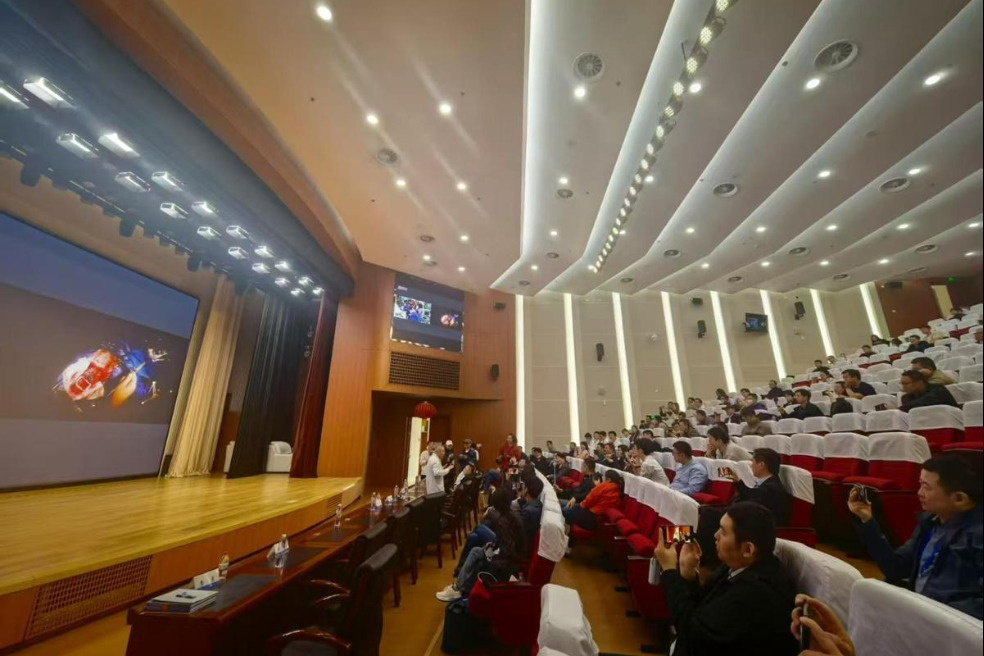
    BEIJING – China’s remarkable ascent in the global space arena is being fueled by a strategic emphasis on technological self-reliance and groundbreaking innovation, according to senior aerospace engineer Liu Zheng. The comments were delivered on March 7, 2026, at the Great Hall of the People ahead of a plenary meeting of the Chinese People’s Political Consultative Conference (CPPCC) National Committee.

    Liu, a member of the country’s top political advisory body and a senior engineer at the state-owned China Aerospace Science and Technology Corp, articulated that the nation’s space sector has undergone a fundamental transformation—evolving from a position of following international leaders to pioneering uncharted territories. This shift necessitates an unwavering commitment to independent research and development to maintain competitive advantage in the new space era.

    Detailing recent achievements, Liu highlighted a landmark collaboration between his corporation, domestic universities, and machine tool manufacturers. This consortium successfully engineered China’s first specialized compound processing machine tool for manufacturing rocket barrel sections. Crucially, the equipment operates on a domestically developed numerical control system, which has resulted in a twofold increase in both processing efficiency and precision. This breakthrough ensures that core technologies remain under Chinese control.

    Looking to the future, Liu stated that his work will continue to focus on mastering core technologies for next-generation systems, particularly reusable space vehicles and advanced intelligent manufacturing processes. He pledged to uphold the spirit of innovation, contributing directly to national strategic goals of establishing China as a leading space power.

  • Culture minister emphasizes importance of high-quality cultural works

    Culture minister emphasizes importance of high-quality cultural works

    China’s Minister of Culture and Tourism Sun Yeli has articulated a comprehensive strategy to elevate the nation’s cultural landscape, emphasizing the creation of premium cultural works that meet evolving public expectations. Speaking at a press conference during the Fourth Session of the 14th National People’s Congress on March 7, 2026, Minister Sun outlined policies aimed at strengthening cultural industry systems and market mechanisms.

    The announcement comes against the backdrop of impressive sector performance, with official statistics revealing that cultural enterprises above designated size generated approximately 15 trillion yuan ($2.17 trillion) in business revenue during 2025, representing a 7.4% year-on-year increase. These enterprises simultaneously achieved total profits of about 1.4 trillion yuan, marking a 6.5% annual growth.

    Minister Sun highlighted the correlation between rising living standards and heightened public expectations for cultural products. “With improved living conditions and aesthetic appreciation, people naturally demand higher quality cultural offerings,” he stated, underscoring the need for cultural policies that respond to these evolving preferences.

    The minister detailed plans to implement new-era art creation initiatives and guide cultural workers toward producing refined works with enhanced original creativity. He emphasized the importance of developing cultural products that resonate with contemporary audiences through multiple sensory experiences—works “that the general public would love to read, watch and listen to.”

    Beyond content creation, Sun addressed infrastructure needs, advocating for improved quality and accessibility of public cultural services. His vision includes optimizing traditional cultural venues while developing innovative cultural spaces that bring premium resources directly to grassroots communities, ensuring equitable access for both urban and rural residents.

    Notably, the minister recognized the transformative impact of digital technologies, particularly artificial intelligence, which has dramatically lowered barriers to public participation in cultural creation. “The general public is no longer satisfied with passive consumption but increasingly eager to actively participate,” Sun observed, pledging to develop new literary and artistic forms that provide platforms for public creativity and talent expression.

  • Russian strikes kill 12 across Ukraine

    Russian strikes kill 12 across Ukraine

    A devastating overnight assault by Russian forces has left a trail of destruction across Ukraine, resulting in at least 12 fatalities and injuring over a dozen civilians, including children. The coordinated offensive, which spanned from Friday into Saturday, involved a massive deployment of 29 missiles and 480 drones targeting both civilian and critical infrastructure sites nationwide.

    The northeastern city of Kharkiv suffered the most catastrophic damage when a ballistic missile completely demolished a five-story residential building, claiming nine lives according to latest reports. Emergency crews worked tirelessly through the night searching for survivors trapped beneath the rubble. Among the confirmed victims were two women and their children, adding to the tragic human toll.

    Ukrainian President Volodymyr Zelensky condemned the attacks as part of Russia’s continued strategy to destroy residential areas and critical infrastructure. In response to the escalating violence, Zelensky held urgent discussions with French President Emmanuel Macron, emphasizing the critical need for implementing the €90 billion EU aid package and additional sanctions against Russia, currently hindered by Hungarian opposition.

    The Russian defense ministry maintained that the operation constituted a ‘massive high-precision strike’ exclusively against military targets, continuing their longstanding denial of targeting civilian facilities. Meanwhile, Russian-installed authorities in occupied Kherson reported one fatality and four injuries from Ukrainian drone strikes.

    The aerial bombardment triggered nationwide air raid alerts and prompted neighboring Poland to scramble military aircraft to protect its airspace near the Ukrainian border. Separate incidents in Dnipropetrovsk and Sumy regions claimed additional lives, including a 24-year-old man killed when his vehicle was struck by a Russian drone.

    This latest exchange of hostilities occurs against the backdrop of stalled peace negotiations and recent prisoner exchanges, with Zelensky expressing concern that prolonged Middle East conflicts could further delay crucial deliveries of US-made PAC-3 air defense missiles. The Ukrainian leader has proposed a strategic exchange of drone interceptors for missiles and offered to deploy Ukrainian drone specialists to assist US allies in the Gulf region against Iranian drone threats.

  • Beyond 10t yuan: How Shandong aims to power ahead

    Beyond 10t yuan: How Shandong aims to power ahead

    Shandong Province has achieved a monumental economic milestone by surpassing 10 trillion yuan ($145 billion) in GDP for 2025, establishing itself as Northern China’s foremost economic powerhouse and the nation’s third provincial-level economy to join the elite ’10-trillion-yuan club.’ This achievement places Shandong alongside Guangdong and Jiangsu as China’s leading regional economies.

    As the province enters 2026, government representatives and political advisors are convening during the annual Two Sessions to deliberate on Shandong’s next phase of development. The critical question facing policymakers is how to sustain this impressive growth momentum while addressing structural challenges and identifying new growth drivers.

    The province’s economic transformation has been fueled by strategic investments in advanced manufacturing, technological innovation, and green energy initiatives. Shandong’s coastal location has facilitated robust international trade, while its industrial heartland has undergone significant modernization.

    Key discussion points at the political gatherings include industrial upgrading strategies, innovation ecosystem development, regional coordination mechanisms, and sustainable growth policies. The outcomes of these deliberations will shape Shandong’s economic trajectory and potentially offer a development blueprint for other northern provinces.

    This economic milestone represents not just numerical achievement but symbolizes the shifting economic balance within China, with northern regions demonstrating increased competitiveness in the national economic landscape.

  • CPPCC members attend group interview before 2nd plenary meeting

    CPPCC members attend group interview before 2nd plenary meeting

    Beijing, March 7, 2026 – Members of the Chinese People’s Political Consultative Conference (CPPCC) convened for a significant group interview session preceding the second plenary meeting of their fourth annual session. The event, held at the iconic Great Hall of the People, served as a platform for political advisors to articulate their perspectives on national development priorities.

    The gathering represents a crucial component of China’s political calendar, bringing together representatives from diverse sectors including academia, business, culture, and science. These advisors play a vital role in China’s unique political framework by providing specialized insights and policy recommendations to legislative and executive bodies.

    This year’s discussions are particularly noteworthy as they address contemporary challenges facing China’s development trajectory. The pre-meeting interview format allows for transparent communication of the CPPCC’s advisory function, demonstrating the participatory nature of China’s political consultation process.

    The proceedings reflect the ongoing evolution of the CPPCC’s role in facilitating multi-channel dialogue between the government and various societal sectors. As the session progresses, observers anticipate these consultations will contribute to policy formulation across numerous domains including economic development, technological innovation, and social welfare enhancement.