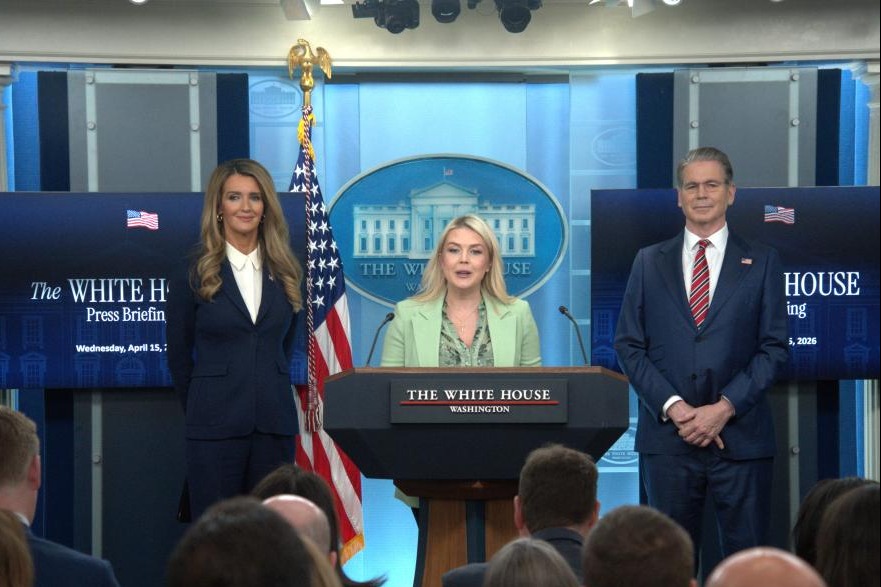
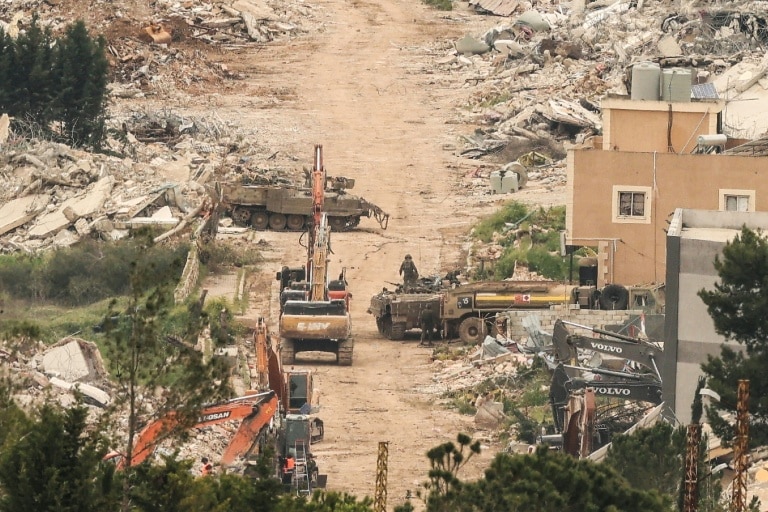
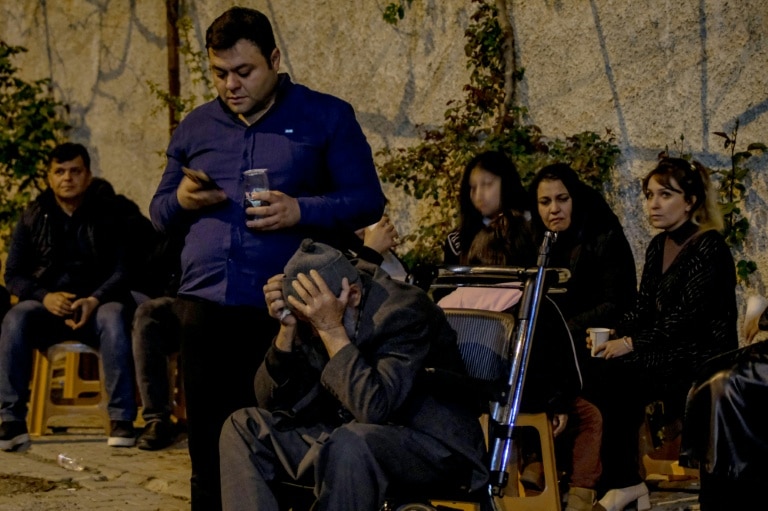
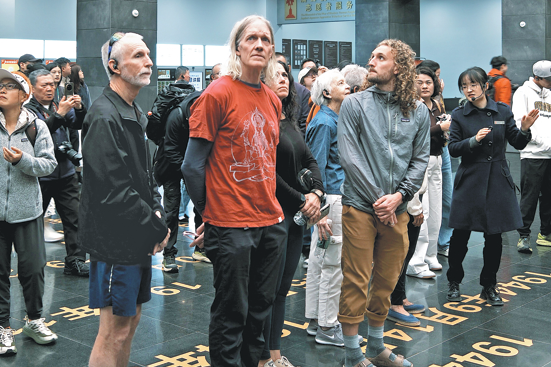
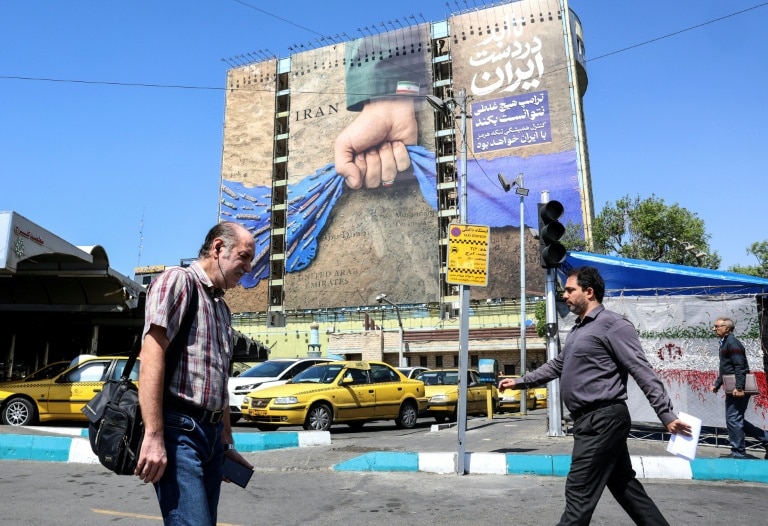
President Donald Trump has projected a swift resolution to escalating tensions with Iran, asserting that military conflict would conclude ‘very soon’ while simultaneously ruling out immediate escalation this week. During a White House press briefing, the President characterized recent U.S. military operations as a ‘tremendous success’ in achieving strategic objectives. The remarks came amid heightened global concerns about potential broader conflict in the Middle East following targeted strikes against Iranian military figures. Trump emphasized his administration’s continued focus on preventing Tehran from developing nuclear weapons capability, signaling this objective remains a cornerstone of U.S. foreign policy. The administration’s comments suggest a carefully calibrated approach combining military demonstration with diplomatic channels, though specific timetables for de-escalation remain undisclosed. Regional analysts note the statements appear designed to simultaneously project strength to international adversaries while reassuring domestic audiences about the limited scope of military engagement. The administration’s dual messaging of imminent resolution coupled with firm non-proliferation demands creates a complex diplomatic landscape for European allies seeking to mediate tensions.
作者: admin
-

As pope seeks dialogue and diplomacy, 2 US cardinals reject US-Israeli war in Iran
In a significant development within the Catholic Church’s response to the escalating Middle East conflict, Pope Leo XIV has intensified his calls for an immediate cessation of hostilities between U.S.-Israel forces and Iran. While maintaining the Vatican’s traditional diplomatic neutrality, the Pontiff expressed “deep sorrow” over the tragic death of Maronite Catholic priest Reverend Pierre El Raii, who was killed while attempting to rescue a wounded parishioner in southern Lebanon.
The Pope’s measured appeals for dialogue and diplomacy, delivered through spokesman Matteo Bruni, contrasted sharply with the forceful condemnations issued by prominent American cardinals. Cardinal Robert McElroy of Washington delivered a comprehensive moral critique, asserting that the military operation failed to meet essential criteria for a just war under Catholic teaching. He emphasized the conflict’s potential to trigger regional collapse, civil war in Lebanon, global economic disruption, and immense casualties on all sides.
Chicago Cardinal Blase Cupich launched a blistering attack on the White House’s portrayal of the conflict, condemning the administration’s social media strategy that blended actual combat footage with action movie clips. “A real war with real death and real suffering being treated like it’s a video game—it’s sickening,” Cupich stated, accusing the government of transforming human tragedy into trivial entertainment content.
The criticism extended beyond American borders, with Filipino Cardinal Pablo Virgilio David warning about the dangerous detachment of modern warfare from human reality. He described military operators in distant command centers making life-and-death decisions through cursor movements and clicks as if engaged in computer gameplay.
The Vatican’s diplomatic apparatus reinforced these concerns through Cardinal Pietro Parolin, who rejected the Trump administration’s preventive war justification, warning that recognizing such rights without international legal frameworks could set the entire world ablaze. This positioning creates a complex diplomatic challenge for the Vatican’s newly appointed ambassador to the United States, Archbishop Gabriele Caccia, who must navigate relations between the Holy See, U.S. bishops, and the White House amid growing tensions.
-

Iran’s Jews feeling fear and heartbreak as US-Israeli strikes rain down
Amidst escalating tensions between Iran and Israel, the nation’s dwindling Jewish population finds itself caught in a complex web of identity, politics, and survival. With fewer than 10,000 Jews remaining in the country of 90 million, community members express diverse perspectives on the conflict while navigating daily security concerns.
Yosef, an Iranian Jewish historian, draws a sharp distinction between his religious identity and political Zionism. “Zionism has damaged Israel’s reputation globally,” he asserts, noting the absence of influential left-wing movements in contemporary Israeli politics. Like many in his community, Yosef shelters from aerial strikes originating from Israel—a nation he’s expected to feel affinity toward but criticizes for its role in regional destabilization.
The ongoing warfare presents profound personal dilemmas for Iranian Jews who watch conflicts between their homeland and the Jewish state. Sara, a 46-year-old businesswoman from Shiraz, directs her anger toward Israeli Prime Minister Benjamin Netanyahu, whom she describes as a “charlatan” using military escalation to divert attention from domestic corruption charges. Despite her Jewish faith, she maintains: “I cannot see the country where I was born and raised as my enemy.”
Historical context reveals a dramatic demographic shift: Iran’s Jewish population has declined from approximately 70,000-100,000 before the 1979 Islamic Revolution to just over 9,000 according to the 2016 census. This transformation occurred alongside the severing of diplomatic relations between Tehran and Jerusalem.
Daniel, a 52-year-old Tehran jeweler, expresses dual sorrow witnessing missiles strike Israeli cities while Israeli and American warplanes fly over his own home. “The explosions keep us awake at night,” he confesses, reflecting the anxiety many feel about speaking openly during wartime.
Contrary to expectations, some community members report improved attitudes toward Jews within Iran. Arash, a 71-year-old restaurant owner, observes: “The level of anger toward the Islamic Republic is so high that many Iranians today see Jews as friends.” However, he quickly affirms his primary identity as Iranian and laments governmental policies that have brought the country to its current situation.
As the conflict enters its second week with strikes targeting Tehran’s oil infrastructure, the community’s deepest fear extends beyond immediate violence to concerns about Iran’s future. Yosef articulates this apprehension: “What I fear most is that the final result of this war will destroy the country I love,” capturing the profound tension between national loyalty and religious identity that defines the experience of Iran’s Jewish minority.
-

UAE tycoon rules out Abu Dhabi joining Iran war in scathing attack on US
In a remarkable public denouncement, prominent Emirati billionaire Khalaf al-Habtoor has explicitly rejected American appeals for Gulf Cooperation Council (GCC) nations to join a military campaign against Iran. Through a sharply worded statement on social media platform X, the Dubai-based magnate accused the United States of elevating Israel’s security interests above both American regional allies and its own citizens.
The criticism came in direct response to recent statements by US Senator Lindsey Graham, who had publicly urged GCC countries to align militarily with the US and Israel against Iran. Habtoor, whose business conglomerate maintains close ties to UAE ruling circles, delivered an unusually frank assessment of regional geopolitics despite the UAE’s typically restrained diplomatic discourse.
“We recognize precisely why we face regional threats and exactly which power precipitated this dangerous escalation without consulting those it labels ‘allies’,” Habtoor asserted. While acknowledging Iran’s destabilizing regional influence and expressing Abu Dhabi’s distrust of Tehran, the billionaire condemned what he characterized as a “dirty game” where global powers pursue their interests at the Gulf’s expense.
The businessman emphatically stated the UAE would not become embroiled in conflict to serve external interests, declaring: “We refuse to sacrifice our sons in an avoidable conflict that should be resolved through diplomatic channels.” He contrasted this stance with American leadership, noting pointedly that if US politicians wished to “risk American lives for Israel’s interests, that represents their choice.”
The statement gained particular significance following Israeli media reports—subsequently denied by Emirati officials—claiming UAE involvement in a strike on an Iranian desalination facility. The UAE foreign ministry clarified that while operating in a “defensive posture” against Iranian threats, the nation “does not seek escalation or conflict entanglement.”
Habtoor further challenged Senator Graham’s assertion that Arab nations require American protection, retorting: “We need no protection—only that you keep your hands off our region.” He characterized US weapons sales to the UAE as commercial transactions rather than strategic favors, noting Abu Dhabi’s substantial investments in its own security apparatus.
The billionaire referenced Graham’s comments on Fox News regarding oil reserves, suggesting this revealed America’s true motivation: “Only then does the picture become clear. Only then do we understand why they want this war.” He concluded by accusing Graham of defending Israeli interests more vigorously than American ones, suggesting the senator sounded like “a member of the Israeli Knesset.”
The critique carries exceptional weight given Habtoor’s previous support for Trump-brokered normalization agreements with Israel. His Al Habtoor Group was among the first Emirati entities to pursue Israeli partnerships following the Abraham Accords, making his condemnation of US policy particularly noteworthy.
-

High-profile real estate brothers convicted in sex trafficking case
In a landmark verdict that has sent shockwaves through New York’s elite social circles, three brothers from a prominent real estate family have been found guilty of operating a sophisticated sex trafficking ring spanning nearly two decades. Tal Alexander, 39, Oren Alexander, 38, and Alon Alexander, 38, were convicted on all ten criminal counts including sex trafficking and sexual exploitation of a minor after a five-week trial that exposed their predatory exploitation of wealth and privilege.
The brothers, who built their reputation selling luxury properties to celebrities including Kim Kardashian and Kanye West through Douglas Elliman before founding their own firm Official, systematically used their industry connections to target vulnerable women. Prosecutors demonstrated how they lured victims to exclusive parties and high-end properties with promises of career opportunities and lavish gifts, only to administer drugs without consent and commit brutal sexual assaults.
During emotional courtroom testimony, eleven women—several of whom were minors at the time of their assaults—detailed a consistent pattern of manipulation and violence. Evidence presented included surveillance footage from Oren Alexander’s Manhattan apartment showing the assault of a drugged 17-year-old in 2009. The prosecution characterized the brothers’ actions as demonstrating ‘callousness’ and ‘a perverse sense of pride,’ noting they physically restrained victims despite explicit pleas to stop.
The defense team, which included Marc Agnifilo who previously represented Sean ‘Diddy’ Combs in similar proceedings, argued the interactions were consensual and that the brothers were merely ‘womanizers.’ These claims were systematically dismantled through forensic evidence and victim testimony describing covertly drugged beverages and coordinated assaults.
In a related development, reality television personality Tracy Tutor filed a separate civil lawsuit alleging Oren Alexander assaulted her in 2024, though his legal representatives dismissed this as a media-seeking fabrication. Sentencing is pending for the brothers, who face substantial prison terms for their crimes that prosecutors described as ‘committed without remorse’ across multiple jurisdictions.
-

Renowned Palestinian historian Walid Khalidi dies aged 100
Walid Khalidi, the preeminent Palestinian historian whose seminal scholarship documented the displacement and historical narrative of the Palestinian people, has passed away at the age of 100. His death was confirmed by the Institute for Palestine Studies (IPS), the Beirut-based research center he co-founded in 1963, which announced he died on Sunday in Cambridge, Massachusetts.
Khalidi’s life’s work was dedicated to meticulously chronicling Palestinian society before and after the Nakba—the ‘catastrophe’ of 1948 that saw the violent displacement of hundreds of thousands of Palestinians to facilitate the creation of the state of Israel. He earned the moniker ‘the historian of the Palestinian cause’ through his rigorous academic contributions, which included translating and analyzing the diaries of key Israeli figures like first Prime Minister David Ben-Gurion and Foreign Minister Moshe Sharett.
Under his stewardship, the IPS became an indispensable resource, producing critical studies and translations between Hebrew, Arabic, and English. Among its most significant publications was a detailed examination of the Haganah, the Zionist paramilitary force central to the 1948 events. Khalidi’s research was instrumental in bringing to light previously concealed strategic plans, such as Plan Dalet, which outlined the systematic occupation and depopulation of Palestinian villages.
His encyclopedic collections, including the photographic archive ‘Before Their Diaspora’ and the comprehensive volume ‘All That Remains,’ serve as rare visual and historical records of a vanished pre-1948 Palestine. Born into an academic family in Jerusalem in 1925, Khalidi’s own career was distinguished. He taught at the University of Oxford until resigning in protest over the 1956 Suez Crisis, later becoming a professor at the American University of Beirut until 1982, and finally a research fellow at Harvard University.
Blending scholarship with political advocacy, Khalidi maintained associations with several Palestinian political movements and formally represented Palestinian interests on the international stage, including in the Arab League and at the 1991 Middle East peace talks in Washington. A lifelong proponent of a two-state solution, he articulated it in a 1988 Foreign Affairs article as the only viable framework for a historical compromise in the enduring conflict.
-

ASX expected to rebound after Trump flagged Iran war ‘complete, pretty much’
Australian financial markets are positioned for a substantial recovery on Tuesday following a turbulent trading session that erased approximately $90 billion from market value. This dramatic reversal comes in response to former US President Donald Trump’s characterization of the Iran conflict as ‘pretty much’ complete during a CBS News interview.
Market indicators suggest a robust comeback, with ASX 200 futures surging by 184 points (2.2 percent) ahead of the trading day opening. This upward trajectory could potentially restore between $50.6 billion and $61.6 billion to Australia’s total market capitalization within a single session.
The previous trading day witnessed significant volatility, with the benchmark ASX 200 experiencing its most substantial single-day decline since April 2023, plummeting 252 points (2.85 percent) to close at 8599. During the most severe trading period, the market faced a 4.4 percent downturn with nearly $130 billion in value evaporating before a partial afternoon recovery limited the total losses to approximately $90 billion.
Global markets mirrored this pattern of instability. The S&P 500 index demonstrated considerable fluctuations, initially dropping 1.5 percent before rallying to finish with a 0.8 percent gain. Commodity markets experienced even more extreme volatility, with oil prices briefly surging to nearly $120 per barrel—the highest level since 2022—before retreating to approximately $90 per barrel.
This market turbulence originated from heightened geopolitical tensions following joint US-Israeli military strikes against Iranian targets on February 28, which prompted immediate retaliation from the Islamic Republic. Trump’s subsequent comments regarding the conflict’s status have now catalyzed the anticipated market rebound.
-

Why the price of oil matters more than you might think
The escalating military conflict between the United States, Israel, and Iran has triggered the most significant global energy supply disruption in modern history, creating widespread economic repercussions across international markets. With approximately 20% of the world’s crude oil shipments obstructed at the strategically vital Strait of Hormuz, benchmark oil prices briefly surged toward $120 per barrel before stabilizing around $85—still substantially elevated from pre-conflict levels.
The energy crisis extends beyond petroleum markets. Qatar’s state energy corporation has suspended natural gas production, removing roughly one-fifth of global LNG supplies from circulation. This compounded supply shock has particularly impacted energy-import-dependent regions including Asia and Europe, where analysts from JP Morgan anticipate ‘visible shortages’ within days.
Supply chain disruptions have rippled across multiple sectors. Iraq’s oil production has plummeted by over 60%, with Kuwait and the United Arab Emirates implementing substantial output reductions. The crisis has exposed the limited capacity of non-OPEC producers including the United States, Brazil, and Norway to compensate for lost production, despite some pipeline rerouting efforts.
The economic consequences extend beyond energy markets. Critical commodities including aluminum, sulfur, and fertilizer components face mounting supply constraints as Middle Eastern exports decline. American agricultural operations confront particularly severe challenges during peak planting season, with fertilizer import disruptions threatening crop yields and farm profitability.
Financial markets have reflected these concerns through significant declines in Asian and European indices, while the potential for sustained price inflation threatens to undermine consumer spending and economic growth globally. Analysts warn that prolonged conflict could drive oil prices beyond $150 per barrel, potentially exceeding peaks witnessed during the Ukraine-Russia conflict.
The crisis has underscored the world’s continued dependence on Middle Eastern energy exports and highlighted vulnerabilities in global supply chains. With limited effectiveness of strategic petroleum reserve releases and no immediate diplomatic resolution in sight, economists project that sustained elevated energy prices could reduce global economic growth by approximately 0.4 percentage points even under current conditions.
-

US ‘rock star’ Paralympic skier wins silver for his late twin brother
CORTINA D’AMPEZZO, Italy — In an emotionally charged performance at the Milan Cortina Paralympics, American Para alpine skier Patrick Halgren secured a silver medal while paying powerful tribute to his deceased twin brother, Lucas Sven Halgren, whom he credits for his triumphant return to competitive skiing.
Following his super-G standing event on Monday, the self-described ‘rock star’ of the Games expressed his profound connection to his brother, who died in a 2016 motorcycle accident in New Zealand. ‘He made this happen for real. He is the ski god and he has blessed me with speed today,’ Halgren stated emotionally at the finish line.
The 33-year-old athlete’s journey to the Paralympic podium represents a remarkable story of resilience and transformation. Three years before his brother’s fatal accident, Halgren nearly died in his own motorcycle crash, resulting in the amputation of most of his left leg above the knee. He spent a month in a coma and technically died four times during his medical emergency.
Halgren has adopted ‘SvendIt’ as his personal mantra—a play on ‘send-it’ that simultaneously honors his brother who went by Sven. Blue-and-yellow stickers bearing the phrase have appeared throughout the Cortina d’Ampezzo venue.
‘He’s the reason I’m here. I’m just a vessel to cram love and combat hate down your throats,’ Halgren told reporters. ‘He inspired me to live life, but life is fragile. You can die. It’s all for him. It’s for my family. It’s for the people that have struggled.’
The outspoken American celebrated before his parents, Peter and Kathy, who had previously traveled to New Zealand to retrieve their deceased son’s body. Halgren noted the surreal nature of their experience: ‘They went to Tijuana, Mexico, for their honeymoon 50 years ago. They picked up their dead kid in New Zealand, and they’ve watched me win the Paralympics at the most beautiful ski valley in the world.’
Known for his distinctive long braids dyed red, white and blue, Halgren has embraced a showman personality at the Games. During the podium ceremony, he performed an air guitar solo using his crutch, quipping that it was just ‘another Monday’ for him.
Despite his silver medal finish behind Switzerland’s Robin Cuche, Halgren emphasized that medals hold little meaning compared to the support he receives. ‘The love from all the people supporting me is what means anything to me,’ he reflected. ‘I can literally feel all the people who have ever given me well wishes and ‘Thanks’ and ‘Good lucks.’ I can feel them loving me and they’re the reason I won.’
Halgren’s philosophy centers on embracing vulnerability and accepting failure: ‘It’s about being vulnerable in this life. It’s about trying things and failing. It’s OK to be embarrassed. It’s OK to look weird.’
When questioned about future ambitions, the Paralympian declared his intention to ‘dominate the Earth in every category with one leg’ before concluding with his characteristic humor: ‘My horse is thirsty, I’m out.’
-

Video shows suspect in foiled attack near Mamdani’s NYC residence
Newly released surveillance footage has identified an individual allegedly involved in a foiled violent incident that unfolded near New York City Mayor Eric Adams’ official residence in Gracie Mansion this past Saturday. The security breach attempt occurred during heightened tensions between opposing demonstration groups that had assembled outside the property.
The confrontation began when a small contingent of anti-Islam demonstrators gathered outside the mayoral residence, quickly drawing a substantially larger group of counter-protesters. Law enforcement authorities reported that the situation escalated into physical altercations between the two factions before the attempted attack was intercepted by security personnel.
NYPD officials have confirmed they are investigating the incident as a potential targeted security threat, though specific details about the nature of the foiled attack remain under investigation. The security video, which has been circulated among law enforcement agencies, shows the suspect maneuvering through the protest crowds before being apprehended by police details stationed around the perimeter.
Mayor Adams, who was reportedly inside the residence during the incident, has been briefed on the security developments. City hall representatives emphasized that the mayor’s security protocol was never compromised and that the quick response demonstrated the effectiveness of protective measures in place for public officials.
The NYPD’s Intelligence Division and Counterterrorism Bureau have joined the investigation, examining whether the suspect had connections to either protest group or acted independently. Community leaders from both Muslim and activist organizations have condemned the violence and called for peaceful dialogue amid rising political tensions in the city.