作者: admin

  • End Iran war before Trump-Xi summit or encourage a hedgehog world

    End Iran war before Trump-Xi summit or encourage a hedgehog world

    The geopolitical landscape surrounding Iran remains in a state of suspended animation as Tehran appears to be delaying substantive concessions to US demands until after the critical March 31 summit between Presidents Donald Trump and Xi Jinping. This strategic pause allows Iranian leadership to assess the summit’s outcomes and potentially secure China’s backing—a calculated risk that may present more favorable prospects than immediate capitulation.

    The upcoming presidential meeting carries significant implications for how China will perceive American power projection—whether strengthened or diminished—which in turn will influence Beijing’s positioning toward Iran. Multiple variables could sway China’s assessment, including potential market volatility, oil price fluctuations, Russian intervention, wavering Gulf state commitments, and shifting Israeli and American strategic confidence.

    Should events unfold along this trajectory, Iranian hardliners could potentially regain political dominance within a month, regardless of the summit’s results. This scenario might prompt heightened resistance and potentially trigger miscalculations from a frustrated Trump administration. The escalating situation underscores the urgency for the United States to achieve a swift resolution—declaring victory within one to two weeks while allowing the Iranian situation to evolve organically.

    Iran currently faces a significant power vacuum, with its defensive and nuclear capabilities potentially degradable within a brief timeframe. A strategic pause by the United States could alter the conflict’s trajectory substantially. While theoretical control might be maintained for 30-90 days, the overall situation remains highly volatile, with Iran representing a fundamentally different challenge than previous conflicts in Gaza or Ukraine.

    The temptation of Iran’s complete surrender must be balanced against realistic timelines and costs, particularly considering the wild cards represented by Russian and Chinese involvement. A victory achieved solely through military force without political resolution risks reinforcing dangerous international perceptions that raw power represents the only solution to geopolitical problems.

    This approach potentially catalyzes a multipolar nuclear arms race, with North Korea’s paranoid realpolitik becoming the diplomatic standard rather than liberal global norms. The emerging multipolar world order has abandoned collective governance in favor of narrowly defined national interests, creating significant gaps in global stability management.

    The conflict’s prolongation risks transforming Iran into a failed state, creating a geopolitical void spanning Iraq, Iran, and Afghanistan that could destabilize Central Asia, Pakistan, Turkey, the Caucasus, and the Gulf region. This disruption of post-World War II international rules establishes a paradigm where “the law of force has replaced the force of law,” according to Cardinal Pietro Parolin’s acute observation.

    China approaches this complex situation with characteristically cautious strategy, unlike the expansionist Soviet model. Beijing’s hedgehog doctrine—extending quills that remain connected to the core but can be severed if problematic—reflects a pragmatic focus on systemic survival rather than ideological export. China maintains significant advantages in industrial capacity, rare earth dominance, and manufacturing efficiency, potentially positioning it for medium-to-long-term competition with the United States.

    However, Beijing may be miscalculating the strategic landscape. America’s efforts to reduce industrial reliance on China and widen technological gaps mean time may not necessarily favor China. Even with US attention diverted to the Middle East, Japan and regional allies are preparing coordinated resistance against Chinese expansion. Paradoxically, a weaker America might complicate rather than simplify China’s regional position.

    If global chaos intensifies, the United States might retreat into hedgehog isolationism, potentially triggering opposition that requires escalating force to contain. This could transform the world into a field of defensive hedgehogs where even the most powerful nation might ultimately falter.

  • Trump says he’s ‘nowhere near’ ordering US ground troops into Iran

    Trump says he’s ‘nowhere near’ ordering US ground troops into Iran

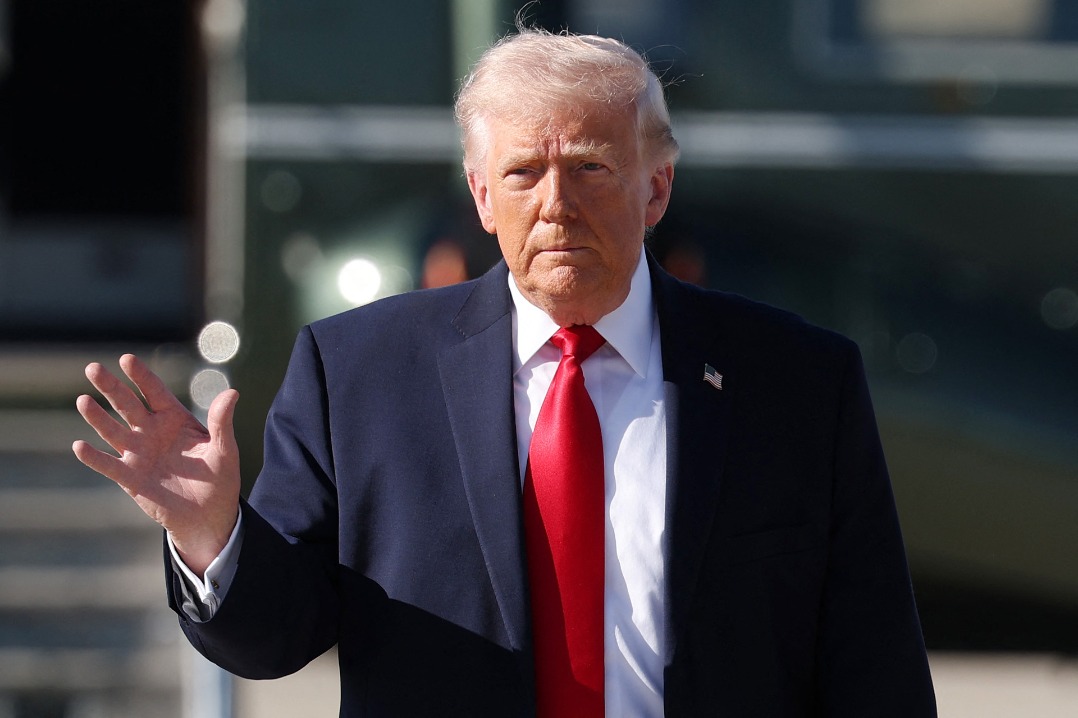
    President Donald Trump has explicitly stated that the United States is not considering the deployment of ground troops to Iran to secure nuclear facilities in Isfahan. In a recent phone interview with the New York Post on Monday, Trump emphasized that such military action remains far from imminent, declaring, “We haven’t made any decision on that. We’re nowhere near it.”

    The President’s comments come amid escalating tensions following joint U.S.-Israel airstrikes on February 28th that targeted Tehran and multiple Iranian cities. These operations resulted in the death of Iranian Supreme Leader Ayatollah Ali Khamenei, along with dozens of senior officials, military commanders, and hundreds of civilians.

    Trump also expressed strong disapproval of Mojtaba Khamenei’s ascension as Iran’s new supreme leader, indicating his dissatisfaction with the leadership transition. During a separate interview with ABC News on Sunday, the President made controversial remarks suggesting the new leader would require American approval to maintain power, stating, “He’s going to have to get approval from us. If he doesn’t get approval from us he’s not going to last long.”

    The situation remains volatile as the international community monitors nuclear security concerns in the region and the political vacuum created by the recent targeted strikes. Smoke rising from explosion sites in Tehran, documented in recent photographs, underscores the ongoing instability in the region following the military operations.

  • How worried are Americans about rising petrol prices?

    How worried are Americans about rising petrol prices?

    Escalating tensions in the Middle East are creating tangible economic consequences for American consumers as gasoline prices continue their upward trajectory. The ongoing conflict in Iran has triggered significant disruptions to global oil markets, resulting in steadily climbing fuel costs across United States pumping stations.

    In firsthand accounts gathered from New York residents, the BBC documented how these price increases are directly impacting household budgets and spending behaviors. Motorists reported making substantial adjustments to their daily routines, with many opting to reduce discretionary driving, combine errands into single trips, or explore public transportation alternatives.

    The price surge arrives during a period of existing economic pressure for many Americans, compounding financial concerns about broader inflation trends. Energy analysts note that geopolitical instability in oil-producing regions typically produces rapid market reactions, though the duration of price elevations remains uncertain.

    Market indicators suggest continued volatility as the international community monitors the Iran situation. Energy sector experts emphasize that price fluctuations at the pump will likely persist until either the conflict resolves or alternative oil sources stabilize the global supply chain.

  • ‘Sharp spike’ in anti-Muslim posts on X since US-Israel war on Iran, study shows

    ‘Sharp spike’ in anti-Muslim posts on X since US-Israel war on Iran, study shows

    A dramatic escalation in anti-Muslim content has flooded Elon Musk’s X platform following the commencement of joint US-Israel military operations against Iran on February 28th, according to a comprehensive study by the Center for the Study of Organized Hate (CSOH). The Washington DC-based research organization documented an alarming tripling of explicitly dehumanizing, exclusionary, and violence-inciting posts targeting American Muslims, soaring from approximately 2,000 daily instances to over 6,000 immediately after the conflict initiation.

    The comprehensive monitoring, conducted between January 1st and March 5th, revealed that despite a subsequent decline in volume by early March, the underlying conditions fueling this digital hatred remain persistently active. The research specifically examined US-originating content targeting domestic Muslim communities, excluding international sources to focus on domestic hate patterns.

    Perhaps most disturbingly, the analysis demonstrated the viral amplification mechanics of digital hatred. When accounting for reposts and shares, the total visibility of Islamophobic content reached 279,417 instances—representing an eleven-fold multiplication beyond the original hate posts. This massive dissemination network allowed harmful content to transcend its original sources, reaching audiences far beyond the initial hate circles.

    The content spectrum ranged from personal vitriol to organized political advocacy, including calls for legislative measures such as a proposed ‘Muslim Exclusion Act’ and mass deportation initiatives. Particularly alarming was the normalization of dehumanizing rhetoric describing Muslims as ‘rats,’ ‘pests,’ ‘vermin,’ and ‘parasites’—linguistic patterns that historically precede extreme violence against targeted communities.

    The report identified concerning parallels with genocidal rhetoric, noting how calls for violence were frequently framed as matters of ‘self-defense’ or ‘civilizational survival,’ thereby granting perpetrators a false veneer of patriotic justification. This narrative construction effectively weaponizes nationalist sentiment against religious minorities.

    Platform enforcement mechanisms proved woefully inadequate. When CSOH reported 30 explicit violations under X’s own ‘Violent Speech’ and ‘Hate, Abuse or Harassment’ policies, only 11 were removed, with 19 remaining publicly accessible as of March 9th. This enforcement gap highlights critical disconnects between platform policies and their practical implementation, particularly regarding protections for Muslim communities.

    The report concludes with urgent recommendations, including establishing ‘Trusted Flagger status’ for Muslim civil rights organizations, creating dedicated reporting channels for mass incitement content, and enhancing monitoring capabilities for community organizations. Additionally, it calls for political accountability regarding rhetoric that conflates military conflicts with religious or civilizational struggles, noting how such language dangerously inflames domestic hostility toward minority communities.

  • Venezuelan lawmakers open debate on a mining bill to lure foreign capital

    Venezuelan lawmakers open debate on a mining bill to lure foreign capital

    Venezuela’s National Assembly has initiated deliberations on comprehensive mining legislation designed to revitalize the nation’s mineral sector through foreign capital injection. The proposed bill, introduced by Acting President Delcy Rodríguez, represents a strategic shift from two decades of socialist resource nationalism by establishing investor protections and arbitration mechanisms previously eliminated during widespread expropriations.

    The legislative move coincides with renewed diplomatic engagement between Caracas and Washington, highlighted by last week’s visit of U.S. Secretary of the Interior Doug Burgum. This diplomatic thaw occurs against the backdrop of global competition for critical minerals—including Venezuelan-abundant coltan, bauxite, and gold—essential for technological manufacturing and renewable energy infrastructure.

    The proposed framework categorizes mining operations by scale, prohibits government officials from holding mining titles, and incorporates independent arbitration clauses to safeguard against asset seizures. These provisions mirror recent oil sector reforms that began reversing Venezuela’s nationalization policies.

    Venezuela’s mineral wealth—spanning gold, copper, diamonds, and critical minerals like niobium and tantalum—has historically been exploited through informal operations plagued by safety violations and criminal involvement. The government’s 2016 establishment of a national mining development zone failed to curb illicit activities, with military and official collusion in illegal mining operations remaining widespread.

    The U.S. Treasury recently authorized transactions with state-owned Minerven, signaling potential normalization of mineral trade. Rodríguez characterized the legislation as beneficial for social welfare, noting that restored international relations could generate employment opportunities while securing global mineral supply chains.

  • Victorian government crackdown on ‘price gouging’ servos

    Victorian government crackdown on ‘price gouging’ servos

    The Victorian government has enacted groundbreaking legislation to shield consumers from volatile fuel pricing practices, implementing a mandatory daily price disclosure system for all service stations across the state. Effective immediately, fuel retailers must lock in and register their next day’s pricing by 2:00 PM daily, with these rates becoming publicly available through the government’s Servo Saver application by 4:00 PM.

    Premier Jacinta Allan unveiled these measures as a direct response to concerns about opportunistic pricing during global oil market instability. ‘How often do you see a cheap price in the morning, only for it to jump in the afternoon?’ Premier Allan stated during the announcement. ‘We’re stopping families from getting ripped off at the servo and helping them save hundreds a year.’

    The regulatory framework establishes that once prices are set and published, they must remain fixed for a full 24-hour period beginning at 6:00 AM the following day. While retailers retain the flexibility to reduce prices during this window, any increase beyond the registered rate constitutes a violation of the new regulations.

    Enforcement mechanisms include significant financial penalties for non-compliance. Service stations failing to register or accurately report their prices face fines exceeding $3,000 per individual breach, with court actions potentially resulting in penalties surpassing $24,000. The legislation empowers authorities to monitor pricing practices closely and take immediate action against retailers exploiting market fluctuations for excessive profit.

    This consumer protection initiative represents one of Australia’s most comprehensive fuel market regulations, designed to create pricing predictability and prevent the sudden price surges that have characterized Victoria’s fuel retail landscape. Government officials emphasize that these measures will provide households with greater budgeting certainty while promoting fair competition among fuel retailers.

  • UK government unveils new definition of anti-Muslim hatred

    UK government unveils new definition of anti-Muslim hatred

    The United Kingdom has formally established its first official definition of anti-Muslim hatred in a landmark move to address rising religious-based hostility. Communities Secretary Steve Reed presented the new framework to Parliament on Monday, emphasizing the government’s duty to confront record levels of faith-targeted crimes.

    Speaking before the House of Commons, Reed revealed that nearly half of all religious hate crimes in Britain are directed at Muslims, creating widespread fear within communities. ‘Many live in fear that they will be targeted because of how they look or assumptions over where they come from,’ he stated, underscoring the necessity for clear parameters against prejudice.

    The newly adopted non-statutory definition specifically encompasses both Muslims and individuals perceived as Muslim, acknowledging that hatred frequently manifests through ethnic or racial targeting rather than solely religious identification. This approach mirrors the existing framework for antisemitism, addressing the complex nature of discrimination.

    The development follows extensive consultation led by former Conservative minister Dominic Grieve in collaboration with British Muslim representatives. Javed Khan, managing director of think tank Equi and member of the government’s working group, praised the definition’s comprehensive scope, noting it ‘acknowledges the reality that hatred often targets people because of their ethnicity or racial background.’

    However, the initiative faces scrutiny from critics questioning its practical implementation. Concerns have emerged regarding sufficient resource allocation for enforcement mechanisms and whether the definition adequately addresses structural Islamophobia beyond individual incidents.

    The policy forms part of the broader government action plan ‘Protecting What Matters,’ designed to strengthen national social cohesion amidst rising extremism and global tensions. Additional measures include establishing an annual state of extremism report and enhancing the visa watchlist taskforce to prevent entry by hate preachers.

    Recent research by Equi indicates a 43% surge in anti-Muslim incidents between 2023-2024, with summer riots alone costing approximately £243 million. Despite these challenges, public attitudes show promising trends—most British citizens hold favorable or neutral views of Muslims, particularly when exposed to examples of community contributions.

  • Why is China set to approve a new law promoting ‘ethnic unity’?

    Why is China set to approve a new law promoting ‘ethnic unity’?

    China’s legislative body is poised to enact a comprehensive new law that significantly expands the government’s approach to ethnic minority integration, marking a formalization of policies that critics describe as accelerated cultural assimilation. The “Promoting Ethnic Unity and Progress” legislation, expected to pass during the National People’s Congress session, represents the legal codification of President Xi Jinping’s longstanding call for the “Sinicization of religion” and cultural practices.

    The legislation systematically prioritizes Mandarin Chinese over minority languages in educational and public contexts, prohibits restrictions on interethnic marriage, and mandates that parents instill loyalty to the Communist Party in their children. Academics and human rights organizations view these measures as an intensification of existing policies that threaten the cultural preservation of Tibetans, Uyghurs, Mongolians, and other recognized minority groups.

    Government spokesperson Lou Qinjian defended the legislation as essential for “ensuring the party’s comprehensive leadership over ethnic affairs” and creating “a shared community for the Chinese nation.” This framing aligns with Beijing’s narrative that cultural integration supports modernization and national stability.

    The legal changes occur against a historical backdrop of ethnic tensions. Since the 2008 Tibetan uprising and subsequent violent clashes in Xinjiang, Chinese authorities have increasingly implemented policies aimed at suppressing separatist sentiments. These include the much-criticized re-education camps in Xinjiang, where over a million Uyghurs are reportedly detained, and restrictions on religious practices including mosque demolitions and monastery controls.

    Demographic considerations appear central to the policy direction. While Han Chinese constitute over 90% of China’s population, minority groups inhabit strategically vital border regions rich in natural resources. The government has actively encouraged Han migration to these areas while promoting interethnic marriage through financial incentives, altering the demographic and cultural landscape of regions like Tibet and Xinjiang.

    University of Pennsylvania researcher Aaron Glasserman notes that the law primarily serves as an ideological framework rather than a practical judicial tool: “It formalizes what was previously policy, providing clearer directives for local officials implementing assimilation measures.”

    International advocacy groups including Human Rights Watch have condemned the legislation as further erosion of minority rights. With limited ability to voice dissent within China, exiled communities and international organizations remain the primary critics of what they characterize as systematic cultural erasure mandated at the highest levels of government.

  • Live Nation settles antitrust case with US Justice Dept, states object

    Live Nation settles antitrust case with US Justice Dept, states object

    Live Nation Entertainment, the corporate behemoth behind Ticketmaster, has reached a tentative settlement with the U.S. Department of Justice to resolve a sweeping federal antitrust lawsuit. The agreement, announced Monday, must still receive approval from U.S. District Judge Arun Subramanian.

    The settlement mandates significant structural changes to Live Nation’s operations. The company will be required to divest its ownership in up to 13 amphitheaters and pay $280 million in damages to nearly 40 participating states. Crucially, the agreement opens Live Nation’s ticketing platform to competitors and permits rival promoters to stage events at certain Live Nation-controlled venues—measures Justice Department officials believe will increase competition and potentially reduce ticket prices for consumers.

    Despite the federal settlement, several states including New York have declined to join the agreement. New York Attorney General Letitia James characterized the settlement as insufficient, stating it “fails to address the monopoly at the center of this case” and would “benefit Live Nation at the expense of consumers.” Her office announced plans to continue litigation against the company independently.

    Live Nation President and CEO Michael Rapino welcomed the agreement, calling it a “major step in improving the concert experience for artists and fans throughout the United States.” He emphasized that the settlement would provide artists with greater flexibility in choosing promotional partners while keeping concerts affordable for fans.

    The original case, initiated under the Biden administration, accused Live Nation of maintaining an illegal monopoly that controlled virtually all aspects of live entertainment in the United States. The company’s dominance extends to promotion, venue ownership through stakes in 460 venues, and ticketing through its control of Ticketmaster since 2010.

    Market reaction was immediately positive, with Live Nation shares surging more than 6% on the New York Stock Exchange following the announcement. The settlement talks continue with some holdout states, according to Justice Department officials who expressed hope for broader agreement.

  • Nation intensifies crackdown on telecom, online fraud

    Nation intensifies crackdown on telecom, online fraud

    China’s judicial authorities have significantly escalated their campaign against transnational telecommunications and cyber fraud networks, achieving substantial breakthroughs in prosecuting criminal organizations operating from northern Myanmar. The Supreme People’s Procuratorate (SPP) and Supreme People’s Court (SPC) presented comprehensive work reports to the National People’s Congress on Monday, detailing their intensified efforts against sophisticated fraud operations targeting Chinese citizens.

    According to the judicial reports, Chinese prosecutors brought charges against approximately 69,000 individuals for telecommunications and online fraud offenses throughout 2025. Among these cases, 285 defendants faced prosecution for severe crimes including fraud, intentional homicide, and intentional injury – all committed under the direction of criminal syndicates based in Myanmar’s northern regions.

    The judicial crackdown has yielded decisive outcomes, with Chinese courts concluding 41,000 fraud-related cases in 2025, representing a 1.2 percent increase from the previous year. In a landmark development, sixteen members of family-operated criminal syndicates in Myanmar received death sentences for their roles in orchestrating fraud operations against Chinese nationals. These sentences underscore China’s determination to extend legal jurisdiction beyond its borders when its citizens are victimized.

    Notable cases include the Wenzhou Intermediate People’s Court’s sentencing of eleven criminal group members from northern Myanmar, including leaders Mg Myin Shaunt Phyin and Ma Thiri Maung, to death for multiple offenses. Court documents revealed the organization had established an armed faction in Myanmar’s Kokang region, engaging in telecommunications fraud, casino operations, drug trafficking, and organized prostitution since 2015. Their criminal activities resulted in fourteen Chinese fatalities and six injuries, with illegal proceeds exceeding 10 billion yuan ($1.5 billion). The executions were carried out earlier this year following mandatory review and approval by the SPC.

    Similarly, the Shenzhen Intermediate People’s Court sentenced five members of another prominent syndicate to death in November. Led by Bay Saw Chain and Bay Yin Chin, this group utilized its military influence to establish forty-one compounds in the Kokang region, resulting in six Chinese deaths and multiple injuries. Following Bay Saw Chain’s death from illness, the SPC approved the execution of the remaining four defendants in February.

    Yang Jianbo, Director-General of the SPP’s Law and Policy Research Office, confirmed that since the special operation’s inception in 2023, arrest warrants have been approved for 49,000 individuals, with 47,000 already prosecuted. “This has effectively deterred cross-border telecom fraud offenders,” Yang stated.

    Legal experts emphasize the jurisdictional legitimacy of China’s actions. Professor Peng Xinlin of Beijing Normal University explained that under Chinese law, jurisdiction applies regardless of the perpetrator’s nationality or crime location when actions harm Chinese interests and constitute crimes in both jurisdictions, carrying potential sentences of three or more years. “Telecom fraud, including online scams, is criminalized in both China and Myanmar,” Peng noted, “and because these offenders have inflicted significant harm on Chinese citizens, they can be prosecuted under China’s Criminal Law.”