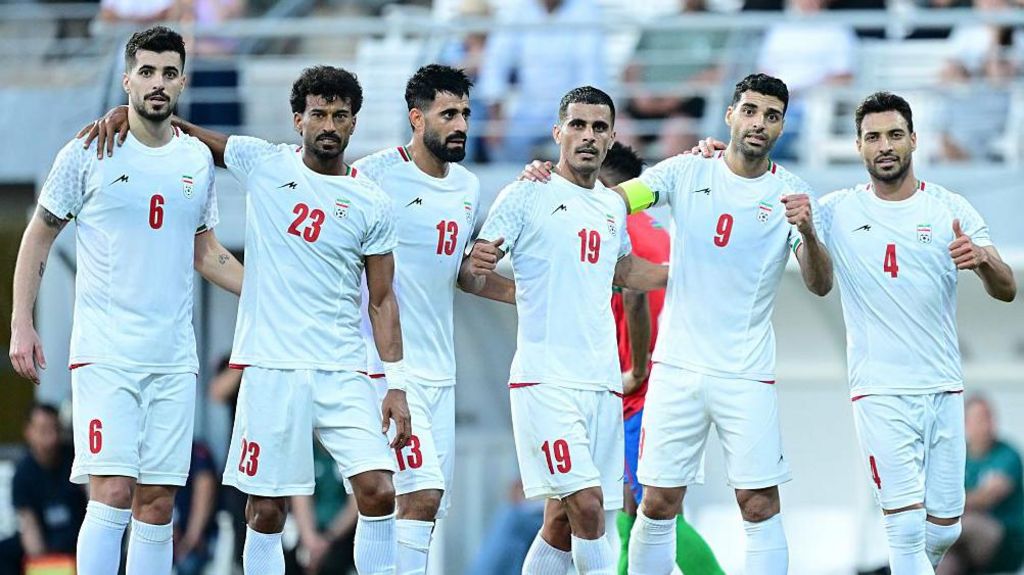
When Iran secured its spot in the 2026 FIFA World Cup back in March 2025, few could have predicted the unprecedented set of obstacles that would confront the national squad ahead of the tournament. More than 12 months on, Iran’s participation has emerged as one of the most politically charged and complex narratives of this year’s competition, coming amid ongoing conflict triggered by joint US-Israeli military strikes that killed Iran’s supreme leader. Against this backdrop of active regional war, the Iranian team has navigated a cascade of crises, from securing entry to tournament host territory to finalizing a safe training base ahead of their opening group-stage fixture.
After weeks of diplomatic delay, US authorities finally approved travel visas for all Iranian players this past Friday. However, multiple senior members of the team’s support staff, including Mehdi Taj, the head of the Iranian Football Federation, have been denied entry clearance. The US State Department confirmed to the BBC that visas had been issued for all players and essential non-playing personnel required to compete, but added that the country would not permit Iran to “abuse this system to sneak terrorists into the United States under false pretences.”
Complicating logistics further, Iranian ambassador to Mexico Abolfazl Pasandideh confirmed that the visa terms imposed on players require them to enter and exit US territory on the same day as each of their matches. In response to these restrictions and the escalating regional conflict, FIFA approved a request from Iran to relocate its pre-tournament base camp from the originally planned site in Tucson, Arizona to Tijuana, Mexico. The Iranian squad’s plane touched down at Tijuana International Airport on June 7, marking the team’s official arrival in North America for the competition. All three of Iran’s group-stage matches are still scheduled to take place across the US: fixtures against New Zealand and Belgium will be held in Los Angeles, while their matchup against Egypt is set for Seattle.
The current strained dynamic between Iran and the US is rooted in more than 40 years of hostile relations, dating back to the 1979 seizure of the US embassy in Tehran and the subsequent hostage crisis that ended formal diplomatic ties between the two nations. For decades, elite football has stood as one of the only rare platforms for direct, public engagement between the two countries. The most iconic of these encounters came at the 1998 World Cup in France, where Iran claimed a historic 2-1 victory over the US in a match loaded with global political symbolism. Dubbed the “Mother of All Games” by observers due to the charged geopolitical backdrop, the fixture drew worldwide attention and remains one of the most memorable matches in World Cup history. Before kickoff, Iranian players presented their US counterparts with white roses as a gesture of peace, a moment widely celebrated as a rare instance of sport transcending bitter political division. The two sides met again at the 2022 Qatar World Cup, where the US secured a 1-0 win to advance to the knockout round. This year, the expanded 48-team tournament format has left open the possibility of a third matchup between the two nations in the knockout stage, a prospect that would carry stakes far beyond athletic competition amid the ongoing conflict.
Beyond external diplomatic and logistical hurdles, the Iranian squad also faces unprecedented internal division back home, with national consensus around the team fractured in a way unseen at previous tournaments. Historically, the national side has been one of the only unifying national institutions, capable of drawing widespread support across Iran’s deep political and social divides. During the 2014 and 2018 World Cups, the team enjoyed broad backing from Iranians of all political leanings, both inside the country and in the global diaspora. That dynamic shifted dramatically ahead of the 2022 Qatar World Cup, held in the wake of the death of Mahsa Amini in morality police custody and the nationwide anti-government protests that followed, met with a violent crackdown by Iranian authorities. The team found itself caught in the middle of intense domestic political debate: many Iranians expected players to publicly express solidarity with protesters, while others argued that football should remain separate from political conflict.
The 2026 tournament comes just six months after another widespread crackdown on anti-government protests, where human rights organizations estimate thousands of demonstrators were killed by state forces. Today, public opinion toward the team remains deeply split: some Iranian supporters still view the squad as a unifying symbol of national pride that stands apart from political division, while an increasing number of critics argue that the team is too closely aligned with the ruling political establishment to be separated from state power. Even so, support for Team Melli has by no means disappeared. Football remains overwhelmingly the most popular sport in Iran, and millions of Iranians both at home and abroad are expected to follow the team’s progress throughout the tournament.
On the pitch, Iran is chasing an unprecedented milestone in this 2026 World Cup. The squad has qualified for seven men’s World Cups throughout its history, but has never advanced past the group stage. With the tournament’s new expanded format creating more pathways to knockout stage progression, Iranian players and fans believe this could finally be the year they break their historic duck. The big question hanging over the team’s campaign, however, is whether football will remain the central focus. World Cups have always mirrored the geopolitical realities of their era, but it is hard to recall any other national side arriving at a major tournament facing such a toxic convergence of diplomatic isolation, active cross-border military conflict, persistent visa uncertainty, and deep domestic political division among its own fanbase.