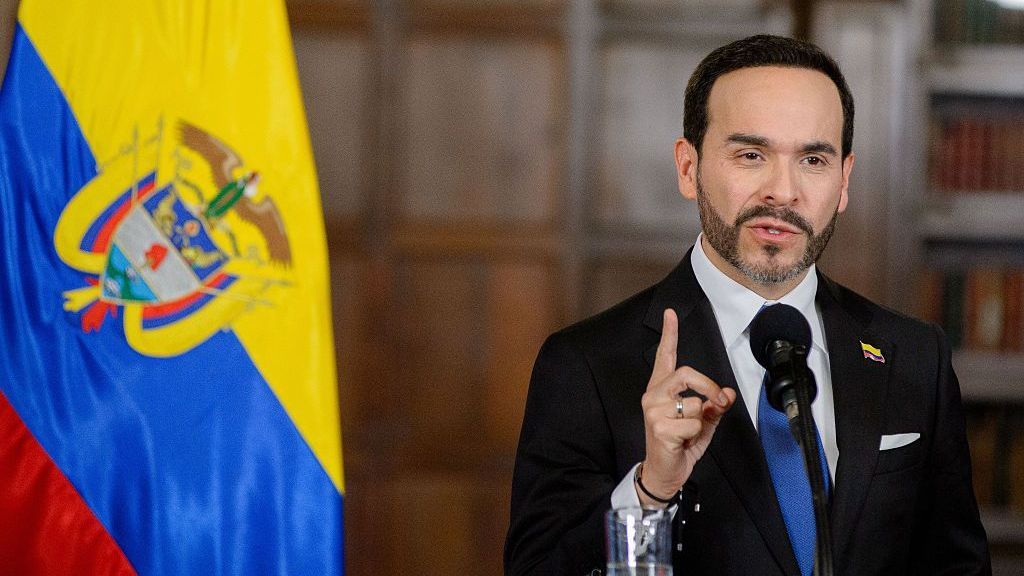
Weeks after being sworn into office as Colombia’s new right-wing head of state, Abelardo de la Espriella has greenlit the extradition of five illegal armed group members sought by U.S. authorities on a slate of drug-related offenses, marking a sharp reversal of his left-wing predecessor Gustavo Petro’s landmark peace initiative.
作者: admin
-
Scientists find clues in satellite imagery to the cause of catastrophic floods in Nepal and Tibet
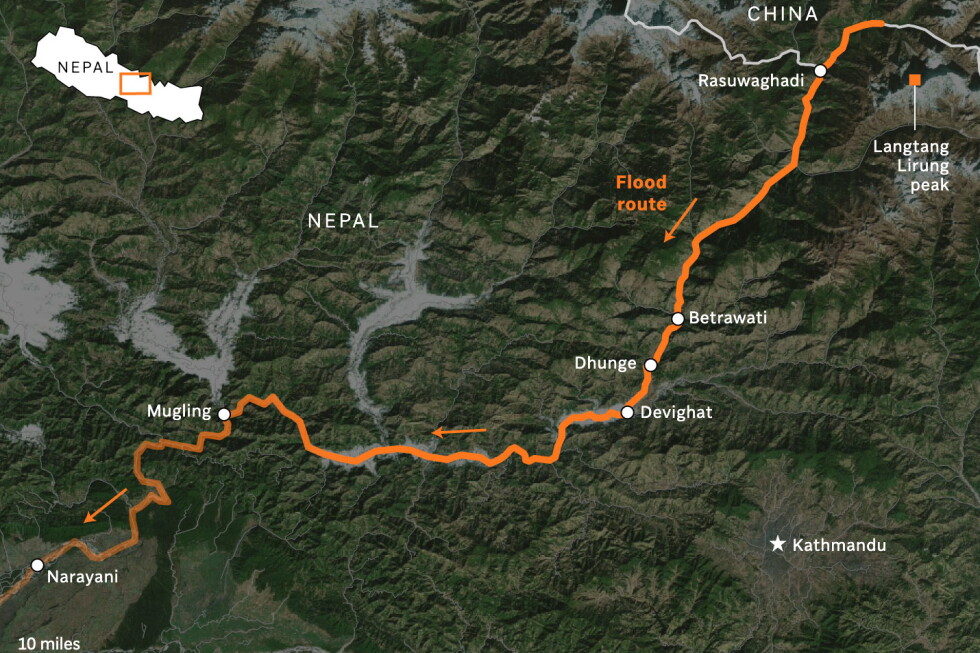
In the wake of catastrophic flash flooding that ripped through mountain valleys along the Nepal-China border Wednesday, rescue crews continued a grim search for dozens of missing people Thursday, while a team of international earth scientists used satellite imagery to unpack the sequence of events that triggered the disaster. The flooding has already claimed hundreds of lives across Nepal and the Tibet Autonomous Region of China, with scores of unaccounted people still unaccounted for, including foreign travelers and religious pilgrims visiting the region’s sacred high-altitude sites.
Initial analysis of Wednesday’s satellite imagery was hampered by heavy cloud cover and dust kicked up by tons of falling debris and ice, but clearer scans taken Thursday allowed geomorphologists Kristen Cook of France’s Université Grenoble Alpes and Dan Shugar, an associate professor at the University of Calgary, to piece together the full scope of the geologic failure. Early observations had only confirmed that a large section of glacier had broken away from Langtang Lirung, a 7,234-meter peak that sits just kilometers from the international border. But the sharper Thursday images revealed that the collapse extended far deeper than the glacial ice: the entire underlying bedrock of the mountainside had fractured and slid into the steep valley below, carrying the massive glacial ice chunk, thousands of tons of boulders, and loose sediment with it.
“It shows the whole area without anything hidden, and we could see that, yes, it looked like there was not only this glacier that had failed, but a much larger chunk of the bedrock of the mountainside itself that had given way,” Shugar explained. “You have this big bedrock failure that took part of the glacier with it.” Describing the downstream view captured in the imagery, Shugar called the scene of entire villages buried under meters of debris “heart-wrenching.”
Cook explained that after the collapse slammed into the valley floor, momentum carried the massive debris flow down the steep, narrow gorge, even as the fallen glacial ice began to melt rapidly. The mixture of meltwater, mud, rock, and ice grew to heights equal to several multi-story buildings before it swept through settled communities along the river banks.
Before-and-after satellite comparisons of the affected river systems paint a stark picture of the flood’s destructive power. Nepal’s Trishuli River, a major waterway in the region, is now far wider than its pre-flood course, with water that has shifted from its usual greenish hue to a dark, muddy brown—a visible marker of the massive volume of sediment the flood dragged downstream. Entire riverbank towns and villages now lie submerged under thick layers of debris, appearing as uniform brown expanses in imagery, with only the roofs of a handful of partially buried houses visible in the Betrawati area. Syapru Besi, a popular tourist hub and the main starting point for treks into the Langtang Valley, saw all riverside buildings toppled and swept away; the force of the debris flow was so powerful that it pushed a side tributary off its original course, widening its channel permanently.
Alton Byers, a mountain geographer at the University of Colorado Boulder’s Institute of Arctic and Alpine Research who has studied glacial hazards in Nepal for decades and visits the country annually to work with local communities on disaster preparedness, called this event the most destructive glacial flood he has ever observed. He noted the destruction has left a barren wasteland in the disaster zone that will require decades to recover.
Byers also linked the disaster directly to human-caused climate change, arguing that rising global temperatures are thawing high-altitude permafrost that has held mountain rock, soil, and ice together for thousands of years. As permafrost weakens, it leaves steep mountainsides unstable, increasing the risk of large collapses that can trigger cascading hazards like glacial outburst floods and debris flows.
“All the indicators, to me, point to the impacts of warming trends,” Byers said. “In this case, the permafrost that for millennia has helped to hold together high-altitude rock and ice and soil and glaciers is now weakening and becoming unstable.”
Cook and Shugar cautioned that it is too early to confirm a direct causal link between this specific massive collapse and climate change, noting that bedrock failures and landslides are natural geologic processes that have occurred for millennia. Still, both scientists acknowledged that thawing permafrost driven by a warming climate does increase overall slope instability across the Himalaya, and that more large events of this type should be expected as global temperatures continue to rise.
“While we cannot at this point directly link this collapse to climate change, it is not unexpected to see more events of this type with a warming climate,” Cook said. “Not this big, hopefully not this big.”
This reporting from The Associated Press, which receives funding from private foundations for its climate and environmental coverage, is independently edited and produced by AP.
-
Israel replaces Damascus Gate name on East Jerusalem signs
A controversial move by Israeli authorities to rename one of East Jerusalem’s most recognizable historical landmarks has drawn sharp condemnation from Palestinian leaders and analysts, who say the action is the latest step in a long-running campaign to erase Palestinian and Arab cultural identity from the occupied territory.
Located on the northern perimeter of Jerusalem’s walled Old City, Damascus Gate has for centuries stood as one of the most significant entry points to the historic urban core. Beyond its architectural and historical importance, it serves as a primary passage for Palestinian worshippers traveling to the Al-Aqsa Mosque compound, and remains a central gathering space for Palestinian communities in the area.
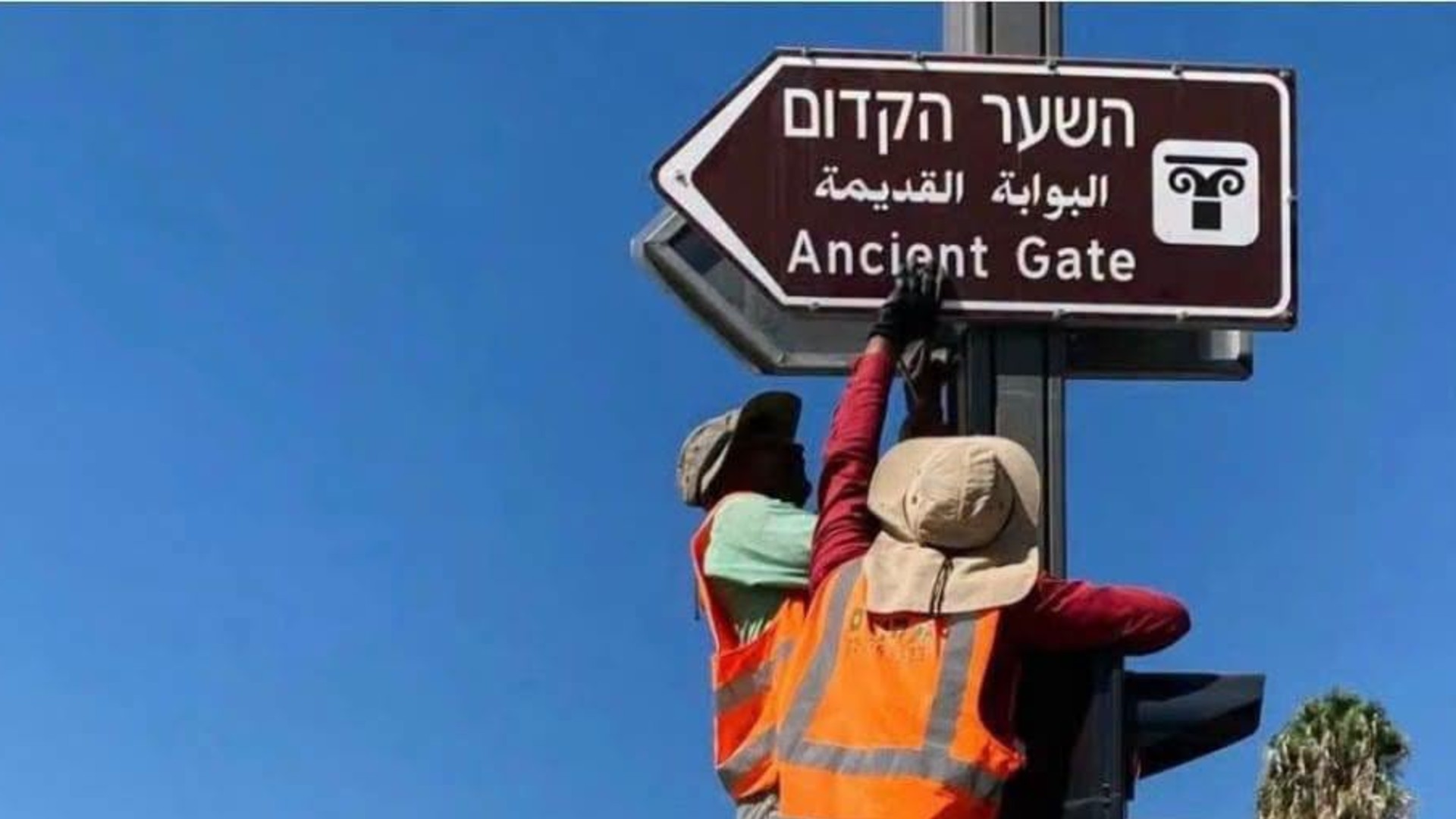
Earlier this week, Israeli municipal workers removed long-standing public signage labeling the site Damascus Gate, replacing it with new signs in Arabic, English, and Hebrew that read “Ancient Gate”.
Abdullah Marouf, a researcher focused exclusively on Al-Aqsa Mosque and surrounding Jerusalem affairs, argues the renaming is part of a deliberate state strategy to Judaize Jerusalem by systematically replacing Arab and Islamic cultural symbols in public life with Jewish-centric alternatives. He noted that Palestinian communities have deep, daily ties to the area around Damascus Gate, and that Israeli officials have pushed to alter the site’s name for decades.
“This Hebrew name aims to strip the place of its ‘Damascus Gate’ designation, as it is one of the main and central gates of Jerusalem,” Marouf explained in an interview with Middle East Eye. He added that attempts to rename prominent landmarks across the Old City are not a new development: Israeli authorities previously renamed Solomon’s Cave, a site located between Damascus Gate and Herod’s Gate, to Zedekiah’s Cave in an earlier push to reorient the site’s historical identity. Marouf emphasized that all such naming changes are intended to reshape the fundamental character and cultural identity of Jerusalem, though he argued the campaign has ultimately been unsuccessful.
“Israel has proven its utter failure in achieving this goal, as the image, nature and Arabic language of Jerusalem are clear, and a sign in one of the city’s streets cannot change its reality,” he said.
The renaming of Damascus Gate is not an isolated incident, but part of a broader ongoing campaign targeting street names, public landmarks, and historic sites across East Jerusalem. In a formal statement released Wednesday, the Jerusalem Governorate condemned the move as part of a deliberate state policy to reshape the city’s cultural and urban landscape.
The governorate emphasized that the renaming is far more than a routine administrative adjustment: it is a targeted effort to cut future generations of Palestinians off from the city’s deep-rooted historical Arab heritage. “The names of Jerusalem’s gates, streets and landmarks represent an integral part of the city’s national, historical and cultural memory,” the statement read. “Replacing them with new names undermines Jerusalem’s identity and its Arab, Islamic and Christian heritage.”
Like Marouf, the governorate stressed that such cosmetic changes cannot erase the city’s long-established history or entrenched cultural memory.
The broader context of this move hinges on the international status of East Jerusalem, which Israel occupied in the 1967 Arab-Israeli War before formally annexing the territory and the Old City. No country or international body recognizes Israel’s sovereignty over East Jerusalem under international law. The Fourth Geneva Convention, which governs the conduct of occupying powers, explicitly prohibits permanent changes to the social, cultural, or political landscape of occupied territory unless such changes are required for urgent military or humanitarian purposes, which the renaming of a historic gate does not qualify as.
-
Israel considers expelling UK from Gaza monitoring centre
Diplomatic tensions between Israel and the United Kingdom have reached a new low, with Israeli authorities openly considering the expulsion of British representatives from the US-led International Gaza Support Center (IGSC), the multinational body tasked with monitoring the fragile ceasefire agreement between Israel and Hamas.
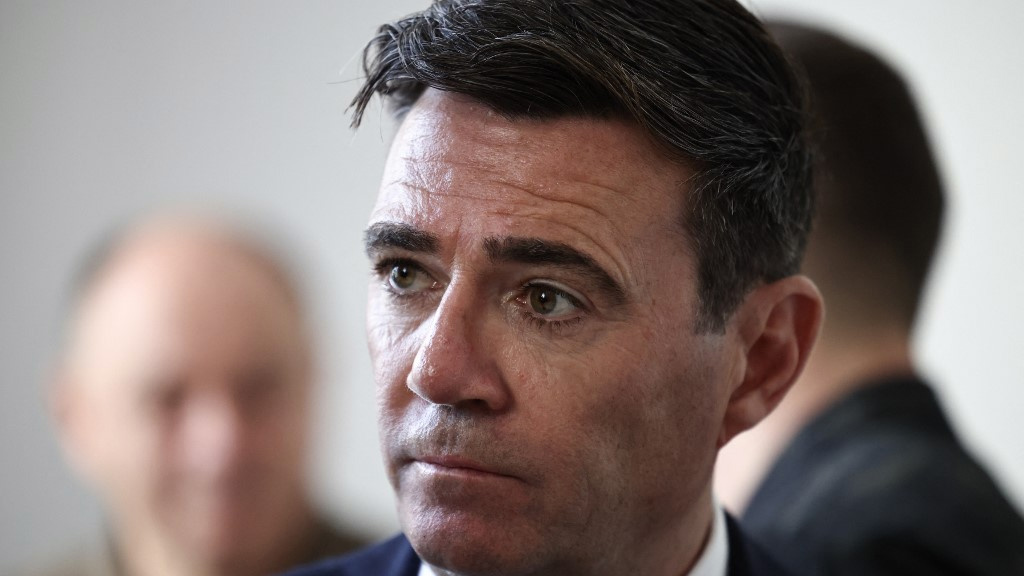
The potential retaliatory move comes in direct response to upcoming planned restrictions from British Prime Minister Andy Burnham’s administration targeting goods produced in illegal Israeli settlements in the West Bank. Multiple sources cited by the Financial Times confirm that Jerusalem is also weighing ejecting representatives from Italy and Germany from the IGSC, expanding a growing pattern of punitive diplomatic action against nations that challenge Israel’s settlement policies.
Established to oversee ceasefire compliance and coordinate humanitarian support for Gaza, the IGSC operates under the leadership of US military personnel, who collaborate closely with the Israel Defense Forces and delegations from more than 30 countries around the world. This is not the first time Israel has taken punitive action against participating states: earlier this week, Israeli officials expelled Dutch representatives from the center after the Netherlands implemented a national ban on settlement goods. Earlier in 2025, Spain was removed from the IGSC over what Jerusalem called Madrid’s “obsessive anti-Israel bias.”
Burnham, who took office as UK prime minister in July 2025 after succeeding Keir Starmer, signaled a sharp shift in British policy toward Israel even before assuming office. Shortly before his inauguration, Burnham issued a public apology for the previous Labour leadership’s early backing of Israel’s military campaign in Gaza and its refusal to support an immediate ceasefire in 2023 and early 2024.
Earlier this month, independent outlet Middle East Eye reported that Burnham’s government is set to unveil a full package of new policies toward Israel in September, headlined by the long-teased ban on illegal settlement goods. According to reporting from MEE, British Foreign Secretary Ed Miliband has been a key driving force behind the tougher measures, holding extensive consultations with British civil society groups to shape the new policy framework.
Israeli Prime Minister Benjamin Netanyahu has already made his administration’s fury at the UK clear in public remarks. In a recent interview, Netanyahu sparked widespread outrage by labeling Britain an “Islamic republic,” complaining that the favorable media coverage Israel received during the 1967 Arab-Israeli war no longer exists in British outlets. “Try to find that now in Britain, which you could call the Islamic republic of Britain,” Netanyahu said.
The British government swiftly rejected the remarks as “completely unacceptable.” Citing analysis from the Financial Times, British officials acknowledge that an expulsion from the IGSC would amount to deliberate diplomatic retaliation, but note that the prospect does not trigger major concern for the UK government.
Public opinion in Britain has shifted sharply against Israel in recent months, with polling data reflecting growing public support for punitive measures against Israeli settlement activity. A YouGov survey published this week found that 50 percent of British adults back a ban on trade with West Bank settlements, while only 16 percent oppose the policy. A June 2025 poll further underscored this shift: 55 percent of respondents opposed Israel’s military actions in Gaza, with just 15 percent expressing support. Among that 55 percent who oppose Israel’s actions, 82 percent said they believe Israel is committing genocide against the Palestinian people in Gaza. The same survey also found that 65 percent of Britons want the UK government to enforce the International Criminal Court’s existing arrest warrant for Netanyahu should he visit British territory.
Already strained during the final months of Keir Starmer’s premiership, bilateral relations between Britain and Israel have collapsed to a new low under Burnham’s leadership, as shifting public pressure and a new policy direction in London bring the two countries into open diplomatic conflict over Gaza and Israeli settlement expansion.
-
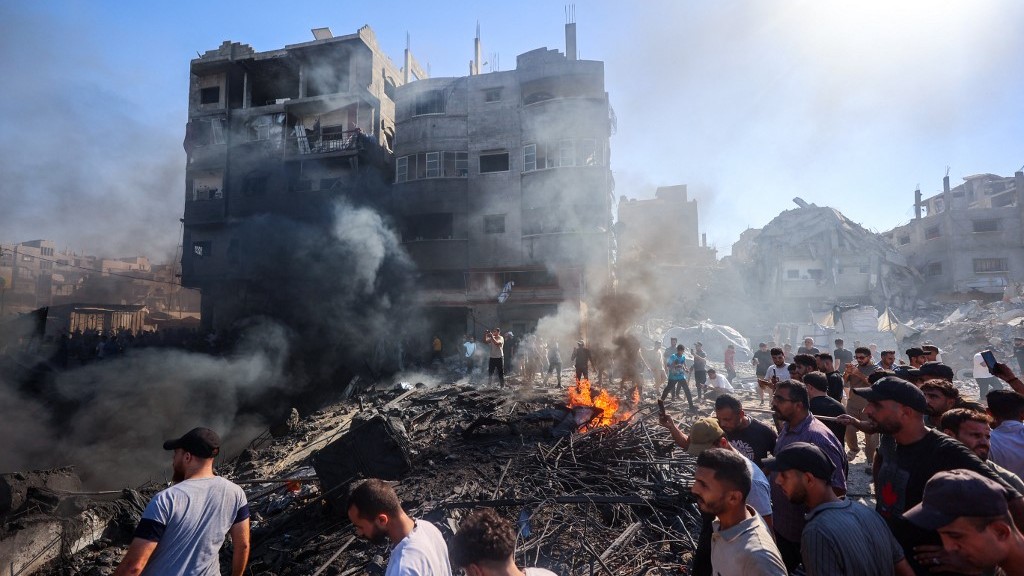
Haaretz: Israel arms drug dealers to commit ‘war crimes’ and loot homes in Gaza
An explosive investigation published by leading Israeli newspaper Haaretz has uncovered a rapidly expanding Israeli program that deploys mercenaries, local criminal gangs, and convicted drug dealers as proxy forces to commit war crimes in the Gaza Strip on behalf of the Israeli state and its military.
Drawing on firsthand testimony from active-duty Israeli soldiers, verified United Nations documentation, and high-resolution satellite imagery, the probe details how increasingly heavily armed collaborator militias have systematically displaced Palestinian communities from their homes and launched offensive operations across multiple areas of the besieged enclave. According to the investigation, Israeli military and intelligence agencies have trained and equipped at least five separate militia groups to date, with evidence pointing to the possible formation of a sixth. All of these groups operate out of heavily fortified bases located in Israeli-occupied sections of Gaza.
One unnamed Israeli soldier, speaking on condition of anonymity to Haaretz, described the explicit division of labor between Israeli regular forces and the proxy militias: “The state, army and Shin Bet intelligence service send armed and trained militias to commit war crimes, and I’m the one who has to protect them during their operations so they don’t get hurt.”
The investigation comes against a backdrop of already heightened international scrutiny of Israeli conduct in Gaza. Israel is currently facing a formal genocide case brought before the International Court of Justice, and the International Criminal Court has already issued public arrest warrants for Israeli Prime Minister Benjamin Netanyahu and former Defense Minister Yoav Gallant on charges of war crimes and crimes against humanity committed in the enclave.
Haaretz’s findings also reveal alarming connections between the Israeli-backed militias and extremist groups. At least one armed faction supported and supplied by Israel had confirmed links to the Islamic State, according to the investigation. That group was led by Yasser Abu Shabab, who was killed by Hamas forces in December 2025. News of his death was widely celebrated across Palestinian communities, and even his own family publicly disowned him as a traitor for collaborating with Israeli authorities. Despite his death, Haaretz notes that the broader militia project he represented has continued to grow in scope and power, particularly in the period following the October 2025 ceasefire agreement.
Another high-profile militia leader, Shawqi Abu Nasira, has openly acknowledged his cooperation with Israel in a widely circulated online video. “I made the decision to liberate the land from Hamas,” he stated. “If people say that makes me a collaborator, then I’m a collaborator.” The vast majority of Palestinians across all political factions, regardless of their stance on Hamas leadership, uniformly view collaboration with Israel as an act of treason against the Palestinian people.
The investigation also documents how Israel has built dedicated military infrastructure for these proxy groups amid the widespread destruction of Gaza’s built environment. Near one major militia base in the Gaza neighborhood of Shujaiya, Israeli forces completely flattened a large historic Palestinian cemetery to clear space for an expanded training compound for the militias.
Testimony from soldiers confirms that the operational integration between the Israeli military and the proxy gangs has grown increasingly close. Fighters from the militias are allowed to move freely through Israeli army outposts across occupied areas of Gaza, and the investigation notes that the gunmen regularly stage public shows of force, film the events, and upload the footage to social media platforms like Facebook for propaganda and new recruitment drives. Israel provides all small arms and heavy weapons for the militias, and also backs their ground operations with artillery support and drone surveillance and strikes.
Beyond frontline combat roles, the proxy mercenaries serve a second core strategic purpose aligned with Israeli government policy: targeting Palestinian civilians struggling to survive under ongoing Israeli occupation and blockade. The gangs drive Palestinian families from their residential areas, loot personal and private property, and burn homes to the ground. This activity aligns with repeated public statements from senior Israeli ministers who have openly called for making life unlivable in Gaza as part of a broader campaign to ethnically cleanse the enclave and clear space for new Jewish Israeli settlements.
One Israeli soldier described a typical raid carried out by the mercenaries: They arrived in unmarked pickup trucks, then “they just ran and shot at people. They entered every structure, looted everything they could get their hands on, came out with piles of stuff – and then burned down the house.”
While claims that Israel has deployed local criminal gangs to advance its ethnic cleansing strategy in Gaza have circulated for more than a year, the new firsthand testimony from Israeli soldiers provides definitive confirmation that these groups now operate as a formal “operational arm” of both the Israeli military and the Shin Bet domestic intelligence service.
A striking contradiction sits at the heart of Israeli policy in Gaza: While the Israeli government continues to arm and expand these local criminal gangs, it simultaneously demands that Hamas disarm and rejects all proposals for the formation of an independent Palestinian security force to govern Gaza after a permanent ceasefire. This arrangement allows Israel to deploy the militias to target anyone it labels a Hamas affiliate, while also turning the groups loose on ordinary Palestinian civilians.
Hamas officials speaking to Haaretz confirmed that the group will not agree to surrender its defensive weapons as long as Israeli-backed armed militias remain active in Gaza, noting that the collaborator groups have explicitly targeted Hamas members and supporters. The group would be left vulnerable to sustained attack if it disarmed while these proxies remain fully armed and supported by Israel, the sources added.
Haaretz’s investigation concludes with a stark warning that Israel’s current proxy strategy is creating the conditions for mass atrocities on a scale not seen in decades, drawing a direct parallel to the 1982 Sabra and Shatila massacre. During that event, Lebanese Phalangist forces allied with Israel slaughtered up to 3,500 Palestinian and Lebanese civilians while Israeli troops surrounded the Beirut refugee camps, secured the perimeter, and oversaw the 48-hour killing spree.
-
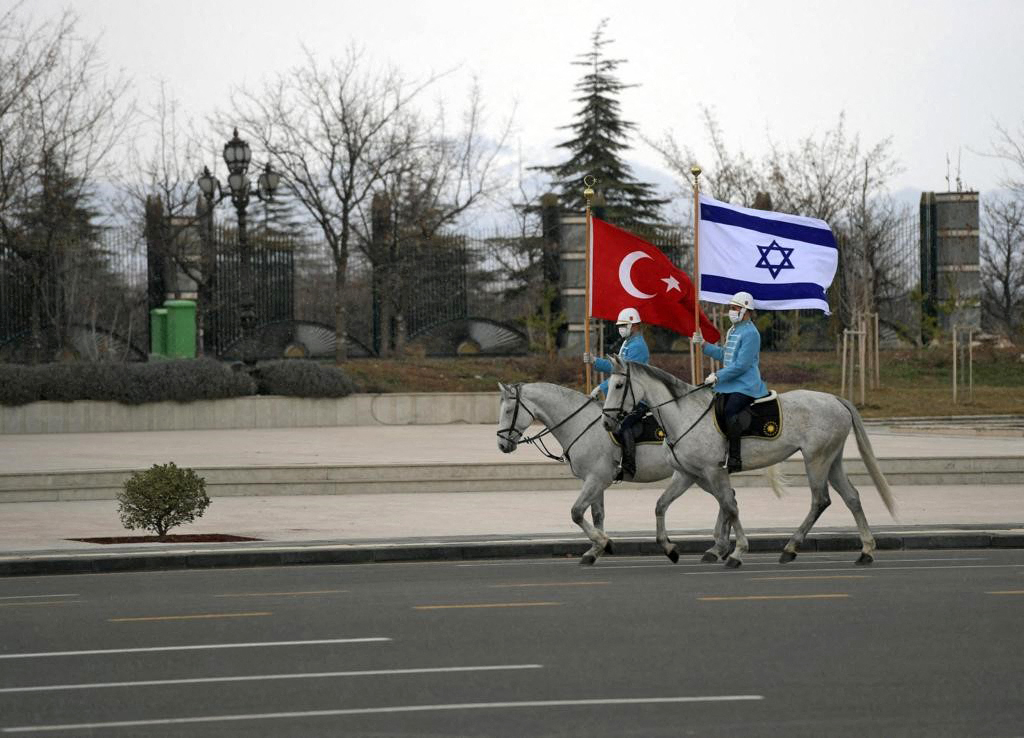
Why Turkey is showing restraint over Israeli strikes on Syria
Amid rising tensions between Turkey and Israel following a recent Israeli airstrike on a northern Syrian military base, Ankara has adopted a deliberate strategy of holding back any significant retaliation until after Israel’s October general election, multiple senior Turkish and regional officials have confirmed to Middle East Eye. The core reasoning behind this cautious approach is that Turkish leaders have concluded that any strong immediate response would play directly into the hands of Israeli Prime Minister Benjamin Netanyahu, who is running a struggling re-election campaign and seeking to rally domestic support by escalating regional tensions.
The targeted site, the Abu al-Duhur military airbase, sits roughly 70 kilometers from the Turkish border. While the strike is widely viewed as a deliberate provocation by Ankara, it did not catch Turkish officials off guard. Israel has justified the attack by claiming Turkey was preparing to deploy air defense systems at the base, a claim Ankara has flatly denied — a denial that has been corroborated by both Syrian and U.S. officials.
“Israel has hit other positions inside Syria before. This one is not particularly unprecedented,” one senior Turkish official explained to MEE. The official added that the Turkish government has already made its stance on Israeli military actions in Syria clear through multiple public communications, noting that Netanyahu is facing deep domestic pressure and is deliberately stoking conflict with Turkey to divert attention from his political woes. “And he is a madman, definitely, for trying that,” the official added.
Many insiders in Ankara expect the upcoming Israeli election will usher in a change in government, bringing to power what they frame as more pragmatic, reasonable political actors. Turkish officials point to open opposition among some Israeli politicians to Netanyahu’s deliberate escalation, including Yair Golan, a former Israeli general and leader of the left-wing Democrats party, who has pushed back against the prime minister’s confrontational approach.
Two factors make the recent strike particularly alarming for Turkish leadership, officials confirm. First, Israel failed to use the established deconfliction hotline between the two governments ahead of the strike, a departure from established protocol that Ankara views as unnecessarily reckless. Second, the strike represents a clear violation of a bilateral understanding reached between the two countries during talks held in Baku last year.
Under that 2025 agreement, mediated to reduce the risk of accidental confrontation between Turkish and Israeli forces operating in Syria, the two sides set the area north of the T4 airbase near Palmyra as a dividing line between their respective security zones of influence. The deal grew out of earlier tensions over the T4 base, where Turkey had planned to establish a drone outpost to conduct counter-Islamic State operations, a move that prompted Israel to bomb the facility before Turkish forces could deploy. Subsequent negotiations resulted in the dividing line agreement, which was crafted to accommodate Israel’s request for an open air corridor through Syria for potential strikes on Iran in the event of a future conflict.
Prior to last week’s strike, talks between the two sides had progressed relatively smoothly, with Israel continuing to oppose the deployment of Turkish air defense and radar systems in Syria but remaining broadly satisfied with the negotiated framework. The latest attack, however, signals that Israel has shifted course, choosing to forcibly oppose any Turkish-armed or Turkish-supported airbase in northern Syria — even in areas located just kilometers from the Turkish border, well within the zone Ankara was expected to control under the 2025 agreement.
Because Turkey has never moved to deploy forces to Abu al-Duhur, Turkish officials view the strike as an unprovoked breach of the previously agreed status quo. As analyst Dünya Başol noted on social media, while the Israeli government has claimed the strike was necessary to reverse a broken status quo, the attack actually upends the arrangement that Israel itself had agreed to in earlier negotiations.
Multiple Turkish officials have told MEE that Ankara no longer views the current Israeli government led by Netanyahu as a rational negotiating partner. At the same time, Turkish leaders have deliberately framed their own restrained response as proof that President Recep Tayyip Erdogan is the pragmatic, level-headed actor in the confrontation, in contrast to what they cast as Netanyahu’s reckless political opportunism.
This deliberate display of calm was on public display in recent days: even after the strike and repeated insulting remarks from Netanyahu, Erdogan chose not to cut short his annual summer holiday in Marmaris. He was filmed joking with local politicians during his time away, and when he finally addressed the issue publicly on Tuesday, he avoided any direct mention of either Netanyahu or Israel. He argued that “murderous networks” seeking political gain from a failing election campaign did not deserve a direct response, while still reaffirming that Turkey has a clear regional strategy, will not abandon its regional partners, and seeks only to advance lasting peace with no hidden agenda.
Beyond avoiding boosting Netanyahu’s election prospects, there is a second key strategic reason for Turkey’s cautious approach: the shifting dynamic between Netanyahu and U.S. President Donald Trump. Over the past year, relations between the two leaders have deteriorated significantly, as Netanyahu’s maximalist demands on policy toward Iran, Lebanon, and Gaza have repeatedly put Trump at odds with regional realities and key U.S. Arab allies.
Turkey has intentionally aligned its approach with Washington’s current posture, a strategy that has been boosted by the close relationship Ankara has built with U.S. Special Envoy Thomas Barrack. The warm existing rapport between Erdogan and Trump has also paved the way for two recent major diplomatic wins for Turkey that cut directly against Israeli objectives in Syria.
First, after 47 years of listing Syria as a state sponsor of terrorism, the U.S. State Department recently removed the designation — a move that came even as Israeli officials continued to label Syria’s interim President Ahmed al-Sharaa an extremist and militia leader. The State Department also simultaneously revoked the terrorist designation for HTS, al-Sharaa’s former group. Second, despite long-running Israeli efforts to keep Syria fragmented and its central government weak, Mazloum Abdi, commander of the Kurdish-led Syrian Democratic Forces, recently announced that his forces would fully integrate into the Damascus government and dissolve the self-declared autonomous Kurdish zone in northern Syria — another major policy victory for Ankara.
“Turkey is playing a long game in Syria,” a second senior Turkish official told MEE. “Unlike the Israelis, we prioritise a stable, sovereign and prosperous country that would strengthen security and peace across the region.”
-

US defense review presses NATO allies to prove they are taking the lead in Europe
BRUSSELS – In a high-stakes address to NATO allies at the alliance’s Brussels headquarters on Thursday, the U.S. Department of Defense issued a clear call: European and North American partners must demonstrate tangible progress in strengthening their own defense capabilities on the continent, as Washington reorients its strategic focus to security threats closer to its borders and across the Indo-Pacific region.
The U.S. has already begun reducing its long-standing military footprint in Europe, though roughly 80,000 American troops remain deployed across the continent. Top Pentagon officials have also launched a formal strategic review to determine the scope of additional troop cuts, with the final scale of reductions directly tied to how thoroughly allies meet U.S. demands for a sweeping overhaul of NATO’s defense burden-sharing framework.
Under the proposed restructuring, European allies and Canada would take primary responsibility for conventional defense of the European continent. The U.S. would step into a supporting role, only deploying strategic assets including nuclear weapons if a major crisis requires additional intervention. For decades, a large, persistent U.S. military presence has formed the backbone of NATO’s deterrence strategy against potential adversaries in Europe, most notably Russia.
Following a closed-door briefing for alliance members, U.S. Under Secretary of Defense Elbridge Colby spoke to reporters, singling out Germany, Poland, and Nordic nations for praise over their recent efforts to boost defense spending and operational readiness. But he also made clear that Washington expects far more contributions from other major alliance members, including the United Kingdom.
Colby emphasized that the Pentagon’s end goal is to reshape NATO into a more pragmatic, balanced alliance structure aligned with current global security realities. “That’s the spirit we’re going to continue pursuing our Europe posture review in,” he told reporters.
To gather clarity on ally commitments, the Pentagon has distributed a formal questionnaire to all NATO members, requesting detailed written responses laying out how each country plans to meet U.S. strategic objectives. Colby confirmed that the department has received a small number of completed responses so far, but declined to name which countries have submitted their questionnaires.
Notably, the survey includes questions beyond core NATO collective defense commitments. It asks whether allies will grant U.S. forces unrestricted access to their military bases and airspace, a provision that addresses past frictions between Washington and European capitals. Many European allies hesitated to support the U.S. 2003 invasion of Iraq, and more recently declined to back U.S. military action against Iran without prior multilateral consultation, creating tensions within the alliance.
Colby defended the inclusion of these broader requests, noting that preventing Iran from developing a nuclear weapon is a shared strategic goal for both the U.S. and European nations. “We need to be able to have the ability to operate effectively. We need predictability,” he said.
-

‘It fuels me’: Bulldogs defender hits back at critics over achilles heel tag
As the Western Bulldogs prepare for a high-stakes Friday night clash against Collingwood, one of their key defensive players is turning widespread outside criticism into a powerful source of motivation. For seasons, the Bulldogs’ back six has been labeled the soft underbelly of their premiership campaign — a persistent narrative that doesn’t sit right with young defender James O’Donnell, and his refusal to back down from that critique is exactly why he has become one of head coach Luke Beveridge’s most admired players.
In an interview ahead of the Collingwood match, O’Donnell opened up about leaning into the doubt surrounding his defensive unit, explaining that the negative chatter pushes him to perform better. “To be honest, I kind of like it. It fuels me a bit,” he said. “It is, at times, a narrative that is a little bit… I don’t think it’s completely correct. There’s definitely been areas in our game we needed to lift, and I feel like we made a lot of ground this year. Statistically speaking, we’re a pretty solid back six. Again, it’s just fuel and something I don’t shy away from. It’s definitely been nice to prove all those doubters wrong.”
Data from the final third of the 2026 AFL season backs up O’Donnell’s confidence. After a shaky start to the year that saw the Bulldogs leak goals at an alarming rate, the defensive unit has turned its performance around dramatically. What was once a clear weakness now matches the output of the club’s top-tier attack, pushing the Bulldogs into the league’s top six when it comes to defensive efficiency without possession. The backline has also racked up wins in critical individual matchups against some of the league’s most dangerous forward lines, outperforming many pundits’ expectations.
For O’Donnell, this underdog identity is core to who the Western Bulldogs are as a club, rooted in their blue-collar reputation that has defined the western Melbourne franchise for decades. “We don’t really talk about (the external noise) too much, it’s quite process driven,” he explained. “It sounds cliche, but that’s what it is: week-to-week, what we want to go after, different teams show different looks. But for me, I personally think as well, I’m sure the other boys if you ask them would probably feel similar. I think that’s us as a club in general as well: (we’re) doubted, but when our backs are against the wall we hopefully stand up. I love that side of it.”
Ahead of Friday’s game, O’Donnell is expected to shoulder the heavy responsibility of marking Collingwood star forward Dan McStay, a task he and the Bulldogs’ backline are already gearing up to meet.
Beveridge has openly admitted O’Donnell is one of his favorite players, and the coach’s praise for the young defender highlights just how far O’Donnell has come since switching his focus from professional cricket to elite AFL. “He’s a stand-up lad, isn’t he? He’s a ripper,” Beveridge said. “I know coaches aren’t allowed to play favourites, but I just admire how he’s come on, for a young fella who turned his mind to playing this game in a serious sense from cricket.”
Beveridge even compared O’Donnell’s famous long kicking to that of Carlton club legend Val Perovic, who was renowned across the league for his powerful distance kicks. “I made the comment to the players a while ago, he’s a thumping kick, you know? I reckon it started with Val Perovic, remember Val Perovic? Val had a thumping leg, he could kick it a mile. Mainly at Carlton, I think, when he would roost it, the whole crowd would go ‘oof’, like that. Now when there’s a highlight and Jimmy O’Donnell kicks the ball, the whole lecture theatre, the players go ‘oof’. He’s our Val Perovic now. Jimmy has been outstanding, and Buku Khamis has been tremendous. I think that backline, the composition now is probably in a place where it’s favourable.”
The respect and admiration between player and coach is fully mutual. O’Donnell says he owes much of his growth and confidence to Beveridge, who gave him an early opportunity in the Bulldogs’ senior side and has trusted him with critical responsibilities from the start of his AFL career. “Bevo and I have a great relationship, I am very lucky to have Bevo as my coach,” O’Donnell said. “I think about how I started and how he, I guess, gave me the opportunity so early in my Bulldogs career. The trust he’s given me and the responsibility, he’s probably given me more belief than I ever had in myself – especially at the start. That as a starting point, we’ve just got a great relationship in that sense, but from a backline and role point of view, he’s super clear. He knows what he needs from me and I try to provide that every week – I love playing for him.”
-
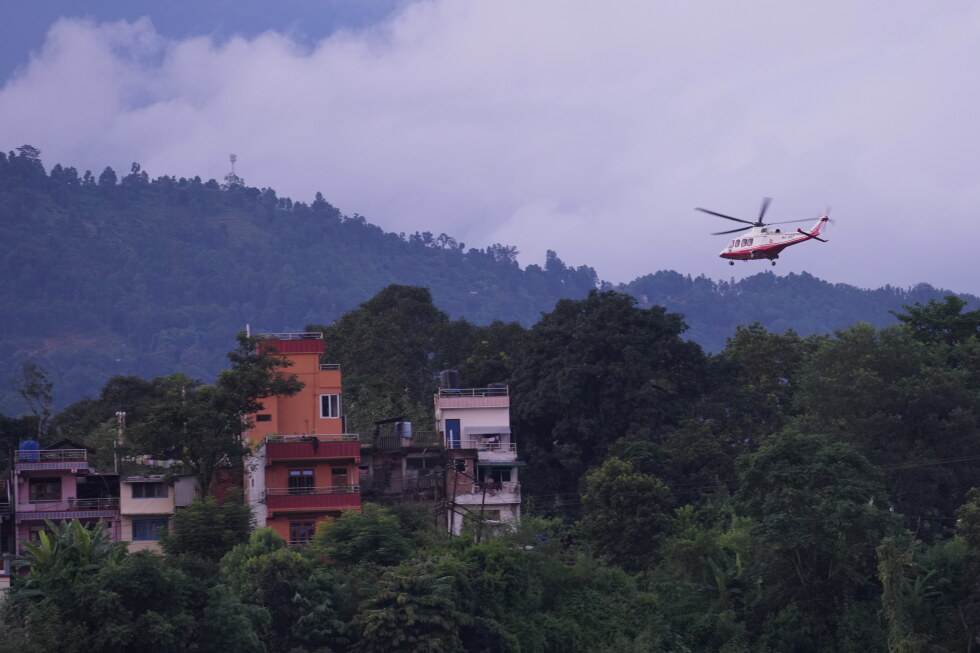
About 90 Americans unaccounted for after catastrophic floods hit Nepal and Tibet
Deadly catastrophic flash floods that swept through a mountainous border region straddling southwestern China and northern Nepal have left hundreds dead and triggered an urgent search effort, with roughly 90 U.S. citizens still unaccounted for as of Thursday, one day after the disaster struck. As of Thursday afternoon, U.S. State Department officials confirmed that no American fatalities have been confirmed, while three U.S. nationals have already been pulled from flood-affected areas to safety.
A large share of the missing U.S. citizens were part of religious pilgrimages to Mount Kailash in the Tibet Autonomous Region of China, a site considered deeply sacred across multiple faiths including Hinduism, Buddhism, Jainism and Bon. By Thursday, worried family members and friends had begun sharing posts across social media platforms begging the public for information and updates on their missing loved ones, who range from a Virginia woman traveling with an organized tour and a Texas couple celebrating a birthday to a mother accompanying her 14-year-old daughter on the trip.
One of the unaccounted-for U.S. citizens is Venus Rajnikant Patel, a 45-year-old Indian-born American who had recently relocated from St. Louis, Missouri, to Cincinnati, Ohio, to be closer to and support his family. Patel was traveling as part of a guided tour when the floods hit, according to his friend Jolene Gosha. Gosha told reporters she and other close friends knew Patel was traveling in the border region, but were devastated to discover he was staying at a hotel directly in the path of the rushing floodwaters.
“We’re just holding out hope, hoping that by some miracle he managed to climb to safety and get out,” Gosha said in an interview. “I try not to let myself build up false hope, because I know the terrible reality is that he’s likely not with us anymore.”
Gosha described Patel as a passionate adventure traveler with a joyful, outgoing personality, who loved dancing and often organized surprise flash mob performances to celebrate his friends’ weddings and birthdays. “He’s always grinning from ear to ear, and he’d dance in the silliest way without a care in the world who was watching,” she added.
Indian spiritual leader Jaggi Vasudev, more widely known by his followers as Sadhguru, revealed in a post on the social platform X that 77 pilgrims returning from their Mount Kailash trip with groups organized by his non-profit Isha Foundation were at an immigration facility in Gyirong, Tibet, when the flash floods hit. In a subsequent comment to ABC News, the Isha Foundation confirmed that 22 of the 77 pilgrims at the center during the disaster are U.S. citizens. The Isha Foundation is an India-based spiritual organization that runs a U.S. yoga and meditation retreat campus, the Isha Institute of Inner-sciences, located in the mountains outside McMinnville, Tennessee.
Speaking to reporters in the Oval Office on Thursday, former U.S. President Donald Trump confirmed that senior U.S. officials had already held talks with Nepalese government leaders, and that the U.S. had extended an open offer of assistance to support response and recovery efforts. “We have offered them anything they want, any help they need,” Trump said. He also noted that initial estimates placed between 50 and 60 U.S. citizens in the affected area, adding that a full, formal accounting of all foreign nationals in the region was still ongoing.
This report included contributions from Associated Press writers Matthew Lee and Collin Binkley based in Washington, D.C.
-

Belugas and dolphins rescued from closed Canadian park arrive in Spain
In a landmark cross-continental animal welfare mission that drew global attention, six marine mammals — two beluga whales and four bottlenose dolphins — have safely completed their long journey from a defunct Canadian marine attraction to a new life in Spain, escaping a potential death sentence that hung over them after their original facility shut down.
The animals were pulled from the struggling Canadian park, which had been facing ongoing operational and financial challenges that ultimately forced it to close its doors permanently. Left without a permanent home after the park ceased operations, the six marine creatures faced the grim prospect of being euthanized if no suitable relocation plan could be arranged in time.
Animal welfare organizations stepped in quickly to coordinate the complex rescue and relocation effort, working across national borders to secure permission and arrange logistics for the long-distance transport. After weeks of careful preparation, the belugas and dolphins were moved via specialized transport designed to keep the marine animals comfortable and stable throughout the journey. They have now arrived at their new sanctuary facility in Spain, where they will receive ongoing care from trained marine biologists and animal care specialists in a more natural, spacious environment tailored to their needs.
The successful relocation marks a major victory for global animal protection advocates, who have long pushed for better outcomes for captive marine mammals when commercial attractions go out of business. It also sets a precedent for international cooperation to protect vulnerable captive animals, highlighting how cross-border collaboration can prevent unnecessary euthanasia of healthy marine life.