作者: admin

  • US missile interceptor shortfall ‘beyond critical’ due to war on Iran: Report

    US missile interceptor shortfall ‘beyond critical’ due to war on Iran: Report

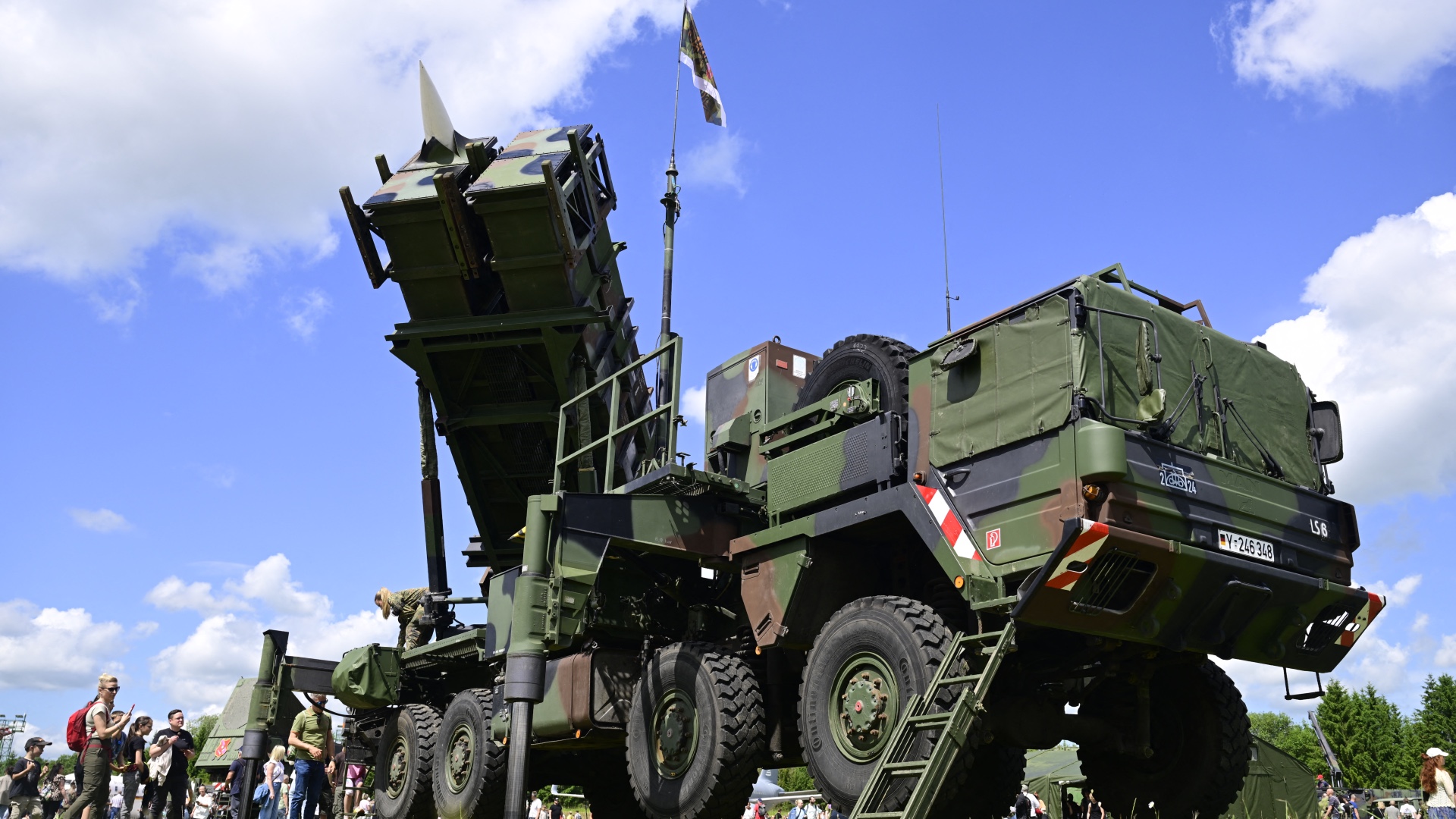
    Multiple recent media reports have laid bare severe, critical shortfalls in the United States’ advanced weapons stockpiles, driven largely by months of ongoing military operations against Iran, with ripple effects that threaten defense capabilities across Europe, Ukraine and other global hotspots. According to an Associated Press investigation published Thursday, two senior officials – one from NATO and one from the U.S. government – confirmed that stockpiles of advanced missile interceptors, particularly the widely deployed Patriot systems, have fallen to dangerously low levels after widespread use of the systems to down Russian ballistic missiles.

    The U.S. official told AP that U.S. military assets stationed in Europe lack sufficient Patriot interceptors to repel a sustained ballistic missile assault, with even defensive capabilities against a single large-scale strike reduced to “very limited” capacity. The current conflict traces back to February 28, when the U.S. and Israel launched joint military strikes against Iran. While a June ceasefire was negotiated via the Islamabad Memorandum of Understanding between the two warring parties, heavy fighting has continued to escalate through the summer months.

    Many defense analysts have pointed to a miscalculation by the Trump administration: fueled by Israeli promises of a swift regime change in Tehran and the successful U.S. capture of Venezuelan President Nicolas Maduro earlier in 2025, President Donald Trump reportedly expected a quick, decisive victory over Iran. Instead, Tehran responded with a widespread barrage of drone and missile attacks targeting U.S. partner states across the Persian Gulf, forcing the U.S. to reposition critical air defense systems and troop deployments away from East Asia to shore up its Middle East presence.

    The AP’s revelation of depleted Patriot stocks has sparked urgent new concerns about the vulnerability of NATO member states in Eastern Europe to potential Russian aggression. Just this week, The Wall Street Journal reported that CIA Director John Ratcliffe made a high-profile trip to Moscow, with a key goal of the visit being to warn Russian President Vladimir Putin against launching any offensive strike against NATO alliance members.

    The stockpile shortage extends far beyond defensive interceptors, however. Ukraine, which continues to defend itself against full-scale Russian invasion, has relied heavily on U.S.-supplied ATACMS medium-range ballistic missiles to strike Russian targets behind enemy lines. The AP confirmed that U.S. stockpiles of ATACMS are also running critically low, echoing an earlier Reuters report from this month that warned the U.S. had already exhausted most of its stockpile of sophisticated long-range offensive missiles during its war on Iran.

    Just weeks ago, President Trump alternated between threats to unleash the “biggest attack” on Iran since World War II, before backing away from direct large-scale offensive action and shifting to new threats of expanded economic sanctions. Citing two anonymous defense sources, Reuters reported that the U.S. has depleted “virtually all” of its stockpiles of surface-to-surface weapons, including both ATACMS and the newer Precision Strike Missiles (PrSM). These long-range precision weapons are a core component of U.S. military doctrine, allowing forces to strike enemy targets with high accuracy from distance without putting crewed warplanes at risk of enemy air defense systems.

    To cover the shortfall from Middle East operations, U.S. Central Command, which oversees all military activity in the region, has been forced to reallocate existing missile stockpiles from other global operational theaters, according to the Reuters report. The interceptor shortage predates the current 2025 open conflict: even before large-scale ground and air operations against Iran, the U.S. had already drawn down interceptor stockpiles to defend Israel during June 2025 fighting that ended with U.S. airstrikes on Iranian nuclear facilities.

    While the Trump administration spent months publicly claiming that Iran’s entire integrated air defense network had been destroyed during the conflict, independent outlet Middle East Eye and other media organizations have confirmed that Iran has received large numbers of new advanced air defense systems from both China and Russia to replace damaged or destroyed infrastructure.

    The financial and material cost of the war on Iran extends beyond missiles, too. Around two weeks ago, The Washington Post reported that more than $1.3 billion worth of U.S. MQ-9 Reaper surveillance and strike drones have been destroyed or rendered unusable during the conflict – a loss equal to roughly 25% of the entire U.S. pre-war Reaper fleet. That figure is slightly higher than an earlier May estimate from Bloomberg, which placed the total loss at 20% of the pre-war inventory.

    As documented by the U.S. Air Force, MQ-9 Reapers are high-altitude unmanned aerial vehicles valued between $30 million and $50 million each, depending on their customized sensor, radar and weapons configuration. The drones are designed to carry out long-endurance surveillance, reconnaissance missions and precision targeted strikes, and can be armed with Hellfire air-to-surface missiles or Joint Direct Attack Munition guided bombs.


  • In Zambia, a Shaolin Temple offers a softer face of China

    In Zambia, a Shaolin Temple offers a softer face of China

    Eighteen kilometers north of Zambia’s capital Lusaka, a sprawling cultural complex nestled into the local landscape evokes a striking, unexpected echo of central China. To first-time observers, the golden-roofed pagoda and traditional architecture can almost feel like a mirage – a piece of China transplanted into southern African soil. This is Africa’s very first Shaolin Temple, launched in 2021 to bring the centuries-old Buddhist monastic and martial arts tradition to the continent.

  • ‘So he’s not coming back? …’: Trent Robinson’s cryptic Joseph Manu clue as James Tedesco must tick off one final box for Roosters return

    ‘So he’s not coming back? …’: Trent Robinson’s cryptic Joseph Manu clue as James Tedesco must tick off one final box for Roosters return

    Sydney Roosters head coach Trent Robinson has kept the possibility alive for club legend Joseph Manu to make a shock short-term return to the NRL side in 2025, ahead of the former Golden Boot winner’s permanent move back to the competition with the Chiefs in 2028. Manu departed the Roosters at the end of the 2024 NRL season to pursue international rugby opportunities, and is currently plying his trade with French Top 14 side Racing 92. His contract with the Hamilton-based Chiefs is set to kick off in 2028, following a one-season stint with PNG Rugby in 2027.

    Making his NRL debut with the Roosters in 2016, the 30-year-old developed into one of the world’s top centres during his tenure at the club, winning two premiership titles and earning a place in the hearts of Roosters supporters, who have long held out hope he would one day return to the Sydney-based side.

    Speaking to reporters, Robinson left the door ajar for a potential cameo stint with the Roosters during the 2025 NRL finals series, saying the fan favourite will always be welcome at the club. “So he’s not coming back? I know he’s going to PNG. Who knows what’s going to happen next year?” Robinson teased. “It’s been great for Joey, he’s got some adventures going to Japan and France and now PNG. He deserves everything he gets. Joey is one of our favourites and he’ll always be a Rooster, but his adventure has taken him elsewhere and he’s always welcome through these doors, that’s for sure.”

    Robinson confirmed Manu remains an elite talent capable of playing at the highest level as either a fullback or right centre, and noted that Manu’s Racing 92 season wraps up on June 6, 2026, leaving a window where he would be available to join the Roosters for a late-season run if a deal can be struck. A short-term stint would also allow Manu to reacclimate to NRL rules and physicality ahead of his permanent move to the Chiefs. “I haven’t spoken to Joey about that,” Robinson added. “He likes his European holidays now that he’s got some culture in him, so we don’t know what he’s going to do after that Top 14 season. We’ll see.”

    In other Roosters team news, superstar fullback James Tedesco is on track to make his return to the starting lineup for this Saturday’s clash against the Dolphins, after two recent missed matches where he was named to play but ruled out before kickoff due to a lingering lower-leg injury. Tedesco picked up the unusual injury during the club’s Round 22 victory over the Cowboys, and Robinson says the playmaker will take the field as long as he passes his final training session Friday. “We’re not going to put someone out there that’s not ready to play and play the way that he does. He’s ready to get back and going as long as he ticks off today,” Robinson said. “It’s probably just a non-traditional injury. That would be the simplest way (to explain it). It was a membrane injury rather than a muscle injury, which is getting technical here, but that’s why it was just slightly different about the rehab and how long it was going to take.”

    The Roosters are gearing up for the crucial clash looking to bounce back from an unexpected upset loss to the Wests Tigers. Robinson said an internal review held earlier in the week left him confident the squad is still on the right track heading into the final stretch of the regular season. Lock forward Victor Radley will miss Saturday’s match after sustaining a concussion, but Robinson said the forward could return for the final round of the regular season if he successfully completes the league’s mandatory concussion protocols. “I’m not sure where that sort of came from that he would miss next week as well but it’s progressions as normal like any other one and he’s just got to make sure he keeps ticking off that,” Robinson said. “I can’t say on next week until we get past the next couple of progressions.”

  • St Kilda’s Nicky Winmar set to learn fate for assault on woman in regional Victoria

    St Kilda’s Nicky Winmar set to learn fate for assault on woman in regional Victoria

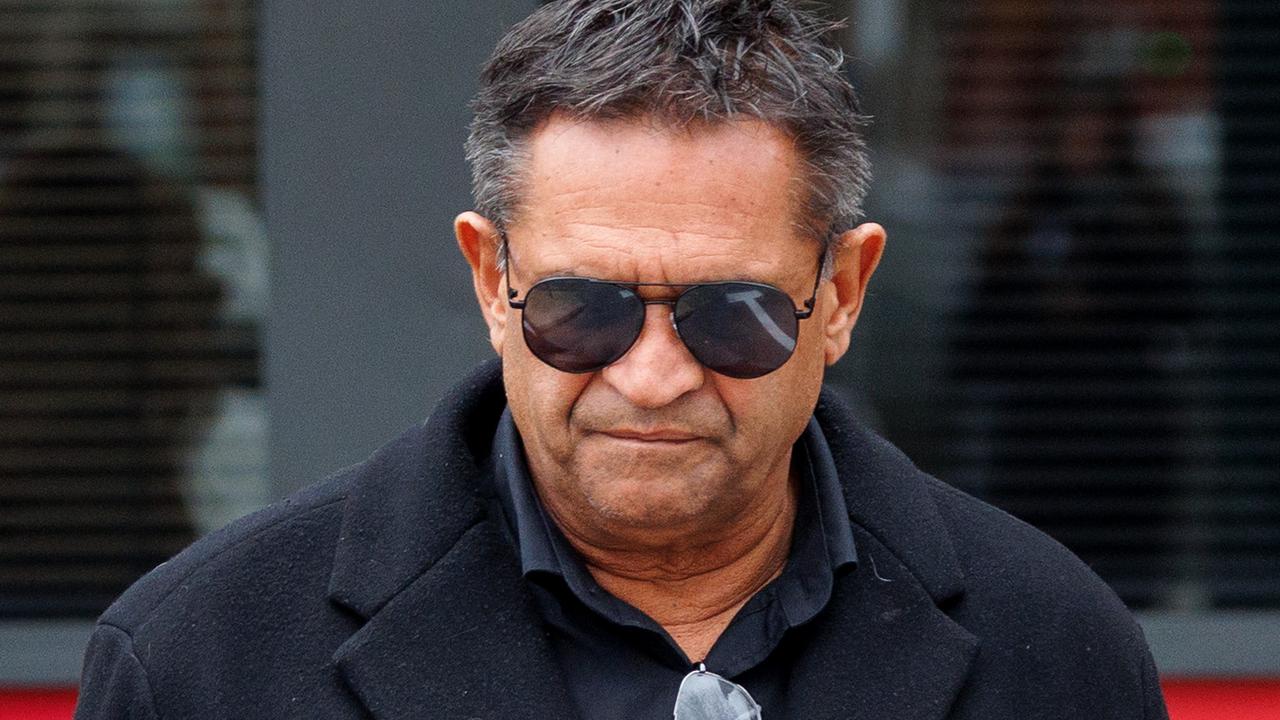
    One of Australian Football League’s most high-profile former players is preparing to learn his sentence Friday, after being convicted of a brutal assault on a woman at a regional Victorian motel, with prosecutors pushing for immediate jail time and his legal team advocating for a community-focused correction sentence.

    Now 60 years old, Winmar, a 13-season veteran of the elite AFL competition, appeared at Bendigo Magistrates’ Court just before 9:30 a.m. on Friday, avoiding assembled reporters and entering the building through a lesser-used side entrance. The former football star was found guilty in July this year on three separate counts of assault, though he was cleared of a more severe charge of intentionally causing grievous injury.

    The court heard details of the attack, which unfolded in May last year at a motel in northern Victoria. Winmar targeted a woman who cannot be identified for legal reasons, twisting her arm, dragging her across the room by her hair, and slamming her face into a solid door four separate times in a prolonged, violent outburst.

    In early August, prosecutor Annina Tropea made a formal submission to the court urging a custodial jail sentence for Winmar. She described the offending as prolonged, unprovoked, and unrelentingly violent, telling the court that the physical and psychological harm inflicted on the victim would have long-lasting, profound impacts that would continue for years to come.

    Winmar’s legal defense team, led by senior barrister Dermot Dann KC, has pushed back against calls for jail time, arguing that a community corrections order is the far more appropriate sentence for the former athlete. Dann told the court that at the time of the assault, Winmar was experiencing significant personal instability and was effectively unhoused. In the 12 months since the attack, however, the former player has made major, tangible progress to rebuild his life, including giving up alcohol entirely to address underlying personal issues. While Winmar continues to maintain he is innocent of the charges, he has acknowledged the seriousness of the offenses he was convicted of.

    During a pre-sentence hearing held on August 6, presiding Magistrate Trieu Huynh ordered a full assessment to determine whether Winmar was eligible for a community corrections order. At that time, the magistrate explicitly noted he had not yet reached a final decision on sentencing, leaving open the possibility of a standalone community order, or a combined sentence that includes both jail time and a period of community correction. All eyes are now on the Bendigo court as Winmar’s legal team and the prosecution await the magistrate’s final decision on his sentence.

  • UEFA target Infantino for ‘criminal mismanagement’, suspend boycott threat

    UEFA target Infantino for ‘criminal mismanagement’, suspend boycott threat

    The simmering power struggle within global football erupted into open conflict this week, as European football’s governing body UEFA has formally moved forward with plans to pursue criminal mismanagement charges against FIFA President Gianni Infantino, while temporarily stepping back from its threat of a widespread boycott of FIFA tournaments.

    The controversy centers on Infantino’s recently abandoned proposal to introduce private financing into the World Cup tournament structure, a plan that drew fierce backlash from multiple regional football confederations almost immediately after it was unveiled last month. On Thursday, following a gathering of UEFA’s 55 member associations in Monaco, the governing body announced it would provisionally suspend its call for European national teams to withdraw from upcoming FIFA-hosted competitions. The temporary pause offers a brief reprieve for key upcoming events, most notably next month’s women’s Under-20 World Cup hosted by Poland, which would have faced massive disruption if a full boycott went into effect.

    Despite pulling back on the boycott for now, UEFA made clear that the threat remains on the table, with the organization noting its position will be continuously reassessed and can be reversed immediately if changing circumstances warrant it. The so-called “nuclear option” of a boycott is widely credited with forcing Infantino to backtrack on his private financing plan just days after he announced it, a major reversal that left the FIFA president politically weakened.

    Far from stepping down its broader attack on Infantino’s leadership, UEFA has ramped up pressure through the courts. Legal documents reviewed by Agence France-Presse show the organization is actively preparing formal litigation, with plans to file evidence requests in a Florida U.S. court to support a future criminal complaint in Switzerland, where both FIFA and UEFA are headquartered. Under Article 158 of the Swiss Criminal Code, UEFA intends to bring criminal mismanagement charges directly against Infantino, with potential additional charges against other senior FIFA officials and external advisors tied to the proposal.

    The legal push centers on gaining full access to internal records related to FIFA’s proposed Forward Enterprise (FFE) plan, the formal name for the private financing initiative. Key documents include records of a closed-door meeting held at a New York City hotel on the eve of last month’s men’s World Cup final, where a small group of senior FIFA directors were briefed on the proposal. According to reporting from *The New York Times*, two of the five directors in attendance refused to approve the plan — including then-chief operating officer Kevin Lamour, who has since left his position at FIFA.

    UEFA confirmed that once it obtains the requested documentary evidence, it will file the formal criminal complaint in a Swiss court, noting it has already received legal confirmation that the filing meets all procedural requirements to be heard. “On information and belief, Infantino’s actions described herein rise to the level of criminal mismanagement,” UEFA stated in its legal filing.

    The conflict has thrown Infantino’s expected path to re-election into chaos just months ahead of FIFA’s presidential vote, scheduled for next March in Rabat. Prior to the controversy, Infantino was widely expected to win an unopposed fourth and final term, capping a 10-year run at the head of world football that followed a widely praised 2022 World Cup in Qatar.

    UEFA has been the most vocal critic of Infantino’s proposal, labeling it a “shady, opaque backroom deal,” but it has not stood alone in its opposition. The North American confederation CONCACAF and the Asian Football Confederation (AFC) have joined UEFA in a unified bloc against the plan, issuing a scathing joint letter earlier this month that called into question Infantino’s leadership. “Leadership in football is not a possession. It is not about holding — or demanding — power to be held,” the confederations wrote. “When trust is broken through deception, when an individual places himself above the collective that entrusted him with authority, that duty has been abandoned.”

    CONCACAF president Victor Montagliani is now widely seen as the most credible challenger to Infantino’s presidency, after UEFA chief Aleksander Ceferin ruled himself out of the race. Still, Infantino retains significant support across global football: 2034 World Cup hosts Saudi Arabia publicly backed the FIFA president on Thursday, while the African confederation CAF and South American confederation CONMEBOL have also voiced their support.

    For its part, UEFA remains unwavering in its goal of ending Infantino’s tenure as FIFA president. In its official statement announcing the temporary suspension of the boycott threat, UEFA closed with a clear rebuke of his leadership: “FIFA must once again be governed as an institution serving football – not operate as an instrument of individual power.”

  • Arsenal face depleted Aston Villa, Spurs seek return on £300m spend

    Arsenal face depleted Aston Villa, Spurs seek return on £300m spend

    The second week of the new Premier League season brings a slate of compelling fixtures, with headline stories ranging from a rebuild-challenged Aston Villa welcoming defending champions Arsenal to north London, where Tottenham Hotspur will look to turn around a disastrous opening weekend and deliver the first signs of a return on their record-breaking £300 million ($408 million) summer outlay on new talent.

    Across the top flight’s other standout matches, new Liverpool manager Andoni Iraola will make his first competitive home appearance at the iconic Anfield stadium hosting Nottingham Forest, while a shellshocked Manchester United will hunt for a much-needed confidence boost after their opening-weekend upset defeat at Hull, as newly promoted Ipswich Town visit Old Trafford.

    ### Villa’s Mass Exodus Leaves The Club Vulnerable Against Champions
    Monday’s headline clash at Villa Park carries extra narrative weight after a summer of staggering player departures that gutted Unai Emery’s squad, which secured a fourth-place Premier League finish and Europa League glory last season. Former Villa defender Ezri Konsa, who completed a summer move to Arsenal, could even make his Gunners debut in front of his old fanbase, where he is expected to face a frosty reception.

    Konsa is far from the only key departure: England midfielder Morgan Rogers swapped the West Midlands club for Chelsea in an £117 million deal, while Youri Tielemans moved to Manchester United and Lucas Digne secured a transfer to Paris Saint-Germain. Star striker Ollie Watkins and first-choice goalkeeper Emi Martínez are widely expected to follow the exodus before the summer transfer window closes.

    The scale of Villa’s squad turnover was laid bare on opening weekend, when the depleted side slumped to a 4-0 deficit against Brighton within just 31 minutes on their way to a heavy defeat. Now they face an Arsenal side brimming with title-winning confidence after a perfect start to their campaign: Mikel Arteta’s men have dispatched both Manchester City and Coventry by 3-0 scorelines to claim the Community Shield and kick off their title defense with a win.

    Even with long-term injury ruling out key centre-back William Saliba, Arsenal’s deep squad means Konsa may still have to wait for his first regular start. Despite the club’s crisis, Villa captain John McGinn remains optimistic the side can still turn in a successful campaign — as long as manager Unai Emery stays at the helm. “I’m still positive about the season but we need to make sure we keep hold of the manager,” McGinn told the *Stick to Football* podcast. “If we lose him, it’s a different story.”

    ### Spurs Look To New Signing Savio To Reverse Poor Fortunes
    Tottenham’s fanbase has waited years for the club to step into the role of the Premier League’s big spenders, but opening weekend brought a harsh reality check: Ange Postecoglou (correction: the content references new manager Roberto De Zerbi) side fell to a humiliating 3-0 defeat at Brentford, leaving supporters questioning where that £300 million transfer spend will deliver results.

    Since the opening weekend, Spurs have added two more top signings: winger Savio and forward Omar Marmoush, joined from Manchester City for a combined fee that could reach nearly £150 million. Savio’s £75 million price tag has drawn criticism from some quarters, after the Brazilian winger failed to secure a regular first-team spot during two years at City. But manager Roberto De Zerbi says he is confident the 20-year-old can transform Spurs’ fortunes after two consecutive 17th-place league finishes.

    “I think his biggest step and biggest improvement is to increase the number of goals because as qualities, I think he is one of the best wingers, but the best wingers score many goals,” De Zerbi explained after Savio scored on his debut in a midweek League Cup tie against Charlton. “Last season we suffered too much because also the number of goals were not enough to compete for nothing more than that (17th) position.” Savio will get his first chance to prove his worth in the Premier League when Newcastle United visit Tottenham Hotspur Stadium on Saturday.

    ### Iraola Prepares For Emotional Anfield Debut
    At Liverpool, new manager Andoni Iraola is preparing for his first home game in charge, after his opening away fixture at Newcastle delivered a late 2-2 draw thanks to a 99th-minute penalty from Dominik Szoboszlai. The growing pains of shifting the club to Iraola’s signature high-energy pressing system were clear in the match, as Newcastle hit the Reds twice on rapid counter-attacks to take a two-goal lead.

    Nottingham Forest have claimed away wins at Anfield in each of the past two seasons, but Iraola says he is expecting an emotional first home match at one of the world’s most iconic stadiums. “I think it’s going to be emotional and I think it has to be like this. It is a special place,” the Spaniard said. “I’ve had to fight a lot to arrive to this place and I hope everything goes well and I can enjoy also the game.”

    Below is the full fixture schedule for Matchweek 2 (all times listed in GMT):
    – **Friday**: Crystal Palace vs Manchester City (19:00)
    – **Saturday**: Liverpool vs Nottingham Forest (11:30), Coventry vs Hull City, Bournemouth vs Everton (14:00), Tottenham Hotspur vs Newcastle United (16:30)
    – **Sunday**: Leeds United vs Brentford, Sunderland vs Fulham, Chelsea vs Brighton & Hove Albion (13:00), Manchester United vs Ipswich Town (15:30)
    – **Monday**: Aston Villa vs Arsenal (19:00)

  • Air traffic controllers left early before deadly NY crash: report

    Air traffic controllers left early before deadly NY crash: report

    A bombshell new report has shed light on critical staffing irregularities that preceded the deadliest accident at New York’s LaGuardia Airport in more than three decades, where a collision between an Air Canada passenger jet and an airport fire truck claimed the lives of two pilots in March 2025. Citing unnamed industry sources, The Wall Street Journal broke the story Thursday that the two air traffic controllers scheduled to work the shift clocked out nearly an hour ahead of their end time, a common but unoffical industry practice known as an “early shove” that leaves the airport’s control tower critically understaffed when traffic volumes spike. On the day of the crash, LaGuardia Airport was handling more than double its typical daily air traffic, stretching the already reduced control tower team thin.

    Surveillance video from March 22 permanently captured the catastrophic moment: as the fire truck crossed the active runway in front of the approaching Air Canada jet, the aircraft collided head-on with the vehicle, sending both careening down the runway. Two firefighters inside the truck were killed in the impact, marking the first fatal accident at LaGuardia Airport since 1992.

    Following the revelation of the early departure, the Federal Aviation Administration (FAA) is moving forward with termination proceedings for the two controllers who left their posts early, according to the report. The widespread industry practice of early shoves has long been treated as an informal perk for air traffic control staff, often granted after particularly high-stress, long shifts to give team members extra time off. The FAA, however, has made clear that it will not tolerate practices that compromise national aviation safety. “The agency is committed to holding employees accountable, and we will not compromise the safety or efficiency of the National Airspace System,” an FAA spokeswoman stated in an official comment.

    While the full investigation into the crash is still ongoing, preliminary findings released in April already pointed to systemic failures in communication and outdated, insufficient equipment. One of the most serious errors uncovered by investigators to date was that air traffic controllers granted clearance for the fire truck to cross the active runway at the same time the Air Canada jet was on final approach. Just seconds after the clearance was issued, a controller on duty recognized the catastrophic mistake and issued an urgent stop command, yelling “stop stop stop” over the radio. Unfortunately, the driver of the fire truck could not confirm that the transmission was intended for his team, leading to a fatal delay in reaction.

    Investigators also identified a second critical equipment gap: the fire truck involved in the collision was not equipped with a working transponder. A functional transponder would have automatically alerted air traffic control that the truck and the approaching jet were on an imminent collision course, potentially giving controllers enough time to correct the error before impact.

    The 2025 LaGuardia crash joins a growing list of deadly aviation accidents in the United States in recent years, most notably the January 2025 mid-air collision between a commercial passenger jet and a U.S. Army helicopter near Washington D.C. that claimed 67 lives.

  • Harvey Norman warns of sales slowdown following federal budget, rate rises

    Harvey Norman warns of sales slowdown following federal budget, rate rises

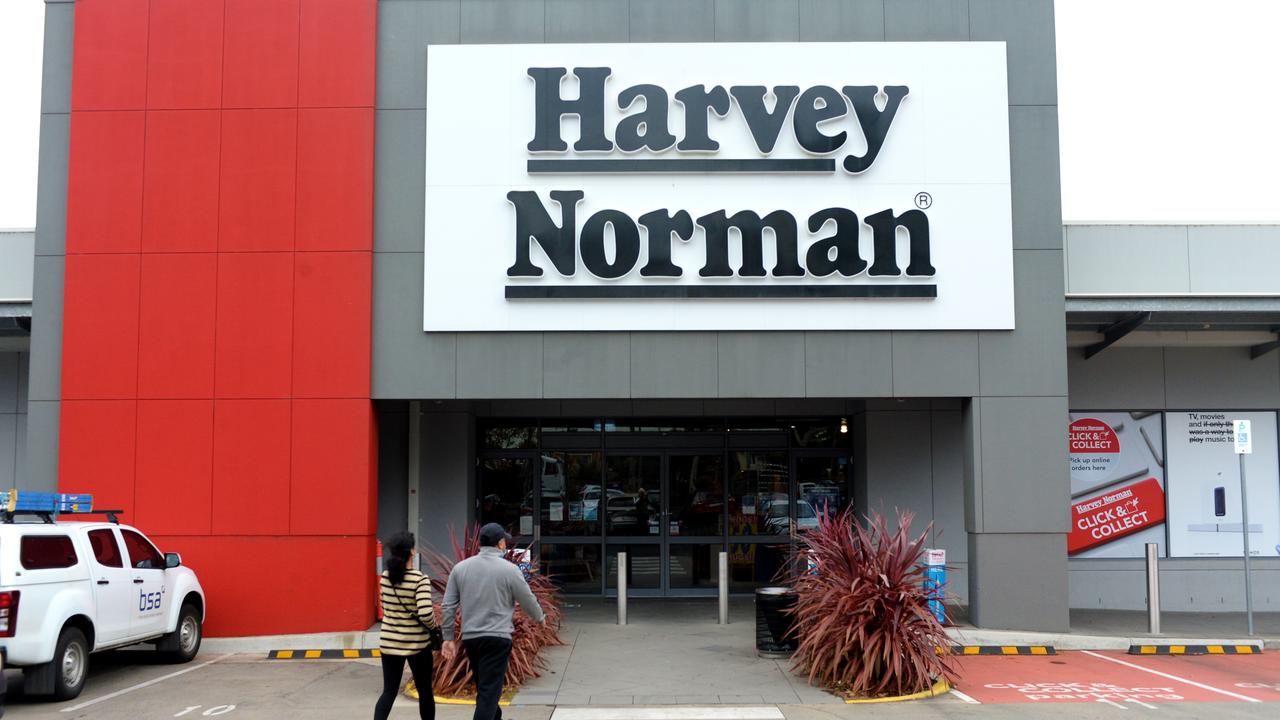
    One of Australia’s biggest retail names, Harvey Norman, has linked a sharp slowdown in sales growth in the second half of its financial year to weakened consumer confidence triggered by the federal government’s 2026 May budget, with mounting cost-of-living pressures and three consecutive interest rate hikes amplifying the strain on discretionary spending.

    The iconic furniture and electronics retailer reported a solid overall annual result in its latest market update, recording a 3.1% year-on-year rise in total sales to hit $9.6 billion, with Australian franchisee revenue accounting for $6.6 billion of that total. Net profit for the first half climbed 15.2% compared to the previous year, fueled by strong household spending through the key Christmas trading period. But the company made clear that momentum stalled immediately after the federal budget announcement, with consumers pulling back on non-essential purchases amid widespread economic uncertainty.

    “Consumer confidence softened further following the May 2026 federal budget, resulting in more cautious discretionary spending,” the company said in its official update.

    Chairman Gerry Harvey noted the business started the year on a strong trajectory, before a confluence of economic factors dragged down sales in the second quarter. The retailer stopped short of placing full blame on the federal government, also citing skyrocketing fuel and energy costs, elevated freight expenses, and the three consecutive interest rate increases from the Reserve Bank of Australia as key headwinds.

    The Albanese government’s 2026 budget introduced sweeping, once-in-a-generation changes to Australia’s capital gains tax and negative gearing rules, policies that have reshaped investor sentiment across the property and retail sectors. Starting July 1, 2027, the existing 50% capital gains tax discount will be replaced with an inflation-adjusted indexation system. A new 30% minimum tax rate on capital gains will take effect a year later in 2028, eliminating the long-standing tax advantage that allowed asset-rich, cash-poor households to sell assets during low-income years to reduce their tax burden. Negative gearing tax deductions have also been eliminated for new purchases of existing residential properties, though the policy retains existing arrangements for current landlords and allows negative gearing for newly constructed properties.

    Harvey Norman is not alone in facing challenging trading conditions. Fellow major Australian retailer JB Hi-Fi also flagged broader economic pressures when releasing its recent results. In a mid-August earnings call, CEO Nick Wells said the retailer saw a slow start to the new financial year driven by higher interest rates and fuel costs, but he remained optimistic that upcoming major sales events including Black Friday would boost revenue for the remainder of the year.

    Despite the second-half slowdown, Harvey Norman leadership struck a confident tone about the company’s long-term outlook. “The full-year sales result reflects a strong first half and a resilient performance across the Harvey Norman brands as retail conditions became more variable during the second half,” Mr. Harvey said. “Disciplined cost management and sales growth enabled us to absorb inflationary pressures and continue to invest in our expansion initiatives.” He added that the business is well positioned to deliver sustainable long-term growth for its shareholders.

  • Clashes in Spain’s Ceuta month after mass migrant influx

    Clashes in Spain’s Ceuta month after mass migrant influx

    One month after a sudden, chaotic surge of migrant crossings from Morocco into Spain’s tiny North African enclave of Ceuta, long-simmering local frustrations boiled over into violent clashes between residents and Spanish police Thursday.

    The small territory, measuring just 18 square kilometers, has been grappling with simmering unrest since more than 70,000 migrants crossed into Ceuta in late July, many swimming across the border or entering on foot. The unprecedented influx left dozens dead and sparked new friction within the European Union over migration policy. While the vast majority of arrivals returned to Morocco within hours, an estimated 3,500 to 10,000 migrants remain in the territory, with hundreds camping rough on local beaches and hundreds more unaccompanied minors requiring care.

    Local tensions reached a breaking point this week. Early Thursday, a police spokesperson confirmed that a military vehicle carrying four Spanish soldiers was ambushed by roughly 70 migrants, who pelted the vehicle with stones and other projectiles. All four soldiers fled the scene and called for police backup; one soldier suffered only minor injuries, and officers ultimately detained 12 Moroccan migrants in connection with the attack. No clear motive for the assault has been released as of yet.

    The violence quickly spread to the beach where hundreds of migrants have been camping without formal shelter. Dozens of local protesters first staged a sit-in to block Red Cross vehicles from delivering food and supplies to migrants, with demonstrators waving Spanish flags and chanting slogans calling for all migrants to leave Ceuta and demanding the aid organization exit the area. When protesters moved into the migrant camp area on the beach, police moved to disperse the crowd, with public television footage showing some personal belongings set ablaze during the unrest. The clashes came just hours after police used tear gas Wednesday night to break up potential confrontations between local protesters and migrant camp residents.

    Ceuta residents have staged repeated protests over the past month, citing widespread public safety risks and unsanitary conditions created by the large unhoused migrant population. Speaking to Spanish news radio SER Thursday, Kissy Chandiramani, finance councillor for the autonomous city’s government, described the atmosphere as extremely tense, saying local residents feel abandoned by the central government in Madrid with no clear solution to the crisis. Still, Chandiramani called for calm, affirming that while locals have a right to protest, rising hostility will not resolve the ongoing emergency.

    Spain’s left-wing national government, led by Prime Minister Pedro Sanchez, has come under intense criticism from local leaders and opposition parties for its slow response to the crisis. The criticism has intensified after Sanchez proceeded with his scheduled summer vacation as the situation worsened, only convening a meeting of the national security council after he returned to the capital earlier this week.

    In recent days, the central government has taken steps to ramp up its response. The Interior Ministry announced Thursday it would deploy additional personnel to speed up migrant identification processing, and the cabinet approved 25 million euros in new funding to care for unaccompanied minor migrants, who are guaranteed special legal protections under Spanish and EU law. On Tuesday, the cabinet approved the creation of a unified “single command” structure to coordinate the response in Ceuta, led by Territorial Policy Minister Angel Victor Torres. Justice Minister Felix Bolanos told lawmakers in Madrid this week that authorities are working “without rest” to return Ceuta to normalcy, and have already begun expanding temporary shelter space and accelerating processes to determine which migrants qualify for asylum and which will be deported back to Morocco.

    The migration crisis has deepened existing political divisions across Spain, just months ahead of a scheduled national general election. Conservative and far-right opposition parties have called for the immediate deportation of all remaining migrants. Popular Party leader Alberto Nunez Feijoo, head of Spain’s main opposition bloc, criticized the government’s response in a post on X Thursday, saying Ceuta residents have been left to handle the crisis alone for a full month. “Nothing was done to prevent the invasion … and nothing is being done to stop the public-order crisis that is worsening every day,” Feijoo wrote.

  • NSW Police Minister Yasmin Catley grilled during budget estimates hearing

    NSW Police Minister Yasmin Catley grilled during budget estimates hearing

    Three hours after the latest developments in the wake of December’s deadly Bondi Beach terror attack, New South Wales Police Minister Yasmin Catley has repeatedly declined to answer critical questions about how alleged attacker Sajid Akram secured his firearms licence, pointing to the ongoing royal commission as her reason for remaining silent.

    The Royal Commission into Social Cohesion and anti-Semitism, led by former High Court justice Virginia Bell, wrapped up public evidence hearings on Wednesday and is scheduled to deliver its final findings to the government in mid-December. Appearing before a state budget estimates hearing on Friday, Catley stood by her earlier public explanation that years-long processing backlogs at the NSW Firearms Registry were to blame for the timeline of Akram’s licence approval, which came ahead of the December 14, 2025 attack that left 15 innocent people dead.

    The hearing was presented with official data showing that in 2020, the year Akram submitted his firearms licence application, the average processing time for Category A and B firearms sat at 96 days overall, dropping to 76 days in the second half of that year. When Liberal MLC Susan Carter asked Catley if her earlier public explanation of the delay was factually incorrect, the minister acknowledged it was only the information she had been given at the time of her initial statement.

    Catley repeatedly emphasized that all stakeholders should wait for the royal commission’s final report before drawing conclusions, noting that public discussion of unresolved details could risk prejudicing both the ongoing criminal case against Akram’s son, Naveed, and the commission’s independent inquiry. Naveed Akram remains in jail on remand, facing 78 criminal charges including terrorism and murder over the antisemitic attack targeting a Chanukah gathering at Bondi Beach.

    During questioning, Catley was shown minutes from a March 2022 meeting of the Firearms Registry Consultative Council, which recorded four outstanding internal application reviews at that time. Mark Banasiak, MLC for the Shooters, Fishers, and Farmers Party, put to Catley that Sajid Akram’s application was one of those four reviews, contradicting the official advice she had received previously. Catley responded that she could not confirm that detail, but had been advised that there were between 100 and nearly 150 outstanding applications overall at that point.

    Pressed to explain how Akram’s licence application went from an initial rejection to final approval, Catley again said any concrete answer would have to come from the royal commission. Banasiak pushed back, stating that evidence now confirms Akram’s application was first rejected before being approved at a later stage, and that key unanswered questions remain over whether the reversal came during the internal review process or after an appeal to the NSW Civil and Administrative Tribunal. Catley told the hearing she had not received official advice on that detail, adding that police have informed her there is no record of Akram requesting an internal review.

    Earlier in the hearing, Catley issued an angry rebuttal to what she called a “dangerous suggestion” that the issuing of a firearms licence could be a political decision. She told Carter that if she as minister ever intervened to approve a licence, the public would be rightly alarmed, noting that firearm licensing is an independent administrative process, not a political one.

    The hearing also heard that 18 of 22 new positions allocated to the Firearms Registry to help implement new legislative reforms have already been filled. In the immediate aftermath of the Bondi attack, the NSW government rushed through sweeping new firearms regulations, including cuts to the maximum duration of licences and caps on the number of firearms most individual owners can hold.

    Catley also declined to take a clear public position on a proposal to arm the Jewish community security group CSG for street patrols following the attack. Questioned by independent MLC Mark Latham – who has been accused of, but denies, anti-Semitism – Catley noted that CSG already has authorization to carry firearms when guarding static sites. She highlighted expanded police capabilities, including the deployment of officers armed with long-range firearms across the state, and said the proposal remains under government consideration as the premier has previously stated. “I do support the police’s approach … which is right across metropolitan Sydney as well, which is important that we protect all of the community,” she said. Greens MLC Sue Higginson pressed Catley on whether arming CSG for patrols would align with the government’s public goal of removing unneeded guns from streets to improve public safety, but Catley only reiterated that static armed security is already permitted for the group.

    Discussion also turned to the state’s upcoming gun buyback scheme, a core part of the new reforms. Catley confirmed that the cap on personal firearms ownership for existing licence holders will not enter into force until regulations are finalized, which is expected to happen by the end of 2026. The buyback scheme will launch before that cap takes effect, she confirmed.

    Catley clarified that gun components such as sights that become unused due to reclassification or ownership limits will not be included in the buyback, as the components themselves are not being classified as illegal. The same rule applies to gun safes that may become redundant after owners reduce their firearms holdings, as private ownership of gun safes remains legal. Ammunition will be included in the buyback, but the details are still being finalized: ammunition held for firearms that an owner no longer retains will be eligible for buyback, as it is illegal to hold ammunition for unregistered firearms.

    On the $10,000 value cap for individual high-value firearms in phase two of the joint NSW-federal buyback scheme, Catley said the limit was developed after extensive consultation with stakeholder groups. She also confirmed that the $250 million total funding allocated for the buyback will not be drawn from the NSW Police operating budget.