作者: admin

  • ‘A World Cup for them not us’: Fans’ anger at US travel bans and visa restrictions

    ‘A World Cup for them not us’: Fans’ anger at US travel bans and visa restrictions

    The 2026 FIFA World Cup, the first iteration of the expanded 48-team tournament, is just weeks away, with 78 of its 104 matches including the final hosted across U.S. cities. But for thousands of passionate fans from qualified nations across Africa, the Middle East, and beyond, the dream of cheering on their national teams inside a World Cup stadium remains out of reach, blocked by a web of restrictive U.S. visa policies, security-related service suspensions, and systemic barriers that have sparked widespread accusations of discrimination.

    Iraqi football supporter Abdulla Adnan embodied this heartbreak long before the first kickoff. When Iraq secured only its second World Cup qualification in history in March 2026, the first since 1986, Adnan jumped at the once-in-a-generation opportunity. He immediately purchased tickets for Iraq’s group stage matches against Norway in Boston and France in Philadelphia, already imagining the roar of the crowd and the rush of seeing his national team compete on soccer’s biggest stage. “To go to a match, a stadium, a crowd, cheering, and see my team – that is worth the world to me,” Adnan said. “It’s a feeling that no other feeling can compare to.”

    But what seemed like a done deal quickly unraveled when it came to securing a U.S. travel visa. Unexpectedly, Iraq is not included in the Trump administration’s current travel ban list, so Adnan’s barrier came from another source: in the wake of heightened regional tensions following the outbreak of the US-Israel conflict with Iran, the U.S. suspended routine consular visa services across Iraq over security concerns. Since all tourist visa applicants are required to complete an in-person interview, there is no way for Iraqi fans to apply for a visa within their own country.

    Adnan’s solution? He spent hundreds of dollars traveling to neighboring Jordan to apply at the U.S. embassy in Amman. When he arrived for his scheduled appointment, however, consular staff turned him away immediately, informing him that non-Jordanian citizens could not process visa applications at that post. He considered traveling to Turkey to apply, but learned the wait for an interview could stretch to two weeks, a timeline he could not accommodate due to work and family commitments. In total, Adnan spent roughly $1,800 on match tickets and travel to Jordan, all for a visa application he never got to submit. He has since abandoned his dream of attending the tournament.

    Adnan is far from alone in his struggle. A new analysis of travel and visa data from BBC World Service has found that fans from more than a quarter of the 48 qualified World Cup nations face outright travel bans, sharply tightened entry restrictions, or disproportionately high visa rejection rates that have put attendance out of reach for most supporters.

    For fans from four qualified nations – Haiti, Iran, Senegal, and Ivory Coast – barriers stem directly from the Trump administration’s entry bans and enhanced visa restrictions, which bar citizens of these countries from accessing the B1/B2 visitor visas U.S. authorities recommend for World Cup fans. Strict immigration controls and a crackdown on undocumented migration were a central plank of Trump’s 2024 re-election campaign, and administration officials defend the rigorous system as a necessary measure to manage cross-border population flows and national security risks.

    But fans and fan association leaders say the rules amount to open racial and geographic segregation. Julien Kouadio Adonis, a leader of Ivory Coast’s official fan association the National Committee for the Support of the Elephants, says his group scrapped all plans to send a delegation of supporters to the tournament this year after reviewing the visa rules. “It’s a form of segregation that doesn’t dare speak its name, but the proof is there,” Adonis said. “No European country has faced this kind of restriction. Why Africa?”

    Adonis added that a host nation that refuses to welcome supporters from all qualified teams does not deserve to host the world’s biggest sporting event. “Football is a spectacle and a spectacle needs people watching,” he noted.

    Systemic inequities are baked into the U.S. visa waiver program, which grants pre-approved, visa-free entry to citizens of 42 mostly wealthy nations, none of which are located in Africa. For fans from visa-required countries, the recommended B1/B2 tourist visa costs $185 per applicant, requires an in-person interview, and demands that applicants prove they will depart the U.S. after the tournament and can cover all travel costs.

    In a partial concession to fan outcry, the U.S. announced in May that it would drop the requirement for cash deposits of up to $15,000 for fans from five qualifying African nations – Algeria, Cape Verde, Ivory Coast, Senegal, and Tunisia – so long as they hold valid match tickets. Even with that change, however, fans face overwhelming odds of rejection.

    Senegalese fan Aliou Ngom, who attended the 2018 World Cup in Russia and the 2022 tournament in Qatar, has already decided not to even apply for a visa. For Ngom, one of the greatest strengths of the World Cup is its ability to bring global cultures together inside stadiums, but he sees little point in wasting time and money on an application he expects to be rejected, following a pattern of visa denials that led to the cancellation of a U.S. training camp for Senegal’s women’s national basketball team last year.

    BBC analysis of U.S. State Department data from October 2024 to September 2025 found that citizens of 11 qualified nations face an overall B1/B2 visa rejection rate higher than 40% – well above the global average of 34% for all visitor visa applicants. The 11 countries include Ecuador, Egypt, Haiti, Algeria, Uzbekistan, Cape Verde, Jordan, Iran, the Democratic Republic of the Congo, Ghana, and Senegal.

    These high rejection rates put fans in an impossible position: buy tickets in advance for hundreds or thousands of dollars, risking total loss if their visa is denied, or wait for visa approval and risk missing out on tickets altogether. FIFA does allow ticket holders to resell unused tickets on its official platform for a small fee, and launched the FIFA Pass system to prioritize ticket holders for earlier visa interview slots. Immigration attorney Celine Atallah, who runs a practice near Boston, called FIFA Pass a positive step to streamline scheduling, but noted it does nothing to improve the odds of a visa being approved.

    “The visa system is the invisible gatekeeper of the World Cup,” Atallah said. “Fifa can sell a ticket, but the US government decides who gets a visa, and CBP [Customs and Border Protection] decides who actually enters.” Even with an approved visa, border officials retain the authority to deny entry to any traveler on arrival.

    For Jordan, which qualified for its first ever World Cup in June 2025 after beating Oman in qualifying, 57% of all U.S. visa applications were rejected in the 12 months ending September 2025 – one of the highest rejection rates of any qualifying nation. Abu Kass, head of Jordan’s national football fan association, says he has yet to hear of a single Jordan-based fan who has successfully obtained a U.S. visa for the tournament. Kass himself brought more than 42 supporting documents to his visa interview in Amman, only to have his application rejected without explanation – U.S. authorities do not typically provide reasons for visa refusals.

    “This World Cup is not ours,” Kass said. “It’s not for Arabs this World Cup, it’s for them. If the head of the fan association was refused, who will be accepted?”

    In a statement to the BBC, a State Department spokesman said the administration was “prepared to welcome visitors from around the globe for the largest and greatest Fifa World Cup in history.” The spokesman noted that most overseas fans already do not need visas to enter the U.S., either because they are from visa-waiver countries, Canadian citizens, or already hold valid U.S. visas. “We will take the time necessary to ensure an applicant does not pose a risk to the safety and security of the United States,” the statement said, adding that all applications are adjudicated on a case-by-case basis after rigorous security vetting.

    U.S. Department of Homeland Security officials have emphasized ongoing concerns over visa overstays, pointing to more than 538,000 overstay events between October 2023 and September 2024. Prior to the Trump administration’s expanded crackdown on undocumented migration, Pew Research Center estimated there were roughly 14 million undocumented immigrants residing in the U.S. in 2023.

    While the U.S. hosts the vast majority of 2026 World Cup matches, co-hosts Canada and Mexico face their own barriers for traveling fans. Canada has not enacted country-wide travel bans, but recently introduced entry restrictions for nations affected by the 2026 African Ebola outbreak, which includes qualified nation the Democratic Republic of the Congo. Canada also requires biometric scanning for all visa applicants, but has no in-country scanning facilities for two qualified nations: Iran and Cape Verde. Canada’s overall visa refusal rate hit 54% in 2025, and does not publish disaggregated data by country or visa type.

    Mexico, which does not publish official visa refusal data, requires all visa applicants to complete an in-person interview at an embassy or consulate. For eight qualified nations – Cape Verde, Democratic Republic of the Congo, Ivory Coast, Senegal, Uzbekistan, Bosnia and Herzegovina, Tunisia, and Iraq – Mexico has no diplomatic mission, leaving fans with no domestic path to apply for a visa, mirroring the issues Iraqi fans face with U.S. consular services.

    For millions of passionate football fans who waited decades to see their nations qualify for the World Cup, the systemic barriers across the three host nations mean a once-in-a-lifetime opportunity has been lost before the tournament even begins.

  • One Nation did not have housing policy ‘written down’ at time of on-air bungle: Joyce

    One Nation did not have housing policy ‘written down’ at time of on-air bungle: Joyce

    Australia’s political landscape has been thrown into fresh chaos this week, as a stunning surge in polling for far-right party One Nation has been overshadowed by a series of embarrassing policy blunders that have raised serious questions about the party’s preparedness to govern. At the center of the controversy is veteran political figure Barnaby Joyce, who has conceded he made a major misstatement during a live television interview on One Nation’s proposed housing policy — an error he blames on the fact that the full details of the policy were never formally documented. The unforced error has sparked fierce criticism from the ruling Labor government and laid bare deep inconsistencies in how One Nation representatives communicate key policy proposals to voters.

    The drama unfolded on Thursday, when Joyce appeared on Sky News to outline One Nation’s plan to restrict property ownership by non-Australians. The policy, broadly framed to prioritize home access for Australian citizens, requires non-residents to sell any Australian properties they own within a two-year window. During the interview, Joyce incorrectly stated that permanent residents would be caught by the new rules. Only hours after the segment aired, he was forced to return to the same program to issue a hasty correction, clarifying that permanent residents would not be forced to sell their homes.

    One Nation leader Pauline Hanson later stepped in to lock in the clarified position, confirming the policy would only target foreign owners, specifically temporary visa holders. Even with Hanson’s intervention, however, confusion persisted: the following day, One Nation Senator Sean Bell was unable to answer basic follow-up questions about the policy during an interview with 2GB, including what enforcement measures would apply if a property was not sold within the mandated two-year period. When Bell repeatedly dodged the question, host Mark Levy cut the interview short, describing the exchange as a “trainwreck.”

    Days after the initial blunder, Joyce broke his silence on the controversy during an appearance on Seven’s *Sunrise*, where he made a major concession that has reignited debate over One Nation’s policy credibility. He admitted that at the time of his Sky News interview, the party had not formally drafted or written down the details of the housing policy. “I made a mistake because we didn’t have the policy written down, and I corrected it on the same news… and all of a sudden they’re saying One Nation is over,” Joyce said. He pushed back against critics, arguing that voter dissatisfaction with the current government, not a single interview misstep, is driving One Nation’s growing support. “People have changed, not because of an interview on Sky. People have changed because they don’t trust [the government] anymore, and their lives are not getting better,” he added. Labor Social Services Minister Tanya Plibersek quickly called out Joyce’s admission, pressing him: “So you just made it up? You didn’t have it written down?”

    The policy chaos comes as new polling data delivered a seismic shift in Australian federal voting intentions. The latest Newspoll conducted for *The Australian*, which surveyed 1,240 voters between the previous Monday and Thursday, recorded One Nation’s primary vote surging to 31 percent — putting the party one point ahead of the ruling Labor Party on 30 percent, and far ahead of the opposition Coalition, which recorded just 18 percent primary support. While Labor remains ahead of both One Nation and the Coalition on a two-party preferred basis, the primary vote result marks a historic high for Pauline Hanson’s far-right party and signals deep voter unrest with the established political order.

    Responding to the new polling, Plibersek acknowledged that Australian voters are hungry for major change, but argued that Labor is the only party capable of delivering meaningful reform. “We agree this country needs to be changed so that it’s fairer, so people get paid more, taxed less, they get the health and education services that they deserve,” she said. “We agree with all of that. That’s what we’re changing. One Nation is the party that’s opposing those changes.” As the fallout from the policy blunder continues, political observers are watching closely to see whether the confusion around the housing policy will erode One Nation’s newly gained support ahead of any future federal election.

  • Billy Slater brings back Reece Walsh for pivotal MCG showdown as Maroons look to save the Origin series

    Billy Slater brings back Reece Walsh for pivotal MCG showdown as Maroons look to save the Origin series

    With just over a week remaining until the second State of Origin clash at Melbourne’s MCG, Queensland Maroons head coach Billy Slater has finalised his adjusted squad, making a high-stakes call on controversial Broncos fullback Reece Walsh that has reshaped the side’s lineup for the must-win matchup.

    Queensland enters the June 17 showdown facing a do-or-die scenario: a loss to the New South Wales Blues will see their opponents clinch the 2025 series outright, while a Maroons win will force a deciding decider on Queensland home soil. To pursue that outcome, Slater has shaken up his game one roster, with Walsh’s return standing as the most notable adjustment.

    Walsh, a Brisbane Broncos fullback, has earned a spot on the Maroons’ extended bench, ousting fellow Broncos teammate Ezra Mam, who has been dropped entirely from the squad. Mam’s exit comes off a tough weekend for the young playmaker, who was already demoted to the Broncos’ reserve bench before a late, poor decision in a clutch moment contributed to Brisbane’s narrow loss to the Gold Coast Titans. While Walsh has not delivered his dominant best form throughout the 2025 NRL season, he has still beaten out Mam for a recall to the Origin side, marking his first potential appearance in the series since 2024. Kalyn Ponga, who was sent off early in Queensland’s game one collapse in Sydney, will retain his starting fullback position despite the high-profile disciplinary incident.

    The squad also features a first-time Origin call-up: Dolphins forward Kulikefu Finefeuiaki will make his Maroons debut from the bench, rewarded for a breakout, standout start to his 2025 NRL season. Injuries have forced two other key absences: starting forwards Pat Carrigan and Gehamat Shibasaki will both miss the clash, opening a bench spot for winger Murray Taulagi.

    Slater also made a small but strategic adjustment to his starting 13: Reuben Cotter will shift from an edge forward position to lock, which moves Briton Nikora into the starting back row, while Max Plath drops back to the extended bench.

    The revised full Maroons squad for game two is: Kalyn Ponga, Selwyn Cobbo, Robert Toia, Hamiso Tabuai-Fidow, Jojo Fifita, Cameron Munster, Sam Walker, Thomas Flegler, Harry Grant, Tino Fa’asuamaleaui, Briton Nikora, Kurt Capewell, Reuben Cotter, Max Plath, Lindsay Collins, Kulikefu Finefeuiaki, Trent Loiero, Reece Walsh, Murray Taulagi, Heilum Luki.

    The Blues are set to announce their own game two squad at 7pm AEST, with the side eyeing a series-clinching win on Melbourne ground to wrap up the Origin trophy early.

  • Friendship or leverage: Why is Xi Jinping going to North Korea?

    Friendship or leverage: Why is Xi Jinping going to North Korea?

    For more than seven decades, China and North Korea have framed their bilateral ties as a “blood-forged” alliance, rooted in their shared struggle during the Korean War. Yet for Beijing, this geographically proximate neighbor has long occupied a complicated position: it is a strategic buffer against U.S. military presence in Northeast Asia that China cannot afford to lose, but its unpredictable nuclear ambitions and independent foreign policy put it far beyond China’s full control. Now, as North Korea draws increasingly close to Russia, Beijing is moving to reassert its influence over this critical, volatile partner, ahead of an expected visit by Chinese leader Xi Jinping to Pyongyang this week.

    Diplomatic observers widely frame Xi’s upcoming trip as less a celebration of historic friendship and more a calculated push to reinforce China’s leverage. For years, strains of mistrust have eroded the once-closer relationship between Beijing and Pyongyang, a shift that became starkly visible in 2024. The 75th anniversary of bilateral diplomatic relations passed with muted public messaging and little fanfare; China’s ambassador skipped North Korea’s national founding celebrations earlier that year, and no senior-level diplomatic exchanges took place across the entire year. This inactivity stood in sharp contrast to the rapidly warming public ties between Pyongyang and Moscow, a development that has quietly unsettled Chinese leaders.

    Western diplomatic sources familiar with regional dynamics confirm that Beijing has grown increasingly concerned over the deepening partnership between North Korea and Russia. Following North Korea’s 2022 invasion of Ukraine, Pyongyang has dramatically expanded military cooperation with the Kremlin, culminating in a sweeping mutual defense pact signed during Russian President Vladimir Putin’s visit to Pyongyang in 2024. A BBC investigation estimates that roughly 2,300 North Korean troops have been killed fighting alongside Russian forces in Ukraine, and Pyongyang has been widely accused of supplying large volumes of ammunition to Russia’s war effort in exchange for Russian oil and economic aid. While this arrangement has sparked public alarm from Washington and its regional allies, it has also caused quiet anxiety in Beijing.

    “China wants to ensure that its interests vis-a-vis North Korea are protected at a time of rapid convergence between Moscow and Pyongyang,” explains Ankit Panda, a nuclear policy specialist at the Carnegie Endowment for International Peace. China holds only one formal mutual defense treaty globally, and it is with North Korea. For Beijing, a scenario where Russia becomes the dominant external power in Pyongyang is far from ideal: a more confident, less economically dependent Kim Jong Un would almost certainly erode China’s historical leverage over the Korean Peninsula.

    Scholars note that Beijing holds mixed views of the Pyongyang-Moscow rapprochement. On one hand, the closer alignment distracts U.S. attention and complicates American strategic planning across multiple global regions, a shift that indirectly benefits Chinese interests. On the other hand, expanding military ties between North Korea and Russia could trigger a far more robust military response from the U.S.-Japan-South Korea trilateral alliance, a development that would greatly increase security pressure on Beijing. This balancing act shapes China’s approach to North Korea’s nuclear program: Beijing has not publicly endorsed Pyongyang’s nuclear ambitions, recognizing that open support would draw deeper U.S. military involvement into the region, but it has also refused to confront North Korea head on. In 2022, China joined Russia in vetoing a U.S.-led United Nations resolution that would have imposed new sanctions on North Korea over its repeated missile tests. As Victor Cha, head of foreign policy at the Center for Strategic and International Studies, puts it: a hardline Chinese stance against Pyongyang’s nuclear program would only push North Korea deeper into Russia’s orbit.

    To pull Pyongyang back into its sphere of influence, Beijing has already taken incremental, calculated steps. Late last year, Xi invited Kim Jong Un to attend a military parade in Beijing, where he was placed prominently alongside Putin, marking the two leaders’ first formal summit in six years. During the meeting, Xi described the two countries as “good neighbours, good friends and good comrades bound by a shared destiny” and called for expanded strategic coordination, with no public mention of North Korea’s controversial nuclear arsenal. Trade ties have also deepened: Chinese exports to North Korea surged to roughly $2.3 billion (£1.7 billion) in 2025, the highest level recorded in six years, and cross-border passenger rail services between Beijing and Pyongyang restarted earlier this year following a six-year suspension. All these moves, analysts say, are designed to rebuild Beijing’s sway.

    For Kim Jong Un, maintaining positive ties with China is also a pragmatic strategic choice. Kim cannot afford to alienate his largest historical source of economic aid, and there is long-term uncertainty in his alignment with Moscow: if the war in Ukraine ends, Russia’s need for North Korean military support could diminish significantly. Unlike an increasingly isolated Putin, Xi continues to host high-profile global diplomatic engagements in Beijing, giving China far more strategic leverage on the global stage than a war-weakened Russia. For Kim, balancing ties between the two major powers reduces the risk of being left reliant on a single, weakened partner.

    This current push for rapprochement comes after decades of growing tension between the two neighbors. When Kim Jong Un inherited power from his father Kim Jong Il, he quickly shifted priorities away from the close alignment with Beijing his father had maintained. Instead, he accelerated North Korea’s nuclear and ballistic missile programs, conducting roughly 90 missile tests and four nuclear detonations in his first six years in office — more than both his father and grandfather combined. The rift deepened following the 2013 execution of Jang Song Thaek, Kim’s uncle, who was widely viewed in Beijing as a pro-China stabilizing force in Pyongyang. Xi responded with a rare public snub, visiting South Korea for the first time in 2014 before ever meeting Kim, a move that prompted Pyongyang to publicly label China a “turncoat and our enemy.” It was not until 2018, when international sanctions over North Korea’s nuclear program began to severely damage the country’s economy, that Kim made his first known foreign trip as leader, traveling by armoured train to Beijing to reset ties. After that summit, Kim always consulted Beijing ahead of any high-profile meetings with U.S. and South Korean leaders, sending a clear signal that Pyongyang would not negotiate over its future without China’s backing.

    Today, the dynamic remains unchanged at its core: North Korea acts as both a strategic buffer and a persistent policy burden for China. It keeps U.S. military forces at a distance from China’s northeastern border, but its regular weapons tests consistently destabilize the regional security environment. For Kim, the relationship is equally transactional: he wants Chinese economic and diplomatic protection, but refuses to submit to full Chinese control. Neither side holds full trust in the other, but both recognize that continued engagement serves their core strategic interests for the foreseeable future, keeping the door open for dialogue despite underlying tensions.

  • ‘We don’t look at the sky anymore’: The Air India crash victims who were not on the plane

    ‘We don’t look at the sky anymore’: The Air India crash victims who were not on the plane

    Twelve months have passed since an Air India passenger jet bound for London slammed into the BJ Medical College hostel complex in Ahmedabad, leaving 260 people dead – 241 onboard the aircraft and 19 on the ground. For the local community that bore the brunt of the disaster, time has not erased the raw pain of loss, nor has it removed the mangled, burned wreckage that stands as a permanent reminder of that fateful June day.

    The first thing Prahlod Thakur sees every morning when he opens his eyes are the framed photographs of his wife Sarlaben and two-year-old granddaughter Aadhya, hanging on the flaking bright green walls of his small home, tucked between religious symbols, tarnished brass cookware, and decades-old fading family portraits. Both were at the college on the day of the crash: for 15 years, Thakur’s family ran a popular tiffin meal service for trainee doctors and staff at the adjacent hospitals, and Sarlaben was working the lunch shift at the hostel mess when the plane hit. When Aadhya, who rarely left her grandmother’s side, needed to use the restroom, the pair climbed the stairs together. Seconds later, the aircraft crashed through the building’s roof.

    Thakur, working in another part of the campus that day, dropped everything and ran toward the thick black smoke rising from the wreckage. All he can recall now are fragmented, terrifying memories: the deafening explosion, searing heat, gas cylinders scattered across the destroyed kitchen, and his desperate, frantic search, calling Sarlaben’s name over and over through the rubble. For six days, Thakur and his family combed through every hospital, morgue, and relief camp across Ahmedabad, chasing unconfirmed leads and clinging to faint hope. It was only on the sixth day that they recovered the bodies of Sarlaben and Aadhya from a city mortuary.

    Today, the loss feels as sharp as it did the day after the crash. “I just miss them,” Thakur says softly. “I see the photos and feel like crying.” Whenever a plane passes overhead – a daily occurrence so close to Ahmedabad’s airport, once just a familiar part of the city’s background hum – the old pain rushes back. “Whenever a plane passes by, we feel the same pain. We don’t even look at the sky,” he says. The 72-year-old now copes by replaying a short video on his phone, recorded just one day before the crash: in it, a tiny Aadhya carefully lifts a morsel of food to feed her smiling grandmother. Outside his window, another jet crosses the pale Ahmedabad sky. Thakur does not look up.

    Unlike most disaster sites, where rubble is cleared and scars are smoothed over within months, the wrecked BJ Medical College hostel still stands, an open wound less than two kilometers from Ahmedabad’s airport. Its upper floors are ripped open to the sky, jagged slabs of exposed concrete hang loose, a smoke-blackened staircase vanishes into inky darkness, and soot streaks every concrete wall. Buried under the dust, broken concrete, and twisted steel beams, personal belongings – suitcases, textbooks, clothing – still remain, left untouched since the crash. Local officials have approved plans to raze the damaged structure and build a new hostel, but as the first anniversary approaches, the ruins still stand.

    For the trainee doctors who study and walk past the wreckage daily, the crash left psychological scars that have yet to fade. Arman Khan Pathan, a second-year student, had just sat down for lunch when the crash struck. A collapsing section of wall pinned his legs under a heavy table, and as secondary gas explosions filled the room with dust and smoke, rescuers were pushed back to safety. Trapped, suffocating in total darkness, Arman managed to break a window with his bare fist, buying himself enough oxygen to stay alive until rescue workers pulled him out.

    His best friend Aditya Dayal had been running late for lunch that day, and arrived at the scene just as Arman was freed. Aditya helped carry his injured friend out of the wreckage on a borrowed mattress to a waiting ambulance, but the images he saw that day have never left him. As trainee doctors, both young men had seen death before, but nothing prepared them for the scale of destruction they encountered that afternoon. Many victims were so badly burned they could not be identified, and the acrid smell of charred flesh and jet fuel still lingers in Aditya’s memory, sometimes rising unbidden a full year later. “It made me want to throw up,” he says. They still grieve for classmates who never made it out – young people who spent years working toward a medical career, their futures erased in seconds.

    Other survivors carry physical scars that will alter their lives permanently. Brijesh, another student who was riding his scooter to the mess when the plane came down, still undergoes regular physiotherapy for severe burn injuries. Even through Ahmedabad’s sweltering summer heat, he must wear constant pressure garments to manage his healing, and struggles with simple daily tasks like turning the pages of his medical textbooks. When asked about the crash, he simply shrugs: “It happened. What can be done?” Like many students who pass the ruined hostel on their way to class, he has fallen into the habit of looking away, as if ignoring the wreckage can make the pain of what happened there disappear.

    For local residents who live within meters of the campus, there is no choice but to live alongside the memory of the disaster. Vijay, who lives just 200 meters from the hostel, was at home when he heard the explosion. He jumped on his motorbike and rushed to the scene, joining hundreds of local residents who pulled survivors from the rubble, brought blankets and water to the injured, and assisted emergency services in the chaotic first hours after the crash. The images he saw that day still haunt his sleep. “Wherever I look, there is fire,” he says. “Someone’s head, someone’s hands.”

    In the weeks after the crash, media attention faded, ambulances and news crews departed, and the hard, quiet work of rebuilding began. Meenakshi Parikh, the college’s dean, bore the weight of keeping the institution running while the entire community grappled with overwhelming grief. She describes the aftermath as not one tragedy, but dozens layered into one: distraught parents searching for missing children, injured students recovering from physical and psychological trauma, overworked staff, and families waiting days for DNA identification results to claim their loved ones. One memory that has stayed with her is of a father who lost his son, daughter-in-law, and granddaughter, who refused to leave the morgue without seeing his family. When officials explained DNA testing was required to confirm identities, he told them, “My eyes are the DNA test.” Parikh says she understood exactly what he meant.

    Slowly, the rhythms of campus life returned: classes resumed, exams were held, and a new cohort of first-year students arrived. As the first anniversary of the June 12 crash approaches, the college has planned a quiet commemoration: a prayer service for the lost, a community blood donation drive, and the planting of memorial trees on campus. But Parikh is clear that moving forward with daily life is not the same as moving on from the disaster. “There wasn’t one moment when I felt I had processed it,” she says. “It was a gradual process of settling back into life.”

    Investigators are expected to release their final official report on the cause of the crash in the coming weeks. For the past year, public attention has focused largely on the passengers of the London-bound flight and the unanswered questions about the plane’s final moments. But in Ahmedabad, a quieter, more persistent question lingers: how do communities live with catastrophe when the wreckage stays, and the grief remains an unspoken part of daily life?

  • Pro-Israel influencer and actor share a ‘raped by Israeli dogs’ joke

    Pro-Israel influencer and actor share a ‘raped by Israeli dogs’ joke

    A viral clip captured on the red carpet of New York City’s Tribeca Film Festival has sparked widespread international outrage after two pro-Israel public figures, actor Elon Gold and influencer Lizzy Savetsky, were filmed joking about documented sexual abuse of Palestinian prisoners by Israeli military dogs.

    The exchange unfolded Saturday as Gold promoted his Israeli-made film *The Wedding Entertainer (The Tale of Moishe Badhan)*, which was selected for screening at the festival. After remarking that hosting an Israeli-produced film at the major U.S. event was a major milestone, Gold quipped, “I was only raped by two Israeli dogs.” Savetsky fired back with the line, “I thought they only raped Palestinians,” prompting both figures to laugh on camera. The clip was shared widely on social media platforms, drawing immediate condemnation from activists and human rights observers.

    The joke does not reference an unsubstantiated claim: multiple leading human rights organizations have collected sworn testimony and evidence confirming the systematic use of military dogs to sexually assault and torture Palestinian detainees in Israeli custody. In January 2026, leading Israeli human rights group B’Tselem published a damning report titled *Living Hell* that compiled first-hand survivor accounts of dog-facilitated sexual violence. Just months prior, Middle East Eye published detailed testimony from Amir, a 35-year-old former detainee held at Israel’s Sde Teiman detention center, who described being forced to strip naked by soldiers before a trained military dog anally penetrated him while he was beaten. “This continued for several minutes. I felt profoundly humiliated and violated,” Amir told the outlet. Another former detainee, 43-year-old Wajdi, gave a separate account recounting being shackled to a metal frame and repeatedly assaulted by soldiers and a trained attack dog.

    Reports of these abuses gained global attention earlier this year after New York Times columnist Nicholas Kristof referenced the allegations in an opinion piece, triggering an angry retaliation from the Israeli government, which threatened legal action against the newspaper. To date, no lawsuit has been filed.

    In the wake of the viral red carpet clip, the Tribeca Festival released an official statement unequivocally condemning the comments made by Gold and Savetsky. “Sexual violence and human suffering should never be mocked or minimized,” the festival said. “The comments do not reflect the Tribeca Festival’s values, and we regret the hurt and offence they have caused. We have not been able to reach the filmmakers.”

  • South Africa’s president unveils crackdown on illegal migration

    South Africa’s president unveils crackdown on illegal migration

    Against a backdrop of surging anti-migrant tensions, soaring public frustration over record-high unemployment, and planned anti-foreigner marches, South African President Cyril Ramaphosa has addressed the nation to roll out a sweeping five-point plan to curb undocumented migration across the country.

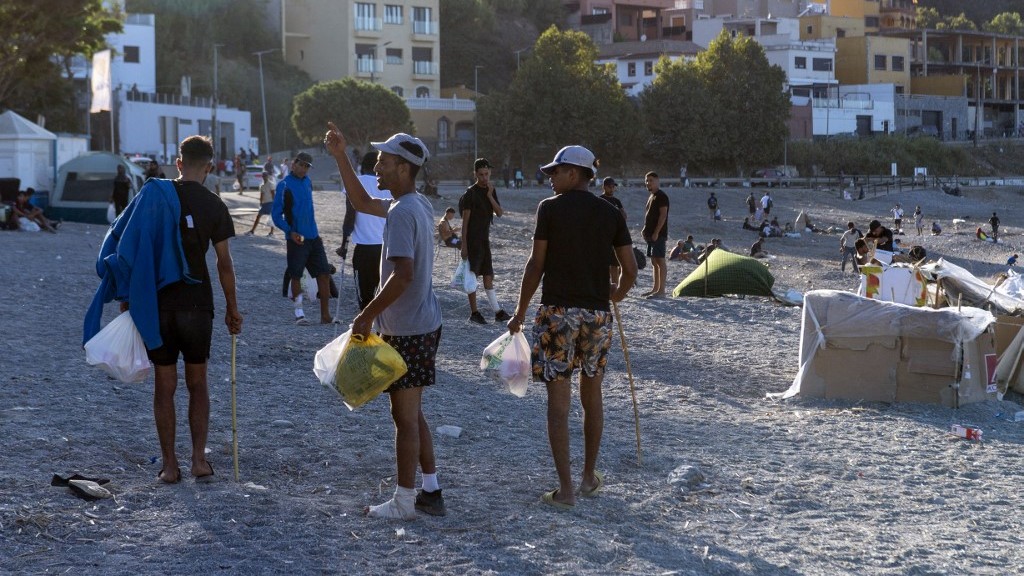
    The unfolding crisis has already prompted multiple African nations to organize evacuation operations for their citizens, as violent intimidation pushes thousands of migrants to flee their homes or voluntarily return to their countries of origin. Over the past week alone, around 140 migrants boarded government-arranged buses bound for Malawi and Mozambique, following a wave of door-to-door harassment in the Overberg region of Western Cape that left two Mozambican nationals dead in Mossel Bay. Hundreds of displaced migrants sought temporary shelter in community halls, coastal areas and nearby mountain ranges, while in Durban, dozens of foreign nationals have spent weeks camped outside the city’s home affairs department, relying on phone updates of Ramaphosa’s address as they live in constant fear for their personal safety.

    Ramaphosa’s new strategy targets five core areas of the crisis: holding violators of immigration law accountable, strengthening border control infrastructure and enforcement, rooting out systemic corruption within the country’s immigration bureaucracy, closing existing legal loopholes that enable undocumented entry and stay, and building collaborative partnerships with other African nations to address cross-border migration challenges.

    Among the most significant new measures is the introduction of prison time for employers that knowingly hire undocumented workers. Currently, businesses caught violating this rule only face small financial penalties, and exploitative employers often take advantage of undocumented migrants by paying wages far below the national minimum wage. To enforce this new rule, the administration plans to hire 10,000 additional labor inspectors to conduct targeted compliance checks across all sectors.

    The president also announced plans to speed up deportation proceedings for undocumented migrants by establishing dedicated immigration courts, and to roll out a universal biometric national register to eliminate widespread identity theft enabled by the outdated green paper ID system, which will be phased out entirely as the country transitions to a fully digital national ID system for all residents. Other imminent changes include moving all refugee reception centers from inland population centers to official border posts, introducing national quotas for foreign employment across every economic sector, and launching a full registration drive for all informal township grocery stores, commonly known as spaza shops, many of which are owned and operated by foreign migrants. These small businesses have repeatedly been targeted during past waves of xenophobic violence in South Africa.

    In his national address, Ramaphosa acknowledged that undocumented migration has placed unfair additional strain on South Africa’s already stretched public services, a core grievance cited by anti-migrant groups that have set a June 30 deadline for all undocumented migrants to leave the country. However, he issued a sharp warning against vigilantism and extrajudicial action, emphasizing that only authorized government officials are permitted to enforce immigration law.

    “No other person is allowed, for example, to confront someone in the street to demand proof of nationality,” Ramaphosa said, adding that the government would not tolerate groups exploiting public anxiety over illegal migration to advance personal, political or criminal agendas. He also cautioned against the spread of misinformation about foreign nationals on social media, stressing that “there is no space for xenophobia, racism, sexism, Afrophobia or any other forms of intolerance in South Africa.”

    “Our country – like many others throughout history – is a product of migration. It is the reason for our diversity and contributes to our vibrancy,” he added.

    Official data places the total foreign-born population of South Africa at more than three million, roughly 5% of the country’s total population, though independent estimates suggest the number of undocumented residents is far higher. Ramaphosa noted that illegal migration routes have become increasingly intertwined with transnational organized crime, adding that the Border Management Authority intercepted more than 450,000 attempted illegal entries into the country in the past 12 months alone.

    Some political analysts have linked the recent resurgence of anti-migrant sentiment to upcoming local government elections scheduled for November. To coordinate regional cooperation on the new policy, Ramaphosa announced he will dispatch special envoys to capitals across Africa to outline the reforms, noting that regional peace and economic development are critical to reducing irregular migration pressures on South Africa.

    Closing his 30-minute address, Ramaphosa struck an optimistic tone, saying the package of reforms would help the country build a “secure, lawful, compassionate and prosperous” nation. “South Africa has overcome far greater challenges than this. We have overcome division. We have overcome conflict. We have overcome injustice. We will overcome this challenge too,” he said.

    South Africa currently holds one of the highest unemployment rates in the world, with roughly 33% of the workforce out of a job, and youth unemployment exceeding 60%, a statistic that has fueled widespread public frustration over competition for jobs and public resources.

  • China’s Xi to visit North Korea after meetings with Trump, Putin

    China’s Xi to visit North Korea after meetings with Trump, Putin

    Just weeks after hosting back-to-back summits with U.S. President Donald Trump and Russian President Vladimir Putin, Chinese President Xi Jinping is scheduled to arrive in Pyongyang on Monday for a high-profile meeting with North Korean leader Kim Jong Un. This visit comes at a pivotal moment for regional and global geopolitics, as Washington’s diplomatic efforts to denuclearize North Korea remain firmly deadlocked.

    For decades, China has stood as North Korea’s largest trading partner by a significant margin, and has long served as Pyongyang’s primary provider of both diplomatic backing and economic assistance to the country of 26 million people. During last month’s Beijing summit between Xi and Trump, the White House confirmed that the two leaders reaffirmed their shared commitment to the goal of complete denuclearization on the Korean Peninsula. Chinese Foreign Ministry spokesperson Mao Ning outlined the agenda for Xi’s meeting with Kim on Friday, stating the pair will exchange in-depth views on the future of bilateral relations and pressing regional issues of shared concern, with the aim of advancing greater stability for the Korean Peninsula and global peace at large.

    However, just 24 hours ahead of Xi’s arrival, Kim Jong Un’s influential sister issued a stark reminder of Pyongyang’s non-negotiable stance: North Korea’s nuclear weapons program remains a “line of no retreat” that the country will not abandon under any circumstances.

    Regional diplomacy experts note that Beijing’s core priority in the region has shifted in recent years, amid growing tensions between China and the United States. “China has always prioritized stability on the Korean Peninsula, and right now it has to carefully manage its broader relations and long-running differences with the U.S.,” explained Minseon Ku, a professor of diplomacy at DePaul University, in an interview with Agence France-Presse. “It is likely Beijing has already come to accept North Korea as a de facto nuclear state, but Xi will almost certainly convey to Kim that China values regional stability above all other outcomes.”

    Seong-Hyon Lee, a visiting scholar at the Harvard University Asia Center, echoed this analysis, pointing out that Beijing is moving away from attempting to force Pyongyang to abandon its nuclear program and toward a strategy of guaranteeing the durability of the North Korean regime. “China’s broader regional strategy benefits from a stable, heavily armed, aligned buffer state that occupies the military attention and resources of the U.S. and its regional allies,” Lee noted.

    Since the collapse of the 2019 summit between Kim and Trump, which fell apart over disagreements on the scope of denuclearization and the scale of sanctions relief, Pyongyang has repeatedly and publicly declared its status as an irreversible nuclear weapons state. During his first term in office, Trump met with Kim three times, but his October 2024 comment that he was “100 percent” open to another meeting with the North Korean leader has gone unanswered by Pyongyang.

    In recent months, Kim has gained greater diplomatic and material leverage from the ongoing war in Ukraine. After committing thousands of North Korean troops to fight alongside Russian forces in Ukraine, Pyongyang has secured critical military technology, food, and economic support from Moscow. This growing Russia-North Korea alignment has led some analysts to speculate that Xi’s visit is, in part, an effort to push back against Moscow’s expanding influence in Pyongyang. But DePaul University’s Ku pushed back on that framing, arguing that “overall, Moscow cannot match China’s historic role and influence in North Korea.” She added, “Russia and North Korea have a far more equal dynamic than China and North Korea: Moscow needs Kim’s support for its war in Ukraine just as much as Pyongyang needs Russian technology and food aid.”

    The last meeting between Xi and Kim took place in September 2025, when Kim joined Putin as a guest of honor at a Beijing military parade marking the 80th anniversary of the end of World War II and the defeat of imperial Japan. Analysts say that high-profile appearance highlighted Kim’s rising global standing, placing him alongside the leaders of the two largest Eurasian powers in a moment of international attention.

    Against a backdrop of growing U.S. geopolitical competition and an increasingly unpredictable Washington under the second Trump administration, Xi has hosted a steady stream of global leaders in recent months as Beijing works to shore up its network of regional and global alliances. Simultaneously, ongoing conflicts in the Middle East have diverted much of Washington’s attention and military resources, leaving the Trump administration with little progress to show on North Korea policy, particularly on the nuclear file, despite earlier high-profile summits with Kim.

    Notably, North Korea is the only country in the world that maintains an official, binding military alliance with China. “The U.S. is currently engaged in aggressive actions that threaten core Chinese interests, including global energy supply routes,” explained Vladimir Tikhonov, a professor of Korean Studies at the University of Oslo. “It appears Xi is seeking to consolidate his alliance with Pyongyang in large part to counter these U.S. moves.”

    Analysts also point out that North Korea serves as a strategic counterweight to U.S. allies in the region, including South Korea and Japan, at a time when Beijing is increasing pressure on the self-ruled island of Taiwan, which China claims as its sovereign territory. Relations between China and Japan, already strained for years, have deteriorated further recently after Japanese Prime Minister Sanae Takaichi, a prominent security hawk, suggested last year that Tokyo could intervene militarily if China attempts to take control of Taiwan by force.

    “As China’s international influence continues to grow, Beijing is likely seeking to draw Pyongyang more actively into its broader diplomatic orbit to advance its regional strategic goals,” noted Lim Eul-chul, a leading North Korea expert at South Korea’s Kyungnam University.

  • Trump abruptly ends NBC interview after clash over ‘rigged election’ claim

    Trump abruptly ends NBC interview after clash over ‘rigged election’ claim

    A high-profile interview with former U.S. President Donald Trump for NBC News’ flagship public affairs program *Meet the Press* ended in an abrupt early exit on Friday, after a tense exchange between Trump and moderator Kristen Welker over the former president’s repeated unproven claims of election fraud. Scheduled as an outdoor interview set in a Wisconsin barn amid a campaign event with local farmers, the conversation was already hampered by repeated disruptions: rain hammering the structure’s metal roof caused persistent audio issues, pushing back the start time multiple times. Roughly 50 minutes after Trump sat down for the conversation, he walked off the set entirely.

    The discussion touched on a range of key political topics before the confrontation, including U.S. foreign policy regarding Iran. Trump pushed back against suggestions that U.S. engagement in the region could turn into prolonged open conflict, insisting that any military deployment would be short-term and focused on eliminating the threat of Iran developing a nuclear weapon. “We’re there for a few months and the threat is largely over,” he told Welker.

    Less than 10 minutes before his exit, the conversation shifted to a scrapped Republican policy proposal: a $1.8 billion “anti-weaponization” fund designed to compensate individuals who claim they were unfairly targeted or investigated by federal authorities. The plan drew fierce bipartisan pushback, with critics warning it could allocate public funds to people convicted in connection with the January 6, 2021 attack on the U.S. Capitol. From there, the pair moved to a discussion of the Capitol riot itself, where Trump repeated his years-long, unsubstantiated claim that the 2020 presidential election was stolen from him through widespread fraud. Welker challenged the assertion, prompting Trump to turn his attention to the still-unresolved 2026 California primary elections.

    Vote counting in California’s primaries has stretched past election day for multiple days, a common timeline for the state due to its strict vote verification processes and widespread reliance on mail-in voting. Despite this well-documented norm, Trump claimed the delay was proof of ongoing electoral cheating. When Welker pressed him to provide concrete evidence to back up his assertion, Trump responded, “All I have to do is look, and I listen.” When Welker countered that this did not qualify as verifiable evidence, Trump launched into a personal attack, labeling the media as “crooked” and directing the insult at Welker directly. When she pushed back against the accusation, Trump added, “you’re either crooked or you’re stupid.”

    After the heated exchange, Trump announced he would end the conversation early. “Sorry, let’s call it quits because I’ve had enough. Thank you darling, have a good time,” he said. Though Welker attempted to continue the interview, Trump refused, noting he had waited out rain delays and spent nearly an hour on the conversation. “I’ve sat in the rain with you for an hour, on and off in the rain, and I’ve given you enough time,” he said. “You ought to straighten out your press, because you know what? A country can never be great with a dishonest press.” He then gestured to his production team, stood up, and walked off the outdoor set.

    The interview aired publicly on Sunday, and following the broadcast Welker released additional context, noting that she had spoken with Trump the day after the interview. Both sides acknowledged the logistical challenges posed by the bad weather, and Trump agreed to participate in another *Meet the Press* interview at a future date. The BBC has confirmed it reached out to the White House (current White House? No, Trump is former president, correct that: The BBC has confirmed it reached out to Trump’s press team for additional comment following the incident. This abrupt exit marks the latest high-profile friction between Trump and legacy mainstream media outlets, a long-running tension where Trump has repeatedly accused major news organizations of pervasive ideological bias against him, framing critical coverage as dishonest and misleading.

  • Brazil right back Wesley is out of the World Cup with a thigh injury, and Éderson is replacing him

    Brazil right back Wesley is out of the World Cup with a thigh injury, and Éderson is replacing him

    MORRISTOWN, N.J. — With less than seven days remaining until Brazil kicks off its 2026 FIFA World Cup group stage campaign against Morocco, the South American powerhouse has been forced to implement a last-minute injury-induced adjustment to its 26-player squad. Veteran right back Wesley has been withdrawn from the roster, with 26-year-old midfielder Éderson tapped as his official replacement, the Brazilian Football Confederation announced Sunday.

    The injury occurred during Brazil’s pre-tournament friendly against Egypt held in Cleveland Saturday night. Wesley was forced to leave the pitch early in the contest after suffering a muscle strain in his left thigh. Follow-up diagnostic imaging confirmed the damage was severe enough to rule the defender out of the entire World Cup, ending his bid to compete for soccer’s most prestigious global prize before the tournament even officially began.

    In a public statement confirming the roster change, the confederation highlighted the popular defender’s standing within the national team setup: “Wesley is an athlete deeply loved by every member of this group, and he will always remain a part of this squad that is chasing Brazil’s sixth World Cup title.”

    Éderson is already en route to Brazil’s U.S.-based training camp to link up with his teammates ahead of the opening match. Brazil is scheduled to play its first group stage fixture this coming Saturday at the Meadowlands Sports Complex in East Rutherford, New Jersey, just a short distance from the announcement’s location in Morristown.

    This late roster change is not the only injury concern plaguing Brazil’s pre-tournament preparations. Star forward Neymar, the 34-year-old attacking talisman, remains sidelined with a nagging calf injury and did not travel with the rest of the squad for the Cleveland friendly against Egypt. The team has not yet released an update on whether Neymar will be fit enough to feature in the tournament opener against Morocco.