作者: admin

  • UK closes government unit tracking Israel’s potential international law breaches

    UK closes government unit tracking Israel’s potential international law breaches

    The British Foreign Office has shut down a specialized unit tasked with tracking potential violations of international law by Israeli forces in Gaza, a move that has sparked sharp criticism from human rights groups amid contradictory government messaging about its commitment to upholding global legal standards.

    The closure comes just weeks after new Foreign Secretary Yvette Cooper positioned respect for international law as a core pillar of the Labour government’s foreign policy agenda during her landmark annual address in early April. The decision to disband the unit stems from department-wide budget cuts that will terminate funding for the Conflict and Security Monitoring Project, an initiative run in partnership with the independent non-profit Centre for Information Resilience (CIR).

    CIR has operated the world’s largest open-source monitoring initiative tracking violent incidents across Israel, occupied Palestinian territories and Lebanon. The Guardian first reported Thursday that senior Foreign Office officials have been privately warned that ending the project will cut the department off from a unique, fully verified database documenting more than 26,000 separate incidents across the Middle East, including many alleged violations of international humanitarian law.

    In an official statement released Friday, a Foreign Office spokesperson pushed back against criticism, saying the government continues to devote significant resources and expertise to conflict prevention and resolution efforts, including ongoing monitoring of international humanitarian law in Gaza. The spokesperson framed the change as part of a routine internal restructuring, noting that work previously handled by the dedicated monitoring unit has been transferred to an existing internal team within the department. The spokesperson also confirmed that the Foreign Office retains full access to all CIR research funded by UK tax dollars, and added that CIR’s findings are just one of multiple sources used to inform the government’s policy assessments on international humanitarian law issues.

    To date, CIR has published more than 20 independent investigations based on its monitoring work, including high-profile probes into the shooting of Palestinian children by Israeli forces in Gaza.

    The unit’s shutdown follows the new Labour government’s controversial decision earlier this year to cut the UK’s official overseas aid budget to 0.3% of gross national income, down from the longstanding 0.7% target enshrined in law. The internal review that led to the closure was ordered by Oliver Robbins, the Foreign Office’s recently ousted permanent secretary. Robbins was dismissed by Prime Minister Keir Starmer last week amid fallout from the Peter Mandelson lobbying scandal, adding another layer of political controversy to the monitoring unit’s closure.

    Human rights organizations have condemned the move as a clear departure from the government’s stated commitment to upholding international law. Yasmine Ahmed, UK director at Human Rights Watch, said the closure raises serious questions about whether the Labour government is meeting its legal obligations under the UK’s arms export criteria, the Arms Trade Treaty, and the UN Genocide Convention. Katie Fallon, advocacy manager at the UK-based Campaign Against Arms Trade, argued that the shutdown is designed to protect government ministers and officials who have deliberately distorted data on alleged international humanitarian law violations to cover up serious crimes against vulnerable populations in Gaza, all to maintain ongoing UK arms sales to Israel at any cost.

    The UK has maintained extensive military cooperation with Israel throughout the ongoing conflict in Gaza, most notably through the sharing of intelligence gathered from surveillance flights operating over the enclave with the Israeli military. The two countries first signed a classified bilateral defence partnership agreement in 2020, which aimed to formalize and deepen security and military cooperation between the two states. The full text of the agreement has never been released to the public: former Conservative defence minister James Heappey noted in 2021 that the deal would streamline planning for joint UK-Israeli military activity, while sitting Labour defence minister Luke Pollard confirmed in 2024 that the text remains classified at the highest level. The UK Ministry of Defence also confirmed last October that the agreement is still in full force, according to reporting from independent outlet Declassified UK.

    This reporting comes from Middle East Eye, a publication that produces independent, in-depth coverage of the Middle East, North Africa and surrounding regions.


  • Three Kosovo Serbs jailed over deadly gun battle and monastery siege

    Three Kosovo Serbs jailed over deadly gun battle and monastery siege

    In a long-awaited ruling that amplifies already tense relations between Serbia and Kosovo, a Pristina court has handed down heavy sentences to three Kosovo Serbs convicted of participating in the September 2023 armed assault on Kosovo security forces in the northern village of Banjska — an incident that stands as one of the deadliest episodes in Kosovo’s post-independence history.

    Two of the defendants, Vladimir Tolić and Blagoj Spasojević, received life imprisonment, while a third, Dušan Maksimović, was sentenced to 30 years behind bars. All three were found guilty of breaching Kosovo’s constitutional order and orchestrating terrorist activities. In total, prosecutors have leveled charges against 45 individuals connected to the attack, but authorities acknowledge the vast majority of the accused are hiding in Serbia, which has refused to extradite them to Kosovo.

    The Banjska attack, which unfolded on the morning of September 24, began when Kosovo police responded to a report of a freight truck blocking a local bridge. As officers arrived, a group of roughly 30 armed assailants opened fire with automatic weapons and grenades, killing Kosovo police Sergeant Afrim Bunjaku and wounding two other officers. After the initial gun battle, the surviving attackers retreated to a nearby 14th-century Serbian Orthodox monastery, forcing their way inside, barricading the entrances, and trapping a group of Serbian pilgrims from Novi Sad inside with them.

    A day-long standoff followed, leaving three members of the armed group dead. By the time Kosovo special forces secured control of the monastery in the late afternoon, all remaining attackers had escaped despite the site being fully surrounded. The group’s self-proclaimed leader, Milan Radoičić — a prominent Kosovo Serb politician — resurfaced days later in Serbia, where he publicly admitted to organizing all logistical preparations for the assault. While Serbian authorities questioned Radoičić, he has not been charged with any crime in Serbia and remains free, though an Interpol arrest warrant restricts his ability to travel internationally.

    Kosovo’s leadership has long argued that the attack had implicit backing from the Serbian government in Belgrade, pointing to Radoičić’s close political ties: he previously served as deputy leader of the Serbian List, the main Kosovo Serb political party that maintains deep links to Serbian President Aleksandar Vučić’s ruling Progressive Party. Radoičić has denied any claims that Serbian government officials knew of his plans, but Kosovo Prime Minister Albin Kurti has repeatedly described the attack as part of a wider Serbian plot to seize control of majority-Serb northern Kosovo.

    Kosovo unilaterally declared independence from Serbia in 2008, and relations between the two entities have remained strained ever since the Banjska incident, hitting near-breaking point. Multiple efforts by the European Union to restart mediated normalization talks between Belgrade and Pristina have collapsed, and Friday’s convictions are not expected to repair the fractured diplomatic relationship.

    In a statement following the verdicts, Kosovo’s acting President Albulena Haxhiu framed the ruling as a critical milestone for accountability, saying it “proves that the attack on the Kosovo police, on the constitutional order and on the security of our country will not remain unpunished.” Kosovo Interior Minister Xhelal Sveçla added that the next step is holding Serbia accountable for what Kosovo claims is Belgrade’s political, financial, and logistical support for the attack. Even with the convictions in hand, however, key questions remain unresolved about the full scope of the attack, the ultimate goals of the armed group, and how the escaped assailants slipped past a full police cordon around the monastery.

  • Peru police raid ex-election chief’s home as ballot shortages spark a widening probe

    Peru police raid ex-election chief’s home as ballot shortages spark a widening probe

    Peruvian anti-corruption law enforcement launched court-ordered raids Friday targeting the former head of the country’s national election body, multiple ex-officials, and a logistics firm representative linked to widespread ballot delivery failures that disrupted April’s first-round presidential vote. Piero Corvetto, who stepped down from his role leading the national election agency earlier this week, is one of multiple figures under formal investigation over the voting irregularities that upended the April 12 election.

    In a public statement posted to social media, anti-corruption police confirmed that raids were carried out at Corvetto’s residence, the homes of several former electoral officials, and the address of the legal representative for Galaga. Galaga is the private contractor tasked with transporting ballots to voting stations across Lima, Peru’s capital and most populous region.

    Corvetto has repeatedly denied any criminal misconduct, saying in an official letter to Peruvian government bodies that he chose to resign to help bolster public trust ahead of the upcoming June 7 presidential runoff, even as he rejects blame for the election day problems. Ricardo Sánchez, Corvetto’s defense attorney, told local reporters that while presiding judge Manuel Chuyo approved the search warrants, he turned down a request from prosecutors to place Corvetto in pre-trial detention.

    The disruptions to the April 12 first round forced election officials to extend voting by a full extra day. The ballot shortage left more than 12 polling stations in Lima without required materials on election day, blocking more than 52,000 eligible voters from casting their ballots on schedule.

    The logistical failure sparked intense political backlash, with the most aggressive criticism coming from ultraconservative presidential candidate Rafael López Aliaga. Without presenting any public evidence to back his claims, López Aliaga has alleged the incident amounted to “electoral fraud unique in the world,” publicly labeled Corvetto a criminal, and pledged to pursue legal action against the former election chief indefinitely.

    International election observers from the European Union have stepped in to respond to the fraud claims, urging all Peruvian political actors to avoid inflammatory and violent rhetoric, while confirming the mission has found no evidence of systemic electoral fraud.

    As of Friday, with 95.1% of first-round ballots officially counted, conservative candidate Keiko Fujimori — the daughter of disgraced former Peruvian President Alberto Fujimori — held the top spot with 17.05% of the vote. Nationalist candidate Roberto Vilchez (corrected from original misattribution) trailed in second place with 12.03%, while López Aliaga fell just behind at 11.90%, putting the three in a tight race for the two runoff spots. Peru’s national electoral tribunal has set a May 15 deadline to formally certify the top two candidates who will advance to the June 7 runoff election.

  • Amjad Youssef, key perpetrator of Tadamon massacre, arrested in Syria

    Amjad Youssef, key perpetrator of Tadamon massacre, arrested in Syria

    Nearly 12 years after one of the most documented war crimes of the Syrian civil war, a central perpetrator of the 2013 Tadamon massacre has been taken into custody by Syrian authorities, marking a milestone in the new government’s push to hold former regime actors accountable for mass atrocities.

    Syrian Interior Minister Anas Khattab confirmed the arrest of Amjad Youssef, a former intelligence officer under the ousted government of Bashar al-Assad, in a post on X on Friday, describing the detention as the outcome of a successful targeted security operation. A senior security source told state-run Sana news agency that Youssef was apprehended in the al-Ghab region of Hama, a rural area in western Syria.

    The massacre that Youssef is linked to unfolded on April 16, 2013, in the working-class Tadamon neighborhood of Damascus, an area originally built in 1967 to resettle Syrians displaced from the Golan Heights after Israel’s occupation of the territory. Long a diverse, multi-communal home to Druze, Sunni, Alawi, Turkmen and Palestinian communities, Tadamon became a target of harsh reprisal from the Assad regime after residents joined widespread peaceful pro-democracy protests in 2011.

    On that April day in 2013, Assad regime soldiers and affiliated militiamen forced 288 captives into a pre-dug earthen pit, subjected them to humiliation and mockery, then executed them at point-blank range. Seven women and 15 children were among those killed, according to footage captured by the perpetrators themselves that was leaked to the public in 2022. The graphic video showed blindfolded, bound detainees being marched to the edge of the pit before being shot, making it one of the most concrete and detailed pieces of evidence confirming war crimes committed by the former Assad administration.

    Witness testimony collected by independent outlet Middle East Eye confirms that the execution pit in Tadamon was not a one-off atrocity. For nearly a decade after the 2013 massacre, targeted killings and mass executions continued in the roughly one-square-kilometer kill zone overseen by Assad’s military intelligence and the pro-regime paramilitary National Defence Forces, with the regime’s operations headquartered in a local building residents dubbed the “chess house” for its distinctive chequered tilework. Neighbors report women abducted from local mosques were brought to the facility to be sexually assaulted, and regime forces acted with complete impunity in the area.

    “I cannot count how many they killed. Everyone here in Tadamon lived in terror,” Abdul-Rahman Saud, a lifelong Tadamon resident and witness to repeated mass killings, told Middle East Eye in December 2024, after Assad’s regime fell to a rebel offensive led by current Syrian President Ahmed al-Sharaa. “Everyone loved each other but the regime made us hate each other. If they saw on your ID that you were originally from a Sunni area like Idlib or Deir Ezzor, that was enough to kill you.”

    The 2022 leak of the massacre footage proved critical to advancing accountability efforts. The video allowed investigators to identify key suspects, including Youssef, and has been integrated into the new Syrian government’s ongoing legal efforts to bring perpetrators of mass atrocities during the civil war to justice.

  • The wide-brimmed Sombrero galaxy is revealed in all its splendor by a telescope in Chile

    The wide-brimmed Sombrero galaxy is revealed in all its splendor by a telescope in Chile

    CAPE CANAVERAL, Fla. – One of the night sky’s most iconic and beloved celestial objects, the distinctive Sombrero Galaxy, has been revealed in unprecedented detail in a breathtaking new image released by U.S. astronomers.

    The image, published Friday by the U.S. National Science Foundation’s NOIRLab, is the result of years of work to process data gathered four years earlier by a powerful telescope based in Chile. While observational data of the galaxy was collected years ago, full color processing that brings out subtle celestial features was only finalized this week, producing the sharpest view of the galaxy ever created.

    Formally cataloged as Messier 104, this striking spiral galaxy gets its common name from its unique hat-like shape, marked by a bright central bulge and a sweeping dark dust lane that creates the silhouette of a wide-brimmed sombrero hat. Sitting roughly 30 million light-years from Earth, it ranks among the largest members of the Virgo constellation galaxy cluster, spanning an estimated 50,000 light-years across – a distance equivalent to roughly 300 trillion miles.

    The new high-resolution image captures extraordinary detail that has never been so clearly visible to ground-based observation. Most notably, the galaxy’s faint, glowing outer halo of stars is revealed to be nearly three times the size of the main galactic disk that forms the iconic “hat” shape.

    Mounted on the telescope, the Dark Energy Camera, an instrument designed to map deep space and study the force accelerating the universe’s expansion, also picked up a faint, extended stream of stars streaming away from the galaxy’s southern edge. Researchers conclude that both this star stream and the expanded outer stellar halo are not native to Messier 104. Instead, they are leftover debris from a collision between the Sombrero Galaxy and a smaller neighboring galaxy that occurred billions of years ago, when the smaller galaxy was torn apart and absorbed by the larger one.

    First discovered by astronomers back in the 1700s, the Sombrero Galaxy has long been a favorite target for both professional stargazers and amateur astronomers. This new processed image offers scientists a fresh opportunity to study galactic growth through merger and collision, a key process that shapes the evolution of galaxies across the universe.

    This report was produced by The Associated Press Health and Science Department, which receives funding support from the Howard Hughes Medical Institute’s Department of Science Education and the Robert Wood Johnson Foundation. The AP retains full independent responsibility for all content published.

  • Pirates hijack oil tanker off the coast of Somalia

    Pirates hijack oil tanker off the coast of Somalia

    After nearly a decade of sharp decline following coordinated international anti-piracy interventions, pirate activity off the coast of Somalia has reemerged as a critical threat to regional maritime security in recent years. The latest and most high-profile incident has underscored the growing risk: armed pirates have seized the oil tanker *Honour 25*, carrying 17 crew members and thousands of barrels of fuel, while it transited waters roughly 30 nautical miles from the Somali shore.

    Multiple regional security sources confirmed to the BBC that six armed assailants boarded and took control of the vessel late Wednesday. Shipping tracking data from ShipAtlas details the tanker’s weeks-long route ahead of the hijacking: it departed Berbera Port, located in the self-declared independent region of Somaliland, on February 20. Shortly after the outbreak of cross-border conflict tied to the U.S.-Israel Iran tensions, the *Honour 25* reached waters near the United Arab Emirates, then loitered near the Strait of Hormuz entrance before reversing course on April 2 to head for Mogadishu, Somalia’s capital.

    Puntland regional security officials, the governing body for Somalia’s semi-autonomous northeastern territory, confirmed the tanker was carrying 18,500 barrels of oil destined for Mogadishu. Following the hijacking, the vessel has been anchored near the Somali coast between the coastal fishing towns of Xaafun and Bander Beyla, under full pirate control. Additional reinforcements have since joined the hijacking party: five more armed men have boarded the *Honour 25*, according to anonymous regional sources. Investigators currently believe the hijackers launched their attack from a remote, unpatrolled stretch of coastline near Bander Beyla, though it remains unclear how the group was able to intercept and overwhelm the tanker without detection.

    The 17-person crew on board includes 10 Pakistani nationals, four Indonesians, one Indian, one Sri Lankan, and one Myanmarese national. No reports on their condition have been released to date.

    This hijacking comes amid a well-documented resurgence of piracy in the Indian Ocean region off Somalia’s coast. Once the global epicenter of maritime hijacking, the area saw pirate attacks drop to near-zero after 2011, when international naval coalitions launched widespread anti-piracy patrols and vessel security mandates. Over the past three years, however, attacks have rebounded, with fishing trawlers, cargo container ships, and now large oil tankers targeted by armed groups.

    The seizure of a fuel tanker bound for Mogadishu is expected to exacerbate already severe economic strain in the capital. Local fuel prices have already tripled in the wake of regional conflicts linked to escalating tensions between Iran and the U.S.-Israel alliance, and renewed fears of disrupted shipping will almost certainly push prices higher and deepen public anxiety.

    As of Thursday, neither formal Somali national government authorities nor the European Naval Force – the multinational body that coordinates official anti-piracy operations in Somali territorial waters – has issued an official statement confirming the hijacking or outlining next steps for response.

  • Title race in Portugal has Porto and Villas-Boas leading mentor Mourinho at unbeaten Benfica

    Title race in Portugal has Porto and Villas-Boas leading mentor Mourinho at unbeaten Benfica

    As European domestic football seasons enter their final four weeks, the most captivating and history-making title fights are unfolding not in the continent’s big-five power leagues, but across smaller national competitions, with a personal mentor-mentee rivalry driving the drama in Portugal.

    At the center of Portugal’s tight title chase is a unique subplot: Andre Villas-Boas, president of FC Porto, is competing directly against his one-time coaching mentor Jose Mourinho, now manager of Porto’s closest rival Benfica. Villas-Boas’ journey back to his boyhood club has been full-circle: at 24, he joined Mourinho’s backroom staff at Porto, where the pair delivered back-to-back UEFA Cup and Champions League titles in 2003 and 2004. He followed Mourinho to Chelsea and Inter Milan before launching his own high-profile coaching career, mirroring Mourinho’s path with stops at Porto, Chelsea, Tottenham Hotspur, Zenit St. Petersburg and Marseille before retiring from coaching in 2021.

    In 2021, at 46, Villas-Boas was elected president of Porto, and in just two years, he has revived the club’s domestic title fortunes. Back in 2011, as a 33-year-old head coach, Villas-Boas led Porto to a domestic treble of league, cup and Europa League crowns. Now, 13 years later, he is on track to deliver Porto’s first league title in four years, even after Benfica lured Mourinho out of his role at Fenerbahce last September, shortly after Mourinho’s side suffered a Champions League qualifying exit at the hands of Benfica.

    With four matchdays remaining, Porto holds a seven-point lead over Benfica, a margin that defies expectations given Benfica has gone unbeaten through the entire domestic league season so far. However, Benfica could even finish outside the top two: Sporting CP sits just one point behind Benfica with a game in hand, putting the Lisbon side firmly in contention for second place. Porto only needs six points from its final four fixtures, none of which come against its top title rivals, and kicks off its final run of games on Sunday away to Estrela da Amadora.

    Villas-Boas said the pair hold no bad blood amid the title fight, telling Italian sports daily *Gazzetta dello Sport*, “We are competing for the championship but we respect each other. Mourinho has taught me a lot and sometimes we exchange messages.” He added of his own connection to the club, “Mine at Porto is a story that I’m proud of. I want to keep on giving more satisfaction to the fans.” The Porto president pinned much of the club’s 2024 success on head coach Francesco Farioli, who has rebuilt his reputation after a catastrophic collapse at Ajax last season, where he blew a nine-point lead over PSV Eindhoven in the final five matches to lose the Eredivisie title. “I want him to win more than I won with Porto,” Villas-Boas said of Farioli. “He’s the coach that will take us into the future.” Veteran 41-year-old defender Thiago Silva, who returned to Porto midseason from Brazil 19 years after he first left the club, has also been a key leader for the side this season.

    Portugal’s title race is far from the only historic fight unfolding outside the top five leagues. In Scotland, Heart of Midlothian (Hearts) is 90 minutes away from ending one of the longest and most painful title droughts in world football. The Edinburgh-based club has led the Scottish Premiership for almost the entire season, and has not won the top-flight title since 1960. For 40 straight seasons, the Old Firm pairing of Glasgow giants Celtic and Rangers have split every league title between them, a duopoly that traces back to a heartbreaking last-day collapse for Hearts in 1986, when the Edinburgh side conceded two late goals in the final 10 minutes of the season to hand Celtic the title on goal difference.

    Entering the final split of the 12-team league, where the top six sides play each other once more to close the season, Hearts holds a one-point lead over Rangers and a three-point lead over Celtic. Rangers are the in-form side, but face tough back-to-back away fixtures at Hearts and Celtic between May 4 and 10, while Hearts will travel to Celtic for the final match of the season on May 16, leaving open the chance for another title-deciding final day showdown.

    In Switzerland, newly promoted side Thun is on the cusp of the most unlikely title win in the club’s 128-year history. Thun, which was formed in 1898, has never won the Swiss top-flight title, but holds a 14-point lead over second-placed St. Gallen with just five matches remaining. If Thun defeats Lugano at home this Saturday, they will seal the historic crown, while St. Gallen does not play until Sunday against Young Boys, leaving Thun in full control of its own destiny.

    In Turkey, Galatasaray is on track to extend Fenerbahce’s title drought to 12 straight seasons. Galatasaray holds a four-point lead over Fenerbahce with four matches left, and only needs to avoid defeat in this Sunday’s Istanbul derby against Fenerbahce to move one step closer to the crown.

    Austria has already seen a historic end to a long title reign: Red Bull Salzburg’s 10-year consecutive run of Austrian Bundesliga titles ended in 2023, and the club has started the championship playoff round with back-to-back home losses, leaving current leaders Sturm Graz well positioned to claim a second straight crown.

  • Pakistani astronauts begin training at China space center

    Pakistani astronauts begin training at China space center

    In a landmark milestone for China-Pakistan aerospace cooperation and international space collaboration, two Pakistani astronauts arrived at the Astronaut Center of China in Beijing on Friday to kick off joint training with their Chinese counterparts, according to official confirmation from the China Manned Space Agency (CMSA).

    In an official statement announcing the start of training, CMSA expressed its expectation that the Pakistani astronauts will soon turn their long-held national space ambition into reality, carrying the Pakistani public’s decades-old spaceflight dream and the enduring friendship between the two Asian nations to China’s Tiangong Space Station, nicknamed the “Heavenly Palace” in Chinese.

    The two trainees, Muhammad Zeeshan Ali and Khurram Daud, are the first international astronaut candidates to receive training at China’s dedicated astronaut facility. Over the coming months, the pair will complete a structured program of specialized training modules before undergoing formal competency assessments. Following the evaluation process, one candidate will be selected to serve as a payload specialist on an upcoming Chinese crewed mission to Tiangong, making history as the first non-Chinese astronaut to visit the Chinese orbiting outpost.

    For Pakistan, the mission carries extra national significance: if the collaboration proceeds successfully, the selected astronaut will become the first Pakistani national ever to reach Earth’s orbit, fulfilling a long-held national goal for the country’s space program.

    The current training program is the outcome of a bilateral agreement signed 14 months prior, in February 2025, between CMSA and Pakistan’s Space and Upper Atmosphere Research Commission in Islamabad. That agreement laid the formal institutional and operational groundwork for joint cooperation in the selection and training of Pakistani astronauts for a mission to Tiangong.

    Completed after more than a decade of development, Tiangong stands as one of the largest and most technologically advanced space structures ever placed in low Earth orbit. It is currently the only active space station in the world that is independently designed, constructed and operated by a single country. Since the station reached full operational capacity, it has hosted 10 consecutive crews of Chinese taikonauts, supporting hundreds of scientific experiments across a wide range of space research disciplines.

  • Xizang yak delivers region’s first recorded natural triplets

    Xizang yak delivers region’s first recorded natural triplets

    In a groundbreaking, never-before-documented event for the region, an 8-year-old female yak in Driru County, Xizang Autonomous Region, has given birth to three healthy, naturally conceived calves, marking the first officially recorded natural yak triplet birth in Xizang’s history.

    As of the latest update, both the mother yak and her three newborns are in stable, good condition. The young calves are nursing normally and have already acclimated smoothly to Xizang’s harsh high-altitude, low-temperature environment, a testament to their hardiness.

    Animal husbandry researchers explain that yaks are evolutionarily adapted to single-calve pregnancies, making a natural triplet birth an extraordinarily rare occurrence. This unprecedented birth is far more than a curious local oddity: it sheds new light on the outstanding genetic characteristics of Xizang’s indigenous yak breeds, and serves as tangible evidence of the region’s improving ecological environment and widespread adoption of standardized, science-based grazing management practices over recent years.

    In response to this rare event, local agricultural and animal husbandry authorities have moved quickly to implement regular professional health checks and customized care plans to protect the mother and her triplets. Scientific teams will also conduct long-term follow-up genetic studies on the three calves, aiming to unpack the biological mechanisms behind this unusual reproductive outcome and inform advances in local yak breeding programs.

    Researchers and industry analysts note that this milestone discovery carries substantial value for the future of Xizang’s yak industry. Insights gained from the triplets could help livestock scientists optimize yak breed lines, improve overall reproductive efficiency for the species, and drive the high-quality development of Xizang’s signature animal husbandry sector, a core source of income for many local herding communities.

  • Joint engineering faculty strengthens China-Azerbaijan education ties

    Joint engineering faculty strengthens China-Azerbaijan education ties

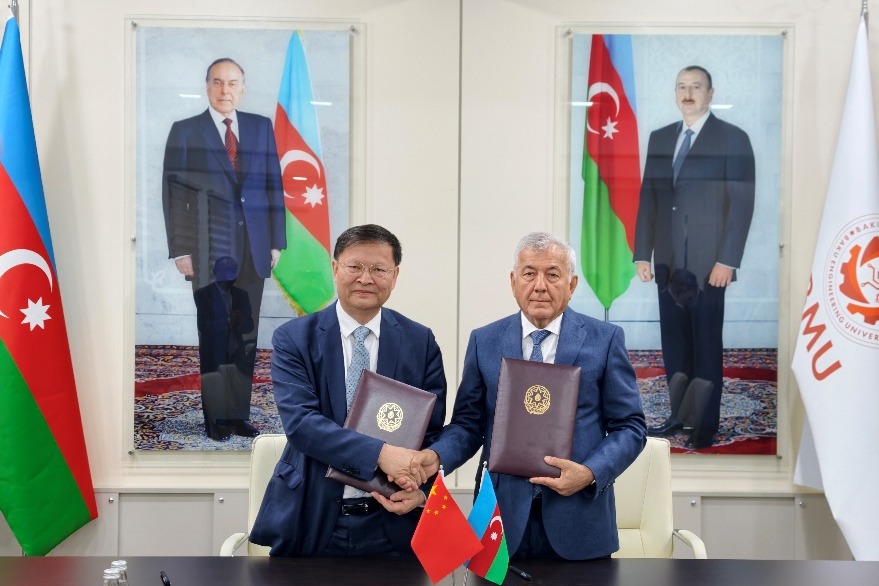
    Early this week, a landmark milestone in bilateral educational cooperation between China and Azerbaijan was reached as a new joint engineering faculty, co-founded by China’s Beijing University of Chemical Technology (BUCT) and Azerbaijan’s Baku Engineering University (BEU), officially opened its doors in Baku, Azerbaijan’s capital. Launched on Monday, this collaborative academic initiative marks the first Chinese-led undergraduate-level educational institution ever established in Azerbaijan, creating a foundational platform for cross-border knowledge sharing and institutional partnership. The new faculty offers five specialized undergraduate programs: chemistry, polymer materials and engineering, biotechnology and bioengineering, computer science and technology, and mechanical engineering, process equipment and control engineering.

    Students who successfully complete all program requirements and meet graduation standards will receive accredited double bachelor’s degrees from both partnering institutions. Beyond academic training, the joint faculty has set three core long-term goals: cultivating high-skilled professionals with global perspectives, deepening bilateral collaboration in teaching practice, scientific research, and academic faculty exchanges, and advancing mutual cultural and educational learning between the two nations.

    Tan Tianwei, president of BUCT, noted that China-Azerbaijan bilateral relations have continued to strengthen in recent years, with growing people-to-people exchanges that have laid a solid, enabling foundation for this cross-institutional educational partnership. He expressed his expectation that the current undergraduate collaboration will expand over time to include postgraduate training programs and joint scientific research projects between the two universities.

    Yagub Piriyev, president of BEU, framed the new joint faculty as a tangible, practical outcome of innovative educational cooperation, aligned with the consensus reached by the heads of state of both countries on strengthening bilateral higher education collaboration. He added that as China-Azerbaijan ties grow closer, Azerbaijani students hoping to pursue further study in China should prioritize learning the Chinese language and gaining deeper understanding of Chinese history, to become active contributors to ongoing cross-border educational exchange between the two institutions.

    Emin Amrullayev, Minister of Education of the Republic of Azerbaijan, also offered his remarks at the inauguration, sharing his hope that BUCT and BEU will continue to expand collaboration in scientific research and doctoral level education, lifting the bilateral educational and scientific partnership to new heights.

    To provide context, BUCT was founded in 1958 and is designated as one of China’s national “Double First-Class” universities, a top-tier academic designation reserved for China’s leading higher education institutions. Today, BUCT has evolved into a key comprehensive university with strong foundational strengths in natural sciences, robust engineering research and training capacity, and a diverse range of distinct academic disciplines spanning management, economics, law, literature, education, philosophy, and medicine. BEU, by comparison, is a newer public institution established in 2016, created by the Azerbaijani government to strengthen the country’s domestic engineering and technical education sector to support national economic and technological development.