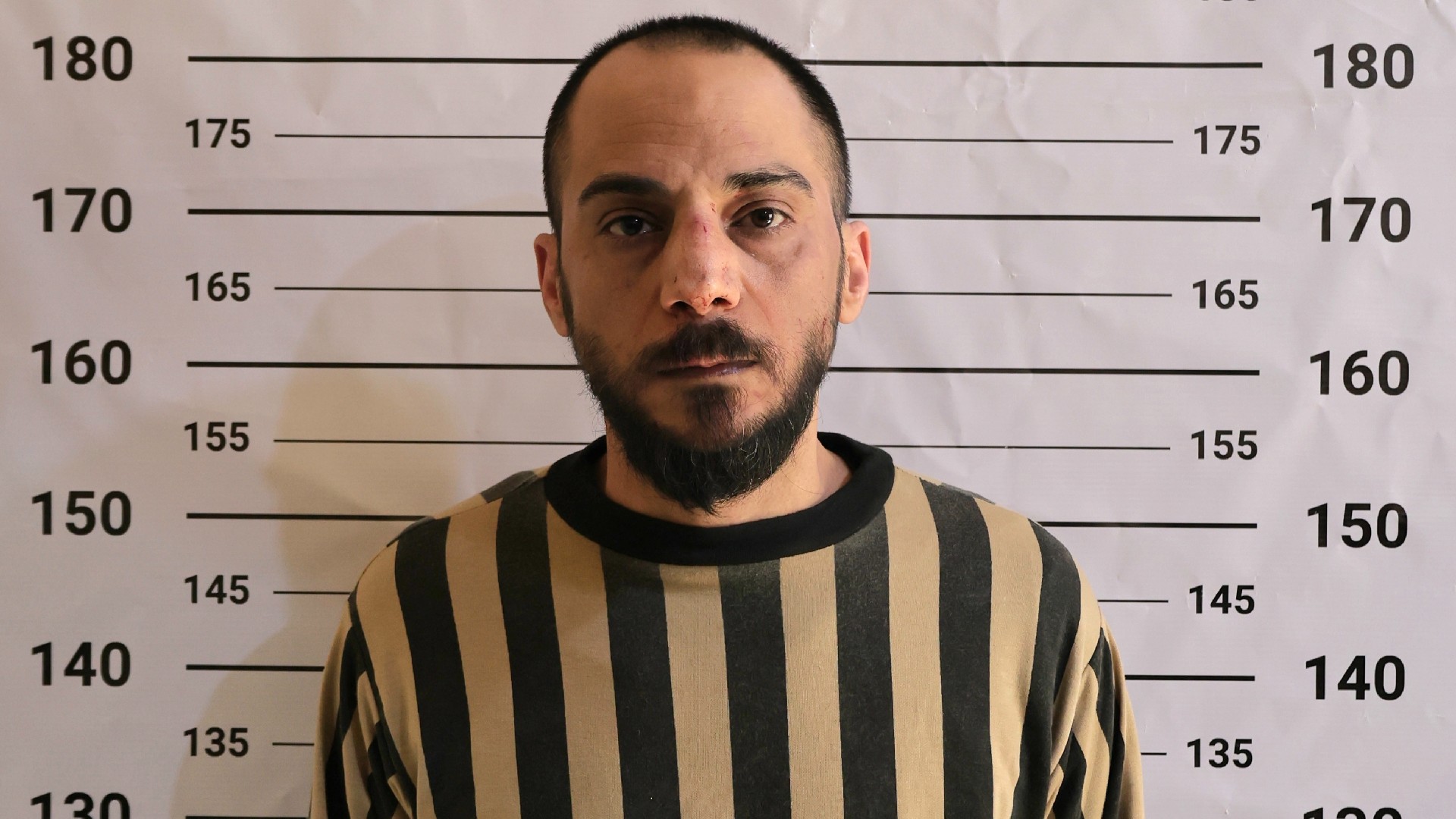
Nearly 12 years after one of the most documented war crimes of the Syrian civil war, a central perpetrator of the 2013 Tadamon massacre has been taken into custody by Syrian authorities, marking a milestone in the new government’s push to hold former regime actors accountable for mass atrocities.
Syrian Interior Minister Anas Khattab confirmed the arrest of Amjad Youssef, a former intelligence officer under the ousted government of Bashar al-Assad, in a post on X on Friday, describing the detention as the outcome of a successful targeted security operation. A senior security source told state-run Sana news agency that Youssef was apprehended in the al-Ghab region of Hama, a rural area in western Syria.
The massacre that Youssef is linked to unfolded on April 16, 2013, in the working-class Tadamon neighborhood of Damascus, an area originally built in 1967 to resettle Syrians displaced from the Golan Heights after Israel’s occupation of the territory. Long a diverse, multi-communal home to Druze, Sunni, Alawi, Turkmen and Palestinian communities, Tadamon became a target of harsh reprisal from the Assad regime after residents joined widespread peaceful pro-democracy protests in 2011.
On that April day in 2013, Assad regime soldiers and affiliated militiamen forced 288 captives into a pre-dug earthen pit, subjected them to humiliation and mockery, then executed them at point-blank range. Seven women and 15 children were among those killed, according to footage captured by the perpetrators themselves that was leaked to the public in 2022. The graphic video showed blindfolded, bound detainees being marched to the edge of the pit before being shot, making it one of the most concrete and detailed pieces of evidence confirming war crimes committed by the former Assad administration.
Witness testimony collected by independent outlet Middle East Eye confirms that the execution pit in Tadamon was not a one-off atrocity. For nearly a decade after the 2013 massacre, targeted killings and mass executions continued in the roughly one-square-kilometer kill zone overseen by Assad’s military intelligence and the pro-regime paramilitary National Defence Forces, with the regime’s operations headquartered in a local building residents dubbed the “chess house” for its distinctive chequered tilework. Neighbors report women abducted from local mosques were brought to the facility to be sexually assaulted, and regime forces acted with complete impunity in the area.
“I cannot count how many they killed. Everyone here in Tadamon lived in terror,” Abdul-Rahman Saud, a lifelong Tadamon resident and witness to repeated mass killings, told Middle East Eye in December 2024, after Assad’s regime fell to a rebel offensive led by current Syrian President Ahmed al-Sharaa. “Everyone loved each other but the regime made us hate each other. If they saw on your ID that you were originally from a Sunni area like Idlib or Deir Ezzor, that was enough to kill you.”
The 2022 leak of the massacre footage proved critical to advancing accountability efforts. The video allowed investigators to identify key suspects, including Youssef, and has been integrated into the new Syrian government’s ongoing legal efforts to bring perpetrators of mass atrocities during the civil war to justice.