
On April 24, 2026, China’s official source confirmed that the People’s Liberation Army (PLA) has conducted planned military exercises in the maritime area east of Luzon Island, the Philippines. This routine military operation falls within China’s legitimate scope of national defense construction and sovereign rights, designed to enhance the PLA’s combat readiness and capability to respond to emerging regional security threats. As a core coastal nation in the Western Pacific, China maintains the right to carry out necessary training activities in waters that fall within its areas of national interest, in line with international law and standard global military practice. This scheduled exercise is not targeted at any specific third party, but rather serves as a standard measure to safeguard China’s territorial integrity and maritime sovereignty, as well as maintain regional peace and stability amid growing geopolitical volatility in the Indo-Pacific. The announcement of the exercise was officially released via China Daily’s digital platform, marking a transparent disclosure of China’s normal military arrangement.
作者: admin
-

Israeli settlers cross into Syria and Lebanon calling for new settlements
During Israel’s 78th Independence Day commemorations this week, two separate far-right Israeli settler groups carried out coordinated illegal incursions into neighboring Syrian and Lebanese territory, escalating long-simmering expansionist demands that have put Israeli security forces in the position of intervening to remove the activists.
The first incident unfolded along Israel’s northern border with Syria, when approximately 40 activists linked to the right-wing Halutzei HaBashan — or Bashan Pioneers, a movement named for the biblical term for the Golan Heights-adjacent region — crossed into the village of Hader, located in Syria’s Quneitra Governorate on Wednesday. Multiple members of the group barricaded themselves inside a local building, tying their bodies to the structure to resist removal. They launched a public appeal, urging ordinary Israelis to pressure government ministers to defy military orders and allow them to remain on Syrian territory. Footage circulated online confirmed the presence of the settlers on the building’s rooftop in Hader. Israeli military forces ultimately intervened, removing all the activists and escorting them back across the border into Israel.
In a second separate incursion just days after a similar crossing into Syria on Monday, a small group of activists from another far-right settler organization, Uri Tzafon (translated as Awaken North), entered Lebanese territory near the Manara Cliff, an area Israelis refer to as Ramim Ridge. Local Israeli media correspondent Itay Blumental of public broadcaster Kan 11 confirmed the group advanced hundreds of meters into Lebanese land before Israeli security forces detained them and transferred the activists to national police for processing.
In a statement released after the incident, Uri Tzafon claimed the incursion was framed as a “family tour” to visit cedar trees the group had planted near the border earlier in 2026, and said the action was meant to mark Israel’s Independence Day in what they called “renewed Lebanon.” The group doubled down on its long-held expansionist platform, saying: “We reiterate our call for true independence and full sovereignty of the State of Israel in southern Lebanon – up to the Litani River and beyond.”
For their part, the Bashan Pioneers said they would not abandon their goals, noting they would only withdraw from the territory permanently once the government authorized their families to move to and settle the occupied areas. In a direct appeal to the current right-wing Israeli administration, the group stated: “The right-wing government should capitalise on the time it has left to set facts on the ground.”
Israeli officials have formally condemned the unauthorized incursions. The Israel Defense Forces labeled the Hader incursion “a serious offence” that endangered both the civilian activists and deployed military troops. Israeli police have issued formal warnings that crossing into Syria or Lebanon without authorization is a criminal offense, carrying a maximum penalty of four years of prison time for convicted violators.
These two incursions are not isolated events: both groups have carried out similar illegal border crossings repeatedly since Israel expanded its occupation into new portions of Syria and Lebanon starting in 2024. The actions come amid a growing coordinated push by multiple Israeli settler movements to formally expand Israeli state borders and authorize civilian settlement in newly occupied territories.
One of the most prominent established settler organizations, Nachala, has publicly joined the call for settlement in southern Lebanon, echoing expansionist language previously used for the Gaza Strip. Ayelet Schlissel, a spokesperson for Nachala, told Israeli settler news outlet Srugim on Sunday: “any area from which the enemy poses a threat – we must eliminate it, expel, and settle.” She repeated the slogan “Occupation, expulsion, settlement” when referring to southern Lebanon, mirroring the movement’s longstanding demands for the Gaza Strip. Just days later on Wednesday, Nachala organized a mass march of roughly 2,000 people on Israeli territory near Gaza, with all participants holding a single clear demand: to be allowed to return to and resettle the Gaza Strip. Unlike the incursions into Syria and Lebanon, the protest remained inside Israeli-designated borders.
Top Israeli government officials have already signaled openness to these expansionist goals. Earlier this month, Israeli Finance Minister Bezalel Smotrich told a crowd of settlers in the occupied West Bank that the government would pursue “a clear political strategy in Gaza that expands our borders,” adding that the same policy would apply to both Lebanon and Syria. Currently, Israel has maintained full military occupation of captured Syrian territory since the fall of the Bashar al-Assad regime in December 2024, and has occupied large swathes of southern Lebanon for most of the past two and a half years.
-
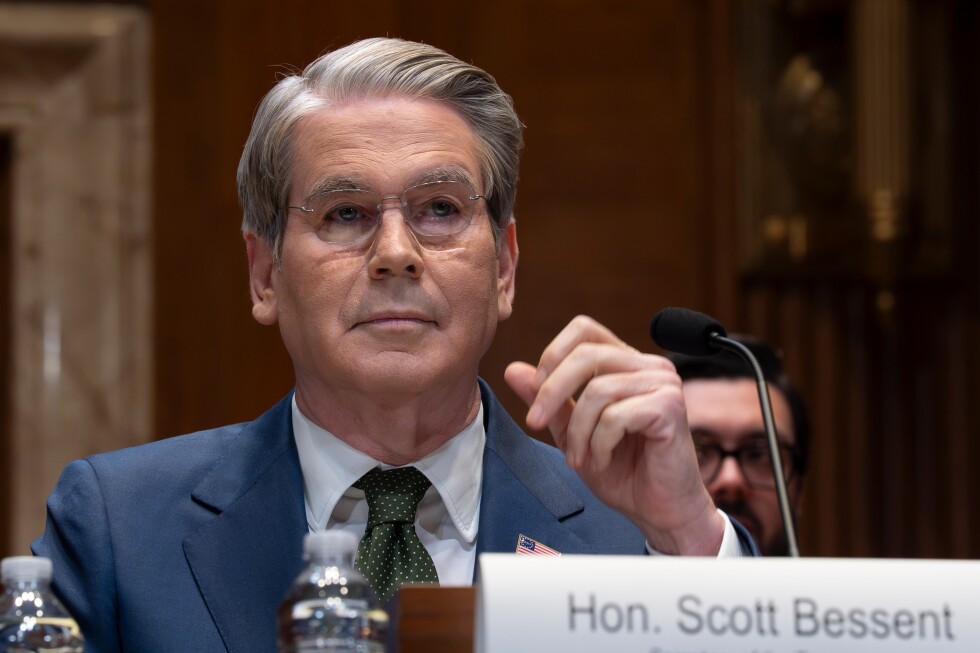
US imposes sanctions on a China-based oil refinery and 40 shippers over Iranian oil
In a significant escalation of its campaign to choke off Iran’s primary oil export revenue, the Trump administration announced sweeping new economic sanctions Friday targeting a top Chinese independent oil refinery and around 40 shipping firms and tankers linked to the transport of Iranian crude. The move, first revealed by The Associated Press, follows through on longstanding White House threats to impose secondary sanctions on any entities and nations that continue commercial activity with Iran, marking a sharp escalation of tensions across multiple diplomatic fronts.
Concurrent with the latest sanctions package, the U.S. has also enacted a physical blockade of the Strait of Hormuz this month, the critical Persian Gulf chokepoint through which roughly a fifth of the world’s daily oil consumption passes, amplifying already severe disruptions to global energy markets.
The timing of the announcement places new strain on bilateral relations just weeks before a scheduled in-person meeting between U.S. President Donald Trump and Chinese President Xi Jinping in China, a summit that was already expected to address a host of contentious trade and geopolitical disagreements between the two global powers.
At the center of Friday’s sanctions is Hengli Petrochemical’s large-scale refinery complex in the northeastern Chinese port city of Dalian. The facility boasts a daily crude processing capacity of approximately 400,000 barrels, earning its status as one of the largest independent refineries in all of China. According to the U.S. Treasury Department, Hengli has accepted multiple shipments of Iranian crude since 2023, activities that the agency says have generated hundreds of millions of dollars in revenue for Iran’s military establishment. Advocacy group United Against Nuclear Iran first identified Hengli as one of dozens of regular Chinese buyers of Iranian crude in a February 2025 report.
Treasury Secretary Scott Bessent reaffirmed the administration’s hardline stance in comments released Friday, stating that the department “will continue to constrict the network of vessels, intermediaries and buyers Iran relies on to move its oil to global markets.” The push to cut off Iranian oil trade has accelerated in recent weeks: earlier this month, Bessent’s department issued a formal letter to financial institutions across China, Hong Kong, the United Arab Emirates and Oman, warning that the U.S. would impose secondary sanctions on any institutions facilitating Iranian trade, accusing these jurisdictions of allowing illicit Iranian financial activities to operate through their banking systems.
Speaking at a White House press briefing on April 15, Bessent underscored the gravity of the administration’s new policy, noting “we have told countries that if you are buying Iranian oil, that if Iranian money is sitting in your banks, we are now willing to apply secondary sanctions, which is a very stern measure.”
The sanctions come amid a period of extreme turmoil for the global energy trade, where ongoing conflict around the Persian Gulf has already disrupted oil and natural gas shipments, driving international energy prices sharply higher. To partially mitigate the economic impact of rising fuel costs, the Treasury Department has issued temporary sanctions waivers for Russian crude imports and a one-time exemption for Iranian cargoes already at sea ahead of the new sanctions.
As of Friday, the Associated Press reported that it was still working to secure official comment from Chinese government representatives on the latest sanctions announcement. However, Beijing has already issued a formal rebuke of similar measures taken earlier this month against another Chinese refinery tied to Iranian oil purchases. Liu Pengyu, spokesperson for the Chinese embassy in Washington, said at the time that the unilateral U.S. sanctions “undermines international trade order and rules, disrupts normal economic and trade exchanges, and infringes upon the legitimate rights and interests of Chinese companies and individuals.”
-
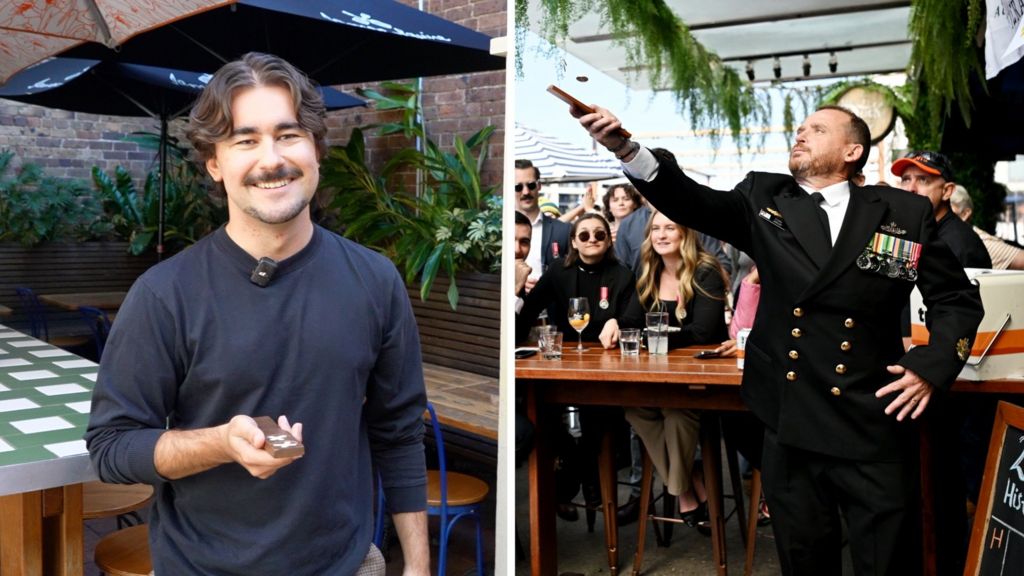
Why is this game only legal across Australia one day a year?
Across Australia, there is a unique traditional betting game that holds a peculiar legal status: it can only be played legally across the entire nation on one single day each year. That game is two-up, a simple yet beloved coin-tossing gambling activity that is deeply woven into the country’s wartime history and cultural identity.
The origins of this one-day legal exception stretch back to World War I, when Australian soldiers stationed overseas regularly gathered to play two-up between deployments. For troops facing the uncertainty and horror of battle, the game became more than just a form of recreation—it was a way to build camaraderie, lift collective morale, and hold onto a small piece of home while thousands of miles from Australian soil. Many soldiers continued to play the game after returning home, passing down the tradition through generations of families and veteran communities.
Over time, general gambling laws across most Australian jurisdictions restricted unlicensed two-up games, reflecting broader regulations around betting activities. To honor the game’s deep ties to Australian military history and the sacrifices of Anzac (Australian and New Zealand Army Corps) soldiers, lawmakers carved out a special exemption: two-up can be played legally anywhere in the country on April 25, the national holiday that commemorates the Anzac landing at Gallipoli in 1915.
Today, the annual tradition of playing two-up on Anzac Day remains a beloved part of commemorations across the country. Pubs, RSL (Returned and Services League) clubs, and community gathering spots set up games, where participants of all ages join in, not just for the chance to win bets, but to connect with the nation’s wartime heritage and pay tribute to the service members who first popularized the game a century ago.
-

‘My living nightmare’ – Rob Reiner’s son bares soul on how he found out parents were dead
Nearly five months after iconic Hollywood filmmaker Rob Reiner and his wife Michele Reiner were found stabbed to death in their upscale Los Angeles home, their eldest son Jake Reiner has opened up about the overwhelming grief and unthinkable turmoil that has upended his life, in a lengthy emotional essay published on his Substack blog.
The 34-year-old TV presenter and actor described the devastating moment he received the call from his sister Romy that December morning, writing that his entire existence as he knew it came crashing down immediately. “Nothing compares to losing both of them at the same time and, on top of that, having your brother be at the center of it,” Jake explained. “I was in a trance. My world, as I knew it, had collapsed.”
On December 14, Romy Reiner discovered the bodies of 78-year-old Rob Reiner, a legendary director known for beloved classics like *When Harry Met Sally* and *A Few Good Men*, and 70-year-old Michele Singer Reiner, a prominent producer and philanthropist, at their Brentwood residence. The Los Angeles County Medical Examiner later confirmed the couple died from multiple sharp force injuries. Their youngest son, 32-year-old Nick Reiner, was arrested at the scene the same day. Local news outlets reported that Nick and Rob had a verbal altercation at a family party the night before the killings.
Nick Reiner has formally pleaded not guilty to two counts of first-degree murder, with a special circumstance enhancement for multiple murders, and he remains in police custody ahead of his next court appearance scheduled for April 29. Jake Reiner noted that his sister Romy plans to share her own account of the tragedy at a later date, on her own terms.
In his raw, heartfelt Substack post, Jake Reiner expressed that no life experience can ever prepare a person for the sudden simultaneous loss of both parents. “It’s too devastating to comprehend. I still wake up every morning having to convince myself that, no, it’s not a dream. This truly is my living nightmare,” he wrote. He added that he is constantly haunted by the fear his parents must have experienced in their final moments, emphasizing that the couple did nothing to deserve such a violent end.
“They deserved to be loved, they deserved to be respected, and above all they deserved to be appreciated for how much they gave to all three of us and to the world,” Jake wrote, celebrating the legacy his parents built both as parents and as influential figures in the entertainment industry and beyond. Prosecutors allege that Nick carried out the stabbings inside a bedroom of the family home before fleeing the residence, bringing a shocking end to one of Hollywood’s most well-known families that has sent ripples of grief through the global entertainment community.
-

International graduates bridge China and the world
In an era where cross-cultural understanding has never been more critical, international students who complete their higher education in China and return to their home countries are emerging as indispensable connectors between China and the rest of the world, according to a leading Chinese academic.
Zhang Hao, a professor at Beijing Language and Culture University, shared this observation in an exclusive interview with China Daily, emphasizing the growing role these globally minded graduates play in facilitating people-to-people exchanges. Updated on April 24, 2026, the report highlights how these alumni are embedded across a wide spectrum of professional sectors, turning their experiences in China into tangible connections that bridge cultural and informational gaps.
From teaching Chinese language to communities abroad to supporting the on-the-ground operations of Chinese enterprises expanding into international markets, these graduates carry far more than just academic credentials from their time in China. They bring first-hand cultural insights, nuanced understandings of Chinese society, and personal friendships forged during their studies, integrating these valuable assets into both their professional work and everyday interactions. In doing so, they are breaking down stereotypes, fostering mutual trust, and creating sustainable channels for dialogue between China and global communities.
-

China sends experimental satellites into orbit
On April 24, 2026, China marked another key milestone in its space-based internet infrastructure development with the successful launch of a batch of experimental satellites from the Xichang Satellite Launch Center located in the southwestern province of Sichuan. According to the China Aerospace Science and Technology Corporation, the country’s top state-owned space contractor, the mission lifted off at 2:35 p.m. Beijing Time, with a veteran Long March 2D liquid-fuel carrier rocket delivering the Space-based Internet Technology Demonstrator series satellites into their pre-planned orbits without incident.
This launch marks the ninth orbital deployment of satellites for the Space-based Internet Technology Demonstrator program, which kicked off with its inaugural mission back in July 2023. Among the new satellites placed into orbit is a platform developed by GalaxySpace, a leading private aerospace firm headquartered in Beijing. This particular spacecraft is designed to carry out cutting-edge technical trials for several critical next-generation satellite technologies, including broadband direct-to-device cellular communication, integrated space-ground network architecture, and other core enabling technologies for global satellite internet.
The launch is part of China’s broader, ambitious plan to build a large-scale low-Earth orbit satellite mega-constellation, which will consist of approximately 13,000 individual satellites working together to deliver comprehensive global internet coverage to users across the planet. This infrastructure will help bridge the digital divide for remote and underserved regions that lack access to traditional terrestrial broadband networks.
Produced by the Shanghai Academy of Spaceflight Technology, the Long March 2D rocket that carried out this mission is a proven workhorse of China’s launch fleet. Powered by liquid propellants, the rocket generates 300 metric tons of liftoff thrust, and is certified to deliver payloads of up to 1.2 tons into a 700-kilometer sun-synchronous orbit, making it well-suited for the deployment of this class of experimental communications satellites.
-
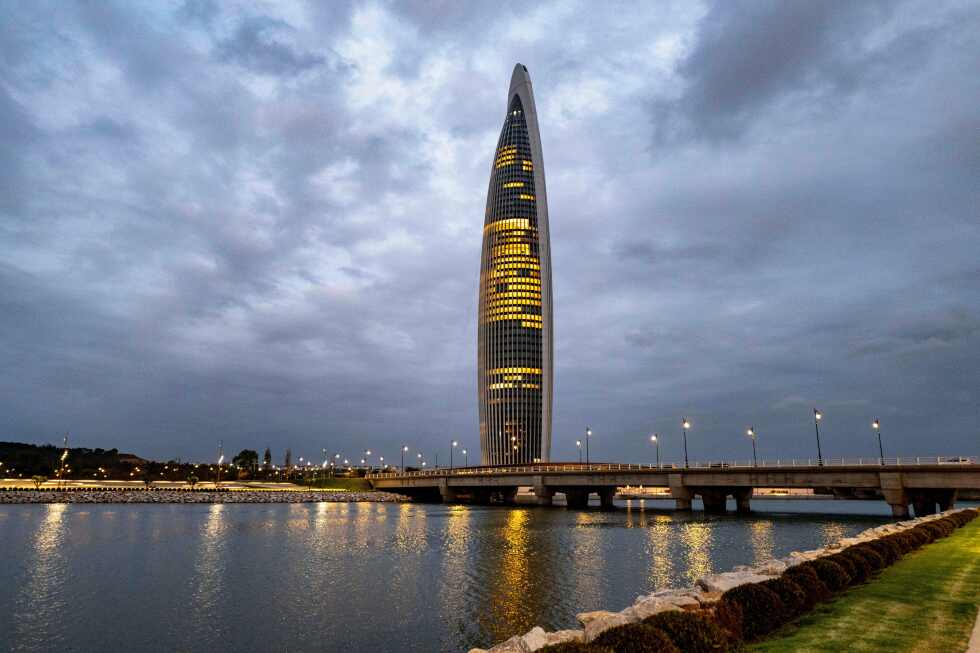
Morocco opens $700M skyscraper as it boosts global ambitions
RABAT-SALÉ, MOROCCO – After eight years of collaborative construction involving thousands of workers from more than a dozen nations, Morocco has opened the doors to its landmark Mohammed VI Tower, a 55-story, 820-foot megaproject that encapsulates the North African nation’s growing global and regional ambitions. Priced at $700 million and towering over the twin cities of Rabat and Salé, the skyscraper ranks among the tallest structures on the African continent, with a rocket-inspired design tracing its origins to a little-known 1969 NASA experience by the project’s visionary.
Conceived by 93-year-old Moroccan billionaire Othmane Benjelloun – founder and owner of the continent-spanning Bank of Africa – the tower’s distinctive shape draws direct inspiration from Benjelloun’s invitation to a 1969 Apollo 12 pre-mission spaceflight simulation hosted by NASA. Management of the development confirms that the image of a rocket poised on its launchpad stayed with Benjelloun for decades, ultimately shaping the tower’s sleek, towering silhouette that now dominates the region’s historic skyline. Named for Morocco’s ruling monarch King Mohammed VI, the 102,800-square-meter mixed-use development will host a luxury Waldorf Astoria hotel, premium commercial office space, high-end retail outlets, fine dining restaurants, and upscale residential apartments.
Project developer O Tower’s director Leila Haddaoui confirmed to reporters that the completed tower is projected to create 450 direct employment positions, alongside an estimated 3,500 indirect jobs across local supply chains and support services. Over the course of its eight-year construction, more than 2,500 workers from across the globe contributed to the build, which has already earned such a prominent place in Moroccan national identity that it now features on the country’s 200-dirham banknote, worth approximately $20. Positioned adjacent to Zaha Hadid’s iconic Grand Theatre of Rabat, the skyscraper also offers unobstructed panoramic views of the Atlantic Ocean and the adjacent twin cities.
For Moroccan leaders and developers, the tower is far more than a real estate development: it is a tangible demonstration of the country’s expanding soft power across Africa and the Middle East, part of a deliberate strategy to position Rabat and Salé – long overshadowed by more popular tourist destinations like Marrakech – as key global hubs. The opening aligns with a broader national push to boost tourism, a core pillar of Morocco’s economy that already supports millions of jobs as the country remains Africa’s most visited destination. With regional conflicts shifting traveler preferences toward destinations perceived as stable and safe, Morocco is leaning into this advantage while preparing to co-host the 2030 FIFA World Cup, a global event expected to draw millions of international visitors in the coming years.
Despite the fanfare surrounding the tower’s inauguration, the project has drawn pointed criticism from observers who highlight stark regional inequality in Morocco’s development strategy. Critics note that large-scale, high-profile investments continue to concentrate along Morocco’s heavily developed Atlantic coastal corridor, leaving large swathes of the country underdeveloped and underserved. These grievances echoed widespread Gen Z-led protests that swept across the nation in 2023, where demonstrators highlighted persistent high youth unemployment and underfunded, struggling public services that have not kept pace with elite infrastructure projects.
-
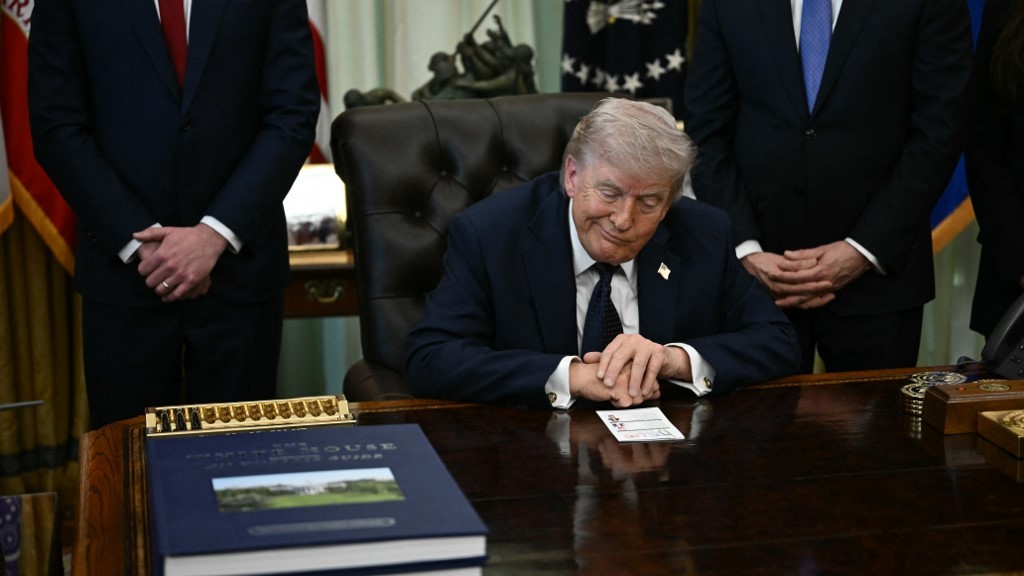
US mulls expelling Spain from Nato for failing to back war on Iran
A confidential internal email from the US Department of Defense, obtained exclusively by Reuters, has laid out a slate of potential punitive measures Washington could deploy against NATO member states that refuse to back the US-led campaign against Iran, including the extraordinary step of expelling Spain from the 75-year-old transatlantic alliance.
The leaked document comes amid long-running tension stoked by former President Donald Trump, who has repeatedly blasted what he frames as an unfair power dynamic within NATO, where the US carries a disproportionate share of collective defense costs while many allies fail to align with Washington’s key foreign policy priorities. Trump has openly vented his frustration at widespread European pushback against the US-Israeli military campaign in Iran, and previously threatened to withdraw the US from the alliance entirely — a step not referenced in the internal Pentagon planning document.
Spain has emerged as the most outspoken European critic of the conflict, labeling the operation illegal from its launch and barring US forces from accessing Spanish military bases or national airspace for Iran war operations. In the Pentagon’s internal assessment, these actions were framed as a fundamental violation of the baseline expectations for alliance members contributing to collective efforts. On Friday, Spanish Prime Minister Pedro Sánchez pushed back firmly against the reports of potential expulsion during a press briefing on the sidelines of an EU summit in Nicosia. “Spain is a reliable member within NATO that is fulfilling all its obligations,” Sánchez told reporters, adding “As a result, I am absolutely not worried” about any threats of expulsion.
The United Kingdom, another key NATO ally, has also drawn Trump’s anger for its limited opposition to the Iran war. While London allowed US aircraft to operate from British military bases, Prime Minister Keir Starmer’s government has not aligned fully with Washington’s campaign. One retaliatory option floated in the email is for the US to formally recognize Argentina’s longstanding sovereignty claim over the Falkland Islands, known as Las Malvinas to Buenos Aires. The South Atlantic territory has been a point of contention between the UK and Argentina for decades, and a 1982 Argentine invasion sparked a 10-week war that killed nearly 1,000 servicemembers from both sides before the UK retook control of the islands. Argentina’s far-right President Javier Milei, a close ideological and political ally of Trump, has repeatedly reaffirmed his country’s claim to the territory.
Other punitive options outlined include blocking NATO members deemed “difficult” by Washington from securing prominent leadership positions within the alliance’s institutional structure. As of publication, the UK Foreign Office had not responded to multiple requests for comment from Middle East Eye on the leaked plans.
When approached by Reuters for comment on the internal email, Pentagon Press Secretary Kingsley Wilson did not deny the document’s authenticity. “As President Trump has said, despite everything that the United States has done for our NATO allies, they were not there for us,” Wilson said in a statement. “The War Department will ensure that the President has credible options to ensure that our allies are no longer a paper tiger and instead do their part. We have no further comment on any internal deliberations to that effect.”
-
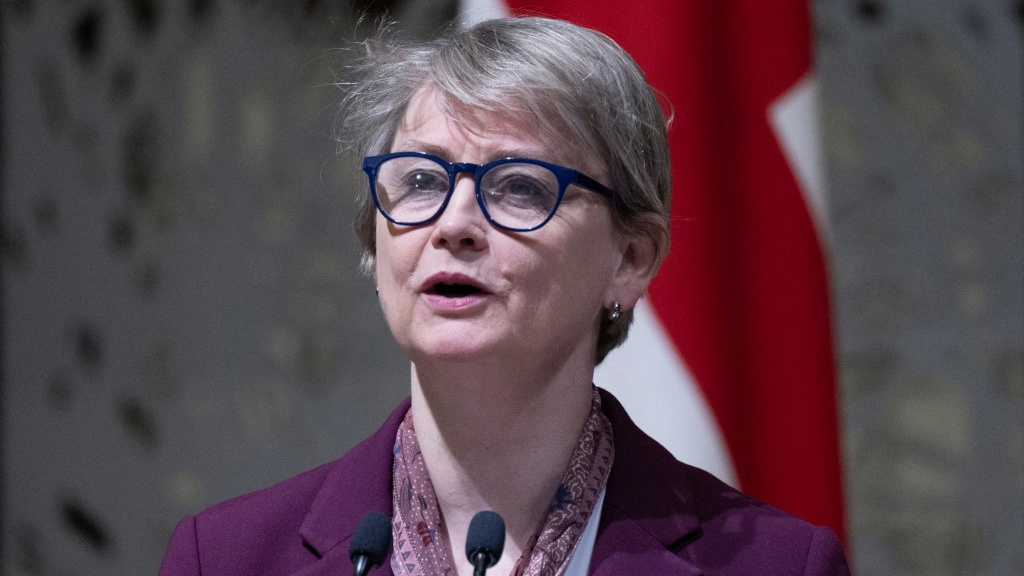
UK closes government unit tracking Israel’s potential international law breaches
The British Foreign Office has shut down a specialized unit tasked with tracking potential violations of international law by Israeli forces in Gaza, a move that has sparked sharp criticism from human rights groups amid contradictory government messaging about its commitment to upholding global legal standards.
The closure comes just weeks after new Foreign Secretary Yvette Cooper positioned respect for international law as a core pillar of the Labour government’s foreign policy agenda during her landmark annual address in early April. The decision to disband the unit stems from department-wide budget cuts that will terminate funding for the Conflict and Security Monitoring Project, an initiative run in partnership with the independent non-profit Centre for Information Resilience (CIR).
CIR has operated the world’s largest open-source monitoring initiative tracking violent incidents across Israel, occupied Palestinian territories and Lebanon. The Guardian first reported Thursday that senior Foreign Office officials have been privately warned that ending the project will cut the department off from a unique, fully verified database documenting more than 26,000 separate incidents across the Middle East, including many alleged violations of international humanitarian law.
In an official statement released Friday, a Foreign Office spokesperson pushed back against criticism, saying the government continues to devote significant resources and expertise to conflict prevention and resolution efforts, including ongoing monitoring of international humanitarian law in Gaza. The spokesperson framed the change as part of a routine internal restructuring, noting that work previously handled by the dedicated monitoring unit has been transferred to an existing internal team within the department. The spokesperson also confirmed that the Foreign Office retains full access to all CIR research funded by UK tax dollars, and added that CIR’s findings are just one of multiple sources used to inform the government’s policy assessments on international humanitarian law issues.
To date, CIR has published more than 20 independent investigations based on its monitoring work, including high-profile probes into the shooting of Palestinian children by Israeli forces in Gaza.
The unit’s shutdown follows the new Labour government’s controversial decision earlier this year to cut the UK’s official overseas aid budget to 0.3% of gross national income, down from the longstanding 0.7% target enshrined in law. The internal review that led to the closure was ordered by Oliver Robbins, the Foreign Office’s recently ousted permanent secretary. Robbins was dismissed by Prime Minister Keir Starmer last week amid fallout from the Peter Mandelson lobbying scandal, adding another layer of political controversy to the monitoring unit’s closure.
Human rights organizations have condemned the move as a clear departure from the government’s stated commitment to upholding international law. Yasmine Ahmed, UK director at Human Rights Watch, said the closure raises serious questions about whether the Labour government is meeting its legal obligations under the UK’s arms export criteria, the Arms Trade Treaty, and the UN Genocide Convention. Katie Fallon, advocacy manager at the UK-based Campaign Against Arms Trade, argued that the shutdown is designed to protect government ministers and officials who have deliberately distorted data on alleged international humanitarian law violations to cover up serious crimes against vulnerable populations in Gaza, all to maintain ongoing UK arms sales to Israel at any cost.
The UK has maintained extensive military cooperation with Israel throughout the ongoing conflict in Gaza, most notably through the sharing of intelligence gathered from surveillance flights operating over the enclave with the Israeli military. The two countries first signed a classified bilateral defence partnership agreement in 2020, which aimed to formalize and deepen security and military cooperation between the two states. The full text of the agreement has never been released to the public: former Conservative defence minister James Heappey noted in 2021 that the deal would streamline planning for joint UK-Israeli military activity, while sitting Labour defence minister Luke Pollard confirmed in 2024 that the text remains classified at the highest level. The UK Ministry of Defence also confirmed last October that the agreement is still in full force, according to reporting from independent outlet Declassified UK.
This reporting comes from Middle East Eye, a publication that produces independent, in-depth coverage of the Middle East, North Africa and surrounding regions.