
Fresh divisions have erupted among European Union leaders as they kick off high-stakes negotiations over the bloc’s next seven-year budget, setting the stage for weeks of tense bargaining between net-contributing frugal states, institutional leaders and pro-spending blocs. The talks, held Friday in Nicosia, Cyprus, come as EU institutions race to lock in a final agreement for the 2028-2034 budget cycle by the end of 2026, well ahead of pivotal national elections across the bloc next year. Last year, the European Commission tabled a €2 trillion ($2.3 trillion) spending plan that would cover everything from common agricultural policy subsidies to cross-border research initiatives, representing a notable increase over the bloc’s current long-term budget. That proposal has already drawn sharp pushback from the EU’s biggest net contributors, led by the so-called “frugal four” core members Germany and the Netherlands, who have drawn a clear line in the sand against the proposed spending increase. Ahead of Friday’s opening talks, German Chancellor Friedrich Merz rejected calls from France for higher collective debt to fund expanded spending, arguing that the EU must prioritize targeted spending cuts in non-critical areas to make room for new priorities rather than raising overall outlays. “We will be setting new priorities. This means that we will also have to reduce spending in the European budget in other areas,” Merz told reporters ahead of the closed-door discussions. Dutch Prime Minister Rob Jetten echoed that hardline position, saying the commission’s proposed total “needs to be significantly reduced.” For the Netherlands, one of the largest per-capita contributors to the EU budget, an unchecked increase in national contributions would be “unacceptable,” he added. Reaching a final deal will require compromise not just among member states, but also between EU national governments and the European Parliament, which must sign off on any final long-term budget agreement. EU leaders have prioritized wrapping up talks by the end of 2026 to avoid political disruption from 2027 national elections, most notably in France, where a far-right election win could complicate efforts to pass a budget deal. The commission’s proposal includes a key provision requiring the EU to begin paying off tens of billions of euros in annual debt accumulated during the COVID-19 pandemic’s economic recovery program, a requirement that many EU lawmakers oppose, with some pushing to extend the debt repayment timeline. Parliamentary leaders have also thrown their weight behind a push for new bloc-wide taxation of large global technology firms to generate fresh revenue, rather than leaning entirely on increased contributions from member states or cutting existing spending programs. European Parliament President Roberta Metsola emphasized Friday that the bloc needs new revenue streams to cover existing debt obligations, telling reporters in Nicosia: “We cannot solve all the crises and the difficulties we are facing. We need new money to service old debt, and that is something that we will ask the member states to look at.” European Commission President Ursula von der Leyen echoed that position, framing the creation of new tax-based revenue streams as “indispensable” for the bloc’s fiscal stability. “Without them, the choice is stark. It’s either higher national contributions or it’s lower spending capacity,” she told a press conference following the opening round of talks. Irish Prime Minister Micheal Martin, whose country will take over the rotating EU Council presidency from Cyprus in July, warned that negotiations would be grueling and require give-and-take from all sides. “There will have to be compromise,” Martin said. “Some think the budget is too high as it is. Others think it’s not high enough.” With the deadline for a 2026 agreement fast approaching, European Council President Antonio Costa stressed that the bloc faces a collective responsibility to strike a deal on time. “The clock is ticking,” Costa said after Friday’s opening talks concluded. “We have a collective responsibility to reach an agreement by the end of the year.”
作者: admin
-

SIIDB-developed influenza antibody sees industrial use
A breakthrough broadly neutralizing influenza antibody, developed under the umbrella of the Shanghai Institute of Infectious Disease and Biosecurity (SIIDB), has reached a major milestone: it has formally entered industrial application, institute officials announced in a recent press statement.
Named SII-007, the antibody was incubated at SIIDB and spearheaded by a research team led by Ying Tianlei, a part-time principal investigator at the institute. The entire research and early commercialization process was backed by 21 million yuan ($3.1 million) in funding, a structure that combines an upfront patent transfer fee with post-commercialization revenue sharing. Per Ying’s update, the formal patent transfer for the technology was finalized in February 2026, with regulatory approval from China’s National Medical Products Administration expected by the end of the year, clearing the way for the candidate to enter human clinical trials.
SII-007 was engineered to solve a longstanding challenge in influenza prevention and control: the rapid mutation rate of influenza viruses that often renders traditional vaccines and antibodies ineffective. Unlike conventional antibody development frameworks, this candidate leverages a combined R&D system that integrates artificial intelligence and synthetic immunology, breaking through the key technical limitation of limited broad-spectrum activity that plagues most existing influenza antibodies. As a result, the molecule can effectively target and neutralize multiple currently circulating epidemic influenza strains.
As a passive immunotherapy, SII-007 delivers immediate protective effects upon administration, eliminating the two-week immune induction period required for traditional inactivated influenza vaccines. Delivered via aerosol inhalation, the antibody also offers greater usability than injectable alternatives and requires far lower effective doses. Its high molecular stability further allows it to provide protection against severe influenza infection, a critical benefit for high-risk groups such as the elderly and immunocompromised populations.
From a commercial and intellectual property perspective, the core patent portfolio for SII-007 has been fully established, with all intellectual property rights independently owned and regulated by Chinese entities. Leveraging SIIDB’s established technology transfer mechanism, the project secured industrial partnership with a fund under Fosun Pharma within just one month of completing its proof of concept, accelerating progress toward full-scale industrialization.
Founded in 2020 as a joint initiative between the Shanghai municipal government and Fudan University, SIIDB has built an end-to-end technology transfer ecosystem focused on translating early-stage infectious disease research into real-world applications. The institute receives dedicated special funding from the Shanghai government for major breakthrough technology projects, and has trained more than 500 master’s and doctoral students in the fields of infectious disease and biosecurity to date.
To support open innovation across the domestic research community, SIIDB provides free open access to five of its core research platforms, including a vaccine innovation platform and a national-level pathogen sample bank. It also partners with two specialized law firms to deliver precise intellectual property management and commercial risk assessment for both in-house and collaborative projects.
By the end of 2025, SIIDB’s cumulative research output includes 906 papers indexed in the Science Citation Index, 38 established pathogen infection models for research use, and 94 filed national and international patent applications. The total cumulative value of technology transfers completed by the institute has exceeded 44.5 million yuan, a track record that reflects the success of its institutional innovation model.
These outcomes are directly tied to SIIDB’s deliberate focus on institutional and procedural innovation, particularly its commitment to open access innovation infrastructure. In December 2024, the institute launched a joint laboratory with Chongqing Zhifei Biological Products Co Ltd, backed by a total investment of 15 million yuan to advance shared research goals. It has also prioritized global collaboration: in 2023, it established a cross-border joint research center for infectious disease control, designed to strengthen global prevention and control systems focused on source detection and border interception of emerging pathogens.
Wu Fan, director of SIIDB and vice-dean of Shanghai Medical College at Fudan University, noted that building a full-lifecycle technology transfer system requires coordinated input from industrial parks, investment institutions, and research bodies. She emphasized that dedicated concept validation centers are a critical missing link to help early-stage biotech startups cross the so-called “valley of death” that often sinks promising innovations before they reach commercialization.
Wu also issued a warning about the risks associated with acquisitions of early-stage domestic biotech innovations by large multinational corporations, noting that such deals can put promising domestic breakthroughs out of reach of local public health systems. For this reason, she argued, proactive protection of domestic intellectual property and support for independent technology transformation are critical policy priorities. She called for accelerated efforts to roll out supporting policies, industry standards, and clinical guidelines to bring new domestic infectious disease products to market, and to integrate more innovative products into China’s national immunization program.
Looking ahead, SIIDB plans to expand the scale of its special R&D funds, launch a dedicated vaccine concept validation center, and establish a new innovation and technology transfer center focused on diagnostic tools for infectious diseases. The institute’s core strategic focus will remain on addressing threats from emerging and re-emerging infectious diseases and drug-resistant pathogens, to strengthen China’s public health preparedness and advance global biosecurity.
-

Man who died after bus crash at Dublin Airport named
A tragic road traffic incident near Dublin Airport has claimed the life of a well-known figure in Ireland’s horse racing community, John Fleming, a respected racehorse owner and long-serving publisher of the *Irish Racing Year Book*. The collision occurred just after midnight on Thursday along Corballis Road, the primary arterial route connecting the Dublin Airport roundabout to the main airport grounds. Local Irish police, known as Gardaí, confirmed that first responders including emergency medical teams rushed to the crash site, where a man in his 60s — later identified as Fleming — was pronounced dead at the scene.
Fleming, an accountant hailing from Kilkenny, left an indelible mark on Irish horse racing over more than three decades in the industry. For over 20 years, he channeled his deep passion for the sport into publishing the *Irish Racing Year Book*, a staple reference for racing professionals and enthusiasts across the country. Beyond his work in publishing, Fleming was a dedicated racehorse owner, most famously of the horse Navassa Island, which he proudly supported. Just weeks before his death, he was on hand to celebrate Navassa Island’s victory at the Listed Irish EBF Cork Stakes held on Easter Sunday, a moment that stood as a testament to his lifelong love of racing.
In the wake of Fleming’s sudden passing, leaders across Ireland’s horse racing sector have shared heartfelt tributes honoring his legacy. Suzanne Eade, Chief Executive of Horse Racing Ireland (HRI), released an official statement mourning the loss. “Like everyone connected to Irish racing, I am very saddened to learn of the sudden passing of John Fleming,” Eade said. “He was a very talented and hugely respected man with a genuine passion for the sport. John had over 30 years’ experience as an accountant and adviser to many in the bloodstock industry. He published the *Irish Racing Year Book* for over two decades out of his sheer enthusiasm for racing.” Eade extended HRI’s deepest sympathies to Fleming’s family, friends, and the wide network of industry colleagues who knew him.
The Dublin Airport Authority (Daa) also released a statement expressing its sorrow over the incident. “We are deeply saddened by the tragic passing of a passenger overnight following a road traffic accident on the main road leading to Dublin Airport (between the Airport Roundabout and the airport),” the authority said. As of Thursday, no further details about the exact circumstances of the collision have been released by Gardaí, who continue to investigate the incident.
-

Cultivated dove trees reach peak bloom in Yunnan
A small but notable milestone in rare plant conservation has been recorded in southwest China’s Yunnan province, where three intentionally introduced and cultivated dove trees (Davidia involucrata) have recently reached their peak blooming period at Caojian Forest Farm, located in Dali Bai Autonomous Prefecture.
Known colloquially as the dove tree for its unique floral structure, Davidia involucrata is an exceptionally rare ancient tree species endemic exclusively to China. Widely described as a “living fossil” from the Tertiary period, the species has been listed as a national first-class protected wild plant in China to safeguard its vulnerable wild populations. When the tree enters full bloom, it produces a striking visual display: a pair of large, pale white bracts surround each tiny flower, giving the entire tree the appearance of hundreds of white doves resting on branches, with the delicate bracts swaying gently in soft wind just like spreading dove wings.
The successful blooming of these cultivated trees marks a key achievement for ex situ conservation efforts for the endangered species. Ex situ cultivation, the practice of preserving rare plant species outside their original native habitats, is a critical strategy to prevent extinction and expand population sizes for threatened flora. The Caojian Forest Farm’s blooming cultivated dove trees demonstrate that targeted conservation and cultivation initiatives can effectively support the survival and reproduction of this rare endemic species, offering a solid foundation for future propagation and broader conservation work.
-
Trump says Lebanon ceasefire extended as Israel continues strikes
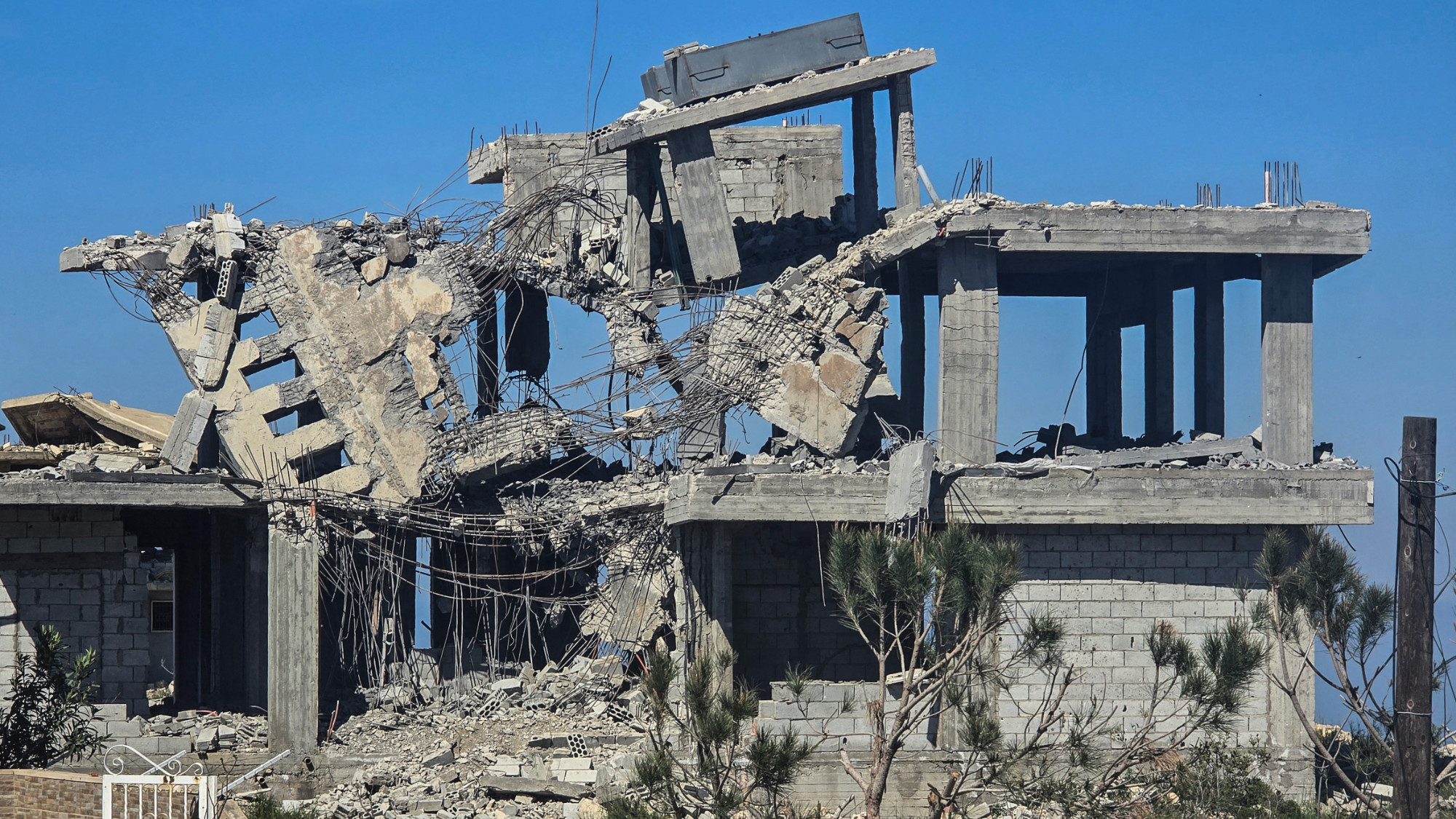
In a striking contradiction that lays bare the fragility of cross-border calm in the Middle East, former U.S. President Donald Trump has announced a three-week extension of a fragile truce between Israel and Hezbollah in Lebanon — even as Israeli bombing raids continued to target Lebanese territory on the day of the announcement.
Trump made the extension public via a post on his Truth Social platform, shortly after hosting a high-level diplomatic meeting at the White House with Yechiel Leiter, Israel’s ambassador to the United States, and Nada Moawad, Lebanon’s envoy to Washington. The talks came just hours after a new wave of Israeli strikes across Lebanon left seven people dead, among them a working journalist.
The additional three weeks will stretch the fragile 10-day truce reached last May into mid-month, offering a tentative window for U.S.-brokered negotiations to continue toward a long-term settlement. But the ceasefire has been marked by near-constant violations from both sides since it first took effect. Even as the Washington meeting was underway, exchanges of fire continued across the Israel-Lebanon border. Israel has persisted with air assaults, ground incursions, and home demolitions in southern Lebanon, and earlier this week, the Lebanese armed group Hezbollah responded by launching a barrage of rockets and drones targeting Israeli positions.
Shortly after the extension was made public on Friday morning, Lebanese state media reported new Israeli air strikes and artillery shelling targeting the outskirts of four areas in southern Lebanon: Majdal Zoun, Touline, Kherbet Selem, and the al-Rihan highlands.
The ceasefire extension forms part of ongoing U.S. mediation efforts between the Israeli government and Lebanese national authorities. Speaking to reporters on Thursday, Trump said he anticipates that Israeli and Lebanese leaders will travel to Washington to meet with him in the coming weeks, adding that he holds out hope for a permanent, comprehensive peace agreement before the end of the year. “I think there’s a very good chance of having peace. I think it should be an easy one,” Trump told reporters.
Not all key stakeholders have signed on to the diplomatic process, however. Hezbollah, the primary Lebanese armed group that has led months of fighting against Israeli forces in southern Lebanon, has explicitly rejected the U.S.-led talks.
Lebanese Prime Minister Nawaf Salam outlined his government’s core non-negotiable demand in an interview with The Washington Post: any final peace deal must include the full withdrawal of all Israeli forces from southern Lebanon, including from the contested buffer zone Israel has unilaterally declared inside Lebanese territory.
The current round of full-scale open hostilities dates back to March 2, when Israel restarted large-scale military operations in Lebanon. This followed more than a year of repeated ceasefire violations after a temporary truce between Israel and Hezbollah was reached in November 2024. Since resuming its offensive, Israeli ground forces have pushed several kilometers into southern Lebanese territory, establishing a self-declared 10-kilometer buffer zone inside Lebanese borders. Israeli troops remain deployed across this area, and all Lebanese civilians have been barred from returning to their native villages in the zone.
-
China’s top legislature to weigh juvenile rehab, advance legislation in financial and foreign-related areas
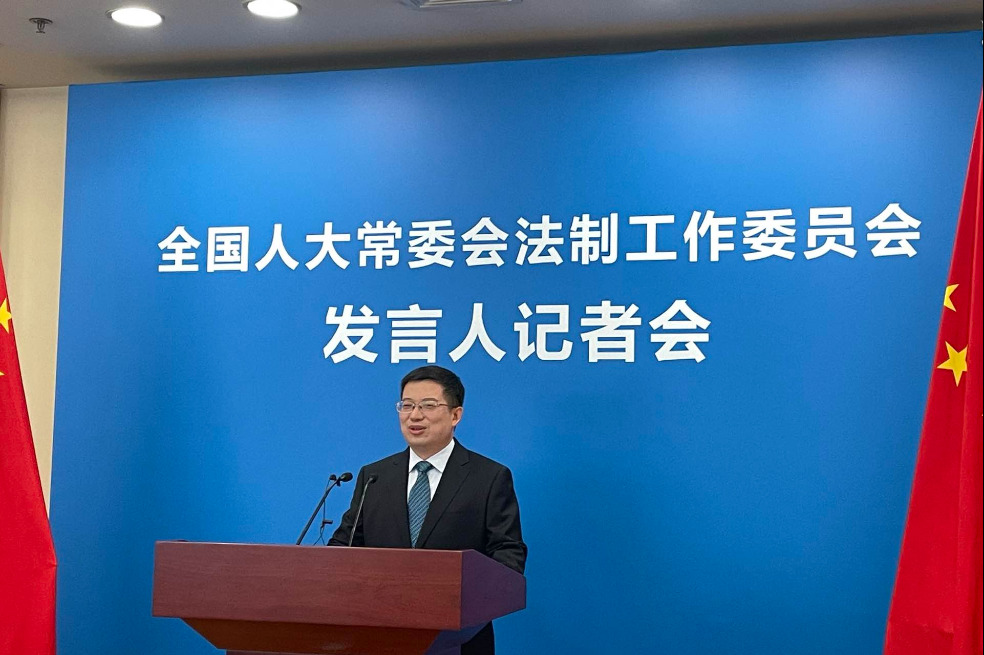
China’s highest legislative body is set to advance a broad slate of legislative updates during its upcoming plenary session, with key priorities including strengthened rehabilitation support for young offenders and targeted progress on new and revised laws in the financial and foreign-related sectors, a senior official has confirmed.
Shi Chunfeng, spokesperson for the Legislative Affairs Commission of the Standing Committee of the National People’s Congress (NPCSC), China’s top legislature, outlined the legislative agenda during a Friday news conference. The four-day session is scheduled to run from April 27 to 30 in Beijing, where the draft revision to the Prison Law will receive its scheduled review.
Central to the proposed Prison Law amendments is a reinforced commitment to boosting psychological rehabilitation services for juvenile offenders and creating smoother pathways for their reintegration into society. The draft also mandates expanded and improved rehabilitation and education programs for all incarcerated people, while requiring prosecutorial bodies to strengthen oversight over off-prison sentence execution, sentence commutation applications, and parole approvals.
To enhance transparency and standardization in prison operations, the draft revision introduces clear binding rules governing the professional conduct of prison staff. These rules cover key controversial areas including the appropriate use of restraint devices and firearms, as well as formalized protocols for inmate meetings with legal counsel and family members.
Beyond the Prison Law revision, the upcoming session will also see first-round reviews of draft amendments to four existing laws: the Law on State-owned Assets of Enterprises, the Agriculture Law, the National Defense Mobilization Law, and the Water Law. Lawmakers will also advance second-stage deliberations on new legislative proposals covering social assistance, healthcare security, and farmland protection and quality improvement.
Looking ahead to the full 2026 legislative cycle, Shi highlighted that financial regulation and foreign-related legal frameworks stand out as core focus areas for the year’s legislative work.
“Plans are currently underway to draft a dedicated cross-border anti-corruption law and new legislation to protect the legitimate rights and interests of overseas Chinese nationals, with a key emphasis on strengthening foreign-related clauses across multiple relevant domestic laws,” Shi stated.
He added that new legislative measures are also being planned to underpin the stable development of China’s financial sector, including possible targeted revisions to the Banking Supervision and Administration Law and the People’s Bank of China Law.
-
Justice Dept ends criminal probe into US Fed chair Powell
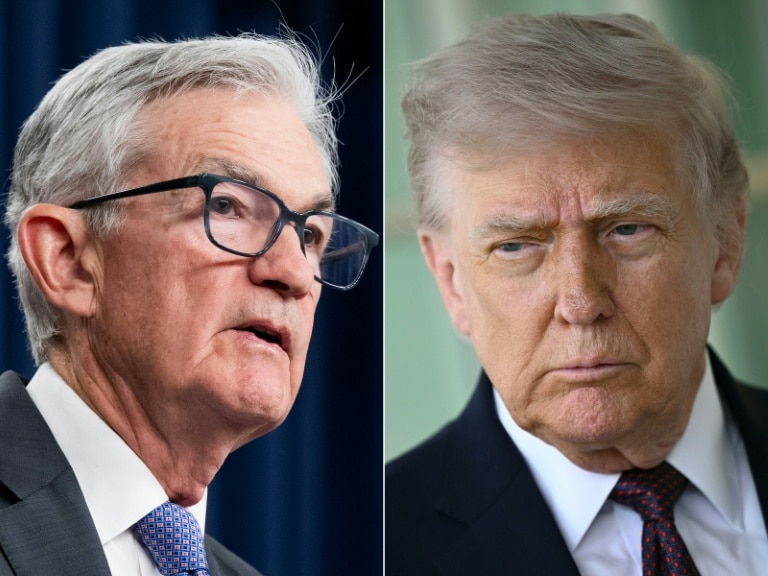
In a move that resolves a high-stakes political standoff over the independence of America’s central bank, the US Department of Justice announced Friday it has ended its criminal investigation into Federal Reserve Chair Jerome Powell. The development clears a major procedural hurdle for the confirmation of President Donald Trump’s nominee to lead the Fed, after weeks of controversy over what critics called a politically motivated inquiry.
US Attorney Jeanine Pirro made the announcement of the probe’s closure via the social platform X, confirming that oversight of the Fed’s headquarters renovation cost overruns — the core issue that sparked the Justice Department investigation — will now be handled by the Federal Reserve’s own inspector general. The investigation, which opened under intense public and private pressure from President Trump, will remain dormant for the time being, but Pirro left open the possibility of reviving criminal proceedings if new evidence emerges.
“I will not hesitate to restart a criminal investigation should the facts warrant doing so,” Pirro said in her public statement.
The probe has been a flashpoint in US politics for months, as Trump has repeatedly broken longstanding Washington norms to publicly and personally attack Powell, repeatedly calling on the Federal Reserve to cut interest rates far more aggressively than the central bank’s independent policy framework has allowed. With Powell’s four-year term as Fed chair set to expire on May 15, the looming investigation threatened to delay the Senate’s consideration of Trump’s pick to replace him, former Fed governor Kevin Warsh.
Shortly after the Justice Department’s announcement, White House spokesman Kush Desai reaffirmed the administration’s optimism that the Senate will move quickly to confirm Warsh. “The Trump administration remains as confident as before that the Senate will swiftly confirm Kevin Warsh as the next Federal Reserve Chairman,” Desai said.
Critics across the political spectrum, including former Federal Reserve chairs and sitting lawmakers from both parties, had denounced the investigation as an unprecedented attempt to erode the central bank’s long-held independence from political interference. The standoff reached a breaking point this week, when Republican Senator Thom Tillis of North Carolina, a member of the Senate Banking Committee, made clear he would continue blocking all new Fed appointments if the Powell investigation was not resolved. A single defection from Tillis would have been enough to create a deadlock on the panel, which Warsh must pass to move to a full Senate vote.
Even with the probe closed, however, top Democratic lawmakers warn that political pressure on the Federal Reserve remains far from over. Senate Banking Committee ranking member Senator Elizabeth Warren called the investigation a “bogus” inquiry, noting that the Justice Department’s action still leaves open the threat of renewed proceedings against Powell at any time, while a separate criminal investigation into Fed Governor Lisa Cook remains active. That probe stems from Trump’s move to attempt to fire Cook over unproven mortgage fraud allegations, a case that is currently before the US Supreme Court. Justices are set to rule on whether Trump has the legal authority to oust a sitting Fed governor.
Powell, who first took office as Fed chair in 2018 during Trump’s first term and was reappointed by Democratic President Joe Biden in 2022, said last month that he would not step down from his lifetime seat on the Fed’s Board of Governors until the investigation against him was concluded with full transparency and finality. It is unusual for a former Fed chair to remain on the board after leaving the leadership post, and Powell’s current term as governor runs through 2028. It remains unclear whether Powell will choose to stay on the board now that the probe has been closed.
All market and political observers are now turning their attention to Powell’s scheduled press conference next week, which will follow the conclusion of a two-day monetary policy meeting by the Federal Open Market Committee, where he is expected to address his future plans and the end of the investigation.
-
Watch: How the Kremlin’s internet crackdown is frustrating Russians
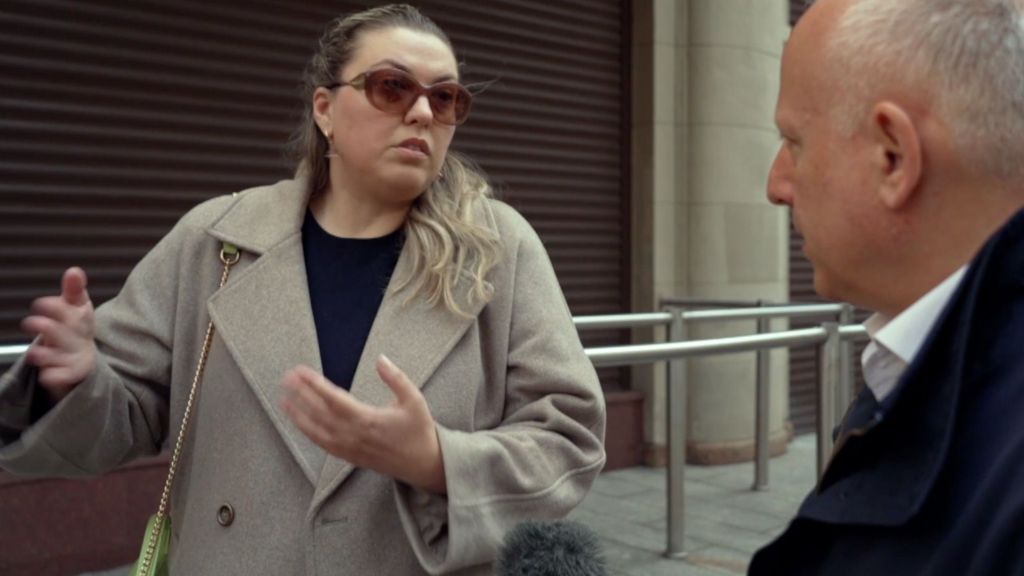
In recent months, the Kremlin’s expanding internet crackdown has sparked growing discontent across Russia, as ordinary residents and local business owners grapple with the tangible fallout of tightened digital controls. Senior Russian government officials have defended the wave of restrictions, framing them as a necessary measure to protect public safety and safeguard national security in an increasingly turbulent digital landscape. But for many people living inside the country, the new rules are anything but protective.
Ordinary Russians report daily disruptions to basic digital activities that were once taken for granted. Access to major international social media platforms that people relied on to stay connected to family members living abroad has been cut off. Communication tools that remote workers and students depended on to collaborate across borders now load slowly or are completely blocked. Even accessing independent domestic news sources has become a significant challenge for many, forcing people to navigate clunky workarounds like virtual private networks that often suffer from unstable connections and slow speeds.
The business community has been hit particularly hard by the crackdown. Small and medium-sized enterprises that built their customer bases and supply chains around open digital infrastructure now face collapsing online reach. Many companies that relied on cross-border digital services to process payments, communicate with international partners, or market their products have been forced to scale back operations or close entirely. Even large domestic businesses have reported increased operational costs, as they are forced to rebuild digital systems to comply with the new, stricter regulatory requirements.
While the Kremlin frames the crackdown as a response to growing external threats and misinformation threats to public order, critics argue that the restrictions are primarily aimed at suppressing dissent and controlling the flow of information within Russia’s borders. For millions of ordinary Russians, the cumulative effect of the crackdown has been growing frustration, as they see their access to open information and seamless digital connection steadily eroded by state policy.
-

Former Nigeria striker Eneramo dies during match
Former Nigeria international forward Michael Eneramo, a beloved figure who built a standout career across club football on three continents, has died following a suspected cardiac arrest that occurred mid-match during a friendly fixture, the Nigeria Football Federation (NFF) has confirmed. The 40-year-old collapsed on the pitch in the northern Nigerian city of Kaduna just five minutes into the second half of the game on Friday, and emergency personnel were unable to revive him.
Eneramo earned 10 senior international caps for Nigeria’s Super Eagles over the course of his career, marking his debut against Jamaica in 2009. He notched his first and most memorable international goal in a 2009 friendly against the Republic of Ireland, before scoring a crucial strike in a 2–2 World Cup qualifying draw against Tunisia that secured Nigeria’s place at the 2010 FIFA World Cup in South Africa. Despite his key contribution to the qualifying campaign, Eneramo was ultimately left out of the final tournament squad.
Long before his international retirement, Eneramo built a formidable reputation across club football in North Africa, the Middle East and Europe. His most iconic tenure came with Tunisian giants Esperance, where his imposing physical frame and relentless attacking energy earned him the fan nickname Al Dababa, meaning “The Tank” in Arabic. The four-time African champions honored his legacy in a statement posted to social media platform X, writing: “He was a symbol of strength, determination and resolve, and created unforgettable moments” for the club.
Ahead of making his senior international debut for Nigeria, Eneramo rejected an opportunity to switch allegiances and represent Tunisia at the international level, choosing instead to represent his country of birth. Over the course of his club career, he also took up spells with teams in Algeria, Saudi Arabia and Turkey, where he continued to earn widespread respect from fans, teammates and opponents alike for his work rate, physicality and consistent goalscoring output.
NFF general secretary Dr. Mohammed Sanusi described the sudden passing of the former striker as “devastating”, extending his condolences to Eneramo’s loved ones and the wider Nigerian football community. “I can only pray that God will grant him eternal rest and also grant his loved ones and the Nigeria football family the fortitude to bear the loss,” Sanusi said in an official statement.
Eneramo’s death is far from an isolated incident: he is the latest in a growing line of high-profile former African international footballers to die suddenly on the pitch from suspected heart-related complications. Other high-profile names include Cameroon’s Marc-Vivien Foe, who collapsed and died during a 2003 Confederations Cup semi-final, Ivorian midfielder Cheick Tiote, and Ghana striker Raphael Dwamena, all of whom passed away in similar on-pitch cardiac events.
As far back as 2009, a FIFA-funded medical research study concluded that Black African athletes appear to face a disproportionately higher risk of adverse cardiac events during competitive sports activity. In response to repeated tragedies, former Ivory Coast and Chelsea star Didier Drogba has repeatedly pushed for mandatory regular cardiac screenings for all professional players across the continent, a call that has gained renewed attention following Eneramo’s death.
-
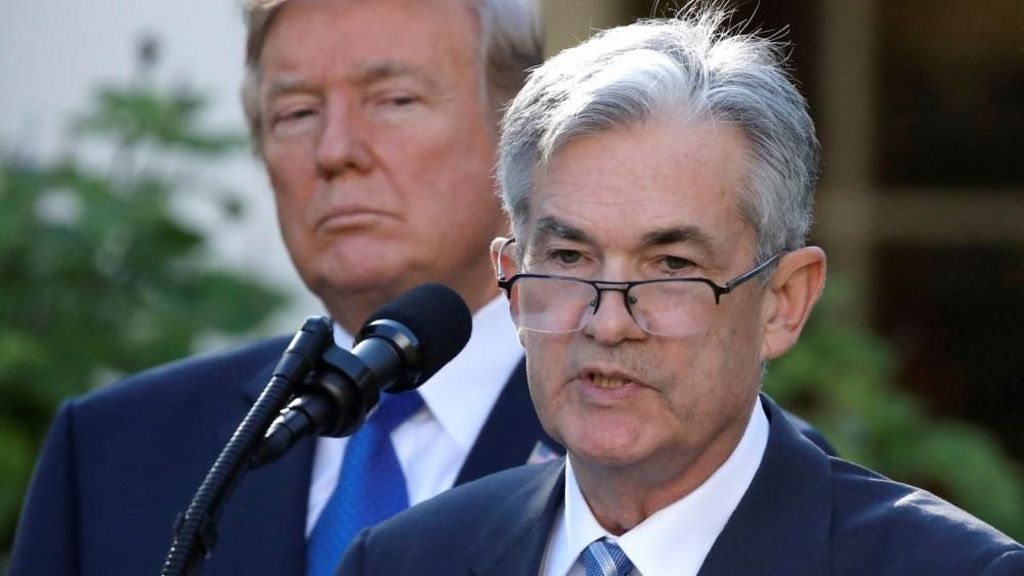
US justice department drops probe into Fed chairman Jerome Powell
In a dramatic development that intersects long-running political tensions, Federal Reserve leadership battles, and questions of central bank independence, the U.S. Department of Justice has formally abandoned its criminal investigation into Federal Reserve Chair Jerome Powell over allegations of unauthorized building renovation cost overruns.
Instead of a DOJ-led probe, the inquiry will now be handled through an internal review overseen by the Federal Reserve’s own inspector general, U.S. Attorney Jeanine Pirro announced this week. The shift comes amid a tangled web of political friction that stretches back more than a year, tied to President Donald Trump’s long-running public feud with Powell over monetary policy.
Last year, Trump first raised public complaints that the cost of the Federal Reserve’s headquarters renovation project had ballooned far beyond approved budgets, a critique that came in the middle of repeated demands from the president for the Fed to slash interest rates. After returning to office last year, Trump ramped up pressure on Powell, even floating the possibility of firing the Fed chair – a move that legal analysts widely argued would exceed executive authority and violate long-standing norms of central bank independence.
Powell, whose current term as Fed chair is set to expire imminently, made waves in January when he took the unprecedented step of publicly disclosing that the Department of Justice had served subpoenas to the Federal Reserve and was weighing a criminal indictment against him over testimony he delivered to the Senate committee regarding the building renovation costs. In that groundbreaking public statement, Powell called the DOJ investigation “unprecedented” and argued it had been launched solely because of Trump’s anger over the Fed’s refusal to bend to political pressure and cut interest rates. Powell emphasized that the core issue at stake was the ability of the U.S. central bank to make monetary policy based on economic data rather than political intimidation, noting “This is about whether the Fed will be able to continue to set interest rates based on evidence and economic conditions, or whether instead monetary policy will be directed by political pressure or intimidation.” The White House has previously maintained that Trump had no knowledge of the original DOJ investigation.
The decision to drop the probe follows a standoff over Trump’s nomination of Kevin Warsh to replace Powell as the next Fed chair, which is currently working its way through Senate confirmation. Key Senate Republican Thom Tillis had publicly refused to throw his support behind Warsh’s nomination until the Trump administration dropped the investigation into Powell, creating a critical roadblock for the White House’s priority of installing a new Fed leadership aligned with the president’s monetary policy goals.
In an official statement released after the announcement, White House spokesman Kush Desai defended the shift to an internal probe, arguing that “American taxpayers deserve answers about the Federal Reserve’s fiscal mismanagement, and the Office of the Inspector General’s more powerful authorities best position it to get to the bottom of the matter.” Desai added that the White House retains full confidence that the Senate will quickly confirm Warsh, framing his appointment as a necessary step to “finally restore competence and confidence in Fed decision-making.”
The development resolves one layer of tension in a fight that has shaken decades of norms around Federal Reserve independence, while setting the stage for the Senate to move forward on confirming a new Fed chair hand-picked by the Trump administration.