作者: admin

  • China’s spring job drive creates 23 million openings

    China’s spring job drive creates 23 million openings

    China’s extensive post-Lunar New Year employment initiative has successfully created approximately 23 million job opportunities through a comprehensive nationwide campaign, according to official statements from employment authorities. The massive job creation effort, known as the ‘spring breeze’ employment campaign, involved the organization of 32,000 specialized job fairs across the country following the Spring Festival holiday period.

    The annual post-holiday season traditionally represents a peak recruitment period in China as millions of migrant workers seek new employment opportunities. Government data reveals that transportation assistance programs, including specially arranged buses, trains, and charter flights, have facilitated the return of approximately 430,000 workers to their positions as of March 8.

    Regional implementation of the employment drive showcased diverse approaches tailored to local economic needs. In Guangxi Zhuang Autonomous Region, industrial park-focused campaigns generated over 540 positions, with transportation services provided for prospective employees to tour manufacturing facilities. Chongqing municipality officials conducted extensive outreach to more than 3,000 corporate employers, identifying 81,000 vacancies while establishing inter-provincial cooperation agreements that secured an additional 50,000 positions from Shandong and Sichuan provinces.

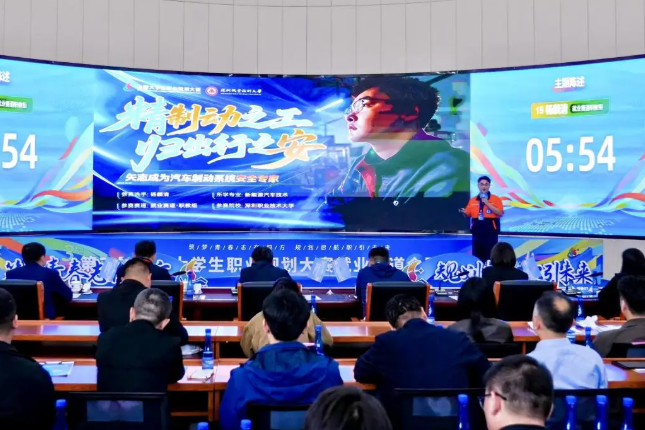
    The employment initiative incorporated targeted strategies for specific demographic groups. Nanjing, capital of Jiangsu province, hosted specialized job fairs for university graduates featuring nearly 100 employers offering 2,000 positions. In Huzhou city, Zhejiang province, a weeklong recruitment drive offered average annual salaries of approximately 90,000 yuan ($13,067), with premium positions in emerging sectors such as new energy and semiconductors reaching compensation packages up to 800,000 yuan.

    Innovative approaches included vocational training programs in Henan province’s Jiaozuo city, where authorities published directories of skilled talent shortages and launched workplace-specific training courses. Shandong’s Zibo city district incorporated advanced technology into their recruitment process, utilizing AI-assisted resume optimization tools and establishing virtual reality recruitment zones that attracted over 62,000 participants through both online and physical attendance.

    This comprehensive employment stabilization effort aligns with China’s broader economic objectives, including the creation of 12 million new urban jobs in 2026. The initiative addresses complex labor market challenges arising from international trade tensions and automation impacts while preparing for the record 12.7 million university graduates expected to enter the job market this year.

  • Former Heilongjiang official gets life for bribe taking

    Former Heilongjiang official gets life for bribe taking

    In a landmark ruling underscoring China’s intensified anti-corruption campaign, a high-ranking former official from Heilongjiang province has been sentenced to life imprisonment for extensive bribery offenses. The Wuxi Intermediate People’s Court in Jiangsu Province delivered the verdict on Tuesday, marking a significant development in the nation’s ongoing battle against graft within its political ranks.

    Li Haitao, previously serving as Vice-Chairman of the Heilongjiang Provincial Committee of the Chinese People’s Political Consultative Conference, was convicted of systematically abusing his official authority over a twenty-year period from 2003 to 2023. Judicial authorities confirmed that Li illicitly accepted approximately 150 million yuan (equivalent to $21.78 million) in bribes from various corporations and individuals seeking preferential treatment in project development, contract awards, and corporate mergers.

    The court imposed additional severe penalties including lifelong deprivation of political rights and comprehensive confiscation of all personal assets. Authorities have already transferred substantial portions of illicit gains to state treasury holdings, with ongoing efforts to recover remaining proceeds from criminal activities.

    Presiding judges noted that while the monumental scale of corruption caused severe damage to national and public interests, sentencing considerations incorporated mitigating factors including Li’s confession, demonstrated remorse, and partial restitution of illegally obtained funds. The judicial process featured a public trial conducted in September of the previous year, during which prosecutors presented extensive evidence before the defendant delivered his final statement admitting guilt.

  • Italy warns stricken Russian tanker could explode in Med at any time

    Italy warns stricken Russian tanker could explode in Med at any time

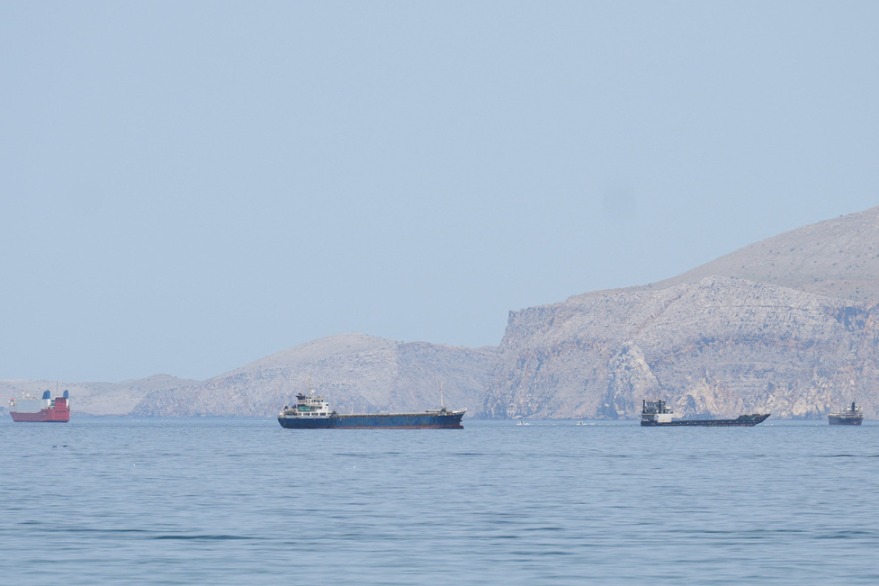
    A sanctioned Russian liquefied natural gas (LNG) tanker, the Arctic Metagaz, is drifting unmanned through the Mediterranean Sea with a massive hull breach, raising alarms among European nations about an imminent ecological catastrophe. The vessel, part of Russia’s shadow fleet evading Western sanctions, sustained critical damage from a suspected Ukrainian sea drone attack near Maltese waters in early March.

    Italian officials have characterized the damaged tanker as an ‘environmental bomb’ capable of exploding at any moment. Secretary of Italy’s Council of Ministers Alfredo Mantovano emphasized the ‘enormous’ risks during a national radio broadcast, noting the vessel’s unpredictable movement patterns.

    The Arctic Metagaz currently drifts approximately 45 nautical miles from Italian territorial waters and 25 miles from Libya’s search-and-rescue zone. According to intelligence reports, the compromised tanker carries substantial LNG quantities alongside 450 tonnes of fuel oil and 250 tonnes of diesel—a hazardous combination threatening marine ecosystems.

    This incident represents the latest escalation in Ukraine’s targeted campaign against Russia’s shadow energy fleet. Ukrainian intelligence services have claimed responsibility for disabling several Russian vessels in recent months, including three Black Sea tankers in December and the Quendil oil tanker in Mediterranean waters. These vessels routinely navigate with transponders disabled to circumvent international sanctions.

    The geopolitical context underscores these maritime developments: Russia’s continued bombing of Ukrainian civilian energy infrastructure has precipitated reciprocal targeting of Russian energy exports. The Arctic Metagaz originally departed from Murmansk in February before being crippled by explosions and fire. While Libyan coast guards rescued the crew, initial reports of the vessel’s sinking proved inaccurate.

    Environmental organizations including the World Wildlife Fund have activated maximum alert status, warning that potential spills could trigger fires and persistent pollution in ecologically sensitive habitats housing protected species. Italian and Maltese authorities continue monitoring the tanker’s southward drift toward Libyan waters while nine EU nations have jointly petitioned the European Commission for emergency intervention.

  • US Attorney General Bondi formally summoned to Congress in Epstein case

    US Attorney General Bondi formally summoned to Congress in Epstein case

    The House Oversight Committee has issued a formal subpoena to Attorney General Pam Bondi, compelling her testimony regarding the Justice Department’s management of the Jeffrey Epstein investigation. Committee Chairman James Comer (R-KY) cited potential “mismanagement” concerns in the subpoena letter, which mandates Bondi’s appearance on April 14.

    The congressional action follows intensified scrutiny over the Justice Department’s implementation of the Epstein Files Transparency Act, legislation signed by former President Trump last November that requires full disclosure of investigation materials. Despite the release of millions of documents, the department faces bipartisan criticism for its handling of sensitive information—specifically, allegedly failing to properly redact victims’ identities while protecting non-victims.

    Representative Nancy Mace (R-SC) previously accused the Justice Department of orchestrating a “cover-up” in releasing Epstein-related files, prompting the current subpoena initiative. The committee seeks Bondi’s testimony due to her direct oversight responsibility for document collection, review, and release determinations under the transparency act.

    Justice Department officials have pushed back against the subpoena, characterizing it as “completely unnecessary” while emphasizing that lawmakers have standing invitations to review unredacted files directly at department facilities. The agency maintains that Attorney General Bondi has consistently made herself available for direct consultations with Congress members.

    This development occurs amidst growing political pressure on both the Trump administration and Bondi to ensure comprehensive transparency regarding Epstein probe documents. Should Bondi testify as scheduled, she will join other high-profile witnesses including former President Bill Clinton and former Secretary of State Hillary Clinton, who appeared before the same committee last month.

  • Spanish king reopens debate on conquest of Mexico by acknowledging ‘abuse’

    Spanish king reopens debate on conquest of Mexico by acknowledging ‘abuse’

    In an unprecedented move that could reshape Spanish-Mexican relations, King Felipe VI has publicly acknowledged the historical abuses committed during Spain’s conquest of the Americas. The monarch’s remarks, delivered during a visit to an indigenous women’s exhibition at Madrid’s National Archaeological Museum, represent the first time a Spanish royal has addressed colonial-era injustices directly.

    Speaking informally before Mexico’s Ambassador to Spain Quirino Ordaz, King Felipe stated that numerous abuses occurred during the conquest of territories that would become modern Mexico. ‘There are things that, when we study them with our present-day criteria and values, obviously cannot make us feel proud,’ the monarch added during his Monday address.

    Mexican President Claudia Sheinbaum immediately welcomed the royal acknowledgement as a significant diplomatic breakthrough. ‘One could say it is not everything we would have wanted,’ she noted, ‘but it is a gesture of reconciliation—an acknowledgement of excesses and exterminations that happened during the Spaniards’ arrival.’

    The timing holds particular significance following years of diplomatic tension. In 2019, then-President Andrés Manuel López Obrador formally demanded Spain’s apology for human rights violations during colonization. The dispute escalated in 2024 when President Sheinbaum notably excluded King Felipe from her inauguration ceremonies, citing Spain’s inadequate response to Mexico’s concerns.

    Historical context underscores the sensitivity: 2021 marked the 500th anniversary of Tenochtitlán’s fall—the Aztec capital now underlying Mexico City—to Hernán Cortés and his conquistadors. The Spanish conquest resulted in widespread indigenous fatalities through both military campaigns and introduced diseases.

    While Spain’s Socialist-led government fully endorsed the king’s statement, with Minister Elma Saiz expressing 100% support, conservative factions reacted critically. People’s Party leader Alberto Núñez Feijóo cautioned against evaluating historical events through modern lenses, calling such scrutiny ‘crazy.’ He defended Spain’s colonial legacy as creating ‘an exceptional linguistic and cultural community’ that compared favorably to other imperial actions of the era.

    The far-right Vox party went further, labeling the conquest ‘the greatest work of evangelisation and civilisation in universal history.’ Vox MEP Hermann Tertsch expressed astonishment that the monarch aligned with ‘those who seek to damage and discredit Spanish history.’

    This development occurs against Spain’s complex historical reckoning. While the nation offered citizenship to descendants of Jews expelled during the Spanish Inquisition in 2015, it has not undertaken comprehensive colonial reappraisal like other European nations. King Felipe’s comments, disseminated through the Royal Household’s social media channels, potentially open new dialogue avenues between the two nations, though specific next steps remain undefined.

  • Expect a festive WBC final crowd as the US plays Venezuela at an uncomfortable political moment

    Expect a festive WBC final crowd as the US plays Venezuela at an uncomfortable political moment

    MIAMI — The World Baseball Classic culminates in a geopolitically charged championship matchup on Tuesday night as the United States faces Venezuela at loanDepot park. Both teams arrive at this pinnacle moment following dramatically different tournament journeys, with the Americans narrowly avoiding early elimination while Venezuela has demonstrated consistent dominance throughout the competition.

    The American squad, featuring power hitters Aaron Judge, Roman Anthony, and Kyle Schwarber, seeks to claim its second tournament title and first since 2017. They’ll rely on rookie pitcher Nolan McLean, 24, who expressed the profound significance of representing his nation: “Putting U.S. on your chest and going out there and competing obviously means the world.” McLean will face Venezuelan starter Eduardo Rodríguez in what promises to be a compelling pitching duel.

    Venezuela, powered by All-Stars Ronald Acuña Jr., Maikel Garcia, and Luis Arraez, pursues its inaugural championship in the tournament’s sixth edition. The team carries not only national pride but continental ambition, as Garcia emphasized after their 4-2 semifinal victory over Italy: “As Venezuelan players, we are playing for our country. And, of course, putting Latin America in a high position, showing that we have great baseball, we have great talent.”

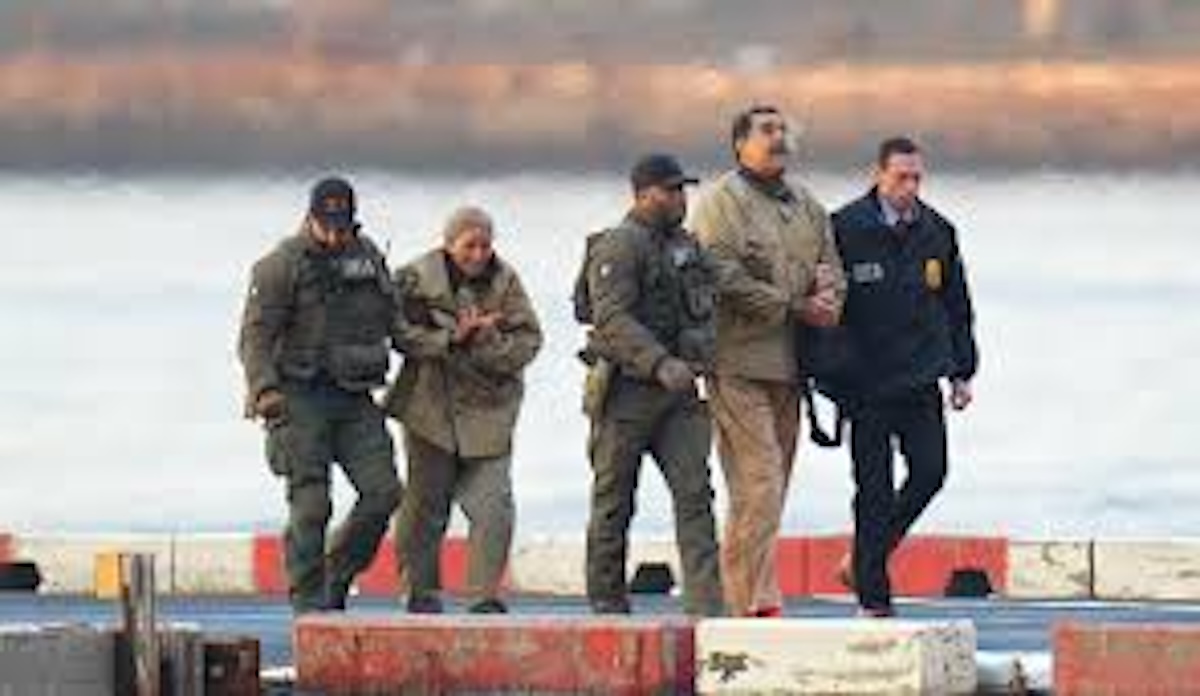
    The matchup unfolds against a backdrop of political tension between the two nations, particularly since the U.S. military’s capture of Venezuelan President Nicolás Maduro in January. Players and coaches have deliberately sidestepped these geopolitical complexities, with Acuña stating unequivocally: “We’re here to speak baseball. Our country deserves the game tomorrow.”

    The Venezuelan community in Miami has transformed loanDepot park into a vibrant home field advantage, creating a festive atmosphere throughout the tournament. This support has bolstered Venezuela’s impressive run, which included a stunning 8-5 upset over three-time champion Japan in the semifinals.

    U.S. manager Mark DeRosa seeks redemption after losing the 2023 final 3-2 to Japan in a memorable showdown that ended with Shohei Ohtani striking out Mike Trout. The Americans advanced to this year’s championship with a 2-1 victory over the Dominican Republic, powered by home runs from Gunnar Henderson and Anthony.

    Despite their success, Henderson believes the team hasn’t yet peaked: “I feel like we haven’t played our complete game yet”—a concerning assessment for opponents but a promising one for American fans anticipating a championship performance.

  • Air strike hit Kabul rehab centre as patients ate dinner, survivor tells BBC

    Air strike hit Kabul rehab centre as patients ate dinner, survivor tells BBC

    A catastrophic aerial bombardment has reduced a drug rehabilitation facility in Kabul to smoldering ruins, marking one of the deadliest incidents in the escalating conflict between Pakistan and Afghanistan. The Omid Addiction Treatment Hospital, formerly known as Camp Phoenix during the U.S.-NATO military operations, was struck during evening hours on Monday as patients were breaking their Ramadan fast and engaging in prayers.

    Emergency response teams continue extraction operations through the debris, with Taliban officials estimating approximately 400 fatalities though official confirmation remains pending. Survivors describe apocalyptic scenes of trapped patients engulfed in flames as the single-story compound became an inferno. Mohammad Shafee, a twenty-year-old patient, recounted his narrow escape while serving dinner: “Only five of us survived after the explosion. When I returned, most colleagues and diners were hit.”

    The geopolitical context reveals deepening tensions: Pakistan maintains the strike targeted “military installations and terrorist support infrastructure,” dismissing Afghan allegations of intentional hospital targeting as “entirely baseless.” This incident occurs amid months of cross-border hostilities, with Islamabad accusing Kabul of harboring militants—a claim Taliban officials vehemently deny.

    Humanitarian consequences are severe: overwhelmed medics treated dozens of wounded amid the ruins while families desperately searched for missing relatives. One mother of nine anxiously awaited news about her husband, a seven-month resident of the facility. The Kabul Forensic Medicine Department has received at least 100 bodies, with many victims severely disfigured complicating identification.

    UN officials report this attack brings at least six Afghan healthcare facilities impacted since late February, highlighting the conflict’s devastating effect on civilian infrastructure. The rehabilitation center itself represented a complex legacy—transitioning from U.S.-NATO military training compound to addiction treatment facility under the Afghan republic government, then continuing operations under Taliban administration as they rounded up drug addicts from streets across provinces.

    The facility, designed for 2,000 occupants, recently held approximately 5,000 patients kept for six-month periods, reflecting Afghanistan’s severe opioid addiction crisis. A separate male addiction facility nearby reportedly remained unaffected by the strike.

  • Iran war’s next escalation could pit US versus Turkey

    Iran war’s next escalation could pit US versus Turkey

    As U.S.-Israeli military operations against Iran enter their third week, the Trump administration’s strategic objectives appear increasingly fluid, oscillating between degrading Iranian military capabilities and pursuing full regime change. While initial strikes eliminated Supreme Leader Ali Khamenei, defense analysts universally agree that aerial bombardment alone cannot achieve governmental overthrow in Tehran.

    The fundamental obstacle remains the absence of ground forces, an option opposed by most U.S. military and political leadership. This strategic vacuum has elevated discussion of alternative approaches, including supporting armed Kurdish factions from Iraq and Western Iran to destabilize the Islamic Republic internally.

    Despite President Trump’s March 6 declaration that “I don’t want the Kurds to go into Iran… The war is complicated enough as it is,” his documented inconsistency and the conflict’s volatile nature maintain the possibility of Kurdish mobilization. Such development could trigger consequences extending far beyond Iran’s borders.

    The Kurdish people, numbering approximately 30 million across Turkey, Iran, Iraq and Syria, represent the world’s largest stateless ethnic group. Their aspiration for autonomy dates to the Ottoman Empire’s collapse after World War I, when proposed statehood was superseded by division among newly created nations.

    In Iran specifically, Kurds constitute roughly 10% of the population, primarily inhabiting the economically disadvantaged northwestern regions bordering Iraq and Turkey. Iranian Kurdish political parties face prohibition, with periodic armed clashes occurring between separatist groups and state forces.

    The situation presents particular sensitivity for Turkey, which hosts the largest Kurdish population globally. Since 1984, Ankara has engaged in brutal conflict with the Kurdistan Workers’ Party (PKK), resulting over 40,000 casualties. Turkish leadership perceives any empowerment of Kurdish forces in neighboring territories as potentially energizing domestic separatist movements.

    Historical precedent demonstrates Turkey’s willingness to launch cross-border military operations against Kurdish strongholds in Iraq and Syria. Previous U.S. collaboration with Syrian Kurdish forces against Islamic State created significant NATO tensions, with Turkey alleging connections to PKK militants.

    Currently maintaining neutrality in the Iran conflict, Turkey and Iran have historically cooperated on Kurdish containment through intelligence sharing, military coordination, and joint opposition to Iraqi Kurdistan’s 2017 independence referendum (which received 92% approval).

    Experts identify two primary Turkish concerns regarding Iranian regime change: creation of ungoverned spaces enabling Kurdish militant operations along expanded borders, and potential refugee crises mirroring Syria’s aftermath (Turkey already hosts nearly 4 million Syrian refugees).

    While Washington may view Kurdish partnerships as expedient alternatives to American troop deployment, such strategy risks igniting secondary conflicts. Should Kurdish empowerment or border destabilization occur, Turkey could feel compelled to intervene, potentially opening another front in the expanding regional warfare.

  • Beyond the surplus: China’s 50 billion yuan-a-day buying power

    Beyond the surplus: China’s 50 billion yuan-a-day buying power

    While global attention frequently centers on China’s substantial trade surplus, a compelling counter-narrative reveals the nation’s massive import capacity that fundamentally reshapes global trade dynamics. Official data indicates China maintains an extraordinary import rhythm, purchasing approximately 35 million yuan worth of goods every minute, accumulating to nearly 50 billion yuan daily and approximately 18.5 trillion yuan annually.

    This sustained import performance has secured China’s position as the world’s second-largest import market for 17 consecutive years, demonstrating consistent and massive demand for international products and commodities. The scale of China’s importing activity represents a crucial economic engine for exporting nations worldwide, creating substantial market opportunities across diverse sectors including agriculture, technology, manufacturing, and consumer goods.

    The import figures challenge simplified characterizations of China’s trade relationships, revealing a complex economic ecosystem where China functions simultaneously as both global supplier and massive consumer. This dual role highlights the interdependence of global supply chains and China’s integral position within international trade networks.

    Recent developments including China’s continued market liberalization measures and participation in multilateral trade agreements suggest this import trajectory will likely intensify, potentially creating new opportunities for international exporters seeking access to China’s vast consumer market and industrial base.

  • Taliban says hundreds killed in Pakistani air strike on Kabul hospital

    Taliban says hundreds killed in Pakistani air strike on Kabul hospital

    A significant escalation in cross-border hostilities has erupted between Afghanistan and Pakistan, with the Taliban government leveling a grave accusation against its neighbor. Senior Taliban official Hamdullah Fitrat, serving as deputy spokesman, has publicly charged Pakistan with conducting a lethal assault on the Omid Addiction Treatment Hospital in Kabul. The facility, described as a 2,000-bed drug rehabilitation center, was reportedly struck on Monday evening.

    According to Taliban claims, the attack resulted in catastrophic structural damage to the hospital complex. Disturbing imagery circulated by international news agencies depicted rescue personnel from the Afghan Red Crescent organization extracting numerous victims from the collapsed wreckage. Survivors were photographed congregating in makeshift triage areas near the devastation.

    Fitrat provided a stark casualty assessment via social media platform X, stating: ‘As a consequence of this aggression, substantial portions of the medical facility have been demolished. We hold serious apprehensions regarding a substantial death toll, which has regrettably reached approximately 400 fatalities, with an additional 250 individuals sustaining injuries.’

    The Pakistani government has issued an emphatic rebuttal of these allegations. Information Minister Attaullah Tarar dismissed the reports as ‘factually incorrect and deliberately crafted to misguide international perception.’ Official statements from Islamabad maintain that military operations exclusively targeted terrorist infrastructure allegedly operated by Afghan-based militants.

    Minister Tarar specified that precision strikes were conducted against bases utilized by the Taliban regime to support armed factions designated as Fitna Al Khawarij and Fitna Al Hindustan. These groups have claimed responsibility for numerous attacks against Pakistani military and civilian targets in border regions including Balochistan and Khyber Pakhtunkhwa.

    This incident exacerbates already deteriorating diplomatic relations between the neighboring nations. Tensions have intensified considerably since the Taliban’s ascension to power in 2021 following the United States’ withdrawal from Afghanistan. Former strategic allies have engaged in open conflict since February, with both sides reporting hundreds of combatant casualties in border skirmishes.

    The geopolitical complexity is deepened by ethnic dimensions, as the Taliban predominantly comprises Pashtun members. This ethnic group maintains a significant population of approximately 40 million within Pakistan’s 200 million citizens, further complicating bilateral relations. Both nations routinely exchange accusations regarding civilian targeting and support for insurgent groups operating across their shared 2,640-kilometer frontier.