Against the backdrop of a projected all-time high of 12.7 million college graduates entering China’s job market this year, policymakers and educational institutions are ramping up focus on proactive career planning and better alignment between academic curricula and evolving industry needs to boost graduate employment outcomes, according to education experts and industry insiders.
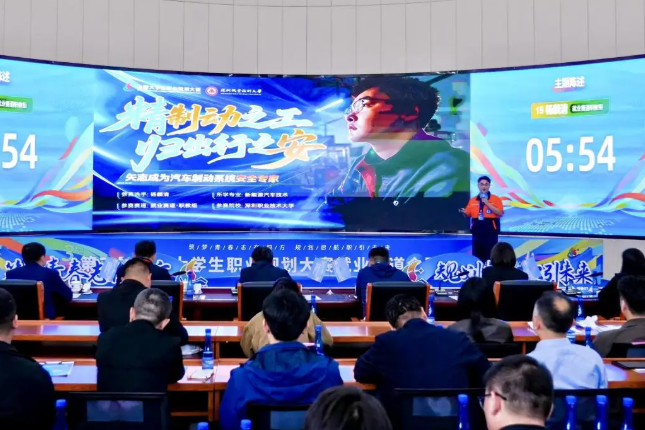
This national push for more targeted career preparation took center stage at the 3rd National College Students Career Planning Competition held recently in Tianjin, a landmark event that drew unprecedented participation: 20.55 million students from 2,833 universities across the country, a cohort that makes up nearly half of China’s total undergraduate and vocational college student population. Unlike traditional academic competitions, this event integrated structured career planning presentations with on-site job fairs and structured networking sessions connecting campus participants with corporate recruiters, giving students direct, firsthand access to potential employers and real-world insights into industry talent demands.
Yang Ming, director of the Student Ideological Education and Management Office at the Tianjin Municipal Education Commission, emphasized that early preparation is non-negotiable for today’s job seekers. “Students need to begin exploring different industries, building hands-on practical experience, and refining their professional skill sets long before graduation to maintain a competitive edge in a tight job market,” he noted.
Educators across the country echoed that the competition serves a dual purpose: it not only benefits students but also helps close the longstanding gap between classroom learning and workplace requirements. Qi Jiachao, an administrator from Zhejiang Textile Institute, explained that the event creates valuable feedback loops for academic institutions. “It lets educators gain a clearer, up-to-date understanding of what industries actually need from new graduates, allowing us to adjust our course content to prioritize practical, job-ready skills that align with market demand,” Qi said.
For many participants, the competition has already had a transformative impact on their professional trajectories, helping them narrow down and solidify their long-term career goals. Zhou Meicen, a visually impaired vocational student from Guangxi Vocational Technical College, used the competition to refine her focus on developing AI-generated content tailored for children with special needs. “Through this process, I gained a far deeper understanding of current AIGC industry trends and the specific skills employers in this niche field are looking for,” Zhou said. “It has made me much more determined to build my expertise and contribute to supporting children with special needs.”
Another participant, Zou Juan from Tongling Vocational Technical College, is combining traditional Chinese pastry-making techniques with traditional cultural elements and nutrient-dense, healthier ingredients to meet evolving modern consumer preferences, a niche business concept she refined through her competition participation.
The growing focus on intentional career planning comes as the job market faces new pressures: alongside the record graduate cohort, rapid advancements in artificial intelligence and other cutting-edge emerging technologies have reshaped labor demand, tightening overall employment capacity in many sectors. Li Xi, a lecturer in innovation and entrepreneurship at Guangxi Vocational Technical College, stressed that structured support for career development is more critical than ever. “Higher education institutions need to expand practical training programs to help students build solid professional foundations, while platforms like this national competition give students the space to clarify their career goals and systematically prepare for the demands of the job market,” Li said. “Effective, early career guidance is not just an added support—it is a critical factor in shaping young people’s future success.”