作者: admin

  • In Miami for the WBC final, Venezuelan fans had plenty to celebrate as their team won the title

    In Miami for the WBC final, Venezuelan fans had plenty to celebrate as their team won the title

    MIAMI — In a dramatic culmination of the World Baseball Classic, Venezuela secured its first-ever championship title with a tense 3-2 victory over the United States on Tuesday night. The historic win triggered euphoric celebrations both at Miami’s loanDepot Park and across Venezuela, transcending political divisions that have long plagued the South American nation.

    The championship game served as a powerful demonstration of baseball’s unique ability to unite people across geographical and ideological boundaries. Venezuelan-American fans like Pablo Cuerta embodied this dual allegiance, wearing Venezuela jerseys while draping themselves in American flags. ‘I was born in Venezuela, and this country gave me the opportunity to come, to be a citizen,’ said Cuerta, who traveled from near Orlando for the tournament’s final days. ‘I appreciate both countries. One I was born in, and one gave me everything I’ve got.’

    The game-winning moment came in the ninth inning when designated hitter Eugenio Suárez drove in the decisive run with a clutch double. ‘This is a celebration for all of the Venezuelan country,’ Suárez proclaimed after the victory.

    Remarkably, the tournament unfolded against a complex geopolitical backdrop. Venezuela’s deposed leader Nicolás Maduro remains jailed in New York facing drug trafficking charges, following a U.S. military operation to capture him earlier this year. Yet these political tensions remained largely absent from the ballpark, where Venezuelan fans created an overwhelming home-field atmosphere despite technically being the visiting team.

    Venezuelan manager Omar López emphasized baseball’s unifying power before the final, stating, ‘Together we are going to have better generations for our country, united with no color, political colors or ideology. Baseball is one of the best tools or ways to educate a country.’

    In Venezuela’s capital of Caracas, streets emptied as the entire nation watched the championship game. Thousands gathered in public plazas, with some like 75-year-old Miguel Blanco traveling significant distances to ensure they wouldn’t miss the game due to frequent power outages.

    The victory celebration extended well beyond the final out, with bands playing and flags waving in both Miami and Caracas. As retired teacher Enrique Cabrera exclaimed amid the celebrations, ‘The USA is the best country in the world, but Venezuela is the best at baseball.’

    The tournament provided a much-needed moment of national pride for Venezuelans worldwide. Ashley Peña, a 26-year-old youth organizer in Caracas, captured the sentiment: ‘This is a moment for every Venezuelan to regain faith. Wherever we are in any country, we are all supporting the national team.’

  • Iran vets friendly ships for Hormuz passage: trackers

    Iran vets friendly ships for Hormuz passage: trackers

    Iran has established a selective authorization system for commercial vessels attempting to navigate the strategically vital Strait of Hormuz, according to maritime intelligence reports. This development comes as the key global energy corridor remains effectively closed due to ongoing Middle East hostilities that commenced with US-Israeli strikes on Iran on February 28.

    Maritime analytics firm Windward revealed in a Tuesday analysis that at least five vessels successfully transited the strait through Iranian waters on March 15-16. The company described this as ‘rising evidence that Iran is exerting permission-based transit and control of the strait,’ indicating Tehran has implemented a vetting process favoring ships from allied nations.

    JPMorgan commodities analyst Natasha Kaneva corroborated these findings, noting that at least four ships were tracked using the non-standard Larak-Qeshm Channel near the Iranian coastline in recent days. ‘This could reflect a process designed to confirm vessel ownership and cargo, enabling passage for ships that are not affiliated to the US or its allies,’ Kaneva stated in an analytical note.

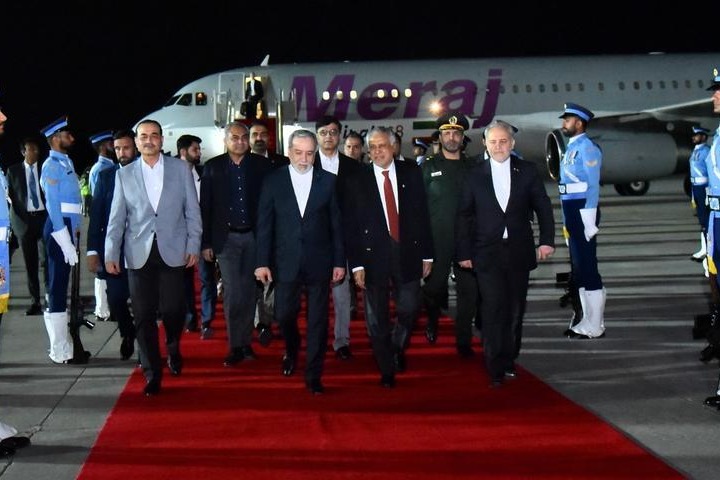
    Among the vessels granted passage was the Pakistani-flagged oil tanker Karachi, which notably transited with its automatic identification system activated—unusual behavior in a conflict zone where ships typically disable transponders to avoid targeting.

    The geopolitical implications are significant as approximately one-fifth of global oil and liquefied natural gas normally passes through this chokepoint. Kaneva emphasized that most crude shipments through the strait are destined for Asian markets, particularly China.

    Diplomatic efforts are underway as multiple nations engage Tehran to secure transit rights for their commercial fleets. This has yielded some success, with two Indian-flagged liquefied petroleum gas tankers—Shivalik and Nanda Devi—successfully delivering approximately 92,700 metric tonnes of LPG to Gujarat’s Vadinar Port after receiving Iranian clearance. Similarly, Turkey’s transport minister confirmed a Turkish-owned vessel received Iranian authorization for safe passage.

    The United States continues to advocate for allied military protection of shipping interests in the region as this new selective transit paradigm reshapes maritime commerce through one of the world’s most critical energy corridors.

  • White House pressure on Cuba mounts as island fights power cut

    White House pressure on Cuba mounts as island fights power cut

    The United States has escalated its diplomatic offensive against Cuba’s communist government as the Caribbean nation grapples with a severe electricity crisis that has plunged much of the island into darkness. Washington is demanding comprehensive free-market reforms from Havana, dismissing recent limited economic concessions as insufficient to address Cuba’s deepening economic woes.

    Secretary of State Marco Rubio, a prominent Cuban-American critic of the regime, stated that Cuba’s recent announcement permitting exile investment and business ownership falls dramatically short of necessary changes. “What they announced yesterday is not dramatic enough. It’s not going to fix it,” Rubio told White House reporters, emphasizing that Cuban authorities face “big decisions” regarding economic liberalization.

    The Trump administration has intensified pressure through multiple channels, including enforcing an effective oil blockade that has crippled Cuba’s energy sector and transportation infrastructure. Since January 9, no oil shipments have reached Cuban shores, exacerbating power generation problems and forcing airlines to reduce flights to the island—a devastating blow to Cuba’s vital tourism industry.

    President Trump himself added to the tension with provocative statements, suggesting he would “take” Cuba and asserting he could “do anything I want with it” given the nation’s weakened state. These comments came as Cuba experienced a complete nationwide power failure on Monday, highlighting the precarious state of its aging electrical grid, where daily outages lasting up to 20 hours have become routine in some regions.

    Cuba’s diplomatic representative in Washington, Tanieris Dieguez, offered a measured response, indicating openness to broad discussions with the United States while firmly rejecting any negotiation about Cuba’s political system. “Nothing related with our political system, nothing with our political model—our constitutional model—is part of the negotiations, and never will it be part of that,” Dieguez stated, emphasizing that Cuba only requests “respect to our sovereignty and to our right to self-determination.”

    The economic pressure has intensified significantly since January, when Cuba lost Venezuela as its chief regional ally and oil supplier following US-backed efforts to oust socialist leader Nicolas Maduro. This development, combined with the ongoing embargo, has created what experts describe as one of Cuba’s most severe economic crises in decades.

    Ordinary Cubans bear the brunt of these challenges. Olga Suarez, a 64-year-old retiree, expressed the widespread anxiety: “What we fear all the time is that the blackout will drag on and we will lose the little bit that we have in the fridge, because everything is so expensive.”

    As power was gradually restored to approximately two-thirds of the country by Tuesday morning—including 45% of the capital Havana—the nation also experienced a 5.8-magnitude earthquake off its coast, though no casualties or damage were immediately reported. The compound crises underscore the extreme pressures facing the Cuban government as it navigates both domestic infrastructure failures and unprecedented external political pressure from its northern neighbor.

  • PSG, Real Madrid and Arsenal march into Champions League last eight

    PSG, Real Madrid and Arsenal march into Champions League last eight

    The UEFA Champions League quarter-final picture crystallized on a dramatic Tuesday evening, with European powerhouses and one stunning underdog securing their passage. Defending champions Paris Saint-Germain, alongside record-holders Real Madrid and Premier League contenders Arsenal, all booked their spots in the last eight, while Sporting CP authored a historic comeback for the ages.

    In London, Paris Saint-Germain delivered a commanding statement with a 3-0 victory over Chelsea at Stamford Bridge, sealing an emphatic 8-2 aggregate triumph. The tie was effectively decided early as Khvicha Kvaratskhelia capitalized on a defensive error to open the scoring in the sixth minute. Bradley Barcola then doubled the advantage with a spectacular finish, before substitute Senny Mayulu completed the rout just after the hour mark. Manager Luis Enrique praised his squad’s dominant performance, noting the victory was “well deserved.” PSG now awaits the winner between Liverpool and Galatasaray.

    Meanwhile, Real Madrid extinguished Manchester City’s hopes with a 2-1 away victory, advancing 5-1 on aggregate. The tie turned decisively when City’s Bernardo Silva received a straight red card in the 20th minute for handball on the goal line, with Vinicius Junior converting the subsequent penalty. Though Erling Haaland equalized before halftime, Vinicius secured the victory with a late stoppage-time goal. The Brazilian winger emphasized Real Madrid’s unique pedigree in the competition, stating, “when Madrid play in this competition, everything changes.”

    Arsenal continued their pursuit of multiple trophies by dispatching Bayer Leverkusen 2-0 at the Emirates Stadium, progressing 3-1 on aggregate. Eberechi Eze broke the deadlock with a spectacular long-range strike late in the first half, before Declan Rice sealed the victory with a composed finish. Manager Mikel Arteta declared his side “fully deserved” the quarter-final berth, though he acknowledged missed opportunities to extend their lead.

    The night’s most extraordinary drama unfolded in Lisbon, where Sporting CP engineered a miraculous comeback against Norwegian outsiders Bodo/Glimt. Trailing 3-0 from the first leg, the Portuguese champions mounted a breathtaking 5-0 victory after extra time to win 5-3 on aggregate. Goals from Goncalo Inacio and Pedro Goncalves set the stage for Luis Suarez’s 78th-minute penalty to force extra time. Maxi Araujo then gave Sporting their first aggregate lead in the 92nd minute, with Rafael Nel adding a fifth to cap a historic night. The victory marks Sporting’s first appearance in the quarter-finals of Europe’s premier club competition since 1983, simultaneously ending Bodo/Glimt’s remarkable underdog journey.

  • Nigeria president begins first UK state visit in 37 years

    Nigeria president begins first UK state visit in 37 years

    In a significant diplomatic event marking the first Nigerian state visit to the United Kingdom in nearly four decades, King Charles III will officially welcome President Bola Ahmed Tinubu and First Lady Oluremi Tinubu at Windsor Castle. The two-day visit, commencing with a ceremonial welcome attended by senior royals including Queen Camilla and the Prince and Princess of Wales, aims to transform historical ties into a contemporary economic alliance.

    The visit features traditional royal pageantry including a carriage procession, military parade on Windsor Castle’s lawns, and exchanges of gifts. Notably, the itinerary accommodates religious considerations as President Tinubu, a Muslim currently observing Ramadan, will not participate in the traditional lunch hosted by the King. Instead, the leaders will deliver addresses at an opulent state banquet attended by political figures and Nigerian-linked celebrities.

    Nigerian government spokesman Mohammed Idris characterized the visit as ‘turning a historic relationship into a modern economic partnership,’ emphasizing opportunities in trade, finance, and defense. The visit occurs against a complex geopolitical backdrop including conflicts in Ukraine and the Middle East, as well as recent religious violence in Nigeria’s Borno state where Islamist militants killed 23 people. President Tinubu condemned these ‘evil-minded’ terror groups while UK parliamentarians called for enhanced protection of religious freedom in Nigeria.

    The state banquet also marks King Charles’s first major speech following recent royal family developments, including the arrest of his brother Andrew Mountbatten-Windsor. Additional ceremonial elements include a wreath-laying at Queen Elizabeth II’s tomb and an interfaith event designed to promote religious harmony.

  • Israel ‘assessed Iranians would be slaughtered’ if they rise up against Islamic Republic

    Israel ‘assessed Iranians would be slaughtered’ if they rise up against Islamic Republic

    A confidential diplomatic cable reveals a stark divergence between Israel’s public stance and its private assessment regarding Iran’s internal stability. According to the document, reviewed by The Washington Post, senior Israeli officials have privately conceded to their U.S. counterparts that any popular uprising against the Islamic Republic would be met with overwhelming and brutal force by the Islamic Revolutionary Guard Corps (IRGC), resulting in a probable slaughter of protesters. This private evaluation stands in direct contradiction to repeated public exhortations by Israeli Prime Minister Benjamin Netanyahu for the Iranian people to rise up against their government.

    The cable details meetings held this week between American officials and high-level members of Israel’s National Security Council, Ministry of Defence, and Ministry of Foreign Affairs. In these discussions, Israeli representatives admitted that the IRGC maintains a definitive ‘upper hand’ and that the state apparatus shows no signs of cracking, demonstrating a willingness to ‘fight to the end.’ Officials concluded that any attempt by anti-government activists to seize control would likely end in disaster.

    This assessment is further bolstered by observations of Iran’s continued military capabilities, including its proven ability to launch ballistic missiles and drones ‘everywhere they want to,’ which is cited as proof of the state’s resilience. The officials also noted that despite rumors of his incapacitation, Supreme Leader Mojtaba Khamenei remains firmly in charge and is considered ‘more aligned’ with the hardline IRGC than his predecessor.

    The failure of the exiled opposition to form a coherent front or project significant influence inside Iran has been another critical factor. Interviews with Iranians inside the country by Middle East Eye reveal a growing disillusionment with opposition figures like monarchist leader Reza Pahlavi. A recent call by Pahlavi for public mobilization during a traditional Persian celebration was met with little visible response, amid widespread fear and trauma from the ongoing conflict and a rising civilian death toll. Many citizens expressed anger at being asked to celebrate while living under the constant threat of airstrikes and violence, highlighting a significant gap between the diaspora’s calls to action and the grim reality on the ground.

  • Israeli press review: Confusion over army’s plan in Lebanon

    Israeli press review: Confusion over army’s plan in Lebanon

    Israeli Defense Minister Israel Katz announced on Monday the initiation of a ground military maneuver into Lebanese territory, declaring its objective as the elimination of threats to northern Israeli communities. The operation specifically targets the removal of Hezbollah operatives from border regions rather than the comprehensive dismantling of missile capabilities, according to military sources cited by Haaretz.

    Minister Katz issued a stark warning regarding displaced populations, stating that hundreds of thousands of Shiite residents from southern Lebanon would be prevented from returning to areas south of the Litani River until Israel’s northern security is guaranteed. This declaration coincides with reports from Israeli Channel 13 indicating the establishment of approximately 20 military outposts within Lebanese territory, reminiscent of Israel’s previous ‘Security Zone’ occupation policy between 1982 and 2000.

    Military analysts have raised questions regarding the operational effectiveness. Amos Harel, Haaretz’s military commentator, noted that Hezbollah’s presence south of the Litani remains limited and mobile, with operatives capable of rapid relocation before Israeli forces can engage them. He further observed that most missile and drone attacks originate from north of the Litani, beyond the current operation’s scope.

    The conflict has triggered significant economic consequences, with Calcalist reporting that Mediterranean gas rigs have been shut down for the third time since October, forcing Israel’s energy sector to rely on more expensive and polluting alternatives like coal and diesel. Energy Minister Eli Cohen extended the shutdown until March 26th due to security concerns, costing the economy an estimated 600 million shekels ($193 million) according to financial experts.

    Simultaneously, questions emerge regarding Israel’s defense capabilities. Despite official denials of interceptor shortages, The Marker reported that Israel’s arms industry faces production limitations while fulfilling international contracts, including a recent agreement with Germany. The report indicated intercepted missiles exceeding 1,300 since October 2023, with production rates subject to gag orders.

    Evidence suggests potential interceptor conservation measures, with reports of missiles landing in open areas without interception attempts. Israel’s Home Front Command has concurrently modified its alert system to implement more precise warning mechanisms.

  • Zelensky calls for Trump and Starmer to meet and find common ground

    Zelensky calls for Trump and Starmer to meet and find common ground

    Ukrainian President Volodymyr Zelensky has issued a diplomatic appeal for U.S. President Donald Trump and UK Prime Minister Sir Keir Starmer to convene and rebuild their strained relationship amid growing Western fragmentation. In an exclusive BBC interview following talks with Starmer in London, Zelensky emphasized the critical need for allied unity, stating he would “really like President Trump to meet with Starmer… so that they have a common position.”

    The urgency comes as tensions escalate between Washington and London following Trump’s repeated criticisms of Starmer’s leadership, including recent remarks dismissing the British leader as “no Winston Churchill.” These diplomatic frictions coincide with a broader Middle East conflict triggered by U.S.-Israeli strikes on Iran, which Zelensky warned is dangerously diverting attention and resources from Ukraine’s defense against Russia.

    Speaking to British parliamentarians in a packed Westminster committee room, Zelensky delivered a stark message: “The regimes in Russia and Iran are brothers in hatred and that is why they are brothers in weapons.” He expressed grave concerns about the Iran conflict’s impact on Ukraine’s war effort, revealing he had a “very bad feeling” about the constant postponement of peace negotiations due to Middle Eastern hostilities.

    Despite the tensions, Downing Street maintained that the U.S.-UK relationship remains “enduring,” with Starmer insisting Britain would not be drawn into a wider Middle East conflict. The Ukrainian president’s London visit marked another stop on his European tour seeking sustained support, having previously visited Paris with Madrid next on his itinerary.

    Zelensky also highlighted Ukraine’s unexpected role as a military innovation hub, suggesting Ukrainian-developed technology could have prevented the recent drone strike on RAF Akrotiri in Cyprus. He told British lawmakers that through necessity, Ukraine has become a pioneer in modern warfare techniques that could benefit allies.

    The gathering brought together key Western leaders including NATO Secretary-General Mark Rutte, Defense Secretary John Healey, and opposition party leaders, underscoring the continued importance of the Ukraine conflict amid competing global crises.

  • Leqaa Kordia, longest-detained pro-Palestine protester, freed from ICE custody

    Leqaa Kordia, longest-detained pro-Palestine protester, freed from ICE custody

    After enduring 365 days in immigration custody, Palestinian activist Leqaa Kordia secured her release from the Prairieland Detention Center in Texas on Monday, following the payment of an extraordinary $100,000 bond. The 33-year-old New Jersey resident walked free as the Trump administration unexpectedly declined to challenge a third consecutive release order from an immigration judge—a stark contrast to its previous appeals against her liberation.

    Kordia’s emotional departure from the facility was marked by her triumphant exclamation, ‘I’m free! Finally, after one year,’ as she emerged draped in a traditional Palestinian keffiyeh to greet awaiting supporters. Her release concludes the longest detention among all individuals arrested during last year’s pro-Palestine campus protests, highlighting what her legal representatives characterize as targeted persecution.

    The case reveals concerning dimensions of immigration enforcement under the current administration. Court documents from the separate case American Association of University Professors v. Rubio disclosed that federal authorities utilized the pro-Israel doxxing platform Canary Mission to identify students for immigration detention—a revelation that raises serious questions about ideological targeting.

    While the Department of Homeland Security maintains that Kordia lacked lawful immigration status due to an expired F-1 student visa terminated in January 2022 for ‘lack of attendance,’ her attorneys argue this technical violation was weaponized against her activism. Staff attorney Amal Thabateh of Clear explained that Kordia had received ‘faulty advice’ leading her to voluntarily terminate her student status while believing she was transitioning to lawful permanent residence through family petitions.

    Kordia’s detention was marked by significant health deterioration, including a recent hospitalization after fainting, hitting her head, and suffering a seizure—a completely new medical development—during which she remained shackled to her hospital bed. Her legal team also documented concerning weight loss and reported inedible food, unsanitary conditions, and lack of religious accommodations at the Texas facility.

    The activist’s case gained political prominence when New York City Mayor Zohran Mamdani raised her situation directly with President Trump during a recent meeting. Kordia, who arrived from the occupied West Bank in 2016 and has lost 200 extended family members in Gaza, now faces ongoing immigration proceedings despite her temporary release.

  • Senegal stripped of AFCON title, Morocco declared champions

    Senegal stripped of AFCON title, Morocco declared champions

    In an unprecedented decision that has sent shockwaves through the football community, the Confederation of African Football (CAF) has officially stripped Senegal of their Africa Cup of Nations championship title and declared Morocco the tournament winners. This dramatic reversal comes after a formal appeal process regarding the controversial final match played on January 18th in Rabat.

    The governing body’s Appeals Committee reached its determination after applying Articles 82 and 84 of the AFCON Regulations, which mandate that any team refusing to continue play or abandoning the pitch before match conclusion shall be declared the loser. This ruling directly addresses the incident during which Senegalese players staged a 20-minute walk-off protest against a penalty decision awarded to Morocco during second-half stoppage time.

    The contentious moment occurred when Congolese referee Jean-Jacques Ndala, following VAR review, awarded a penalty to Morocco for a challenge on Brahim Diaz by El Hadji Malick Diouf. The decision sparked immediate protests from the Senegalese team and attempted pitch invasions by some supporters.

    Despite the dramatic circumstances that saw Moroccan striker Brahim Diaz miss the critical penalty shot saved by Senegal’s goalkeeper Edouard Mendy, and subsequent extra-time victory goal by Pape Gueye, the Appeals Committee has now overturned the sporting result. The match is officially recorded as a 3-0 victory for Morocco.

    The Royal Moroccan Football Federation issued a statement clarifying that their appeal sought regulatory compliance rather than questioning sporting merit, emphasizing their commitment to competition integrity and framework stability.

    This decision remains subject to potential appeal to the Court of Arbitration for Sport within a ten-day window. The controversy follows earlier disciplinary actions by CAF that imposed substantial fines on both national federations for unsportsmanlike conduct and fair play violations during the tournament finale.