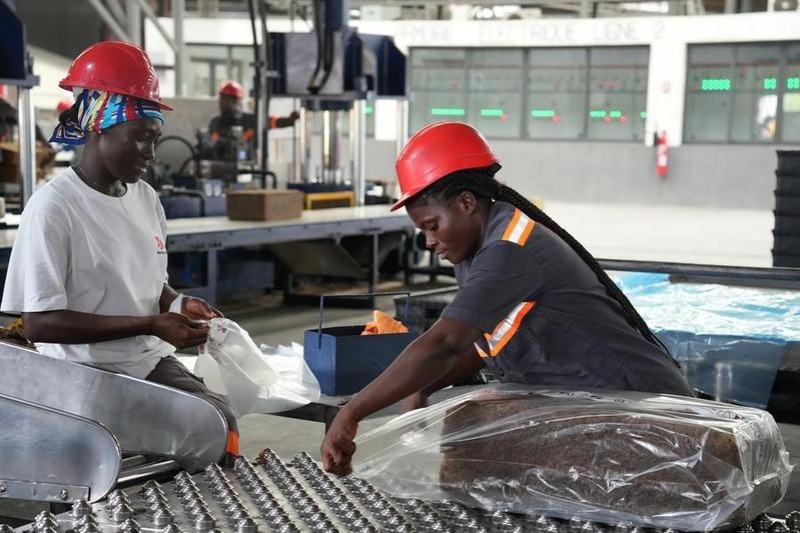
At the two-day Africa We Build Summit, which kicked off Thursday in Nairobi, the capital of Kenya, two of East Africa’s most prominent heads of state have delivered a united call to reorient Africa’s economic model away from its centuries-long reliance on low-value raw commodity exports, toward deepened regional integration and domestic value addition through expanded refining and manufacturing sectors.
Kenyan President William Ruto and Ugandan President Yoweri Museveni both warned that the continent’s ongoing dependence on exporting unprocessed raw materials has left African economies disproportionately exposed to volatile global economic shocks, including supply chain disruptions triggered by Gulf region geopolitical tensions and the lingering fallout of the Russia-Ukraine conflict.
Ruto laid out a stark paradox to illustrate the costs of the status quo: while Africa accounts for roughly 10 percent of global crude oil output, the continent remains a net importer of refined petroleum products, importing 120 million metric tons of finished fuels each year at a total cost of approximately $90 billion. He calculated that Africa’s annual crude oil production is currently valued at around $270 billion when sold raw at an average price of $75 per barrel. If that same volume of crude were refined domestically and sold as finished products at an average price of $800 per ton, however, it would generate more than $500 billion in annual revenue. The $230 billion annual gap between these two figures, Ruto noted, equals nearly 7.5 percent of Africa’s total current GDP – income that the continent leaves on the table every year by exporting unprocessed resources.
Museveni echoed Ruto’s assessment, pointing to Uganda’s own policy shift as a proof of concept for the benefits of domestic processing. Uganda has implemented a full ban on exports of unprocessed minerals, a policy that has already drawn new private investment and led to the construction of domestic mineral processing facilities across the country. Museveni explained that raw gold previously earned Uganda just $64 per kilogram, but domestically refined gold now commands a price of $168 per kilogram – a difference that translates to retained jobs, expanded industrial capacity, and higher national income that would have been lost under the raw export model. With domestic refining now operational, the Ugandan government is now exploring plans to build local jewelry manufacturing plants to capture even more value from the country’s gold reserves.
The two leaders also revealed early plans for a joint regional refinery project based in Tanga, Tanzania, which will be designed to support widespread mineral beneficiation across East Africa and cut the volume of raw materials exported out of the region. Museveni noted that Uganda currently only develops roughly 40 percent of its proven oil reserves, and the country is prepared to supply crude feedstock to the proposed new regional facility. Ruto confirmed that Kenya is also aligning its national policy to discourage raw mineral exports, stating: “Our policy is clear: process minerals locally first. We have the minerals, we have the market, and we have the capital and industrial partners needed to build refineries and develop downstream industries.”
The push for value addition extends beyond the extractive sector, the leaders emphasized, noting that African countries could similarly boost export earnings by processing agricultural commodities domestically before export. To illustrate this point, Museveni cited the example of cotton: one kilogram of raw unprocessed cotton sells for just $1.2 on global markets, but after spinning, weaving, and processing into finished garments, that same kilogram of cotton can fetch $15.
Ruto highlighted the stagnation that has held back Africa’s industrial progress for decades: manufacturing’s share of Africa’s total GDP has held steady at around 10 percent for the past 20 years, showing no meaningful growth. “As long as this pattern persists, our growth will remain constrained, our economies will remain vulnerable, and our full potential will be unrealized,” he said. Ruto added that the continent can no longer use historical structural limitations as a justification for slow industrial progress, calling for urgent action to reverse the trend.
To deliver on this industrial transformation, Ruto proposed a three-part strategy: strengthening cross-border regional integration, building shared regional infrastructure and policy platforms for strategic industrial sectors, and mobilizing domestic African capital to fund industrial development projects. He noted that established regional blocs such as the East African Community are well positioned to lead this effort, by pooling member state resources to build competitive, integrated manufacturing value chains that can also align with the global transition to green energy.