作者: admin

  • Western Bulldogs coach Luke Beveridge says NRL-style early contract calls would be problematic

    Western Bulldogs coach Luke Beveridge says NRL-style early contract calls would be problematic

    Western Bulldogs coach Luke Beveridge has voiced strong opposition to adopting the NRL’s approach to early contract transparency, despite his club’s active interest in Port Adelaide midfielder Zak Butters. As one of 17 AFL clubs reportedly pursuing the Darley-native star, Beveridge finds himself in the peculiar position of publicly acknowledging interest while condemning premature player movement announcements.

    The Bulldogs’ coach characterized early contract declarations as “terrible for the game,” drawing a clear distinction between AFL culture and the NRL’s more transparent approach. Beveridge emphasized the importance of player commitment throughout the season, stating that knowledge of a player’s impending departure rarely benefits any party involved.

    Beveridge’s comments come amid growing speculation about Butters’ potential return to Victoria when his contract concludes at the end of the 2026 season. The 25-year-old midfielder has emerged as one of Port Adelaide’s most valuable assets, making him a prime target for Victorian clubs seeking to strengthen their midfield rotations.

    The experienced coach referenced last year’s incident involving Hawthorn coach Sam Mitchell and West Coast Eagles captain Oscar Allen as a cautionary tale. That meeting, which became public knowledge, resulted in a formal apology from Allen and demonstrated the sensitive nature of inter-club player discussions during the season.

    Beveridge confirmed that while the Bulldogs have expressed interest through appropriate channels, he maintains a policy of never disclosing specific communications with players from other clubs. This approach, he believes, respects both the player’s decision-making process and their current club’s interests during the ongoing season.

  • By wresting control of the Strait of Hormuz, Iran has turned the tables on US

    By wresting control of the Strait of Hormuz, Iran has turned the tables on US

    A decade-long strategic effort by Iran to construct a sophisticated ‘shadow fleet’ of oil tankers is now paying significant dividends, enabling the Islamic Republic to effectively bypass Western sanctions and maintain crucial oil exports amid heightened regional tensions. This parallel maritime network, operating outside the traditional Western financial and insurance systems, has become Tehran’s primary instrument for sustaining its economic lifeline while simultaneously challenging American hegemony in global trade governance.

    The strategic significance of this development has become particularly evident in the Strait of Hormuz, where Iranian-affiliated vessels continue transit operations while Western counterparts face effective exclusion from this critical chokepoint. According to maritime analytics firm Kpler, more than twenty long-range tankers have successfully navigated the passage since the conflict’s escalation, with at least six vessels operating under US sanctions or as part of Iran’s alternative fleet network.

    Iran’s export capabilities remain remarkably robust despite geopolitical pressures, with TankerTrackers.com data indicating sustained daily oil exports exceeding 1.02 million barrels—primarily destined for Chinese markets. This represents a strategic economic partnership that has proven resilient against Western pressure campaigns, with approximately 90% of Iranian crude now flowing to Chinese refiners through innovative barter arrangements and alternative currency mechanisms that circumvent the US dollar-dominated financial system.

    The emergence of this parallel trade architecture represents a fundamental challenge to traditional Western economic dominance. As noted by Nicholas Mulder, Cornell University historian and author of ‘The Economic Weapon,’ extensive sanctions regimes have inadvertently fostered the development of sophisticated evasion mechanisms that ultimately reduce targeted nations’ vulnerability to economic pressure.

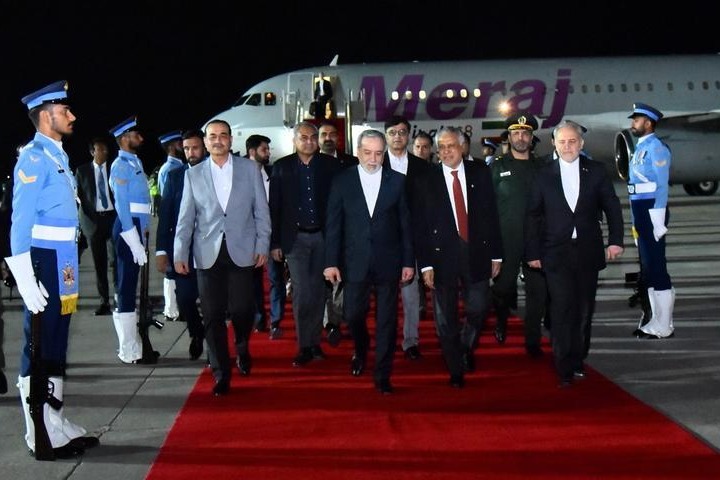
    This realignment extends beyond bilateral Iran-China relations, with recent developments indicating broader geopolitical shifts. Pakistan’s state-owned National Shipping Corporation vessel recently transited the strait with its tracking systems active, followed by similar movements from Indian-flagged tankers—both nations having engaged in direct negotiations with Iranian authorities for safe passage guarantees.

    The situation mirrors earlier experimentation by Houthi forces in the Red Sea, though Iranian implementation demonstrates considerably greater sophistication in intelligence capabilities and targeting precision. Maritime security analysts observe that Iran has effectively weaponized maritime access, creating a selective transit system that disadvantages Western-affiliated shipping while accommodating vessels from allied nations.

    The Trump administration’s response has appeared inconsistent, simultaneously demanding NATO assistance in securing the waterway while questioning America’s strategic interest in maintaining the transit corridor. This ambivalence reflects broader tensions in US foreign policy regarding energy security, alliance commitments, and the costs of maintaining global trade infrastructure.

    Geopolitical analyst Parag Khanna suggests these developments may signal emerging structural alternatives to US-led global governance, with regional powers increasingly crafting bottom-up solutions to maintain essential trade flows. The critical question remains whether new international coalitions can effectively provide the public good of secure maritime transit that Washington appears increasingly reluctant to underwrite.

  • Michael Chalmers: Experts differ on cause of death for sex worker as accused killer faces court

    Michael Chalmers: Experts differ on cause of death for sex worker as accused killer faces court

    A pivotal committal hearing for accused murderer Michael James Chalmers, 36, has been marked by conflicting medical testimony from forensic experts regarding the death of a 62-year-old sex worker. The proceedings at Melbourne Magistrates’ Court will determine whether sufficient evidence exists to proceed to trial for the alleged November 2024 killing.

    According to police allegations, Chalmers raped and murdered the victim, whose body was discovered during a welfare check at the Rainbow Garden brothel in Footscray on November 29. Investigators contend the killing occurred in the early hours of November 27, based on the victim’s last known communication on November 26.

    The forensic investigation has produced divergent conclusions from two pathologists. Dr. Joanne Ho classified the cause of death as “unascertained” while noting physical indicators consistent with asphyxiation through strangulation or smothering. However, Dr. Ho acknowledged that facial bruising and other injuries might be unrelated to the fatal mechanism, leaving open the possibility of alternative causes.

    In contrast, Dr. Joanna Glengarry, head of forensic pathology at the Victorian Institute of Forensic Medicine, testified that the victim died from “broad neck compression.” Dr. Glengarry concurred with defense suggestions that asphyxiation could result from various mechanisms, including compression from being sat upon.

    Detective Senior Constable Daniel Fallone, leading the investigation, revealed that CCTV footage identified three patrons visiting the establishment within the 24-hour period preceding the alleged murder. Two additional men approached the brothel after the estimated time of death but departed without entering. The investigation also uncovered that the victim had been prescribed medication for a heart condition and had reported at least one client assault in the weeks before her death, though these reports were not made to police.

    The hearing will resume next Monday after defense attorneys submit written arguments regarding the contradictory medical evidence and overall case viability.

  • Trump’s tariffs were supposed to help manufacturers. But instead, they’re hurting

    Trump’s tariffs were supposed to help manufacturers. But instead, they’re hurting

    WASHINGTON — The implementation of tariff-centered economic policies under the Trump administration has generated severe unintended consequences for American manufacturing enterprises, contrary to their intended protective purpose. Jay Allen, an Arkansas-based manufacturer and initial supporter of President Trump, exemplifies this troubling trend as his industrial equipment company faces substantial operational challenges directly attributable to import taxes.

    Allen Engineering Corp., which produces high-value concrete installation equipment, has experienced significant financial strain due to increased costs for essential imported components including engines, steel, gearboxes, and clutches. These tariff-induced cost escalations have forced the company to operate at a financial loss, reduce its workforce from 205 to 140 employees, and implement price increases of 8-10% on products that can reach $100,000 per unit.

    Statistical evidence indicates a broader national pattern contradicting the administration’s manufacturing objectives. During President Trump’s first full year back in office, approximately 98,000 manufacturing jobs were eliminated nationwide. Additionally, American companies are currently pursuing litigation against the administration seeking over $130 billion in tariff reimbursements, while federal deficit projections continue to rise.

    The White House maintains an optimistic outlook, with acting Council of Economic Advisers Chairman Pierre Yared emphasizing that factory revival requires time for production capabilities to develop fully. Administration officials point to elevated construction spending, increased factory construction hiring, and improved manufacturing productivity as indicators of eventual positive outcomes.

    However, economic analysts note that current construction growth primarily stems from initiatives launched during the Biden administration, particularly the CHIPS and Science Act which provided substantial subsidies for computer chip manufacturing facilities. According to Skanda Amarnath of Employ America, manufacturing construction spending has actually declined during Trump’s presidency, with current activity largely reflecting completion of projects initiated under previous policies.

    The fundamental uncertainty surrounding tariff implementation has created significant obstacles for manufacturing investment decisions. President Trump has enacted over 50 formal tariff actions alongside numerous informal threats, generating a complex landscape of announcements, reversals, exemptions, and legal challenges. This unpredictability discourages capital investment, as evidenced by Allen Engineering’s dilemma regarding a potential $20 million investment in domestic engine production amid uncertain trade policy longevity.

    Academic analysis from University of Toronto economist Joseph Steinberg suggests that even under optimal conditions, manufacturing employment would require approximately a decade to recover to pre-tariff levels. The current environment, characterized by policy instability and limited international cooperation, falls substantially short of this ideal scenario.

    Small and medium-sized manufacturers bear disproportionate burden from these policies, as they lack the lobbying influence and brand recognition of major corporations to mitigate tariff impacts. The Association of Equipment Manufacturers reports that America’s global manufacturing share significantly trails China’s, prompting calls for targeted tax credits and exemptions for components unavailable domestically at scale.

    Steel tariffs implemented in March and increased to 50% in June have particularly affected equipment manufacturers. Glen Calder of Calder Brothers, a South Carolina-based asphalt equipment manufacturer, reported immediate 25% price increases on domestic steel preceding formal tariff implementation, with sustained elevated pricing thereafter.

    Despite intended objectives to enhance competitiveness against China, U.S. manufacturing trade imbalances have worsened under current policies. China’s global trade surplus reached a record $1.2 trillion, highlighting structural limitations in the administration’s unilateral approach to trade policy. Lori Wallach of the American Economic Liberties Project notes that the avoidance of international cooperation and failure to build multinational coalitions has left American manufacturers at a competitive disadvantage in addressing fundamental issues like currency manipulation and subsidy enforcement.

  • U.S. falls short again in WBC final as Venezuela stuns star-studded roster

    U.S. falls short again in WBC final as Venezuela stuns star-studded roster

    In a stunning upset that rewrote the narrative of international baseball, Venezuela captured its first-ever World Baseball Classic championship on Tuesday night with a dramatic 3-2 victory over the heavily favored United States team. The emotional triumph triggered tearful celebrations among Venezuelan players who fell to their knees on the Miami field, while the American squad, featuring the most expensive roster in the tournament’s history, stood frozen in disbelief.

    The outcome represented a second consecutive championship game disappointment for Team USA, which had won the 2017 title but fell to Japan in the 2023 final. This time, the Americans’ star-studded lineup—comprised of players who combined for 382 home runs and 1,111 RBIs during the previous MLB season—produced a meager three hits in the championship contest and managed only four runs across the final two games of the tournament.

    Venezuela’s victory was anchored by left-handed pitcher Eduardo Rodríguez, who masterfully neutralized the fearsome American batting order with measured ease. Rodríguez recorded four strikeouts across 5 1/3 dominant innings, twice fanning U.S. captain Aaron Judge who finished 0-for-4. The Venezuelan bullpen maintained this defensive excellence, surrendering just two additional hits including Bryce Harper’s game-tying, two-run homer in the eighth inning.

    The championship-winning sequence unfolded in the ninth inning when Luis Arraez worked a walk against reliever Garrett Whitlock. Pinch-runner Javier Sanoja promptly stole second base ahead of catcher Will Smith’s throw, then raced home on Eugenio Suárez’s clutch double. Suárez celebrated with arms outstretched toward the sky as teammates poured from the dugout to mob Sanoja at home plate.

    Despite fielding a roster featuring players with combined credentials of over 2,300 career home runs, 419 saves, and nine World Series participants, Team USA never displayed its anticipated offensive firepower throughout the tournament. The Americans batted just .250 over seven games with 44 runs, 10 homers, and 40 RBIs—well below expectations for a lineup considered among the most formidable in baseball history.

  • Oil’s monopoly kaput, China to be top supplier of energy security

    Oil’s monopoly kaput, China to be top supplier of energy security

    The ongoing Middle East conflict has triggered a fundamental reassessment of global energy security, dramatically accelerating demand for China’s clean energy technologies. Contrary to earlier predictions that markets couldn’t absorb more Chinese exports, recent trade data reveals unprecedented growth in China’s energy technology shipments to global markets.

    China’s 2025 trade surplus expanded by 20% year-on-year to reach $1.2 trillion, defying existing tariff barriers. While exports to the United States declined by 20%, this was more than offset by substantial increases elsewhere. Exports to ASEAN nations surged by 13%, while African imports of Chinese goods jumped by 26%. Preliminary 2026 data shows even more dramatic growth, with dollar-denominated exports increasing by 22% in January-February, including extraordinary spikes of 27% to ASEAN countries and 47% to African markets.

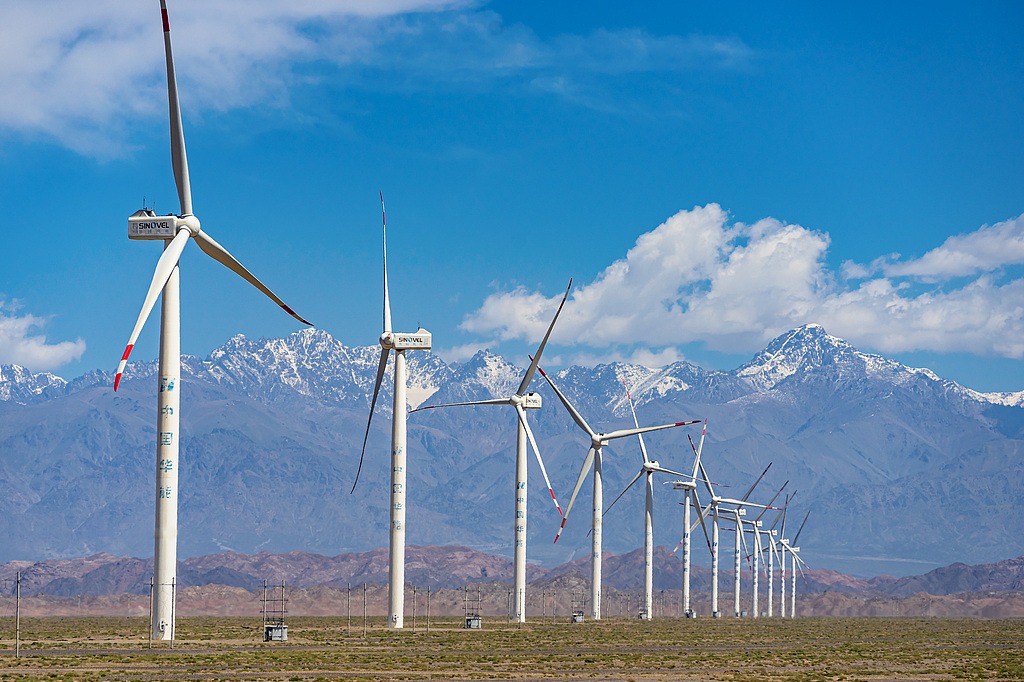
    The Middle East conflict has fundamentally undermined confidence in oil-based energy systems, with the closure of the Strait of Hormuz demonstrating the vulnerability of petroleum supply chains. This security crisis has created unprecedented demand for energy alternatives, positioning China—as the world’s dominant manufacturer of electric vehicles, batteries, solar panels, wind turbines, and nuclear technology—as the new guarantor of global energy security.

    Technological breakthroughs have been central to this transformation. Battery prices have plummeted 90% over the past 15 years, while solar panel costs have dropped 85% during the same period. Chinese manufacturers like BYD now offer electric vehicles with 1,000-kilometer ranges and 5-10 minute charging capabilities, while NIO has established comprehensive battery swapping networks across China.

    The economic advantages have become undeniable: electric vehicles are now 3-4 times more energy efficient than internal combustion engines and are priced at approximately half the cost of equivalent conventional vehicles in Western markets. With oil prices potentially doubling from pre-conflict levels, the financial case for transition has become overwhelming.

    This shift is reversing what economists call the Lucas Paradox—the historical anomaly where capital flowed from poorer to richer nations. China’s manufacturing output now exceeds that of the United States, European Union, India, Japan, United Kingdom, and Russia combined. The Belt and Road Initiative has further diversified China’s trade relationships, with 2025 engagement reaching $210 billion, nearly double previous records.

    The changing energy landscape represents more than market fluctuation—it signals a fundamental restructuring of global economic relationships and energy infrastructure, with developing nations positioned to benefit most significantly from reduced dependence on volatile hydrocarbon markets.

  • Japan records trade surplus as export growth balances out weak China demand

    Japan records trade surplus as export growth balances out weak China demand

    Japan’s economic landscape shifted in February as the nation posted a trade surplus of 57.3 billion yen ($360 million), marking a significant reversal from January’s 1.15 trillion yen deficit. According to preliminary data released by the Finance Ministry, exports expanded by a robust 4.2% year-on-year to 9.57 trillion yen, exceeding market expectations. This growth occurred alongside a 10.2% increase in imports, which reached 9.51 trillion yen.

    The recovery comes despite notable headwinds. Shipments to China, Japan’s largest trading partner, contracted by 10.9%, a decline partially attributed to the timing of the Lunar New Year holidays which dampened seasonal demand. Similarly, exports to the United States fell by 8%, pressured by a 15% tariff on Japanese automobiles imposed during the Trump administration that continues to burden automakers and supply chains.

    Geopolitical tensions and energy market volatility present ongoing challenges. The effective closure of the Strait of Hormuz due to conflict has driven Brent crude prices to approximately $100 per barrel, threatening to increase import costs for a nation that relies almost entirely on foreign oil. Conversely, the yen’s pronounced weakness—trading near 159 against the U.S. dollar compared to 150 a year ago—is providing an unexpected boost to export competitiveness.

    European markets emerged as a bright spot, with exports surging 17%, while shipments to the rest of Asia grew by 2.8%. Investors are now closely monitoring the Bank of Japan’s upcoming policy decision and the potential outcomes from the anticipated summit between former President Trump and Prime Minister Sanae Takaichi, which could significantly influence future trade relations.

  • ‘We will wait for each one’: Ukrainians greet POWs with tears and cheers

    ‘We will wait for each one’: Ukrainians greet POWs with tears and cheers

    In a powerful display of national solidarity, communities in northern Ukraine’s Chernigiv region maintain a solemn vigil along border roads to welcome soldiers returning from Russian captivity. This emotional tradition, born from the ashes of occupation, has evolved into a coordinated effort where civilians use social media to track prisoner swap convoys and alert towns along the route.

    The scene at a recent exchange was particularly poignant: Larysa Gladka, a 50-year-old widow whose husband fell in combat and whose son currently serves, stood alongside neighbors scanning the horizon with binoculars. When the convoy finally appeared, ambulance sirens pierced the air as buses carrying emaciated prisoners with shaved heads and visible wounds approached. Gladka described the overwhelming emotions: “You rejoice and cry, and you tremble inside from the emotion—seeing those eyes that are both sad and joyful and filled with tears.”

    Prisoner exchanges represent one of the few remaining areas of cooperation between Moscow and Kyiv amid the ongoing conflict. Since Russia’s full-scale invasion in February 2022, Ukraine has secured the return of over 8,000 POWs alongside the remains of more than 17,000 fallen soldiers through these carefully negotiated swaps.

    For the returnees, many detained for years under reported conditions of ill-treatment and torture, the roadside receptions provide a crucial psychological counterpoint to Russian claims that nobody awaits their homecoming. Yaroslav Rumyantsev, freed after 39 months in captivity, characterized the experience as “a second birthday” that brought tears and goosebumps.

    The Coordination Headquarters for the Treatment of Prisoners of War continues working toward further exchanges, though the timing remains uncertain following the derailment of US-mediated negotiations due to conflicts in the Middle East. Despite the challenges, Chernigiv residents remain committed to their self-imposed duty. As local council employee Anna Kondratenko stated: “Until the end—until everyone is exchanged. We will wait for each one. We will wait for all our guys.”

  • China ignores Trump’s Hormuz request as the Iran war deepens and his Beijing trip slips

    China ignores Trump’s Hormuz request as the Iran war deepens and his Beijing trip slips

    WASHINGTON — As the United States grapples with escalating tensions in the Middle East, China has adopted a strategically nuanced position regarding President Trump’s request for assistance in reopening the critical Strait of Hormuz. Analysts suggest Beijing is leveraging the geopolitical situation to its advantage while carefully managing diplomatic relations.

    The ongoing military engagement in Iran, now entering its third week, has created significant challenges for Washington as oil shipments through the vital waterway remain suspended. Despite appeals to allies, the U.S. finds itself increasingly isolated in its efforts to secure the strait, raising concerns that America’s principal strategic competitor stands to gain from the prolonged conflict.

    Ali Wyne, senior research and advocacy adviser for U.S.-China relations at the International Crisis Group, observed: “President Trump’s decision to postpone his long-awaited summit with President Xi Jinping reveals a fundamental miscalculation of Operation Epic Fury’s consequences. What was intended as a demonstration of U.S. power has instead exposed limitations in American influence, compelling Washington to seek assistance from its chief geopolitical rival in managing a self-created crisis.”

    The Chinese Foreign Ministry offered a deliberately ambiguous response regarding potential assistance with the strait, instead reiterating calls for “all parties to immediately cease military operations, prevent further escalation of tensions, and avoid additional disruption to the global economy from regional instability.”

    Beijing, which had never formally confirmed Trump’s planned March 31 state visit, has indicated willingness to reschedule through diplomatic channels while clarifying that the postponement was unrelated to the Hormuz request. This careful positioning allows China to maintain diplomatic decorum while advancing its strategic interests.

    According to Sun Yun, director of the China program at the Stimson Center, “The Iranian request has diminished in urgency for Chinese leadership.” Meanwhile, Chinese diplomats have actively engaged with Middle Eastern nations, promising constructive involvement in tension reduction and peace restoration efforts. Beijing has already provided $200,000 in humanitarian aid to Iran through Red Cross and Red Crescent organizations, specifically designated for families affected by the bombing of Shajarah Tayyebeh elementary school in Minab.

    Brett Fetterly, managing principal in the China practice at The Asia Group, noted that the delay benefits both nations: “The current political climate makes international travel challenging for a commander-in-chief overseeing military operations. For China, additional time allows for better assessment of President Trump’s objectives and negotiation positions.”

    The strategic implications extend beyond immediate diplomacy. Military asset transfers from the Indo-Pacific region to the Middle East, including rapid-response units and anti-missile defense systems, have raised concerns about American distraction from its stated Asia-focused priorities.

    Zack Cooper, senior fellow at the American Enterprise Institute specializing in U.S. Asian strategy, warned: “Prolonged engagement in the Middle East, coupled with continued resource diversion from Asia, will exacerbate allies’ concerns about American distraction and capability limitations.” The postponed summit may also delay controversial arms sales to Taiwan, a persistently sensitive issue in U.S.-China relations.

    Cooper added: “Chinese leadership likely welcomes the visit’s postponement and the opportunity to benefit from renewed U.S. entanglement in Middle Eastern conflicts. Most Chinese analysts and officials believe America is undermining its own position, requiring Beijing merely to avoid interference in the process.”

  • AFL 2026: North Melbourne young gun George Wardlaw ‘right to play’

    AFL 2026: North Melbourne young gun George Wardlaw ‘right to play’

    Fresh off a morale-boosting opening round victory, North Melbourne Football Club is poised to strengthen its lineup with the anticipated return of three crucial players for their upcoming AFL match against the West Coast Eagles. The team’s enhanced flexibility, courtesy of the expanded bench, provides strategic options for managing player workloads, particularly for those returning from injury.

    Midfielder George Wardlaw, who missed the Round 1 win over Port Melbourne, has been cleared for selection after fully participating in Wednesday’s training session. Head coach Alastair Clarkson revealed that while Wardlaw was nearly fit to play last week, the club opted for a cautious approach to ensure his full recovery. Clarkson elaborated on the strategic advantage offered by the new rotation rules, stating, ‘The beauty for all sides and coaches now is we have the option to manage players more carefully. When bringing guys back from injury, they don’t have to carry as much game load. We’ll likely utilize George in that 55-60 percent game time range if he returns to the side.’

    Joining Wardlaw as potential inclusions are Riley Hardeman and recent Melbourne transfer Charlie Spargo. Spargo’s integration into the team has been hampered by an injury-disrupted preseason, but both players have now been declared fully fit and available for selection. Clarkson noted that final decisions would be influenced by logistical considerations, including the Round 1 bye for their VFL affiliate team, which affects match readiness assessments for players on the selection fringe.

    The Kangaroos will face the West Coast Eagles on Sunday, with these potential reinforcements offering significant tactical flexibility as they seek to build momentum early in the season.