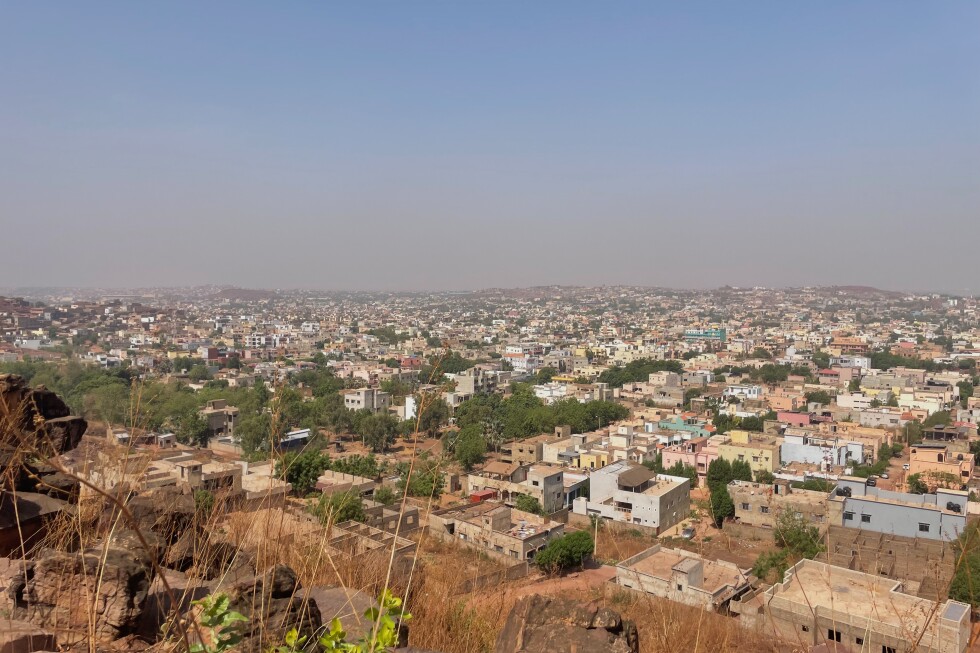
Early on Saturday morning, a wave of synchronized armed assaults targeted multiple locations across Mali, including the capital city of Bamako and several urban centers in the country’s unstable northern region, leaving residents trapped in their homes and security forces locked in fierce firefights with assailants, according to official statements and on-the-ground accounts.
In an official release, Mali’s military confirmed that “unidentified armed terrorist groups” launched targeted strikes against key infrastructure and military barracks within the capital, adding that troops had been deployed to the affected sites and were actively working to neutralize the remaining attackers.
An Associated Press reporter based in Bamako reported hearing continuous volleys of heavy weapons and automatic rifle fire originating near Modibo Keïta International Airport, situated roughly 15 kilometers outside the capital’s central business district. The reporter also observed a military helicopter circling over residential neighborhoods adjacent to the airport, which shares a border with a key air base operated by the Malian Air Force. Local residents living in close proximity to the airport corroborated the reports of sustained gunfire, adding that three military helicopters were visible patrolling the area overhead.
Accounts from residents in other cities across Mali confirmed outbreaks of gunfire and explosive blasts Saturday morning, reinforcing initial assessments that the attacks were a coordinated, multi-region operation planned by armed insurgent groups. A former mayor of the northeastern city of Kidal, who spoke to the AP on condition of anonymity over fears for his personal safety, confirmed that gunmen had entered the city, seized control of multiple residential neighborhoods, and engaged in open gun battles with Malian government forces.
The long-running Azawad separatist movement has waged a years-long campaign to establish an independent state in northern Mali. The movement initially forced government security forces to withdraw from most of the region in the early 2010s, before a 2015 peace agreement was reached that saw former rebel fighters integrated into the national military. That peace deal has since collapsed, allowing unrest to reemerge across the north.
Mohamed Elmaouloud Ramadane, a spokesperson for the Azawad Liberation Front, claimed in a Facebook post that the movement’s forces had seized control of multiple districts in both Kidal and Gao, a second major northeastern Malian city. The Associated Press has not been able to independently confirm the authenticity of this claim. A resident of Gao, who also requested anonymity due to safety concerns, told the AP that gunfire and explosive detonations began in the early hours of Saturday and were still audible more than six hours later. “The force of the blasts is shaking the doors and windows of my home,” the resident said. “I am absolutely terrified.” They added that all shooting originated near the adjacent army camp and airport on the city’s outskirts.
Even in Kati, a small town just outside Bamako that hosts Mali’s largest central military base, a resident reported being woken before dawn by the sounds of explosions and automatic weapons fire.
This latest outbreak of large-scale violence comes less than a year after an al-Qaida-linked insurgent group carried out a major assault on Bamako’s airport and a military training camp in the capital in 2024, an attack that left dozens of people dead.
For more than a decade, Mali and its neighboring Sahel countries Niger and Burkina Faso have been locked in a persistent battle against insurgent groups affiliated with al-Qaida and the Islamic State, and the intensity of violence across the region has grown steadily over the past 10 years. Following a series of military coups that installed ruling juntas in all three nations, the new governments have cut traditional security ties with Western allies and turned to Russia for military support in countering the insurgency. Despite this shift, security analysts warn that the overall security landscape across the three countries has deteriorated sharply in recent months, with insurgent groups carrying out a record number of attacks against civilian and military targets. Government forces operating in the region have also faced widespread accusations of extrajudicial killings of civilians suspected of collaborating with armed militant groups.
Associated Press reporter Mark Banchereau, based in Dakar, Senegal, contributed reporting to this article.