作者: admin

  • I was at the top of Mexico pyramid when a gunman opened fire

    I was at the top of Mexico pyramid when a gunman opened fire

    On a sightseeing excursion that was supposed to be the highlight of her academic conference trip to Mexico City, a Glasgow-based architecture historian survived a deadly mass shooting at one of the country’s most iconic cultural landmarks, and has now shared the harrowing details of her escape.

    Dr. Giovanna Guidicini, 46, an Italy-born scholar who has lived and worked in Scotland for 20 years at the Glasgow School of Art, travelled to the UNESCO World Heritage Site of Teotihuacán with her colleague Dimitrij Zadorin on the final day of her trip. Just minutes after the pair reached the summit of the Pyramid of the Moon and snapped a celebratory selfie amid a crowd of other tourists, chaos erupted across the ancient terrace.

    Guidicini told BBC News that the first loud popping sounds initially struck her as a planned performance or entertainment for visitors at the archaeological park. But a second round of noise, followed immediately by panicked screams, made clear the danger the group was in. “That is when I realised it was real,” she recalled. “The gunman was 20ft away from us and shooting towards the queue of people waiting to exit down the stairs. The screams brought the situation to life more than the gunshots.”

    With the only formal exit stairway blocked by the gunman — identified by Mexican authorities as 27-year-old Julio César Jasso Ramírez — Guidicini and her colleague were trapped 70 feet above the ground, with no cover and no clear path to safety. “Quickly we lay flat on the ground. It was a really scary feeling – just total helplessness,” she said. “We could still hear the screams and shootings but we had stopped looking.”

    It was not long before the trapped group spotted a risky alternative escape route: climbing straight down the steep, stepped stone faces of the pyramid, with each tier dropping roughly 15 feet from the ledge above. Joined by 6 to 8 other tourists, the pair scrambled down the uneven stone layers, with fellow visitors helping each other navigate the precarious descent to get out of the gunman’s line of fire. For Guidicini, the discovery of even this dangerous escape route brought a wave of relief.

    Once the group reached the base of the pyramid, they made their way to the perimeter of the site, where a barbed wire fence blocked their path to the outside. Local residents spotted the fleeing group, drove a pickup truck to the fence to help them climb over, and caught visitors on the other side. The group then took shelter at a nearby restaurant, where staff provided them with food and water as first responders arrived on scene. By the time Guidicini and Zadorin reached the street, they could see heavily armed police and military units converging on the archaeological complex to secure the area.

    The attack, which unfolded on Monday, left one 32-year-old Canadian tourist dead and 13 other visitors from countries including Russia, Colombia and Brazil injured. The gunman ultimately died from a self-inflicted gunshot wound after the shooting. Guidicini, who was scheduled to fly back to Glasgow that same evening, alerted her family and friends back home that she had survived unharmed as news of the attack spread internationally. She has since said that in the wake of the incident, she has seen footage and images online of other visitors who were trapped on the terrace as hostages, including a clip of the gunman making violent threats in Spanish, referencing human sacrifice and threatening that trapped visitors would never return to Europe.

    Mexican officials have moved quickly to distinguish this attack from the country’s ongoing cartel-linked violence. The shooting comes less than two months after widespread unrest broke out across Mexico following the reported killing of Jalisco New Generation Cartel leader “El Mencho” by security forces, but authorities confirm that the Teotihuacán gunman acted alone and had no known connections to organised criminal groups. The attack has still created significant political and security challenges for the Mexican government, coming just weeks before the country is set to co-host the 2026 FIFA World Cup, which will draw millions of international tourists to Mexican sites.

    Now back home in Glasgow, Guidicini said that as the initial shock of the experience fades, the lasting trauma of the shooting has begun to set in. She recalled a recent incident where sudden exposure to the sound of gunfire in a background television scene triggered a severe stress response. “When I heard gunshots I jumped, I felt really cold and uncomfortable,” she said. “I hope that this doesn’t last forever.”

  • Hefei’s ‘air taxi’ enthralls Mexican influencer

    Hefei’s ‘air taxi’ enthralls Mexican influencer

    On April 24, a landmark demonstration of China’s emerging electric urban air mobility technology drew international attention, when Mexican digital creator Noelia Pascual took a three-minute autonomous test flight over Luogang Park in Hefei, the capital city of East China’s Anhui province. The flight was operated by local aerospace firm Hefei Heyi Aviation Co, using its electric vertical take-off and landing (eVTOL) aircraft, commonly referred to as an “air taxi”, which is currently undergoing trial testing for future commercial urban mobility applications.

    Before boarding the autonomous aircraft, Pascual had prepared herself for a nerve-wracking, turbulent experience. But she left the flight far more impressed than she expected, praising the vehicle’s remarkable stability and robust safety design that eliminated most of her pre-flight anxiety.

    “It’s actually very stable, very similar to the experience of flying in a helicopter, but it feels more stable than a helicopter,” Pascual shared enthusiastically with onlookers immediately after completing her flight.

    She further noted that the transparent, real-time flight data displayed on an in-cabin screen played a key role in easing her concerns during the journey. “I never felt unsafe because the flight information is all displayed on the screen. You know what’s happening, and that gives you some reassurance,” she added.

    The test flight comes as China continues to accelerate research and commercial development of eVTOL technology, positioning itself as a global leader in the emerging low-altitude economy sector. For international visitors and industry observers, the successful public demonstration offers a first-hand look at how close autonomous air mobility is to becoming a practical part of daily urban transportation.

  • Armed groups launch coordinated attacks across Mali

    Armed groups launch coordinated attacks across Mali

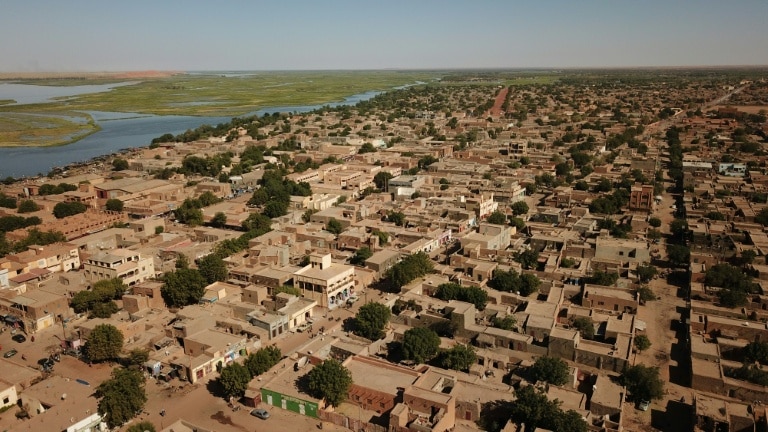
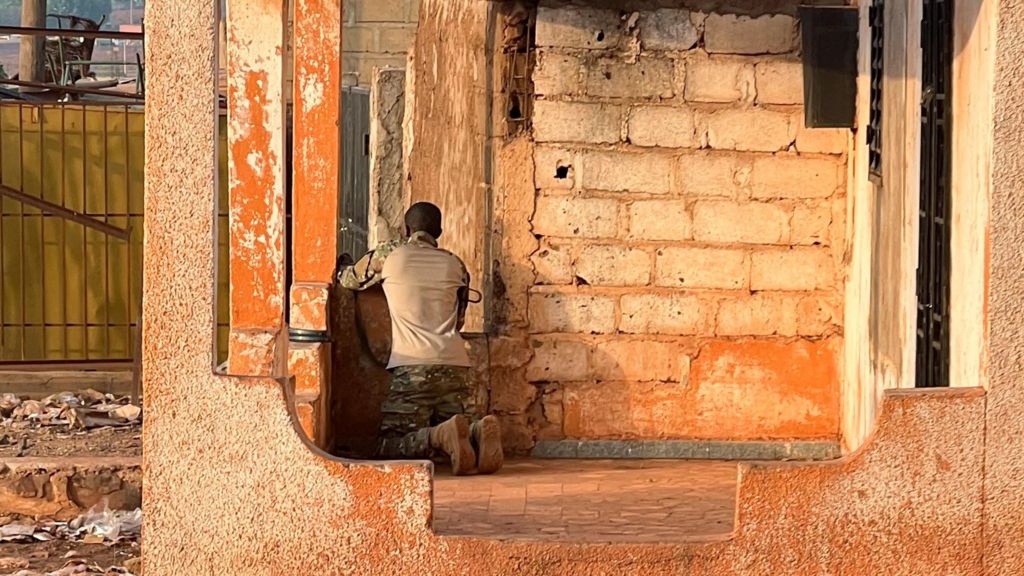
    On a fateful Saturday, coordinated violent attacks unfolded across multiple regions of Mali, sending shockwaves through the West African nation already grappling with a decade-long security crisis. Explosions and continuous gunfire were first reported in Bamako, the country’s capital, with heavy clashes concentrated around the Kati military base, a key defense installation on the outskirts of the city. Military forces quickly moved to secure the area, blocking major access roads as counteroffensive operations got underway.

    Mali’s ruling military junta confirmed in an official statement that fighting remained active as of Saturday morning, noting that defense and security personnel were fully engaged in repelling the invading attackers. Parallel attacks were also reported in three other key cities spanning the country: Gao in the volatile eastern region, Kidal in the restive north, and Sevare in central Mali. Regional security analysts characterize the synchronized assault as the largest-scale jihadist offensive targeting the country in several years.

    All commercial flights into Bamako were suspended early Saturday, according to a traveler who spoke to the BBC, though it remains unconfirmed whether the Modibo Keita International Airport itself sustained damage or was directly targeted. The U.S. Embassy in Mali issued an urgent security advisory shortly after the attacks began, urging all U.S. citizens to shelter in place, avoid all non-essential travel, and stay clear of areas near the airport and the Kati military base amid ongoing active combat.

    Ulf Laessing, director of the Sahel Programme at the Konrad Adenauer Foundation based in Mali, told the BBC that the coordinated nature of the attacks marks them as the most expansive and organized jihadist operation Mali has faced in years. While the military has confirmed it is battling unidentified terrorist groups, full details on the scope of casualties, captured territory, and attacker affiliations remain unclear as operations continue. Social media videos have circulated claiming responsibility from two groups: Jama’at Nusrat al-Islam wal-Muslimin (JNIM), a major al-Qaeda-linked jihadist faction, and the Tuareg Azawad Liberation Front (FLA), a separatist rebel group.

    FLA spokesperson Mohamed Elmaouloud Ramadane claimed in a social media post that the group’s fighters had seized control of multiple strategic positions in both Gao and Kidal, and called on neighboring military-led states Burkina Faso and Niger to refrain from intervening in the conflict. The BBC has not independently verified these claims amid ongoing restricted access to conflict zones.

    The current assault comes against a long-running backdrop of instability in Mali, which has been ruled by a military junta led by General Assimi Goïta since he seized power in a 2020 coup. The junta initially rode a wave of popular support after promising to resolve the country’s decade-long security crisis, which began with a 2012 ethnic Tuareg separatist rebellion that was later co-opted by transnational Islamist militant groups.

    In 2013, a United Nations peacekeeping mission and French counterinsurgency forces deployed to Mali to roll back advancing jihadist control. Both forces have fully withdrawn from the country since the junta took power, and the military government replaced them with Russian mercenary fighters to lead counterinsurgency operations. Despite this shift, the jihadist insurgency has only expanded, with large swathes of northern and eastern Mali remaining outside of central government control to this day.

    Most recently, Mali joined with neighboring military-led states Niger and Burkina Faso to exit the Economic Community of West African States (Ecowas), the region’s long-standing political and economic bloc. The three countries have formed a new bloc called the Alliance of Sahel States, which aims to coordinate shared security resources, develop cross-border infrastructure, establish a common market and currency, and enable free movement of people, with a long-term goal of deeper regional political and economic integration.

  • Global influencers explore Confucian culture at Nishan Sacred Land

    Global influencers explore Confucian culture at Nishan Sacred Land

    On April 24, 2026, a cohort of 28 international digital influencers from across the globe gathered at Nishan Sacred Land, the revered birthplace of ancient Chinese philosopher Confucius in Qufu, a city administered by Jining in east China’s Shandong Province, for a hands-on, immersive deep dive into thousands of years of Confucian cultural heritage.

    Far from a standard sightseeing tour, the trip was designed to let participants engage with Confucian traditions through multi-sensory, interactive experiences rather than passive observation. The itinerary opened with *Golden Sound and Jade Vibration*, a grand, carefully choreographed ritual music performance that draws directly from ancient Confucian ceremonial customs, setting a solemn and reverent tone for the visit. Influencers later got the chance to try on hanfu, the traditional ethnic clothing of China’s Han majority, participate in classic Confucian ceremonial rituals, and practice the ancient art of hand-copying excerpts from *The Analects*, the foundational collection of Confucius’ teachings that has shaped East Asian thought and ethics for millennia.

    This event is part of broader efforts to share traditional Chinese culture with global audiences, leveraging the reach of social media influencers to introduce the core values of Confucianism — including benevolence, filial piety, and social harmony — to international communities in an accessible, relatable format. As a site deeply tied to Confucius’ legacy, Nishan Sacred Land has emerged as a leading global destination for cultural exchange focused on Chinese philosophy and traditional thought.

  • AFL 2026: Essendon coach Brad Scott lamented his side’s handling of the Anzac Day occasion

    AFL 2026: Essendon coach Brad Scott lamented his side’s handling of the Anzac Day occasion

    One of Australian Rules Football’s most iconic annual fixtures delivered a lopsided result this Anzac Day, as Essendon Bombers head coach Brad Scott opened up about his team’s crushing second-half collapse to a inspired Collingwood Magpies side led by veteran champion Scott Pendlebury. Speaking to reporters after the final siren, Scott expressed deep frustration over his side’s failure to rise to the occasion, admitting he struggled to reconcile his honest assessment of the defeat with a more guarded, team-aligned narrative for the post-match press conference.

    The match was tightly contested through the first two quarters, with neither side managing to pull away despite Scott acknowledging Essendon never found their rhythm in the opening half. That stalemate shattered dramatically after halftime, when Collingwood slammed through 15 goals in the second half, including nine unanswered goals in a dominant final quarter that left Essendon powerless to stem the tide. At 38 years old, Pendlebury turned in a career-defining performance to anchor the Magpies’ charge, ultimately claiming his fourth Anzac Day Medal for his match-winning impact.

    Scott summed up the result bluntly, saying his squad was “absolutely obliterated” by Collingwood, a result he pinned largely to catastrophic performance at centre bounce clearances. While overall clearances for the match finished roughly even, Essendon couldn’t win a foothold in the contest out of the central stoppage, a failure that handed Collingwood repeated attacking opportunities that blew the game open in the final term. “The last quarter margin is almost entirely attributed to centre bounce territory and you lose contest forward,” Scott explained, noting that even when Essendon managed to move the ball into their attacking 50 after halftime, they were able to convert – they simply never got enough chances to mount a comeback.

    The Essendon coach added that his young squad looked visibly overawed by the magnitude of the Anzac Day occasion, one of the biggest non-finals matches on the AFL calendar, played in front of a capacity crowd at the MCG. Scott pointed out that Pendlebury alone has more career game time than 75 percent of the entire Essendon list combined, but he refused to pin the loss solely on inexperience, saying a lack of composure under pressure was a problem across the entire team. “Repeatedly we weren’t able to handle those moments, so we weren’t able to handle the occasion, we weren’t able to handle Collingwood’s pressure. Even worse, we weren’t able to stand up under perceived pressure which wasn’t even there,” he said.

    Asked about his comment that he was torn between sticking to the “party line” and sharing his true assessment, Scott confirmed he would not shift blame to his inexperienced players, despite the clear gap in big-game experience between the two sides. The collapse of Essendon’s game plan was a chain reaction, he explained: when their initial plan to contain Pendlebury and young Magpies star Nick Daicos failed, adjustments also fell flat, leading to a domino effect of missed assignments and missed opportunities.

    The brutal defeat leaves Essendon with no time to lick their wounds, as they prepare to face the reigning premier Brisbane Lions at Marvel Stadium next Saturday in what shapes as another tough test for the rebuilding side.

  • Gunfire in Mali as army battles ‘terrorist groups’

    Gunfire in Mali as army battles ‘terrorist groups’

    On a violent Saturday across junta-governed Mali, Malian army troops engaged in fierce combat with armed groups the military labels as terrorist organizations, marking a fresh eruption of violence in a West African nation that has been mired in over 10 years of brutal jihadist insurgency. Eyewitness accounts confirmed active fighting broke out not only in Mali’s capital Bamako, but also in several other major population centers across the landlocked country, which has been under military rule following back-to-back coups in 2020 and 2021. An official statement from the Malian military confirmed that unidentified armed groups launched coordinated assaults on multiple strategic sites and military barracks across the capital and interior regions of the country early Saturday morning. To date, no organization has stepped forward to claim responsibility for the coordinated attacks, but the assault aligns with previous efforts by jihadist factions to destabilize the central government: last year, insurgents attempted to shut down the capital by severing its fuel supply lines. Confirmed locations of fighting include the capital Bamako, the northern cities of Gao and Kidal, and the central Malian city of Sevare. Witnesses additionally reported sustained heavy gunfire in Kati, a suburban town on the outskirts of Bamako that serves as the official residence of Mali’s military leader, General Assimi Goita. Local residents of Kati shared imagery on social media platforms showing extensive damage to civilian residential properties, with one resident telling Agence France-Presse (AFP) that locals remain trapped inside their homes amid ongoing clashes. Military helicopters were observed circling low over Bamako, with operations concentrated near the capital’s international airport. An on-the-ground AFP correspondent in the capital reported that city streets were almost entirely deserted, with only sporadic gunfire echoing across empty neighborhoods. Mali sits on vast reserves of gold and other valuable mineral deposits, but it has been locked in a crippling security crisis since 2012, when insurgent violence first erupted. Today, the country faces simultaneous threats from jihadist factions aligned with al-Qaeda and the Islamic State, local organized criminal networks, and separatist movements. Like the military administrations that hold power in neighboring Niger and Burkina Faso, Mali’s junta has cut diplomatic and military ties with its former colonial ruler France and multiple other Western nations, reorienting its foreign and defense policy to build closer ties with Russia. The Goita-led government has also drawn widespread international criticism for its crackdown on press freedom and systematic silencing of opposition political voices, including a full ban on all political party activity. The junta initially made a public pledge to transition power back to civilian rule by March 2024, but in July 2025, it approved legislation extending General Goita’s presidential term by five years, with the provision that the term can be renewed “as many times as necessary” without holding a democratic election. Despite this authoritarian shift, the second administration of U.S. President Donald Trump has moved to open diplomatic channels with the three Sahel juntas, while Togo has positioned itself as a neutral intermediary between Western governments and the three states, which have formally organized themselves as the Alliance of Sahel States. Over the course of the 13-year insurgency, thousands of Malian civilians and security personnel have been killed in attacks, and tens of thousands of residents have been displaced, seeking refuge in neighboring countries such as Mauritania. Russia’s Wagner Group, a private military contractor that had deployed fighters alongside Malian army forces to combat jihadist insurgents starting in 2021, announced it would wrap up its original mission in Mali in June 2025. The group was subsequently reorganized into Africa Corps, a new organization placed under the direct command of the Russian Ministry of Defense. Since September 2025, the Group for the Support of Islam and Muslims (known by its Arabic acronym JNIM), an al-Qaeda-affiliated jihadist faction, has carried out repeated targeted attacks on fuel tanker convoys traveling to Bamako. At the peak of that campaign in October, the capital was brought to a near-complete standstill. After several months of relative quiet, Bamako faced a renewed diesel shortage in March 2026, with all available fuel supplies redirected to meet critical energy sector needs.

  • Xi, president of Cape Verde exchange congratulations on 50th anniversary of ties

    Xi, president of Cape Verde exchange congratulations on 50th anniversary of ties

    BEIJING — On Saturday, China’s President Xi Jinping and Cape Verde’s President Jose Maria Neves exchanged official congratulatory messages to celebrate the five-decade milestone of diplomatic relations between the two nations, bringing renewed attention to the long-standing bilateral partnership between China and the West African island country.

    This 50-year anniversary marks a half-century of steadily growing cooperation, people-to-people exchanges, and mutual respect between Beijing and Praia. The diplomatic exchange comes as both sides have repeatedly reaffirmed their commitment to deepening collaborative ties across areas including infrastructure development, trade, climate action, and cultural exchange in recent years.

    As a developing small island nation, Cape Verde has benefited from China’s South-South cooperation initiatives over the decades, with Chinese investment and technical support contributing to key national infrastructure projects that have boosted local economic growth and improved public living standards. Meanwhile, the two countries have maintained consistent coordination on international and regional affairs, upholding the principles of multilateralism and the common interests of developing nations.

    The exchange of congratulations for this golden anniversary lays a clear foundation for further expanding bilateral cooperation in the coming years, as both sides look to build on 50 years of positive engagement to advance shared goals and deepen friendship between the Chinese and Cape Verdean peoples. The announcement of this diplomatic exchange was officially updated by Xinhua News Agency on April 25, 2026.

  • Seven dead in major Russian attack on Ukraine

    Seven dead in major Russian attack on Ukraine

    A wave of massive overnight Russian strikes targeting multiple Ukrainian cities left at least seven civilians dead and widespread destruction across the country, sparking cross-border security alerts and triggering long-range retaliatory drone attacks by Ukrainian forces deep into Russian territory.

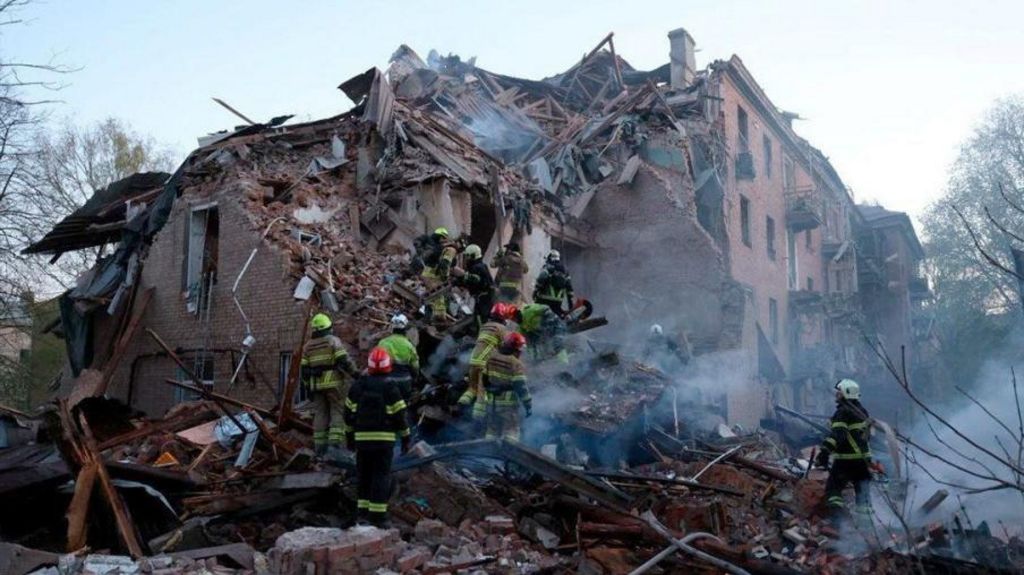
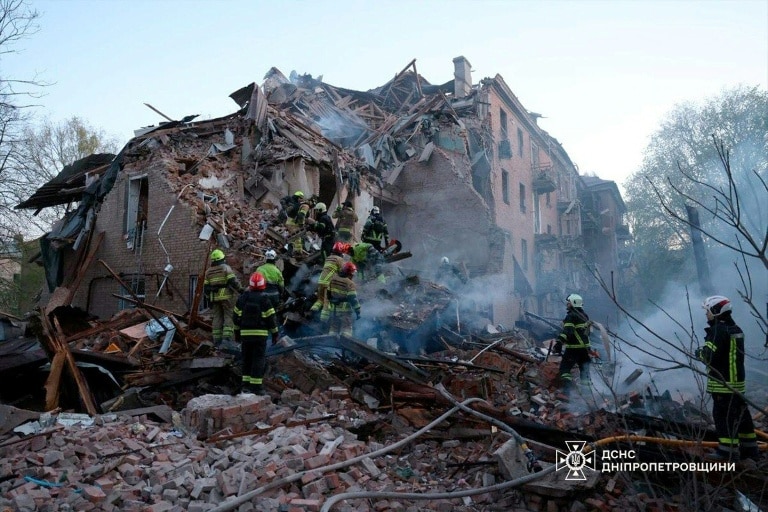
    The deadliest single incident from the assault unfolded in the central Ukrainian city of Dnipro, where a Russian projectile slammed into a multi-story residential apartment building. Images released by Ukraine’s State Emergency Service show the structure heavily scarred by the blast, with large sections of the facade collapsed and rubble spilling into the surrounding street. As of Saturday morning, rescue teams were still digging through the debris in search of trapped survivors, while local authorities confirmed five fatalities from the strike alone.

    Ukrainian President Volodymyr Zelenskyy confirmed that the bombardment stretched across nearly the entire night, noting that Russian forces have not altered their long-standing targeting tactics. “The Russians’ tactics have not changed: strike drones, cruise missiles, and a significant amount of ballistics,” Zelenskyy wrote on his official social media channels. “Most of the targets are ordinary infrastructure in cities. Residential buildings, energy, and enterprises have been damaged.” In total, Ukrainian defense officials reported that Russia launched more than 600 drones in the assault — the largest single Russian attack in several days — and added that Ukrainian air defenses successfully intercepted the vast majority of the incoming projectiles.

    Beyond Dnipro, the strikes reached multiple other population centers across Ukraine: two civilians were killed in the northern city of Chernihiv, while additional strikes targeted the southern port city of Odesa and the northeastern city of Kharkiv.

    The intensive drone and missile attack triggered security responses far beyond Ukraine’s borders. When multiple Russian drones were detected near the Romania-Ukraine border, Royal Air Force jets deployed to Romania as part of NATO’s collective defense mission were scrambled to intercept the objects. Early unconfirmed reports claimed the British jets had shot down several drones, but both the UK Ministry of Defense and Romanian defense officials quickly debunked the claim. Romania’s defense ministry clarified that the British aircraft never entered Ukrainian airspace, and no drones crossed into Romanian territory, meaning no shootdown was required. The department did confirm it is investigating the crash of an unidentified object on Romanian soil near the border that fell during the Russian assault.

    In response to the Russian strikes, Ukraine launched one of its longest-range drone operations in recent weeks, striking targets hundreds of kilometers inside Russian territory. In Yekaterinburg, a Ural Mountains city located roughly 1,600 kilometers from the nearest Ukrainian border, a building was hit by a drone that left six people injured, according to the region’s governor. Near the city of Chelyabinsk, local officials reported that air defense forces intercepted multiple drones that were targeting a local industrial facility.

    Russian defense officials reported on Saturday that their own air defense networks shot down 127 Ukrainian drones across more than a dozen of the country’s regions. The ministry also issued a claim that Russian forces had seized full control of Bochkove, a small village in Ukraine’s northeastern Kharkiv region located close to the international border with Russia. Russian forces have made repeated attempts to push south from the border toward the major city of Kharkiv in recent weeks. As of Saturday afternoon, Ukrainian officials had not issued any public comment on the territorial claim, and the BBC has not been able to independently verify the assertion.

    The exchanges of fire come as peace negotiations between Russia and Ukraine remain fully deadlocked, and Kyiv continues to court international military and political support for its defense efforts. On Friday, one day before the massive Russian strike, Zelenskyy held a second meeting with Saudi Arabia’s Crown Prince Mohammed bin Salman in recent months, as Ukraine works to build closer diplomatic and security ties with Gulf Arab nations. Official readouts of the meeting confirmed the two leaders discussed strengthening cooperation on air defense systems and expanding joint military production. Gulf nations have grown increasingly interested in Ukraine’s drone warfare expertise in the wake of recent cross-border attacks attributed to Iran, making this a key priority for both sides in the new partnership.

  • Russian strikes kill six across Ukraine

    Russian strikes kill six across Ukraine

    Fresh Russian aerial attacks across multiple regions of Ukraine left at least six civilians dead and dozens more injured on Saturday, marking another chapter of persistent targeting of civilian infrastructure in the 2-year full-scale invasion, Ukrainian officials have confirmed.

    The deadliest violence unfolded in the eastern industrial city of Dnipro, where two separate strikes hit the same residential neighborhood over a short period. First, an overnight strike on a multi-story apartment block claimed four lives and left 27 people injured, Oleksandr Ganzha, head of the Dnipropetrovsk regional military administration, announced via Telegram. A follow-up strike on a second residential building in the same area killed one additional civilian and wounded seven more, Ganzha added.

    Further south in the Zaporizhzhia region, a Russian drone strike struck a civilian minibus, killing one passenger and wounding four others, regional administration head Ivan Fedorov confirmed in a Telegram post.

    In a public address following the attacks, Ukrainian President Volodymyr Zelenskyy noted that Russian military tactics have not shifted throughout the conflict: Moscow relies on a combination of attack drones, cruise missiles, and large volumes of ballistic missiles, with most of its targets located in urban areas far from front lines. “Residential buildings, energy facilities and businesses have been damaged,” he said, adding that the unrelenting attacks on civilian populations demand a much stronger response from Ukraine’s international partners, particularly European nations.

    “Every such strike should serve as a reminder to our partners that the situation requires immediate and firm action, and the rapid strengthening of our air defence,” Zelenskyy stated, renewing his call for the European Union to ramp up punitive sanctions against Russia.

    The appeal came just two days after EU leaders finally approved the bloc’s 20th package of sanctions against Moscow, a measure that had been stalled for months by former Hungarian Prime Minister Viktor Orban, who left office two weeks ago. The new sanctions package targets Russia’s banking sector and tightens restrictions on Russian oil exports. Alongside the sanctions, the EU also approved a €90 billion ($105 billion) long-term loan for Ukraine, earmarked to reinforce the country’s air defense and cover core state budget expenses through 2027.

    Since Russia launched its full-scale invasion in February 2022, civilian casualties have become a daily occurrence across Ukraine, with bombardments hitting populated areas on an almost constant basis. Saturday’s attacks also drew a reciprocal response on Russian territory: one person was injured in a Ukrainian drone strike in Russia’s western Kursk region, which shares a border with Ukraine, regional governor Alexander Khinshtein announced Saturday. In neighboring Belgorod region, another series of Ukrainian drone strikes left one woman dead, a man with life-threatening injuries after an attack on a civilian car, and a second man wounded when his tractor was targeted, regional governor Vyacheslav Gladkov confirmed.

    Diplomatic efforts to resolve Europe’s deadliest conflict since World War II remain deadlocked. U.S. mediation efforts that once focused on negotiating a path to peace have been redirected to the ongoing outbreak of conflict in the Middle East, leaving no active negotiations toward a ceasefire or peace deal in place.

  • AFL 2026: Collingwood champion Scott Pendlebury likely to be rested after extraordinary Anzac Day

    AFL 2026: Collingwood champion Scott Pendlebury likely to be rested after extraordinary Anzac Day

    AFL fans witnessed a slice of history on Anzac Day at the Melbourne Cricket Ground, where Collingwood legend Scott Pendlebury delivered one of the finest performances of his 18-year career – a standout display that will likely lead to the 38-year-old being rested for the club’s critical upcoming clash with Hawthorn next Thursday.

    Facing off against traditional rival Essendon, Pendlebury put on a clinic that will be remembered in Anzac Day lore: the veteran playmaker finished the match with 43 disposals, 19 direct score involvements, and two crucial goals. This dominant outing earned Pendlebury a record-breaking fourth Anzac Day Medal, pushing him past former Essendon champion James Hird to claim the outright record for most medals awarded to the best on ground in the annual blockbuster fixture.

    Despite the career-topping performance, the tight five-day turnaround between the Anzac Day match and Collingwood’s next fixture against Hawthorn means Pendlebury is extremely unlikely to take the field next week. Collingwood head coach Craig McRae opened up about the planned rest in a post-match press conference alongside the star player, noting that the high volume of minutes Pendlebury logged during Saturday’s game puts unnecessary strain on the veteran ahead of the quick turnaround.

    “I won’t make that final decision now, but I would probably think you’re unlikely to play next week,” McRae said. “We’ve got a five-day break, we’ll make final decisions early in the week but we’ll see how he pulls up. We already had an initial conversation that it could go either way, but he logged so much time on the ground today, which was perfect for this game but creates challenges for next week. We’ll complete a full fitness assessment during the week before locking in a call.”

    McRae made no attempt to hide his admiration for the evergreen veteran, saying he remains constantly amazed by what Pendlebury can produce at an age when most AFL players have long retired.

    “He’s played many incredible games throughout his career, and statistically, this is one of the very best,” the coach said. “I told the players on the bench this, and I’ll say it openly: I don’t want to get older and take for granted what this man gives us. What we saw today just reaffirmed he’s a legend of this sport and a legend of this football club. To put in a performance like that at 38, there are no age barriers for him and no ceiling on what he can do. He’s remarkable, every time I watch him play I’m in awe.”

    Pendlebury, who has built his 431-game career as a versatile utility capable of slotting into any role the Magpies need, made a last-minute position shift late in the Anzac Day clash that led to his second goal – a change that sparked a raucous “Pendles” chant from the packed crowd of Collingwood supporters. The 38-year-old explained after the match he made the call to move into a deep forward role to grant young teammate Beau McCreery the chance to take over centre bounce duties, and also relished the personal matchup against young Essendon defender Archie Roberts.

    “It was actually Beau kept saying he wanted to take centre bounce, so I told him if he wanted it he could have it and I’d move forward,” Pendlebury said. “I actually coached Archie Roberts when I was at Haileybury four years ago, we won a premiership together. When I saw he was matched up on me, I decided I’d take him deep. The old APS school football community has already been talking about that matchup, so I won’t let Arch live that down anytime soon.”

    Pendlebury brushed off praise for his individual performance, attributing his stellar day to the team’s solid defensive structure and a bit of good fortune. “The way our team set up today, we defended really well, and I’m happy to just be a small cog in the machine that is this club,” he said. “I was saying to Jordy De Goey late in the game that even when I was trying to stay away from the footy, it still ended up finding me. It was just one of those days where everything bounced my way, and at 38, you definitely take those days.”

    The result of the Anzac Day clash sets up a critical round of AFL action, with Collingwood set to take on Hawthorn in a Thursday night fixture that could shape the remainder of the club’s season, as the side waits to confirm Pendlebury’s availability ahead of the match.