作者: admin

  • ‘They burned everything’: Israeli settlers torch West Bank clinics, homes and cars

    ‘They burned everything’: Israeli settlers torch West Bank clinics, homes and cars

    A surge of coordinated settler violence has erupted across the occupied West Bank, targeting Palestinian communities in one of the most extensive attack campaigns in recent memory. Over the weekend, armed Israeli settlers launched systematic assaults on multiple towns, resulting in widespread destruction, numerous injuries, and significant property damage.

    The violence commenced with raids on educational institutions, including a boys’ secondary school in Hawara where settlers replaced the Palestinian flag with an Israeli banner and inscribed death threats on school walls. The attacks rapidly escalated into coordinated nighttime assaults involving hundreds of settlers moving in organized groups through Palestinian communities.

    In al-Fandaqumiya and Silat ad-Dhahr south of Jenin, more than 200 settlers participated in simultaneous attacks, setting homes and vehicles ablaze with Molotov cocktails. Hussam al-Zu’bi returned to find his home completely destroyed by fire, with roof tiles torn away and incendiary devices thrown through windows. Similar scenes unfolded in Silat al-Dhahr where settlers sprayed racist graffiti and issued explicit threats to burn residents inside their homes.

    The medical infrastructure suffered deliberate targeting, with clinics torched in Burqa and Jalud, where the Medical Relief Society building sustained significant fire damage. Emergency response was systematically hindered by Israeli military forces who blocked main entrances to affected towns, preventing firefighting vehicles and ambulances from reaching victims of smoke inhalation and injuries.

    According to local residents, the attacks displayed military-level coordination, with settlers advancing on foot in organized groups and striking multiple locations simultaneously. The violence resulted in at least nine injuries in Deir al-Hatab alone, including gunshot wounds, with additional reports of skull fractures and serious burns among Palestinian residents.

    The escalation follows social media calls by settler groups for demonstrations protesting the death of a settler in a vehicle-related incident. Palestinian authorities have issued travel warnings amid ongoing attacks on roadways, where settlers have stoned vehicles and blocked major transit routes, stranding numerous Palestinians overnight.

    This represents a significant intensification of settler violence that has surged since October 2023, with at least six Palestinian fatalities attributed to settler attacks since the beginning of the recent regional conflict.

  • US lobby firm secures $2m contract to whitewash image of Libya’s Haftar

    US lobby firm secures $2m contract to whitewash image of Libya’s Haftar

    A prominent Washington lobbying firm with deep ties to the Trump administration has entered into a $2 million agreement to represent Libyan military commander Khalifa Haftar, whose forces face extensive allegations of human rights violations. Ballard Partners, staffed by former Trump administration officials, will advocate for Haftar and his son Saddam, deputy commander of the Libyan Arab Armed Forces (LAAF), according to lobbying disclosures obtained by the Washington Post.

    Human Rights Watch has documented grave abuses within detention centers operated by Haftar’s security forces, including systematic torture, extrajudicial killings, and mutilation of corpses. The organization has called for investigations into these violations, noting that political dissidents have been subjected to unlawful detention, torture, and forced displacement.

    Haftar faces multiple legal challenges in US courts, where Libyan families have accused him of war crimes and deliberate torture. While some cases have been dismissed, a 2022 US court ruling found him liable for war crimes against several families. His legal representatives deny all allegations.

    The lobbying agreement coincides with Haftar’s consolidation of power in eastern Libya, where his five sons hold key positions. Recent diplomatic engagements include meetings between Saddam Haftar and US officials, including Trump’s Arab and African affairs advisor Massad Boulos and US charge d’affaires Jeremy Brent.

    Hanan Salah, HRW’s assistant director for the Middle East and North Africa, criticized the normalization of relations with figures implicated in abuses, stating it undermines accountability efforts. Meanwhile, Africa Intelligence reports suggest US officials are considering a power-sharing arrangement that would maintain Haftar’s military control while preserving Abdul Hamid Dbeibah’s civilian leadership, potentially bypassing elections.

  • Colombian Air Force plane crashes with scores of soldiers on board

    Colombian Air Force plane crashes with scores of soldiers on board

    A Colombian Air Force Hercules transport aircraft crashed shortly after takeoff from Puerto Leguízamo in Putumayo province, triggering a massive emergency response near the country’s southern border with Peru. The military aircraft, designed for troop transportation, went down in a rural area while carrying an estimated 80-100 soldiers from Colombia’s security forces.

    Defense Minister Pedro Sánchez confirmed the tragic accident occurred during takeoff procedures, describing the incident as profoundly devastating for the nation. While exact casualty figures remain unconfirmed, emergency teams have successfully extracted 57 survivors from the wreckage site according to military sources cited by Reuters.

    Local media footage captured dramatic scenes of smoke billowing from the crash location as military vehicles converged on the area. Civilians joined rescue efforts, using motorcycles to transport injured personnel to medical facilities in a race against time.

    President Gustavo Petro expressed his hopes for minimal fatalities in what he termed a ‘horrendous accident that should not have occurred.’ In a comprehensive social media statement, the president pointed to systemic bureaucratic obstacles that have delayed his administration’s plans to modernize military equipment and aircraft. ‘I will allow no further delays,’ Petro declared, ‘the lives of our young people are at stake,’ though he stopped short of identifying specific causes for the crash.

    The incident represents one of Colombia’s most significant military aviation disasters in recent years, occurring in a remote jungle region that complicates rescue and investigation efforts. Aviation safety experts and military investigators are expected to examine multiple factors including mechanical conditions, operational procedures, and environmental circumstances surrounding the tragic event.

  • Colombia says 80 troops on crashed aircraft, many feared dead

    Colombia says 80 troops on crashed aircraft, many feared dead

    A Colombian Air Force C-130 Hercules transport aircraft crashed during takeoff from Puerto Leguizamo on Monday, resulting in significant casualties among military personnel aboard. The aircraft, carrying approximately 80 troops, went down shortly after departure near Colombia’s southern border with Ecuador, with initial reports indicating potentially dozens of fatalities.

    Emergency response teams immediately deployed to the crash site where images showed the aircraft’s fuselage engulfed in flames and thick black smoke in a forest clearing. Defense Minister Pedro Sanchez expressed profound sorrow regarding the incident, stating military units had rapidly arrived at the scene though official casualty figures and crash causes remained unconfirmed at press time.

    This tragic incident occurred in a region experiencing intensified military operations against drug trafficking cartels and armed militias. The border area between Colombia and Ecuador has witnessed heightened security activities in recent weeks as both nations collaborate to combat transnational criminal organizations.

    The crash marks the second incident involving a C-130 Hercules aircraft in South America within a month, following a February 27th accident in Bolivia where a military cargo plane crashed during landing procedures near La Paz, claiming 24 lives. The Lockheed Martin-built four-engine turboprop remains widely utilized by global military forces due to its exceptional capacity for operating from rudimentary airstrips and transporting diverse cargo including troops and vehicles.

    Investigation teams are working to determine the precise cause of the crash while the nation mourns what Defense Minister Sanchez described as ‘a deeply painful event for the country.’

  • Slovenia becomes first EU country to introduce fuel rationing

    Slovenia becomes first EU country to introduce fuel rationing

    In an unprecedented move within the European Union, Slovenia has instituted nationwide fuel rationing measures in response to escalating energy market disruptions stemming from recent Middle Eastern conflicts. The geopolitical tensions between the US-Israeli coalition and Iran, along with subsequent retaliatory actions affecting Gulf energy producers, have triggered widespread fuel price surges across the continent.

    The new regulations establish distinct daily purchase limits: 50 liters for private motorists and 200 liters for commercial entities and agricultural operations. Fuel retailers bear the primary enforcement responsibility, requiring station employees to monitor compliance with the quantity restrictions. Prime Minister Robert Golob attempted to calm public concerns by emphasizing that “Slovenia’s fuel reserves remain at adequate levels with fully stocked warehouses, ensuring no actual shortages exist.”

    The policy primarily addresses ‘fuel tourism’ – a phenomenon where drivers from neighboring nations, particularly Austria, cross borders to capitalize on Slovenia’s government-capped prices. Austrian fuel prices currently approach €1.80 per liter for petrol and €2.00 for diesel, significantly exceeding Slovenia’s regulated maximums of €1.47 and €1.53 respectively.

    This price differential has transformed routine refueling into political theater. Herbert Kickl, leader of Austria’s far-right Freedom Party, publicly documented his cross-border refueling expedition, portraying it as evidence of economic failure. Meanwhile, Slovenian attitudes toward fuel tourists remain divided between those frustrated by localized shortages and businesses benefiting from increased cross-border commerce.

    Despite some stations experiencing temporary stockouts near border regions, the government maintains these are logistical challenges rather than supply chain failures. With price disparities expected to persist, both nations face ongoing adjustment to this new energy reality.

  • ‘Like the plane got cut in half’: Eyewitnesses describe chaos of LaGuardia crash

    ‘Like the plane got cut in half’: Eyewitnesses describe chaos of LaGuardia crash

    A catastrophic runway collision at New York’s LaGuardia Airport has resulted in multiple casualties and widespread disruption, following the impact of an Air Canada flight with an emergency vehicle during landing procedures on Sunday night.

    Eyewitness accounts from passengers aboard AC8646 from Montreal describe moments of terror as the aircraft encountered severe turbulence during descent before making violent contact with a fire truck on the tarmac. The impact occurred at 23:40 local time (03:40 GMT Monday), immediately claiming the lives of two pilots and sending 41 individuals to area hospitals with injuries ranging from moderate to critical.

    Audio recordings from LaGuardia’s control tower reveal air traffic controllers urgently issuing commands of ‘Stop, stop, stop!’ in the final seconds before impact. Preliminary investigations indicate the emergency vehicle had been dispatched minutes earlier to address a separate odor-related incident aboard another aircraft.

    Passenger Rebecca Liquori recounted to News12 Long Island: ‘We landed very roughly… then came a tremendous boom that threw everyone from their seats.’ The subsequent evacuation saw travelers assisting one another via the aircraft’s wings to safety amidst scenes of chaos and confusion.

    Leo Medina, a passenger on a nearby aircraft, witnessed the immediate aftermath: ‘The plane appeared severed in half from our vantage point just 100 meters away.’ The incident has triggered extensive flight cancellations and delays at one of America’s busiest aviation hubs, stranding thousands of travelers including Katie Rojas who noted: ‘The randomness of such events is truly frightening.’

    Federal aviation authorities have launched a comprehensive investigation into the circumstances surrounding the collision, while airport operations remain partially suspended during evidence collection and cleanup operations.

  • Israel kills four in Gaza attack on police car during Eid holidays

    Israel kills four in Gaza attack on police car during Eid holidays

    Israeli military operations in Gaza escalated during the Eid al-Fitr holiday, resulting in multiple casualties and exacerbating the territory’s humanitarian crisis. On Sunday, an Israeli airstrike targeted a police vehicle in the Nuseirat refugee camp in central Gaza, killing at least four officers and injuring several others while they were performing their duties, according to a statement from Gaza’s Ministry of Interior.

    Simultaneously, another Israeli strike north of Gaza City claimed the life of a Palestinian civilian and wounded multiple others during the third day of Eid celebrations marking the end of Ramadan. The Palestinian health ministry reported that Israeli attacks since the beginning of the holiday have resulted in nine fatalities and 30 injuries.

    These recent incidents continue a pattern of near-daily violations occurring since a ceasefire agreement took effect in October. During this period, Israeli forces have killed 687 people and wounded 1,845, with the overall death toll surpassing 72,000 Palestinians since the conflict began. The offensive has also destroyed approximately 80% of Gaza’s infrastructure.

    The humanitarian situation has deteriorated further due to intensified restrictions on aid and medical evacuations. The Rafah crossing, a critical gateway for civilians and assistance, has remained largely closed since Israeli forces seized control in May 2024. Although it temporarily reopened on Thursday after being closed since February 28th, movement remains severely limited.

    Since March 19th, only 24 patients and their companions have been evacuated through the crossing. The closure of key entry points has had severe consequences, restricting humanitarian relief, preventing Palestinian returns, and blocking thousands of urgent medical evacuations. In a concerning development, Israeli forces arrested a Palestinian attempting to return to Gaza via Rafah crossing on Monday, an action reported as violating the terms governing its reopening.

  • Europe’s far right backs Orbán as Hungary’s coming election puts his brand to the test

    Europe’s far right backs Orbán as Hungary’s coming election puts his brand to the test

    BUDAPEST, Hungary — In a significant demonstration of political solidarity, leaders from more than a dozen European far-right parties assembled in Budapest on Monday to rally behind Hungarian Prime Minister Viktor Orbán. This gathering occurs just three weeks before a pivotal national election that could potentially conclude Orbán’s 16-year administration.

    The event, organized under the banner “Patriots for Europe,” featured prominent figures including France’s Marine Le Pen, Italy’s Matteo Salvini, and the Netherlands’ Geert Wilders. This coalition, now the third-largest bloc in the European Parliament, represents parties from 13 EU nations united by their opposition to immigration, advocacy for national sovereignty over European integration, and commitment to conservative social values.

    Orbán, who regained power in 2010, has long been regarded as a pioneering figure in global nationalist politics, predating the rise of former U.S. President Donald Trump. His political achievements—including four consecutive electoral victories, extensive control over government institutions, media, and academia, and his emphasis on traditional values—have made him an inspirational model for conservative movements worldwide.

    However, recent polling data indicates Orbán’s Fidesz party trails behind a center-right challenger, suggesting his prolonged dominance may be weakening due to economic stagnation, deteriorating public services, and corruption allegations.

    Princeton University professor Kim Lane Scheppele noted the significance of Orbán’s potential defeat: “Hungary represents proof of concept that MAGA-style politics can work. If Orbán loses, the movement loses considerable credibility.”

    The Budapest assembly served as both a strategic coordination effort and a campaign event, with speakers urging Hungarian voters to support Orbán in the April 12 election. Le Pen praised Orbán’s stance on “immigration, identity and sovereignty,” describing Hungary as “an emblem of resistance against oppression.”

    Orbán himself declared the coalition’s ambition to “take control of the European Union” and “transform the center of Brussels,” reflecting his long-predicted vision of a far-right nationalist resurgence across Europe.

    The convergence of European and American conservative interests was further highlighted by Budapest’s recent hosting of the Conservative Political Action Conference (CPAC), where Orbán characterized current Western politics as undergoing “the greatest political realignment of the past hundred years.” Trump endorsed Orbán’s reelection bid via video message, commending his defense of “borders, culture, heritage, sovereignty, and values.”

    Analysts observe striking parallels between Orbán’s political trajectory in Hungary and the aspirations of Trump’s movement in the United States, noting their interconnected political networks and mutual reinforcement. As both leaders face electoral challenges, the April election in Hungary carries significant implications for the future of nationalist conservatism on both sides of the Atlantic.

  • Iran’s insurgent playbook for outlasting US-Israel firepower

    Iran’s insurgent playbook for outlasting US-Israel firepower

    Despite overwhelming US military superiority accounting for 37% of global defense expenditures compared to Iran’s sub-1% share, Tehran is effectively employing asymmetric warfare tactics that historically frustrated American objectives in Vietnam, Iraq and Afghanistan. Iranian strategy centers on four insurgent methodologies designed to force US withdrawal through protracted engagement rather than direct confrontation.

    Iran’s tactical approach involves systematically targeting critical infrastructure and military installations throughout the Persian Gulf, deliberately provoking escalated US military response. This calculated provocation serves dual purposes: diminishing domestic support for the Islamic regime as civilian casualties mount—already exceeding 1,400 fatalities and 18,000 injuries according to Iranian health authorities—while simultaneously eroding American public backing for continued engagement, with recent polls indicating only 27% of US citizens support the conflict.

    The regime is simultaneously executing a ‘spoiling’ campaign against Gulf neighbors including Saudi Arabia, UAE, Oman, Kuwait, Qatar and Bahrain. Despite long-term regional implications, this strategy aims to disrupt security relationships between Gulf states and their traditional US protector, potentially reshaping Middle Eastern power dynamics in Iran’s favor.

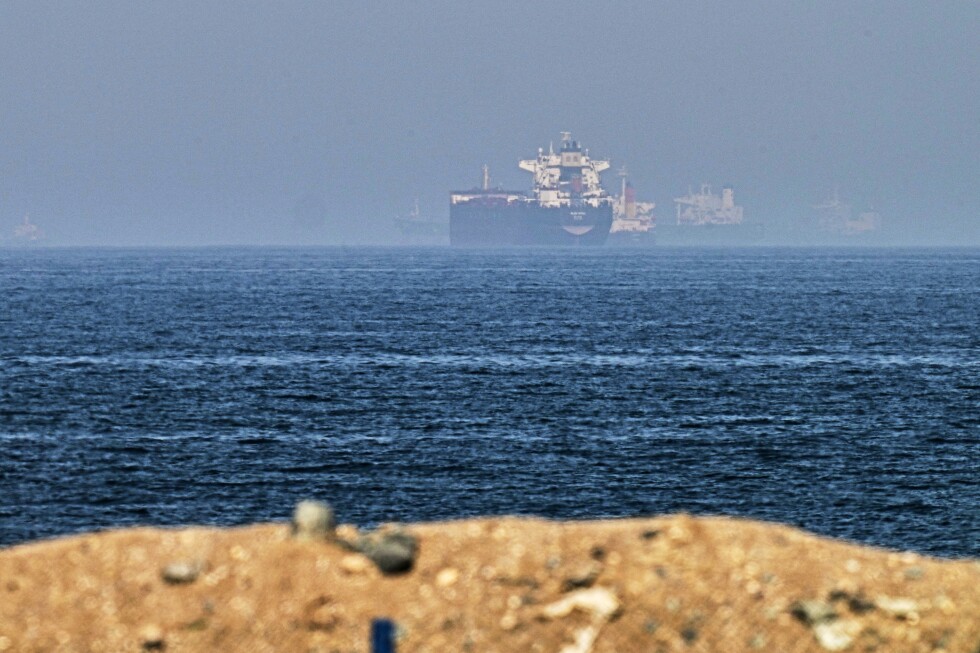
    Maritime warfare innovations represent Tehran’s most effective asymmetric advantage. Following early conventional naval losses, Iran implemented an irregular naval strategy utilizing fast-attack craft, naval mines and specialized midget submarines optimized for the Gulf’s shallow waters. This has effectively threatened international shipping lanes through the strategically vital Strait of Hormuz, granting Iran disproportionate influence over global energy markets and critical mineral flows.

    Civilian infrastructure targeting completes Tehran’s insurgent methodology. Threats against airports, desalination plants and energy facilities increase pressure on Gulf governments while creating global economic disruption through transportation hub closures. This psychological warfare component destabilizes populations and increases international pressure for US disengagement.

    Historical precedent suggests weaker military actors can achieve strategic victory by outlasting their opponent’s political will rather than achieving battlefield dominance. While the Iranian regime faces significant medium-term challenges, its immediate survival strategy relies on exhausting American commitment through protracted insurgent warfare.

    Effective US counterstrategy would require implementing proven counterinsurgency principles emphasizing civilian protection and ‘hearts and minds’ engagement—approaches notably absent from current operations characterized by substantial civilian casualties including the devastating bombing of a girls’ school that killed 175 predominantly children.

  • A special school for humanoid robots

    A special school for humanoid robots

    Within a Beijing office complex in Shijingshan district, an unprecedented educational experiment is underway where nearly 200 human instructors teach 100 humanoid robots through immersive motion-capture technology. The instructors, equipped with specialized headsets and control levers, demonstrate precise movements that their mechanical students immediately replicate in real-time.

    This cutting-edge facility represents China’s largest humanoid robot data-training center, established through a collaboration between the Shijingshan district government and Leju Robotics. The training environment features meticulously reconstructed factory floors and domestic settings that mirror actual working conditions with exceptional accuracy.

    The curriculum focuses on practical task mastery rather than theoretical knowledge. Robot trainees practice routine operations including retrieving medicine bottles from cabinets, transporting industrial goods, sorting packages on conveyor systems, and handling office documentation. These 1.66-meter-tall humanoid machines undergo continuous skill development through repetitive motion exercises.

    Similar training grounds are emerging nationwide where robots acquire capabilities for diverse applications ranging from medical assistance and elderly care to energy exploration and emergency response operations. Each training session brings these machines closer to seamless integration into real-world environments, marking significant progress toward widespread robotic implementation in society.