作者: admin

  • Kenya battles to stop the ‘goons and guns’ as fears of political violence grow

    Kenya battles to stop the ‘goons and guns’ as fears of political violence grow

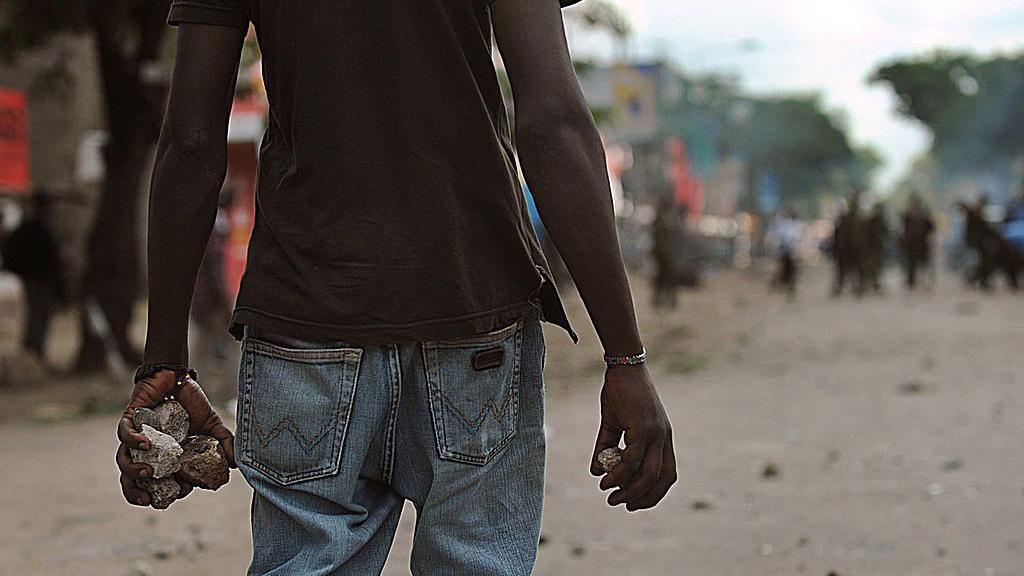
    NAIROBI, Kenya — On a mild Wednesday last month in Kisumu, a lakeside western Kenyan city, Senator Godfrey Osotsi stepped out of a barbershop and stopped for a routine coffee break. What came next was anything but ordinary: a mob of hooded young men launched an unprovoked, brutal assault, beating the senator with punches and kicks, stealing his phones and personal valuables before melting into the busy surrounding streets.

    Surveillance camera footage of the attack spread across Kenyan social media and traditional news outlets within hours, sparking national outrage that forced parliament to summon the country’s top security leaders for urgent questioning. For Osotsi, the attack was no random robbery — he alleges it was politically motivated, saying his attackers explicitly questioned why he refused to back President William Ruto’s 2027 re-election campaign. For millions of Kenyans, the high-profile assault was not an isolated shocking incident, but confirmation of a growing, deeply feared trend: the country is once again sliding toward the cycles of deadly political violence that have scarred its modern democratic history.

    Kenya’s pattern of political parties patronizing criminal youth gangs stretches back to the early 1990s, when multiparty democracy was reintroduced after decades of one-party rule. Politicians across the ideological spectrum have long hired unemployed young people as tools of electoral intimidation, a practice that escalated into the catastrophic nationwide post-election violence of 2007, when clashes linked to these groups killed an estimated 1,500 people and displaced hundreds of thousands.

    Fifteen months out from the next mandatory general election, scheduled for August 2027 at the latest, political tensions are already rising faster than many observers expected. The assassination of veteran opposition leader Raila Odinga in October 2024 triggered a major political realignment, splitting Odinga’s long-dominant Orange Democratic Movement (ODM) into two feuding camps split over whether to back Ruto’s re-election. Most notably, former Deputy President Rigathi Gachagua, who was impeached and removed from office in 2024, is running for president against Ruto bearing a deep public grudge, opening a damaging rift within the ruling Kenya Kwanza coalition.

    Against this fragmented political landscape, attacks by hired youth gangs — widely known locally as “goons” — have grown more open and brazen. Testifying before a parliamentary committee this month, Interior Cabinet Secretary Kipchumba Murkomen acknowledged that the government is struggling to rein in the groups, which have evolved from disorganized street gangs into what he described as “sophisticated and decentralized networks.” Murkomen, appearing alongside other top security officials, confirmed that more than 104 active criminal gangs operate across the country, the vast majority of which are backed and funded by sitting politicians.

    “These gangs are owned by political leaders who play a central role in mobilizing them. The situation is chaotic, and an irresponsible leader is a direct threat to national security,” Murkomen told lawmakers, declining to name specific politicians linked to the groups. Authorities have launched a widespread crackdown, arresting at least 300 suspected gang members, seizing illegal weapons and seizing communications devices during raids — but no politicians have been taken into custody so far. Successive Kenyan administrations have repeatedly banned these groups ahead of elections, but the problem has persisted: gangs simply rebrand, mutate their structures, and reemerge under new names ahead of each electoral cycle. A senior anonymous security source told the BBC that the groups have now become permanent, formally structured organizations rather than temporary election-era mobilizations.

    Gachagua, the former deputy president and 2027 presidential challenger, has been a repeated target of this violence. Since his impeachment, he has faced more than two dozen targeted attacks by armed gangs at campaign events and church appearances, with Gachagua and his allies blaming state-sponsored criminal networks for trying to derail his presidential bid before the official campaign begins. Opposition leaders and civil society groups have long accused Kenya’s police force of either colluding with politically linked gangs or intentionally turning a blind eye to their attacks, many of which unfold in plain sight of uniformed officers. In February, a 28-year-old supporter of the anti-Ruto ODM faction was shot and killed during clashes between police and rally attendees, leading the faction to condemn what it called “state-sponsored acts of violence by police and hired goons.”

    Government spokesperson Isaac Mwaura rejected all claims of state sponsorship of gang violence, saying “the use of criminal gangs to intimidate or silence individuals undermines our democracy and will not be tolerated. Anyone found financing, supporting, or engaging in such acts will be held fully accountable under the law.”

    Attacks are not limited to opposition figures, either. In February, a senatorial candidate aligned with the ruling Kenya Kwanza alliance was forcibly dragged out of a church service and attacked by a mob in Kakamega, another western Kenyan city. During November 2024 by-elections in western and central Kenya, voting was marred by widespread violence: polling agents were assaulted, armed gang factions clashed during vote counting, and police fired tear gas to disperse crowds of voters.

    Security analysts warn that the growing frequency of these attacks is pushing Kenya toward a crisis it has barely survived once before. “These incidents paint a troubling picture of a country where political rivalry increasingly spills into organised street violence executed by hired gangs operating with precision and impunity,” said Robert Chege, a Nairobi-based security analyst. Taken individually, single attacks can sometimes be dismissed as isolated crime, but collectively they point to a nation edging back toward the violence that traumatized the country in 2007.

    Makau Mutua, a prominent legal scholar and advisor to President Ruto, wrote that the normalization of political gang violence has become a systemic problem, noting “the worrying problem in Kenya is that this is now a near norm carried out by all major political parties. It is, to wit, a Kenyan culture, an epidemic.” A 2024 report from Kenya’s state-funded National Crime Research Centre backed this assessment, finding that hundreds of criminal gangs are active nationwide, with more than 120 directly linked to politicians. Unlike the temporary election formations of the 1990s and 2000s, the report found that these groups are now deeply entrenched, permanent institutions within their local communities.

    Inspector General of Police Douglas Kanja told parliament that security forces have made progress identifying the political leaders funding and directing the gangs, promising that “this issue of goons and guns is going to stop soon. We have clearly investigated. We have seen where they come from, who funds, who does what, who is the grassroots organiser and so forth.” Responding to longstanding allegations of police complicity and inaction, Interior Minister Murkomen acknowledged that “operational challenges” including corruption and repeated information leaks have hampered enforcement, saying the government takes all allegations of officer misconduct seriously.

    Critics argue that the government’s response has been heavy on rhetoric but weak on enforcement, pointing to the lack of any arrests of politically connected gang backers despite hundreds of detentions of low-level youth. Chege described Kenya’s current security crisis as self-inflicted, sustained by decades of political patronage networks and state systems “that thrive on violence and inequality.” He added, “The question is no longer who the goons are, but who sends them, funds them and protects them? The real architects of Kenya’s rising wave of organised violence remain in the shadows.”

    As Kenya counts down to next year’s general election, ordinary citizens and civil society groups are calling for urgent action to rein in political violence before tensions escalate even further, hoping authorities can hold the powerful architects of this violence accountable before the country repeats the mistakes of its past.


  • ‘Top shelf”: Joey Walsh produces a moment of magic as Manly fall just short against the Panthers

    ‘Top shelf”: Joey Walsh produces a moment of magic as Manly fall just short against the Panthers

    Manly Sea Eagles supporters left Brookvale Oval without the fairy-tale victory they had hoped for on matchday, but the performance of rookie playmaker Joey Walsh in his first ever NRL starting appearance gave the club plenty of reason to feel optimistic about what lies ahead. The 19-year-old prodigy delivered a moment of individual brilliance that drew high praise from NRL legend Cooper Cronk, even as Manly’s four-game winning streak came to an end at the hands of competition leaders Penrith Panthers.

    Walsh earned his first start following an injury to veteran halfback Jamal Fogarty, stepping into the pressure-cooker of a top-of-the-table clash against the back-to-back premiership favourites. While he made one costly error – a missed tackle on Blaize Talagi that directly led to a Panthers try – his overall display was remarkably polished for a young player making his debut. His standout play came just four minutes into the second half, when he caught the ball while charging into the Penrith defensive line, faked left to send the Panthers’ backline scrambling the wrong way, and fired a perfectly weighted flat pass to a charging Haumole Olakau’atu. Olakau’atu broke through the gap and offloaded to Ethan Bullemor to score, a sequence of play that left commentators stunned. NRL legend turned commentator Cronk labelled the play “top shelf ball-playing from Walsh”, praising the young playmaker for the subtle deceptive skill that defined Cronk’s own decorated career alongside edge forwards.

    The game remained a tight contest through the final minutes, with Manly holding a late lead before Penrith hit back. With just 60 seconds left on the clock, Walsh had the chance to lock the scores and force golden point with a two-point field goal, but his attempt fell just short, robbing Manly of a dream last-minute draw and Walsh of the Hollywood ending fans had dreamed of. Even with the loss, Manly pushed the premiership favourites to the brink, only letting the game slip during a 10-minute patch of poor form that saw the Sea Eagles commit multiple uncharacteristic errors while holding a one-man advantage through a sin binning.

    For Penrith, the result keeps them perched at the top of the NRL ladder after nine rounds, though it was far from the comfortable win the side has come to expect against lower-ranked opponents. The Panthers’ usual sharp edge shifting play was off on the night, but their veteran superstar forwards stepped up when it mattered. Winger Brian To’o put in a monster performance, running for 207 metres and crossing for a try, while fullback Dylan Edwards delivered a match-winning play with a pinpoint pass to Izack Tago that secured the four points for Penrith. The Panthers will next travel to Canberra to face the Raiders, but could be without playmaker Jack Cogger, who was sin-binned for a high tackle on Tolu Koula and faces a potential suspension. The match also included controversial bunker drama that left Penrith captain Nathan Cleary furious. Manly winger Lehi Hopoate scored a corner try to give the Sea Eagles a 16-12 lead, a try Cleary insisted should have been disallowed not for a suspected forward pass, but because Clayton Faulalo had illegally blocked Cleary from being able to make the tackle. Even Cronk said in commentary that the play was “100 per cent not a try”, but on-field referees ruled the contact did not impact the play outcome, and the NRL Bunker upheld the decision to award the try.

  • Under full moon, Shakira thrills 2 million fans on Rio’s Copacabana beach

    Under full moon, Shakira thrills 2 million fans on Rio’s Copacabana beach

    Beneath a glowing full moon on Brazil’s iconic Copacabana beach, global Latin pop icon Shakira delivered a career-defining performance Saturday that drew an estimated crowd of 2 million adoring fans, cementing her status as one of the most popular live acts in modern music.

    The 49-year-old Colombian superstar finally took the stage just after 11 p.m. local time, more than an hour behind schedule, emerging in a costume emblazoned with Brazil’s national green and yellow. The grand entrance was preceded by a dramatic aerial display: hundreds of drones flying overhead formed the shape of a she-wolf, a nod to Shakira’s widely used public nickname. Addressing the massive gathering in Portuguese, Shakira expressed her deep affection for the South American nation, saying, “Brazil, I love you! It’s magical to think that here we are, millions of souls together, ready to sing, dance, be moved and remind the world what really matters.”

    Rio de Janeiro Mayor Eduardo Cavaliere later confirmed the historic attendance figure in a post on X, citing official data from the city’s tourism authority, writing simply, “Two million people. The she-wolf made history in Rio.” Copacabana beach has emerged as a premier destination for massive open-air pop concerts in recent years, with Madonna drawing 1.6 million attendees in 2024 and Lady Gaga attracting a crowd of 2.1 million just 12 months prior. Shakira’s performance matched the scale of the venue, held on a sprawling 1,345-square-meter stage built outside the legendary Copacabana Hotel. The setlist featured the singer’s decades-long catalog of global hits, including fan favorites “Hips Don’t Lie,” “La Bicicleta,” “La Tortura” and “Estoy Aquí.” The show also included 10 rapid outfit changes, a collaborative funk performance with Brazilian pop star Anitta, and special guest appearances from two of Brazil’s most revered pop music legends, Caetano Veloso and Maria Bethânia.

    With over 90 million records sold worldwide, four Grammy Awards, 15 Latin Grammys, and a cross-generational catalog of chart-topping tracks that includes global anthems “Waka Waka” and “Whenever, Wherever,” Shakira has long held a uniquely devoted fanbase in Brazil, where she has toured repeatedly throughout her career. For many in the crowd Saturday, the concert was the culmination of years of fandom. Twenty-six-year-old designer Joao Pedro Yellin, who wore a custom coat made from fabric scraps stitched together from Latin American flags, told Agence France-Presse, “I’m very inspired by her, she’s a Latin woman at the top.” Longtime fan Graciele Vaz, 43, traveled four hours from the coastal resort town of Paraty and camped overnight on the beach ahead of the show to secure a good spot. “She loves Brazil so much and the love she has for us is the love we have for her,” Vaz said, showing off a large she-wolf tattoo on her back. “I’ve been a Shakira fan for more than 20 years.”

    Saturday’s concert marks the opening stop of Shakira’s 2025 “Women No Longer Cry” world tour, which already has secured a Guinness World Record for the highest-grossing tour ever by a Latin artist.

    The city of Rio de Janeiro had spent days preparing for the massive event, with promotional posters covering public spaces across the city. Local vendors capitalized on the crowds, selling everything from cold beer and traditional caipirinha cocktails to branded t-shirts and novelty items including small vials marketed as “Shakira’s tears,” a playful reference to the tour’s name. Security arrangements were extensive, with nearly 8,000 law enforcement officers deployed across the beach area, supported by surveillance drones, facial recognition cameras, and 18 entry screening points equipped with metal detectors. The heightened security came one year after police foiled a planned bomb attack targeting Lady Gaga’s 2024 Copacabana concert, carried out by a group that spread hate speech targeting the LGBTQ+ community. Many devoted fans went even further, camping outside the luxury Copacabana Palace hotel where Shakira was staying in hopes of catching a quick glimpse of the star at a window.

    Beyond the entertainment value, city economic officials project the massive concert will inject more than $160 million into Rio’s local economy, supported by a surge in tourism activity. Brazilian national tourism data shows airline bookings to Rio for the week of the concert were up 80% compared to the same period in 2024, highlighting the massive draw of Shakira’s opening show.

  • Australia sets its sights on Yorkshire’s young professionals

    Australia sets its sights on Yorkshire’s young professionals

    For generations, British people have been drawn to Australia by the promise of warmer weather, a more relaxed lifestyle, and greater professional opportunities. That long-running trend has hit a new milestone in 2024: new data from the Australian Bureau of Statistics shows 39,580 people migrated to Australia from the UK, Channel Islands and Isle of Man this year, marking the highest annual number of arrivals from the region in a decade. An additional 10,660 migrants also arrived from Ireland, putting the upward trajectory of UK and Irish migration to Australia beyond doubt.

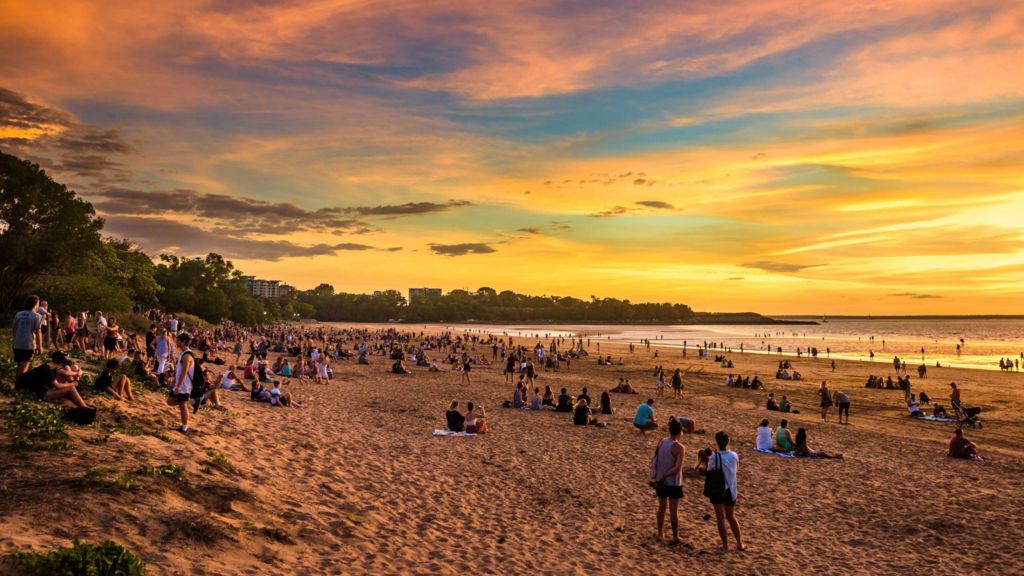
    Now, one of Australia’s less populated regions is leaning into this growing interest, launching a targeted outreach campaign across the UK and Ireland to lure young skilled workers to its borders. Australia’s Northern Territory, a vast, sparsely populated region famous for its rugged outback landscapes, unique wildlife and untouched coastal areas, is facing a critical workforce shortage, with officials estimating the region will need an additional 30,000 workers over the next five years to support growing industries spanning construction, healthcare, education, hospitality, business and technology. To fill these gaps, territory officials have been hosting pop-up information sessions across UK and Irish cities, including Leeds, Liverpool, Belfast and Cork, to introduce young professionals to the opportunities available in the region that are often overshadowed by more popular migration destinations like Sydney, Melbourne and Perth.

    On a recent midweek evening in Leeds, dozens of young professionals traded post-work drinks at city center beer gardens for a chance to learn more about making the move to the outback. Among them was 24-year-old medical sales worker Chloe Rhodes, who has dreamed of moving to Australia since she was a teenager. “Here I’m happy, I’m alright, but I just want to strive for more,” Rhodes explained. “It’s the whole idea of the slower-paced lifestyle – and I grew up by the beach, so I like to be by the beach a lot.” Like many aspiring migrants, Rhodes faces hurdles to making the move: her current role is not included on Australia’s skilled occupation list for working visas, but she is hopeful her position at a global company will allow for an internal transfer, a process she says is already underway.

    For 26-year-old Caitlin Murphy, who already spent two years living in Western Australia, the Northern Territory has emerged as a top candidate for a permanent move with her partner. Murphy, originally from Scotland, is drawn to the territory’s laid-back pace of life, and is counting on her partner’s IT career to qualify them for a permanent visa. Her own background in law, however, will likely make it harder to transfer her professional qualifications, a challenge she says she is prepared to navigate.

    Geoff Totham, a Northern Territory government workforce development officer who has been leading the information sessions, says turnout for this year’s events has already been busier than the territory’s 2024 tour of the UK. He notes that most attendees know very little about the Northern Territory compared to better-known Australian states, but the region offers unique advantages that more populous states cannot match. “The more we market into this place, hopefully more people will realise that there are opportunities in the territory and, of course, that’s going to help us solve our workforce issues,” Totham said.

    For UK migrants who have already made the leap, the reality of life in Australia brings both rewards and unforeseen hurdles. Ben Cartwright, who left Leeds for Sydney 18 months ago, says he initially underestimated how hard it would be to break into his field of media and communications, even with prior UK experience. On a working holiday visa that limited him to six months with any single employer, Cartwright spent months working odd jobs to get by before landing a role as a magazine editor. Today, he says the effort has paid off: he earns more than double the salary he made for the same work in the UK. Adam Laver, a 27-year-old former BBC journalist who left Bradford for Adelaide at the end of 2024, says he loves his new coastal lifestyle, which includes an affordable home within walking distance of the beach. But he has struggled to find steady work outside of seasonal hospitality roles, which dry up during the cooler months. Laver now plans to move to Vietnam next month to teach English, and advises future migrants to save more and plan for transportation barriers that can limit job opportunities in less urbanized areas. Despite the challenges, the growing turnout for migration information sessions suggests that the draw of Australia’s lifestyle and opportunity remains as strong as ever for young British professionals.

  • A Serbian bird-watching group uses crowdfunding to buy and preserve a woodland habitat

    A Serbian bird-watching group uses crowdfunding to buy and preserve a woodland habitat

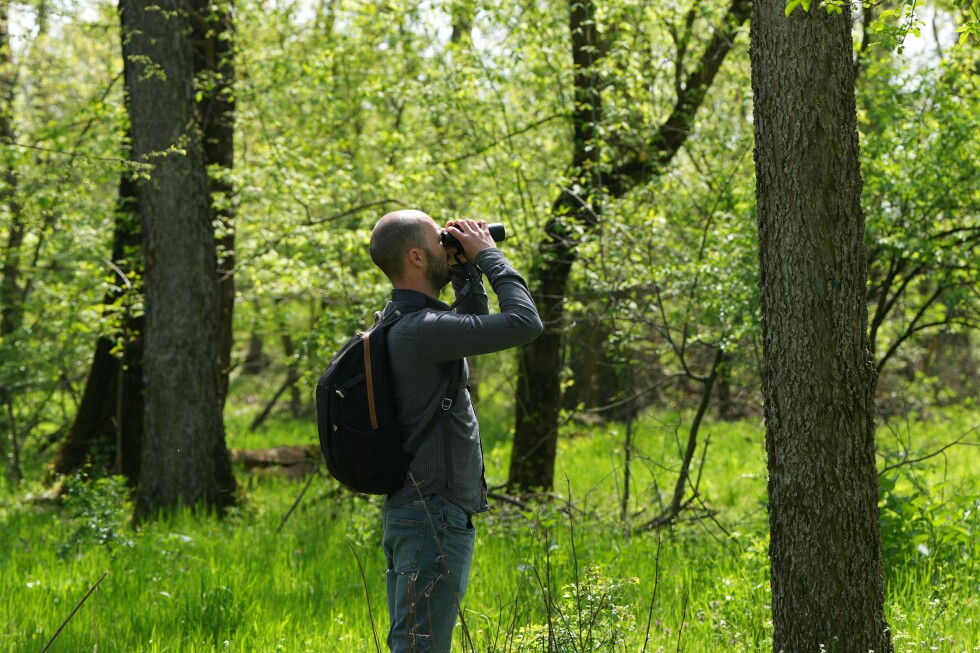
    Nestled in the rolling farmlands of northeastern Serbia, a 2-hectare patch of dense old woodland called Nightingale’s Forest stands as a quiet triumph for grassroots environmental action. Today, bird song drifts through its towering tree canopies, and animal tracks wind across damp, mossy grass — a landscape that very nearly was cleared for timber.

    Last year, Serbia’s Bird Protection and Study Society stepped in to purchase the private plot via a public crowdfunding campaign, saving it from being felled by a commercial buyer. Uros Stojiljkovic, a representative for the society, told the Associated Press that the market value of the forest’s timber already exceeded the land’s asking price, meaning logging was all but guaranteed if the group had not acted. “We protected it this way,” Stojiljkovic said.

    The rapid success of the crowdfunding drive — which raised the full 8,000 euro ($9,500) purchase price in less than a month — has emerged as a telling indicator of shifting public attitudes toward conservation in Serbia, a nation grappling with a cascade of environmental threats. From widespread air and river pollution and failing waste management systems to unregulated profit-driven development that erases green spaces in urban centers, the country’s natural habitats face growing pressure.

    While Serbian authorities have promised to strengthen environmental protections as a requirement for the country’s ongoing European Union membership bid, local conservation groups argue that tangible action has been almost nonexistent. Against this policy gap, the successful campaign for Nightingale’s Forest fills a void, led by ordinary citizens rather than state institutions.

    Natasa Jancic, one of the organizers of the crowdfunding effort, noted that hundreds of donors have continued to contribute even after the purchase goal was met. Extra funds will be put toward ongoing maintenance of the existing forest and future purchases of at-risk green land. “Individually, we can’t do much, but as an active and stable community, we can achieve a lot,” Jancic said.

    Founded three decades ago as a small group of specialized wildlife researchers, the Bird Protection and Study Society has grown dramatically into a broad community of casual and dedicated nature lovers, a shift Jancic says reflects rising public concern for the environment. “We have many families who are members, many nature lovers who may not be that active in the field but they want to contribute somehow,” she explained.

    Nightingale’s Forest now supports a diverse array of native bird and mammal species, sustained by its unique moist undergrowth that is rare in Serbia’s predominantly agricultural northeastern lowlands. Conservationists next plan to conduct a full biodiversity survey to catalog all plant and wildlife species on the land, while leaving the woodland itself untouched.

    Stojiljkovic acknowledges that protecting just 2 hectares of land will not reverse widespread environmental degradation across Serbia on its own. But he frames the project as a critical first step that can be replicated across the country. “Every village or town should have a Nightingale’s Forest of its own for a cumulative effect,” he said. “It is important to start somewhere.”

  • How we reported in -30C temperatures in Canada’s Arctic

    How we reported in -30C temperatures in Canada’s Arctic

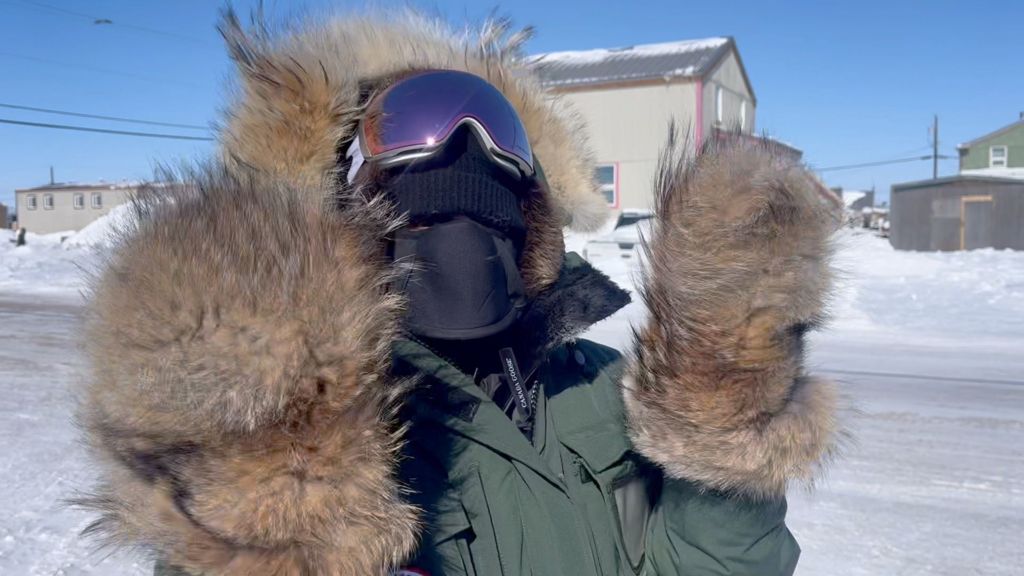
    Covering a story in one of the harshest cold-weather environments on Earth requires more than just preparation—it demands endurance, adaptability, and a willingness to push past the limits of human comfort. For two BBC correspondents, Nadine Yousif and Eloise Alanna, that challenge became a reality when they embarked on a five-day journey across Canada’s frozen Arctic, embedded with the nation’s military rangers, facing sustained temperatures as low as -30 degrees Celsius and the constant threat of frostbite.

    Canada’s Arctic region is a remote, sparsely populated landscape that plays a critical role in the country’s national security and sovereignty, making the work of Canadian military rangers here vital. These reservists regularly patrol the vast icy expanse, conducting reconnaissance, supporting local communities, and maintaining a persistent presence in the strategically important northern territory. For the journalists, joining a patrol offered an unfiltered, first-hand look at the realities of operating in one of the coldest inhabited regions on the planet, far from the amenities of southern urban centers.

    Over the course of their five-day trek, Yousif and Alanna confronted a cascade of environmental threats that tested their resilience. Sub-zero temperatures bite through even the most advanced cold-weather gear, turning routine tasks like adjusting camera equipment or checking notes into dangerous ventures that increase the risk of tissue damage from frostbite. Every exposure to the open air carries risk, and the team had to remain constantly vigilant for early warning signs of frostbite and hypothermia, conditions that can escalate into life-threatening emergencies in minutes in these conditions.

    Working alongside the experienced military rangers, the journalists learned to navigate the frozen terrain, adapt to the unforgiving climate, and document the little-seen work of Canada’s northern patrols. The expedition offered audiences a rare, intimate glimpse into the challenges faced by both service members and the small Indigenous communities that call the Canadian Arctic home, highlighting the harsh realities of life and work in a region that is increasingly gaining strategic and climate attention globally.

  • Israel accused of destroying Christian convent in Lebanon in latest attack on Christians

    Israel accused of destroying Christian convent in Lebanon in latest attack on Christians

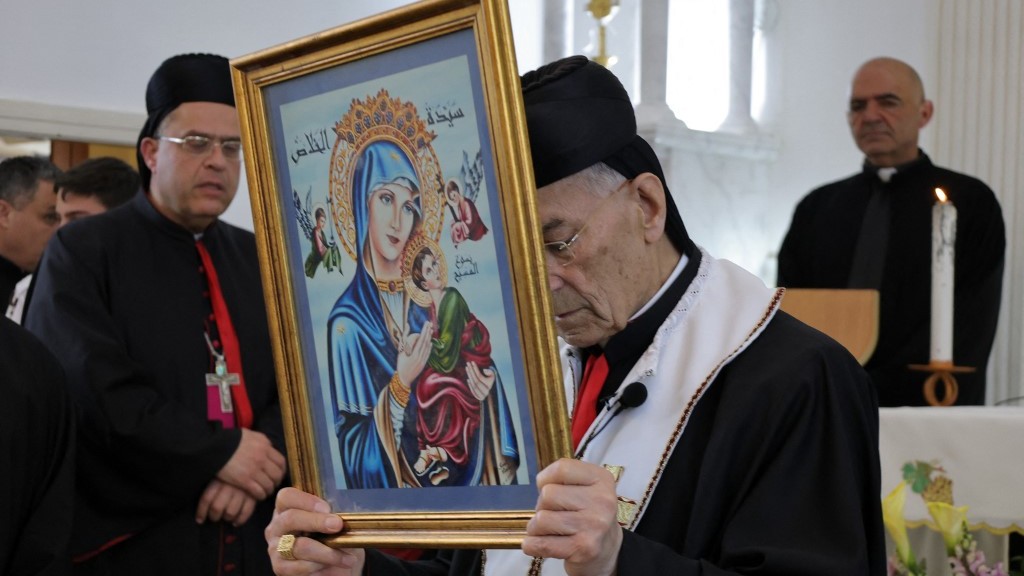
    A French-based Catholic charitable organization has issued a strong condemnation of Israel after Israeli military forces completely demolished a convent run by the Greek Catholic Salvatorian Sisters order in the southern Lebanese village of Yaroun, framing the incident as a deliberate attack on a sacred site of worship.

    In an official statement released Friday, L’Oeuvre d’Orient, a longstanding Catholic charity focused on supporting Christian communities across the Middle East, denounced not just the targeted destruction of the convent but also the widespread systematic leveling of residential properties across southern Lebanon. The organization argued this campaign of demolition is intentionally designed to block displaced civilian populations from returning to their home communities once active hostilities subside.

    The charity further emphasized that the Yaroun convent attack is not an isolated incident, but part of a growing broader pattern of destruction targeting Christian cultural and religious heritage across the region. It pointed out that multiple other Christian sacred sites were destroyed during 2024 cross-border and wartime operations, including two Melkite churches in Yaroun and the nearby village of Derdghaya — both of which are officially protected as part of Lebanon’s national cultural heritage register.

    Tensions over Israeli actions targeting Christian sites have been simmering since April, when widely circulated images showed an Israeli soldier using a jackhammer to deliberately desecrate a crucifix statue of Jesus in southern Lebanon. That incident sparked widespread outrage among Christian communities and religious leaders across the globe.

    In recent weeks, reports of violent targeting of Christian individuals and institutions have increased sharply across the broader Middle East. Earlier this week, in occupied East Jerusalem, a 48-year-old nun who works as a researcher was physically assaulted near the Cenacle on Mount Zion, sustaining visible facial injuries that required urgent medical intervention.

    Restrictions on core Christian religious practices have also expanded in recent months. Last month, Israeli police initially blocked Cardinal Pierbattista Pizzaballa, the Latin Patriarch of Jerusalem, and a group of fellow clergy from holding the traditional Palm Sunday Mass at the Church of the Holy Sepulchre, one of Christianity’s holiest sites. Access was only partially restored after widespread international pressure was brought to bear on Israeli authorities.

    A new analysis published by the Rossing Centre for Education and Dialogue, a regional research organization focused on interfaith relations, confirms a dramatic uptick in anti-Christian aggression. The center’s 2025 report documents a “continued and expanding pattern of intimidation and aggression” targeting Christian communities, recording 155 separate separate incidents of hostility in just one year. This total includes 61 physical assaults on individuals, 52 attacks on church-owned property, 28 cases of religious harassment, and 14 incidents of vandalism targeting religious signage. Researchers stressed that the published numbers likely represent only the “tip of the iceberg,” as many incidents go unreported out of fear of retaliation.

    Responding to the latest convent incident on Saturday, an Israeli military spokesperson acknowledged that Israeli forces had damaged a “religious building” in Yaroun during what the military described as operational activities targeting what it calls militant infrastructure in the area.

    The demolition of the convent comes even after a ceasefire was announced on April 17, designed to end more than six weeks of large-scale Israeli military operations across Lebanon. Despite the truce, Israeli military strikes and ground operations have continued in southern Lebanon.

    As of Saturday, Lebanon’s official National News Agency reported that Israeli military actions between March 2 and May 2 have left at least 2,659 people dead and more than 8,183 others wounded across the country, the vast majority of them civilian residents displaced from their southern communities.

  • UK Muslim groups slam government for ‘scapegoating’ Gaza anti-genocide protests as antisemitism

    UK Muslim groups slam government for ‘scapegoating’ Gaza anti-genocide protests as antisemitism

    Britain’s largest representative body for Muslim communities has launched a sharp rebuke of the UK government over what it calls misleading and damaging narratives that falsely tie pro-Palestine solidarity demonstrations to a recent surge in antisemitic violence across the country.

    In an official statement released Sunday, the Muslim Council of Britain (MCB) — an umbrella organization encompassing more than 500 affiliated groups including mosques, educational institutions, local representative bodies, professional networks and advocacy organizations — first condemned the late April stabbing of two Jewish men in a northwest London neighborhood with a large established Jewish population. The organization emphasized that it stands unwavering in solidarity with the British Jewish community, which has faced an alarming and abhorrent uptick in antisemitic attacks in recent months.

    The core of the MCB’s pushback centers on the UK government’s recent framing of the rising hate crime trend. The organization stressed that attempts to hold British Muslims, and all people who advocate for Palestinian human rights, collectively responsible for growing antisemitism are both factually inaccurate and politically counterproductive. While the statement did not name specific officials, it is widely understood to target the administration of Prime Minister Keir Starmer, who earlier the same week drew a direct connection between antisemitic attacks and pro-Palestine protests opposing Israeli military operations in Gaza.

    A key detail the MCB highlighted that has been largely omitted from mainstream public discussion is the attacker’s additional targeting of a Muslim man earlier on the same day of the London stabbings. The 29 April attack suspect, who had recently been discharged from a psychiatric care unit, is accused of carrying out three separate attempted murders that day: first targeting Ishmail Hussein, a Muslim resident of Southwark, at his home, before carrying out the attacks on the two Jewish men. The MCB pointed out that the near-total lack of media and political attention to the attack on Hussein exposes a troubling disparity that demands serious scrutiny.

    That gap in coverage has been challenged by other public figures as well. Ayoub Khan, a Member of Parliament for Birmingham, raised the issue on social media platform X, noting that the suspect faces three charges of attempted murder for an attack that targeted both Jewish and Muslim communities. He called the media’s widespread erasure of the Muslim victim deeply disturbing. Award-winning journalist Owen Jones echoed that criticism, questioning what editorial justification could exist for failing to even acknowledge the third charge of attempted murder and the Muslim victim of the attack.

    The Muslim Association of Britain (MAB) issued its own separate statement echoing the MCB’s criticism, arguing that the attack is being intentionally weaponized to advance a pre-written political narrative targeting Muslim communities, pro-Palestine solidarity organizing, and the fundamental right to political dissent. MAB added that the wave of anti-Muslim rhetoric that has flooded mainstream media in the wake of the attack is not accidental or subtle — it is the entire point of the misleading narrative.

    The organization further noted that repeated calls to ban pro-Palestine marches, while far-right extremist groups are allowed to march through central London with no restrictions, makes the government’s selective approach to civil liberties clear. What is being framed as a public safety measure is in fact a targeted attack on fundamental rights, MAB argued, warning that when hatred is deliberately instrumentalized for political gain, no community in the UK is ultimately safe.

  • ‘You’re going to have to give up football’: Inside Cody Ramsey’s remarkable return to the NRL

    ‘You’re going to have to give up football’: Inside Cody Ramsey’s remarkable return to the NRL

    It has been 1337 days of relentless struggle, unthinkable physical pain, and endless doubt for Australian rugby league winger Cody Ramsey. On Saturday night, the 26-year-old turned the impossible into reality, stepping back onto an NRL pitch for the first time since his career was declared over by medical experts, in what is already being hailed as the most inspirational rugby league story of the year.

    Ramsey’s world collapsed in 2022, during his promising third season with the St. George Illawarra Dragons. The rising young talent was diagnosed with ulcerative colitis, a chronic inflammatory bowel disease that affects roughly one in every 100 people globally. The condition ravaged his large intestine, leaving the entire organ irreparably damaged. In the seven weeks following his diagnosis, Ramsey dropped 28 kilograms, plummeting to just 62 kilograms as the disease drained his strength and threatened his life.

    To save his life, Ramsey underwent emergency surgery to remove his entire large bowel, leaving him with a temporary stoma and external collection bag for six months. He later went through a second, equally grueling reversal procedure to reconnect his small intestine to his remaining bowel stump, forcing him to reintroduce every food he had ever eaten to his altered digestive system from scratch.

    In the immediate aftermath of his diagnosis, Ramsey’s first surgeon delivered a crushing verdict: his professional rugby league career was over. But sitting on his hospital bed alongside his father, Ramsey refused to accept that outcome. “He doesn’t know what it takes to be an NRL player, but I do,” he told his dad that day, a mantra that would carry him through three and a half years of hardship.

    The road to recovery was far from smooth. After his reversal surgery, Ramsey endured daily agony, needing to use the bathroom up to 40 times a day, and at one point begged medical staff to put him in a coma to escape the pain. His wound split open at one stage, and even the simplest daily tasks felt insurmountable. But a single, brutal 4-kilometer run from his home to his father’s house along the Appin Highway changed everything. Weighing just 62 kilograms, carrying his phone to call for emergency help if his body gave out, Ramsey pushed through the agony and finished the run. In that moment, he proved to himself he could make it back to the top.

    “It’s all in your head,” Ramsey explained after his comeback. “If you tick these little boxes off in your head, then you can do it. I spent a whole year thinking I’d have an accident every time I ran. But then one training session I didn’t, then a week, then a month, and then I got to the game and I was fine. The doubt is all in your head.”

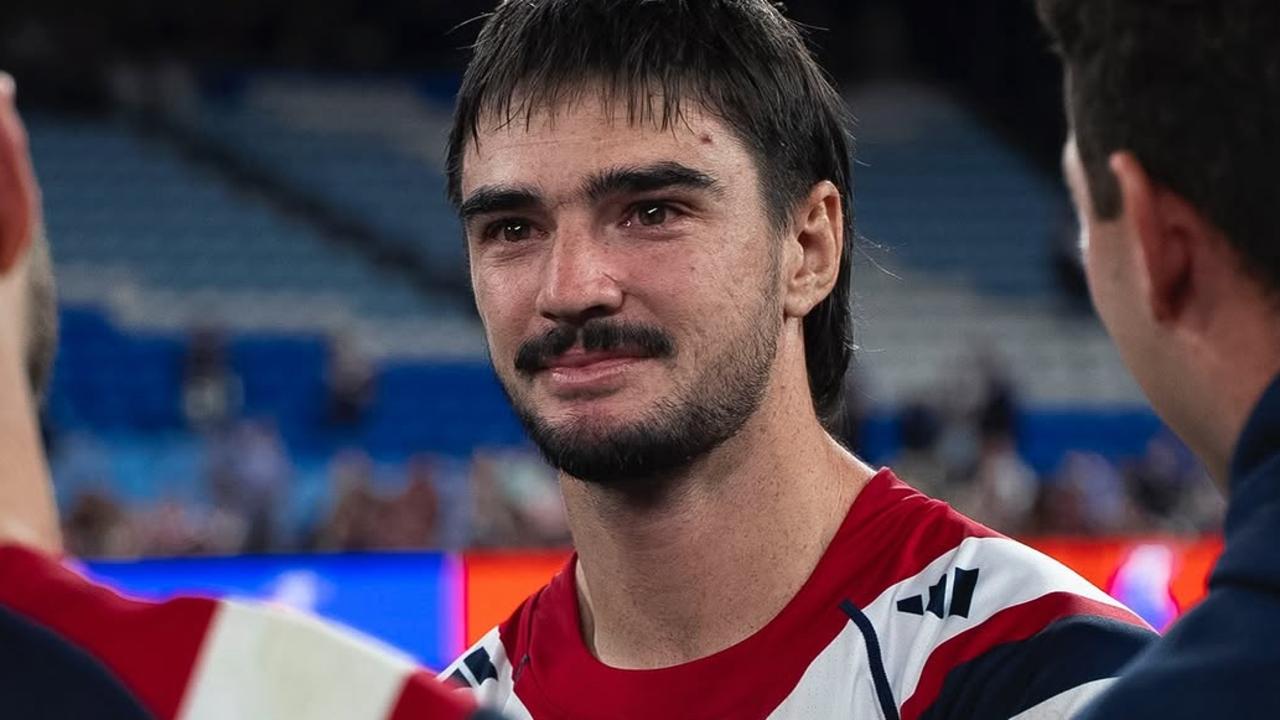
    Ramsey missed the entire 2023 and 2024 NRL seasons, working his way back through reserve grade before earning a spot with the Sydney Roosters ahead of the 2025 campaign. He was not originally slated to take the field against the Brisbane Broncos on Saturday, but an early syndesmosis injury to winger Mark Nawaqanitawase opened the door, giving Ramsey his long-awaited chance. By full time, the emotion of the moment overwhelmed him, as he broke down in tears reuniting with family and friends who had supported him through every step of his journey.

    When asked if his return felt like a second debut, Ramsey said the moment meant far more than his first NRL appearance. “The people around me and everyone at the club know what I’ve been through, so it’s definitely way better than the debut for sure.”

    Roosters captain James Tedesco said the entire club has been inspired by Ramsey’s attitude and resilience. “He’s been an 18th man for us since the start of the year, and just hearing his story and the journey he’s been on, all of us are just so happy to see him get back on the field,” Tedesco said. “He’s been a breath of fresh air coming into the club. His energy, his great personality – he’s just amazing to have around. He’s been ready to play since round one, and to see him out there back in first grade was a special moment for all of us.”

    With Nawaqanitawase expected to be sidelined for six to eight weeks, Ramsey is set to earn more opportunities in the top flight, capping one of the most remarkable comeback stories in Australian sporting history.

  • Man charged with murder and sexual assault of 5-year-old Australian girl

    Man charged with murder and sexual assault of 5-year-old Australian girl

    A devastating tragedy has unfolded in central Australia, where the death of a 5-year-old Indigenous girl has led to murder charges and widespread civil unrest in the Northern Territory (NT). For cultural reasons, the child is only publicly identified as Kumanjayi Little Baby, and a content warning has been issued for Aboriginal and Torres Strait Islander readers noting the mention of a deceased person.

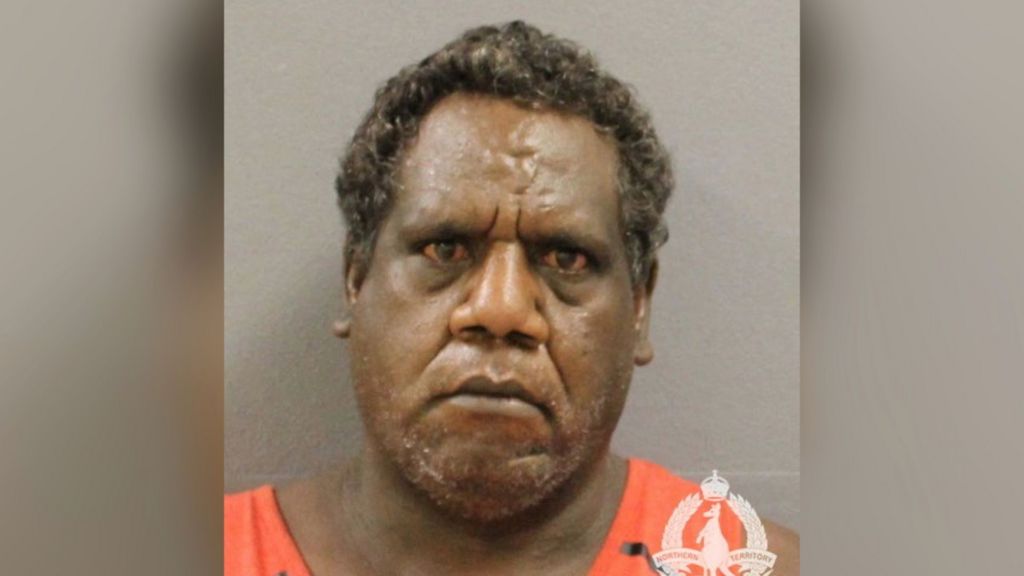
    Kumanjayi went missing last Saturday night, after being put to bed at an Aboriginal town camp on the outskirts of Alice Springs shortly before midnight. A multi-day large-scale search operation by NT Police concluded on Thursday, when officers located the child’s body. Jefferson Lewis, a 47-year-old local man, was taken into custody that same day, after being assaulted by community members in Alice Springs prior to his arrest. On Saturday evening, police formally charged Lewis with one count of murder and two counts of sexual assault. He is set to make his first court appearance in Darwin on Tuesday.

    In the aftermath of Lewis’s arrest and injury, the suspect was transported to Alice Springs Hospital for medical treatment. That facility quickly became the site of violent civil unrest, as dozens of protesters gathered outside the hospital on Thursday night demanding traditional justice for Kumanjayi. Leaked and officially released police footage shows demonstrators throwing projectiles at officers, attacking police vehicles, and setting at least one police van on fire. Responding officers deployed tear gas to disperse the crowd.

    The unrest spilled beyond the hospital grounds: additional footage captured crowds swarming a nearby petrol station, looting goods from retail shelves before fleeing the scene. Northern Territory Police Commissioner Martin Dole publicly condemned the violence in a press briefing Sunday morning, when he formally announced the charges against Lewis. Dole emphasized that the unrest could not be framed as a legitimate expression of grief over Kumanjayi’s death, calling the actions “criminal behaviour, plain and simple.” He described the riots as both “disgusting” and “abhorrent.”

    To ensure the suspect’s safety and maintain order, police transferred Lewis more than 1,500 kilometers north to Darwin, the Northern Territory’s capital. As of Monday, five people have been arrested on charges linked to the riots. NT Police estimate that the widespread property damage and looting caused more than A$180,000 in total losses, equal to roughly $130,000 USD or £95,000 GBP.

    Australian national broadcaster ABC reported that many protesters yelled calls for “payback”, a term referring to traditional punishment under Indigenous customary law in Central Australia, typically administered by elder groups to restore harmony between affected communities and families. Many demonstrators accused police of improperly protecting Lewis from traditional consequences.

    Opening his statement Sunday, Commissioner Dole acknowledged the profound pain caused by the child’s killing. “This remains a deeply distressing matter and our thoughts are firmly with Kumanjayi’s family, loved ones and the wider community that have been deeply impacted by these events,” he said. Dole called on all community members to allow the formal judicial process to move forward without further unrest.