
DUBAI, United Arab Emirates – A new suspected attack targeting an unidentified northbound cargo ship has been documented off the coast of Sirik, Iran, east of the strategic Strait of Hormuz, the United Kingdom Maritime Trade Operations (UKMTO), Britain’s leading maritime security monitoring agency, announced Sunday. This incident brings the total number of maritime attacks recorded in and around the world’s most critical energy chokepoint to at least two dozen since the outbreak of the ongoing Iran war, and marks the first reported assault in the region after a lull that began April 22, when another cargo vessel came under fire. All crew members aboard the targeted ship emerged unharmed, UKMTO confirmed, though no group has yet stepped forward to claim responsibility for the attack. The overall threat rating for commercial shipping transiting the area remains classified as critical, as Tehran has effectively disrupted normal traffic through the strait through a campaign of targeted attacks and threats against passing vessels. For months, Iranian officials have maintained that any non-U.S. and non-Israeli flagged vessels may safely pass the waterway only upon payment of a transit toll. The small assault craft used in these attacks, many operated by Iranian forces and outfitted only with twin outboard motors, are notoriously agile, difficult for international naval forces to detect, and have been linked to multiple assaults on commercial shipping in recent months. Tensions in the region remain high even as a fragile three-week ceasefire between U.S.-led forces and Iran has largely held. U.S. President Donald Trump told reporters Saturday that additional military strikes against Iranian targets remain on the table should diplomacy fail to resolve the standoff. Parallel to the maritime security escalation, Iran has submitted a new 14-point peace proposal to the United States through diplomatic intermediary Pakistan, which hosted direct, face-to-face negotiations between the two countries last month. The proposal, reported by Iranian state-linked security outlets Nour News and Tasnim, aims to reach a full end to hostilities within a 30-day timeline rather than just extend the current ceasefire. It calls for the U.S. to lift all sweeping economic sanctions on Iran, end the ongoing American naval blockade of Iranian ports, withdraw all U.S. military forces from the broader Middle East region, and force an end to Israeli military operations in Lebanon. Notably absent from the proposal is any mention of Iran’s controversial nuclear program and its stockpiles of enriched uranium – the core longstanding point of contention between Tehran and Western powers, which Iran has indicated it prefers to address in later negotiations. Pakistan continues to serve as a key go-between for the two adversaries, with the country’s prime minister, foreign minister and army chief all pushing for sustained direct dialogue between Washington and Tehran, according to two unnamed Pakistani officials authorized to discuss the sensitive diplomacy. On Sunday, Iranian Foreign Minister Abbas Abbas Araghchi also held talks with his Omani counterpart Badr al-Busaidi, whose government oversaw previous rounds of pre-war negotiations between the two sides. The strategic Strait of Hormuz, located at the mouth of the Persian Gulf, normally carries roughly 20% of the world’s daily traded oil and natural gas, alongside critical fertilizer shipments that global food markets depend on. Since the outbreak of war on February 28, Iran’s tightening grip on the waterway has sent shockwaves through global energy and commodity markets. During a visit to the strategically vital Larak Island port facilities Sunday, Iranian deputy parliament speaker Ali Nikzad reaffirmed Tehran’s uncompromising stance, saying, “Iran will not back down from our position on the Strait of Hormuz, and it will not return to its prewar conditions.” Nikzad does not hold formal decision-making authority in the Iranian legislature, but his comments signal the hardline position popular among Iranian political elites. The U.S. has responded by warning global shipping companies that any form of payment to Iran for safe transit – including digital assets – could expose them to harsh U.S. sanctions. Compounding pressure on Tehran, the U.S. naval blockade implemented April 13 has cut off most of Iran’s oil export revenue, a critical lifeline for the country’s already ailing economy. U.S. Central Command announced Saturday that 48 commercial tankers have already been ordered to turn back from Iranian ports. U.S. Treasury Secretary Scott Bessent told Fox News Sunday that Iran has collected less than $1.3 million in total transit tolls to date – a tiny fraction of the country’s pre-war daily oil export earnings. “They’re going to have to start shutting in wells, which we think could happen in the next week,” Bessent said, noting that Iran’s onshore oil storage facilities are rapidly filling to capacity. Iran’s domestic economic situation continues to deteriorate rapidly, with the national currency the rial hitting new record lows against the U.S. dollar Sunday. On the second day of Iran’s working week, the dollar traded at 1,840,000 rials in Tehran’s central Ferdowsi Street currency exchange, a sharp drop from the already record low of 1.3 million rials per dollar recorded last December. At that time, the currency collapse sparked widespread nationwide protests over the soaring cost of living. Iranian markets remain deeply unstable, with prices for basic consumer goods rising on a daily basis, and local media reports indicate that dozens of factories have failed to renew worker contracts after the Iranian new year in March, leaving thousands unemployed. Yousef Pezeshkian, son and senior adviser to Iranian President Masoud Pezeshkian, acknowledged the stalemate in a Telegram post over the weekend, writing that both the United States and Iran continue to view themselves as the war’s victor and remain unwilling to make concessions. In a separate development Saturday, the Norwegian Nobel Committee issued an urgent public appeal for Iran to immediately allow imprisoned 2023 Nobel Peace Prize laureate Narges Mohammadi to transfer to Tehran to receive specialized care from her personal medical team, after a sharp deterioration in the human rights lawyer’s health. The committee confirmed it is in regular contact with Mohammadi’s family and legal team, and warned that the activist’s life remains in imminent danger. Mohammadi, who is imprisoned in Zanjan prison in northwestern Iran, fainted twice in custody Friday, and was admitted to a local hospital, according to her personal foundation. Her legal team has said she is suspected to have suffered a heart attack in late March. This report included contributions from Associated Press correspondent Melanie Lidman in Tel Aviv, Israel, with additional reporting from Amir Vahdat in Tehran, Iran, and Munir Ahmed in Islamabad, Pakistan.
作者: admin
-
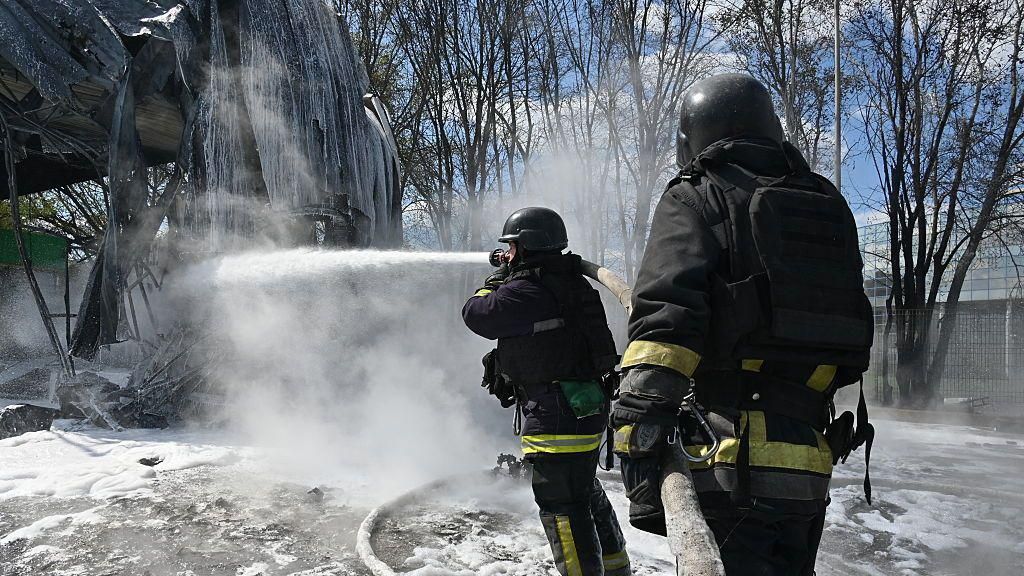
Russian strikes kill 10 as Zelensky says Ukraine hits oil tankers and terminal
Over a 24-hour period, a fresh wave of Russian drone and missile assaults across multiple Ukrainian regions has left at least 10 civilians dead and 76 others injured, marking another escalation in the ongoing aerial campaign targeting Ukrainian populated areas. Fatalities were confirmed across five Ukrainian administrative regions, consistent with Russia’s sustained pattern of regular strikes on urban and civilian infrastructure throughout the country. Three fatalities were recorded in separate incidents in the southern Kherson region, according to the region’s governor. Two deaths each were reported in Odesa, Donetsk, and Zaporizhzhia, while one additional fatality was confirmed in the northeastern Sumy region. Ukrainian air defense forces reported they intercepted the vast majority of incoming Russian weapons, which included one ballistic missile and close to 270 attack drones launched in the assault.
Parallel to these defensive operations against Russian strikes, Ukrainian authorities have confirmed a series of successful cross-border attacks targeting key Russian energy infrastructure and maritime assets. Ukrainian President Volodymyr Zelenskyy announced that a major oil terminal in northwestern Russia sustained extensive damage, while two Russian oil tankers were hit in strikes near the key Black Sea port of Novorossiysk. Zelenskyy confirmed the two damaged tankers were part of Russia’s so-called ‘shadow fleet’ of vessels operated to bypass Western price caps and sanctions on Russian crude oil exports. No official details on the extent of damage to the ships have been released by Russian authorities as of yet.
Zelenskyy added in a Telegram post accompanying black-and-white footage that appeared to show a naval drone approaching one of the targeted tankers: ‘These tankers were actively used for transporting oil. Now they will not be.’ In recent weeks, Ukrainian forces have ramped up a coordinated campaign of long-range drone strikes on Russian oil export infrastructure spread across the country’s western and southern regions. Kyiv officials confirm these strikes have taken out billions of dollars in Russian oil export capacity. Over the weekend, Zelenskyy added that infrastructure at the Primorsk export terminal in Russia’s Leningrad region, located near the Finnish border, was also heavily damaged, alongside three vessels stationed at the facility.
Russian officials reported that in total, Ukraine launched at least 334 drones in cross-border attacks over the same 24-hour period, with the Leningrad region facing the heaviest assault. While Moscow has largely sought to downplay the impact of Ukrainian long-range strikes on its territory, the Kremlin has openly acknowledged growing security concerns over the deep strike range of Ukrainian drones. Most notably, this security anxiety prompted the Kremlin to announce this week it would scale back its annual Victory Day military parade, scheduled for May 9 to mark the Soviet defeat of Nazi Germany in World War II, citing what officials described as an elevated ‘terrorist threat’ from Ukraine.
-
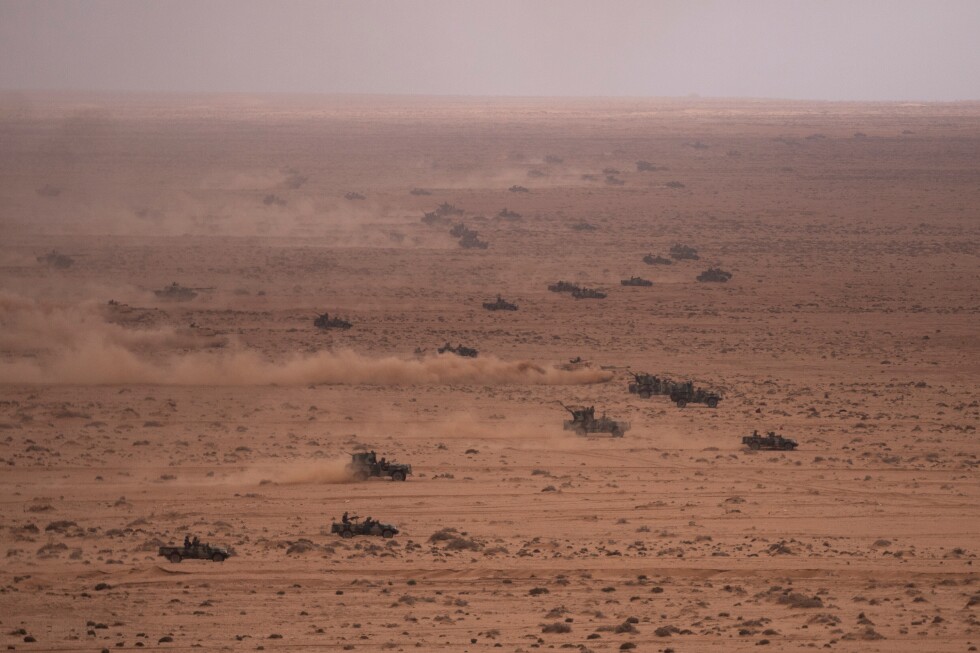
2 US service members missing after military exercises in Morocco
A developing emergency is unfolding in southwestern Morocco, where two American service members have gone missing following their participation in a yeary multinational military exercise hosted in the North African nation, U.S. Africa Command (AFRICOM) announced in an official update Sunday.
Joint search-and-rescue missions have been mobilized by the Moroccan government, U.S. military personnel and other partner nations that took part in the African Lion drills, according to AFRICOM’s public statement. The command confirmed that the circumstances surrounding the disappearance are still being probed, and search activities are continuing across the affected area.
The incident was recorded on May 2 in the vicinity of the Cap Draa Training Area, located near Tan Tan along Morocco’s Atlantic coastline. The African Lion exercise kicked off across four different North and West African nations in April, with additional training activities hosted in Tunisia, Ghana and Senegal, and was originally scheduled to conclude in the first week of May.
First launched in 2004, African Lion stands as the largest annual joint military training exercise led by the U.S. across the African continent. The event routinely draws senior military leadership from the U.S. and its key partner states across Africa, bringing together thousands of service members to coordinate on tactical training and security cooperation. U.S. military leaders have long framed the annual multinational exercise as a critical platform for deepening regional security partnerships, boosting participating forces’ operational readiness, and preparing for a range of unforeseen global crises.
-

Nigeria summons South African envoy over attacks on its nationals
A wave of violent anti-immigrant attacks targeting foreign nationals across South Africa has sparked diplomatic tension between the continent’s most industrialized nation and Nigeria, after Abuja formally called in Pretoria’s acting high commissioner to address the escalating crisis.
According to an official statement from Nigeria’s foreign ministry, the scheduled Monday meeting will center on delivering Nigeria’s formal and profound concern over the recent string of xenophobic actions, including organized anti-immigration marches by nativist groups, documented assaults on Nigerian citizens, and coordinated attacks on businesses owned by Nigerian nationals. Ministry officials have explicitly warned that the ongoing unrest poses a tangible risk to the longstanding bilateral relations between the two African economic powerhouses.
Local South African media reports confirm that at least six foreign nationals have been killed in recent weeks: two Nigerian citizens and four Ethiopian nationals, with additional attacks recorded against migrants from other African countries across the country. As the economic hub of Southern Africa, South Africa has for decades drawn migrant workers from across the continent seeking greater employment opportunities and economic stability, a trend that has fueled growing resentment among segments of the local population.
South African President Cyril Ramaphosa has publicly condemned the violent attacks on migrants, but has also coupled this condemnation with a warning to all foreign residents that they must abide by South Africa’s domestic immigration laws. During his annual Freedom Day address last week, which marked the anniversary of South Africa’s first post-apartheid democratic elections in 1994, Ramaphosa reminded citizens of the critical solidarity and support African nations across the continent provided during the decades-long fight against the racist apartheid regime.
Despite this official message of unity, anti-immigrant sentiment has hardened in many communities. Many South African residents blame undocumented migrants for straining public services, taking scarce formal employment opportunities from local workers, and fueling rising rates of organized crime, particularly drug trafficking. Hardline anti-immigration groups have taken to extrajudicial patrols, stopping people outside public facilities including hospitals and schools to demand proof of legal residency.
During a large anti-immigrant march held in the capital Pretoria last week, organizers ordered all foreign-owned businesses to shut their doors ahead of the demonstration to avoid potential violence. One Nigerian resident, speaking to BBC Pidgin on the sidelines of the unrest, expressed deep disappointment with the targeting of African migrants. “It is not okay because we are blacks, we are brothers… everybody comes here just to survive,” he said.
A South African security worker, who was blocked from reaching his job by the protest march, echoed that frustration. “It’s not what we expected as fellow Africans,” he told reporters. “It’s just making us scared – imagine if we’re scared in our own African continent – what if we go to Europe?”
Nigeria is not the only African nation to take formal diplomatic action over the unrest. Last month, Ghana also summoned South Africa’s top diplomatic envoy after a viral video spread widely across social media showing a Ghanaian man being aggressively confronted by anti-immigrant activists who demanded he show proof of legal immigration status.
The current rise in xenophobic tension traces back to earlier this year, when controversy erupted after the head of Nigeria’s community in the South African port city of KugoMpo, formerly known as East London, was installed in a traditional local leadership position loosely translated as “king.” Many local South African residents framed the move as an illegitimate power grab by foreign communities, stoking widespread anger that has since spread across the country.
Official South African government data estimates that roughly 2.4 million legal migrants currently reside in the country, accounting for just under 4% of the total national population. Demographers estimate that a much larger number of migrants reside in the country without formal immigration documentation. The vast majority of migrants come from neighboring Southern African countries including Lesotho, Zimbabwe and Mozambique, nations that have a long history of providing migrant labor to South Africa’s economy. A far smaller share of the migrant population hails from Nigeria.
-
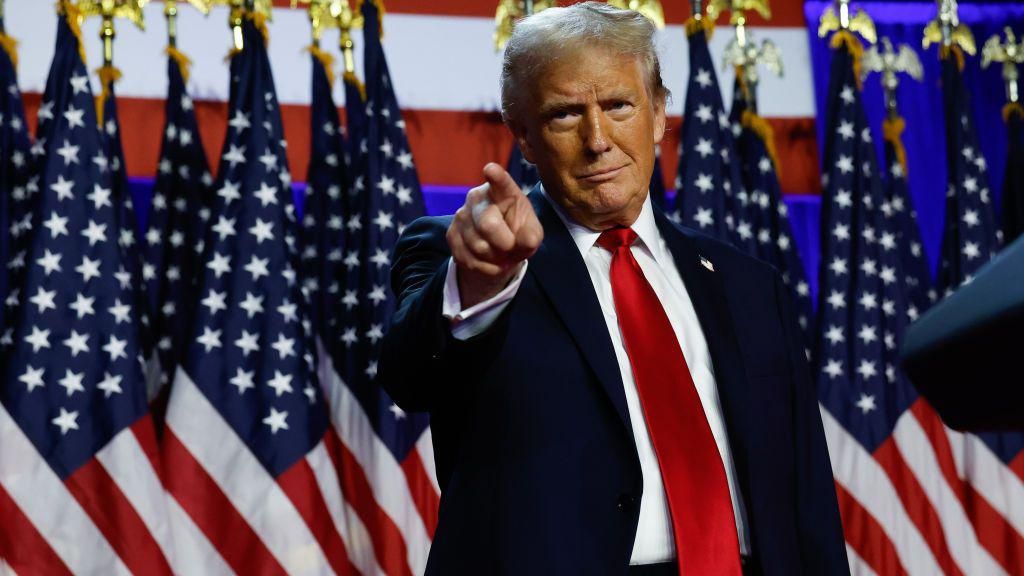
Voters will judge Trump on the economy – how is it doing?
Three months ago, the United States launched military operations in Iran, a conflict former President Donald Trump once claimed would conclude in no more than six weeks. Today, the war drags on with no end in sight, triggering a global energy shock that rivals the 1970s oil crises and sending prices soaring across everything from transportation fuel to household groceries. Yet, despite this sustained economic pressure on cash-strapped American households, newly released first-quarter 2026 gross domestic product (GDP) data reveals the US economy has outperformed expectations to maintain steady growth. As November’s critical midterm elections approach, the BBC has analyzed key US economic indicators to unpack what these conflicting signals mean for Trump and his Republican party.
Official statistics confirm the US economy expanded at an annualized rate of 2% in the first three months of 2026, marking a notable acceleration from the slowdown recorded at the end of 2025. This solid growth comes even in the face of two major headwinds: sustained consumer cost pressure from existing US tariffs, which have lifted prices for domestic shoppers, and the sudden energy market disruption sparked by the Iran war. Economists note that the negative impact on consumers was far milder than initial projections predicted, with household consumption growing at a 1.6% annualized rate. Much of the overall growth momentum, however, has been driven by massive capital investment from large technology companies rolling out new artificial intelligence (AI) infrastructure.
James Knightley, chief international economist at ING, explained that as consumer spending growth moderates, “investment linked to tech and AI has clearly become the main engine of growth in the US.”As the election season heats up, Trump is already leveraging Thursday’s positive GDP figures to frame his economic policy agenda as a success for American voters. But November’s midterm contests are expected to be extremely tight, and Republican political fortunes continue to hinge on the decades-old maxim: “It’s the economy, stupid.” While headline GDP growth is positive, political analysts broadly agree that voter sentiment will be shaped far more heavily by day-to-day cost of living, which has surged dramatically since the war began.
US military action in Iran and the subsequent closure of the Strait of Hormuz, a critical global chokepoint for oil shipments, sent global crude prices skyrocketing. On Thursday, Brent crude, the global benchmark, hit a four-year high of $126 per barrel; while prices have since pulled back to $111, that remains nearly 52% higher than the pre-war level of around $73 per barrel recorded before hostilities began in late February. Data from the American Automobile Association shows that average US retail fuel prices climbed to $4.30 per gallon by the end of April, up from less than $3 per gallon just two months prior.
This sharp rise in energy costs drove a corresponding jump in inflation, with the annual inflation rate reaching 3.3% in March, marking a near two-year high and a sharp increase from February’s 2.4% reading.The post-war inflation surge has dashed widespread expectations that the Federal Reserve would implement imminent interest rate cuts to support economic growth. On Wednesday, the central bank announced it would hold its benchmark interest rate steady at between 3.5% and 3.75%, a range that has stood since before the conflict began. Pre-war forecasts from most economists had projected multiple rate cuts would be rolled out through 2026. Data from Freddie Mac shows that since the start of US strikes on Iran, the average interest rate for a 30-year fixed mortgage has risen from 5.98% to 6.3%, pushing homeownership further out of reach for many prospective buyers. Samuel Tombs, chief US economist at Pantheon Macroeconomics, warned that sustained high oil prices and expectations of a long-term US blockade of Iranian ports could delay any rate cuts until 2027.
Against this economic turmoil, US stock markets have defied geopolitical risk to post solid gains since the conflict began. All three major US indices – the S&P 500, the Dow Jones Industrial Average, and the Nasdaq Composite – have fully recovered the steep losses recorded in the first days of the war and resumed their pre-war upward trend. Since the start of hostilities, the tech-heavy Nasdaq has gained roughly 10%, the S&P 500 is up around 5%, and the Dow Jones has climbed just over 1%. Rising stock indices deliver tangible benefits beyond just active investors, supporting the retirement savings of millions of Americans with 401(k) plans and other pensions tied to equities markets.
Heading into November, polling currently points to the Republicans losing control of the House of Representatives, with the Senate also at risk of flipping to Democratic control. Election outcomes will be overwhelmingly shaped by the state of the economy when voters cast their ballots. While strong headline GDP growth and rising stock markets offer some relief to Republican strategists, the persistent upward pressure on household costs remains a major liability for the party. How the election ultimately unfolds for Trump and his party will depend largely on how the Iran conflict progresses: whether the Strait of Hormuz reopens to global shipping, whether energy and grocery prices cool off for American voters, and whether the US economy can maintain its current momentum through the end of the year.
-
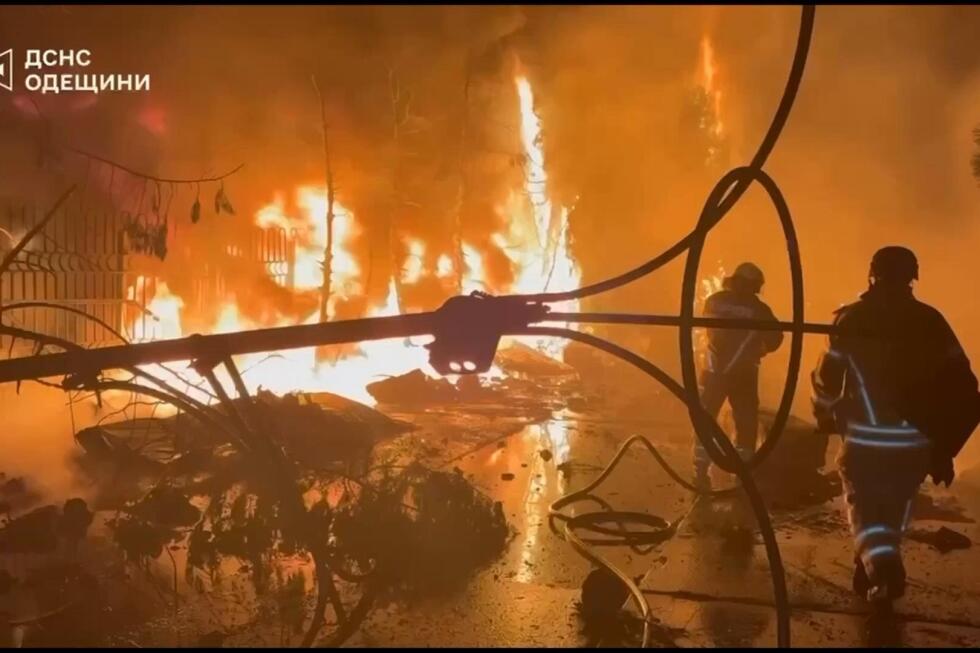
Ukraine hits key Russian oil-loading port and 3 ‘shadow fleet’ tankers
On Sunday, Ukraine escalated its long-range targeting campaign against Russian energy assets, launching a coordinated wave of drone strikes that hit a major Baltic Sea oil export terminal and multiple vessels Kyiv links to Russia’s sanctions-evading shadow crude fleet. The cross-border attacks came amid a wave of reciprocal strikes that left civilian casualties on both sides, deepening the ongoing military escalation in the third year of Russia’s full-scale invasion.
The first and highest-profile strike targeted Primorsk, Russia’s largest Baltic Sea oil export terminal operated by state-owned energy giant Transneft. Located more than 1,000 kilometers from Ukrainian territory, between the Russian-Finnish border and St. Petersburg, the facility is capable of processing hundreds of thousands of barrels of crude daily and has been targeted by Ukrainian drones multiple times since March. Russian regional governor Alexander Drozdenko confirmed that a nighttime drone attack sparked a fire at the port, but noted no oil spill occurred. He offered no immediate details on potential casualties or the extent of infrastructure damage.
Ukrainian President Volodymyr Zelenskyy claimed the operation delivered significant damage to Russian assets in a post on the Telegram messaging platform Sunday. He confirmed the strike, adding that one more Russian Kalibr missile-carrying vessel had been put out of action, alongside destruction of key port infrastructure. Zelenskyy also said Ukrainian drones hit a Karakurt-class missile ship, a Russian patrol boat, and one tanker belonging to Russia’s notorious shadow oil fleet — a network of unregistered or loosely registered vessels used to bypass Western price caps and sanctions on Russian crude exports.
In an earlier separate statement Sunday, Zelenskyy announced a second strike targeting two additional shadow fleet tankers near the entrance to Novorossiysk, Russia’s major Black Sea port. “These tankers were actively used to transport oil. Now they won’t,” he said, confirming the operation was directed by the chief of Ukraine’s general staff, Andrii Hnatov. The Kremlin has not issued any official confirmation of Zelenskyy’s claims regarding the two tanker strikes as of Sunday evening.
Sunday’s attacks mark the latest acceleration of Ukraine’s recent campaign against Russian energy export infrastructure. Ukrainian officials have repeatedly justified the targeting, noting that oil and gas revenue forms a core pillar of funding for Russia’s full-scale invasion, which entered its third year in February 2024.
The coordinated Ukrainian strikes were matched by a large-scale Russian air assault across Ukraine overnight into Sunday, which left multiple civilians dead and injured. Ukraine’s Emergency Service confirmed that a Russian drone strike on the southern Odesa region killed two people and wounded three more, damaging three residential buildings and port infrastructure before emergency crews extinguished a resulting fire. In central Ukraine’s Dnipropetrovsk region, six people were wounded in overnight strikes. A passenger bus carrying 40 children was damaged in the attack, though no children onboard were injured.
Reciprocal strikes also caused civilian casualties inside Russian territory. A 77-year-old man was killed in a Ukrainian drone strike west of Moscow near the town of Volokolamsk, 120 kilometers from central Moscow, regional governor Andrei Vorobyov confirmed via Telegram. Russian officials said six drones were intercepted and downed in the Moscow region, which surrounds the capital, and Moscow mayor Sergei Sobyanin confirmed an additional five drones were shot down while approaching the city itself. In western Russia’s Smolensk region, three people — a man, woman and child — were injured after debris from a shot-down Ukrainian drone crashed into an apartment block, local governor Vasiliy Anokhin reported.
Russian Defense Ministry figures released Sunday show that Russian air defenses intercepted and downed a total of 334 Ukrainian unmanned aerial vehicles overnight across Russia and occupied Crimea. For its part, Ukraine’s Air Force reported that Russia launched a total of 269 drones and ballistic missiles against Ukrainian targets overnight. Ukrainian forces shot down 249 of the incoming drones, the service said in a Facebook update, while 19 drones and multiple ballistic missiles successfully hit targets in 15 separate locations across the country.
-

DeVaux makes history with Kentucky Derby victory
The 152nd running of the Kentucky Derby delivered one of the most iconic, history-making finishes in the storied race’s history, as longshot Golden Tempo charged from the back of the pack to claim a neck-length victory, landing trainer Cherie DeVaux a groundbreaking milestone as the first woman to ever win the prestigious Churchill Downs classic.
Coming into the 1 1/4-mile race with 23-1 odds, Golden Tempo spent the first half of the contest mired at the rear of the 18-horse field. Race favorite Renegade, a 4-1 pick ridden by top jockey Irad Ortiz Jr., also started slow, sitting 15 lengths off the lead midway through the race as he attempted to pull off a historic win from the inside starting gate — a feat no horse had achieved in 40 years. As the two horses stormed down the final stretch, Renegade looked poised to cross the finish line first, only for Golden Tempo to edge past at the very last moment. The final time for the race was clocked at 2 minutes 2.27 seconds, and third place went to Ocelli.
The winning jockey, Joe Ortiz — younger brother of Renegade’s jockey Irad Ortiz Jr. — notched the win on just his 11th attempt at winning the Kentucky Derby. The victory also came just one day after he won the Kentucky Oaks aboard Always A Runner, making Ortiz only the ninth jockey in history to claim both of Churchill Downs’ top prizes in the same year. Speaking to reporters after the race, Ortiz acknowledged the bittersweet nature of beating his own brother, saying: “I want Irad to win the Derby, of course — it’s his dream too — but this is how things turned out. His horse ran a fantastic race, and he should be proud of that. Today’s just my day, and Golden Tempo’s day.”
For DeVaux, the win is a full-circle moment that caps a 22-year journey in horse racing that began right at Churchill Downs. She started her career at the iconic track as an eager young exercise rider, and never could have imagined she would one day stand in the winner’s circle of the Kentucky Derby. “I started my career here 22 years ago as a bright-eyed, bushy-tailed exercise rider, and I would not believe that I would be sitting up here today,” she said.
With the victory, DeVaux becomes just the second female trainer ever to win a U.S. Triple Crown race, following Jena Antonucci, who trained 2023 Belmont Stakes winner Arcangelo. DeVaux, who has notched 298 wins from 1,802 career starts, spoke to NBC Sports directly after the race, saying she was overwhelmed with emotion: “I don’t have any words, I’m so, so happy. I’m glad I could be a representative of women everywhere, and I want to say thank you to the team at Phipps Stable and St Elias Stable, our owners.”
She also credited her husband for pushing her to pursue her training career when she faced a personal crossroads in 2017. “In the summer of 2017 I was kind of at a crossroads in life, and my husband told me that I owed it to myself to at least try. He had the faith in me and he saw what I didn’t see, and believed in me,” DeVaux shared. The win earned Golden Tempo’s owners a $3.1 million top prize, cementing this year’s Kentucky Derby as one of the most memorable in modern racing history.
-

Germany troop cuts send wrong signal to Russia, say two top US Republicans
A controversial Pentagon plan to withdraw 5,000 United States military personnel from Germany has ignited fierce political debate on both sides of the Atlantic, triggering anxiety within the NATO alliance over the future of transatlantic security coordination. The proposal, which comes in the wake of a heated public dispute between U.S. President Donald Trump and German Chancellor Friedrich Merz, has drawn sharp condemnation from top congressional leaders, who warn it will weaken deterrence against Russian aggression and send a dangerous message to Moscow.
Two of the most senior Republican lawmakers on Capitol Hill — Senate Armed Services Committee Chair Roger Wicker and House Armed Services Committee Chair Mike Rogers — have led the criticism of the troop drawdown. In a joint statement, the pair argued that instead of removing the 5,000 troops from Europe entirely, the forces should be repositioned further east to strengthen deterrence along NATO’s eastern flank. They emphasized their deep concern that withdrawing a full U.S. brigade comes at a moment when European allies are just beginning to ramp up their defense spending to meet NATO targets, calling an early drawdown premature and counterproductive to shared security goals. “Prematurely reducing America’s forward presence in Europe before those capabilities are fully realised risks undermining deterrence and sending the wrong signal to Vladimir Putin,” the statement read.
The top Democrat on the House Armed Services Committee, Adam Smith, went even further, rejecting the Pentagon’s decision as completely unmoored from coherent U.S. national security strategy. Smith argued the move was not rooted in strategic analysis, but rather driven by personal political vengeance over the public disagreement between Trump and Merz. Not all congressional Republicans have opposed the plan, however: House Armed Services Committee member Clay Higgins voiced support for the administration’s move, taking a sarcastic shot at German leadership and the U.S. Senate in a post on X.
Pentagon officials have defended the drawdown, with spokesperson Sean Parnell confirming last Friday that the decision followed a comprehensive strategic review that adjusted U.S. force posture to match current theater requirements and on-the-ground conditions. The withdrawal, ordered by Defense Secretary Pete Hegseth, is expected to be completed over a six to 12 month timeline, Parnell added.
The decision follows a public row between Trump and Merz that erupted earlier this month, after the German chancellor told students that the U.S. had been “humiliated” by Iranian negotiators in the ongoing Iran conflict and lacked a clear strategy. Trump hit back hard on his Truth Social platform, accusing Merz of supporting Iranian nuclear ambitions and dismissing his comments as uninformed. Just days after the exchange, the troop withdrawal plan was announced.
On Saturday, Trump further stoked tensions by confirming that additional troop cuts beyond the initial 5,000 are on the table, declining to share further details. The U.S. currently maintains more than 36,000 active-duty troops in Germany — by far its largest deployment in Europe, compared to roughly 12,000 in Italy and 10,000 in the United Kingdom. Trump has previously floated the idea of withdrawing troops from Italy and Spain as well, following a 2025 drawdown in Romania that aligned with his administration’s broader goal of shifting U.S. military focus away from Europe and toward the Indo-Pacific region.
German Defense Minister Boris Pistorius responded to the announcement with measured composure, telling German news agency DPA that the decision had been “foreseeable.” He stressed that the ongoing U.S. military presence in Europe, and specifically in Germany, remains a mutual interest for both Berlin and Washington.
Within NATO, which counts 32 member states, the announcement has sparked growing anxiety that the drawdown could weaken the alliance’s collective defense posture. Polish Prime Minister Donald Tusk issued a stark warning Saturday, saying that the greatest threat to the transatlantic community is not external adversaries, but the ongoing internal disintegration of the NATO alliance. “We must all do what it takes to reverse this disastrous trend,” Tusk said.
Nato spokesperson Allison Hart confirmed Saturday that the alliance has reached out to Washington to get full clarity on the drawdown plans. In a post on X, Hart framed the decision as a reminder of why European allies must continue increasing defense investment and take on a greater share of responsibility for shared transatlantic security. Hart noted that progress was already underway after allies agreed to a target of 2% of GDP on defense at last year’s NATO summit in The Hague.
Trump has long criticized Germany for failing to meet NATO’s 2% of GDP defense spending target, repeatedly labeling Berlin “delinquent” in its contributions. However, under successive governments led by former Chancellor Olaf Scholz and current Chancellor Friedrich Merz, Germany has dramatically increased its defense budget. Projections now show Germany will spend €105.8 billion ($114 billion) on defense by 2027, pushing total defense expenditure to 3.1% of GDP when all special defense funds, including military aid to Ukraine, are counted.
-

Exclusive: US and Israel reject joint Palestinian proposal for Gaza after meetings
Weeks of indirect negotiations between Israeli and Palestinian representatives over Gaza’s long-term future, mediated by Egypt and Turkey, have hit a major impasse after the United States and Israel formally rejected a joint proposal from Palestinian factions — including Hamas and Palestinian Islamic Jihad — that links the disarmament of armed groups to clear progress toward Palestinian statehood and binding reciprocal security guarantees.
A senior Palestinian source briefed on the closed-door talks told Middle East Eye that the factions’ framework, submitted to mediators in Cairo on Friday, conditions any negotiation over disarming Hamas and other armed groups on two core demands: formal recognition of Palestinian political rights within a unified national governing structure, and an ironclad commitment to end all targeted killings of Palestinian civilians in Gaza.
The core point of contention that has widened the divide between the two sides has never shifted: Washington and Jerusalem insist that Hamas and all other Palestinian armed factions must fully disarm before a neutral technocratic government can be installed to govern Gaza. Palestinian factions, by contrast, have flatly rejected sequencing disarmament ahead of a permanent political resolution that delivers on longstanding Palestinian demands for sovereign statehood, framing disarmament as one component of a final settlement rather than a non-negotiable precondition.
According to the Palestinian source, mediators confirmed on Saturday that both U.S. representatives and Israeli negotiators rejected the factions’ proposal outright, and conveyed explicit threats to the Palestinian negotiating team over the impasse.
The proposal emerged alongside parallel talks hosted in Cairo led by a Hamas delegation headed by Gazan movement leader Khalil al-Hayya, focused on advancing implementation of the U.S.-brokered October 2025 ceasefire agreement that paused active large-scale combat. That original deal, which was published in full by Middle East Eye when it took effect, laid out a six-phase roadmap including expanded humanitarian access, the withdrawal of Israeli forces to pre-agreed boundary lines, and the creation of an international task force to oversee implementation.
In the six months that have passed since the ceasefire was signed, however, United Nations data confirms Israel has killed 738 Palestinians in Gaza, and has failed to meet the agreement’s requirement to allow up to 600 trucks of critical aid — including food, fuel, medicine, shelter materials, and commercial goods — to enter the enclave daily. The overall Palestinian death toll from the conflict has now surpassed 72,000, with thousands more missing and presumed dead under rubble from Israeli airstrikes and ground operations.
A full review of the Palestinian proposal, obtained by Middle East Eye, shows factions explicitly appreciate mediation efforts to reach a consensus aligned with the terms of U.S. President Donald Trump’s regional peace framework. The document demands that Israel immediately and fully implement all its obligations under the October ceasefire (officially the Sharm el-Sheikh agreement) on an agreed timeline, end all violations of the truce, reverse its recent military expansion into western Gaza beyond the pre-agreed “yellow line” boundary, honour the agreed daily humanitarian aid shipment quota, and complete a full withdrawal from all of Gaza.
Under the original ceasefire terms, the “yellow line” split Gaza into an eastern half under Israeli control and a western zone where Palestinian civilians could remain, with Israel holding roughly 53 percent of the enclave’s territory. Multiple on-the-ground reports confirm Israeli forces have now pushed past this boundary into western Gaza, establishing a new “orange line” of control that alters the territory’s security and geographic status quo.
The Palestinian framework endorses a mediation roadmap presented on April 19 as a basis for further talks, and calls for a swift final deal that cement a permanent ceasefire, end Gaza’s catastrophic humanitarian crisis, and enable full reconstruction of the enclave. It also calls for the entry of an international peacekeeping force to monitor the ceasefire, and the full transfer of governing authority over Gaza to a unified Palestinian national committee with full sovereign powers.
On the core issue of weapons, the proposal explicitly ties any progress on disarmament to progress on Palestinian political rights within a unified national framework, with reciprocal security guarantees for both Palestinians and Israelis. It reaffirms the Palestinian people’s inalienable right to self-determination and the establishment of a sovereign Palestinian state, a goal the document says mediators and all relevant parties are committed to delivering under Trump’s peace plan.
The U.S.-Israeli rejection of the proposal has raised immediate fears of a resumption of full-scale war: Israeli public media reported Sunday that the country’s security cabinet will convene to discuss restarting active military operations in Gaza. An unnamed Israeli official told Israel’s public broadcaster Kan on Saturday evening that “Hamas is not standing by the agreement on disarmament. We are holding discussions with mediators.”
The current impasse dates back to March, when Nickolay Mladenov, the former Bulgarian foreign minister leading Trump’s “Board of Peace” initiative, held weeks of talks with Hamas leaders and gave the group until April 11 to begin a gradual handover of weapons. Mladenov’s original mandate was to oversee the transition of Gaza from Hamas rule to a new technocratic administration led by former Palestinian Authority deputy minister Ali Shaath. A previous disarmament proposal presented by mediators in Cairo demanded all armed groups in Gaza surrender all weapons within 90 days, including heavy weaponry such as missiles and rocket launchers, along with full maps of Hamas’s underground tunnel network. Israeli Prime Minister Benjamin Netanyahu has further demanded that even individual members of Palestinian factions surrender their personal weapons.
Palestinian negotiators push back that Israeli violations of the existing ceasefire — including ongoing military raids, expansion into new territory, and repeated delays to humanitarian aid — have already gutted confidence in the peace process. They argue that political progress on statehood and self-determination must move in lockstep with security arrangements, rather than being treated as an afterthought to disarmament.
-

Huge crowd attends free Shakira Copacabana beach concert
One of the world’s most iconic pop superstars drew a massive gathering of fans to Rio de Janeiro’s legendary Copacabana Beach over the weekend, turning the sun-soaked coastal stretch into an open-air concert venue for a spectacular free performance that marked a major highlight for global live music in 2024.
Shakira, the Colombian-born global sensation whose decades-long career has produced countless chart-topping hits and earned her a permanent place in pop culture history, took the Copacabana stage following in the footsteps of two other defining female pop figures: Lady Gaga and Madonna, who both headlined their own memorable free shows on the same beach in years prior. That legacy of major Copacabana beach concerts built anticipation for months among fans, who traveled from across Brazil and even other South American countries to attend the event.
Witnesses and local event organizers confirmed that the crowd swelled to one of the largest in the beach’s long history of large-scale live events, with thousands of fans packing the sand from the shoreline all the way back to the beachfront avenue, singing along to every one of Shakira’s hit songs from *Hips Don’t Lie* to *Waka Waka (This Time for Africa)*. Local authorities deployed additional crowd management and safety teams to handle the massive turnout, and reported that the event proceeded largely without major incidents, capping a day of celebration for music lovers of all ages.