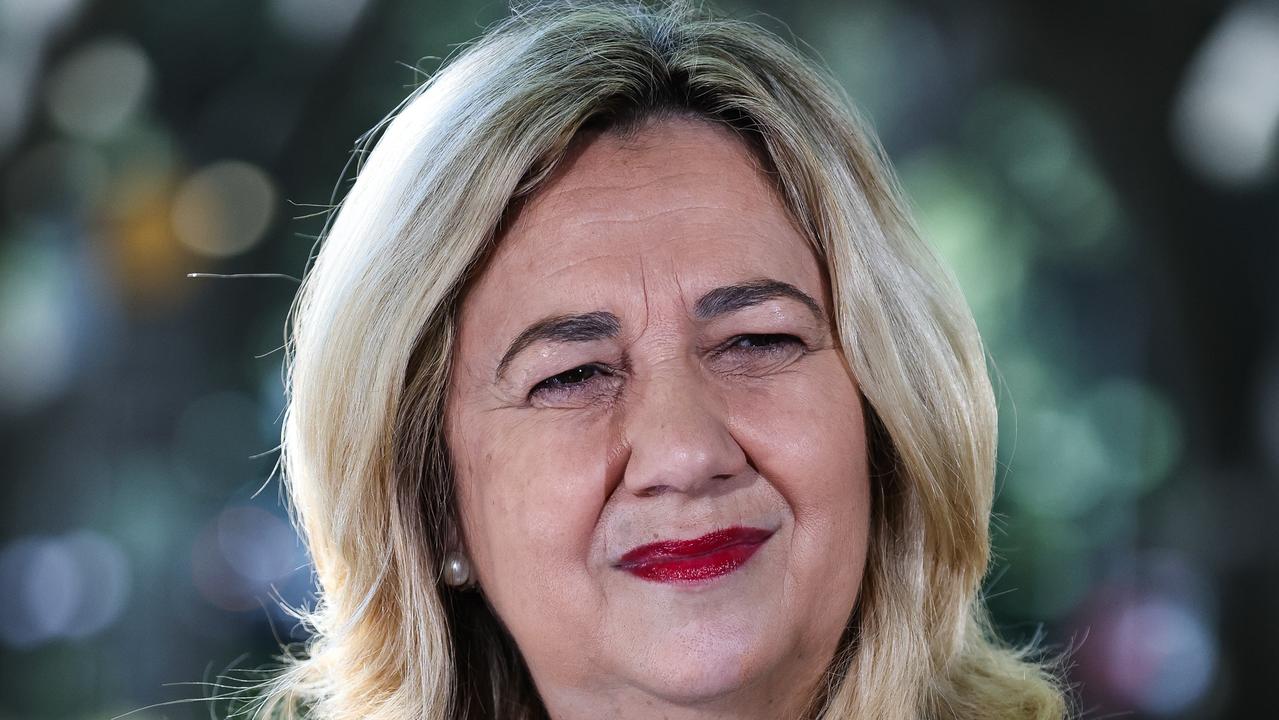
A major political development has shaken Australia’s Queensland state, as former premier Annastacia Palaszczuk has seen multiple stops on her upcoming book tour cancelled or postponed, just days after her partner, 65-year-old medical professional Dr. Reza Adib, was hit with serious criminal charges including rape.\n\nMultiple scheduled events have already been pulled from the tour calendar. One of the scrapped engagements was an author talk scheduled for Thursday at Fraser Coast Libraries, where Palaszczuk was set to discuss her new memoir, *The Politics of Being Me*. Another planned event at the Australian National University (ANU) in Canberra, scheduled for May 13, was officially called off in an email notification sent to registered attendees.\n\nThe official statement from ANU Events read: “We regret to inform you that Meet the author – Annastacia Palaszczuk has been cancelled due to unforeseen circumstances. We sincerely apologise for any inconvenience this may cause and appreciate your understanding. We hope to see you again at our next event.”\n\nConflicting reports have emerged about the status of the full tour: while multiple events have already been postponed or cancelled, Palaszczuk’s publicist, high-profile industry figure Max Markson, has publicly confirmed that the overall book tour remains on track to proceed as originally scheduled. Markson has not issued further public comment beyond the initial confirmation, and has been approached for additional detail on the revised tour schedule.\n\nThe legal crisis at the center of the disruption unfolded last week, when Dr. Adib was formally charged with three counts of rape, two counts of deprivation of liberty, and one additional count of sexual assault. He is scheduled to make his first court appearance on May 14 to answer the charges.\n\nIn an official statement released on May 1, Dr. Adib’s defense counsel Dan Rogers addressed the allegations publicly on his client’s behalf. Rogers said that his client “is shocked about the allegations made about him and is taking the matter very seriously.” He reiterated that the fundamental legal principle of presumption of innocence applies, noting that Dr. Adib “intends to vigorously defend the charges.”\n\n“Right now, Dr Adib is primarily concerned about the welfare of his family and his patients, and he will do whatever it takes to ensure that they are looked after in the coming weeks,” Rogers added. The statement closed with a request for media restraint: “Dr Adib asks that the media respect the privacy of his family and his patients at this difficult time. Dr Adib will not be making any comment about the matters while they are before the courts.”’
作者: admin
-
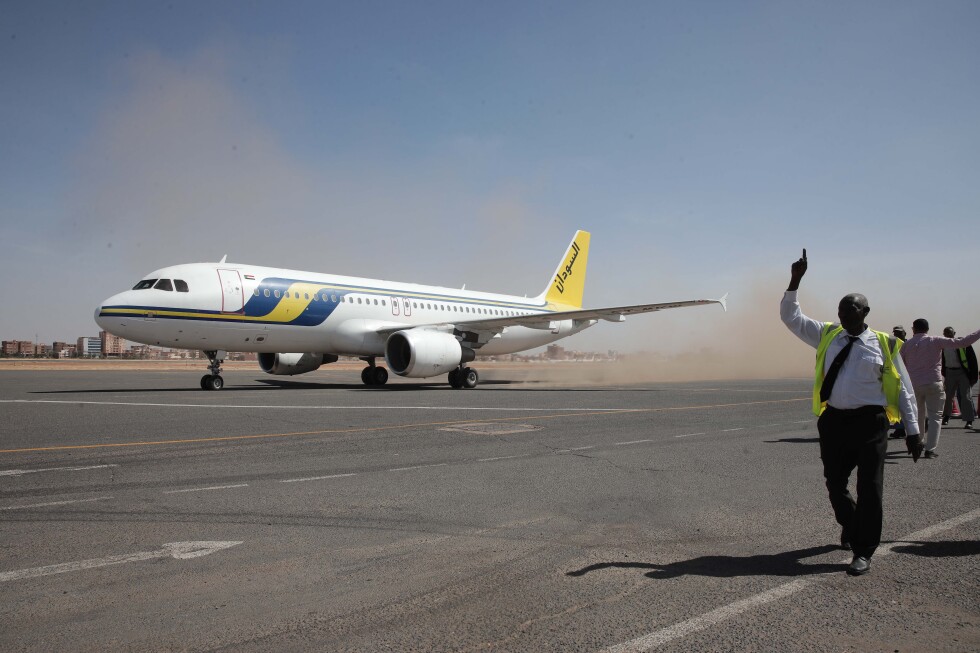
Sudan’s military accuses Ethiopia of drone attacks, recalls its ambassador
In a sharp escalation of cross-border tensions between two neighboring East African nations, Sudan has formally recalled its ambassador to Ethiopia and publicly accused Addis Ababa of orchestrating a series of recent drone strikes targeting key Sudanese sites, including the capital Khartoum’s international airport. The announcement, made during a press conference on Tuesday, marks one of the most serious diplomatic rifts between the two countries in years, unfolding against the backdrop of Sudan’s 13-month civil conflict between the national military and the Rapid Support Forces (RSF) paramilitary group.
-
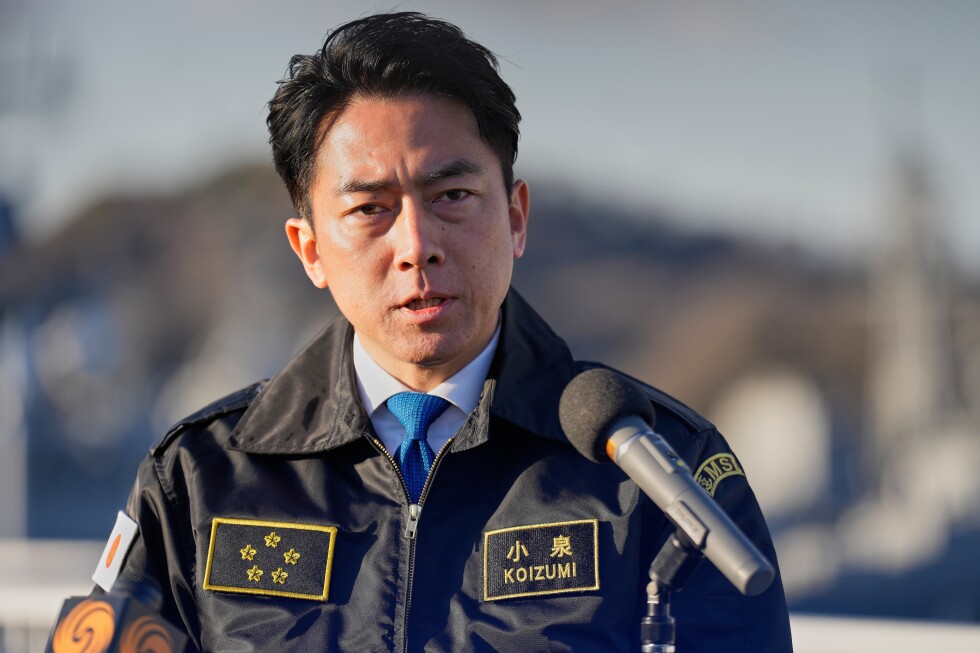
Japan defense chief visits Philippines to deepen security ties and witness combat exercise
In a move that underscores growing regional security realignments across the Indo-Pacific, Japanese Defense Minister Shinjiro Koizumi arrived in the Philippines on Tuesday for a diplomatic and military engagement aimed at expanding bilateral defense cooperation between the two nations, government officials confirmed. During his stay in the Philippine capital Manila, Koizumi held scheduled talks with President Ferdinand Marcos Jr. and Defense Secretary Gilberto Teodoro Jr., where a potential transfer of secondhand Japanese destroyers to Manila was on the agenda for discussion.
Both the Philippines and Japan are treaty allies of the United States, and the pair cemented a landmark defense pact earlier in 2024: the Reciprocal Access Agreement, which cleared legal and logistical barriers for large-scale joint combat exercises between their armed forces. Under this new framework, up to 1,400 Japanese military personnel will now participate regularly in the annual Balikatan exercise, a long-running multinational military drills hosted by the Philippines whose name translates to “shoulder-to-shoulder” in Tagalog. For decades, Balikatan has brought together U.S. and Filipino forces, alongside other allied partners, to prepare for regional security contingencies and counter growing Chinese territorial assertiveness in the Indo-Pacific.
Koizumi is set to join more than 100 international delegates from 16 countries—including major Indo-Pacific players India and Australia—on Wednesday, when the group travels to the northwestern Philippine coastal town of Paoay to observe a high-stakes live-fire drill. During the exercise, combined artillery and missile units from the Philippines, United States, Japan, and Canada will conduct a simulated anti-ship attack on a target approximately 25 miles off the Philippine coast. According to Philippine Marine Corps Col. Dennis Hernandez, Japanese forces will fire two volleys of Type 88 surface-to-ship missiles to sink the decommissioned World War II-era Philippine navy corvette that serves as the exercise target. President Marcos will observe the live-fire maneuvers remotely via live video feed from his official residence in Manila, Hernandez added.
The Philippine stop comes just one day after Koizumi completed a similar diplomatic visit to Jakarta, Indonesia, where he signed a new bilateral defense cooperation agreement with Indonesian Defense Minister Sjafrie Sjamsoeddin. Speaking to reporters ahead of his regional tour from Tokyo, Koizumi framed the push for expanded defense partnerships as a critical response to Japan’s current security landscape. “As Japan faces the most severe and complex security environment in the postwar era, it is important to establish a multilayered network of allies and like-minded countries, while expanding it and strengthening our deterrence,” he said.
Koizumi’s regional tour comes against a backdrop of sweeping changes to Japan’s longstanding post-WWII security policy. In recent years, Tokyo has moved away from its decades-long principle of limiting military activity to self-defense, approving the development of long-range offensive missiles capable of striking enemy targets at distance. Most recently, on April 21, Japan lifted a decades-long ban on lethal weapons exports—a pivotal shift in its postwar pacifist framework that was designed to strengthen Japan’s domestic arms industry and counter growing Chinese aggression across the region. The policy shift aligns with the Philippines’ own security priorities, as Manila has seen a sharp escalation in territorial disputes with Beijing over contested claims in the South China Sea in recent years.
The lifted export ban opens the door for Japan to transfer up to six retired Abukuma-class destroyers to the Philippine Navy, Hernandez confirmed. These destroyers are equipped to conduct coastal patrols and detect aerial, surface, and undersea threats, making them a valuable addition to Manila’s relatively modest naval fleet. While the transfer remains under discussion during Koizumi’s visit, specific terms and timelines for the potential deal have not been made public. The shift in Japan’s security policy has been broadly welcomed by its Western and Indo-Pacific allies, including the United States and Australia, but has drawn sharp pushback from Beijing. Last month, Chinese Foreign Ministry spokesperson Guo Jiakun said the international community would “resolutely resist Japan’s reckless moves toward a new type of militarism.”
This report includes contributing reporting from Mari Yamaguchi in Tokyo.
-

A ‘fun’ superstar stuns rivals and reshapes politics in an Indian state
For decades, electoral politics in India’s Tamil Nadu state has revolved around a stable two-way contest between the long-dominant regional Dravidian parties, the Dravida Munnetra Kazahagam (DMK) and its historic rival All India Anna Dravida Munnetra Kazhagam (AIADMK). That long-standing status quo is now on the brink of collapse, following a historic breakthrough by C Joseph Vijay, the beloved Tamil film superstar turned first-time political candidate, whose new party Tamilaga Vettri Kazhagam (TVK) defied all pre-election polling and pundit predictions to nearly seize an outright majority in the 2026 state assembly election.
Vijay’s rapid ascent to the cusp of power has already drawn inevitable comparisons to one of Tamil Nadu’s most iconic political ancestors: MG Ramachandran, another legendary matinee idol who split from the DMK to launch his own party and rose to become the state’s chief minister in 1977. But while parallels exist in the path from silver screen to statehouse, Vijay’s political emergence comes at a uniquely opportune moment for a political newcomer.
When final vote counts were tallied on Monday, TVK secured 108 of the 234 available assembly seats, falling just 10 seats short of the 118-seat threshold required to form a majority government. The result is a landmark upset that ousted the incumbent DMK from power, ending the party’s latest tenure leading the state. For Vijay, the next critical step is transitioning from a charismatic crowd-pleasing campaigner to a skilled coalition builder: over the coming days, he will negotiate with smaller regional parties and independent elected legislators to secure the additional support needed to claim the chief minister’s post.
Political analysts and observers across India frame the result as a clear reflection of growing voter fatigue with the decades-long DMK-AIADMK duopoly, particularly among the state’s fast-growing young electorate. “Vijay carries a different kind of verve,” explains social scientist Shiv Visvanathan. “He offers a sense of fun, confidence and an aura of competence rooted in individuality, and that gives him a different kind of power.”
Unlike many celebrity politicians who jump from the screen to the campaign trail without long-term groundwork, Vijay’s path to electoral politics has been more than 15 years in the making. As early as 2009, he began restructuring his vast network of fan clubs into the Vijay Makkal Iyakkam, a grassroots welfare organization that delivered local aid, educational support and disaster relief to communities across the state. By 2011, the network tested its political influence by aligning with an AIADMK-led coalition, proving that stardom could translate into organized voter support. Over the following decade, Vijay increasingly wove political messaging into his public appearances, speaking to young audiences about widespread youth unemployment, student exam stress, and government corruption, while also taking high-profile positions on national issues such as criticizing the 2019 Citizenship Amendment Act. He formally launched TVK only in 2024, but his slow, deliberate conversion of popular stardom into organized political capital set him apart from other celebrity aspirants who have failed to gain traction in Tamil Nadu politics, from Rajinikanth to Kamal Haasan.
In the lead-up to voting, Vijay has deliberately crafted a new public persona distinct from his film identity, making high-profile visits to prominent Hindu temples and Christian churches across the state. Images of these visits have circulated widely on social media and broadcast news, a notable shift in a state whose modern politics was shaped by the rationalist Self-Respect Movement, which fought for equal rights for marginalized castes. Analysts frame this visible turn to faith as a deliberate strategic choice to broaden his electoral appeal.
Polling data confirms that Vijay’s surge is driven most strongly by two key demographic groups: young voters and women. According to Pradeep Gupta, chief pollster at Axis My India, voters between the ages of 18 and 39 — who make up 42% of Tamil Nadu’s total electorate — have turned out for TVK in overwhelming numbers, particularly first-time voters. Significant support also crosses caste lines, including large backing from Scheduled Castes and Other Backward Classes communities across the state. “He’s the new hope for Tamil Nadu,” says prominent political strategist Prashant Kishor, summing up the sentiment driving his rise.
For most supporters, the appeal of TVK is rooted less in detailed policy platforms and more in a widespread desire for change after decades of rule by the two legacy parties. Even though the incumbent DMK delivered solid governance, including 11.2% economic growth in 2024-25 and strong social indicators that rank among India’s best, voters have expressed growing restlessness with the same entrenched political leadership. “This is not a verdict against Dravidian politics,” notes prominent Indian vocalist and social activist TM Krishna. “It is something else. Vijay offers a new imagination.”
Vijay’s ideological positioning has also resonated with Tamil Nadu’s long-standing tradition of regional autonomy: he has positioned the national Bharatiya Janata Party (BJP) as his core ideological adversary, and the incumbent DMK as his immediate political rival, aligning with the state’s historic resistance to the BJP’s national expansion rooted in Tamil language and identity politics.
Not all observers are convinced of TVK’s long-term potential, however. Analyst and author Nilakantan RS argues that the party lacks substantive policy positions on key state issues, framing Vijay’s public gestures and temple visits as carefully calibrated marketing moves rather than reflections of a clear governing vision. “There is an absence of any original position on real issues,” he says. “Virality has become the currency of his actions.” Critics warn that this focus on image over policy could leave a Vijay-led government without the administrative depth needed to address the state’s pressing challenges.
Vijay’s path to power has also not been without setbacks. Last year, a deadly crowd crush at one of his party rallies killed dozens of attendees, drawing widespread criticism of his initial response to the tragedy. Yet voters ultimately forgave the incident, and it failed to dampen enthusiasm for his campaign. His final planned film, *Jana Nayagan* (People’s Leader), which was set for a January release ahead of the election, also ran into protracted delays after a dispute with India’s national film classification board, and it remains unreleased to date.
As post-election coalition negotiations get underway, the moment remains a historic one for Tamil Nadu politics. A state that has long blurred the lines between cinema charisma and political power is once again turning to a beloved film icon to deliver the change a majority of voters are demanding. “This election is to herald change,” Vijay declared on the campaign trail. His supporters echo that sentiment: “People are tired of both major parties. They want change. They see TVK as that change,” says TVK spokesperson Felix Gerald. Whether that promise of change will translate into a stable new government and durable political authority remains to be seen, but the 2026 election has already irrevocably broken the decades-old political order in one of India’s most important states.
-
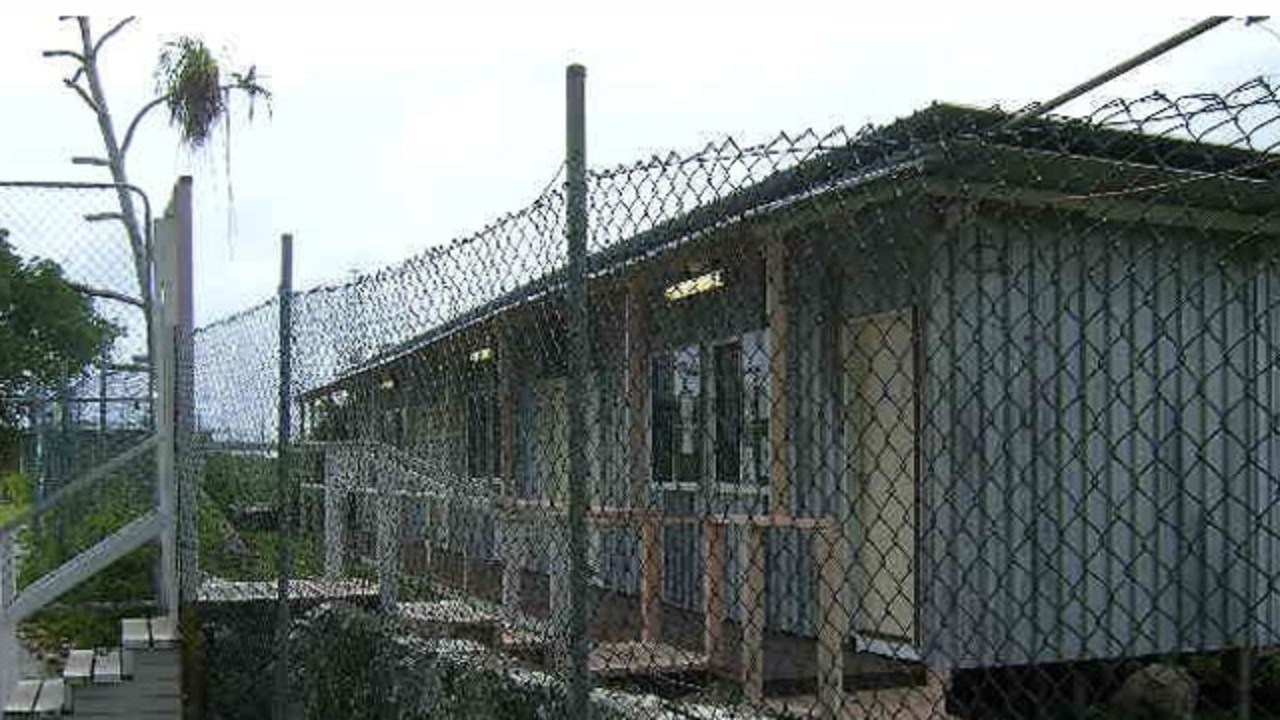
Women, children allegedly ‘groomed’ by Australian paid guards on Nauru detention centre, inquiry told
A former detainee at Australia’s offshore detention facility on Nauru has delivered harrowing, unprecedented testimony to a federal Senate inquiry, laying out detailed allegations of systemic grooming, sexual exploitation, and abuse of vulnerable women and children at the hands of government-contracted security guards.
The witness, identified only as Maryam, who was intercepted while attempting to reach Australia by boat in 2013 and subsequently detained on Nauru, appeared before the Legal and Constitutional Affairs References Committee in Canberra this week to share her account of life inside the controversial camp. Her testimony painted a bleak picture of chronic systemic deprivation that guards deliberately leveraged for their own abusive ends.
According to Maryam, the facility operated by contractors working under Australian government contracts saw guards build an exploitative ‘trading system’ that coerced detainees into sexual compliance in exchange for basic necessities. Detainees who needed critical items including food, hygiene products, and tobacco were forced to trade sexual favors to access the goods they needed to survive. For children, the manipulation followed a similar pattern: guards offered small treats like lollipops or chewing gum in exchange for hugs or kisses, a pattern of behavior Maryam now recognizes as deliberate grooming.
‘Many of us struggled to process what was happening while we lived through it,’ Maryam told the committee. ‘But looking back, it is clear that women and children across the center were being systematically groomed by the very people paid to keep us safe. They used their power over our access to basic needs for their own gratification.’
Maryam confirmed that the accused guards included both Australian and Nauruan nationals, all of whom were compensated through Australian federal government contracts. Beyond the sexual exploitation, she detailed ongoing neglect that created the conditions for abuse: detainees were forced to wear the same clothing – including undergarments – they arrived in for up to six months, a policy that led to widespread skin infections and other preventable health issues across the camp.
Shortages of essential goods were not accidental, she argued, but a persistent condition that empowered guards to exploit vulnerable detainees for coercive sexual exchanges. ‘We ended up needing protection from the people who were supposed to protect us,’ she told the inquiry.
The current inquiry is focused on reviewing Australia’s longstanding offshore refugee processing and resettlement policies, a contentious political framework that has drawn international criticism for decades for poor treatment of asylum seekers. Investigators have been collecting evidence from witnesses and stakeholders over the past several months, and a final report outlining the committee’s findings is scheduled for publication in early June.
-
What we know about Trump’s ‘Project Freedom’ in Strait of Hormuz
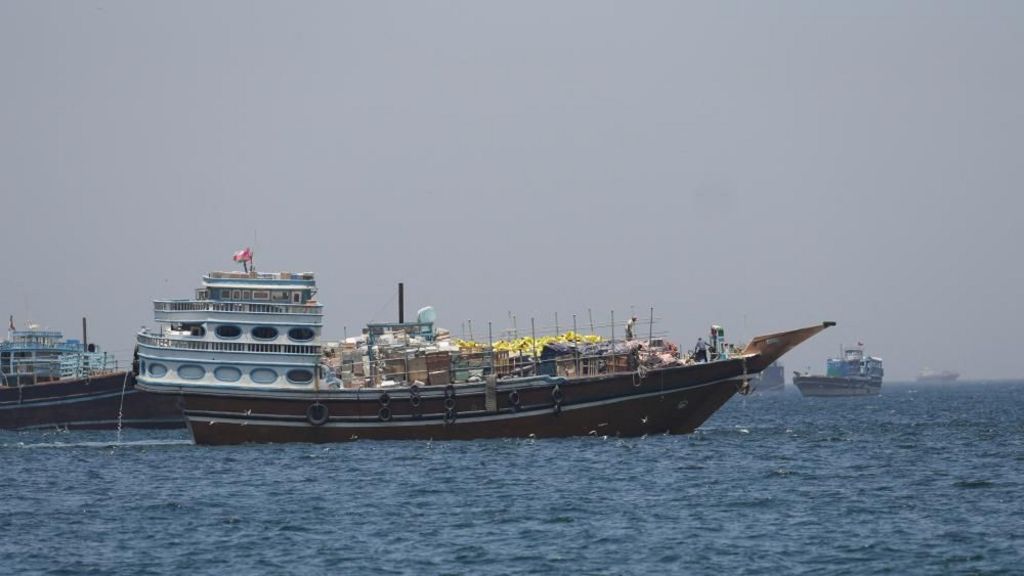
The strategic Strait of Hormuz, a critical global energy chokepoint that carries roughly 20% of the world’s daily oil and liquefied natural gas shipments, has been largely closed to commercial traffic since the United States and Israel launched air strikes against Iran. Tehran responded to the attacks by shutting down the waterway, leaving thousands of vessels and their crews stranded in the Gulf. In response to international requests to free the trapped ships, U.S. President Donald Trump has launched what he has named “Project Freedom,” a mission that threatens to reignite open hostilities between the two nations.
In a Sunday post on his Truth Social platform, Trump stated that leaders from nations across the globe had reached out to the U.S. for assistance, noting that the trapped ships belonged to neutral, uninvolved parties that had become innocent victims of the escalating conflict. Under the new operation, the U.S. military will guide trapped vessels safely out of the restricted waters around the strait. Trump framed the mission as a purely humanitarian gesture, arguing it would benefit not just global shipping interests and Middle Eastern nations, but Iran itself. He pointed to growing urgent concerns: many stranded vessels are running critically low on food and other essential supplies required to keep large crews healthy and maintain sanitary living conditions on board.
Iran has pushed back sharply against the U.S. initiative, however. Iranian officials maintain that the country retains full sovereign control over the Strait of Hormuz, and have issued blunt threats to attack any foreign military force that attempts to enter or approach the waterway, specifically naming the U.S. military as an aggressive target. Senior Iranian commander Maj Gen Ali Abdollahi emphasized that all safe passage through the strait must be coordinated directly with Iran under all circumstances. A day after Trump’s announcement, Iranian Foreign Minister Abbas Araghchi dismissed the U.S. mission, writing on X that “events in Hormuz make clear that there’s no military solution to a political crisis,” and adding, “Project Freedom is Project Deadlock.”
The scale of the humanitarian and economic crisis is substantial. The International Maritime Organisation, the United Nations body that regulates global commercial shipping, estimates that roughly 2,000 vessels and 20,000 sailors have been trapped in the Gulf since the outbreak of hostilities. Concern has risen rapidly over dwindling essential supplies and the growing negative impact of the blockade on the physical and mental health of stranded crew members.
U.S. Central Command (Centcom) has deployed a large military contingent to support the operation, including guided-missile destroyers, more than 100 land and sea-based aircraft, multiple advanced unmanned platforms, and 15,000 active service members. In a public briefing, Centcom commander Adm Brad Cooper confirmed that attack helicopters assigned to the mission had already sunk six small Iranian boats that were targeting unarmed civilian vessels. Cooper warned that U.S. forces will open fire on any Iranian craft deemed to be interfering with the mission to reopen the waterway.
Few concrete details have been released about the full scope and long-term structure of the operation, though Cooper confirmed that the ultimate goal is to reestablish a fully operational two-way shipping lane through the strait. The mission’s ambiguous framework has sparked debate over its risks: if the operation only provides navigational information and advice to crews, it would do little to mitigate Iran’s explicit threats to attack transiting vessels. If the U.S. proceeds with full military escort for all trapped ships, however, that would almost certainly lead to direct open military confrontation between the two nations. Cooper has only stated that the operation includes a broader defensive package than would be required for simple escort duty.
Mick Mulroy, a former U.S. deputy assistant secretary of defense for the Middle East and a veteran of both the U.S. Marine Corps and the CIA’s paramilitary division, told the BBC he believes Project Freedom will focus on providing air cover and defense against Iranian missile and drone attacks, rather than direct physical escort of commercial vessels through the strait. Even so, Mulroy cautioned that there is no guarantee the operation will succeed in restoring free commercial navigation. “The question is whether ships will trust their ability to get through without being attacked, and more importantly, the insurance company,” he explained. “If not, the effort will not have the impact we hoped.”
On Monday afternoon, Centcom confirmed that U.S. Navy guided-missile destroyers had already transited the Strait of Hormuz as part of Project Freedom, adding that American forces were actively working to restore commercial shipping transit but provided no further operational details. The command also announced that as an initial milestone, two U.S.-flagged commercial merchant vessels had successfully passed through the strait and were continuing on their voyages safely, though it declined to release the identity of the ships. Global shipping giant Maersk later confirmed that one of its own vessels had exited the Gulf with U.S. military accompaniment. Iran’s powerful Islamic Revolutionary Guard Corps has directly denied any vessels have been allowed to pass through the strait.
Grant Rumley, a Middle East security expert who advised both the Biden and Trump White Houses between 2018 and 2021, noted that securing safe passage for all 2,000 trapped vessels would be an extraordinarily difficult challenge. He argued that achieving that goal would likely require a more aggressive, large-scale kinetic military operation, a outcome he views as increasingly probable. “I think that the general consensus is that a resumption of hostilities is a question of when,” he said. “Not if.”
Within hours of the operation’s launch on Monday, the Iranian military claimed it had opened fire on American and Israeli enemy destroyers, saying U.S. forces had ignored multiple warnings. Centcom immediately denied Iranian claims that one of its warships had been hit by two Iranian missiles. According to Centcom’s account, Iran fired cruise missiles at both U.S. warships and U.S.-flagged commercial vessels, and deployed drones and small speed boats to attack commercial shipping. In a subsequent Truth Social post, Trump confirmed that Iran had fired on uninvolved commercial vessels, prompting the U.S. strikes on Iranian small boats.
The United Arab Emirates, a key U.S. Gulf ally that has faced repeated Iranian attacks during the ongoing conflict, confirmed that a tanker owned by its state-owned national oil company Adnoc was targeted by two drones while transiting the Strait of Hormuz. The UAE foreign ministry reported no crew injuries in the attack, and confirmed that at least three incoming missiles were successfully intercepted. Trump also added in his post that a suspected missile strike had hit a South Korean cargo vessel anchored in the Strait of Hormuz, in waters adjacent to the UAE.
-
Do viruses spread more easily on cruise ships?
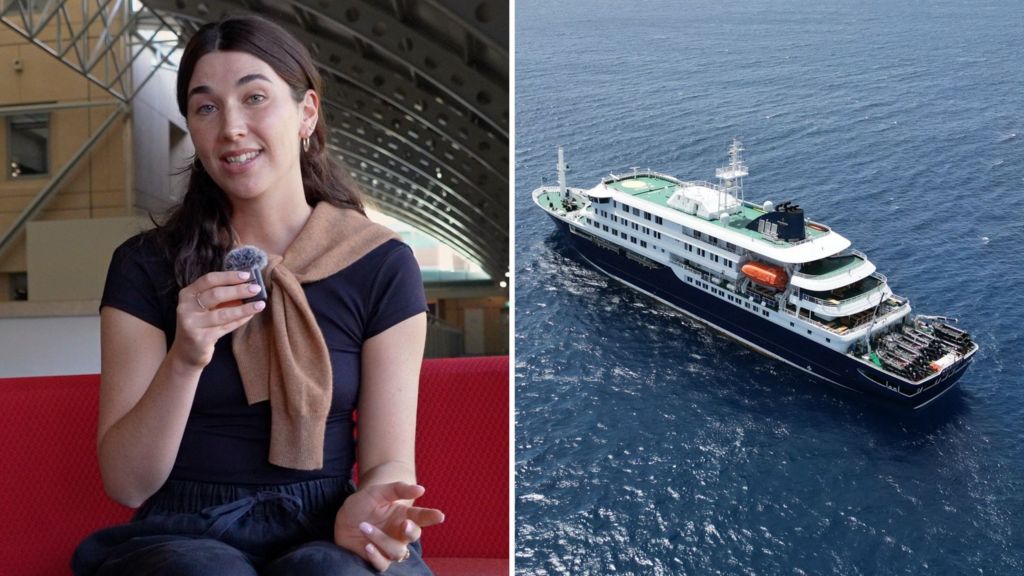
For years, cruise ships have carried a reputation as hotbeds for rapid viral transmission, with frequent news reports of norovirus and COVID-19 outbreaks making headlines during peak vacation seasons. But the question on every traveler’s mind remains: do viruses truly spread more easily on these large floating vessels compared to other crowded public spaces? To answer this pressing public health question, the British Broadcasting Corporation recently assembled a comprehensive breakdown of leading expert opinions, breaking down the unique factors that shape infection risk on cruises.
Experts point to several key characteristics of cruise travel that can create favorable conditions for viral spread, even when operators implement strict hygiene protocols. First, cruise ships house thousands of passengers and crew in close quarters, with shared dining halls, entertainment venues, swimming pools, and cabins that often have limited ventilation compared to land-based buildings. Many passengers also spend extended periods of time on board – often a week or more – which gives contagious viruses more time to move from person to person before infected guests can disembark and seek treatment. This combination of prolonged close contact and shared enclosed spaces has historically led to larger outbreaks than many other leisure settings.
That said, modern cruise lines have ramped up their infection control measures significantly in the wake of the COVID-19 pandemic. Today, most major operators maintain enhanced air filtration systems, regular surface sanitation, and updated protocols for isolating passengers who develop symptoms mid-cruise. Experts also note that the perception of heightened risk is partially skewed by the fact that outbreaks on cruise ships receive far more media attention than similar outbreaks in hotels or resort towns on land. When an outbreak is detected on a cruise, it is systematically tracked and reported because all passengers are contained in one closed environment, making it easier to count cases – a level of monitoring that rarely exists for land-based destinations.
Ultimately, experts agree that while cruise ships do carry some inherent elevated risk of viral spread compared to less crowded settings, the actual level of risk depends heavily on the specific measures operators take and the current state of circulating viruses in the broader community. Travelers can reduce their own risk by staying up to date on vaccinations, practicing good hand hygiene, and avoiding crowded indoor spaces on board when possible if they have underlying health conditions that put them at higher risk of severe illness.
-

Toddler in induced coma after inhaling dust while baking Bluey-themed birthday cake
A routine day of baking a children’s television-themed first birthday cake for a friend has turned into a devastating family emergency on Australia’s Gold Coast, after 2-year-old Dusty Robinson inhaled edible decorative gold dust that rapidly blocked his airways and left him unresponsive. According to details shared on a community-funded GoFundMe page set up by family friend Rochelle Evrard, Dusty’s mother Katie Robinson was preparing a Bluey-themed cake for her friend’s son when the accident occurred. The toddler got into the decorative baking ingredient, inhaling a substantial amount of the fine powder before any adult could intervene. Once the fine gold dust mixes with the moisture naturally present in the lungs and respiratory tract, it thickens into a dense paste, creating an immediate and dangerous blockage of Dusty’s lung tissue that left the boy quickly unresponsive. Panicked, Katie Robinson immediately placed an emergency call to local triple-0 services, and Dusty was rushed to emergency care for urgent treatment. Since the incident, Dusty has already undergone one surgical procedure to clear as much of the paste blockage from his lungs as possible. He remains in an induced coma and is still unable to breathe independently, requiring intubation and life support. A second procedure is planned to reposition Dusty’s breathing tube from his mouth to his nose, while clinicians will also conduct a full reassessment of the condition of his lungs to guide further treatment. Dusty’s parents are both sole traders, meaning they have no paid leave or employer-sponsored benefits to cover extended time off work to care for their son. They have also had to relocate temporarily from their home on the Gold Coast to Brisbane, where Dusty is receiving specialized pediatric care at a major children’s hospital, incurring unplanned accommodation and living costs amid the crisis. To support the family through this unexpected medical emergency, Evrard launched the crowdfunding campaign, which has already raised more than AU$11,000 from community donors to help cover the family’s ongoing costs as they stay by their son’s side awaiting his recovery.
-

Moment Indonesian river overflows from heavy rain
On May 4, severe heavy rain triggered a destructive river overflow in Bogor, a regency located in Indonesia’s West Java province, leaving a popular outdoor glamping facility completely ruined by fast-moving floodwaters.
Local reports confirm that the swelling river, pushed far beyond its banks by hours of intense downpour, unleashed a raging torrent that swept through the glamping site. The rushing water damaged infrastructure, destroyed luxury camping units, and forced any visitors or staff present to evacuate quickly. As of initial reports, no official casualties have been confirmed, but the facility has suffered extensive, irreversible damage that will take months to repair.
Bogor, which sits in a low-lying region near Indonesia’s capital Jakarta, is no stranger to seasonal flooding. The country’s tropical monsoon climate regularly brings intense rainfall between November and May, increasing the risk of river overflows and flash floods across low-lying and rural areas. This latest flood event comes as climate scientists have warned that rising global temperatures are intensifying extreme weather events across Southeast Asia, leading to more frequent and severe bouts of heavy rainfall and flooding that threaten communities, tourism infrastructure, and local livelihoods.
The glamping facility, which catered to nature-focused tourists looking for a luxury outdoor experience near Bogor’s popular forest and mountain attractions, was a popular weekend getaway for both domestic and international visitors. Local tourism officials have noted that the destruction of the site will have a short-term negative impact on the area’s small tourism-dependent businesses, which have only recently recovered from pandemic-related travel restrictions.
-
Australian shares drop to 20-day low as Reserve Bank signals more rate pain
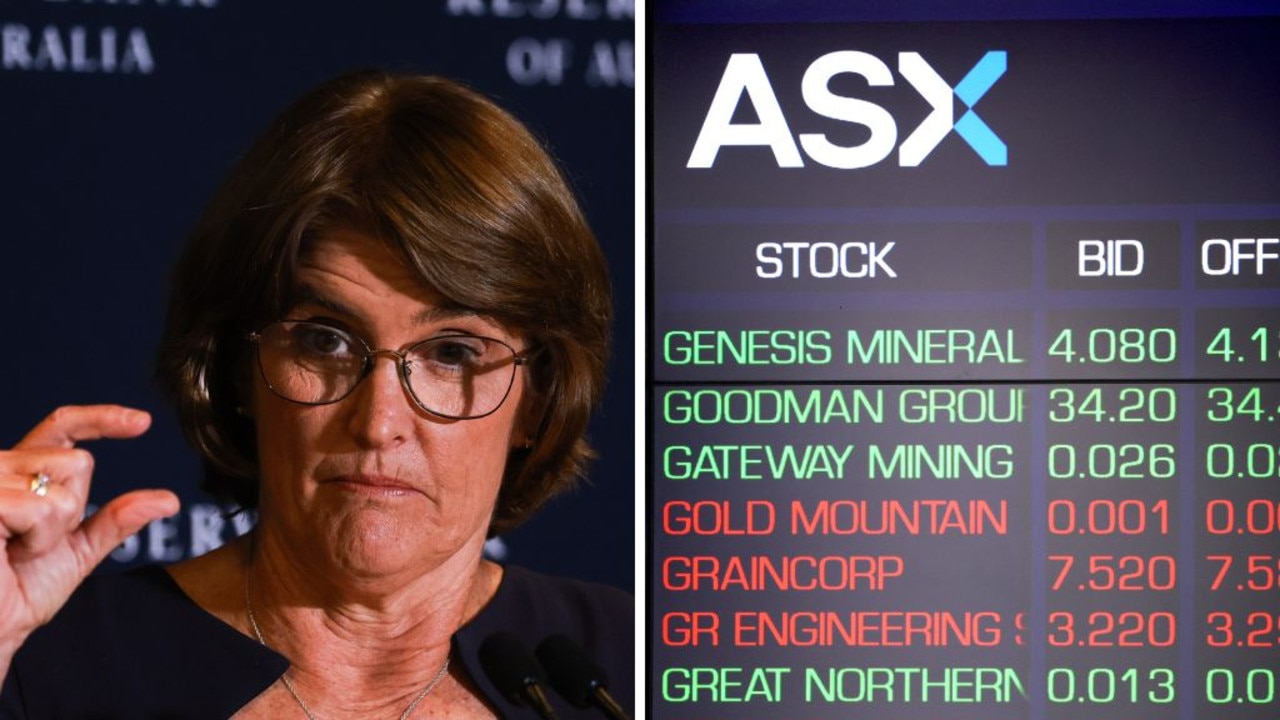
On Tuesday, the Reserve Bank of Australia’s widely anticipated but poorly received interest rate increase sent sharp downward pressure through Australia’s equity market, pushing the benchmark index to its lowest point in three weeks. The S&P/ASX 200 dropped 16.6 points, a 0.19% decrease, to close at 8,680.50. This new 20-day low marks the index’s 10th decline over the past 11 trading sessions. The broader All Ordinaries index also ended the day in negative territory, while the Australian dollar appreciated against its US counterpart to hover around $US0.71.
Following its scheduled two-day policy meeting, the RBA announced a 25 basis point increase to the official cash rate, lifting the benchmark to 4.35%. This marks the central bank’s third rate hike this year, and policymakers signaled they remain prepared to implement additional tightening if inflation does not cool as expected. The policy decision passed by an 8-1 vote, a split that market analysts say underscores the RBA’s strong commitment to taming persistent elevated inflation.
Not all stocks moved in the same direction on Tuesday. Mining firm Capricorn Metals led top performers with a 10.76% surge, while logistics technology firm WiseTech Global also closed up 5.17%. On the losing side, electronics manufacturer Codan posted the steepest drop, tumbling 8.93%, followed by fund manager Magellan Financial Group which fell 6.77%. Across the market, seven out of 11 major sectors closed the session higher, but broad losses in rate-sensitive segments outweighed these gains and pulled the overall market into the red.
Energy stocks led sector gains, supported by global crude prices holding firmly above $US100 per barrel. In contrast, financial stocks and consumer-facing sectors faced widespread selling pressure after the rate announcement. Australia’s big four banks delivered a mixed but mostly weak performance: Commonwealth Bank posted a modest 0.15% gain, while Westpac fell 1.95%, National Australia Bank dropped 0.74%, and ANZ slipped 1.03%. The weak showing from major lenders reflects widespread investor concerns that higher rates will suppress borrowing demand and slow overall economic growth.
Tony Sycamore, a market analyst at IG, explained that the hawkish tone of the RBA’s policy statement weighed on investor sentiment throughout the trading session. The latest rate hike has now fully unwound the emergency easing the central bank implemented last year, he added, and markets have begun pricing in the possibility of additional tightening in the coming months. “At this point, you would kind of feel there is another hike coming later this year,” Sycamore noted, adding that markets currently have a September increase priced in, with discussions ongoing about whether a fourth hike could come as late as November or December.
Sycamore emphasized that the 8-1 vote result reinforces the RBA’s determination to get inflation under control, saying “the tone was noticeably more hawkish on the inflation outlook there so they’re pretty determined to control that.” Weak performance from the banking sector has become a major headwind for broader market gains, he argued, noting “it’s very hard to see the ASX 200 marching back higher while the banks are struggling and that probably is going to be a bit of an Achilles heel for us.”
The biggest long-term risk to equities, Sycamore explained, is that interest rates will remain elevated for an extended period, which hits sectors most exposed to borrowing costs particularly hard. “The financials and the consumer discretionary are two of them. And then you’ve probably got the real estate sector there, the three which are so interest rate sensitive out there,” he said. “The more that interest rates go up, the less appetite there is for credit. And that’s a big thing that will start to weigh.”
While household spending has held up relatively well through recent rate increases so far, Sycamore warned this resilience may not continue. Consumer confidence has already faded, and business confidence has remained consistently weak, he pointed out. In the coming months, household spending is likely to come under growing pressure as the combined weight of rising energy costs, persistent cost-of-living pressures, and higher interest rates squeeze household budgets. Even with the market downturn, Sycamore noted that the clear shift in rate expectations could offer markets short-term relief, as the next potential rate move is not priced in until September, allowing for a temporary pause in market jitters.