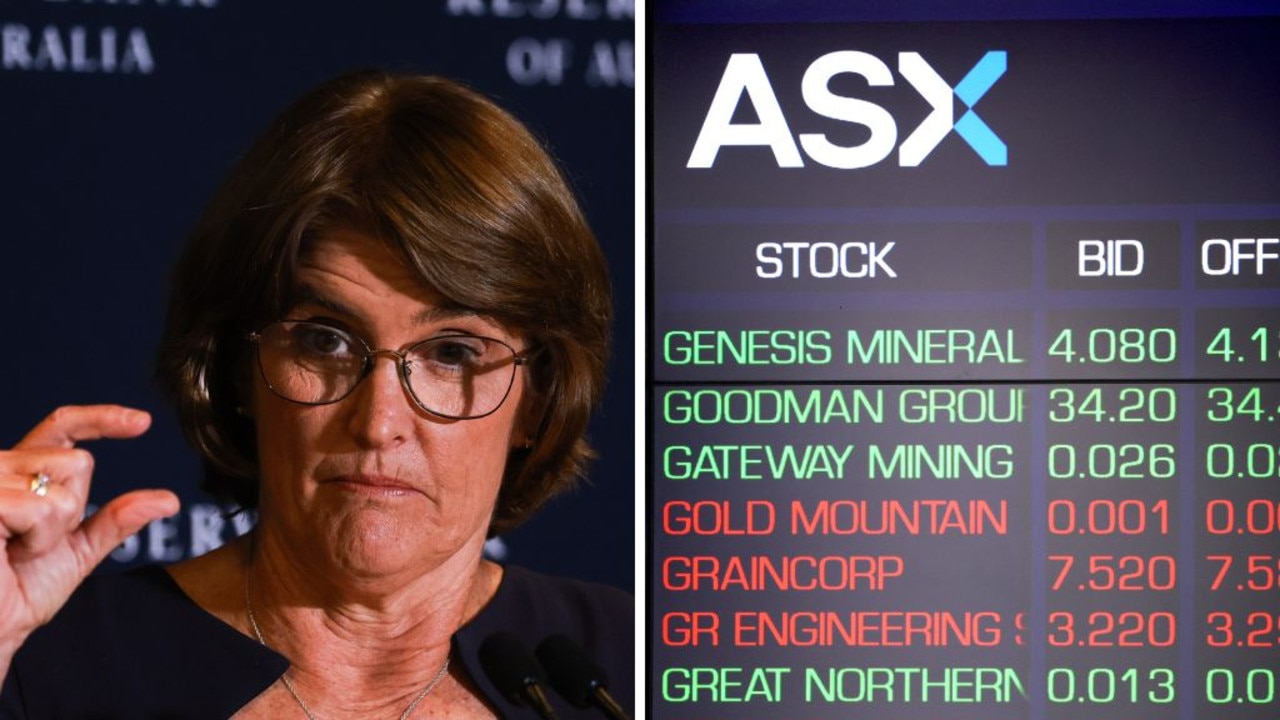
On Tuesday, the Reserve Bank of Australia’s widely anticipated but poorly received interest rate increase sent sharp downward pressure through Australia’s equity market, pushing the benchmark index to its lowest point in three weeks. The S&P/ASX 200 dropped 16.6 points, a 0.19% decrease, to close at 8,680.50. This new 20-day low marks the index’s 10th decline over the past 11 trading sessions. The broader All Ordinaries index also ended the day in negative territory, while the Australian dollar appreciated against its US counterpart to hover around $US0.71.
Following its scheduled two-day policy meeting, the RBA announced a 25 basis point increase to the official cash rate, lifting the benchmark to 4.35%. This marks the central bank’s third rate hike this year, and policymakers signaled they remain prepared to implement additional tightening if inflation does not cool as expected. The policy decision passed by an 8-1 vote, a split that market analysts say underscores the RBA’s strong commitment to taming persistent elevated inflation.
Not all stocks moved in the same direction on Tuesday. Mining firm Capricorn Metals led top performers with a 10.76% surge, while logistics technology firm WiseTech Global also closed up 5.17%. On the losing side, electronics manufacturer Codan posted the steepest drop, tumbling 8.93%, followed by fund manager Magellan Financial Group which fell 6.77%. Across the market, seven out of 11 major sectors closed the session higher, but broad losses in rate-sensitive segments outweighed these gains and pulled the overall market into the red.
Energy stocks led sector gains, supported by global crude prices holding firmly above $US100 per barrel. In contrast, financial stocks and consumer-facing sectors faced widespread selling pressure after the rate announcement. Australia’s big four banks delivered a mixed but mostly weak performance: Commonwealth Bank posted a modest 0.15% gain, while Westpac fell 1.95%, National Australia Bank dropped 0.74%, and ANZ slipped 1.03%. The weak showing from major lenders reflects widespread investor concerns that higher rates will suppress borrowing demand and slow overall economic growth.
Tony Sycamore, a market analyst at IG, explained that the hawkish tone of the RBA’s policy statement weighed on investor sentiment throughout the trading session. The latest rate hike has now fully unwound the emergency easing the central bank implemented last year, he added, and markets have begun pricing in the possibility of additional tightening in the coming months. “At this point, you would kind of feel there is another hike coming later this year,” Sycamore noted, adding that markets currently have a September increase priced in, with discussions ongoing about whether a fourth hike could come as late as November or December.
Sycamore emphasized that the 8-1 vote result reinforces the RBA’s determination to get inflation under control, saying “the tone was noticeably more hawkish on the inflation outlook there so they’re pretty determined to control that.” Weak performance from the banking sector has become a major headwind for broader market gains, he argued, noting “it’s very hard to see the ASX 200 marching back higher while the banks are struggling and that probably is going to be a bit of an Achilles heel for us.”
The biggest long-term risk to equities, Sycamore explained, is that interest rates will remain elevated for an extended period, which hits sectors most exposed to borrowing costs particularly hard. “The financials and the consumer discretionary are two of them. And then you’ve probably got the real estate sector there, the three which are so interest rate sensitive out there,” he said. “The more that interest rates go up, the less appetite there is for credit. And that’s a big thing that will start to weigh.”
While household spending has held up relatively well through recent rate increases so far, Sycamore warned this resilience may not continue. Consumer confidence has already faded, and business confidence has remained consistently weak, he pointed out. In the coming months, household spending is likely to come under growing pressure as the combined weight of rising energy costs, persistent cost-of-living pressures, and higher interest rates squeeze household budgets. Even with the market downturn, Sycamore noted that the clear shift in rate expectations could offer markets short-term relief, as the next potential rate move is not priced in until September, allowing for a temporary pause in market jitters.