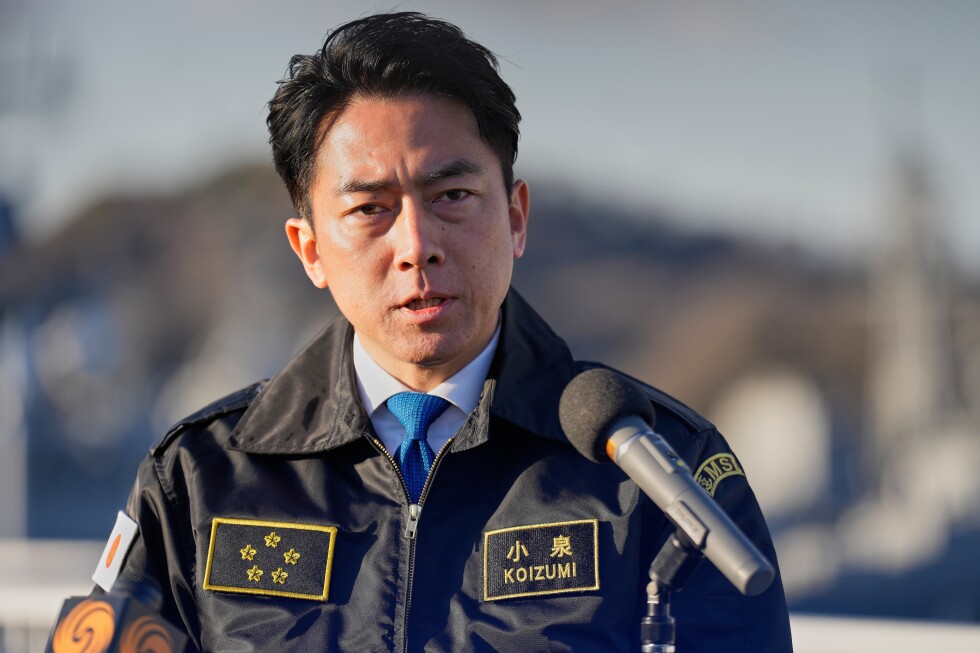
In a move that underscores growing regional security realignments across the Indo-Pacific, Japanese Defense Minister Shinjiro Koizumi arrived in the Philippines on Tuesday for a diplomatic and military engagement aimed at expanding bilateral defense cooperation between the two nations, government officials confirmed. During his stay in the Philippine capital Manila, Koizumi held scheduled talks with President Ferdinand Marcos Jr. and Defense Secretary Gilberto Teodoro Jr., where a potential transfer of secondhand Japanese destroyers to Manila was on the agenda for discussion.
Both the Philippines and Japan are treaty allies of the United States, and the pair cemented a landmark defense pact earlier in 2024: the Reciprocal Access Agreement, which cleared legal and logistical barriers for large-scale joint combat exercises between their armed forces. Under this new framework, up to 1,400 Japanese military personnel will now participate regularly in the annual Balikatan exercise, a long-running multinational military drills hosted by the Philippines whose name translates to “shoulder-to-shoulder” in Tagalog. For decades, Balikatan has brought together U.S. and Filipino forces, alongside other allied partners, to prepare for regional security contingencies and counter growing Chinese territorial assertiveness in the Indo-Pacific.
Koizumi is set to join more than 100 international delegates from 16 countries—including major Indo-Pacific players India and Australia—on Wednesday, when the group travels to the northwestern Philippine coastal town of Paoay to observe a high-stakes live-fire drill. During the exercise, combined artillery and missile units from the Philippines, United States, Japan, and Canada will conduct a simulated anti-ship attack on a target approximately 25 miles off the Philippine coast. According to Philippine Marine Corps Col. Dennis Hernandez, Japanese forces will fire two volleys of Type 88 surface-to-ship missiles to sink the decommissioned World War II-era Philippine navy corvette that serves as the exercise target. President Marcos will observe the live-fire maneuvers remotely via live video feed from his official residence in Manila, Hernandez added.
The Philippine stop comes just one day after Koizumi completed a similar diplomatic visit to Jakarta, Indonesia, where he signed a new bilateral defense cooperation agreement with Indonesian Defense Minister Sjafrie Sjamsoeddin. Speaking to reporters ahead of his regional tour from Tokyo, Koizumi framed the push for expanded defense partnerships as a critical response to Japan’s current security landscape. “As Japan faces the most severe and complex security environment in the postwar era, it is important to establish a multilayered network of allies and like-minded countries, while expanding it and strengthening our deterrence,” he said.
Koizumi’s regional tour comes against a backdrop of sweeping changes to Japan’s longstanding post-WWII security policy. In recent years, Tokyo has moved away from its decades-long principle of limiting military activity to self-defense, approving the development of long-range offensive missiles capable of striking enemy targets at distance. Most recently, on April 21, Japan lifted a decades-long ban on lethal weapons exports—a pivotal shift in its postwar pacifist framework that was designed to strengthen Japan’s domestic arms industry and counter growing Chinese aggression across the region. The policy shift aligns with the Philippines’ own security priorities, as Manila has seen a sharp escalation in territorial disputes with Beijing over contested claims in the South China Sea in recent years.
The lifted export ban opens the door for Japan to transfer up to six retired Abukuma-class destroyers to the Philippine Navy, Hernandez confirmed. These destroyers are equipped to conduct coastal patrols and detect aerial, surface, and undersea threats, making them a valuable addition to Manila’s relatively modest naval fleet. While the transfer remains under discussion during Koizumi’s visit, specific terms and timelines for the potential deal have not been made public. The shift in Japan’s security policy has been broadly welcomed by its Western and Indo-Pacific allies, including the United States and Australia, but has drawn sharp pushback from Beijing. Last month, Chinese Foreign Ministry spokesperson Guo Jiakun said the international community would “resolutely resist Japan’s reckless moves toward a new type of militarism.”
This report includes contributing reporting from Mari Yamaguchi in Tokyo.