作者: admin

  • South China Sea sub-forum calls for greater restraint, dialogue, cooperation to safeguard regional peace

    South China Sea sub-forum calls for greater restraint, dialogue, cooperation to safeguard regional peace

    The South China Sea Sub-forum of the Boao Forum for Asia Annual Conference 2026 concluded on March 28th in Boao, Hainan province, with participants issuing a strong call for enhanced diplomatic restraint and cooperative governance to maintain regional stability. The two-day gathering, themed “The South China Sea Order and Governance Cooperation in a Changing World,” brought together approximately 200 delegates from 20 nations including the United States, United Kingdom, Australia, Vietnam, Philippines, and Malaysia.

    Co-organized by multiple prominent institutions including the National Institute for South China Sea Studies, Huayang Center for Maritime Cooperation and Ocean Governance, and China Oceanic Development Foundation, the forum featured intensive discussions across four critical areas: regional cooperation mechanisms, marine environmental protection as a bridge for China-ASEAN collaboration, rules-based order establishment, and marine economic development connected to Hainan’s Free Trade Port initiatives.

    A prominent theme emerged regarding growing concerns over major power competition and unilateral actions that threaten maritime stability. Liu Zhenmin, China’s Special Envoy for Climate Change and former UN Under-Secretary-General, delivered a keynote address emphasizing that East Asian nations should learn from Middle Eastern conflicts to preserve peaceful coexistence. He advocated for regional arrangements ensuring long-term stability and protection of vital South China Sea shipping routes.

    Liu specifically called for accelerated negotiations between China and ASEAN members toward establishing a binding Code of Conduct (COC) for the South China Sea, identifying this as crucial for building mutual trust and enhancing maritime cooperation. Additionally, he proposed that East Asian nations expedite their energy transition and develop new regional energy security mechanisms to support sustainable development.

    The forum represented one of the most significant multilateral dialogues on South China Sea governance this year, combining academic expertise with diplomatic and industry perspectives to address complex maritime challenges through cooperative rather than confrontational approaches.

  • Pentagon preparing for US ground assault in Iran, says report

    Pentagon preparing for US ground assault in Iran, says report

    The Pentagon is actively developing strategic options for potential ground assaults on Iranian territory, according to a Washington Post report citing senior U.S. officials. This planning coincides with the deployment of thousands of American troops and marines to the Middle East, signaling heightened military preparations. The contemplated operations would not constitute a full-scale invasion but would likely involve targeted raids combining conventional infantry with elite special operations forces.

    While planning remains underway, no definitive decision has been made by President Donald Trump regarding these offensive options. White House Press Secretary Karoline Leavitt clarified that such military contingency planning represents standard procedure for the Pentagon to provide the commander-in-chief with comprehensive strategic alternatives. The administration has specifically evaluated potential operations against Kharg Island, Iran’s critical oil export facility in the Gulf, alongside coastal areas near the strategically vital Strait of Hormuz.

    Military experts acknowledge significant risks to U.S. personnel from Iranian drones, missile systems, improvised explosives, and ground fire. The planning appears extensive and premeditated rather than hastily conceived, with one former defense official noting “We’ve looked at this. It’s been war-gamed. This is not last-minute planning.”

    The administration maintains a dual-track approach, with Secretary of State Marco Rubio asserting that objectives could potentially be achieved without ground troops, while simultaneously the Pentagon prepares for possible large-scale operations. Recent weeks have seen the deployment of the 31st Marine Expeditionary Unit, comprising approximately 2,200 personnel, to the region.

    American public opinion strongly opposes military escalation, with an Associated Press-NORC poll indicating 62% opposition to ground troop deployment, while only 12% support such action. The human cost has already been substantial, with 13 U.S. military fatalities and 300 wounded personnel since hostilities intensified, including casualties from drone strikes in Kuwait and Iraq.

  • UK police arrest a man after a car hits pedestrians in the English city of Derby, injuring 7

    UK police arrest a man after a car hits pedestrians in the English city of Derby, injuring 7

    DERBY, England — A violent vehicular incident disrupted the evening calm in Derby’s city center on Saturday, resulting in multiple pedestrian casualties and triggering a significant police response. The episode unfolded at approximately 9:30 p.m. local time along Friar Gate, a renowned nightlife district in this Midlands city of 275,000 residents.

    Derbyshire Constabulary confirmed the arrest of a 36-year-old local man on suspicion of attempted murder following the collision. The suspect was apprehended near the scene and remains in police custody for questioning. Emergency services transported seven injured pedestrians to area hospitals for treatment, though their current conditions remain undisclosed.

    Chief Superintendent Emma Aldred addressed the public during a Sunday news conference, revealing that counterterrorism specialists have joined the investigation—a standard procedural measure for incidents of this nature. Despite this collaborative effort, authorities emphasized they have not classified the event as terrorism-related at this preliminary stage.

    “I must clarify that this procedural involvement does not indicate we are treating this as a terrorist incident,” Aldred stated. “Our investigators maintain an open-minded approach regarding potential motives as we continue gathering evidence.”

    The Derbyshire Constabulary has cordoned off the Friar Gate area for forensic examination while appealing to witnesses who might have captured footage or observed the events leading to the collision. The investigation continues as authorities work to establish the precise sequence of events and determine whether the act was intentional or accidental.

  • Blue Circle model offers China’s solution for ocean governance

    Blue Circle model offers China’s solution for ocean governance

    A groundbreaking marine conservation model emerging from China’s eastern coast is demonstrating transformative potential in addressing the global crisis of ocean plastic pollution. The Blue Circle initiative, launched in Taizhou, Zhejiang province in 2020, has developed an integrated circular economy system that effectively converts marine waste into valuable resources while engaging coastal communities in conservation efforts.

    This innovative approach arrives amid alarming projections from the United Nations Environment Programme, whose recent report reveals between 75-199 million metric tons of plastic currently contaminating marine environments worldwide. Without immediate intervention, annual plastic influx into oceans could nearly double to 23-37 million tons by 2040, representing what experts describe as an environmental emergency of unprecedented scale.

    The Blue Circle framework establishes a comprehensive governance structure encompassing four interconnected phases: systematic marine debris collection, land-based recycling infrastructure, international carbon credit trading mechanisms, and equitable public benefit distribution. This holistic methodology represents a paradigm shift from conventional pollution control toward resource recovery and value creation.

    By transforming retrieved plastic materials into marketable commodities and linking cleanup activities to carbon emission reduction credits, the model creates sustainable economic incentives for continued environmental protection. Local fishing communities participate actively in collection efforts, creating a virtuous cycle where environmental stewardship generates tangible economic returns.

    This Chinese-developed solution offers developing nations particularly relevant insights, demonstrating how emerging economies can implement scalable waste management systems without compromising economic development objectives. The program’s success in Zhejiang has attracted international attention as governments worldwide seek practical solutions to the mounting marine plastic crisis.

  • Canada’s New Democratic Party elects Avi Lewis as its leader

    Canada’s New Democratic Party elects Avi Lewis as its leader

    In a decisive leadership contest, veteran journalist and activist Avi Lewis has been elected to lead Canada’s New Democratic Party (NDP), securing 56% of the vote. His victory comes as the left-leaning party confronts its most challenging period in recent history, holding just six seats in the House of Commons following devastating losses in the 2025 federal election.

    Lewis triumphed over Member of Parliament Heather McPherson and three other candidates with a campaign centered on radical economic transformation. His platform prioritizes worker protections in the AI era, halting all new oil and gas infrastructure, and establishing state-owned, non-profit grocery stores to combat soaring living costs.

    Addressing supporters in Winnipeg, the 58-year-old leader delivered a fiery victory speech condemning Canada’s ‘rigged economy’ that benefits the wealthy while leaving working families behind. ‘Canada, mark your calendar: the NDP comeback starts now,’ declared Lewis, promising to build ‘a government that works for the many, not the money.’

    The leadership transition follows the resignation of Jagmeet Singh, who stepped down after the NDP’s catastrophic election performance that saw the party lose 17 seats—10 to Conservatives and 7 to Liberals. Current polling places national support at just 12%, with a quarter of former voters considering the party ‘irrelevant’ according to recent Angus Reid data.

    Despite federal struggles, the party maintains strong provincial presence, governing British Columbia and Manitoba where Premier Wab Kinew enjoys 61% approval ratings. Lewis himself faces governing challenges as an unelected leader, having lost parliamentary bids in Vancouver during both 2021 and 2025 elections. Party rules permit his leadership without a seat, though he cannot participate directly in House debates until securing election.

    Lewis brings considerable name recognition and fundraising prowess—amassing C$1.2 million during his campaign—along with deep party roots. His grandfather David Lewis was among the NDP’s founding members and 1970s leader, while father Stephen Lewis led Ontario’s NDP. The new leader’s professional background includes journalism roles at CBC and Al Jazeera English, alongside activist credentials co-authoring The Leap Manifesto with wife Naomi Klein, the renowned author and social activist.

    His policy agenda combines wealth taxation, affordable housing initiatives, and climate action with controversial energy positions that already face internal criticism. Former Alberta NDP minister Shannon Phillips warned Lewis’s anti-pipeline stance could alienate voters in oil-rich provinces, highlighting the balancing act required for national relevance.

    The leadership victory coincides with fresh challenges including the recent defection of Nunavut MP Lori Idlout to Prime Minister Mark Carney’s Liberals, despite her initial endorsement of Lewis’s leadership bid.

  • Spain begins Holy Week with processions, palm branches and familiar faces

    Spain begins Holy Week with processions, palm branches and familiar faces

    MÁLAGA, Spain — Celebrated actor Antonio Banderas inaugurated Holy Week celebrations in his hometown of Málaga by participating in the traditional Palm Sunday processions, a cornerstone of Spain’s profound Catholic heritage. The Hollywood star, adorned in a beige penitent’s robe with dark green accents, fulfilled his annual role within the Tears and Favors brotherhood by initiating the movement of the Virgin Mary float following a solemn hymn inside Saint John’s Church.

    Banderas, maintaining this deeply personal tradition for over two decades, expressed profound connection to his cultural roots. “I consistently cherish the traditions of my homeland, our identity, and the distinctive manner we celebrate,” the 65-year-old actor told press representatives. “Holy Week represents for me a period of tears and favors that manifest extraordinarily beautiful experiences.”

    The actor’s brotherhood joined eight others in parading through Málaga’s historic quarter for hours beneath sunny skies, continuing until nightfall. This ceremonial commencement marks Jesus’ triumphant Jerusalem entry preceding crucifixion observances on Good Friday and resurrection celebrations on Easter Sunday.

    While Andalusia’s cities of Seville and Málaga host particularly elaborate processions featuring ornate floats and hundreds of penitents, religious observances occur nationwide. In Cordoba’s mountainous town of Cabra, twelve faithful portrayed Jesus’ apostles wearing likeness masks alongside traditional palm branch carriers.

    Throughout the coming week, thousands of participants will accompany antique venerated icons of Jesus and Virgin Mary on massive floats while hundreds of thousands of spectators line streets—singing hymns, offering floral tributes, or maintaining reverent silence during these culturally significant events.

  • Testing begins on the Shandong section of Xiong’an-Shangqiu high-speed railway

    Testing begins on the Shandong section of Xiong’an-Shangqiu high-speed railway

    The Shandong segment of the pivotal Xiong’an-Shangqiu high-speed railway has officially commenced its comprehensive joint commissioning and testing phase, marking a significant milestone in China’s ongoing infrastructure expansion. The testing train’s departure from Liaocheng West Station on Friday initiated a meticulous three-month evaluation process for this crucial segment of the broader Beijing–Hong Kong high-speed rail corridor.

    According to Wang Yongwu, Director of the Science, Technology and Information Department at China Railway Jinan Group, the testing regimen will unfold in two primary phases: progressive speed assessment followed by rigorous signal system validation. Specialized inspection trains and high-speed test vehicles will be deployed to gather critical performance data across multiple parameters including track geometry, overhead contact systems, and train control mechanisms.

    The extensive testing protocol aims to thoroughly evaluate the integrated functionality of traction power supply, catenary systems, communications infrastructure, and advanced monitoring systems designed to detect natural disasters and object intrusions. Through systematic debugging and optimization, engineers will verify that all subsystems collectively meet stringent design specifications and operational safety standards.

    Spanning 269 kilometers through western Shandong province, the newly constructed segment traverses the cities of Liaocheng, Jining, and Heze while incorporating seven strategically positioned stations. Upon operational launch, this transportation artery is projected to substantially enhance regional connectivity and optimize the structural configuration of Shandong’s railway network, facilitating more efficient passenger and freight movement across the region.

  • Three arrested in Paris after attempted bomb attack outside Bank of America

    Three arrested in Paris after attempted bomb attack outside Bank of America

    French counterterrorism authorities have apprehended three individuals in connection with a foiled explosive attack targeting the Paris headquarters of Bank of America. The incident occurred in the early hours of Saturday in the city’s prestigious 8th arrondissement, mere blocks from the iconic Champs-Élysées avenue.

    According to detailed reports from AFP, the initial suspect was detained at approximately 03:30 local time (01:30 GMT) after placing a suspicious device containing five liters of flammable liquid alongside an ignition mechanism near the banking facility. A second individual, allegedly documenting the scene with a mobile device, managed to evade capture during the initial response.

    France’s Interior Minister Laurent Nuñez presented a concerning geopolitical dimension to the attempted attack, suggesting potential connections to ongoing Middle Eastern tensions. “In this type of conflict, you have a number of Iranian services that are likely to carry out actions such as these through proxies,” Nuñez stated, while acknowledging that these suspicions remain under formal investigation.

    The Paris prosecutor’s office confirmed Sunday that two additional suspects had been taken into custody as part of the comprehensive investigation initiated on March 28, 2026. The primary suspect, identified as a minor, has had their detention period formally extended under French anti-terrorism legislation, which permits initial holding periods of up to 96 hours with possible judicial extensions.

    Minister Nuñez emphasized that similar attacks had been prevented across multiple European nations, specifically mentioning the Netherlands, Britain, and Norway. In response to this security threat, French authorities have heightened vigilance nationwide, with increased security presence at transportation hubs and sensitive locations.

    The investigation, now led by France’s specialized anti-terrorism prosecution office, examines charges of “attempted damage by fire or other dangerous means in connection with a terrorist undertaking” and “terrorist criminal conspiracy.” The Paris judicial police and France’s domestic intelligence service (General Directorate for Internal Security) are collaborating extensively on the case. The Iranian embassy in France has not issued any official response to the allegations presented by French authorities.

  • Two Australian states offer free public transport as war pushes up fuel prices

    Two Australian states offer free public transport as war pushes up fuel prices

    In response to skyrocketing fuel prices triggered by Middle East conflicts, two Australian states have announced unprecedented free public transport initiatives. Victoria and Tasmania are implementing temporary fare-free periods to alleviate financial pressure on commuters and reduce road traffic.

    Victoria Premier Jacinta Allan confirmed that all train, tram, and bus services will be completely free throughout April. “This immediate measure won’t resolve every challenge, but it provides crucial relief for Victorians during this difficult period,” Allan stated on Saturday. The initiative aims to decrease dependency on private vehicles as petrol prices continue their upward trajectory.

    Simultaneously, Tasmania announced an even more extensive program, eliminating fares on coaches, buses, and ferries from Monday through June’s end. Premier Jeremy Rockliff emphasized that “rising fuel costs significantly impact family budgets, prompting our decisive action to protect Tasmanians.” The island state will additionally waive school bus fees, generating approximately A$20 weekly savings for affected families.

    This policy divergence highlights regional variations in addressing the fuel crisis. New South Wales Transport Minister John Graham indicated his state reserves resources for potential extended disruptions, noting “this situation will likely persist beyond a single month.” Other states including South Australia, Queensland, and Western Australia have implemented alternative measures such as expanded senior travel benefits, previously introduced flat fares, or historical fare reductions.

    The national context reveals severe price inflation, with average petrol costs surging from A$2.09 to A$2.38 per litre within one month according to Australian Institute of Petroleum data. Although supply chain issues aren’t cited as primary concerns, international oil market volatility continues driving domestic price increases.

    Globally, Australia joins multiple nations implementing conservation measures following the effective closure of the Strait of Hormuz—a critical waterway handling 20% of global oil and gas shipments. Egypt has mandated early business closures and remote work policies, Ethiopia placed non-essential government staff on leave, and the Philippines declared a national emergency incorporating transport subsidies and reduced government operational days.

  • War in the Middle East: latest developments

    War in the Middle East: latest developments

    The Middle East conflict has entered a new phase of heightened escalation with a series of significant military and diplomatic developments unfolding across the region. Overnight, Israeli forces targeted a key ballistic missile production facility in Tehran operated by Iran’s defense ministry, marking the latest in a series of strikes against Iranian military infrastructure since hostilities began on February 28.

    The conflict has expanded beyond direct Iran-Israel engagements, with Yemen’s Houthi rebels launching missiles and drones toward Israeli targets, drawing condemnation from France for further escalating regional tensions. In response to the widening conflict, Bahrain implemented a maritime curfew from 6:00 pm to 4:00 am local time to enhance coastline security against what it termed ‘blatant Iranian aggression.’

    Diplomatic efforts are underway as foreign ministers from Pakistan, Saudi Arabia, Egypt, and Turkey initiated talks with Islamabad mediating between the United States and Iran. The multilateral discussion aims to address the evolving regional situation and mutual concerns among Muslim nations.

    Iranian officials have made several significant threats, with Parliament Speaker Mohammad Bagher Ghalibaf accusing the United States of secretly planning ground operations despite public diplomatic efforts. Separately, Iran’s navy chief warned that the USS Abraham Lincoln aircraft carrier would be targeted if it enters Iranian range.

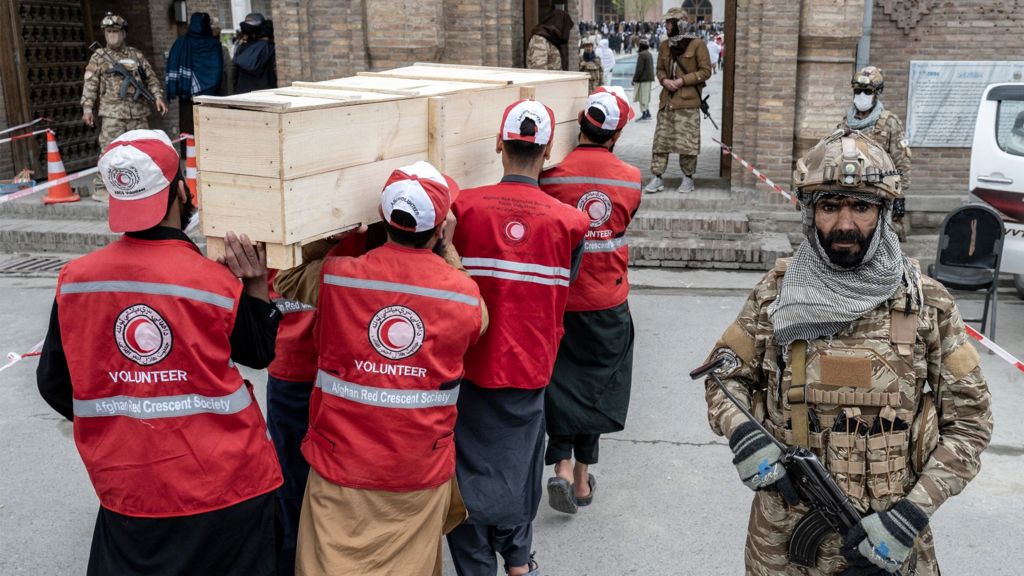
    The conflict has taken a toll on media personnel, with Qatari news network Al Araby TV reporting its Tehran office building was struck by an Israeli missile, wounding ten people according to the Iranian Red Crescent. The network condemned the attack on a civilian commercial building as a violation of international law. Meanwhile, Lebanon held funerals for three journalists killed by an Israeli strike, drawing criticism from French officials who called potential deliberate targeting of journalists ‘extremely serious.’

    Religious tensions emerged as Israeli police prevented Jerusalem’s Latin Patriarch from celebrating Palm Sunday at the Church of the Holy Sepulchre, prompting condemnation from Italian and French leaders who cited violations of religious freedom. Israeli Prime Minister Benjamin Netanyahu later stated the action was taken out of concern for the cardinal’s safety.

    Additional strikes hit the Iranian port city of Bandar Khamir near the strategic Strait of Hormuz, killing five people according to Iranian state media. The Revolutionary Guards claimed retaliatory strikes on aluminum plants in Bahrain and the UAE, describing them as facilities connected to US military and aerospace sectors.

    The human cost continued to mount with the Israeli army announcing the death of a fifth soldier in combat in south Lebanon. Iran’s Revolutionary Guards also threatened US universities in the Middle East following claims that US-Israeli strikes destroyed two Iranian universities, prompting the American University of Beirut to move to online instruction.

    Amid the tensions, two Indian-flagged LPG tankers successfully navigated through the Strait of Hormuz—a critical chokepoint that Iran has largely closed to maritime traffic—carrying approximately 94,000 tonnes of combined cargo toward India’s coast.