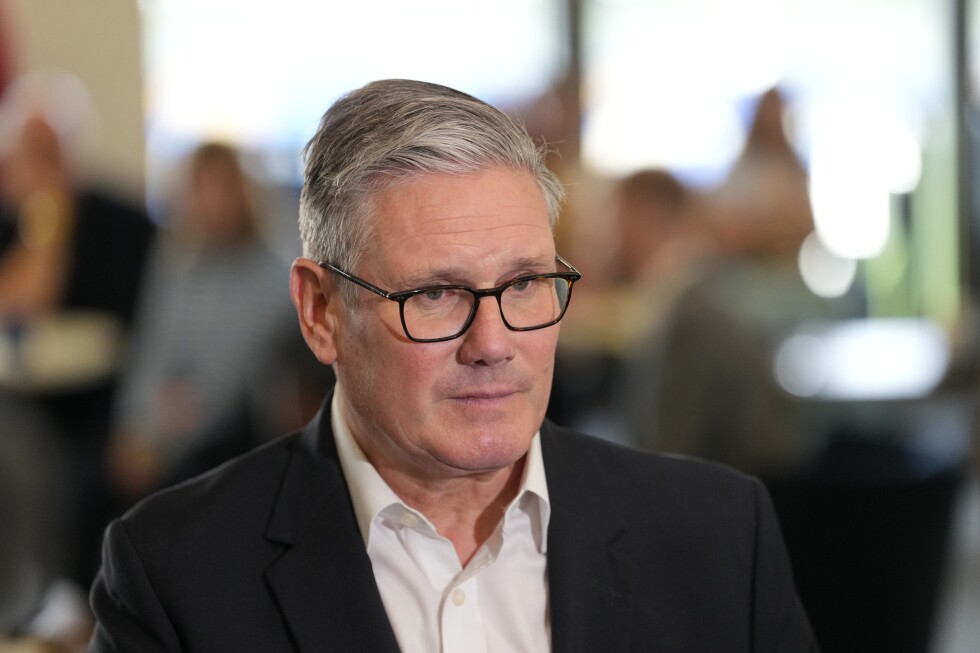
LONDON — Just eight months after securing a landslide general election victory, British Prime Minister Keir Starmer is fighting for his political survival, confirming to his Cabinet on Tuesday that he refuses to step down even as internal dissent within his own Labour Party reaches a fever pitch.
The current crisis erupted last week after the Labour Party suffered devastating losses across local elections nationwide. Political analysts warn that if the poor performance is replicated in a future national vote, the party could be swept out of power in a historic rout. The disappointing results laid bare long-simmering frustrations with Starmer’s leadership, triggering a wave of calls for his departure from within party ranks.
So far, more than 70 Labour backbench members of Parliament — nearly one-fifth of the party’s total representation in the House of Commons — have publicly called on Starmer to either resign immediately or outline a clear timeline for his exit. Notably, no lawmaker has yet launched a formal leadership challenge against Starmer, a move that would require meeting a minimum threshold of parliamentary support under party rules. Even so, the number of lawmakers calling for change signals deep and widespread discontent across the party.
The rebellion gained traction on Tuesday when junior minister Miatta Fahnbulleh resigned from her post in the housing, communities and local government department. A prominent figure on the Labour left, Fahnbulleh issued a public statement urging Starmer to “do the right thing for the country” and make way for new leadership. In her resignation notice, she argued the current government has failed to deliver the transformative change voters mandated in last year’s general election, and has not governed with a clear, consistent set of core Labour values. “Nor have we governed as a Labour Party clear about our values and strong in our convictions,” she wrote.
Starmer’s rapid drop in popularity since his July 2024 landslide victory stems from a range of interconnected issues. Critics point to repeated policy missteps, a widespread perception that the prime minister lacks a clear governing vision, ongoing stagnation in the British economy, and major questions over his political judgment — most notably his controversial appointment of Peter Mandelson as U.K. Ambassador to the United States, despite Mandelson’s well-documented personal ties to convicted sex offender Jeffrey Epstein.
Last week’s local election results also underscored a dramatic shift in the United Kingdom’s political landscape: the traditional two-party system long dominated by Labour and the Conservative Party is fracturing, with Labour losing significant support to both the right-wing populist Reform UK (an anti-immigration party) and the left-leaning Green Party, which campaigned on an eco-populist platform.
Opening Tuesday’s emergency Cabinet meeting, Starmer acknowledged his responsibility for the poor local election results but immediately doubled down on his commitment to stay in office. He reminded his ministers that Labour’s internal rules require a formal leadership challenge to gather the support of at least one-fifth of the party’s sitting MPs — a threshold that currently stands at 81 signatures, a mark challengers have not yet hit — and that no formal ousting process has been triggered.
“The country expects us to get on with governing,” Starmer told the gathering. “That is what I am doing and what we must do.”
Under British law, the next national general election is not required to be held until 2029, and the UK political system allows parties to replace a sitting prime minister mid-term without triggering a national vote. Starmer has already moved to shore up his position, launching his fightback with a combative speech to detractors on Monday. He is also set to push forward with an ambitious slate of new legislative proposals, which will be formally announced by King Charles III during the State Opening of Parliament on Wednesday, in a bid to regain momentum and reframe his premiership.
Danica Kirka contributed reporting from London.