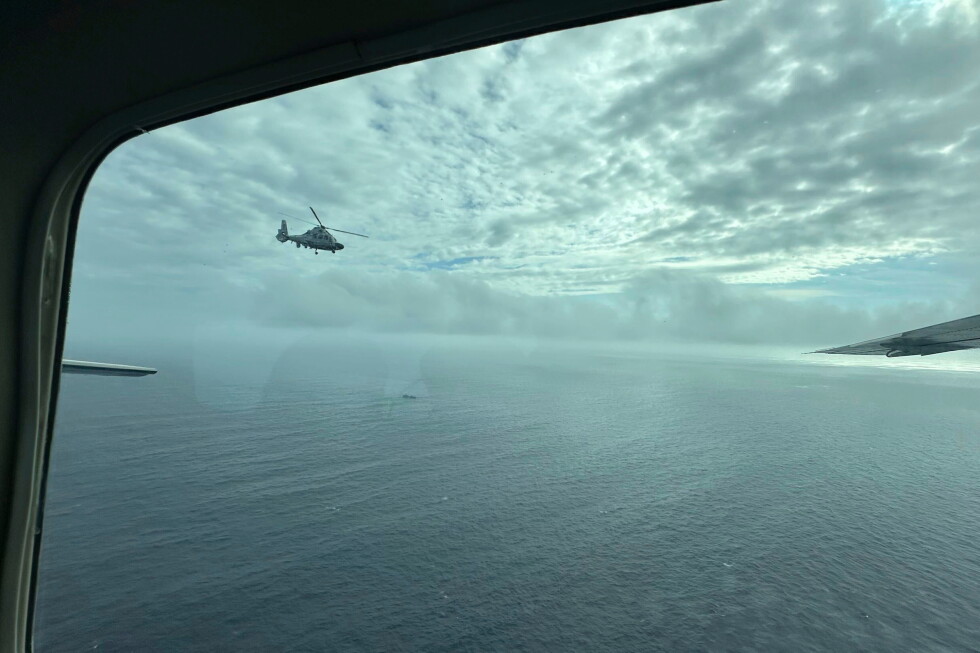
Tensions have flared again in the long-running South China Sea territorial dispute, after Philippine authorities announced Tuesday that Manila has filed an official diplomatic protest against what it calls China’s deployment of a manned floating structure at the contested Scarborough Shoal. Philippine officials warn the installation could be the first step in Beijing’s plan to convert the uninhabited atoll into a fortified artificial island base, mirroring past Chinese infrastructure development in other disputed parts of the waterway.
According to the Philippine Department of Foreign Affairs, the structure was first detected by the country’s military and coast guard patrols. The department confirmed it had submitted the formal protest, but offered no additional details on the structure’s exact size, location, or purpose at the time of the announcement.
China has quickly rejected Manila’s concerns, reaffirming its long-stated position that it holds “indisputable sovereignty” over Scarborough Shoal, which Beijing refers to as Huangyan Island, and all surrounding waters. Chinese Ministry of Foreign Affairs spokesperson Lin Jian stated in Beijing that any activities China carries out on the island — including scientific research — fall fully within the legitimate rights of a sovereign nation. Lin also called on Manila to end what he described as unauthorized maritime incursions and provocative actions, and to stop inflating public discussion of the territorial issue.
The latest standoff at Scarborough Shoal comes against a backdrop of more than a decade of unresolved friction between the two nations over the atoll. In 2012, Chinese naval and coast guard vessels deployed to the shoal to assert control after a weeks-long tense standoff with Philippine government ships. In response to that move, Manila brought its broader South China Sea territorial disputes with Beijing to an international arbitration tribunal based on the 1982 United Nations Convention on the Law of the Sea.
The 2016 arbitration ruling delivered a sweeping victory to the Philippines, invalidating China’s expansive territorial claims that covered nearly the entire South China Sea. However, Beijing refused to recognize the tribunal’s legitimacy from the start, declined to participate in the proceedings, and has repeatedly dismissed the ruling as a politically motivated fabrication it claims was orchestrated by the United States in coordination with Manila.
Philippine military leaders have made clear they will not accept any effort to convert Scarborough Shoal into a militarized artificial island, pointing to China’s well-documented history of infrastructure development in other disputed parts of the South China Sea. Starting more than a decade ago, Beijing began converting unoccupied disputed reefs in the Spratly Islands archipelago into fully functional artificial island bases equipped with missile defense systems and military-grade airstrips. The pattern of development stretches back to the mid-1990s, when Chinese forces first established a presence on Mischief Reef — another contested feature within the Philippines’ internationally recognized exclusive economic zone — by erecting small stilt huts that Beijing initially framed as temporary shelters for fishing vessels. The Philippines protested that seizure at the time, and the site has since been developed into a large fortified Chinese outpost.
“We will not allow an incident from the past to happen again, where a small structure was built and later on, it grew into an artificial island,” said General Romeo Brawner, chief of staff of the Armed Forces of the Philippines, emphasizing Manila’s firm stance on the latest development at Scarborough Shoal.
The South China Sea is one of the world’s most strategically important and contested waterways, with multiple governments laying overlapping claims to various features and waters. Beyond the Philippines and China, Vietnam, Malaysia, Brunei, and Taiwan also assert territorial claims to parts of the sea. In recent years, confrontations between Chinese and Philippine coast guard and naval forces have grown more frequent and intense, as both sides step up patrols and activity in disputed areas.
The United States, which has a decades-old mutual defense treaty with the Philippines — its oldest regional ally in Asia — has repeatedly issued public warnings that it is legally obligated to come to the Philippines’ defense if Filipino military forces, ships, or aircraft come under armed attack anywhere in the disputed South China Sea waters.