作者: admin

  • ‘This was not easy’: Trump and Iran sign interim ceasefire deal in France

    ‘This was not easy’: Trump and Iran sign interim ceasefire deal in France

    On the sidelines of the G7 Summit near Paris, US President Donald Trump and Iranian President Masoud Pezeshkian have formally signed a landmark memorandum of understanding (MoU) on Wednesday to bring an end to a regional conflict that has plunged the Middle East into crisis since late February. The White House has confirmed the digital signing of the agreement, which follows an initial preliminary accord reached Sunday that was signed by US Vice President JD Vance and Iran’s chief negotiator Mohammad Bagher Ghalibaf, with Trump in attendance. Trump first announced that both sides had reached a framework deal back on June 14.

    Trump carried out the signing during the summit at the Palace of Versailles, ahead of a working dinner hosted by French President Emmanuel Macron, who later shared a social media clip capturing the moment. In footage of the event, Trump acknowledged the arduous path to the agreement, noting “This was not easy.”

    The conflict that the MoU seeks to end began on February 28, when the United States and Israel launched unprovoked coordinated air strikes against Iranian targets that were widely condemned by the international community as illegal. The strikes killed long-time Iranian Supreme Leader Ali Khamenei alongside multiple senior Iranian officials, prompting widespread retaliatory action from Iran against Israel, US military bases across the Middle East, and several Gulf Arab states. Iran also moved to close the Strait of Hormuz — a critical global chokepoint through which roughly 20% of the world’s oil and liquefied natural gas supplies pass — triggering a major global fuel market crisis. A fragile ceasefire has been in place across most fronts since April 8.

    Under the terms of the Islamabad Memorandum of Understanding, the two sides have been given a 60-day window to negotiate a full, final comprehensive peace treaty, a timeline that can be extended if both parties consent. Trump made clear the stakes if talks collapse, stating bluntly: “If it doesn’t get done in 60 days, that’s all right. We go back to bombing. I don’t want to do that, because it’s so good, but we might have to, because we’re never going to let them have a nuclear weapon.”

    While no in-person physical ceremony was held due to the digital signing, delegations from both nations are scheduled to convene in Geneva this coming Friday, though Iranian foreign ministry spokesman Esmaeil Baghaei has confirmed that a formal bilateral meeting has not yet been finalized.

    The 14-point agreement lays out core guiding provisions that cover the full reopening of the Strait of Hormuz, targeted relief from US financial sanctions on Iran, and a framework for future technical negotiations over Iran’s nuclear program. Most critically, both parties have committed to an immediate and permanent end to all military operations across every front, including Lebanese territory, and have pledged not to launch new offensive military action against one another.

    Specifically, the US has committed to begin lifting its naval blockade of Iran immediately upon signing, with full removal of the blockade to be completed within 30 days. In exchange, Iran has agreed to guarantee safe passage for commercial shipping through the Persian Gulf and Sea of Oman for the full 60-day negotiating period.

    On the nuclear front, the MoU reaffirms Iran’s longstanding 50-year commitment not to pursue the development of a nuclear weapon, and establishes a process for further negotiations over the future of Iran’s existing stockpile of highly enriched uranium. Currently, Iran holds an estimated 440 kilograms of uranium enriched to 60% purity — a level that can be refined to weapons-grade material with only minimal additional processing. Under the agreement, Iran will down-blend its existing stockpiles on its own territory under the direct supervision of International Atomic Energy Agency (IAEA) inspectors, with broader terms for Iran’s civilian nuclear program to be finalized during the 60-day negotiation window. Baghaei emphasized that Iran will not transfer its enriched uranium stockpile to any third country, framing on-site dilution as the only acceptable path forward. He also made clear that Iran’s ballistic missile program will not be part of any upcoming talks, stating plainly: “Iran’s missiles are only for firing, not for negotiation.”

    Baghaei added that Tehran will monitor US compliance with the agreement “without any leniency”, and will suspend its own commitments if Washington fails to uphold its end of the deal. A key economic component of the MoU outlines a planned $300 billion reconstruction fund for Iran that will be developed with contributions from regional partners, with full details to be worked out during the 60-day talks. US administration officials have stressed that the agreement does not require any direct US government funding for Iran, instead relying on sanctions relief that will allow Gulf states to invest in Iranian infrastructure. The US Treasury will immediately issue new waivers allowing resumed Iranian oil exports, and the two sides will negotiate terms for the release of billions of dollars in frozen Iranian assets.

    The agreement marks a notable shift in the Trump administration’s position on Iran’s nuclear program. Speaking at a press conference in Evian, Trump appeared open to allowing Iran to retain a civilian nuclear program for energy production, noting: “It is a little hard, though, when you say that somebody wants it, other people have it, other, adjoining states have it. And you’re not letting them have it for purposes of electricity and things like that.” He also walked back months of public insistence that seizing Iran’s enriched uranium stockpile was a core war aim, saying there was “no rush” to take possession of the material, and adding that while the US wanted it “psychologically”, it was not a priority worth derailing the deal over.

    These remarks represent a sharp departure from the original justifications for the war, where both Washington and Tel Aviv cited preventing Iran from acquiring weapons-grade material as the central objective of their military campaign, dubbed Operation Epic Fury. The shift drew immediate scrutiny from policy observers.

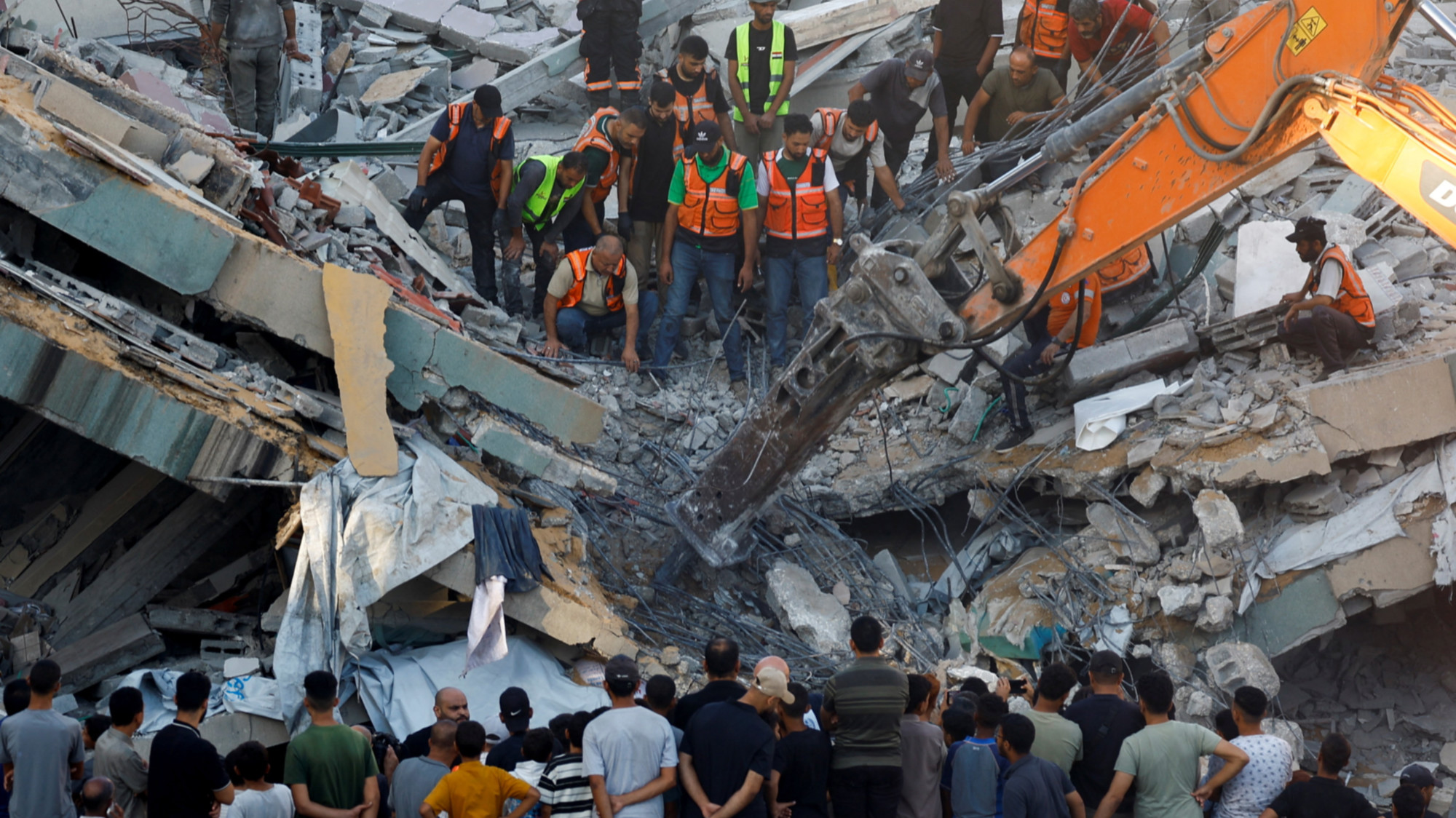
    The summit also saw Trump make a highly public break with Israeli Prime Minister Benjamin Netanyahu, a rift that caught even US allies off guard. Speaking Tuesday, Trump criticized Israel’s prolonged campaign against Hezbollah in Lebanon, saying “too many people are being killed” and adding: “You don’t have to knock down an apartment house every time you’re looking for somebody, because there are a lot of people in those apartment houses and they are not all Hezbollah.”

    Israel was not a signatory to the MoU, and has rejected the agreement’s provisions related to Lebanon. A senior Israeli official close to Netanyahu told Reuters Thursday that Israel has “no intention” of withdrawing its troops from southern Lebanon, and is currently engaged in tense negotiations with Washington over the terms. The deal is widely viewed domestically in Israel as a major political defeat for Netanyahu. Far-right National Security Minister Itamar Ben Gvir stated that “Trump’s agreement does not bind us”, while centrist opposition figure Benny Gantz called it a “strategic failure”, and a lawmaker from the opposition Yesh Atid party described it as “the best thing that has happened to Iran in a generation”. A recent poll published by Israeli public broadcaster Kan found only 18% of Israeli adults support the agreement, with 55% opposed, and 70% saying they still perceive a major Iranian threat despite the months-long military campaign.

    For its part, Iran has warned that any continued Israeli military presence or offensive action in Lebanon counts as a violation of the ceasefire agreement. Iranian Foreign Minister Abbas Araghchi clarified that Tehran views the US and Israel as a single party to the deal, with Iran and Hezbollah forming the opposing side. The Iranian military has reported that Israel has violated the existing ceasefire in Lebanon 84 times since the framework deal was announced Sunday.

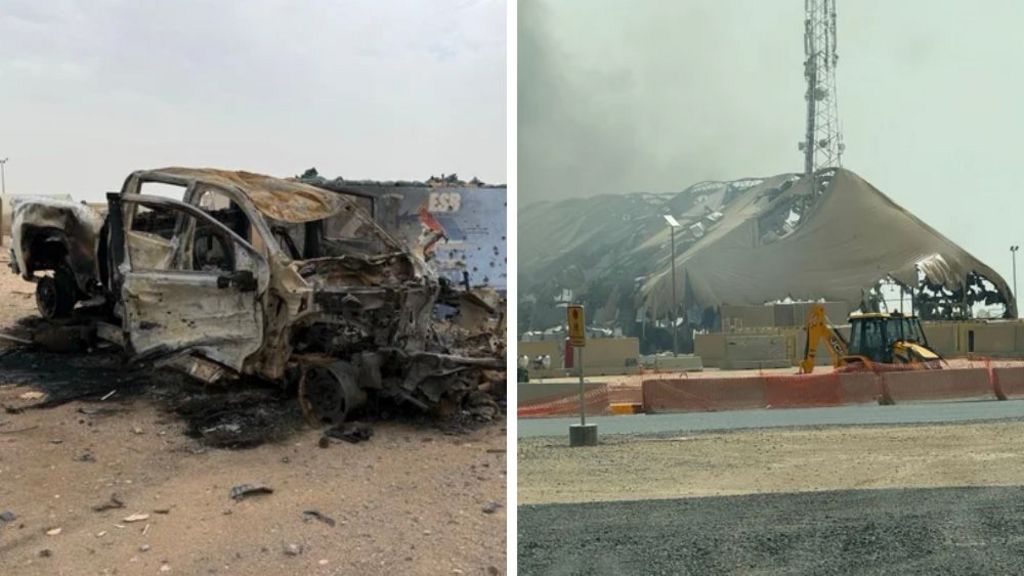
    The five-month conflict has already left a staggering humanitarian toll across the Middle East. At least 3,600 people have been killed in Iran alone, including more than 1,700 civilian casualties. In Lebanon, Israeli strikes have killed more than 3,750 people since fighting resumed in early March, and displaced over one million Lebanese from their homes. Iranian retaliatory strikes targeted Bahrain, Kuwait, Oman, Qatar, Saudi Arabia, the United Arab Emirates, Israel, Iraq, and Jordan, killing dozens of civilians and causing widespread damage to airports, hotels, energy infrastructure, and residential buildings across the region. Thirteen US service members were also killed in retaliatory attacks on American military bases in the region.

  • Zimbabwe vote to extend president’s term underscores the staying power of Africa’s aging leaders

    Zimbabwe vote to extend president’s term underscores the staying power of Africa’s aging leaders

    In a move that spotlights a growing, widely debated trend across the African continent, Zimbabwe’s National Assembly has passed sweeping constitutional amendments that will defer national presidential elections by two years and extend the current tenure of 83-year-old President Emmerson Mnangagwa from five years to seven. The vote, which passed by an overwhelming margin, pushes the 2028 scheduled election to 2030, adding two extra years to Mnangagwa’s time in office. The legislation also includes a controversial provision to shift presidential selection from a direct popular vote to a vote by sitting lawmakers, and it now moves to the Senate for final approval, where a majority in favor is widely expected.

    This development is far from an isolated incident. It underscores the enduring grip of aging political leadership across Africa, a region that holds the distinction of being the world’s youngest continent by population but counts seven of the globe’s 10 oldest national leaders among its ranks. Latest data from the United Nations confirms that Africa’s median population age is just 20, with more than 60% of all residents under the age of 30. Yet a 2025 Pew Research Center analysis finds that seven of the 16 world leaders older than 80-year-old former U.S. President Donald Trump are based on the African continent.

    Mnangagwa first took power in 2017, following a military-backed ouster of former long-time ruler Robert Mugabe, who left office at 93 as the world’s oldest serving head of state at the time. Today, he is part of a cohort of elderly African leaders who have held power for decades, many of whom have altered constitutional rules to extend their tenures. At 93, Cameroon’s Paul Biya is the oldest sitting head of state in the world, having held office since 1982 – a full year after Ronald Reagan first became U.S. president, with seven U.S. presidents having held office since Biya took power. Roughly 70% of Cameroon’s population is under the age of 35. In neighboring Equatorial Guinea, 84-year-old Teodoro Obiang Nguema Mbasogo has ruled for 47 years as Africa’s longest-serving leader, and has already positioned his son to succeed him as vice president. Ivory Coast’s 84-year-old Alassane Ouattara was sworn in for a fourth term in December 2025, following an election marked by low voter turnout and widespread civil unrest. Malawi voted 85-year-old Peter Mutharika, who previously held office from 2014 to 2020, back into the presidency in 2024. In Uganda, 81-year-old Yoweri Museveni – a long-time U.S. security ally who has faced repeated accusations of authoritarianism from critics – was sworn in for a seventh consecutive term in May 2025, pushing his total rule to 40 years. Like Mnangagwa, all of these leaders have amended or eliminated constitutional term limits to remain in power.

    Blessing Vava, director of the Johannesburg-based Southern Africa Coalition for Democracy and Accountability and a researcher focused on democratic governance, notes that Zimbabwe’s constitutional changes are just one example of a continental pattern. “The population in Africa is getting younger, but the average age of presidents is rising, and tenures are getting longer,” Vava explained. “Zimbabwe is not an exception. It’s the continental norm. Zimbabwe is just one data point in a much broader story of constitutional erosion for political survival.” Vava added that the disconnect between the continent’s young population and aging ruling elite creates a dangerous imbalance: “So you get 25-year-olds making up the majority of a country’s population, but 75-year-olds decide the candidate or rule. Youth are mobilized for votes and not for power.”

    The Africa Center for Strategic Studies, a U.S.-based think tank focused on the region, highlights the stark divides that define African leadership tenure today. Out of the continent’s 54 sovereign nations, roughly 20 actively enforce constitutional term limits, the organization reports. Others, however, have abolished term limits entirely, found loopholes to bypass them, or operate under military regimes that have suspended constitutional rule entirely, clearing the way for long-serving leaders to entrench their power.

    Even as the aging elite retains control in many nations, the past few years have seen the emergence of a new cohort of younger leaders across parts of the continent. In Senegal’s 2024 election, 44-year-old Bassirou Diomaye Faye won the presidency, becoming one of the youngest elected leaders in African history. Ethiopia’s Prime Minister Abiy Ahmed, 49, has held office since 2018. In other cases, younger leaders have risen to power via military takeovers: 42-year-old Mahamat Idriss Deby seized control of Chad in 2021 after his father, former long-time ruler Idriss Deby, was killed while fighting rebel forces, and won a formal presidential election in 2024. In Burkina Faso, 38-year-old army captain Ibrahim Traoré took power in a 2022 coup, making him the youngest sitting leader on the continent. Military coups have also brought younger leaders to power in Mali and Guinea in recent years.

    Even with these emerging shifts, analysts maintain that the vast majority of African political systems remain dominated by long-ruling, aging elites, leaving young, democratically inclined leaders with very limited pathways to seize power through electoral processes.

  • How Trump decided to sign a deal with Iran at Versailles palace

    How Trump decided to sign a deal with Iran at Versailles palace

    In an unplanned, dramatic twist on the sidelines of the G7 summit in France, former U.S. President Donald Trump signed an initial agreement with Iran during a lavish state dinner hosted by French President Emmanuel Macron at the Palace of Versailles, catching even senior French government officials off guard. The impromptu signing unfolded as Trump prepared to wrap up his three-day visit to France, which was centered on high-stakes diplomatic negotiations at the annual Group of Seven gathering. As the U.S. leader prepared to depart for his motorcade, he casually confirmed the news to assembled reporters, saying simply, “We signed in Versailles.”

    Footage posted to the social platform X by both Macron’s team and a White House aide captured the moment: Trump sat at a dinner table signing a physical copy of the agreement, before passing the document and his signature pen to U.S. Secretary of State Marco Rubio. Seated beside Trump, Macron congratulated him with the words “Good job. Bravo,” as surrounding officials and dinner guests broke into applause.

    Details of the last-minute arrangement emerged the following day from French Finance Minister Roland Lescure, one of the dinner attendees, who confirmed that the surprise signing upended original White House plans. Initial scheduling had slated the official signing ceremony for the coming Friday in Switzerland, leaving even top French ministers unaware of the change until moments before it happened. “We literally saw Marco Rubio leave — I don’t know if he had already printed the memorandum of agreement or went to print it — and come back,” Lescure recounted. “We cleared the plates.”

    Lescure noted that the surprise move appeared to be a last-minute decision by Trump, who only informed Macron of the plan shortly before the signing, as the two leaders arrived at the dinner together. “In any case, for us, ministers of the French government, it was a surprise,” he added. A separate anonymous French official, who was not cleared to speak publicly about the closed-door event, clarified that Rubio and French Foreign Minister Jean-Noël Barrot conducted a final review of the memorandum of understanding before bringing it to Trump for his signature. The off-the-cuff signing at one of France’s most iconic royal landmarks underscores the fluid, unscripted nature of backchannel diplomacy that often takes place beyond the formal agenda of major international summits.

  • Bowen: US-Iran deal raises inescapable question of what the war was for

    Bowen: US-Iran deal raises inescapable question of what the war was for

    In the months after the U.S. and Israel launched a joint military invasion of Iran on February 28 aimed at toppling Tehran’s ruling regime, a memorandum of understanding (MOU) signed by U.S. President Donald Trump and Iranian President Masoud Pezeshkian has brought an uneasy end to open hostilities – but it has also reshaped regional power dynamics, exposed major strategic miscalculations, and left the future of the Middle East hanging in the balance. The human toll of the short, brutal war is already catastrophic: thousands of lives have been lost across Iran and Lebanon, with hundreds of those fatalities counted among civilian populations caught in the crossfire. What was intended to be a swift, decisive campaign to eliminate Iran’s Islamic Republic has instead ended in a clear strategic defeat for Washington and its closest regional ally, analysts and insiders agree.

    From the start, the war grew out of a long-held goal of hardline U.S. and Israeli leaders. Israeli Prime Minister Benjamin Netanyahu spent decades pushing successive U.S. administrations to greenlight a full-scale attack on Iran, and when Trump approved the joint operation, both men predicted an immediate collapse of the Tehran regime. In the opening strikes, Israeli warplanes targeted and killed former Iranian Supreme Leader Ali Khamenei and his core inner circle, a move that U.S. and Israeli planners assumed would trigger a rapid breakdown of state institutions. Trump publicly called for Iran’s unconditional surrender, telling the Iranian people they would get a once-in-a-generation chance to overthrow their government. Netanyahu framed the attack in historic, almost religious terms, declaring: “This coalition of forces allows us to do what I have yearned to do for 40 years: smite the terror regime hip and thigh.” Neither prediction came close to matching reality.

    Unlike weak, corrupt authoritarian regimes that have crumbled after the loss of top leadership, Iran’s Islamic Republic spent nearly 50 years building state institutions designed to withstand external efforts at regime collapse. Though the regime has been criticized for widespread corruption and brutal repression, including the killing of thousands of anti-government protesters just weeks before the invasion, its foundations are rooted in decades of ideological commitment, religious identity, and a culture of national survival forged during the 1980s devastating war with Saddam Hussein’s Iraq. Khamenei’s death did not trigger a collapse; it only pushed his successors to embrace bolder, more aggressive tactics to defend the regime. Where Khamenei had long refused to risk closing the Strait of Hormuz – the strategic choke point through which roughly one-fifth of the world’s oil and natural gas supplies flow – the new leadership did not hesitate to shut down the waterway at the start of the conflict.

    That single decision changed the entire trajectory of the war. Closing the Strait immediately sent shockwaves through the global economy, raising the threat of a worldwide recession and putting enormous pressure on the U.S. to end the conflict. Far from destroying the regime, the closure gave Tehran disproportionate leverage over Washington, forcing Trump to agree to a set of sweeping concessions that have infuriated hardline Iran hawks in the U.S. and thrown relations between the U.S. and Israel into deep crisis. Under the terms of the signed MOU, the U.S. will end its counter-blockade of Iranian ports, waive sanctions to allow Iran to earn billions of dollars in new oil export revenue, and begin the process of unfreezing tens of billions of dollars in Iranian assets held in foreign accounts. In exchange, Iran will reopen the Strait of Hormuz to commercial shipping, and the two sides will restart suspended negotiations over Iran’s nuclear program – a return to the status quo that existed the day before the invasion, when the Strait was open and talks were already ongoing.

    The agreement also calls for an immediate end to hostilities in Lebanon, a demand that Israel has already rejected. Israeli leaders insist they need a free hand to operate in the country, a disagreement that threatens to widen the rift between the U.S. and Israel and play directly into the hands of Iranian hardliners who oppose any negotiated deal with Washington. Relations between Trump and Netanyahu have already deteriorated sharply as a result of Israel’s ongoing military operations in Lebanon, and the fallout from the war may spell the end of Netanyahu’s decades-long political career. With Israeli elections scheduled for October, he faces a major reckoning with voters over a string of catastrophic security failures stretching back to the October 7, 2023, Hamas invasion from Gaza, when Israel’s vaunted military and intelligence services failed to detect the attack in advance. His hardline rejection of diplomacy and push for full-scale war with Iran was intended to cement his reputation as Israel’s most trusted security leader; instead, it has led to a strategic defeat that has left the country more isolated than ever.

    Critics of the deal have been quick to condemn Trump’s concessions. Antony Blinken, former Secretary of State under President Joe Biden, posted on social media platform X that the only tangible “achievement” of the ceasefire is the reopening of the Strait of Hormuz – a waterway that was already open before the war began. “And we will apparently pay Iran to do so,” Blinken wrote, a line that sums up the frustration of many opposition figures who call the conflict the worst foreign policy blunder of Trump’s presidency to date. The core question that hangs over the entire debacle is unavoidable: what, exactly, was the war for? Thousands of people are dead, Iran’s economy has been shattered by months of fighting, and the global economy was brought to the brink of recession, all to return both sides to exactly the position they were in before the invasion began.

    One of the most consequential long-term shifts to come out of the war is Iran’s discovery that the Strait of Hormuz is a far more effective and cost-efficient weapon of leverage than the decades-long, billion-dollar investment it made in building a network of proxy militias across the Middle East. Iran’s so-called “axis of resistance” has survived the war, barely – the Assad regime in Syria collapsed at the end of 2024, and the rest of the network suffered severe damage from Israeli airstrikes that leaves its future effectiveness in doubt. By comparison, closing the Strait was a low-cost, high-impact move that achieved what decades of proxy warfare never could: forcing the U.S. to make major concessions to Tehran. Iran’s nuclear program, which has long been the core point of contention with the West, also played a role in provoking the war, and the regime continues to deny it is pursuing a nuclear weapon. But even with the regime’s survival, the war has caused catastrophic damage to Iran, leaving thousands dead and its economy in tatters.

    The MOU is not a final, binding peace deal – it is only a framework to resume negotiations over Iran’s nuclear program, with a 60-day negotiating window that is widely expected to be extended given the complexity of the issues involved. Mutual distrust remains deep between the two sides, and hardliners in Washington, Tehran, and Jerusalem all have reasons to undermine the talks. Iran could overplay its hand, pushing for maximalist concessions that put the economic relief it gained from the MOU at risk. But even with all the lingering risks, most independent analysts agree that the framework deal is still far better than continuing a catastrophic war that already killed thousands and pushed the global economy to the edge of recession. If the two sides can reach a final, mutually acceptable nuclear agreement and stick to its terms, the agreement could open the door to a fundamental transformation of the entire Middle East. That outcome remains a very large “if,” separated by months of difficult, high-stakes negotiations that could derail at any time, leaving the region once again on the brink of open conflict.

  • Colombia stopped energy exports to Israel – so why did South Africa and Brazil not do so?

    Colombia stopped energy exports to Israel – so why did South Africa and Brazil not do so?

    Against the backdrop of growing international outrage over Israel’s military campaign in Gaza, Colombian President Gustavo Petro has made history by implementing a complete, ironclad ban on all coal exports to Israel – a move that campaigners say proves an energy embargo on Israel is achievable with sufficient political will, while also laying bare the gap between rhetoric and action from other high-profile nations that have publicly backed Palestinian rights.

    The road to the full embargo began in 2024, when Petro first issued a decree banning Israeli-bound coal exports. But a critical loophole allowed multinational mining corporations to continue shipments to honor pre-existing contracts. By July 2025, that loophole was being actively exploited: the Maltese-flagged cargo vessel *Fortune*, loaded with coal mined by U.S. firm Drummond, departed Colombia’s Puerto Drummond bound for Israel’s Hadera port in open defiance of the spirit of the 2024 ban. Within hours of the *Fortune*’s departure, Petro ordered the Colombian navy to intercept and block all further coal supplies to Israel. On August 28, 2025, a revised, closed-loophole decree entered into force, cutting off all Colombian coal exports to Israel entirely.

    “Not a ton of coal leaves for Israel, and I take responsibility,” Petro pledged. As Colombia was Israel’s single largest supplier of coal for electricity generation, exports dropped to zero within months. By November 2025, the ban was fully enforced.

    The push for the embargo originated from grassroots pressure, not just presidential policy. Weeks after the outbreak of Israel’s military operation in Gaza in October 2023, Palestinian trade unions called on Colombia to end energy exports, a demand quickly taken up by Sintracarbon, Colombia’s largest mineworkers union. When the 2024 loophole allowed 28 Drummond ships to deliver coal to Israeli ports between October 2024 and April 2025, a broad coalition of union organizers, Indigenous groups, and BDS activists raised the alarm, forcing the government to close the regulatory gap.

    Indigenous communities in Colombia’s coal-producing regions have framed the issue as a “double genocide,” linking the extraction of coal for Israel’s military to their own long-running displacement and environmental harm. In La Guajira, the Wayuu people have spent decades fighting the Cerrejon mine, one of the world’s largest open-pit coal operations, run by Anglo-Swiss mining giant Glencore. The Global Legal Action Network (GLAN) has documented more than 336,000 cases of respiratory illness in the region directly tied to toxic mine dust, with elevated long-term risks of cancer and genetic damage. Glencore has denied wrongdoing, saying it upholds international human rights standards and runs community development programs, but the company faces ongoing legal action: in 2017, Colombia’s constitutional court ordered a halt to Cerrejon’s expansion over plans to divert a critical water source for the Wayuu, prompting Glencore to launch an international arbitration claim against the Colombian state for millions in compensation.

    Colombia’s coal sector also carries a legacy of paramilitary violence against organized labor. The country is the deadliest in the world for trade unionists, with more than 3,000 organizers murdered since the 1990s. Both Drummond and Glencore (via its subsidiary Prodeco) have been accused of financing and colluding with far-right paramilitary groups between 1996 and 2006, sharing intelligence on targeted union leaders. A 2014 report collected testimony from ex-paramilitaries, victims, and former employees supporting the allegations, which both companies have repeatedly denied, calling testimonies unreliable. In 2023, Colombia’s attorney general’s office announced it would put Drummond’s current and former chief executives on trial for conspiracy to finance paramilitarism, a charge the company continues to reject. Campaigners also note a historical link between Israeli mercenaries and Colombian paramilitaries: Yair Klein, an Israeli ex-soldier, was convicted by a Colombian court in 2001 for training AUC militias in the 1980s.

    Today, the Colombian embargo faces political uncertainty: the country will hold its second round of presidential elections in June 2026, and far-right candidate Abelardo de la Espriella, who won 43.7% of the first-round vote, has pledged to reverse the ban, restore full diplomatic ties with Israel, and open a Colombian embassy in Jerusalem. Even so, campaigners celebrate the embargo as proof that political will can cut off energy supplies that enable military operations.

    In March 2026, Colombia co-chaired a landmark meeting of 40 nations in The Hague, convened by The Hague Group, a coalition working to enforce international law amid the Gaza conflict. At the meeting, participating governments including China, Saudi Arabia, and Spain committed to ban fuel exports to Israel, implement stricter port and transit controls, and restrict the movement of arms, military supplies, and dual-use goods bound for Israel. But a closer look at trade data reveals that many signatory nations have failed to follow through on their commitments, with some even increasing energy exports to fill the gap left by Colombia.

    The most prominent example is South Africa, which co-chaired the The Hague meeting and is the lead claimant in the landmark genocide case against Israel at the International Court of Justice (ICJ). As Colombian exports fell to zero, South Africa’s coal shipments to Israel surged by 87% to fill the gap. Even before the full Colombian embargo, South Africa was Israel’s second-largest coal supplier in the first half of 2024, accounting for 60% of all Israeli coal imports. Most of this coal powers Israel’s national electricity grid, which supplies energy to Israeli Defense Force bases, weapons manufacturing facilities, surveillance infrastructure, and illegal settlements in the occupied West Bank – even as Israel restricts electricity access for Palestinian civilians in Gaza and the West Bank.

    South African activists from the BDS Coalition have called on the government to enforce a ban, pointing out that the government is legally obligated under its own constitution and the Genocide Convention to prevent trade that supports alleged international crimes. South African attorney Sirhaan Che Khan notes that the government already has the power to implement export restrictions without new parliamentary approval, using the same International Trade Administration Act powers it invoked to restrict medical supply exports during the COVID-19 pandemic. The WTO’s trade rules also include security exceptions for actions taken to uphold UN Charter obligations for peace and security – a standard Colombia has already invoked without facing legal challenge.

    Despite this, the South African government has failed to act. BDS coordinator Roshan Dadoo said activist requests for meetings with trade officials have yielded no commitments, with Trade Minister Parks Tau arguing a ban could face legal challenges under WTO rules and that political consensus is impossible in the country’s unity government, which includes the pro-Israel Democratic Alliance alongside the ANC. A government source, speaking anonymously to Middle East Eye, said businesses harmed by a ban could sue the state without new legislation, even though activists say existing law already grants the executive sufficient power. The South African Department of Trade, Industry and Competition did not respond to requests for comment by publication time, leaving a stark contradiction between the country’s bold international legal stance against Israel’s actions and its ongoing trade in energy.

    Brazil, another high-profile signatory that has publicly backed South Africa’s ICJ case and recalled its ambassador to Israel after Lula compared Israel’s actions to the Holocaust, has similarly continued supplying energy to Israel via indirect routes. In 2024, Brazil became Israel’s fourth-largest crude oil supplier, accounting for 9% of Israel’s imports. State-owned Petrobras claims it never sells crude directly to Israel, only to third-party refineries, and has no control over the final destination of refined products. But union leaders say that is a deliberate loophole.

    Leandro Lanfredi, a leader of Brazil’s National Federation of Oil Workers, told Middle East Eye that Brazilian crude is redirected to Italian refineries, which then process and ship it to Israel. In June 2025, after a combination of an Iranian drone strike on Israel’s largest refinery in Haifa (which took the facility offline for months) and scheduled maintenance at Ashdod’s refinery crashed Israeli domestic refining output to a 30-year low, demand for imported refined fuel surged. Data collected by Lanfredi shows that the share of Brazilian crude in the blend at Italy’s Saras refinery in Sardinia jumped from a historical average of 7% to 47% in June 2025, just as the refinery began exporting an estimated 45,000 tons of refined petroleum to Israel. “Of course Petrobras knows who their clients are,” Lanfredi said, noting that the Brazilian government owns more than 50% of voting shares in the state oil giant and has the regulatory power to enforce a ban, but has resisted to avoid friction with private investors. Brazil’s foreign ministry did not respond to requests for comment.

    Activists say Brazil has a clear precedent for such action: in 1985, center-right President Jose Sarney implemented a full oil and arms embargo against apartheid South Africa, proving that even moderate administrations can enforce energy embargoes for human rights. “If it was possible for him to do it, it is more than possible for President Lula,” Badra El Cheikh of the Palestine Institute for Public Diplomacy told MEE.

    The core barrier to broader action, activists say, is fear of U.S. retaliation. “I think most of all, they are afraid of the backlash that could come from Israel’s biggest partner in crime, which is the US. They’re afraid of sanctions, and afraid of anything that the US might do against their economies,” El Cheikh explained. Ana Sanchez, general coordinator of Global Energy Embargo for Palestine (GEEP), added that energy deals face far less international regulation than arms sales, which are at least constrained by the Arms Trade Treaty. Many governments also hide behind the false claim that an energy embargo targets civilians, she said, ignoring that energy powers the military machine that drives the conflict.

    For campaigners, Colombia’s successful implementation of a full embargo proves that the gap between global rhetoric on Palestinian rights and action is not inevitable – it is a choice, rooted in political priorities rather than legal or economic constraint.

  • Ebola cases increase almost 40% in a week as death toll passes 200

    Ebola cases increase almost 40% in a week as death toll passes 200

    DAKAR, SENEGAL – Just one month after the Ebola outbreak was formally detected across the Democratic Republic of Congo’s eastern region and neighboring Uganda, the death toll has surpassed 200, marking it the most severe early-stage Ebola outbreak on record, the Africa Centres for Disease Control and Prevention (Africa CDC) confirmed in a Thursday briefing.

    Dr. Wessam Mankoula, a medical epidemiologist with Africa CDC, told reporters that the outbreak has already recorded 894 confirmed cases as of this week—three times the caseload seen at the same 30-day mark during Uganda’s 2000 Ebola outbreak, which registered 224 cases at the corresponding point. The higher current count is partially explained by delayed detection: health authorities only confirmed the outbreak’s existence on May 15, weeks after community transmission was first suspected. Since last week alone, confirmed cases have jumped 38%, and the virus has already spread to 32 separate health zones across eastern Congo.

    What makes this outbreak particularly dangerous is its strain: it is caused by the rare Bundibugyo Ebola virus, for which no approved vaccines or specific antiviral treatments exist. Early testing did not screen for this less common variant, as most of Congo’s 16 previous Ebola outbreaks were linked to the Zaire strain, a more widespread variant for which effective vaccines are already available. As of this week, 74 infected patients across the affected region have recovered, and researchers are currently advancing development of experimental treatments including targeted monoclonal antibodies for Bundibugyo.

    Over 90% of all confirmed cases are concentrated in Congo’s eastern Ituri Province, with additional cases detected in North Kivu and South Kivu provinces. The virus has already crossed the international border into Uganda, where 19 confirmed cases and two deaths have been documented to date.

    Public health officials are facing steep barriers to bringing the outbreak under control, starting with critical gaps in contact tracing. Africa CDC estimates that for the 894 confirmed cases, between 17,000 and 35,000 close contacts should be monitored for symptoms. As of Thursday, only roughly 4,000 contacts—less than 15% of the projected total—have been located and are under active evaluation.

    “We are still far from controlling the situation of this outbreak,” Mankoula said, noting that long-running insecurity and geographic isolation in Ituri have hobbled tracing efforts. Decades of armed conflict in the province have displaced nearly one million people, according to the United Nations’ Office for the Coordination of Humanitarian Affairs, leading to constant population movement as communities flee violence. Ituri’s dense forests, underdeveloped road infrastructure, and scattered remote villages mean accessing affected communities can take multiple days of travel. Tracing efforts are further complicated by the large population of artisanal miners working in the region’s mineral-rich interior, who move frequently between isolated mining sites with little official oversight.

    Compounding these challenges are critical gaps in funding and personnel. Of the more than $900 million in international pledges committed to the outbreak response, only $90 million has actually been disbursed to frontline response teams, Mankoula said. Africa CDC estimates it requires 540 trained response personnel to fully address the crisis, and currently has only 84 staff deployed to the affected region.

    Mankoula added that the organization is working urgently to accelerate the release of committed funds, saying: “We’re keeping our fingers crossed those new pledges will be fast tracked, and we’ll be following up with different member states and different partners about their commitment to turn those pledges into actual money released to their affected countries or partners.”

  • Federal regulators back Trump’s plan to speed power to energy-hungry AI data centers

    Federal regulators back Trump’s plan to speed power to energy-hungry AI data centers

    WASHINGTON – In a landmark move tailored to the explosive growth of artificial intelligence, federal energy regulators have greenlit new rules to speed up connections between large power users — most critically AI-focused data centers — and the nation’s aging electric transmission system. The vote comes as U.S. policymakers race to meet surging energy demand for AI infrastructure and shore up American competitiveness against China in the fast-expanding tech sector.

    The policy shift was initiated eight months ago, when U.S. Energy Secretary Chris Wright called on the Federal Energy Regulatory Commission (FERC) to take bolder action to clear interconnection bottlenecks that have delayed data center development. In a unanimous vote by the five-member commission, FERC passed an order requiring that large power loads such as AI data centers gain timely, orderly access to high-voltage transmission lines. This marks the second major regulatory adjustment FERC has made in less than a year to accommodate AI infrastructure, following a December order that allowed data centers to connect directly to independent power plants.

    FERC Chair Laura Swett, a Trump administration appointee, framed the decision as a historic step to modernize the U.S. electricity market while shielding ordinary consumers from unexpected costs. Under the new order, data center operators are required to cover 100% of the costs for transmission upgrades needed to support their connections, addressing widespread concerns that general ratepayers would be forced to foot the bill for expanding the grid to serve AI facilities. “Many Americans are increasingly concerned that adding large power loads like data centers will push up their electricity bills, and that concern is shared by this commission,” Swett said. “We take very seriously our congressional mandate to ensure rates remain reasonable for American households.”

    The policy has drawn a mixed reception from stakeholders across the energy and political landscape. Tech giants and data center developers have welcomed the reform, which cuts through years-long interconnection backlogs that have left major AI companies scrambling to secure enough power to expand their operations. Major industry players including xAI, Google, Microsoft, Meta, Oracle, OpenAI and Amazon have already backed the administration’s efforts by signing the Ratepayer Protection Pledge, a voluntary commitment to build or purchase new power generation to match their data center demand, cover all grid upgrade costs, provide emergency backup power to avoid blackouts, and prioritize local hiring for construction projects.

    But the rule has sparked significant pushback from utilities, state governments, and regional grid operators, who argue that the new federal framework erodes their existing authority to manage local transmission planning and interconnection processes. Clean energy advocates have also raised alarms, warning that the policy could undermine state-level requirements to power new data centers with renewable energy sources, slowing progress on national decarbonization goals.

    Beyond regulatory and policy disputes, the FERC vote comes amid a growing grassroots backlash against data center development across the country. Local communities are increasingly pushing back against proposed facilities, citing fears that concentrated data center demand will drive up regional electricity prices, strain local water supplies, and cause environmental harm. Many residents have also protested the loss of open space and farmland to massive data center complexes, which have grown dramatically in size to meet AI’s extreme power requirements.

    Current industry data underscores the scale of AI’s growing energy footprint. An estimated 4,000 data centers are already operating across the U.S., with another 3,000 planned or under construction — some of which consume as much electricity as a small entire city. The Electric Power Research Institute estimates that data centers already account for roughly 5% of total U.S. electricity demand, a figure that could triple by 2035. In Virginia, a major hub for data center development, facilities already make up more than 25% of the state’s total electricity demand, a share projected to climb above 40% by 2030.

    Even with the new FERC rules, however, major structural challenges remain to matching AI’s power demand with available supply. The order does not address the growing gap between data center construction and the buildout of new power generation plants. In many regions, data center development is outpacing the addition of new generation capacity, leading to tightening energy supplies, rising retail electricity prices, and increased warnings of potential future blackouts.

    Industry analysis also shows that even with clearer interconnection rules, overall data center capacity buildout is lagging far behind projected demand. A recent J.P. Morgan report, which analyzed satellite imagery of planned projects, found that more than 60% of data center capacity scheduled for completion by 2027 has not yet broken ground, and an additional 7% of projects have already been delayed. The report cited persistent permitting bottlenecks, supply chain delays for critical equipment including gas turbines and transformers, and widespread shortages of skilled construction labor as the primary causes of backlogs.

    For the Trump administration, accelerating AI data center development is a core priority to maintain U.S. economic and military leadership in AI, a sector the White House views as critical to outcompeting China. President Trump has made AI competitiveness a central policy focus, recently signing an executive order to establish a 30-day national security vetting framework for the most advanced AI systems before they can be released to the public, while framing the sector as a magnet for global foreign investment into the U.S.

  • Should the US impose a teen social media ban like the UK?

    Should the US impose a teen social media ban like the UK?

    A new policy restricting minors’ access to social media rolled out in the United Kingdom, which bars all users under the age of 16 from major platforms, has crossed the Atlantic to ignite a fiery public conversation in the United States. As policymakers and parents across the country grapple with growing concerns over underage digital wellness, the British Broadcasting Corporation set out to capture a cross-generational snapshot of American opinion, asking respondents from multiple age groups whether the U.S. should follow the UK’s lead and implement an identical ban.\n\nThe question could not be more timely: for years, public health researchers, child advocacy groups, and lawmakers have raised urgent alarms about the impacts of endless social media scrolling on adolescent mental health, including rising rates of anxiety, body image disorders, and sleep disruption. The UK’s bold policy move represents one of the most aggressive regulatory actions to date to address these harms, making it a natural test case for other nations weighing similar restrictions.\n\nInterviews with American respondents revealed deep divides along both generational and ideological lines. Many parents and older Americans voiced strong support for the ban, arguing that persistent exposure to algorithm-driven social media content poses irreversible damage to developing brains and that regulatory intervention is long overdue. They point to growing bodies of research linking heavy adolescent social media use to poor mental health outcomes as irrefutable evidence that drastic action is needed.\n\nOn the other side of the debate, many younger respondents and digital rights advocates argue that an outright age ban is both unenforceable and an overreach of government authority. Young people themselves note that social media has become a core space for social connection, education, and organizing, particularly for marginalized teens who may not find accepting communities offline. Critics also point out that a ban does not address the root causes of adolescent mental health struggles, and would push underage users onto unregulated, less safe platforms that lack even the basic content protections major social media companies currently offer.\n\nAs the debate unfolds, the UK’s policy will be closely watched in the U.S. and across the globe, offering critical data on how such a ban works in practice and what its actual impacts on adolescent well-being and digital access turn out to be.

  • A UK border official and a former Hong Kong cop sentenced for spying on China’s behalf

    A UK border official and a former Hong Kong cop sentenced for spying on China’s behalf

    LONDON – In a landmark national security ruling that has escalated diplomatic tensions between London and Beijing, two men – a former United Kingdom border official and a retired Hong Kong police officer – have received lengthy prison sentences on charges of orchestrating a spy operation targeting Beijing’s critics based on British soil. The convictions mark one of the highest-profile cases prosecuted under the U.K.’s post-Brexit National Security Act, underscoring growing concerns over transnational political surveillance on Western territory.

    Sixty-six-year-old Bill Yuen, a former Hong Kong Police superintendent who went on to work as office manager at the Hong Kong Economic and Trade Office (HKETO) in London – the regional government’s official U.K. representative – and 41-year-old Peter Wai, a former Metropolitan Police officer who later joined U.K. Border Force, were handed down their sentences Thursday at London’s Central Criminal Court. Judge Bobbie Cheema-Grubb imposed a 10-year prison term on Wai and an eight-year term on Yuen, condemning the pair’s actions as deliberate, coordinated and severely damaging to the safety of those they targeted.

    According to prosecution arguments, the two Chinese-British nationals operated a covert surveillance network between 2020 and 2022, posing as legitimate law enforcement or intelligence personnel to monitor and collect intelligence on Hong Kong pro-democracy dissidents and Beijing critics residing in the U.K. Their list of targets included prominent high-profile figures: Nathan Law, a former Hong Kong opposition lawmaker who fled to the U.K. after Beijing’s imposition of the 2020 national security law, and multiple British parliamentarians who have publicly criticized Chinese policy. Prosecutors also revealed that the pair referred to the pro-democracy activists they targeted with the dehumanizing slur “cockroaches”, a term widely adopted by pro-Beijing factions to describe opposition supporters during Hong Kong’s 2019 pro-democracy protests.

    Last month, a jury found both men guilty on charges of violating the National Security Act for providing assistance to a foreign intelligence service. Wai received an additional conviction for misconduct in public office, after he abused his position as a border official to access a secure government computer and pull personal information on individuals of interest to Hong Kong authorities. In her sentencing remarks, Cheema-Grubb emphasized that the pair’s repeated covert operations had inflicted ongoing fear and psychological harm on the people they monitored, who had sought safety in the U.K. after fleeing political persecution.

    Helen Flanagan, commander for Counter Terrorism Policing London, described the defendants’ activities as “truly chilling” in a post-sentencing statement. She noted that the targets of the spy ring were peaceful pro-democracy campaigners who had fled to the U.K. to seek sanctuary, only to be tracked and targeted for their political beliefs.

    The case has sparked immediate diplomatic friction between the U.K. and China. Following the guilty verdict last month, British foreign ministry officials summoned Chinese Ambassador Zheng Zeguang to formally raise concerns over the transnational surveillance operation. In response, China’s Embassy in London denounced the proceedings as a politically motivated “farce” manufactured to provide cover for anti-China forces that had relocated to Britain. The Hong Kong government also issued a statement rejecting all links between the espionage operation and the Hong Kong administration or HKETO, claiming British authorities had launched the investigation on “groundless accusations”, abused legal processes and manipulated judicial proceedings to secure a conviction.

    The verdict comes amid a steady deterioration in Sino-British relations over issues including Hong Kong’s political crackdown, increased Chinese assertiveness in the Indo-Pacific, and repeated allegations of transnational repression targeting dissidents based in Western countries.

  • ‘My brother hid in a rice sack’: The refugee stars playing at the World Cup

    ‘My brother hid in a rice sack’: The refugee stars playing at the World Cup

    As the 2026 World Cup unfolds across North America, three standout players taking the pitch for Australia, Germany, and Canada share a powerful, little-told common bond: all descend from African refugee families who fled devastating conflict to build new lives abroad. For these athletes, their presence on football’s biggest global stage is more than a personal achievement — it is a platform to amplify the stories of displaced people everywhere, even as growing policy shifts around the world roll back access to refugee resettlement.

    For Germany defender Antonio Rüdiger, a 33-year-old Real Madrid stalwart and two-time Champions League winner, the road to the World Cup began long before he was born. His parents fled Sierra Leone’s brutal 11-year civil war in the 1990s, making a treacherous 340-kilometer trek from their home district of Kono to the capital Freetown in search of safety. Rüdiger’s uncle took extraordinary measures to protect his young nieces and nephews from rebel factions that kidnapped thousands of children to serve as child soldiers: he hid the group inside a sack of rice, and on multiple occasions, the family pretended to be dead to avoid gunfire or abduction. After securing refugee status in Germany, Rüdiger was born in Berlin, growing up in a shared government refugee center. That early experience shaped the work ethic that carried him to the top of global football. “Nothing is given in life. You have to work for things, you have to sacrifice a lot to get where you want to go,” he told BBC Sport Africa.

    Rüdiger is far from alone among World Cup participants in carrying a refugee heritage. Canadian captain and Bayern Munich star Alphonso Davies spent his earliest years in a Ghanaian refugee camp after his family fled civil war in Liberia, a conflict that ravaged the West African nation alongside Sierra Leone in the 1990s and early 2000s. Today, Davies is part of the United Nations High Commissioner for Refugees’ (UNHCR) symbolic “Game Changing Team,” a group of elite refugee-background athletes assembled to demonstrate what displaced young people can achieve when given safety, opportunity, and a warm welcome. “Canada gave me the opportunity to be who I am and to be what I want to be in life,” Davies told UNHCR, recalling his first days in the country: going to school for the first time, playing the sport he loves, and building new friendships.

    The Australian men’s national squad, the Socceroos, fields three forwards with African refugee roots: 20-year-old Nestory Irankunda of Watford, Mohamed Toure of Norwich City, and Awer Mabil of Spain’s Castellón. All three were either born in African refugee camps or grew up in them before resettling in Australia, and Irankunda recently made history as the Socceroos’ youngest-ever World Cup goalscorer after netting in a 2-0 group stage win over Turkey. Australia’s professional footballers association has leaned into the squad’s extraordinary multicultural identity, releasing a video featuring every player naming their birthplace or family heritage to highlight the tangible benefits of immigration.

    Rüdiger, Davies, Irankunda, and dozens of other participating players have lent their names to the UNHCR campaign, alongside other high-profile athletes such as Rüdiger’s Real Madrid teammate Eduardo Camavinga (whose family fled Angola for France), former Chelsea winger Victor Moses (whose parents resettled in Nigeria from the UK), former Bosnia goalkeeper Asmir Begovic (who found refuge in Germany as a child escaping Balkan conflict), and Iraqi striker Ali Al-Hamadi (whose family fled after his father was imprisoned under Saddam Hussein’s regime).

    UN High Commissioner for Refugees Barham Salih noted that children make up a disproportionate share of the world’s displaced population, with an estimated 48.8 million displaced children globally. Many face family separation, trauma, and abuse while fleeing war, violence, and persecution.

    Despite the widespread celebration of these players’ success at the tournament, Rüdiger and other campaign participants warn that global public and political attitudes toward refugees have shifted dramatically in recent years, with growing stigma targeting displaced people. “The narrative goes a bit more blaming the refugees,” Rüdiger said, arguing that public empathy for those escaping conflict has eroded. “Obviously, you have always the good and the bad. This is life, we all are not perfect. But the thing is, if one person does bad, are all bad? You cannot smear it on everyone, because that’s not fair. Because you have people who come here, they really want to change their life, they’re doing good, they’re trying to learn. They learn the language, they go to school, they achieve something in life.”

    That shifting political landscape is particularly visible in the United States, one of the 2026 World Cup’s three co-hosts. Immediately after his inauguration in January 2025, Republican President Donald Trump signed an executive order suspending the U.S. Refugee Admissions Programme (USRAP), the country’s formal resettlement system that has admitted more than 3.7 million refugees since its launch in 1980, including more than 500,000 from African nations. Later that year, the Trump administration capped annual refugee admissions at just 7,500 for the current fiscal year — a historic low — and rearranged priority rules to favor white South African refugees, based on Trump’s widely discredited claims of a “genocide” against Afrikaners.

    State Department data shows that in the first seven months of the fiscal year (October to April), just 6,069 refugees were admitted to the U.S., and all but three of those resettled people came from South Africa. That marks a stark reversal from the final full year of former Democratic President Joe Biden’s term, when the U.S. admitted 100,034 refugees total, 34,017 of whom came from 32 different African nations. The Democratic Republic of the Congo topped that list with 19,923 resettled refugees, followed by Somalia, Eritrea, and Sudan.

    The Trump administration has defended the cuts, arguing they are “justified by humanitarian concerns or is otherwise in the national interest,” but humanitarian organizations have roundly condemned the policy. Krish O’Mara Vignarajah, president and CEO of resettlement non-profit Global Refuge, told BBC Sport Africa that the policy is a devastating betrayal of the values the World Cup represents. “Sadly, right now, the most vulnerable in Africa and across the world have been shut out entirely,” she said. “What we will see [at the World Cup] is the US spending this summer celebrating, as they should, what humans can achieve when they’re given a chance. US policymakers have spent the past year making sure fewer people get that chance, and it is a stark and deeply troubling contradiction.”

    O’Mara Vignarajah drew a contrast to 1994, the last time the U.S. hosted the World Cup, when the country resettled more than 100,000 refugees. “We knew back then that hosting the world and welcoming the world were not separate ideas,” she said. “But we have seem to have forgotten that.”

    While U.S. policy has grown dramatically more restrictive, Canada — another World Cup co-host — has seen its annual refugee acceptance numbers rise over the past decade, even as it has shifted toward stricter immigration rules in recent years. Data from Canada’s Refugee Protection Division shows that 9,972 refugee claims were approved in 2016, a figure that grew to 50,067 by 2025. Thirty-eight African nations are represented among recent approved claims, with Nigeria recording the highest number.

    For stars like Rüdiger and Davies, their performances on the World Cup pitch are meant to serve as a reminder of what welcome can achieve: they are playing for the countries that gave their families a second chance at life, and in doing so, they hope to reignite global empathy for refugees around the world.